



Why Chairs Aren’t a Safe Child’s Kitchen Stool Substitute
You’re making dinner, your toddler wants to “help” and the dining chair is right there. It feels like the fastest way to let them reach the counter, wash fruit or stir pancake batter without you lifting them over and over.
But a chair is not a safe child’s kitchen stool substitute. A chair is designed for sitting, not for a toddler to climb, stand, lean, twist and reach from an elevated surface in a busy kitchen. The risk is not that your child is “doing something wrong.” The problem is that the furniture is being used for a job it was never built to do.
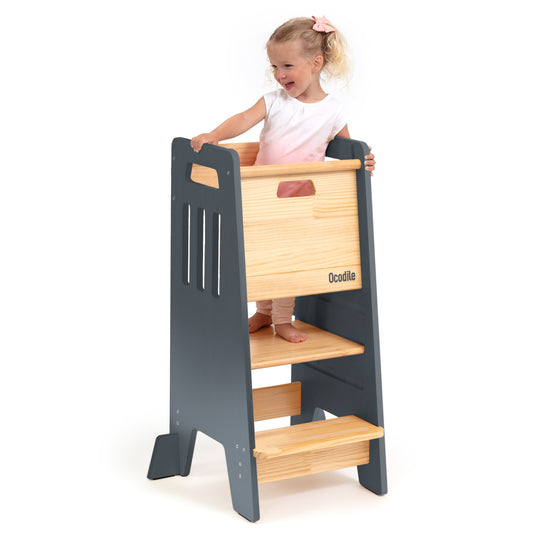
A purpose-built child’s kitchen stool or toddler tower gives your child a steadier place to stand for simple kitchen tasks. It can make everyday routines easier, but it still needs adult supervision, smart placement and clear boundaries.
Quick answer: why chairs are not safe for counter-height toddler use
A chair is unsafe as a child’s kitchen stool substitute because it usually has a smaller standing surface, no protective sides, no standing platform made for little feet and a higher chance of sliding or tipping when a child shifts their weight.
Toddlers do not stand still like adults. They bounce on their toes, turn to look at you, lean toward the sink, step backward without checking and push against the counter when something is just out of reach. A dining chair may feel sturdy when an adult sits on it, but that does not mean it stays secure when a 2-year-old stands on the edge and reaches sideways.
A safer setup starts with furniture designed for the task: a stable toddler tower, learning tower or well-sized child’s kitchen stool used on a flat, dry floor, away from heat, sharp tools and cords.
The real problem: chairs make normal toddler movement risky
Most parents do not use a chair because they think it is ideal. They use it because the child is asking to help, the sink is too high or the counter task will only take a minute.
That “just for a minute” moment is exactly when accidents tend to happen. Your hands are wet. The oven timer beeps. A younger sibling needs something. Your toddler reaches for the spoon, scoots the chair with their hips or tries to climb down before you are ready.
A kitchen chair creates several safety issues at once:
- The seat can be too high, putting your child’s center of gravity higher than needed.
- The surface is meant for sitting, so little feet may not land flat and steady.
- The chair back and legs can encourage awkward climbing.
- Many chairs slide easily on tile, hardwood or laminate.
- There are no side boundaries to slow a sideways step or backward movement.
None of this means your child is careless. It means the setup is asking toddler behavior to fit adult furniture.
Chair vs. child’s kitchen stool: what changes?
A child’s kitchen stool is not just a shorter chair. The better comparison is between furniture made for sitting and furniture made for standing support.
| Kitchen setup | What it is designed for | Main concern for toddlers | Better use case |
|---|---|---|---|
| Dining chair | Sitting at a table | Standing surface is not enclosed and may tip or slide | Mealtime seating with proper supervision |
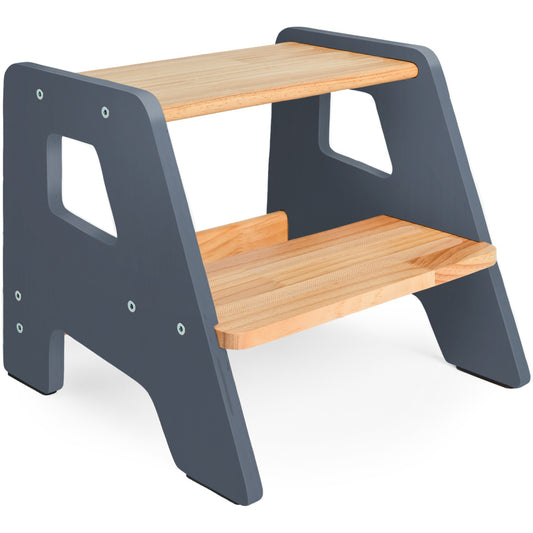
| Basic step stool | Short reach tasks | May not offer enough support for counter work | Quick handwashing or reaching a low shelf |
| Child’s kitchen stool | Helping a child reach safely | Still requires adult supervision and correct placement | Sink, counter or simple food prep tasks |
| Toddler tower | Supported standing at counter height | Needs space and consistent safety rules | Longer kitchen participation, washing hands or helping with prep |
The biggest difference is predictability. A child’s kitchen stool or toddler tower gives you a more intentional setup, so your toddler can focus on the task instead of balancing on furniture that was never meant for standing.
That purpose-built mindset applies throughout the home. Families do not treat a regular bathtub as a substitute for specialized home wellness equipment like a hot tub or sauna because the design, materials and setup expectations are different. Toddler reach furniture deserves the same kind of practical thinking.
Why a toddler tower is often safer than a chair for kitchen tasks
For toddlers and preschoolers, the kitchen is full of real-life learning: pouring, rinsing, stirring, spreading, wiping and handing you ingredients. The challenge is helping them participate without relying on unstable shortcuts.
A toddler tower is often a better fit than a chair because it gives a child a defined standing space. Many designs include guardrails or side support, which can add an extra boundary when a child shifts weight or turns around. The goal is not to remove every risk. The goal is to reduce the most obvious hazards caused by improvised furniture.
If you are still deciding whether your child needs a tower, a stand or a simpler stool, Ocodile’s toddler tower guide explains how these setups fit into everyday routines like brushing teeth, washing hands and helping at the counter.
A safer setup also reduces lifting for parents
Using a chair often means you are constantly lifting your child up, helping them down and moving the chair around the kitchen. That gets tiring fast, especially when your toddler wants to help ten times a day.
A well-placed child’s kitchen stool can make routines smoother. Your child can climb up with your help or within the limits of the product design, stand in one predictable spot and practice small tasks while you stay close. For parents, that can mean less bending, less one-arm cooking and fewer last-second grabs when a chair starts to scoot.
What to look for instead of using a chair
The right child’s kitchen stool depends on your kitchen, your child’s size and the tasks you want them to practice. A family with a tiny apartment kitchen may care most about storage. A family with an active climber may care more about entry control and side support.
Look for features that solve real problems, not just features that sound nice.
Stable construction
A sturdy, solid feel matters because toddlers shift their weight constantly. Wider support can help the stool or tower feel steadier when your child leans toward the counter, turns to talk to you or presses down while stirring.
Guardrails or side boundaries
Side support helps define where your child stands. This matters most during counter tasks because toddlers often step sideways without looking. Boundaries are not a replacement for supervision, but they add structure that a chair does not provide.
Adjustable height
An adjustable standing platform can help the stool fit your child as they grow. If the platform is too high, your child may tower over the work surface and lean down awkwardly. If it is too low, they may stretch, climb or stand on tiptoe. A better height helps them keep both feet planted while working.
Foldable or space-conscious design
If a bulky tower blocks your kitchen, you may be tempted to go back to using a chair. A foldable design can make storage easier and help parents keep the safer option available without giving up too much floor space.
For families who want a counter-height option that can be stored when not in use, the Adjustable Foldable Kitchen Tower is a relevant option to compare because it is designed as an adjustable, foldable learning stool for toddlers at counter height.
If your child is ready to climb up and join everyday kitchen routines, but you want the added boundary of a door, the Standing Toddler Tower with Sliding Safety Door is designed with a sliding safety door so little ones can participate alongside you with a more contained standing area.

Toddler tower or step stool: which one is right for your child?
A step stool can be useful for quick, low-risk tasks, especially when the child is reaching a bathroom sink or a low shelf. It is simple, compact and easy to move.
A toddler tower is usually the better choice when your child will be standing longer, using both hands or working near a counter. Stirring batter, rinsing vegetables, spreading cream cheese or helping pack snacks all involve movement. Your child may lean, reach, turn and shift their feet, so more standing support can make a noticeable difference.
Use this simple rule: if the task takes only a few seconds and does not require much movement, a step stool may be enough. If the task happens at counter height and your child will be standing there with both hands busy, a toddler tower is usually the more practical choice.
How to use a child’s kitchen stool more safely
Even the best child’s kitchen stool is not a babysitter. It is a tool that works best when the adult sets up the space well and stays nearby.
Start with the location. Place the stool on a flat, dry floor and make sure it is centered in front of the task. Keep it away from the stove, oven doors, hot pans, knives, glass bowls, appliance cords and anything your child could pull down.
If you want a deeper walkthrough, Ocodile has a practical guide on how to position a children’s kitchen tower at the counter, including where to place it and what to keep out of reach.
Then keep the activity simple. Toddlers do best when the job is clear and repeatable. Instead of inviting them to “help with dinner,” try one small task:
- Wash strawberries in a bowl at the sink.
- Tear lettuce into pieces.
- Stir pancake batter with your hand over theirs if needed.
- Spread nut butter or cream cheese with a child-safe utensil.
- Wipe the counter with a damp cloth.
Clear rules help too. You might say, “Feet stay on the platform,” “Hands stay on the counter” or “Ask me before climbing down.” Use the same words every time so the routine becomes familiar.
When a chair might seem fine, but still is not worth the risk
Some parents wonder if a chair is okay for older preschoolers who climb well. The answer is still usually no for kitchen counter tasks.
A preschooler may be more coordinated than a toddler, but chairs still lack the right standing surface and boundaries. Kids also get more confident as they grow, which can lead to bigger reaches, faster climbing and more “I can do it myself” moments.
If your child is old enough to help, they are old enough to learn safer routines. That might mean carrying the tower to the sink with your help, waiting until you invite them up or choosing one approved kitchen spot where helping happens.
The goal is not to stop them from participating. It is to give them a setup that matches the way children actually move.
A practical parent checklist before kitchen helping starts
Before your child climbs up, take ten seconds to scan the area. Those few seconds can prevent a lot of stress.
Check that the floor is dry, the stool is steady, the task is centered, the counter is clear of hazards and you can stay within arm’s reach. If you cannot supervise because you need to step away, have your child climb down first.
Also pay attention to your child’s mood. A tired, hungry or overly excited toddler is more likely to bounce, lean or climb in ways that make any elevated surface less safe. Some days, the safest choice is letting them help from the floor with a mixing bowl, towel or pretend cooking tools.
Frequently Asked Questions
Can I use a dining chair as a child’s kitchen stool just once? It is better not to. Most accidents happen during ordinary moments, not planned risky ones. A chair may slide, tip or allow a toddler to step off the side while reaching. A purpose-built child’s kitchen stool or toddler tower is a safer choice for counter-height tasks.
What is the safest alternative to a chair in the kitchen? For toddlers who want to help at the counter, a sturdy toddler tower or child’s kitchen stool with side support is usually safer than a dining chair. It should be used on a flat, dry floor with close adult supervision.
Is a child’s kitchen stool the same as a toddler tower? Parents often use these terms loosely, but they can mean different things. A child’s kitchen stool may be a simple reach stool, while a toddler tower usually has a more enclosed standing area for counter-height tasks. The right choice depends on your child’s age, size and how long they will stand.
What age can a child use a kitchen stool or toddler tower? There is no single age that fits every child. Many families consider one when a toddler can stand steadily, follow simple safety directions and wants to participate in sink or counter tasks. Always follow the product’s guidance and supervise closely.
Do I still need to supervise if the stool has guardrails or a door? Yes. Guardrails, side support and doors can add useful boundaries, but they do not replace adult supervision. Stay close, keep hazards out of reach and have your child climb down before you step away.
The safer next step
If your toddler keeps dragging chairs to the counter or asking to be lifted to the sink, it may be time to replace the improvised setup with a piece of furniture made for standing support.
Start by thinking about your real kitchen routine. Do you need something foldable? Do you want an added door? Will your child mostly wash hands, help with snacks or stand beside you during meal prep? Once you know the job, it becomes much easier to choose a child’s kitchen stool or toddler tower that feels sturdy, practical and easy to use every day.