



What to Check When Your Child Starts Climbing Bed Rails
Your toddler was supposed to be asleep, but instead you hear shuffling, peek into the room and find one leg hooked over the rail. If your child has started climbing a bed with railings, treat it as a signal that the setup needs a fresh safety check, not as bad behavior. Start by looking at why they are climbing, whether the rail is still helping and how they can get in and out of bed without using the rail like a ladder.
The quick answer: check the bed height, rail stability, rail gaps, mattress fit, nearby furniture, floor surface and your child’s reason for climbing. A rail can reduce rolling out, but once a child can climb over it, the risk changes from rolling to falling from a higher point.
First, ask why the bed with railings has become a climbing spot
Children usually climb bed rails for a practical reason. They may want to reach you, get a toy, go potty, turn on a light or simply climb because the rail is there and it looks possible. Before changing the bed, watch the pattern for a few nights.
Ask yourself when it happens. Climbing right after lights out may mean your child is not ready to settle without more connection or a clearer routine. Climbing in the morning may mean they want a safe way to leave bed. Climbing during potty training may mean the path to the bathroom needs to be easier and more predictable.
A bed with railings is most helpful when the rail creates a clear boundary while still allowing a safe entry and exit point. If your child is climbing over the highest section instead of using an opening, the layout may be confusing, too tall or blocked by blankets, toys or furniture.
Check the rail itself before changing anything else
Start with the basics, even if the bed looked perfectly fine last month. Toddlers grow quickly, and a rail that worked during the first weeks of a crib-to-bed transition may feel like an obstacle once your child gets stronger and more coordinated.
Look for looseness, wobbling or hardware that needs tightening. Follow the manufacturer’s assembly instructions rather than guessing, especially if the bed has removable or adjustable rails. If anything shifts when your child pushes against it, pause use until you can correct the issue.
Also check whether the rail invites climbing. Horizontal slats, low rails and nearby objects can act like steps. A bed with railings should not create an easy ladder effect, especially if your child is already curious, active or in a climbing phase.
| What to check | Why it matters | Parent-friendly fix |
|---|---|---|
| Rail movement | A loose rail can shift when a child leans or climbs | Tighten hardware and follow the bed instructions |
| Rail height | A very low rail may be easy to step over | Consider whether the rail still matches your child’s size |
| Openings and gaps | Gaps can trap bedding, limbs or small items | Make sure the mattress and rail fit as intended |
| Entry point | A blocked opening encourages climbing over the side | Keep the intended exit clear and easy to see |
| Nearby furniture | Dressers, chairs and bins can become climbing aids | Move climbable items away from the bed |
If you are still deciding whether rails are right for your child’s sleep setup, Ocodile’s guide to a bed frame with rails explains how rails can fit into a kid-friendly transition from crib to big-kid bed.
Recheck mattress fit, bedding and bed height
A mattress that does not fit the frame well can change how a rail functions. If the mattress slides, sits too high or leaves a gap near the rail, your child may have more leverage to climb. Bedding can also pile up along the side and create an unintended step.
Keep the sleep surface simple enough that your child can find the exit point. If stuffed animals, blankets or pillows collect near the rail, move them away from the climbing area. The goal is not a bare room, but a room where the path in and out of bed is obvious.
Bed height matters too. A higher bed can make climbing over a rail more concerning because the fall distance is greater. A bed with railings that sits close to the floor may reduce the consequence of a tumble, but it still needs proper fit, stable rails and a clear opening.

Give your child a safer way in and out
If your child is climbing because the bed is hard to enter or exit, solve that problem directly. Many parents focus on stopping the climbing, but the child may simply be trying to do something reasonable, like getting up to use the potty or coming to find you in the morning.
For some families, the answer is a lower bed. For others, it is a clearer opening in the rail or a sturdy step placed where the child is meant to climb. The right choice depends on your child’s age, coordination, room layout and how high the bed sits.
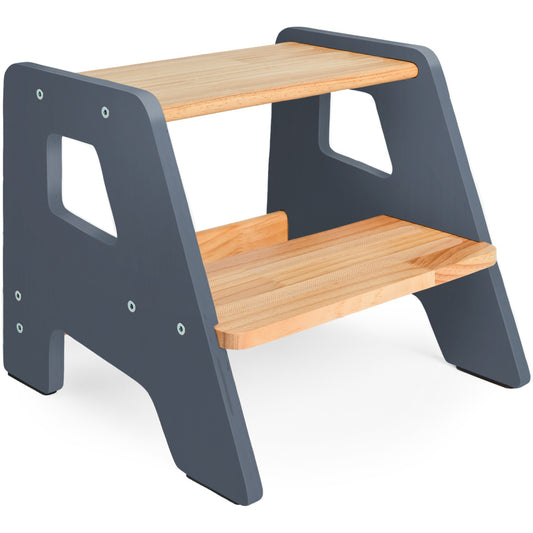
If the bed is a little too high for independent entry, a stable step can help your child use the intended path instead of scaling the rail. Ocodile’s 2-Step Wooden Stool for Toddlers is designed for children ages 2 and up and can be used as stairs for kids to get on a bed. Its no-slip surface includes clear anti-slip strips on the step and platform, which matters because toddlers often shift their weight quickly when climbing.
If you are comparing step height, materials and placement, this kids step stool for bed safety guide walks through what to measure before adding a stool beside a child’s bed.
Remove climbing invitations around the bed
Once a child starts climbing, the whole room becomes part of the sleep setup. A bed rail is not the only thing to inspect. Look at what your child can reach from the bed and what they can drag over to the side.
Move chairs, toy bins, laundry baskets and low shelves away from the bed. Keep cords, curtains and wall decor out of reach. If a nightstand is close enough to step onto, move it or simplify what sits on it. A bed with railings works best when the surrounding space does not turn it into a climbing course.
Also look at the floor. A soft rug beside the bed can make the area feel more comfortable, but it should not slide. If you use a rug, make sure it lies flat and does not bunch up where your child steps down.
Check whether the rail is solving the right problem
Rails are often added because parents worry about a toddler rolling out of bed. That is a real concern during the transition out of a crib, especially for children who move a lot in their sleep. But once a child repeatedly climbs over the rail, you need to decide whether the rail still reduces risk or has become the main thing they climb.
A bed with railings may still be useful if your child mostly sleeps safely and only needs a better exit path. But if your child climbs the tallest part every night, hangs over the side or uses furniture to get higher, it may be time to rethink the setup.
Options can include lowering the mattress if the bed allows it, changing rail placement, using a bed with a lower profile or considering a floor-style bed with guardrails. If you are weighing that last option, Ocodile’s floor bed with rails guide explains how low sleep setups can support a safer transition for some toddlers and preschoolers.
Build climbing needs into the daytime routine
Some toddlers climb more at night because they are wired to practice new skills. They climb into chairs, onto couches, up steps and eventually over bed rails. You cannot remove the desire to climb, but you can give it safer places during the day.
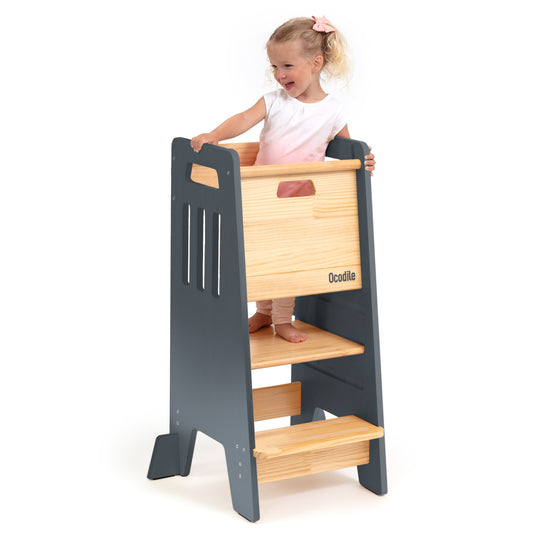
In the kitchen, for example, children often want to see what you are doing, rinse fruit, stir batter or help with lunch. Instead of lifting them repeatedly or letting them stand on a chair, a learning tower can create a more defined place to participate. The Adjustable Foldable Kitchen Tower helps toddlers reach counter height for hands-on activities and folds when not in use, which can be helpful in busy family spaces.
The key is to keep climbing tools where they belong. A tower belongs in supervised kitchen activities, not near the bed. A step stool belongs at a planned access point, not beside a dresser. When your home gives your child safe ways to reach things during the day, bedtime can stay focused on sleeping rather than exploring.
Try not to introduce major bedtime changes the night before a packed morning. If you have preschool photos, a dentist visit or even a haircut appointment at Kingdom Cute Hair Salon, keep the sleep setup familiar and make changes when you have time to observe how your child responds.
Reset expectations without turning bedtime into a battle
When you catch your child climbing, respond calmly and consistently. A big reaction can accidentally make climbing feel exciting. Walk them back to the safe entry point, use a short phrase and repeat it the same way each time.
You might say, “Feet go through the opening,” or “Rails are not for climbing.” Keep it simple. Long explanations at bedtime can turn into a conversation your child uses to stay awake.
During the day, practice the right way to get in and out of bed. Show them where their feet go, where their hands go and what path they should use if they need you. A safer bed with railings setup is easier for a toddler to use when the rule is physical and visible, not just verbal.
If potty training is part of the issue, make the route predictable. Use a night light if needed, keep the floor clear and decide whether your child should call for you or use the bathroom independently. The safer plan is the one your child can actually follow when sleepy.
When to stop using the current rail setup
Sometimes small changes are enough. Other times, the current rail setup is no longer the right fit. Consider changing the setup if your child climbs over the rail repeatedly, gets stuck trying to climb, shakes the rail hard, uses nearby furniture to climb higher or seems more tempted by the rail than protected by it.
This does not always mean you need a completely new bed. It may mean changing the rail, lowering the bed, moving furniture, adding a safer access point or simplifying the room. But if your child is regularly going over the top, do not ignore it and hope the phase passes.
A bed with railings should support sleep and safe movement. When the rail becomes the main climbing challenge in the room, it is time to adjust the environment so your child has fewer reasons and fewer chances to scale it.
Quick parent checklist
Use this checklist tonight before bedtime:
- Press gently on each rail to check for movement
- Confirm the mattress fits the frame without shifting or leaving gaps
- Clear toys, blankets and pillows away from the rail opening
- Move chairs, bins, stools and low shelves away from the bed
- Make the intended entry and exit point easy to see
- Check that rugs or mats beside the bed do not slide
- Practice the safe way in and out during the day
- Watch when and why climbing happens for a few nights
You do not need a perfect bedroom. You need a setup that matches your child’s current size, skill level and reasons for getting out of bed.
Frequently Asked Questions
Is climbing bed rails a sign my toddler is ready for a different bed? It can be. If your child climbs a rail once out of curiosity, you may only need to adjust the room and teach a safer exit. If they climb repeatedly or climb over the highest part, the current setup may no longer fit how they move.
Should I remove the rails right away? Not automatically. First check whether the rail is loose, too easy to climb or blocking the intended exit. Some children still benefit from rails when there is a safe opening, but repeated climbing means you should reassess the setup promptly.
What is safer, a low bed or a bed with railings? It depends on the child and the room. A low bed can reduce fall distance, while rails can help a child who rolls in sleep. The safest choice is the one that fits your child’s movement, mattress size, room layout and ability to enter and exit without climbing dangerously.
Can a step stool help if my child climbs the rails to get into bed? A sturdy step stool can help when the problem is bed height and the child is old enough to use it safely. Place it only at the intended entry point and remove other climbable furniture from the room.
How do I stop my child from climbing over a bed with railings at bedtime? Make the safe exit path clear, remove nearby climbing aids, keep your response calm and practice the right way in and out during the day. If climbing continues, consider whether the rail, bed height or bed style needs to change.
A practical next step
If your child has started climbing bed rails, start with a room check tonight, then decide whether the problem is height, access, rail design or routine. Small changes often make the biggest difference: a clearer exit, less furniture near the bed, a better step option or a lower sleep setup.
When you are ready to compare safer, more practical options for your child’s room and daily routines, explore Ocodile’s Montessori-inspired furniture at Ocodile.com. Look for pieces that feel sturdy, stable, easy to use and suited to the way your child actually moves through the day.