



Bed Frame with Rails: A Safe, Kid-Friendly Transition Guide
A bed frame with rails isn't just a piece of furniture; it's a specialized bed designed with built-in safety barriers. Its whole purpose is to keep your child from falling out while they sleep. It’s that essential first “big kid” bed for toddlers moving out of an enclosed crib, giving them security and you, the parent, a little more peace of mind.
Why a Bed Frame with Rails Is a Parent's Best Friend
That leap from a crib to a toddler bed is a huge milestone for your child—and, let's be honest, a new source of anxiety for you. Suddenly, the safe, contained world of the crib is gone. It's replaced by an open bed where tumbles and midnight wandering become very real possibilities. This is exactly where a bed frame with rails becomes more than just furniture; it’s your best tool for a safe and positive transition.
Think of it as creating a "safe harbor" for sleep. A well-designed frame with guardrails acts as a gentle boundary, which can be really reassuring for a child who is used to the enclosed feeling of a crib. It physically stops them from rolling out during the night, a common occurrence since young children are often restless sleepers. This one feature prevents countless bumps and bruises, making sure their sleep space stays a place of comfort and security.
Fostering Independence, Safely
While safety is the top priority, this kind of bed also champions a core principle of child development: independence. Unlike a crib, a bed with rails allows a child to climb in and out on their own. This autonomy is a cornerstone of philosophies like Montessori, which encourage kids to develop self-reliance within a safe, prepared environment.
A low-profile bed frame with rails, like the ones we design at Ocodile, strikes the perfect balance. It empowers your child by giving them control over their own space, while the rails provide that necessary safety net. It's a setup that helps them build confidence and a sense of ownership over their room.
By providing safe limits, a bed frame with rails allows children to explore their growing independence without unnecessary risk. It’s the perfect blend of freedom and protection, turning a potentially stressful transition into an exciting new chapter.
This thoughtful design has real benefits for the whole family. For your child, it means a secure sleeping environment that still feels like a proper "big kid" bed. For you, it translates into fewer worries and more restful nights. You can actually sleep soundly knowing they are protected from accidental falls.
Here are the key advantages wrapped up:
- Fall Prevention: This is the big one. It prevents those nighttime tumbles that are so common when toddlers first move out of a crib.
- Psychological Comfort: The rails offer a sense of enclosure, mimicking the security of a crib and making the transition feel less jarring.
- Promotes Autonomy: Kids can safely get in and out of bed by themselves, which is a great way to foster a healthy sense of independence.
- Parental Peace of Mind: Knowing your child is secure helps dial down your own anxiety, leading to better sleep for everyone in the house.
Decoding the Different Types of Bed Rails
Choosing a bed frame with rails seems simple enough, right? That is, until you discover that not all rails are the same. The world of bed rails is surprisingly varied, with each type designed for different needs and stages of your child's development. Think of it like a car seat—what works for a newborn is completely wrong for a five-year-old. The same logic applies here.
Getting a handle on these differences is the key to creating a sleep space that’s not just safe, but also supports your child’s budding independence. Some rails offer fortress-like security, while others are more of a gentle reminder to stay put. Let’s break down the main options so you can find the perfect fit for your family.
This decision tree gives you a great visual for how to think about the safety progression from a crib to a toddler bed with rails.
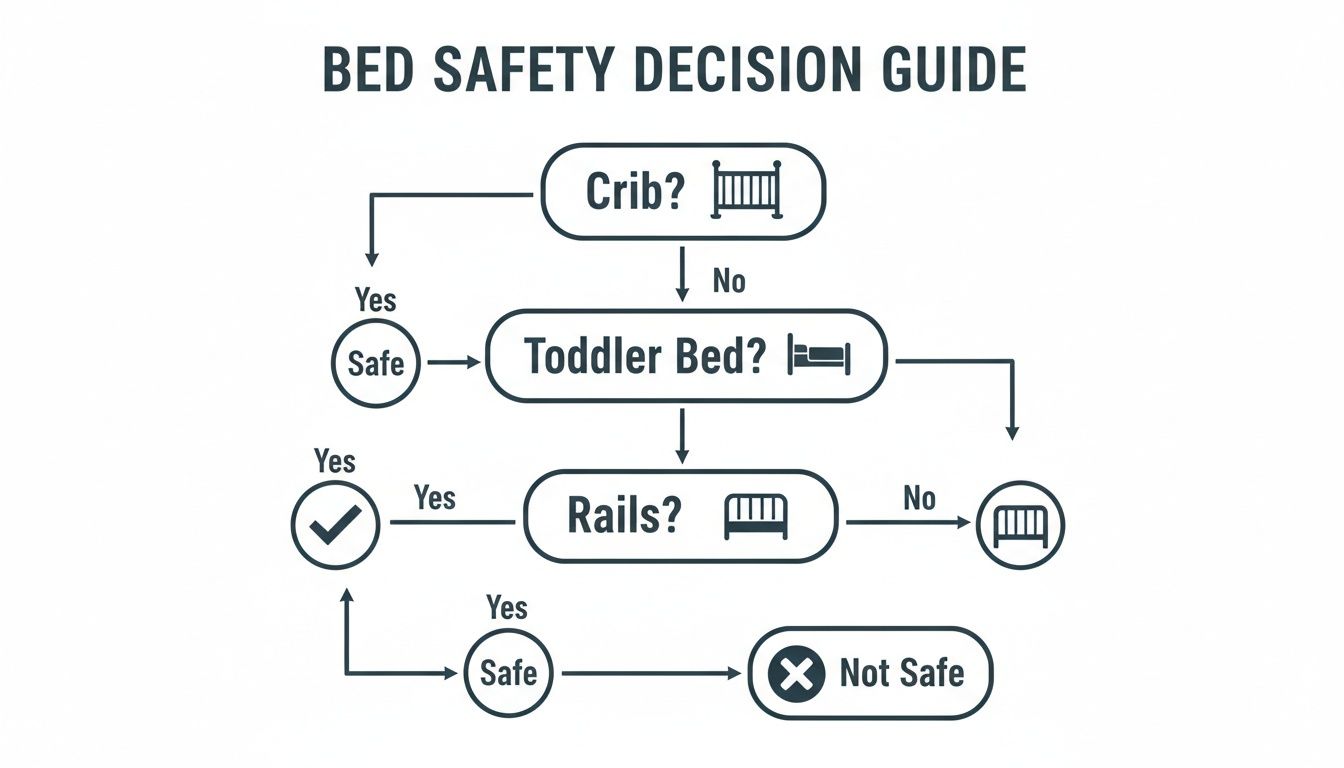
As the chart shows, once your little one graduates from their crib, adding rails to their new bed is a critical step in keeping them safe and sound while they sleep.
Fixed vs. Removable Rails
The first big choice you’ll face is between fixed and removable rails. This decision doesn't just affect safety; it also shapes the long-term usefulness of the bed frame itself.
Fixed rails are built right into the bed’s structure. They’re a permanent feature, which means they offer maximum stability and security. Because they’re part of the bed’s design, there’s no chance of them coming loose or being installed incorrectly. This makes them a fantastic choice for very young toddlers or extra-wiggly sleepers who need the highest level of protection.
On the flip side, removable rails offer flexibility. You can detach them from the bed frame once your child doesn’t need them anymore. This adaptability means the bed can grow with your child, turning from a secure toddler bed into a standard bed for a bigger kid without you having to buy a whole new piece of furniture. It’s a practical, budget-friendly approach that works for many families.
The choice between fixed and removable often comes down to this: peak security for the early years versus long-term adaptability for the whole journey.
For families who follow the Montessori philosophy, both styles have their place. A bed with fixed rails can be a great starting point, creating a safe, clearly defined space. To see how this fits with child-led learning, you might want to read our guide on the Montessori floor bed frame.
Full-Length vs. Partial Rails
Beyond permanence, the length of the rail is another crucial detail. This affects how much of the bedside is covered and how easily your child can get in and out of bed on their own.
- Full-Length Rails: These run along the entire side of the bed, creating a space that feels a lot like the enclosure of a crib. They offer the most complete protection from falls, making them perfect for that very first transition to a "big kid" bed.
- Partial Rails: These shorter rails only cover part of the bedside, usually the upper half near your child’s pillow. It’s a clever design that stops them from accidentally rolling out in their sleep while leaving an open spot at the foot of the bed for them to climb in and out independently.
Partial rails are fantastic for fostering a sense of autonomy. They provide a safe boundary without making your child feel "caged in," empowering them to use their bed on their own terms. This design strikes a perfect balance between safety and freedom—a core principle of great child-centric design.
Comparing Bed Rail Types for Your Child's Bed
To make the decision a little easier, we've put together a quick comparison table. This should help you weigh the pros and cons of each rail type to find what works best for your child and your home.
| Rail Type | Best For | Key Benefit | Consideration |
|---|---|---|---|
| Fixed Rails | Very young toddlers and active sleepers who need maximum security. | Unmatched stability and sturdiness as part of the bed's core structure. | The bed cannot be converted to a standard bed without rails later on. |
| Removable Rails | Families looking for a long-term solution that adapts to their child's needs. | High versatility; the bed grows with your child into their school years. | Must be checked periodically to ensure they remain securely attached. |
| Full-Length Rails | The first transition from a crib, providing maximum fall protection. | Creates a comforting, enclosed feeling that mimics a crib's security. | Can make it difficult for a child to get in and out of bed independently. |
| Partial Rails | Toddlers who are developing independence but still need nighttime protection. | Balances safety with autonomy, encouraging self-reliance. | Offers less coverage than full-length rails for very restless sleepers. |
Ultimately, whether you choose fixed, removable, full, or partial rails depends on your child’s age, sleeping habits, and your family's long-term plans for the furniture. Each option provides a safe sleep environment—it's all about finding the one that provides the right kind of support for your little one right now.
Choosing Safe Materials and Sturdy Construction
Beyond the style of the rails, the real secret to a safe bed frame lies in its bones—the core materials and how well it’s put together. Think of your child’s bed as their own little nest. Just like a bird carefully chooses strong twigs and soft lining, we as parents need to inspect a bed frame for its durability, non-toxic parts, and smart design. This makes sure the frame isn’t just sturdy enough for a good night's sleep, but also safe for the occasional jump or playtime adventure.
When you start looking at a bed frame with rails, you’re really investing in a piece of furniture that has to stand up to years of use. It’s more than just a place to sleep; it’s a central part of their room and their world. The materials it’s made from and how it's assembled are just as crucial as the guardrails themselves.
This focus on safety and quality is a big deal for parents everywhere. The global market for bed frames, many with safety rails, hit a staggering USD 20,389.9 million in 2021 and is on track to reach USD 24,361.9 million by 2025. North America is leading the way, with more families choosing low-profile beds with rails that encourage safe exploration—a philosophy we champion at Ocodile. This isn't just a fleeting trend; research shows that rail-equipped frames can slash child bed falls by as much as 75%, turning a simple bed into a secure haven. You can explore more about these market insights and the growing emphasis on child safety in bed design.
The Gold Standard of Materials
When it comes to materials for kids' furniture, solid wood is almost always the best bet. Woods like pine, poplar, maple, and cherry are famous for their strength and ability to last. Unlike composite materials like particleboard or MDF, solid wood won't break down, warp, or release nasty chemicals over time.
But not all wood is the same. Look for frames made from kiln-dried wood, a process that removes moisture to stop it from warping and cracking down the road. This helps the bed frame stay stable and strong, no matter the season.
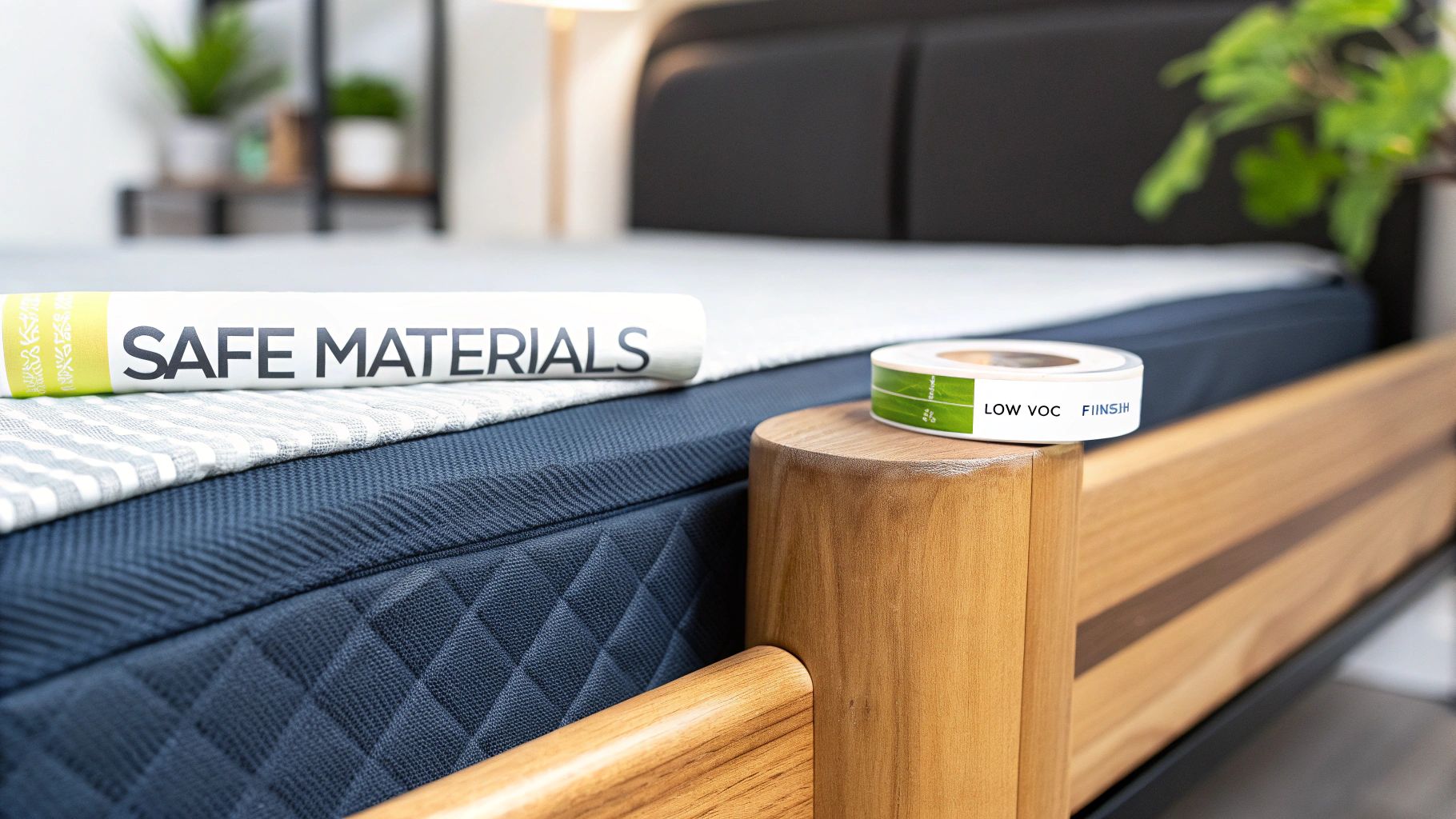
A key detail that’s easy to miss is the finish. Many furniture finishes have volatile organic compounds (VOCs), which can seep into the air and mess with your home’s air quality.
Always look for a bed frame with a non-toxic, low-VOC or zero-VOC finish. These are usually water-based paints or natural oils that are certified child-safe. It’s peace of mind, knowing your little one isn’t breathing in harmful fumes while they sleep.
Examining the Construction Quality
Even the best materials are useless if the bed is poorly constructed. A truly sturdy frame depends on strong joints and thoughtful design details that lock everything together securely.
Here’s a quick checklist for what to look for when you're inspecting the build quality of a bed frame with rails:
- Strong Joinery: Keep an eye out for methods like mortise-and-tenon joints or heavy-duty metal bolts. These create much stronger connections than the simple screws or glue you’ll find in cheaper furniture, which can loosen over time.
- Rounded Edges and Corners: Sharp corners are just waiting to cause bumps and bruises. A well-designed kids' bed will have smooth, rounded edges on every part, from the headboard to the rails.
- Slat Strength and Spacing: The slats that hold up the mattress are a critical safety feature. They need to be made of solid wood and spaced no more than 2-3 inches apart. This gives the mattress firm support and, more importantly, prevents a child from getting trapped between them.
- Solid Rail Attachments: The guardrails have to be securely attached to the frame. Give them a little wiggle—if they feel flimsy, walk away. This is where high-quality hardware really proves its worth.
By paying close attention to both the materials and the construction, you can confidently pick a bed frame that will truly be a safe and comforting nest for your child.
Finding the Right Bed Size and Mattress Fit
When you're picking out a bed for your child, it's easy to get caught up in how it looks in the room. But choosing the right size is really one of the first and most important safety decisions you'll make. A bed frame with rails is only truly safe when the mattress inside fits perfectly, creating a secure, gap-free space for your little one to sleep.
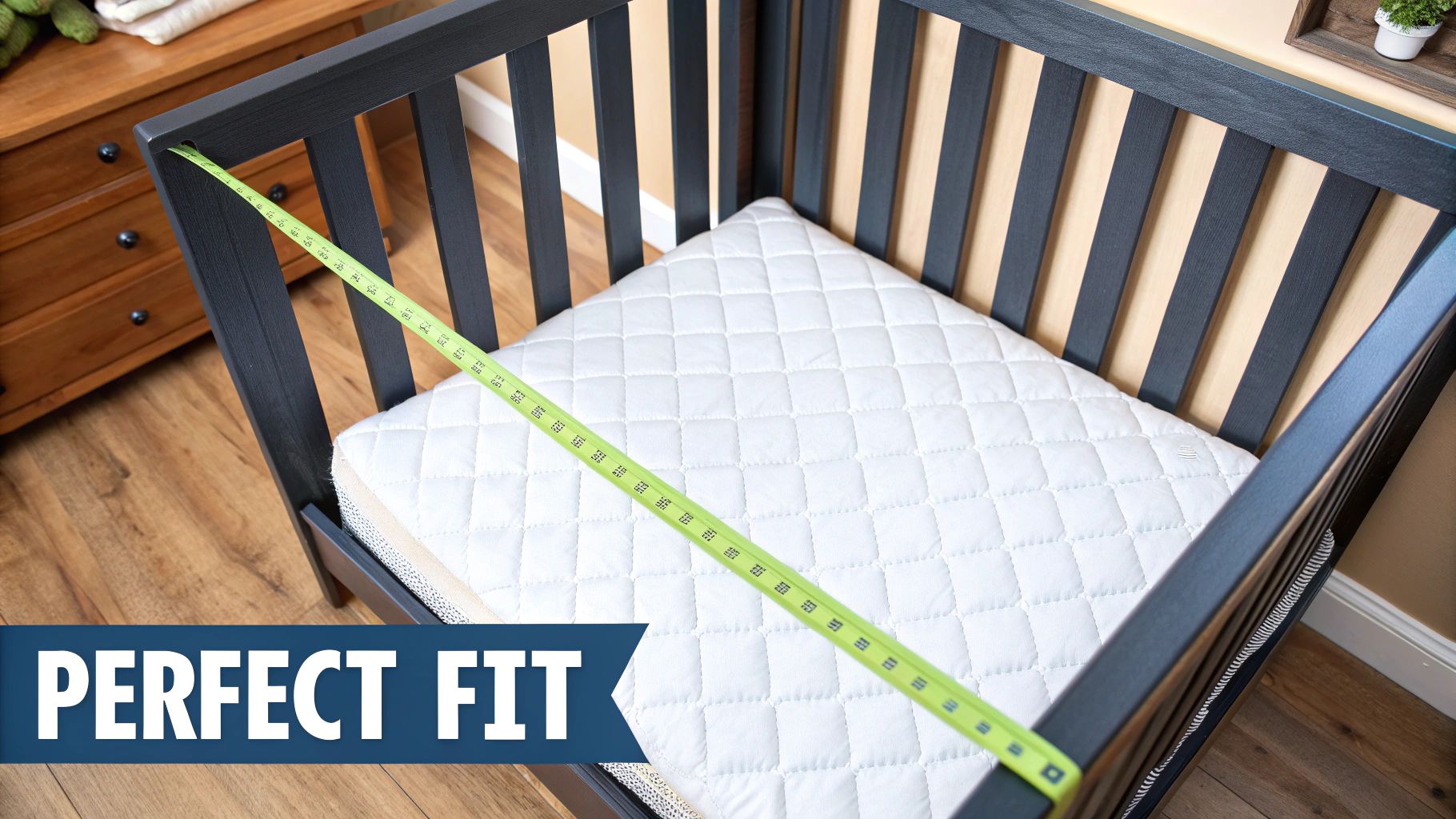
The first big question is usually: toddler bed or straight to a twin? A toddler bed uses the same mattress as a crib, which is great for making the switch feel a little less scary. The downside? They outgrow them in a flash. That's why many parents find a twin-size bed is a more practical, long-term choice.
Selecting the Perfect Size for Growth
Picking a bed size is a balancing act. You have to think about your child's current size, how much they'll grow, and how much space you actually have in the room.
- Toddler Size: A great first step out of the crib. The familiar mattress size is comforting, and the smaller frame isn't so intimidating for a little body.
- Twin Size: This is the go-to "big kid" bed for a reason. It gives them plenty of space to grow without taking over the whole bedroom, and it'll last for years.
- Full Size: If you've got the room, a full bed is a fantastic option. It gives them even more room to sprawl out and will easily see them through their teen years.
Once you’ve settled on a frame, figuring out how to choose the best bed mattress size for your home is the next vital step. It’s not just about fitting the frame, but also about supporting your child's development.
The Critical Importance of a Snug Fit
If you take away just one thing, let it be this: the mattress must fit snugly. Think of the mattress and frame as two puzzle pieces that have to lock together without any wiggle room. Any gap between the mattress and the rails is a serious entrapment risk.
A small child can easily get trapped in these gaps while sleeping, which can lead to injury or even suffocation. The official safety guideline is that there should be no more than a two-finger width of space between the mattress and the frame. That tiny gap is the absolute maximum allowed to keep things safe.
A snug fit isn't just a suggestion; it's a non-negotiable safety rule. The mattress should be so tight that you can't easily wedge your hand between it and the frame.
To get this right, always measure the inside of the bed frame before you buy a mattress. Don't just go by standard names like "twin" or "full," because different brands can have slight variations. If you're looking for the perfect sleep surface, we've put together a guide on the best mattress for a toddler bed that puts safety first.
This is especially true for Montessori-style floor beds. A low bed with a perfectly fitted mattress and rails allows a child to get in and out on their own, safely. No gaps means their independent exploration stays secure, which is exactly what Montessori is all about—fostering autonomy in a safe, prepared environment.
Your Essential Checklist for Buying a Bed Frame with Rails
Feeling truly confident about the bed you choose for your child is everything. To make things a little easier, I’ve put together an actionable checklist that boils down all the critical points into one simple guide.
Think of this as your go-to tool for looking at any potential bed. It’ll help you move beyond just how a bed looks and focus on the details that really matter for your little one’s safety and well-being.
Safety First—Always
Before you even think about style or color, your evaluation has to start with the non-negotiables. These are the features that turn your child's sleep space into a true sanctuary.
-
Official Safety Certifications: Look for proof that the bed meets or exceeds established safety standards. For toddler beds, that usually means compliance with ASTM F1821 (Consumer Safety Specification for Toddler Beds). This certification is your peace of mind, showing the bed has been properly tested for strength and potential hazards.
-
A Snug Mattress Fit: This is a big one. There should be almost no gap between the mattress and the frame. The golden rule is no more than two fingers of space to prevent any risk of entrapment.
-
Secure Rail Height and Strength: The top of the guardrails should sit at least 5 inches above the mattress to actually prevent tumbles. Give the rails a gentle shake—they should feel solid and firmly attached, with no wobbling or looseness.
-
Slat Spacing: Take a look at the slats supporting the mattress. To stop a child from falling through or getting stuck, the gap between them should be no wider than 2 3/8 inches (that's about the width of a soda can).
Materials and Construction Quality
How long a bed lasts and how safe it is comes down to what it’s made of and how it’s put together. A well-built bed frame with rails is an investment in years of safe sleep and play.
A thoughtfully constructed bed frame is more than just furniture; it’s a commitment to your child's security. Prioritize solid wood, non-toxic finishes, and sturdy joinery to ensure it can withstand the test of time and toddlerhood.
-
Solid Wood Construction: Whenever possible, choose frames made from solid wood like pine, poplar, or maple over particleboard or MDF. Solid wood is far more durable and isn’t as likely to warp or break down the road.
-
Non-Toxic, Low-VOC Finish: Make sure any paint or finish is certified child-safe, with low or zero Volatile Organic Compounds (VOCs). This keeps your home's air quality clean and ensures your child isn’t breathing in nasty chemicals.
-
Smooth, Rounded Edges: Run your hand over the entire frame. High-quality kids' furniture will have smooth, rounded edges to prevent bumps, scrapes, and bruises when playtime gets a little wild.
Design and Future-Proofing
The best bed frame doesn't just meet your child's needs right now—it adapts as they grow. Asking a few key questions about the design can help you pick a piece that offers real long-term value. When pulling your checklist together, it can be helpful to peek at guides for bigger beds, like this one for choosing the perfect king bed frame, just to make sure you've covered all the angles.
-
Will this bed adapt as my child grows? Check if the rails are removable. A bed that can go from a secure toddler bed to a standard twin bed offers so much more longevity.
-
Does this design support my child’s independence? Look for a low-profile or floor bed design. These empower kids to climb in and out on their own, building confidence and fitting perfectly with Montessori principles.
-
How difficult is the assembly? Read reviews or check the product info for assembly details. A bed with clear instructions and fewer complicated steps will save you a ton of time and frustration.
The growing awareness among parents about these features is really shaping the market. The global bed rails market was valued at USD 1.5 billion in 2024 and is projected to hit USD 2.8 billion by 2033. This growth is fueled by the fact that falls from beds are a leading cause of pediatric injuries, making a secure bed frame with rails a top priority for families. Discover more insights about bed rail market trends and see how safety standards are shaping product design worldwide.
Assembly Tips and Long-Term Safety Checks
A bed frame with rails is only as good as its assembly and upkeep. Getting the initial setup right and performing a few simple checks every now and then is what transforms it from just furniture into a true safe haven for your child.
Think of the instruction manual as your blueprint for safety. It's tempting to rush through it, but please don't. Following the manufacturer’s directions step-by-step is crucial for the bed's long-term stability.
Your goal during assembly is a completely stable, wobble-free structure. Once built, give the frame a firm shake. If there's any movement, go back and tighten every single connection until it’s rock-solid.
This initial stability check is your first and most important line of defense. It confirms that all the joints are secure and the bed is ready for both quiet nights and energetic mornings.
Building the Habit of Regular Maintenance
Once assembled, your job isn't quite done. Long-term safety relies on simple, consistent checks that take just a few minutes. A well-maintained bed frame will remain a secure part of your child's room for years, adapting as they grow without ever compromising on safety.
The easiest way to remember is to create a routine. Maybe every time you change the sheets, run through these quick inspections:
- Check Hardware: Run your hands over the bolts and screws. With daily use and even small changes in temperature, hardware can sometimes loosen slightly. Re-tighten anything that feels even a little loose.
- Inspect the Rails: Give the guardrails a gentle but firm push. They should feel completely sturdy, with no give or wiggle. This is especially important if you have removable rails.
- Examine the Slats: Take a quick look at the mattress-supporting slats. You're checking to make sure none are cracked, warped, or have shifted out of place. Solid support is essential for the mattress and your child.
Safe Cleaning and Environment
Maintaining the bed's environment is just as important as the frame itself. For cleaning, stick to a damp cloth and a mild, non-toxic cleaner. It's best to avoid harsh chemicals that could damage the finish or introduce unwanted fumes into your child's room.
Finally, think about where the bed is placed in the room. Anchoring furniture is a key part of creating a safe space for kids. For more on this, check out our guide on how to secure furniture to the wall to prevent any tipping hazards. These simple habits are all it takes to maintain a secure sleep space, effortlessly.
Of course! Here is the rewritten section, crafted to sound like an experienced human expert and match the provided blog post examples.
Your Top Questions About Bed Frames with Rails, Answered
Making the jump to a "big kid" bed is a huge milestone, and even with all the information, you're bound to have a few questions swirling around. That’s completely normal. We hear from parents all the time who want to get this transition just right.
Think of this as a quick chat where we tackle the most common questions we get. We’ll clear up everything from the "when" to the "how," so you can feel confident you're making the best choice for your little one.
When Is the Right Age to Make the Switch?
There’s no magic number here, but the sweet spot for most toddlers is somewhere between 18 months and 3 years old. More important than age, though, are the signs they're ready. The biggest one is usually a safety issue: if your child has become a little escape artist and is trying to climb out of their crib, it's definitely time to move them. A fall from a crib is much more serious than a roll onto a soft rug from a low bed.
A few other clues they’re ready:
- They’ve started asking for a “big kid” bed.
- They’re potty training and need to get to the bathroom easily at night.
- They simply look like they're outgrowing their crib space.
Do We Really Need Rails on Both Sides of the Bed?
If you plan to place the bed in the middle of the room, then yes, absolutely. Toddlers are notoriously active sleepers—they roll, they kick, they somehow end up sleeping upside down. Rails on both sides create a safe, cozy little cocoon.
The only exception is if the bed is pushed up flush against a wall. In that case, one rail on the open side will do the trick. Just be extra careful to check that there's zero gap between the mattress and the wall where a child could potentially get stuck.
A common mistake is thinking a wall is a perfect substitute for a rail. Always run your hand along the space between the mattress and the wall to ensure it's a truly snug fit before you skip that second rail.
How Do I Know When It’s Time to Take the Rails Off?
Knowing when to remove the rails is just as crucial as putting them on. You'll know the time is right when your child has been sleeping soundly for several weeks (or even a couple of months) without falling or bumping into the rails.
Most kids are ready for a rail-free bed somewhere between 4 and 5 years old. By this age, their body awareness has improved, and they're far less likely to roll out accidentally. A great way to ease into it is to start by removing just one rail, or swapping a full rail for a smaller, partial one to help build their confidence.
At Ocodile, we’re parents too, and we design our furniture with all these real-world questions in mind. Our goal is to create products that support your child safely through every one of these exciting stages.