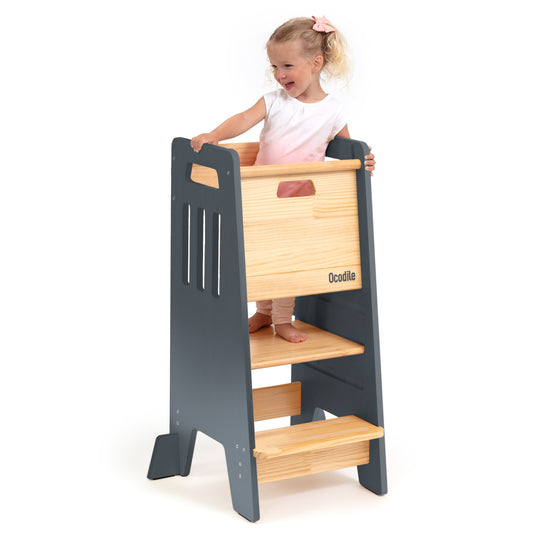


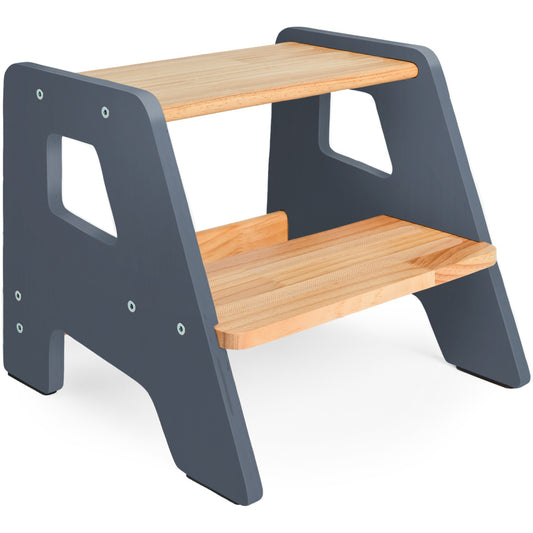


Kids Step Stool for Bed: A Parent's Safety Guide
Your child is standing beside the bed in pajamas, one knee up, trying to scramble onto the mattress without help. You can see the appeal. They want to do it themselves. You can also see the risk. One awkward slip at bedtime and that proud little climb turns into a hard fall.
That's why choosing a kids step stool for bed isn't just about convenience. It's about giving your child a predictable, stable way to get in and out of bed without turning the side of the mattress into a climbing wall.
Giving Your Child a Safe Step Up
Most parents start looking for a stool after the same moment. Their child has outgrown being lifted every time, but the bed is still just high enough to make independent climbing clumsy.
That middle stage matters. A stool can make bedtime smoother, morning wakeups easier, and your child more confident. But the wrong stool creates its own hazard.
A 2024 CPSC report found that 12% of all step stool injuries involved toddlers slipping from unstable designs, with many of those happening during bed access attempts. The same report noted that stools with a wider base and non-slip surfaces reduced these injury rates by 40% (CPSC summary reference).
That tells you something important right away. The question isn't “Should I get a stool?” The better question is “What kind of stool gives my child support instead of false confidence?”
Practical rule: If a stool rocks, slides, or feels narrow under your hand, it's not a bed stool for a young child.
A safe stool should do three things well:
- Lower the climb: It should make getting onto the bed feel like a step, not a pull-up.
- Stay planted: It shouldn't shift when your child steps up with sleepy, uneven weight.
- Support routine: It should help your child repeat the same movement every night and every morning.
Parents often focus on color, style, or whether the stool folds away neatly. Those things matter less than fit and stability. Height has to match the bed. Grip has to match the floor. Construction has to match how real kids move, which is rarely slow and careful.
If you're feeling unsure, that's normal. Bedtime furniture seems simple until you realize your child will use it half-awake, barefoot, and in a hurry. A good choice makes that routine safer and easier.
Is Your Child Ready for a Bed Step Stool
Readiness isn't just about age. It's about whether your child can use a stool with enough body control and enough understanding to make it useful instead of risky.
Some children are eager before they're steady. Others are physically capable but still impulsive in a way that makes extra climbing equipment a bad fit for now. Watching how your child moves tells you more than a label on a package.
Signs your child is physically ready
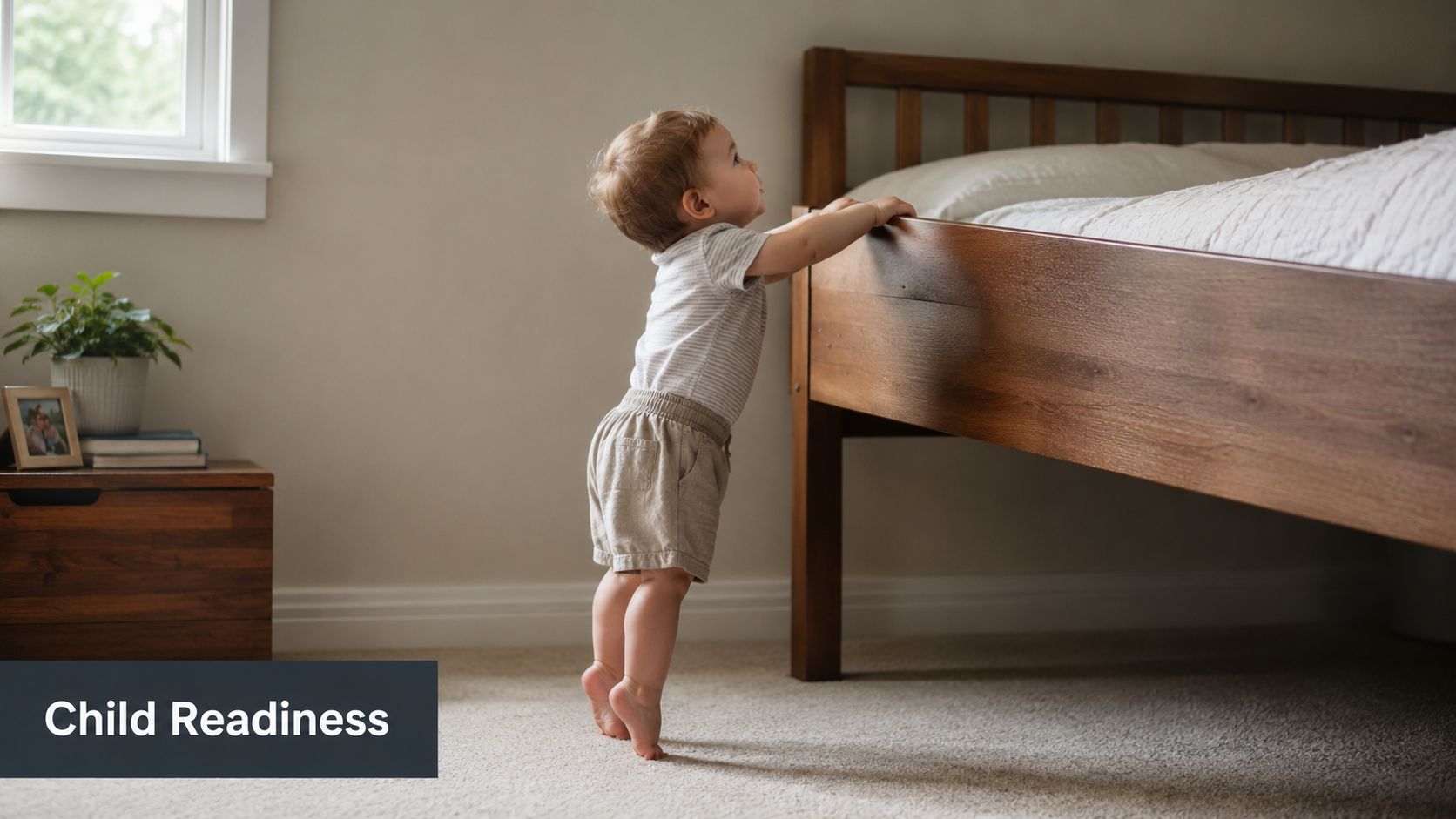
A child is usually ready to try a bed stool when they can walk steadily, stop without toppling, and step up onto a low surface without panic or wild grabbing. You want to see basic balance, not perfect balance.
A few useful signs:
- They climb with intention: They place a foot, shift weight, and continue, instead of lunging.
- They can step down with control: Going down is often harder than going up.
- They use one hand for support: Holding the mattress edge or bed rail while stepping is a good sign.
- They don't freeze at small height changes: Hesitation is normal. Fear that turns into jumping isn't.
Signs your child is mentally ready
This part gets overlooked. A child can be strong enough for a stool and still not ready to use it safely.
Look for simple behavior cues:
- They follow one-step directions: “Face the bed.” “Hold on.” “One foot at a time.”
- They repeat routines well: Bedtime success comes from doing the same movement the same way.
- They want independence: Children who want to climb up by themselves often cooperate better with a stool because they see it as a tool, not a rule.
If your child treats every object as something to jump from, drag across the room, or turn into a game, pause before adding a stool beside the bed.
For many families, this question comes up during transitioning to a toddler bed. That change often reveals whether your child needs a small, stable step or whether the bed setup itself needs adjusting first.
When to wait a little longer
A stool may not be the right next step if your child still climbs by throwing their body forward, often moves while half-asleep without awareness, or can't yet step down while facing the surface.
In that case, simplify the environment instead. Lower the bed if possible. Add a soft landing area around the bed. Practice stepping on and off a very low platform during the day while you stay close.
That's still progress. Independence doesn't have to happen all at once.
The Ultimate Guide to Size and Height
The most common mistake parents make is choosing a stool that “looks about right.” Bed access works better when the height is measured, not guessed.
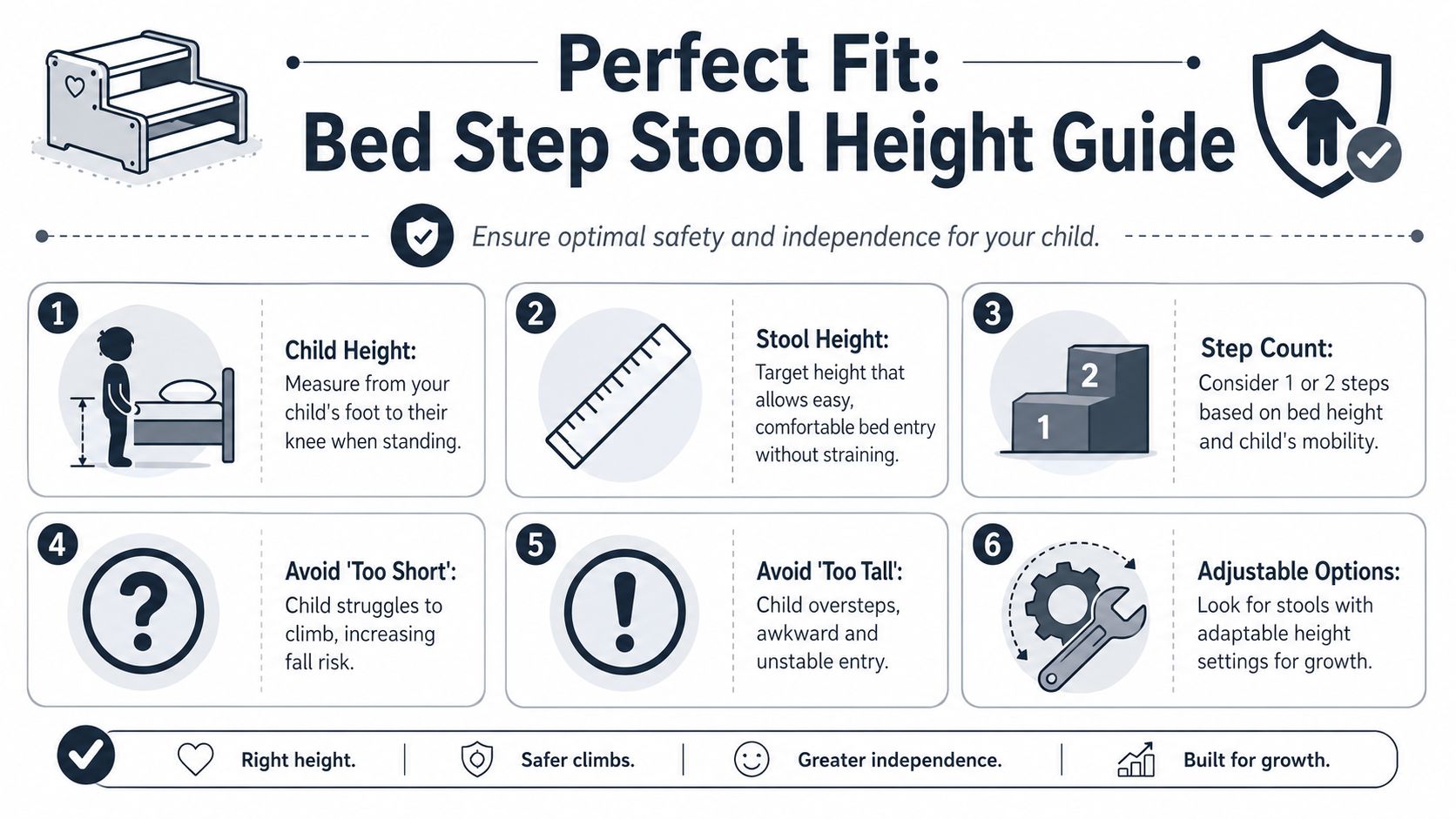
Finding the right height presents the Goldilocks problem. Too short, and your child has to reach or pull themselves up. Too tall, and they step up awkwardly and lose balance getting onto the mattress. A 2025 National Safety Council study found that 38% of bed-access incidents happened because the stool was either too short or too tall (National Safety Council reference).
Ensure optimal safety and independence for your child.
Start with the bed, not the product listing
Before you compare stools, measure your setup at home. Product descriptions can be vague, and “for toddlers” doesn't tell you whether the stool fits your child's bed.
Use this simple process:
- Measure from the floor to the top of the mattress where your child usually climbs in.
- Notice mattress compression if the bed sinks when weight is added. A very soft mattress changes the final step.
- Check the bed edge your child uses most often. Bed frames aren't always level all around.
- Think about the final movement from stool to mattress. Your child shouldn't need to haul themselves upward.
According to ASTM F966 safety standards, a toddler stool's standing surface should not exceed 8.25 inches in height to help keep the child's center of gravity within the base footprint when leaning forward to access a bed.
A practical way to choose the right height
You don't need a complicated formula. You need a stool that lets your child step up and transfer onto the bed with control.
A good fit usually looks like this:
- The child can place one foot on the stool without lifting the knee too high
- The top step gives enough reach to get onto the bed without overreaching
- The transfer from stool to mattress feels like a step across and up, not a climb and pull
A good bed stool reduces effort at both points of transition. From floor to stool, and from stool to mattress.
Here's a simple decision table you can use at home:
| Bed setup | What to look for |
|---|---|
| Low floor-style bed | A very low single step or no stool at all |
| Standard toddler bed | A low, stable single step that makes the mattress easy to reach |
| Higher bed frame | A carefully matched one-step or two-step option with strong side stability |
| Loft-style or unusually tall bed | Reconsider the setup first. A stool alone may not be the safest solution |
Later in your search, it can help to compare styles with resources that review best step stool options for kids, especially if you're deciding between a low single step and a wider two-step model.
Match the stool to the way your child sleeps and climbs
Children who sleep in floor beds or very low setups need something different from children climbing into thicker mattresses on higher frames. If your child uses a sleeping bag bed or another cozy low-profile sleep setup, Space Ranger Fred's sleeping bag bed insights are useful for thinking through bed height and entry style together.
This short video gives a helpful visual sense of how step height affects movement.
Test the movement before you commit
If possible, simulate the step before buying. Stack a firm book or low box temporarily and watch your child's movement while you hold a hand nearby. You're not testing courage. You're checking mechanics.
Watch for these clues:
- Too short: Your child reaches chest-first onto the bed.
- Too tall: Their foot lands high and their body tips forward.
- Just right: They step up, hold the bed, and move onto the mattress in one calm sequence.
That calm sequence is what you're buying.
A Deep Dive into Materials and Construction
A stool's material tells you a lot about how it will behave in real family life. Some options are easy to wipe down but feel too light. Others feel solid but may be bulky or harder to move. The goal isn't to pick the prettiest material. It's to pick the one that stays dependable after repeated daily use.
How common materials compare
Wood often feels steadier underfoot. Quality wood or high-grade plywood usually has more natural heft, which can help a stool stay planted when a child climbs up with uneven weight. It also tends to age well if the joints are solid and the finish is smooth.
Plastic can be useful, especially in bathrooms or for families who need something easy to carry room to room. But lightweight plastic stools vary a lot. Some are sturdy. Some flex, wobble, or skid too easily on hard flooring.
Bamboo sits somewhere in between depending on construction. It can be attractive and reasonably strong, but quality depends heavily on how the layers, fasteners, and surface finish are made.
Here's a side-by-side look:
| Material | Strengths | Watch-outs |
|---|---|---|
| Wood | Stable feel, durable, often heavier and less slide-prone | Check finish, edges, and joint quality |
| Plastic | Easy to clean, lighter to move | Can feel flimsy, may slide more on smooth floors |
| Bamboo | Clean look, can be sturdy | Quality varies a lot by build |
Construction details that matter more than the label
Parents often stop at “wood” or “plastic,” but the build quality matters just as much as the raw material.
Check these points in person if you can:
- Edges and corners: Rounded edges are kinder to shins, ankles, and sleepy feet.
- Step surface: It should feel grippy, not glossy.
- Joinery or fasteners: The stool shouldn't creak or shift when pressure is applied.
- Finish: Smooth, sealed surfaces are easier to clean and less likely to splinter or snag.
Don't judge by weight alone. A stool can feel heavy and still be poorly built. It should feel solid and balanced.
Why weight capacity deserves a close look
A 2023 study in the Journal of Pediatric Safety found that step stools with a load-bearing capacity of at least 200 pounds reduced fall risks by 35% for growing children, and 40% of parents reported never checking the manufacturer's weight limit (Journal of Pediatric Safety summary).
That matters for two reasons. First, children grow. Second, parents often steady a child with one hand while putting some pressure on the stool with the other foot or knee. A stool should handle normal family use without strain.
What to choose for different homes
If your stool will live beside the bed all the time, a sturdier wood model often makes sense because consistency matters more than portability. If you need one stool to move between bathroom, bedroom, and closet, a well-built plastic or hybrid option may be easier, but it still needs a broad base and secure grip.
A good material choice should match your real routine:
- For one fixed bedroom location: Favor stability over lightness.
- For shared use in multiple rooms: Choose something easy to carry but still rigid.
- For messy homes with lots of wiping: Look for surfaces that clean easily without becoming slick.
What you want is simple. A stool that still feels trustworthy after months of bedtime, cleanup, dragging, and daily use.
Crucial Stability and Safety Features to Demand
If I had to rank one factor above all others, it would be stability. A stool can be the perfect height and still be a poor choice if it shifts under a child's foot.
This matters even more in real homes, where the floor may be hardwood one month, a washable rug the next, and damp tile right after bath time. A 2024 BabyGearLab report noted that 42% of stair and bed-access falls happened in bathrooms or near wet floors, while many stool reviews still skip wet-surface traction details (BabyGearLab pediatric fall risk reference).
The non-negotiable features
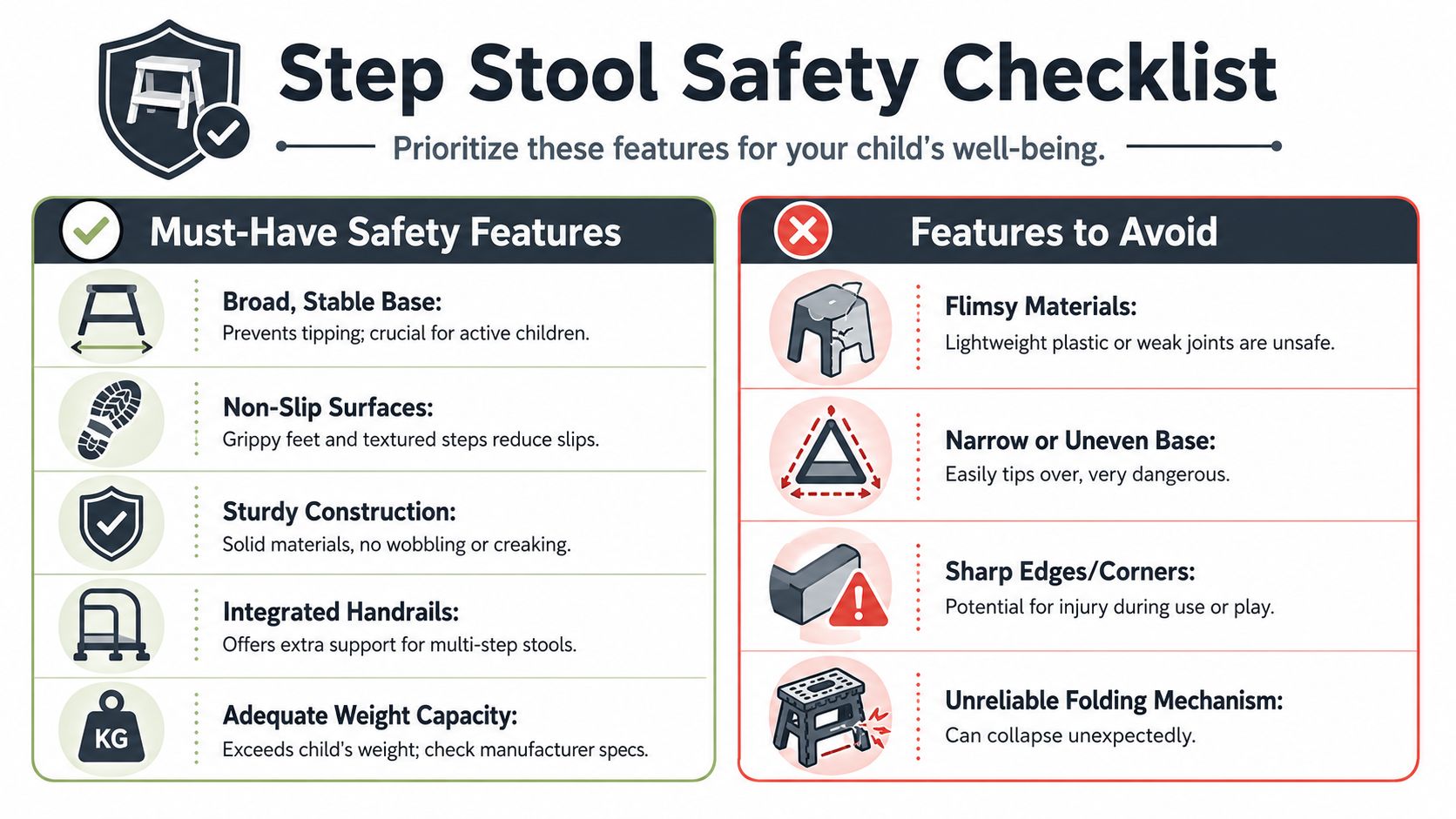
When you're choosing a kids step stool for bed, these features deserve the closest inspection:
- Wide base: A broad footprint lowers the chance of tipping when your child leans toward the mattress.
- Non-slip feet: Grip on the bottom matters as much as grip on the top.
- Textured standing surface: Bare feet need traction, especially at bedtime or after a bath.
- Rigid frame: No wobble, no flex, no unsettling shift when weight transfers.
- Supportive design for taller models: If the stool has more than one step, hand support becomes more valuable.
For parents who want a closer look at how sturdiness is evaluated, these stability testing methods for children's furniture give helpful context.
Features that should make you walk away
Some stools look convenient but create problems fast in everyday use.
Watch out for these red flags:
- Narrow footprint: The stool may fit a small space, but it's easier to tip.
- Glossy or smooth top surface: Socks and damp feet won't forgive that.
- Weak folding design: If it can collapse unexpectedly, it doesn't belong next to a bed.
- Uneven legs or cheap pads: Tiny differences at the base create rocking.
- Sharp corners: Bedtime stumbles happen. Hard edges make them worse.
A stool beside a bed has to be safe when your child is tired, distracted, or moving fast. That's the standard, not ideal daytime use.
Check stability on your actual floor
A stool can perform well in a store and poorly at home. Test it where your child will use it.
Try this quick home check:
- Place it where it will live beside the bed.
- Press down on each corner with your hand.
- Slide it gently from the side to see if it skids too easily.
- Step on it yourself if the weight rating allows.
- Re-test after cleaning the floor because some floor products leave surfaces slick.
A stool on polished hardwood may need different grip than one on matte laminate. On wet tile, traction becomes even more important. If the stool shifts even a little under routine use, trust what you see.
Think beyond the product photo
Many reviews focus on shape and storage. Parents need to think about friction, base width, and how children climb. Kids don't center their weight neatly. They step with one foot, twist toward the bed, and grab the mattress at an angle.
That's why the best stool is usually the one that feels a little overbuilt for the task. More stable. Less clever. Harder to knock sideways.
Fostering Independence with Montessori Principles
A bed stool isn't only about access. It's also about respect. When a child can get into bed on their own, they're practicing a small but meaningful form of self-care.
That idea fits neatly with Montessori thinking. The environment should meet the child at their level so they can participate safely and confidently in daily life. If you've been exploring low beds and child-accessible rooms, this overview of what a Montessori bed is helps connect the bigger picture.
Independence grows through repeatable routines
Children build confidence when they can do the same task the same way each day. A well-matched stool helps bedtime become a routine they own. Walk to the bed. Place feet carefully. Climb in. Settle down.
That predictability matters. It turns “I need help” into “I can do it.”
Freedom works best with limits
Montessori doesn't mean leaving children to figure everything out alone. It means preparing the space so success is more likely.
For a bed stool, that means:
- The height fits the bed
- The stool stays in one clear location
- The child knows how to use it
- The adult still supervises until the routine is reliable
Independence works best when the environment quietly supports the child's next right step.
A good kids step stool for bed can support that kind of growth. Not by pushing independence too early, but by making one small daily task feel manageable and safe.
Smart Placement and Everyday Use
Even the safest stool can become a problem if it's placed badly or used carelessly. This part is simple but important. Put the stool where your child can approach the bed in a straight, comfortable path.
Keep it on a flat surface. Avoid placing it where a rug bunches underneath, where a door can swing into it, or where your child has to twist around furniture to reach the mattress.
A simple setup checklist
Use this quick review when you position the stool:
- Bedside location: Place it where your child naturally climbs in, not where it looks best.
- Clear landing area: Keep toys, laundry, and cords away from the step zone.
- Consistent orientation: Don't keep turning the stool around. Children learn movement patterns.
- Stable floor contact: Check that all points of the stool touch the floor firmly.
According to ASTM F966 safety standards, a toddler stool's standing surface should not exceed 8.25 inches in height to help keep the child's center of gravity inside the base footprint when leaning toward the bed.
Teach the movement slowly
Children usually learn best with a short script and repetition. Keep the words the same every time at first.
Try cues like these:
- “Stand close.”
- “One foot up.”
- “Hold the bed.”
- “Step in, don't jump.”
Practice during the day before expecting sleepy success at night. Bedtime is not the easiest moment to learn a new body skill.
Keep the stool safe over time
A sturdy stool still needs occasional checks. Family furniture loosens, gets dragged, and collects dust on the grips.
Look over it regularly for:
- Loose screws or joints
- Worn non-slip pads
- Cracks, chips, or splinters
- Sticky residue that could make the top slick
If the stool starts wobbling, retire it until you can fix the issue. Don't wait and hope it holds up one more week. Children trust the routine you create. The equipment has to deserve that trust.
If you're looking for child-friendly furniture built around independence and everyday safety, Ocodile is worth exploring. Their approach centers on practical design for real family routines, with products made to help children move through their spaces with more confidence and support.