



Stability Testing Methods: Children's Furniture Safety
A lot of parents know this moment. You're unloading groceries, answering one question, wiping one spill, and in the corner of your eye your child has already turned a dresser into a climbing wall. One foot on a lower drawer. One hand reaching higher. Your whole body reacts before your brain does.
That reaction is useful. It tells you something important. Furniture isn't only about style, storage, or how well it matches the room. It's also about how it behaves when real family life happens. Kids pull, lean, climb, swing, and test every edge of the home because that's how they learn.
As someone who thinks about product safety through a family lens, I find that many parents don't need more fear. They need clearer explanations. They need to know what stability testing methods mean, how professionals think about them, and what they can check today with the furniture they already own.
The Hidden Danger in Your Home
The risky moment usually doesn't look dramatic at first. A toddler opens a drawer because socks are inside. Then they use that drawer like a step. An older sibling reaches for a toy on top. A TV stand becomes a ladder for two seconds. That's often all it takes for a stable-looking piece to behave very differently.
This isn't a rare concern. From 2020 to 2022, an estimated annual average of 22,500 people in the U.S. required emergency room treatment for injuries related to furniture, TV, or appliance tip-overs, and children accounted for 70% of all tip-over fatalities, according to the U.S. Consumer Product Safety Commission report on tip-over injuries and fatalities.
That number matters because tip-overs don't always come from obviously broken furniture. They often happen with ordinary household pieces used in ordinary ways by curious children.
Practical rule: If a child can open it, pull it, climb it, or hang from it, stability matters.
Many parents start with outlet covers and corner guards. Those are good steps. But tall storage furniture, dressers, shelves, and changing units deserve the same attention. If you want a helpful starting point, this guide on how to baby proof furniture gives practical room-by-room ideas.
Stability testing is the broad name for the checks designers, engineers, and manufacturers use to learn whether a product stays safe when weight shifts, drawers open, or force gets applied. It is similar to checking whether a high chair still feels solid after months of breakfast chaos. It's not about hoping for the best. It's about testing what families do.
Understanding Furniture Stability
A piece of furniture stays upright for the same basic reason a person does. Balance depends on where the weight sits and how much support there is underneath.

Center of gravity in family language
Think about standing on the floor with your feet close together while holding a heavy laundry basket above your chest. You'll feel less steady right away. Now put the basket down at waist height and stand with your feet wider apart. You feel safer because your center of gravity is lower and your base of support is wider.
Furniture works the same way.
A low, broad toy chest usually feels steady because its weight sits close to the floor and spreads over a wider footprint. A tall, narrow bookcase is different. Its weight sits higher, and it has less room for error if something pulls forward.
What makes a piece tip
Most furniture doesn't tip while it's sitting still. It tips when something changes the balance.
Here are the most common changes:
- Open drawers shift weight forward. A dresser can act very differently with one or more drawers open.
- Climbing increases tipping force. A child standing on a lower drawer moves force outward and upward.
- Top-heavy storage raises risk. Heavy books, decor, or electronics placed high up can make a unit less forgiving.
- Uneven floors create wobble. Even a small rock or tilt can reduce stability.
- Missing wall anchorage removes a key backup. Anchors help stop forward tipping when balance changes suddenly.
A furniture piece can look solid and still become unstable once drawers open or weight moves upward.
The easiest way to see it
Picture a stroller with a shopping bag hanging from the handles. Set it down empty, and it may seem fine. Add weight in the wrong place, and the balance changes fast. Furniture behaves in that same quiet, physics-based way.
If you've ever moved house and struggled with a wardrobe that looked simple but became tricky during setup, you already know assembly affects stability too. For families who'd rather avoid installation mistakes, Home Removals Sydney assembly services can be a practical resource when a piece needs careful assembly and leveling.
What parents should notice first
When you look at a new or existing piece, scan for these signs:
- Tall and narrow shape means less natural stability.
- Large drawers low down can become climbing steps.
- Heavy items stored high increase tipping force.
- Any rocking at the base deserves attention immediately.
Once you see furniture this way, you stop judging it only by appearance. You start reading it like a system: weight, height, footprint, movement.
How Professionals Test for Safety
Professional stability testing methods try to answer a simple question. What happens when normal home behavior puts stress on a product?

Static load tests
A static load test checks how furniture behaves when weight rests on it without sudden movement. In plain language, this simulates things like stacked books on a shelf, a child sitting on the edge for a moment, or someone placing a basket of folded laundry on top.
The goal isn't only to see whether the piece breaks. It's also to see whether it bends, loosens, or shifts into a less stable position.
A good test asks practical questions:
- Does the top stay level?
- Do joints remain tight?
- Does the unit begin to lean?
- Do feet stay planted on the floor?
Tip-over tests
A tip-over test is closer to the moment parents worry about most. It simulates forward pulling force, often through open drawers, applied loads, or both. This mirrors what happens when a child treats drawers like ladder rungs.
This kind of test matters because some furniture feels sturdy until the weight moves away from the center. A closed dresser and an open dresser are not behaving like the same object.
Professional tip-over testing asks the product to face the exact imbalance families fear most.
Push and pull tests
Children rarely interact with furniture gently. They yank a handle, push off a side panel, or lean their full body weight into a shelf while turning around.
A push or pull test checks whether the furniture resists these directional forces without sliding, lifting, twisting, or collapsing. In a lab, this is controlled and repeatable. At home, the forces are messy and unpredictable, which is exactly why formal testing matters.
Dynamic tests
Dynamic testing adds movement. Instead of a quiet load resting in one place, the test introduces repeated or shifting force. That can simulate everyday life better than a still test can.
Think of:
- a drawer opened and closed over time
- a child stepping up and down on a lower rail
- a shelf experiencing repeated loading and unloading
- furniture being nudged across a floor surface during use
Why these tests are more useful than labels alone
A safety claim is only meaningful if the manufacturer has a repeatable way to challenge the product. That's the value of stability testing methods. They replace guesswork with a set of conditions the product has to survive.
Parents sometimes assume “solid wood” automatically means safe, or that “heavy” means impossible to tip. Neither is enough on its own. Weight can help, but shape, assembly, drawer design, floor contact, and anchoring all matter.
A note on method changes
In regulated product fields, experts also pay close attention when a test method changes. Guidance on analytical method bridging says a replacement method should be at least as sensitive, specific, and accurate as the old one, and comparisons should include real-time, accelerated, archived, and stress-tested samples, as described in this article on bridging analytical methods for release and stability testing. For parents, the simple takeaway is this: when a company updates how it tests, it should prove the new method is just as trustworthy, not merely newer.
Decoding Safety Standards Like ASTM F2057
Safety standards can sound dry, but they do something parents care about deeply. They turn vague promises into concrete expectations.

What a standard does
A standard tells manufacturers how to test a product in a consistent way. Without that, one company might use a mild in-house check while another uses a much tougher one, and both could still say “tested.”
That's why standards matter. They create a common bar.
With clothing storage furniture, parents often hear about ASTM F2057. You don't need to memorize the document. What matters is understanding the role it plays. It gives the industry a structured way to evaluate whether a storage unit resists tipping under conditions related to child interaction.
Why this isn't bureaucracy for its own sake
Children don't use furniture the way product photos show. They open every drawer. They reach high. They shift their weight suddenly. Good standards are built around those real behaviors.
That's why the best way to read a safety standard is not as paperwork, but as a translation of lived home life into a repeatable test.
Standards matter because they force a product to prove itself the same way, every time, instead of relying on reassuring marketing language.
What to ask when you shop
When you're comparing dressers, shelves, or children's storage pieces, ask direct questions:
- Was this product tested to a recognized furniture stability standard?
- Is anti-tip hardware included?
- Does the product come with clear anchoring instructions?
- Does the company explain the intended use and limitations?
If the answers are vague, that's useful information.
Don't get stuck on labels alone
A standards label is valuable, but it isn't the whole safety story. A well-tested product can still become risky if it's assembled incorrectly, loaded top-heavy, or left unanchored. That's why a parent's role and a manufacturer's role work together.
Consider a car seat as an analogy. Certification matters. Correct installation matters too.
Simple Stability Checks You Can Do at Home
Most parents can do a meaningful first pass on furniture stability in less time than it takes to sort a laundry basket. These checks won't replace lab testing, but they can help you spot obvious risk quickly.

The gentle push check
Stand in front of the furniture and place your hands near the upper front edge. Give it a gentle, controlled push. Don't shove. You're checking for movement, not trying to force failure.
Watch for these signs:
- Rocking means the base may not be sitting flat.
- Front feet lifting suggests the piece is easier to tip than it appears.
- Side-to-side wobble can point to loose joints, poor assembly, or an uneven floor.
If you notice any of these, stop there and fix the setup before the furniture goes back into regular use.
The open-drawer reality check
This one is especially useful for dressers and storage units.
Open the drawers the way your child would. That doesn't mean opening them with adult caution. It means checking how the unit behaves when drawers are extended and the center of balance moves forward.
Look for:
- a noticeable forward lean
- any change in contact at the base
- wobble that wasn't present when drawers were closed
If the furniture feels dramatically different once drawers are open, treat that as a safety signal.
A good companion step is to review how to secure furniture to the wall, especially for taller units in bedrooms and play spaces.
The storage pattern scan
Sometimes the issue isn't the furniture. It's how the family is using it.
Open the unit and look at where the heavy things live.
- Books and dense toys should stay lower.
- Lighter items belong higher up.
- Decor on top should be minimal, especially if it encourages reaching.
This is the same principle parents use with diaper bags and strollers. Put the heavy stuff low, and everything feels steadier.
If a piece only feels stable when it's empty, it isn't ready for real family life.
The floor and anchor check
Put your hand on the top corner and see whether the piece rocks. If it does, inspect the floor contact points. Rugs, baseboards, uneven flooring, and missing levelers can all change stability.
Then check the wall anchor. Is it installed? Is it tight? Does it connect properly to the furniture and the wall?
For many families, anchoring is the step that changes a manageable risk into a much safer setup.
Here's a short visual guide that helps reinforce what to look for during a room check:
Professional vs. DIY Stability Checks
| Test Method | Purpose | Typical Application |
|---|---|---|
| Professional static load test | Checks how a product handles weight without failing or deforming | Product development, compliance, quality control |
| Professional tip-over test | Evaluates resistance to forward tipping under defined conditions | Dressers, storage furniture, child-accessible units |
| DIY gentle push check | Spots rocking, lifting, or obvious instability | Existing furniture at home |
| DIY open-drawer check | Reveals balance changes when drawers extend | Dressers, bedside units, storage cabinets |
| DIY storage pattern scan | Identifies top-heavy loading problems | Bedrooms, playrooms, living rooms |
| DIY anchor check | Confirms anti-tip protection is in place | Tall or heavy furniture near children |
What these home checks can and can't do
Home checks are good for identifying clear warning signs. They are not a substitute for formal certification or engineering-based product testing. A unit can pass your quick inspection and still perform poorly under a more demanding scenario.
That's why the smartest approach is layered:
- Choose furniture that has been properly tested.
- Assemble it carefully.
- Anchor it when appropriate.
- Check it again after real use begins.
Making the Safest Choice for Your Family
Parents don't need to become engineers to make better decisions. They need a practical filter.
When you shop for children's furniture or storage, look for companies that are specific about safety. “Kid-friendly” is not the same as tested. Clear information about standards, anchoring, intended use, and setup is far more useful than warm marketing language.
What a trustworthy product page should tell you
A strong product listing or manual should make it easy to find:
- Testing information tied to recognized safety expectations
- Anchoring guidance with included or clearly specified hardware
- Assembly instructions that don't leave critical safety steps vague
- Use guidance that reflects real family behavior
If you have to hunt for those details, pause before buying.
When your own checks are enough
DIY checks are a great first line of defense for furniture already in your home. They help you catch wobble, bad loading habits, and missing anchors. They're especially useful after a move, after reassembly, or when a child enters a new climbing stage.
But your checks shouldn't be the only safety system. For products that store clothing, stand tall, or are likely to attract climbing, professionally tested design matters most.
The calm, practical standard
The safest homes aren't the ones where children never explore. They're the ones where adults plan for exploration.
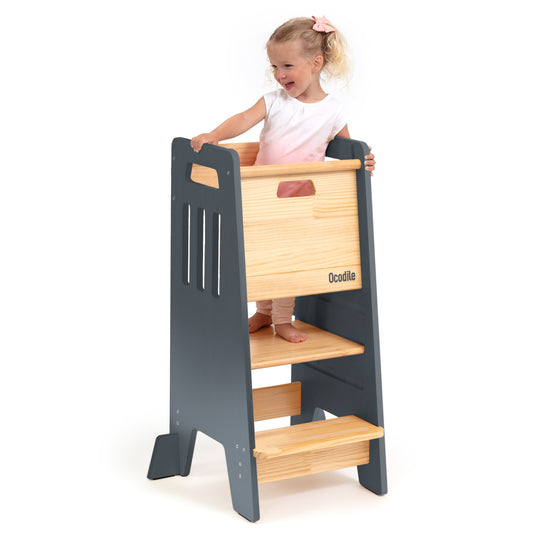
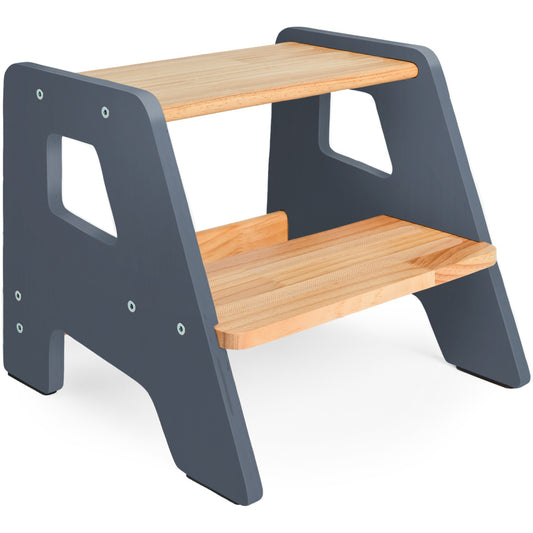
That may mean anchoring the dresser, rethinking what goes on top shelves, or choosing a piece designed with child use in mind from the start. It may also mean choosing products that support independence safely, like well-designed kitchen helpers or step stools. If that's part of your family routine, this guide to the best learning tower is a helpful example of what to evaluate.
Safe furniture should support curiosity, not punish it.
When parents understand stability testing methods in plain language, they make calmer choices. They ask better questions. They spot weak points earlier. And they build homes that feel both welcoming and safer for everyday discovery.
If you're looking for children's furniture designed around safe exploration, practical family use, and thoughtful child-centered design, take a look at Ocodile. Their collection focuses on helping children participate in daily life with furniture made for real homes, real routines, and the kind of independence parents want to encourage safely.