



Safest Natural Wood Step Stool for Independent Kids
Your child wants to wash strawberries at the sink, stir pancake batter, or reach the toothbrush without asking for help every time. That urge is healthy. It’s part of how young children build confidence, coordination, and a sense that they belong in family life.
A natural wood step stool can support that independence beautifully, but only if it’s chosen with safety in mind. Many parents get stuck between two competing goals. They want something that looks calm and timeless in the home, and they also want proof that the stool is safe for a toddler’s body, lungs, and everyday movement.
That’s the key question: not just “Which stool is pretty?” or “Which stool is sturdy?” but “How do I judge a wooden stool the way a child development professional would?” The answer comes down to material, finish, stability, and fit.
Why Choose a Natural Wood Step Stool
Your toddler pulls a chair toward the sink, climbs sideways, and reaches with one hand while the chair legs wobble on the tile. That is the moment many parents start looking for a safer way to give access.
A natural wood step stool gives a child a steady place to stand during real daily routines, like washing hands, helping crack eggs, or reaching the faucet after toothbrushing. Used well, it supports independence while giving you more control over stability, height, and surface grip than a dining chair or improvised booster ever could.

Why wood appeals to families
Parents often choose wood for two reasons at once. It usually looks calmer and more intentional in the home, and it can offer a more solid, grounded feel under little feet.
That second point matters. Young children are still learning how to shift weight, plant both feet, and climb down with control. A stool that feels sturdy and predictable is like a wide sidewalk compared with a narrow curb. Both raise a child up, but one gives them more room to organize their body safely.
Natural wood also tends to age more gracefully than many plastic options. It can stay out in the kitchen or bathroom without looking like temporary baby gear, which means families are more likely to keep it where the child can use it consistently.
There is also a health question many parents ask, and it is a good one. “Natural wood” sounds reassuring, but the safest choice depends on more than appearance. The wood species, the glue if composite material is used, and the finish on the surface all affect what a child touches and what may off-gas into indoor air. If you are thinking about the whole room, this guide to non-toxic kids furniture can help you evaluate the stool as part of a child-safe home setup.
Beauty matters, but safety details matter more
A wood stool can match your cabinets and still be the wrong pick for a toddler. Some are made from solid hardwood. Others use lighter engineered boards with surface coatings that photograph well but may not hold up the same way around water, climbing, and daily wear.
That is why it helps to look at a stool the way you would look at a crib or car seat. Start with how it functions for a child’s body, then consider the finish and style. Parents who want a clearer sense of how different woods behave over time may find understanding hardwood furniture styles useful, especially when comparing stools that look similar online but may differ in density, durability, and long-term stability.
A good natural wood step stool brings aesthetics and child safety together. It should look at home in your space, feel secure under a small child, and use materials and finishes you can evaluate with confidence.
Decoding Wood Types and Finishes
A product page may say “wood” and still leave out the details that matter most for a child. Solid hardwood, plywood, and particle board can look similar in a polished photo, but they respond very differently as a child climbs, shifts weight, or splashes water nearby.
That difference affects safety in quiet, practical ways. A denser wood usually resists wobble, joint stress, and edge damage better over time. A lower-strength composite may look neat on day one but wear faster at the corners, swell if moisture gets in, or loosen where hardware is attached.
What wood type tells you
For parents, it helps to sort materials into two broad categories: solid woods and composite boards.
Solid woods such as oak, rubberwood, and pine are cut from lumber. Composite boards such as particle board are made from wood particles and adhesive, then often covered with veneer or laminate. Birch plywood sits in the middle. It is engineered, but its layered construction is usually stronger and more stable than particle board when it is well made.
A simple way to read this is to treat the wood type as the stool’s skeleton. The finish changes what you see and touch. The core material affects how the stool holds up after hundreds of climbs, quick turns, damp hands, and daily dragging across the floor.
Common Woods for Step Stools Compared
| Wood Type | Durability | Cost | Eco-Friendliness | Best For |
|---|---|---|---|---|
| Oak | High | Higher | Depends on sourcing | Families wanting a heavy-duty stool with long-term durability |
| Rubberwood | High | Moderate | Often appealing to eco-minded buyers | Daily kitchen or bathroom use where moisture resistance and stability matter |
| Solid pine | Moderate | Moderate | Depends on sourcing | Families wanting solid wood with a lighter visual style |
| Birch plywood | Moderate to high | Moderate | Depends on adhesives and sourcing | Well-designed stools with layered strength and smooth surfaces |
| Particle board with laminate | Lower | Lower | Varies | Better avoided for active toddler use when safety and longevity are priorities |
No single wood species guarantees a safe stool. It does give you useful clues.
Oak is heavy and durable, which can help a stool feel planted underfoot.
Rubberwood is also sturdy and often appears in children’s furniture because it balances strength, cost, and a smooth painted or sealed finish.
Pine is solid wood, but it is softer, so dents and wear may show sooner.
Birch plywood can be a good option if the design is stable and the adhesives and finish are clearly disclosed.
Particle board deserves extra caution for toddler use because durability depends heavily on the quality of the board, the laminate, and the way the joints are built.
If you want a broader primer on how species affect durability and appearance, Critelli Furniture has a useful guide on understanding hardwood furniture styles.
Why the finish matters as much as the wood
Parents often notice the wood first because it is visible. The finish deserves equal attention because it is the part your child touches, rubs, and stands on every day.
Finish affects two things at once. First, it changes how slippery, smooth, or durable the surface feels. Second, it can affect indoor air quality, especially in small spaces where a stool lives close to a sink, a kitchen helper zone, or a child’s bedroom.
The article’s safety lens comes into play. A beautiful natural finish is not automatically a child-safer finish. What matters is whether the brand explains the coating clearly and backs it up with recognized testing or certification, especially for low VOC emissions.
Here is a practical way to read common finish language:
- Natural oil finishes often keep a more natural look and are easier to spot-repair, but parents still need to confirm what oils, dryers, or sealers are included.
- Water-based clear finishes may be a strong option if the manufacturer specifies low-VOC or certified emissions and the surface still provides enough grip.
- Painted finishes can be perfectly appropriate for children if the brand explains the coating system and safety testing instead of just saying “non-toxic.”
- Unspecified sealants or coatings should prompt more questions, not less.
A finish works like your child’s point of contact with the stool. If the listing says “safe finish” without naming the type, the VOC standard, or any certification, you still do not know enough.
A better way to read a product description
Many parents feel stuck here because product listings mix design language with safety language. A clearer method is to check the stool in three passes.
-
Read the base material carefully
Look for “solid oak,” “solid rubberwood,” or “birch plywood.” Be cautious with vague phrases such as “wood construction” or “MDF/engineered wood” if the brand does not explain where each material is used. -
Read the finish as if you were checking ingredients
Look for plain details: water-based finish, low-VOC coating, GREENGUARD Gold, formaldehyde disclosure, or other recognized emissions information. -
Read for child-specific use
Does the brand describe toddler use, wet-area use, or daily climbing? Or does it sound like general decor furniture that happens to be stool-shaped?
Parents applying this same filter to other children’s items may also find this guide to sustainable wood toys helpful, because the same questions about wood source, adhesives, and finishes come up again and again.
A stool should fit your home visually. It should also give you a clear material story you can verify. That combination is what helps a natural wood step stool feel both beautiful and child-conscious.
Essential Child Safety Features to Look For
A stool can be made from good materials and still be a poor choice for a toddler. Design is where many accidents happen. Children don’t use step stools like adults do. They climb quickly, step off at odd angles, and shift their weight while looking at the sink, not their feet.
Stability starts at the base
The base should resist tipping when your child steps up, turns, or leans. That’s why leg shape matters.
A 2024 CPSC report noted that 12% of step stool injuries involved toddlers slipping from unstable designs, and recent safety audits suggest that a 5 to 10° inward splay can reduce tip-over risk by up to 40% for children weighing 20 to 40 lbs, as summarized in this step stool stability discussion. Parents don’t need to measure angles at home, but you should look for a stool with a visibly stable stance rather than straight, narrow legs.

What to check before you buy
Use this quick safety checklist when comparing options:
-
Wide footprint
The stool should look grounded, not top-heavy. If the platform seems tall but the base is narrow, that’s a concern. -
Non-slip contact points
Rubber or similar grippy feet help the stool stay put on smooth flooring. -
Secure stepping surface
A child’s foot needs traction. Smooth wood can be attractive, but the tread area shouldn’t feel slick. -
Rounded, smooth edges
Corners and rails should feel sanded and splinter-free. -
Helpful hand support
For younger toddlers, side panels or handholds can improve confidence and control while climbing.
What parents often miss
Many adults test a stool by standing on it once. That isn’t enough. Watch for what happens when weight shifts sideways. A toddler often plants one foot, twists to look at you, then brings the second foot up late. That movement pattern is less stable than adult use.
The safest stool for a toddler is usually not the slimmest or the lightest one. It’s the one that stays boringly steady during messy, distracted movement.
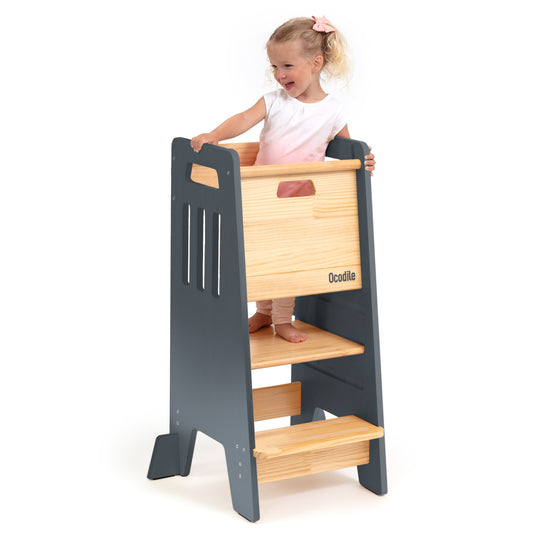
For families using a stool mainly at the counter, some children do better with a more enclosed setup than a basic stool. This guide to a toddler tower for kitchen use can help you decide whether your child needs side support instead of an open step stool right now.
Red flags worth taking seriously
A few design details should make you pause:
- Ladder-like side openings that invite climbing in the wrong direction
- Very glossy treads with no traction support
- Sharp corners near face height
- Noticeable wobble on a flat floor
- Unclear assembly hardware, especially if the stool requires frequent tightening
Safety features aren’t extras. For toddlers, they’re part of the basic job description.
Finding the Perfect Fit for Your Child and Home
The right stool should fit your child’s body and your actual room, not just your Pinterest board. A stool that’s too short leads to reaching and stretching. A stool that’s too tall can make stepping down awkward and unsafe.

Measure the task, not just the child
Start with the place where the stool will live most often. Is it for the bathroom sink, kitchen counter, bookshelf, or entryway?
Then ask a simple question: when your child stands on the platform, can they use the surface with relaxed shoulders and bent elbows, or do they still have to shrug upward and reach? You want access that feels natural, not strained.
Matching stool style to real use
Different homes need different formats.
- Single-step stools work well for older children or low bathroom sinks.
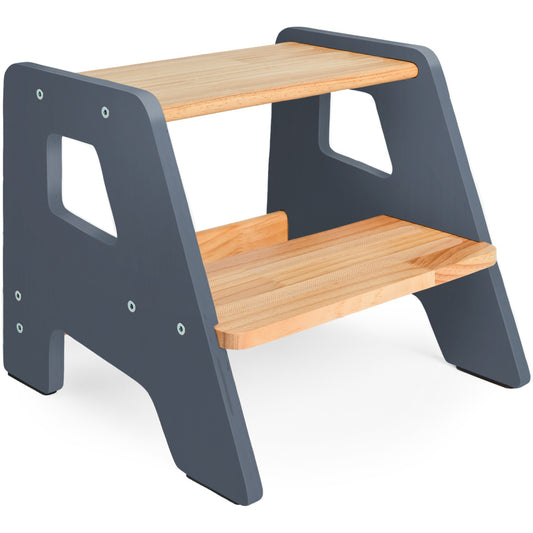
- Two-step stools often help younger children climb more comfortably because each rise feels manageable.
- Adjustable-height models can make sense if you want one stool to work through several growth stages.
One factual example in this category is that Ocodile offers both a 1-Step Stool for Kids and a 2-Step Stool for Kids, made with birch plywood side panels, solid pinewood steps, and a non-toxic coating. That kind of product detail is useful because it tells you both the structure and the finish approach.
Home fit matters too
A stool can be safe in theory and annoying in practice. If it blocks a walkway, scrapes the floor, or is too heavy for adults to reposition easily, families often stop using it where it was intended.
Ask yourself:
- Where will it stay most days
- Can your child approach it straight on
- Will it sit flat on your floor type
- Is there enough room to step down safely
If you’re constantly moving the stool out of the way, your child may start dragging it alone. That changes the safety picture.
A good fit feels easy. Your child climbs, uses it, steps down, and moves on without awkward reaching or last-second grabbing.
Beyond the Kitchen Counter Montessori Uses
One of the clearest signs that a stool is working well is simple. Your child starts using it for ordinary life, not just for one planned activity with you.

Everyday uses that build real skills
In the bathroom, a natural wood step stool can help with hand washing, face washing, and tooth brushing. For a toddler, those routines are full of small lessons. They practice climbing up, turning toward the sink, managing tools like a toothbrush, and stepping down with control.
In a bedroom or play area, the same stool may help a child reach a low shelf, choose a book, or sit while pulling on socks. Used this way, the stool becomes a steady platform for decision-making. The message to the child is clear: “You can take part here.”
That idea has deep roots in home design. Wooden step stools became common household tools because families needed safe access to everyday spaces. That original purpose still fits family life today.
A stool supports participation throughout the home
Parents sometimes hear “Montessori stool” and picture kitchen helping only. Daily life is broader than that.
A good stool works like a child-sized bridge between wanting to help and being able to help safely. In practical terms, that might mean your child uses it to rinse fruit at the sink, reach a tissue box in the bathroom, or sit down to put on shoes without wobbling on one foot.
The best setup is the one your child can use again and again with calm, predictable movements. This is also where safety and materials connect to real life. A stool that feels stable underfoot, has a low-odor finish, and resists slickness after a damp hand-washing routine is more likely to stay in regular use.
A child might:
- carry it to the sink before meals
- use it to help rinse produce
- sit on it to pull on shoes
- reach a favorite puzzle from a shelf
Here’s a visual example of how these setups can support practical family routines:
A good Montessori tool fades into the background. The child notices the work they can do, not the furniture itself.
That is why many families keep using a natural wood step stool long after the early toddler stage. Its value reaches beyond counter height. It helps a child join the routines that make a home feel like theirs too.
Styling and Maintaining Your Wooden Stool
A natural wood step stool earns its place faster when it doesn’t look out of sync with the rest of the house. Light woods often blend easily into Scandinavian, minimalist, and modern family spaces. Warmer finishes can sit comfortably in farmhouse, traditional, or mixed-style homes.
Keeping the look simple
If your home already has wood tones, try matching the stool to the dominant tone rather than making it identical to every cabinet or floor. Close coordination usually looks more relaxed than an exact match attempt.
If the stool will move between rooms, a simple natural finish is often the most flexible choice. It tends to work in kitchens, bathrooms, and bedrooms without drawing too much attention.
Maintenance that protects safety
Wooden children’s furniture doesn’t need complicated care, but it does need regular checking.
- Wipe spills promptly so water doesn’t sit on the finish.
- Use a gentle cleaner that won’t strip the surface.
- Check joints and screws from time to time, especially if the stool gets dragged around often.
- Run your hand along edges and treads to catch rough spots before your child does.
A stool used near sinks and counters sees moisture, crumbs, soap, and daily friction. Families who do a quick check during regular cleaning usually catch small issues early.
What wear is telling you
Scratches on the finish may be cosmetic. Movement at the joints is not. If the stool starts rocking or loosening, stop using it until you can fix the problem.
Wood ages well when the structure stays sound. The goal isn’t to keep it looking untouched. The goal is to keep it stable, smooth, and predictable every time your child climbs.
Your Natural Wood Step Stool Questions Answered
At what age is a step stool appropriate?
Start with readiness, not age. A child should be able to stand without wobbling, climb up and down with control, and pause when you give a simple reminder like "two feet on the step."
That often means some toddlers are ready for a low, stable stool earlier than parents expect, while others still need the boundaries of a helper tower. The stool should match your child's body control the way shoes match foot size. A child can grow into it, but not safely use it before the fit is right.
Are folding wooden stools safe for toddlers?
Some are. They just require closer checking.
A folding stool has one extra safety question that a fixed stool does not. What happens at the hinge when a child climbs, shifts weight, or grabs the side? If the design leaves room for pinched fingers, closes too easily, or feels less planted on the floor, it is a poor match for a young child.
For early toddler years, a fixed wooden stool is often the simpler choice because the structure stays predictable every time your child uses it.
How do I verify a “non-toxic” finish claim?
Look for clear, specific language. A strong product listing should specify the standard or certification that supports its finish claim.
Appearance and safety must align. A stool may look beautifully natural and still tell you very little about what is on the surface. Parents should look for details about low-VOC finishes, water-based coatings, and child-relevant standards such as CPSIA compliance or GREENGUARD Gold if the brand offers them. If the listing only says "safe" or "natural" without naming a standard, treat that as incomplete information.
Is solid wood always better than engineered wood?
Solid wood can be a very good choice, especially if the species is hard enough to resist dents and the stool is built with stable joinery. But wood type alone does not decide safety.
A well-made stool in solid beech or rubberwood may feel steady and wear well over time. A poorly made solid wood stool can still wobble, tip, or chip. Engineered wood raises more questions because adhesives and surface treatments matter, so parents should ask for clearer finish and emissions information before buying.
What’s the simplest buying rule to remember?
Use this four-part check. Material, finish, stability, and fit.
If you can identify the wood type, understand the finish standard, see how the stool resists tipping, and match the height and tread size to your child, you are evaluating it like a careful safety reviewer rather than a shopper reacting to a pretty photo.
If you're comparing options for your home, Ocodile offers child-focused furniture, including step stools and standing towers designed for everyday family use.