



When to Replace a Kitchen Stool or Step Stool
Your toddler climbs up to wash their hands, and the stool rocks under their feet. If you’re searching for “kitchen stool step stool” because yours no longer feels steady, start with its condition and fit, not how many years you’ve owned it.
Stop using a stool with structural damage, unexplained wobbling or missing safety components. Replace it if the problem cannot be resolved using the manufacturer’s instructions and approved parts. An undamaged stool may also need replacing when its height, weight limit or design no longer suits your child’s everyday tasks.
A scuffed finish alone does not necessarily mean a stool is worn out. The useful distinction is between cosmetic wear, a fixable maintenance issue and a reason to retire it.
When a “kitchen stool step stool” needs replacing
There is no single replacement schedule that applies to every children’s stool. Materials, construction, use and storage conditions all affect its condition. Follow any service-life or replacement guidance provided by the manufacturer.
Use these signs to decide what needs attention:
| What you notice | What to do next |
|---|---|
| A cracked leg, split load-bearing step or separating joint | Stop use. Replace unless the manufacturer provides an approved repair or replacement component. |
| Wobbling on a clean, level floor | Remove from use and check assembly, fasteners and feet against the instructions. Replace if the cause remains unresolved. |
| Missing, loose or damaged feet | Stop use until the correct manufacturer-approved components are fitted. |
| Peeling or worn anti-slip strips | Follow the manufacturer’s replacement instructions. Do not keep using a surface that has lost its intended grip. |
| Swelling, softness or separation after water exposure | Stop use and seek manufacturer guidance. Structural deterioration is a reason to replace. |
| A child exceeding the stated weight limit | Stop use and choose an appropriately rated alternative. |
| Minor scuffs with no damaged edges or components | Inspect carefully, but cosmetic wear alone may not require replacement. |
A quick inspection cannot prove that a stool is safe. If something looks wrong and you cannot explain or correct it according to the instructions, keep it out of your child’s reach while you contact the manufacturer.
What can be cleaned or repaired, and what should be retired?
Start with the floor and assembly
A stool that moves may be sitting on crumbs, a wet tile or an uneven surface. Remove it, clean and dry the floor, then check that every foot rests fully on a level surface. Do not balance it with cardboard, folded towels or makeshift shims.
Next, check the assembly instructions. Some loose fasteners can be tightened as directed, but stripped threads, damaged hardware or joints that keep loosening need manufacturer guidance. Tightening harder is not always the answer and can damage components.
A kitchen stool or step stool should stay out of use until the issue is resolved. Do not ask your child to climb on it to see whether the repair worked, or test it by standing on it yourself if that would exceed its rating.
Keep repairs within the manufacturer’s instructions
Cleaning residue from an intact step is different from repairing a cracked support. Likewise, replacing an approved grip strip is different from gluing a separating joint back together.
Avoid improvised structural fixes such as adding screws, taping over cracks or gluing broken legs. They can hide damage without restoring the stool’s intended strength.
Keep the model information and instructions if you have them. For a secondhand stool, missing identification, unknown repairs or unavailable instructions may make it difficult to establish whether it is suitable to keep using.
Replace a stool that no longer fits the task
A stool can remain solid while becoming the wrong tool for your household. Watch what happens during the routine, rather than judging fit by appearance alone.
Check reach, footing and climbing
At the sink, your child should not need to stretch so far that their heels lift or their body leans well beyond the platform. Check whether they have room to place their feet securely and can climb up and down in a controlled way with the help they need.
Growth does not automatically mean buying a taller stool. As your child gets taller, they may need less extra height. Moving from two steps to one can sometimes suit the task better, provided the replacement meets the manufacturer’s guidance and your child’s abilities.
Consider replacing a kitchen stool or step stool if its platform is awkward for the activity, its step arrangement is difficult for your child to manage or your child has exceeded its stated limits.
Reconsider the design for longer counter activities
Reaching the sink briefly is different from standing at a counter to stir batter or wash vegetables. A child who repeatedly turns, leans or steps backward during those activities may need a different setup, not simply a taller stool.
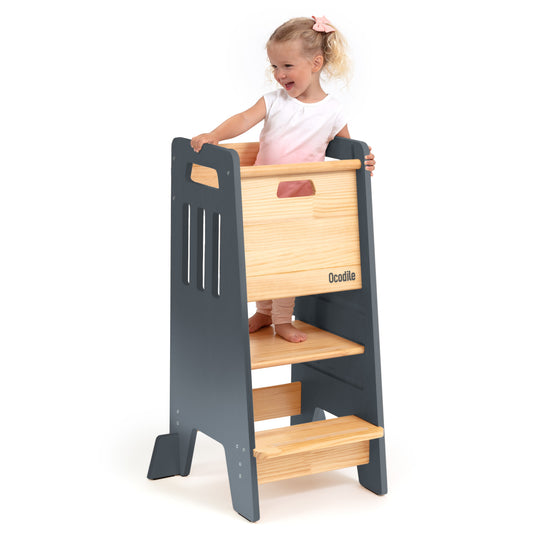
Our guide to when a step tower makes more sense than a step stool explains that distinction. A tower’s surrounding rails can provide additional boundaries, but they do not remove the need for supervision or careful placement away from heat, knives and other hazards.
A quick check before the next climb
Before each use, glance at the floor, steps and feet. Do a closer inspection after a drop, a spill that soaks into the material, moving the stool to another room or noticing any change in how it feels.
Follow the manufacturer’s inspection and maintenance instructions. This checklist can help you spot issues worth investigating:
- Structure: Look for cracks, splitting, bending, swelling or separating joints, including underneath the stool.
- Hardware: Check for missing or loose fasteners without overtightening them.
- Footing: Confirm that feet are present, secure and resting fully on a clean, dry, level floor.
- Grip: Check for residue, peeling strips or worn areas on the stepping surfaces.
- Fit and placement: Confirm the stated limits and make sure the location does not encourage reaching toward hazards.
With the stool empty, gentle pressure may reveal obvious rocking. That is only a basic check, not a load test or a guarantee of safety.
For any kitchen stool or step stool, also check the manufacturer’s notices and the U.S. Consumer Product Safety Commission recall database. If the product is recalled, follow the specific remedy instructions rather than attempting your own fix. Do not pass an unsafe or recalled stool to another family.

Choose a replacement for the routine you actually have
Before ordering, measure the relevant sink or work surface and compare the replacement’s listed dimensions, platform height, weight limit and age guidance. Also check its footprint: a stool that fits the room still needs a clear, level place to stand.
Choose the amount of height your child needs for the task, rather than automatically choosing the tallest option. Do not stack stools or place one on another raised surface to gain extra reach.
When one step is enough
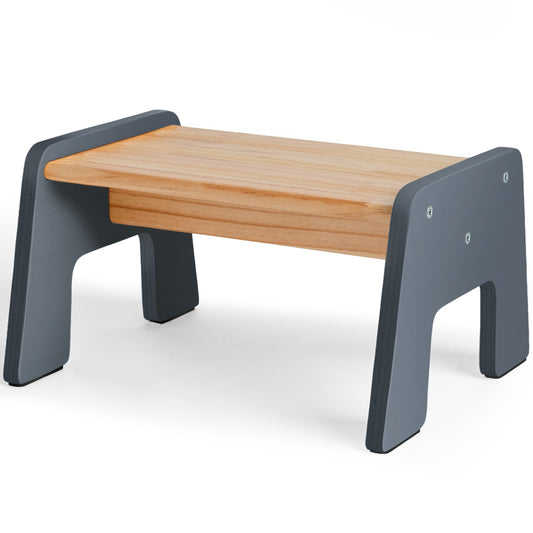
If your child needs only a small boost, the 1-Step Wooden Stool for Kids is an option to compare for sink access and potty-training routines. Its product description lists three clear anti-slip strips.
Those strips add grip to the stepping surface, which can help with footing during everyday use. They still need to remain clean and intact, and they do not make wet floors or awkward reaching safe. Check the product’s current dimensions and limits against your child and the intended location.
When two steps suit the reach
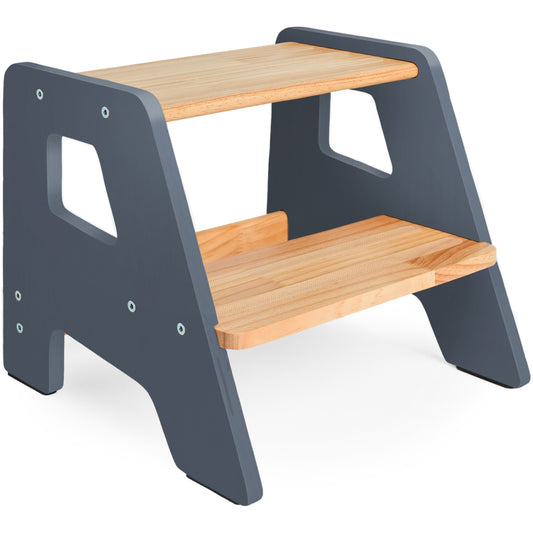
The 2-Step Wooden Stool for Toddlers is listed for children ages 2 and older and includes five clear anti-slip strips across the step and platform. The intermediate step provides a route up to the platform rather than requiring one larger climb.
Age guidance is a starting point, not proof that a particular child is ready. Compare the step arrangement with how your child climbs and descends, and confirm the listed limits before use.
For either design, judge a replacement kitchen stool or step stool by fit, intact construction and the intended activity, not by reassuring labels alone. No stool should be treated as impossible to tip or slip.
Help the replacement last without overlooking wear
Keep the stool away from prolonged moisture and clean it using the manufacturer’s recommended method. Avoid soaking wooden components or using cleaning products that could affect the finish or grip materials.
Store it where it will not be repeatedly knocked over or exposed to damage. If the same issue returns, investigate the cause. Repeated wobbling, for example, should not become something you simply tighten away before every use.
Bathroom routines deserve particular attention because splashes can leave both the platform and floor wet. Dry them before the next climb, even if the stool has anti-slip strips.
For toothbrushing, remember that reaching the sink and brushing effectively are separate skills. A family dental practice such as Bright Smiles Dentistry, located on Australia’s Sunshine Coast, can provide children’s oral-care guidance; your own dentist can advise on how much brushing help your child needs. A stool provides access, not a reason to stop helping.
The goal is a dependable setup for repeated practice, with less improvised lifting and fewer workarounds such as climbing onto a chair.
Frequently asked questions
How often should I replace a kitchen stool or step stool? Follow the manufacturer’s guidance rather than a universal yearly schedule. Replace it when unresolved damage, instability, a recall remedy or an unsuitable fit makes continued use inappropriate.
Does wobbling always mean I need a new stool? Not always. An uneven floor or an assembly issue may explain it. Stop using the stool while you investigate, and only return it to use after resolving the cause according to the manufacturer’s instructions.
Can I replace just the anti-slip strips? Sometimes, if the manufacturer provides approved replacement strips and fitting instructions. Do not assume any adhesive tape will provide equivalent grip or adhere correctly to the surface.
Should I replace a stool when my child turns two or three? A birthday alone is not a replacement trigger. Check the product’s age guidance, weight limit, condition and fit, along with your child’s ability to use it for the intended task.
Can I keep using a cracked stool if the crack looks small? Stop use until the manufacturer confirms what the damage means. Appearance alone cannot tell you whether a crack affects a load-bearing component.
Find the right next step
If your current stool has an unresolved safety issue, set it aside before comparing replacements. If it is intact but no longer suits the routine, measure the space and watch where your child struggles. Ocodile’s guide to choosing a kids’ step stool for the kitchen can help you compare the next option without buying more height or complexity than you need.