



When a Standing Tower Makes More Sense Than a Step Stool
You are making dinner, your toddler is tugging at your leg and the chair they dragged over to the counter suddenly looks like a bad idea. A step tower makes more sense than a step stool when your child needs to stand at counter height for more than a quick reach, use both hands and stay in one defined spot while you supervise.
The short version: choose a tower for kitchen helping, long sink routines and two-handed tasks. Choose a stool for quick up-and-down moments like reaching the bathroom sink, climbing onto the toilet or grabbing a low shelf with an adult nearby.
That difference matters because most parents are not shopping for a cute piece of furniture. They are trying to stop lifting a wiggly toddler ten times a day, avoid using dining chairs as makeshift ladders and give their child a safer way to try real tasks like washing hands, stirring batter or brushing teeth.
The quick answer: when a step tower makes more sense
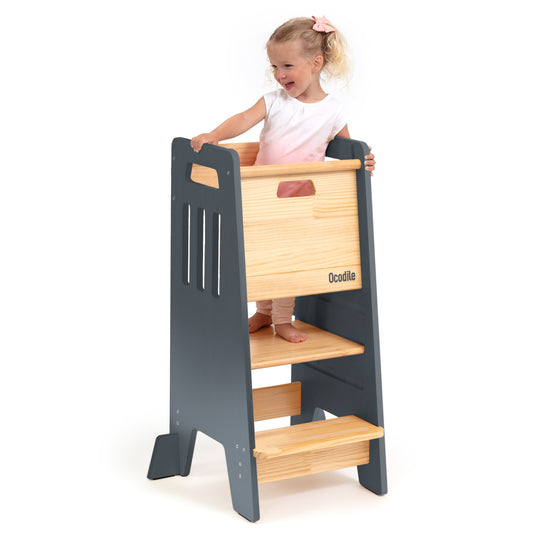
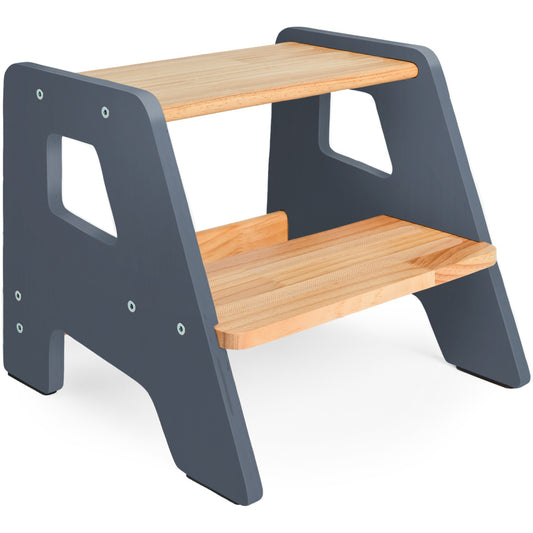
A step tower is a toddler-height standing platform with side support or rails, designed for supervised activities at a counter, table or sink. A step stool is usually a smaller set of steps that helps a child reach something briefly.
A tower is usually the better fit when the task takes time. If your child will be standing long enough to peel a banana, rinse berries, help mix pancake batter or wash hands after paint, a small stool can start to feel wobbly or limiting. The child may turn sideways, lean on the counter or step down unexpectedly.
A stool still has a place. It is simple, compact and useful in bathrooms or bedrooms where the goal is a quick reach. The question is not which product is “better” overall. The question is which one matches the task, your space and your child’s current climbing skills.
| Daily situation | Tower usually fits better | Step stool usually fits better |
|---|---|---|
| Helping at the kitchen counter | Yes, because the child can stand longer and use both hands | Only for very brief supervised reaches |
| Washing hands at a bathroom sink | Sometimes, if the bathroom has room | Yes, especially for quick routines |
| Potty training | Usually not the main tool | Yes, for reaching the toilet and sink |
| Tight spaces | Only if it fits without blocking walkways | Often easier to store and move |
| Food prep or baking | Yes, because the child stays in one work zone | Less ideal for longer tasks |
| Older preschooler reaching a low shelf | May be more than needed | Often enough |
Everyday moments when a step tower helps more than a stool
The biggest reason parents consider a step tower is the kitchen. Toddlers want to be where the action is, and lifting them onto your hip while chopping vegetables or washing dishes is not practical. A tower gives them a place to stand next to you instead of under your feet.
For example, a child can rinse strawberries, sprinkle cheese on a tortilla, tear lettuce, pour pre-measured ingredients or wipe the counter with a small cloth. These are ordinary tasks, but they are exactly the kind of repetition toddlers enjoy. They get to try, make a little mess and try again.
At the sink, a tower can also help if handwashing takes more than a few seconds. Some toddlers want to pump soap, rub their hands, rinse, splash and start over. A tiny stool may work for a quick rinse, but a more contained standing space can feel steadier for a longer routine.
For parents, the practical benefit is simple: less lifting, fewer improvised chairs and more predictable routines. Instead of saying “no, get down” all evening, you can say “stand in your helper tower” and keep the boundary clear.
When a step stool is still the smarter choice
A step tower is not always the right answer. If your child only needs a quick boost to reach the bathroom sink, a step stool may be easier. It is lighter, smaller and often simpler for older toddlers or preschoolers who are already steady on their feet.
Step stools are also helpful for potty training because they can support the everyday sequence: climb up, sit, climb down, wash hands. If that is your main need, a tower may take up more space than necessary. Ocodile has a separate guide on whether a 2-in-1 step stool can help with potty training if you are focused on bathroom routines.
Height matters too. A stool that is too short leads to tiptoes and leaning. One that is too tall can make climbing awkward. If you are leaning toward a stool, it helps to measure the sink, counter or surface your child needs to reach, then compare that with the child’s height. This guide to choosing the right step stool height for kids walks through that decision in more detail.

Safety differences parents actually notice
A step tower is not a substitute for supervision, but its shape changes how a child uses the space. Instead of balancing on a small top step, the child stands inside a more defined area. That can be especially helpful when an excited toddler shifts weight, reaches for a spoon or turns to tell you something.
Look for design details that match real toddler behavior, not just nice product photos. A sturdy, stable feel matters because toddlers bounce, twist and lean. A solid platform matters because children need enough room for both feet. Side support matters because it gives a clear boundary around where standing happens.
The location is just as important as the product. Any tower or stool should be used on a flat, dry floor, away from hot surfaces, knives, heavy appliances, cords and anything your child should not touch. If the tower is at a counter, center it in front of the activity so your child does not have to reach sideways.
For kitchen use, Ocodile’s guide on how to position a children’s kitchen tower at the counter is a useful next read because placement can make a sturdy product feel much more practical in daily life.
How to decide before you buy anything
Before choosing a step tower, watch the moment that keeps causing trouble. Is your child dragging a chair to the counter? Are you lifting them to the sink over and over? Are they trying to help cook, but they do not have a safe place to stand? The right product should solve that specific daily friction.
A helpful way to think is to diagnose where use breaks down before choosing a tool. Product teams use structured systems like the AI Product Adoption Deck to find the moment where people stop trusting or using a product; parents can use a simpler home version by noticing exactly when a routine becomes frustrating or unsafe.
Ask yourself a few practical questions:
- Does my child need both hands free for the task?
- Will they stand there for more than a minute or two?
- Is the task at counter height or only sink height?
- Do I have enough floor space for a tower to sit flat and out of the walkway?
- Can my child climb with control and follow simple directions like “feet stay on the platform”?
- Do I need something that stays in one room or moves around the house?
If the answers point to long, counter-height activities, a tower is likely the better match. If most answers point to short bathroom or bedroom tasks, a stool may be enough.
What to look for in a sturdy, everyday tower
A step tower should feel like something your family can actually live with, not just something that looks good in a nursery photo. Parents usually care about the same things after a few weeks of use: sturdy construction, stable footing, easy cleaning, a size that fits the kitchen and a design that does not make every routine harder.
Consider these features in plain parent terms. A wide, stable base helps the tower feel steadier when your toddler shifts from one foot to the other. An enclosed or supported standing area gives your child a clearer place to stay. A child-safe coating matters because toddlers touch, lean and sometimes chew more than adults expect. If your space is small, a foldable tower design may be worth considering as long as it still feels solid when open and used according to the manufacturer’s instructions.
Adjustability can also be helpful. Toddlers grow quickly, and a platform that can adapt may make the product useful for longer. The same idea applies to step stools: an adjustable stool may fit more than one sink or stage, depending on your home.
If you are still comparing options, Ocodile’s parent handbook to toddler towers explains readiness, common uses and safety considerations in more depth. Ocodile also offers toddler kitchen towers and adjustable step stools with family-friendly details such as free US shipping, 60-day returns and a 5-year warranty.
A simple rule of thumb for parents
Choose a step tower when your toddler wants to participate beside you, not just reach something. Choose a step stool when your child needs a quick boost and the task is short.
That rule keeps the decision grounded in real life. A tower makes sense for the child who wants to help make muffins, wash produce, brush teeth slowly or stand beside a parent during meal prep. A stool makes sense for the child who needs to reach the sink, climb onto the toilet or grab pajamas from a lower drawer.
The best choice is the one that reduces the risky workaround. If the current solution is a dining chair, your hip, a slippery bathroom stool or constant lifting, it may be time to choose a more purpose-built option.
Frequently Asked Questions
Is a step tower safer than a step stool? A tower can be more appropriate for longer, supervised counter-height tasks because it gives the child a defined place to stand. A stool can still be safe and useful for quick tasks when it is stable, the right height and used with supervision.
What age is a step tower for? A step tower is generally for toddlers and preschoolers who can stand steadily, climb with control and follow simple safety directions. It is not for infants or children who cannot stay upright without help.
Can I use a dining chair instead of a tower? A dining chair is not designed to be a toddler climbing tool. Chairs can slide, tip or put the child too close to hazards. A purpose-built tower or stool is usually a more practical choice for repeated daily routines.
Do I need both a tower and a step stool? Some families use both because they solve different problems. A tower may stay in the kitchen for helping at the counter, while a stool stays in the bathroom for handwashing or potty training.
Should I choose wood or plastic? Wood often feels solid and furniture-like, while plastic can be lightweight and easy to wipe. Focus less on the material alone and more on stability, construction, surface grip, fit in your space and whether the product is designed for your child’s current stage.
Find the right helper for your home
If your child is ready to help at the counter, a tower can make everyday routines feel calmer and less improvised. If they mainly need a quick reach, a stool may be the more practical fit.
Ocodile designs children’s furniture for real family routines, including toddler kitchen towers, adjustable step stools, floor beds and other kid-friendly pieces made to support safer everyday participation at home. Start by matching the product to the moment you need help with most, then compare the option that fits your child, your space and your daily rhythm.