



Can a 1-Step Stool Help With Potty Training?
If potty training currently looks like this, lift your toddler onto the toilet, hold them steady, lift them down, then lift them again to reach the sink, you are doing a lot of work for a routine that happens many times a day.
A 1-step stool can help with potty training because it gives your child a steadier way to reach the toilet and sink with less lifting from you. It does not potty train your child on its own, and it still requires close supervision. But the right stool can make the routine easier to repeat, easier for your toddler to understand and less dependent on improvised solutions like chairs or being held under the arms.
The biggest benefit is simple: your child gets a predictable place to put their feet during the bathroom routine. That can mean climbing up with help nearby, sitting with more confidence, stepping down safely and washing hands as part of the same sequence.
Quick answer: yes, a toddler step stool can help potty training
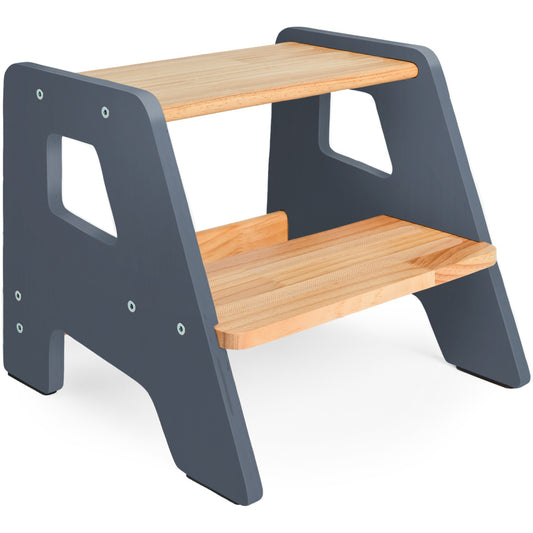
A wooden step stool can support potty training when it does two practical jobs well: helping your toddler reach the toilet and helping them reach the sink.
For potty training, the label matters less than the everyday function. A good stool should be sturdy, stable, the right height for your bathroom and easy to clean. If it wobbles, slides or encourages your toddler to climb in unsafe ways, it can make the routine more stressful instead of easier.
Toilet learning also depends on readiness. The American Academy of Pediatrics explains through HealthyChildren.org that children develop toilet readiness at different times, and pressure can backfire. A stool helps with access and routine. It cannot replace patience, body awareness or a child who is ready to practice.
Why bathroom access matters during potty training
Toddlers are often interested in doing things by themselves before their bodies are fully coordinated. They want to climb. They want to flush. They want to wash hands. They may also resist being picked up every time because being lifted can feel like the parent is taking over.
That is where a step stool can be useful. It gives the child a clear job: climb up, sit, climb down, wash hands. The routine becomes easier to repeat because the environment stays the same.
For parents, the benefit is just as real. Less lifting can help your back, especially if you are also carrying laundry, bathing another child or doing nighttime wake-ups. It can also reduce the temptation to use whatever is nearby, such as a bathroom trash can, a bath ledge or a dining chair dragged across the house.
How a kids step stool helps with potty training?
It helps your child get on and off the toilet
Many toddlers are too short to climb onto a regular toilet without help. A step stool lowers the first step and gives them a defined place to stand before sitting.
The mechanism is straightforward: when the stool is close enough to the toilet and does not shift on the floor, your child can practice the same movement again and again. You still stay within arm's reach, but you may not need to lift them fully every time.
You will see the proof in the routine. Instead of calling for help before every attempt, your toddler may begin moving toward the bathroom, placing their feet on the stool and trying the first part of the process with you nearby.
It gives feet a more secure place to rest
When a toddler sits on a toilet with feet dangling, the position can feel unstable. A stool gives their feet somewhere to press, which may make sitting feel less scary and more controlled.
This is especially helpful if you use a toilet seat insert rather than a separate potty chair. The insert can make the seat opening feel smaller, while the stool helps your child feel more grounded. If your child shows signs of pain, constipation or fear around bowel movements, talk with your pediatrician instead of relying on furniture changes alone.
It makes handwashing part of the same routine
Potty training is not just about sitting on the toilet. Handwashing is part of the habit you are trying to build.
A 2 in 1 step stool can let your child reach the sink, soap and towel more easily. That means you can teach the full sequence from the beginning: try the potty, wipe with help as needed, flush if your child is comfortable with the sound and wash hands.
This is where independence becomes concrete. It is not an abstract parenting goal. It looks like your child reaching the faucet, rubbing soap between their hands and grabbing the towel without needing to be lifted each time.
It can reduce unsafe climbing
Toddlers are creative. If they want to reach something, they may climb cabinet pulls, toilet lids or loose furniture. A stable stool gives them a safer option for the tasks you allow.
That does not mean leaving a toddler alone in the bathroom. It means creating a clearer boundary: this is the stool for the potty and sink, and we use it only when a grown-up is nearby.
solid wooden step stool vs. potty chair vs. regular stool
Parents often wonder whether they need a step stool at all if they already own a potty chair. The answer depends on your bathroom, your child's size and the type of potty setup you want.
| Option | Best for | Parent benefit | Watch-out |
|---|---|---|---|
| solid wooden step stool | Reaching the toilet and sink, sometimes another child-sized use depending on design | Less lifting and one tool for multiple bathroom tasks | Must be stable, correctly sized and supervised |
| Potty chair | Toddlers who are nervous about the big toilet or need feet flat on the floor | Portable and low to the ground | Requires emptying and cleaning after use |
| Regular one-step stool | Simple sink access or older toddlers who need only a small boost | Easy to move and store | May not be tall enough for toilet access |
| Two-step stool | Higher sinks or toilets, depending on child's height | Helps shorter toddlers reach safely when sized well | Can be bulky in small bathrooms |
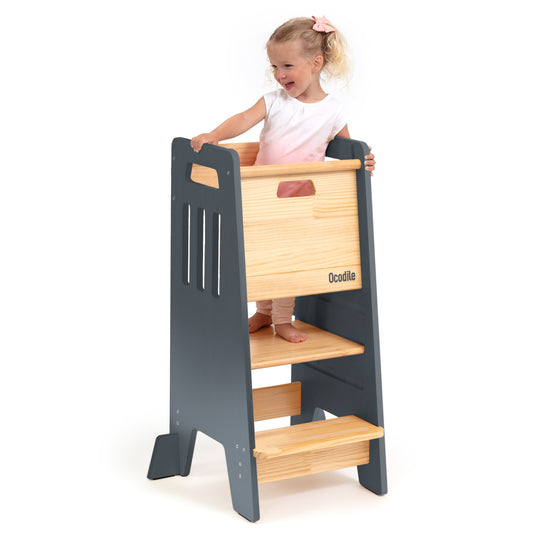
A step stool is often most useful for families who want one piece that works across routine tasks. If you are comparing shapes, sizes and convertible designs, Ocodile's step stool chair guide explains how these child-friendly pieces help toddlers reach household areas more safely.
Safety features to look for before using a stool in the bathroom
Bathroom floors can be slippery, and toddlers shift their weight quickly. Before using any step stool for potty training, check the design and the room setup together.
Look for these practical features:
- Sturdy construction so the stool feels solid when your child steps up or turns around.
- A wide or stable base because a broader support area can help the stool feel steadier when an active toddler leans or shifts weight.
- A grippy stepping surface to reduce slipping when socks, water or bathroom steam are part of the routine.
- The right height so your child can reach without stretching too far or climbing awkwardly.
- Rounded edges and smooth surfaces because toddlers move fast in tight spaces.
- Easy cleaning since potty training involves drips, handwashing splashes and frequent wipe-downs.
Height deserves special attention. A stool that works for the sink may still be too short for the toilet, and a stool that is very tall may feel unstable in a small bathroom. If you are not sure what height fits your child's task, this step stool height guide walks through practical measuring tips for kids.
How to set up a potty training routine with a step stool for children?
Start with the bathroom your child uses most often. A stool that is always in the same place is easier for a toddler to understand than one that moves from room to room all day.
Place the stool on a flat, dry surface. Keep it close enough that your child does not have to take a big sideways step, but not so close that it blocks safe movement. If you use a toilet seat insert, put it on before your child climbs up so the routine stays predictable.
| Routine moment | How the stool helps | Parent check |
|---|---|---|
| Approaching the toilet | Gives your child a visible starting place | Floor is dry and stool is flat |
| Climbing up | Reduces how much lifting the parent has to do | Stay close enough to guide hips or hands |
| Sitting | Gives feet a place to rest or press | Child looks balanced and not twisted |
| Climbing down | Creates a repeatable exit | Remind child to face forward and move slowly |
| Washing hands | Makes the sink part of the same routine | Check water temperature and soap access |
Keep your language simple. Instead of giving five directions at once, use the same short phrases: feet on the stool, turn, sit, try, step down, wash hands. Toddlers learn through repetition, especially when the room is arranged the same way each time.

Small bathroom details that make potty training easier
A step stool is only one part of the setup. The bathroom should be easy for your child to move through without extra clutter.
Keep wipes, toilet paper and a towel within adult reach first, then gradually let your child help when appropriate. Avoid placing tempting items like razors, cleaners, medicines or glass containers near the sink just because your toddler can now reach higher.
Lighting also matters, especially for early morning or nighttime potty trips. A bathroom path that is easy to see can feel calmer than a dark hallway followed by a bright overhead light. If you are updating lighting in other family spaces too, browsing modern lighting for family living spaces can give you ideas for fixtures that make daily routines feel warmer and easier to navigate.
For the bathroom itself, keep the goal practical. Your child needs to see the stool, toilet and sink clearly without being startled awake by harsh light during nighttime practice.
When a step stool is not enough
A 2 in 1 step stool can make potty training easier, but it is not the answer to every potty training problem.
Pause or adjust your approach if your child:
- Cannot follow simple safety directions like wait, hold on or feet down.
- Treats the stool like a toy for jumping or climbing onto counters.
- Seems afraid of the toilet sound, seat height or flushing.
- Has painful bowel movements or ongoing constipation.
- Shows no awareness of wet or dirty diapers yet.
In these situations, the next step may be more time, a different potty setup or a conversation with your pediatrician. A potty chair on the floor may feel less intimidating for some children. Other children do better with a toilet insert and a stool because they want to use the same toilet as the rest of the family.
Should you use a toddler tower instead?
A toddler tower is usually better for kitchen counters, helping with food prep or standing beside a parent during household tasks. A step stool is usually better for potty training because bathrooms are smaller and the task is shorter.
If your child also wants to help at the kitchen counter, a tower can be a better fit there because it offers a contained standing space for longer activities. Ocodile's toddler tower guide explains when children are typically ready for that type of furniture and what parents should look for.
For the bathroom, think compact, stable and easy to clean. You want your child to step up, complete the routine and step down, not linger or climb.
Potty training often overlaps with sleep transitions
Many families start potty training around the same season they are thinking about moving out of the crib. That can be a lot for a toddler. If possible, avoid changing everything in the same week. A new potty routine, new bed and new expectations can feel overwhelming when they arrive all at once.
If your child is also ready for a lower sleep setup, choose something that makes the transition feel familiar and manageable. The Crib Size Wooden Floor Bed with Safety Rails for Kids Age 1 to 3 uses the same familiar crib mattress and includes safety rails, which can help make the move from a crib or bedside sleeper feel less abrupt.
For older toddlers or children who need more room, the Full-Size Montessori Floor Bed with Strong Slatted Frame includes a slatted frame designed for airflow and stability, rounded edges, full guardrails and two easy entries on one long side. If you are still deciding whether a low bed fits your child, Ocodile's guide to low toddler beds can help you think through readiness and room setup.
The bigger point is this: arrange the home so your child can practice real skills in manageable steps. In the bathroom, that may mean a stable 2 in 1 step stool. At bedtime, it may mean a low, accessible sleep space. In both cases, the goal is not rushing independence. It is making everyday routines safer and easier to repeat.
Frequently Asked Questions
Is a 2 in 1 step stool better than a potty chair? It depends on your child. A potty chair can feel easier for younger toddlers because it sits low to the floor. A 2 in 1 step stool is helpful when your child uses the regular toilet with an insert and also needs to reach the sink for handwashing.
What age should a child use a step stool for potty training? Readiness matters more than age. Your child should be able to stand steadily, follow simple directions and use the stool with close adult supervision. If they are climbing wildly or cannot pause when asked, wait and try again later.
Can my child use the same 2 in 1 step stool for the toilet and sink? Often, yes, if the height works for both tasks and the stool stays stable in each position. Check the bathroom layout first. Some families need a taller stool for the sink or a more compact stool near the toilet.
Is a wooden or plastic step stool better for potty training? Both can work. Focus on stability, surface grip, cleaning and fit in your bathroom. Wood often feels solid and home-friendly, while plastic can be lightweight and easy to rinse. The safest choice is the one your child can use steadily under supervision.
Do I still need to supervise if the stool is sturdy? Yes. A sturdy step stool adds support, but toddlers still need an adult nearby during potty training. Bathrooms include water, hard surfaces and items children should not access alone.
A practical next step
If you are tired of lifting your toddler for every potty attempt, start by checking your bathroom setup. Measure the toilet and sink height, look at the floor space and choose a stool that feels sturdy, stable and easy to clean.
Ocodile designs children's furniture for real daily routines, from step stools and toddler towers to floor beds and bunk beds, with a focus on safety, durability and child-friendly use. You can explore more practical furniture options for growing toddlers at Ocodile.