



Choosing the Best Art and Craft Table with Storage for Kids
An art and craft table with storage is so much more than a piece of furniture. It’s a dedicated creative hub that keeps all those messy projects contained and the supplies organized. Think of it as the launchpad for your child's imagination, giving them a durable surface to work on plus built-in drawers, bins, or shelves to keep everything from crayons to glitter exactly where it belongs.
The Ultimate Hub for Your Child's Imagination
Picture a space in your home where your child can dive into their creativity, and you don't have to worry about paint on the dining table or glue on the floor. That’s the real magic of a dedicated art and craft table with storage. It’s not just a table; it's a "yes-space"—a spot where exploring is always encouraged and all their tools are right at their fingertips. When you give them this organized little world, you're empowering them to own their creative process from start to finish.
Fostering Independence and Focus
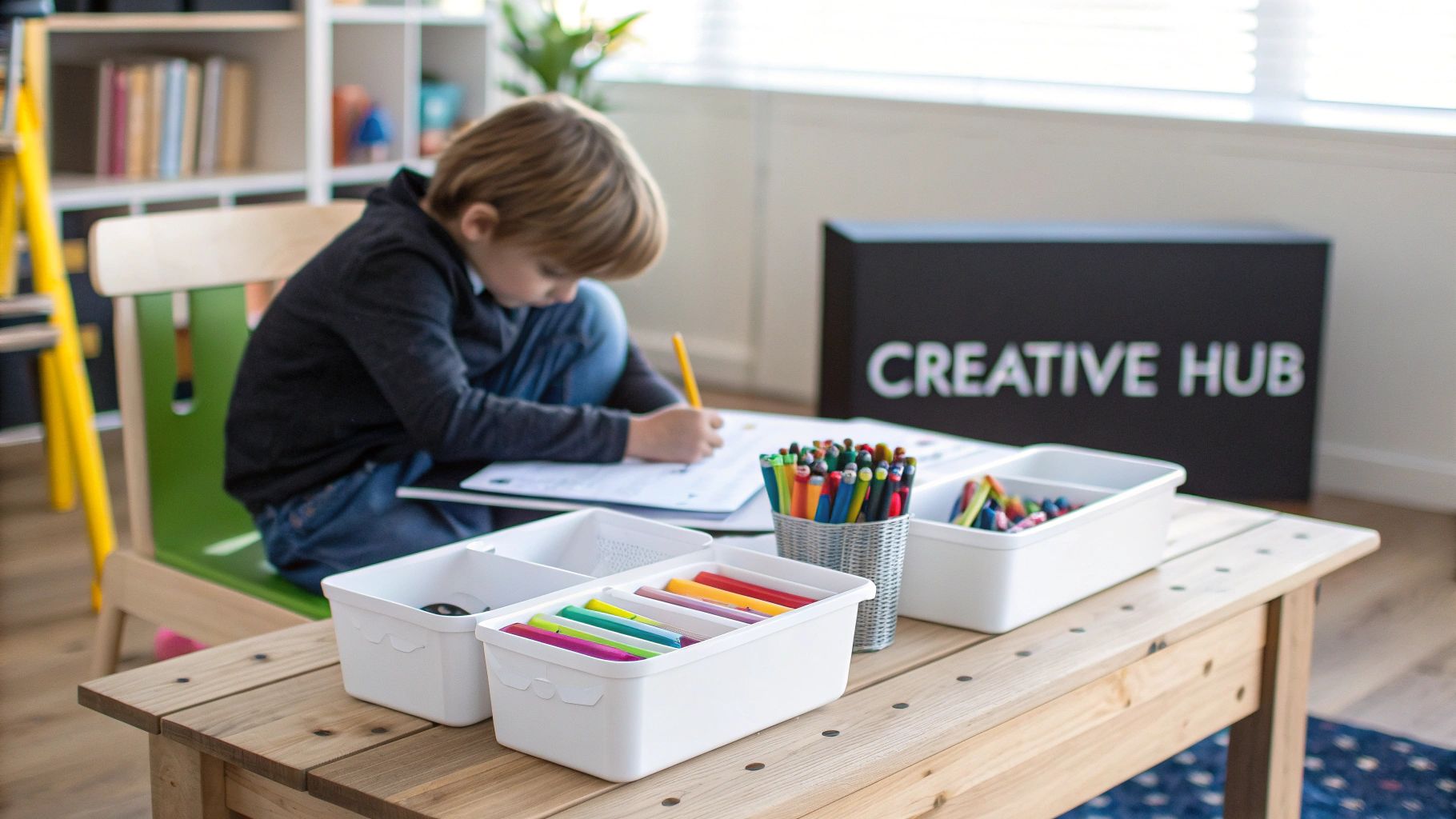
This little creative hub is a huge tool for child development. When every crayon and paintbrush has a home, kids naturally learn about organization and responsibility. They can grab their own paper, pick their own colors, and—this is a big one—learn to tidy up when they're done. That sense of ownership is a massive confidence booster.
A well-organized craft space gets rid of the distractions and the "what should I do now?" moments. It lets a child slip into that state of focused play, which is so important for building a longer attention span and cognitive growth.
This idea fits right in with Montessori principles, which are all about self-directed, hands-on learning in a carefully prepared space. The table becomes their own personal studio, a place where they can truly concentrate.
Transforming Chaos into Joyful Creation
With so many of us doing more creative activities at home, we need solutions that actually work. A dedicated table is perfect for those nature-inspired projects, like autumn leaf exploration crafts, because it keeps all the leaves, twigs, and glue contained. The right table can turn a potentially chaotic mess into a joyful, structured afternoon, making it a must-have for any family trying to find that sweet spot between creativity and order.
What to Look for in the Perfect Kids Craft Table
Picking out the perfect art and craft table with storage is about more than just finding a cute piece of furniture. Think of it as investing in your child's very first creative headquarters. The best tables strike that perfect balance between inspiring play and practical design, making sure they can handle messy art sessions while helping you keep the house (relatively) tidy.
It’s about hitting that sweet spot where safety, durability, and smart features all come together.
This isn't a niche purchase anymore, either. More and more families are creating dedicated creative zones at home. The global arts and crafts market is set to explode from $47.36 billion in 2025 to a massive $86.33 billion by 2033. With North America leading the charge at a 40% market share, it’s clear that parents are looking for this kind of multifunctional furniture. In fact, craft tables now make up 15-20% of what families spend on furniture for their creative spaces.
Size and Height Matter More Than You Think
First things first: measure your space. But don't forget to measure your child, too! A table that’s too high will leave them frustrated, while one that’s too low can lead to poor posture and discomfort. The goal is to find a table where your little one can sit with their feet flat on the floor and their elbows bent comfortably at a 90-degree angle on the tabletop.
Pro Tip: If you can, spring for an adjustable-height table. It might cost a little more upfront, but a table that grows with your child is a brilliant long-term investment. It'll see them through from their first scribbles all the way to their elementary school homework.
An adjustable table stays ergonomic and inviting for years, making it a much smarter choice than a fixed-height one they'll outgrow in a flash.
Material and Durability Are Key
Let’s be honest: kids are tough on furniture. Any art table is destined to face paint spills, rogue marker drawings, and the occasional glitter bomb. The material you choose will determine how well it stands up to the chaos and, just as importantly, how easy it is to clean.
- Solid Wood: This is the heavyweight champion of durability. Solid wood tables are incredibly sturdy and can easily be passed down through generations. Just make sure you look for non-toxic finishes to keep them safe for little hands and mouths.
- Engineered Wood (MDF): A great budget-friendly alternative. The key here is to find one with a high-quality, non-toxic laminate finish that’s tough enough to resist stains and wipes clean in a second.
- Durable Plastic: Lightweight, a breeze to clean, and usually available in a rainbow of fun colors. Plastic is a fantastic choice for younger toddlers, but double-check that it’s BPA-free and has a sturdy base that won’t tip over.
Safety Should Always Come First
When it comes to kids' furniture, safety is absolutely non-negotiable. A well-designed craft table should have built-in features that prevent the most common bumps and tumbles, giving you peace of mind while your child gets lost in their creative world.
Here are the critical safety elements to check for:
- Rounded Corners: Sharp edges are a parent’s worst enemy. Soft, rounded corners are a must-have to prevent painful bumps and bruises during playtime.
- Stable Construction: Give the table a good wiggle before you buy it. It should feel solid and grounded, not wobbly or top-heavy, especially when storage bins or drawers are pulled out.
- Non-Toxic Finishes: Kids touch everything, and things often end up in their mouths. Make sure all paints, stains, and sealants on the table are certified non-toxic and lead-free.
Finding the right table can feel like a big decision, but a quick checklist can make comparing your options a whole lot easier.
Key Feature Checklist for Your Art and Craft Table
| Feature | Why It Matters | What to Look For |
|---|---|---|
| Adjustable Height | The table grows with your child, ensuring proper ergonomics and long-term use. | Look for tables with at least 2-3 height settings or a screw-in leg mechanism. |
| Durable Materials | It needs to withstand spills, scratches, and enthusiastic creativity. | Solid wood for longevity; laminated MDF for budget; BPA-free plastic for toddlers. |
| Rounded Corners | Prevents bumps, bruises, and injuries during play. | Check that all edges and corners are smoothly and generously rounded. |
| Stable Base | A sturdy table won't tip over, even when leaned on or drawers are open. | Wide-set legs or a solid base. Give it a gentle "wobble test" in the store. |
| Non-Toxic Finish | Keeps your child safe from harmful chemicals. | Look for labels like "non-toxic," "lead-free," "low-VOC," or "GREENGUARD Certified." |
| Easy-to-Clean Surface | Makes cleanup after messy art projects quick and painless. | A smooth, non-porous surface like laminate or sealed wood is ideal. |
Ultimately, the best art and craft table with storage is one that safely supports your child’s creative journey. By keeping these core features in mind, you can pick a piece that will be the heart of their creative space for years. For more tips on setting up the perfect spot, check out our guide on choosing a toddler's art desk.
Mastering The Mess With Smart Storage Solutions
An art and craft table with storage is your secret weapon against the explosion of glitter, crayons, and pom-poms that comes with raising a creative kid. The right storage doesn't just hide the mess; it creates an intuitive workspace where everything has its place.
Suddenly, cleanup isn't a chore. It becomes a simple, teachable moment about tidying up and taking care of your things. Think of the storage as the table's brain—a good one anticipates what you and your child need. Is drawing a favorite activity? A built-in paper roll is a must. Are you drowning in tiny beads and googly eyes? Small, removable bins will be your best friend. The whole point is to make creating feel seamless for them and cleanup feel manageable for you.
Choosing Your Storage Style
Integrated storage isn't just a nice-to-have feature; it's what most families are actively looking for. In fact, online searches for 'craft table with storage' are far more common than for 'adjustable' or 'foldable' options. It makes sense when you consider that nearly 70% of modern homes, particularly in cities, are designed to save space. Adding smart storage like drawers can actually boost furniture sales by 28%, and real-world reviews show that organized supplies can cut down on visible clutter by as much as 40%.
So, what are your options? The storage built into these tables generally falls into a few categories.
- Built-in Drawers: These give the table a clean, streamlined look. They’re fantastic for tucking away supplies that you don't use every single day, keeping everything dust-free and out of sight.
- Open Cubbies: If you love the Montessori approach, this is the way to go. Open cubbies let kids see their materials and grab them on their own, which builds independence. They’re also perfect for bigger items like sketchbooks and containers of playdough.
- Removable Bins: The champion of flexibility. These bins can be lifted out and brought right to the floor or another play area. They make sorting and cleanup incredibly easy. Look for sturdy plastic or fabric bins that are a breeze to wipe down.
This flowchart shows how to think about the most important features, starting with the non-negotiables.
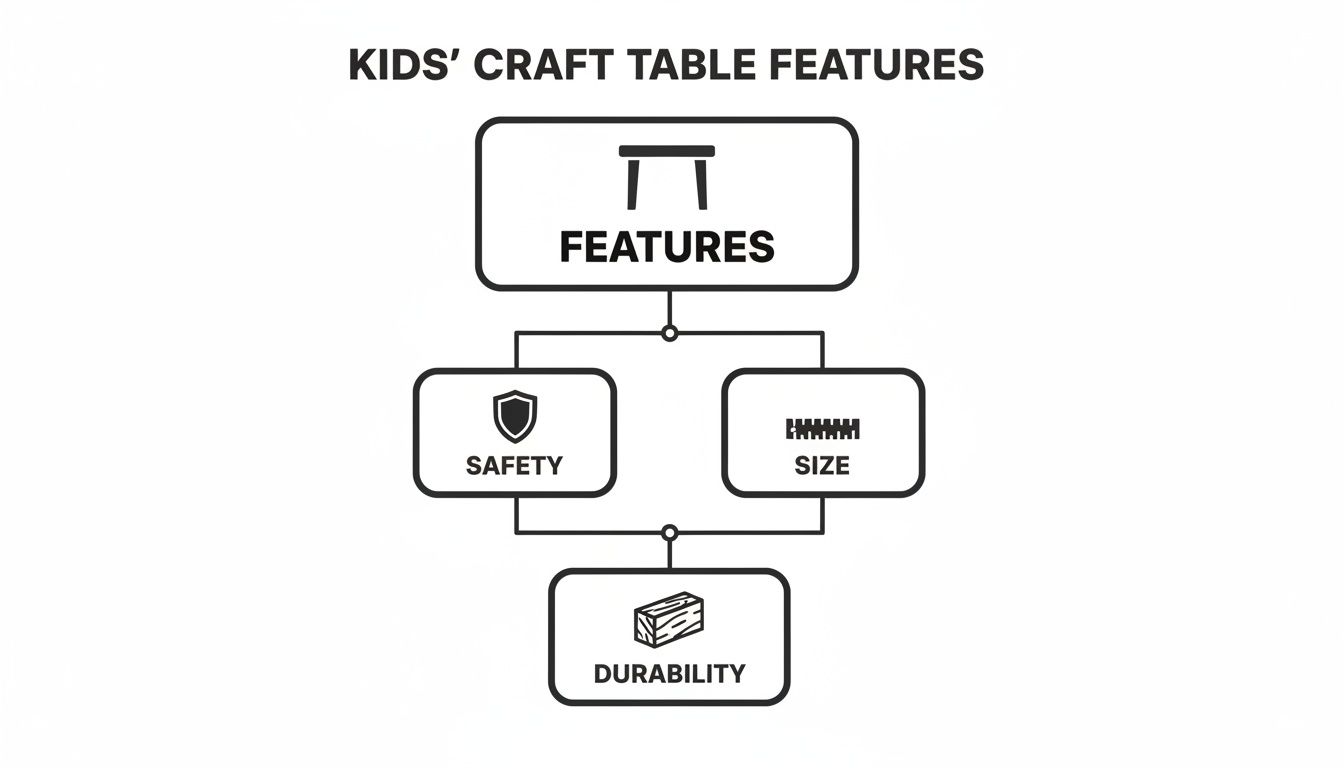
As you can see, safety and size are the foundation. From there, you can focus on durability and the finer details that will make the table work for your family.
Here’s a quick breakdown of the different storage options to help you decide what’s best for your space and your child's creative style.
Storage Type Comparison
| Storage Type | Best For | Potential Downsides |
|---|---|---|
| Built-in Drawers | Hiding clutter, storing flat items like paper, and keeping things dust-free. | Can be harder for little hands to open and see what's inside. |
| Open Cubbies | Montessori-style independence, storing bulky items, and quick access. | Can look messy if not kept tidy; items are visible and can gather dust. |
| Removable Bins | Easy cleanup, sorting small items, and moving supplies to other areas. | Bins can get misplaced; may not look as streamlined as built-ins. |
Ultimately, the best choice depends on how your child plays and how much organization you're willing to maintain.
Organization For Easy Access And Cleanup
A table with great storage is only half the battle—how you organize it is what really makes it shine. A simple system is usually the most effective. Try grouping similar items together: all the crayons and markers in one bin, collage materials in another, and paints in a third. This helps your child find what they're looking for without dumping everything out.
A well-organized table empowers children to manage their own creative process. When they know where things go, they build independence and a sense of ownership over their space and supplies.
This simple act of knowing where the glue stick lives builds confidence and makes them more likely to start projects on their own.
For a deeper dive into setting up a creative hub that works, our guide on art supply storage ideas for kids has tons of practical tips. And if you're ready to tackle the whole craft corner, you can learn how to organize craft supplies like a pro. By pairing a smart table with a thoughtful system, you really can master the mess for good.
Creating a Montessori-Friendly Creative Zone
Bringing Montessori principles into your child’s creative space can do something amazing: it turns a simple play area into a rich learning environment. The whole philosophy boils down to fostering independence and respect. An art and craft table with storage is the perfect starting point for this, creating a "prepared environment" where your child can truly lead their own creative journey.
The idea is to create a space that belongs entirely to them—one that's calm, inviting, and totally accessible. This means furniture that's actually child-sized, letting them sit comfortably without needing a booster or struggling to reach. When a child can easily grab their own paper, crayons, and paint, they don't have to ask for help. That simple act builds an incredible amount of confidence and self-sufficiency.
Arranging Materials for Independence
How you set up the supplies is just as critical as the table itself. The Montessori method is big on order and visibility. So, instead of cramming everything into deep, jumbled drawers, think low, open shelving or clear bins. This lets your child see all their options at a single glance.
This kind of setup accomplishes two very important things:
- It sparks choice. When a child sees all their materials laid out, they're far more likely to start a project on their own, picking and choosing based on their own creative whim.
- It teaches responsibility. An orderly space makes cleanup feel natural and intuitive. Kids learn that every single item has its own home, and they quickly see they are capable of putting things back where they belong.
By making supplies visible and reachable, you are sending a clear message to your child: "This is your space, your tools, and your ideas are respected here." This sense of ownership is fundamental to building a lifelong love of learning and creating.
For more inspiration on designing an empowering workspace for your little one, our guide on choosing the right Montessori activity table offers some great additional insights.
Cultivating a Calm and Focused Atmosphere
The vibe of the space around the table should be just as intentional. Aim for a calm, uncluttered corner with plenty of good natural light if you can. Try to avoid overwhelming your child with too many materials at once. A better approach is to rotate a curated selection of supplies based on what they're into right now. This "less is more" strategy cuts down on distractions and encourages them to engage more deeply with the materials in front of them.
At the end of the day, a Montessori-friendly creative zone is all about respecting the child's process. It’s a space free from interruption, where they can work at their own speed and let their imagination run wild without any pressure. Your art and craft table with storage becomes so much more than just a piece of furniture—it’s the foundation for independence, focus, and joyful creation.
How to Set Up and Maintain Your Art Station
You’ve brought home the perfect art and craft table with storage—that's the first big win. Now, let's turn that piece of furniture into a buzzing hub of creativity. How you set it up can mean the difference between a table that’s used every day and one that becomes a glorified dust collector. It’s all about making the space inviting, easy for little hands to use, and even easier to manage.
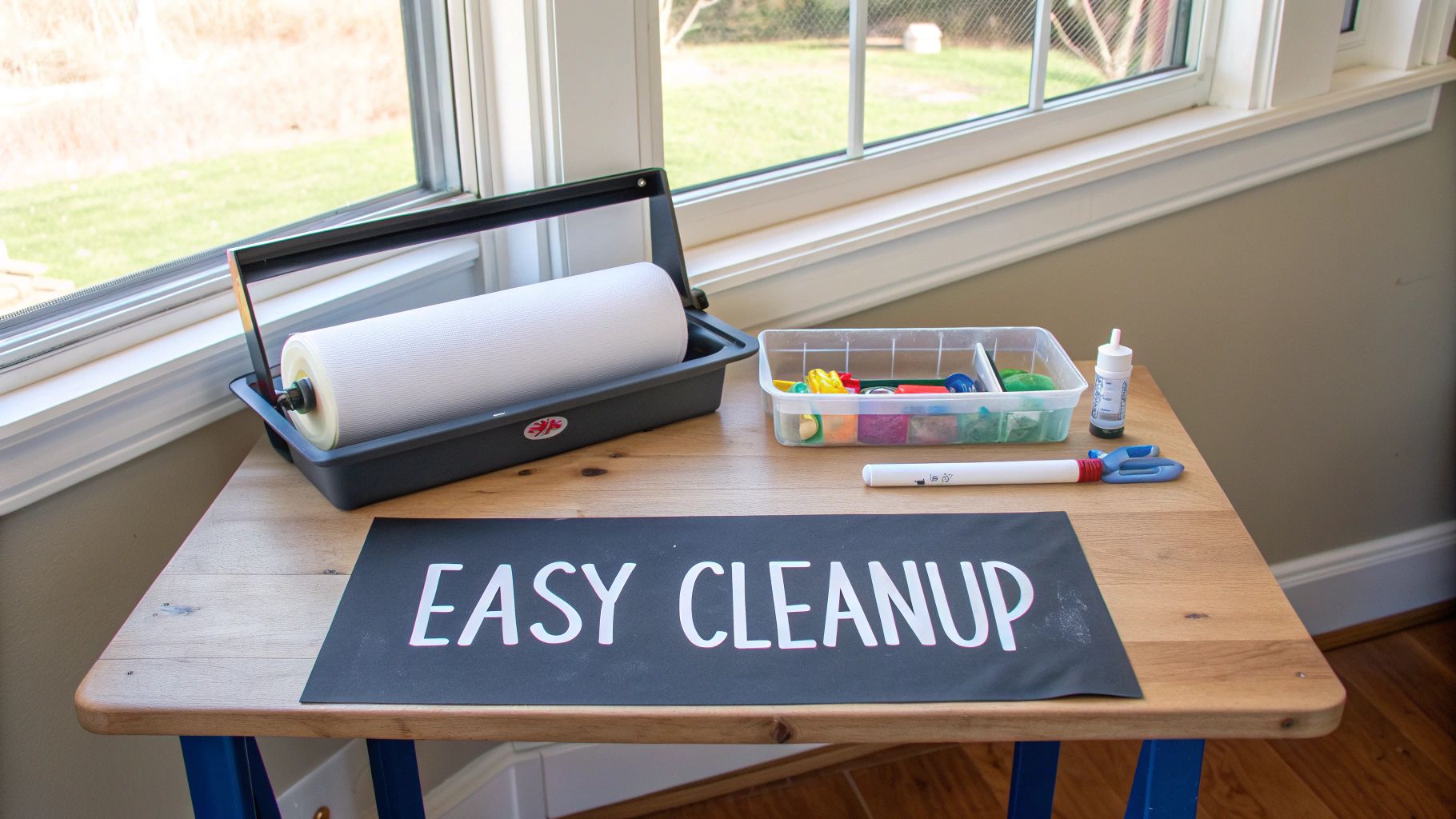
First things first: location. Think like a pint-sized Picasso. Where would they feel most comfortable and inspired? A spot with lots of natural light is ideal—it’s easier on the eyes and makes those crayon colors really pop. And trust me, having it close to a sink is a game-changer for those mid-project hand washes and brush rinses.
Don't forget to protect your floors! A simple, wipeable splat mat or a small, low-pile rug tucked underneath will save you from the inevitable "oops" of paint drips and runaway markers.
Simple Routines for Lasting Success
With your station in place, the real secret to keeping it fun (and not a total disaster zone) is creating a few simple routines. Consistency is everything. It helps kids learn what to expect and gives them a real sense of ownership over their creative corner.
- Prep Together: Before diving into a project, get your child involved in gathering the supplies. It builds anticipation and subtly teaches them where everything belongs from the get-go.
- Cleanup Cue: Come up with a consistent signal that means it's time to tidy up. This could be a special song you sing or a simple phrase like, "Time to put our art tools to bed."
- One-Task Tidy: Don't overwhelm them. For toddlers, start small by asking them to do just one thing, like putting all the red crayons back in their bin. Simple.
A predictable cleanup routine transforms a dreaded chore into a satisfying part of the creative process. It empowers children by showing them they are capable of caring for their own special space.
Keeping Your Craft Table in Top Shape
A little TLC will ensure your art and craft table with storage survives years of glitter explosions and glue masterpieces. Different materials need slightly different care, but a few universal tips will see you through.
For daily messes, a damp cloth is your best friend. For tougher stuff like dried paint or permanent marker, start gentle. A little paste made from baking soda and water can often lift stubborn marks from sealed wood or laminate surfaces without causing any damage.
By making these small setup and maintenance habits part of your family’s rhythm, your art station will stay a well-loved, well-used hub for creativity.
So, you've got a dining table. Isn't that good enough for a bit of glitter and glue? It's a fair question, but trust me, getting a dedicated art and craft table is one of the smartest moves you can make. This isn't just about buying another piece of kids' furniture; it’s about investing in your child's creativity, your own sanity, and a more organized home.
Think of it as creating a special zone where imagination can run wild without you worrying about your good furniture. Beyond that, a dedicated art and craft table with storage gives kids a sense of ownership and structure. When they know exactly where their creative space is, they're far more likely to dive into play on their own. This is huge for fostering independence, problem-solving, and—dare I say it—even cleaning up after themselves.
It's a Powerhouse for Their Development
The simple act of drawing, snipping with scissors, or squishing some clay is doing so much for their growing brains and bodies. It’s all about building those fine motor skills—the tiny, precise movements in their hands and fingers that are the building blocks for writing their name or tying their shoes.
An art station also becomes a safe place for them to just be. It's an outlet for big feelings, a canvas for their wildest stories, and a way to build confidence without any pressure to get it "right."
A dedicated craft table sends a powerful message to a child: Your creativity matters. This space is yours to explore, make messes in, and bring your ideas to life.
A Sanity-Saver for the Whole Family
Let's be honest, the perks are just as much for us parents. It means no more glitter explosions on the dinner table right as you’re about to serve spaghetti. It means less clutter scattered across every surface of your home.
Cleanup is a breeze, and you might just find you have more time for creating with them instead of just managing the chaos.
This isn't just a niche idea anymore; families everywhere are catching on. The global market for craft tables is expected to hit a massive $1,500 million by 2025. A huge chunk of that—over 60%—is driven by parents in North America and Europe looking for smart, ergonomic designs that blend storage with creative space. It's clear this is more than a table; it's becoming a centerpiece of a creative home. You can read more about these craft table market trends if you're curious.
A Few Common Questions We Get
Picking out the perfect art and craft table with storage is a big step, and it's totally normal to have questions pop up. From getting the size just right to figuring out how to handle the inevitable mess, we’ve gathered the most common queries from parents just like you.
What Age Is Best for a Craft Table?
One of the first things parents wonder is when to introduce a craft table. A child is usually ready as soon as they can sit up confidently on their own and start showing an interest in things like scribbling or stacking blocks. This often happens around 18 months to 2 years old.
Starting them at this age is great for building good habits. It makes creative time feel like a natural, fun part of their daily rhythm.
What Is The Ideal Height And Size?
Another frequent question is about the dimensions. For toddlers and preschoolers, a table height between 18 to 22 inches usually works best. This allows their little feet to rest flat on the floor while they're sitting, which is important for comfort and posture.
As for the tabletop, you want it large enough for big sheets of paper but not so vast that supplies are out of reach. A surface around 30 inches wide is a fantastic starting point.
Remember, the goal is independence. A right-sized table empowers your child to get in and out of their chair without help and easily grab everything they need—a huge confidence booster.
Can I Just Build One Myself?
Many parents also ask if a DIY table is a good idea. The answer is a resounding yes! A DIY craft table can be a budget-friendly and totally customizable option if you're handy.
Simple, popular designs often use shelving units, like the IKEA Kallax, for the base and a nice stained wood board for the top. This gives you tons of built-in storage right from the get-go.
How Do I Keep The Table Clean?
And finally, the big one: how do you handle the mess? The secret is choosing a surface that’s a breeze to clean, like sealed wood or laminate.
For those extra-stubborn stains from markers or paint, a simple paste of baking soda and water often works wonders without any harsh chemicals. Making cleanup a quick, simple routine after each art session helps it feel less like a chore and more like the last step of the creative fun.
Ready to create a space that sparks joy and fosters independence? Ocodile designs beautiful, child-safe furniture that grows with your family. Explore our collection of thoughtfully crafted pieces and find the perfect foundation for your child’s creative journey at https://ocodile.com.