



Building Confidence in Kids: A Practical Parent's Guide
Your child is standing right there, one hand on the counter, one foot half-lifted, wanting to help but unsure. You can almost see the question move across their face: Can I do this? Most parents recognize that moment. It happens at the sink, on the playground, while tying shoes, opening lunch containers, or walking into a new activity.
Confidence usually doesn’t grow from one big speech. It grows from hundreds of ordinary moments. A parent’s mindset shapes the challenge, the parent’s words shape the child’s inner voice, and the home environment shapes what the child can attempt without constant adult rescue.
That triad matters because building confidence in kids isn’t just about praise. It’s about helping a child feel capable, trusted, and practiced.
Why Building Confidence Early Matters
A child reaches for the soap pump, misses, and looks up before trying again. That pause tells parents a lot. Early confidence shapes whether a child returns to the task, waits to be rescued, or decides to themselves, “I can’t do this.”
In practice, confidence starts influencing daily life long before school performance or friendship struggles make it obvious. It affects whether a child attempts hard things, tolerates frustration, and recovers from small mistakes. Those patterns get rehearsed at home, in ordinary routines, with ordinary objects, under the watch of adults who mean well but sometimes step in too fast.
Confidence also grows unevenly. A child may feel bold on the playground and unsure at the sink, chatty with cousins and withdrawn in a new class. That is normal. Parents get better results when they stop treating confidence as a personality trait and start treating it as something built through repetition, expectations, and access.
Confidence is the belief that effort will lead somewhere.
That is why the early years carry so much weight. During this stage, children are forming their inner script about challenge. They notice whether adults expect them to participate, whether the words around them leave room for growth, and whether the home setup lets them do meaningful things for themselves. If you want support for the social and emotional side of this work, Soul Shoppe offers SEL tools for child confidence. It also helps to keep developmental expectations grounded in the bigger picture of childhood development milestones, because a child who is asked to do what fits their stage is more likely to feel capable than chronically behind.
Parents often make one understandable mistake. They treat confidence as a feeling to protect instead of a capacity to build. That leads to overhelping, quick praise for outcomes, and home routines that leave children watching instead of participating. The short-term trade-off is fewer messes and less frustration. The long-term cost is a child who has had fewer chances to test, adjust, and succeed on their own.
A steadier approach looks different:
- Build confidence through practice: Repeating small tasks matters more than giving big pep talks.
- Allow manageable struggle: A brief wobble often teaches more than instant adult rescue.
- Use the whole triad: Parent mindset, daily language, and the physical environment work together.
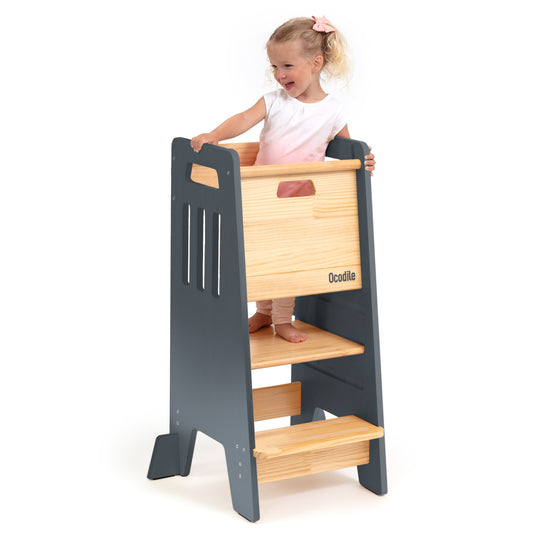
- Make independence visible at home: Tools such as a standing tower can turn “wait there while I do it” into “come help,” which gives children real evidence that they are capable.
That is the part many articles miss. Children do not build confidence from praise alone. They build it when the adults around them expect growth, speak in ways that support it, and set up a home where capable behavior can happen again and again.
Adopt a Growth Mindset to Nurture Resilience
Some children stop trying because they think ability is fixed. Others keep trying because they believe skill can grow. That difference often starts with the adults around them.
Research shows that teaching a growth mindset, praising effort and strategy over innate ability, leads to increased motivation and higher academic performance. Parents who use effort-focused language can see measurable confidence gains within 4-6 weeks (Tutor Doctor).

Shift from traits to process
A fixed mindset sounds innocent. “You’re so smart.” “You’re a natural.” “You’re the best climber.” The problem isn’t kindness. The problem is fragility. If a child starts to believe their worth depends on looking naturally good at something, challenge feels dangerous.
A growth mindset sounds different. It points the child toward what they did, not what they are.
Try language like this:
- After effort: “You stayed with that even when it got hard.”
- After strategy: “You changed your plan when the first one didn’t work.”
- After progress: “Last week you needed help. Today you did more on your own.”
That kind of feedback tells a child that ability is built. It also lowers the fear of mistakes.
What resilience looks like at home
Parents often think resilience means pushing children harder. Usually it means responding differently when they struggle. A child spills flour while helping bake. A preschooler can’t get their coat zipper started. A school-age child gets frustrated by homework.
In those moments, avoid turning struggle into identity. “You’re not being careful.” “You’re bad at this.” “Math just isn’t your thing.” Those phrases settle deep.
Instead, use a simple pattern:
- Name the effort: “You kept trying.”
- Name the strategy: “You lined the zipper up more carefully.”
- Name the growth: “That made it work better.”
For parents who want a deeper practical framework, this guide to scaffolding in child development is useful because good support helps a child do more without taking over.
Practical rule: Praise the part your child can repeat. Effort, attention, planning, persistence, and recovery can all be repeated. “Being gifted” cannot.
The trade-off parents have to accept
Growth mindset parenting sounds simple until your child is upset, behind schedule, and asking for help right now. That’s where the trade-off lives. Quick rescue gets the task done faster. Patient coaching builds the child faster.
Not every moment needs to become a lesson. Sometimes children are tired and need help. But if adults solve every frustration immediately, children never collect enough lived evidence that they can improve through practice.
That evidence is what confidence rests on.
Use the Language of Empowerment in Daily Life
Your child drops the spoon, freezes at the shoe basket, or hesitates at the playground ladder. In ordinary moments like these, the tone of the home shows up fast. Parents build confidence less through big speeches and more through the short, repeated phrases children hear every day.

As noted earlier, many children hear far more correction than encouragement in a typical day. That does not mean parents should force praise into every interaction. It means the family’s everyday wording deserves close attention, especially during routines that already carry stress, like getting dressed, cleaning up, or trying something physical for the first time.
Choose language that builds agency
The goal is not to sound nicer. The goal is to speak in a way that leaves the child with a job to do, a choice to make, or a next step to try.
That takes practice, because rushed adults often reach for efficient phrases. “Be careful.” “Stop.” “Here, let me do it.” Those lines can keep the day moving, but over time they also teach a child to look outward for direction instead of inward for judgment, planning, and persistence.
Here are a few swaps that work better in real family life.
| Common moment | Less helpful language | Language that builds agency |
|---|---|---|
| Child climbs something low but challenging | “Be careful.” | “What’s your plan for getting down?” |
| Child struggles with shoes | “Let me do it.” | “Show me which part is tricky.” |
| Child spills while helping | “You made a mess.” | “Spills happen. What do you need to clean it up?” |
| Child says “I can’t” | “Yes you can.” | “You can’t do it yet. What’s the first step?” |
| Child succeeds quickly | “You’re amazing.” | “You focused and figured it out.” |
The most useful phrase is often the one that sounds the least dramatic. It gives information, points to action, and leaves room for the child to participate.
Validate first, then coach
Children learn best when their nervous system is settled enough to take in guidance. A frustrated child usually does not need a lecture. A worried child does not need immediate correction. They need a parent who can name the feeling without getting pulled into it.
Try language like this:
- For frustration: “I see this is frustrating.”
- For hesitation: “You’re not sure about this yet.”
- For disappointment: “You wanted that to go differently.”
Then pause.
In my experience, that small pause changes the whole interaction. It lowers shame, buys a little cooperation, and makes problem-solving possible. Parents sometimes worry that this is too soft. It is not soft. It is efficient. A child who feels understood can usually re-engage faster than a child who feels judged.
“I believe you can handle this, and I’m here if you need a little help.”
That sentence works because it combines confidence in the child with a realistic offer of support. It reflects the balance good confidence-building always requires. Too much reassurance with no expectation can make a child passive. Too much pressure with no support can make them avoidant.
After you validate, move into questions that help the child think:
- Ask for observation: “What happened?”
- Ask for a next step: “What do you want to try now?”
- Ask for reflection: “What helped last time?”
A useful example is risky play and movement. Constant warnings can make children tense or dependent on adult cues. Calm questions build body awareness and judgment instead. The video below shows the kind of coaching that helps children stay engaged and think clearly.
Phrases worth keeping close
Parents do not need a perfect script. They need a handful of steady lines they can return to under pressure. Repetition matters because children borrow our language before they build their own.
- “Take your time.” This lowers panic.
- “What have you tried so far?” This builds reflection.
- “Do you want help, or do you want me to stay close?” This preserves control.
- “You’re learning.” This normalizes imperfection.
- “I noticed you kept going.” This strengthens persistence.
Words are one part of the confidence triad. Your mindset sets the tone. Your language guides the child’s inner voice. Your home either supports that message or works against it. When those three line up, children do not just feel encouraged. They get repeated proof that they can try, adjust, and do more for themselves.
Design a Home Environment for Independence
A child can’t practice independence in a space built entirely for adults. If the cup is too high, the sink is unreachable, the hook is overhead, and every useful tool requires permission, the home teaches dependence all day long.
That’s why the physical environment matters so much in building confidence in kids. A well-designed home suggests, “You may participate here.”
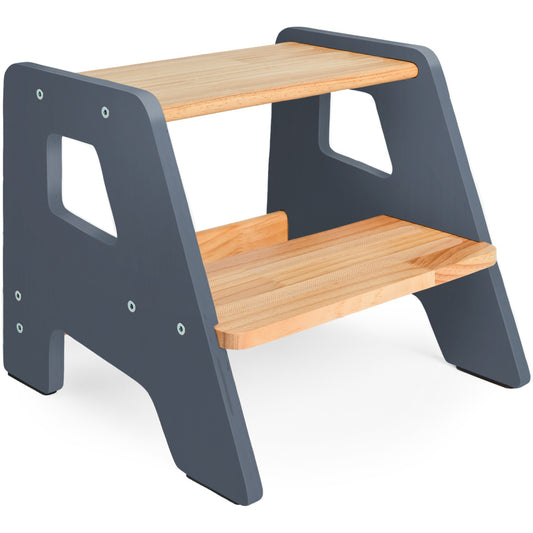
A 2023 study in the Journal of Applied Developmental Psychology found that children in Montessori environments using low aids like step stools showed 25% higher task persistence and self-efficacy scores compared to traditional setups (Child Mind Institute). Parents don’t need a perfect Montessori home to apply that principle. They need a home that gives children safe access to real participation.

What a confidence-building home actually does
A supportive environment reduces unnecessary barriers without removing every challenge. That’s the balance. Children still work, climb, carry, pour, sort, wipe, and decide. They just do it in a space where success is possible.
Look for these pressure points in your home:
- Height problems: If children can’t reach what they need, they wait for adults.
- Storage overload: If every shelf is crowded, children can’t find or return things independently.
- Adult-only routines: If all meaningful tasks happen above the child’s head or out of their way, they don’t get to practice competence.
- Too many choices: If toys and materials are scattered everywhere, many children become less decisive, not more independent.
Small changes with a big daily effect
You don’t need a remodel. Most families make noticeable progress with a few targeted adjustments.
Lower access
Put everyday child-appropriate items where your child can reach them safely. That might include cups, pajamas, shoes, art materials, hand towels, or a snack basket you’ve approved.
When a child can get what they need, use it, and put it back, they build a loop of competence. That loop matters more than decorative perfection.
Create defined zones
Children manage themselves better when spaces have a purpose they can understand. A reading corner, a getting-dressed area, a low shelf for art, a stool at the bathroom sink, a regular spot for dirty clothes. Clear zones reduce friction.
Make practical life visible
Children gain confidence when they take part in real family work. Let them see where cloths are kept, where dishes go, where vegetables get washed, where shoes belong. The more visible the task, the easier it is for the child to join it.
A prepared environment doesn’t spoil a child. It gives them the structure to practice capability.
Design for participation, not just prevention
Many homes are child-proofed in ways that accidentally communicate, “Don’t touch, don’t try, wait for me.” Safety matters, of course. But there’s a difference between removing serious hazards and removing all opportunity.
Here’s a better filter for home decisions:
| Ask yourself | Confidence-building answer |
|---|---|
| Can my child reach it? | If yes, they can practice self-help. |
| Can my child use it safely with supervision or training? | If yes, it can become a learning tool. |
| Does this setup invite contribution? | If yes, it supports competence. |
| Will I need to say “no” all day? | If yes, redesign the space. |
Children don’t become confident because adults tell them they’re capable. They become confident because their environment lets them act capable, again and again. A reachable hook, a low shelf, a hand towel at their height, and a safe way to join kitchen life often do more than another round of praise.
Implement Age-Appropriate Confidence-Building Activities
Confidence grows fastest when children do useful things that matter to the family. Not pretend work. Real work, scaled to their age and ability.
That’s one reason structured activities can help. Research involving parents of 18-35-year-olds found that 94% affirm that structured activities like sports enhance confidence and social skills, and 88% report that coached children are more likely to speak up for themselves (First Tee). The lesson for home life is straightforward. Confidence builds through practice, contribution, and supported challenge.

Confidence-building activities by age
| Age Group | Activity Example | Confidence Skill Built |
|---|---|---|
| Toddler | Put dirty clothes in a basket | Contribution and follow-through |
| Toddler | Carry napkins to the table | Responsibility |
| Toddler | Wipe a small spill with guidance | Recovery after mistakes |
| Preschool | Set spoons and cups at each place | Competence through routine |
| Preschool | Water plants | Care and consistency |
| Preschool | Choose between two outfits | Decision-making |
| Early Elementary | Pack parts of their school bag | Organization |
| Early Elementary | Help plan a simple meal | Problem-solving |
| Early Elementary | Read instructions for a small project | Persistence and independence |
What makes an activity confidence-building
Parents sometimes choose tasks that are too advanced, too performative, or too optional. The best activities share a few traits:
- They’re real: The child can see why the task matters.
- They’re repeatable: Confidence needs repetition.
- They’re visible: The child can tell when they’ve helped.
- They stretch without overwhelming: The task should require effort, not defeat.
A toddler feels proud dropping washcloths into a basket because they can complete the loop. A preschooler feels steady setting the table because the job belongs to them. An early elementary child grows by managing one part of family life with dependable support.
Good contribution beats constant praise
A common mistake is turning every task into applause. Children do need encouragement, but they don’t need a standing ovation for putting socks away. Too much commentary can make a child dependent on adult reaction.
Instead, try this approach:
- Acknowledge matter-of-factly: “You put every fork in the right place.”
- Connect to impact: “Now the table is ready for everyone.”
- Hand over ownership: “This can be your job tonight.”
That style builds identity. The child starts to think, “I’m someone who helps.”
When outside activities help
Home is the first practice field, but it doesn’t have to be the only one. Team sports, martial arts, theater, music, scouting, and other structured settings can strengthen confidence because children learn to try, fail, improve, and belong with other people watching.
If your family is exploring local programs, it helps to use practical criteria instead of choosing by hype alone. A guide on how to evaluate youth soccer programs Houston can be useful because it focuses on fit, coaching quality, and developmental support. At home, you can reinforce the same values through Montessori practical life activities that turn ordinary routines into skill-building moments.
Children gain durable confidence when they feel needed, not just praised.
A simple test for parents
Ask yourself one question at day's end: What did my child do today that made them feel useful? If the answer is unclear, start smaller tomorrow.
Let them carry, sort, wipe, choose, measure, pour, fetch, match, fold, or prepare. These aren’t filler tasks. They are confidence practice hidden inside family life.
Your Role as Your Child's Confidence Coach
Parents often get handed two bad options. Protect your child from struggle, or throw them into hard things and hope they toughen up. Neither works well. Children need support with space, not control with panic.
That’s why the coaching mindset is so useful. A good coach doesn’t play the whole game for the child. A good coach prepares, observes, encourages, adjusts, and trusts the process.
What confidence coaching looks like at home
Your role is not to remove every hard feeling. It’s to help your child build a workable response to hard feelings. That means:
- Holding a steady mindset: You look for growth, not perfection.
- Using language that gives agency: You ask, reflect, and guide instead of label and rush.
- Creating a home that allows practice: You make participation possible.
Some days, this will look calm and natural. Other days, it will feel slow. Your child will dawdle while pouring. They’ll refuse a task they did happily yesterday. They’ll ask for help with something you know they can do.
That doesn’t mean the approach isn’t working. Confidence is uneven while it’s developing.
When your child needs more support
Some children struggle with confidence because of temperament, transitions, learning differences, anxiety, grief, bullying, or family stress. In those cases, warm parenting strategies still matter, but extra support may help. If your child seems persistently overwhelmed, withdrawn, or harsh with themselves, it can be wise to find mental health services in Grande Prairie or in your local area through a qualified provider.
The goal isn’t to raise a child who never doubts themselves. The goal is to raise a child who knows doubt doesn’t have the final say.
Start with one change
You don’t need to overhaul your parenting this week. Pick one place where confidence breaks down most often in your home. Mornings. Mealtimes. Homework. Climbing. Getting dressed. Then make one adjustment in each part of the triad.
- Change one belief: “My child can do more than I usually allow.”
- Change one phrase: “What’s your plan?”
- Change one part of the environment: “I’ll make this easier to reach and easier to use.”
Those small shifts compound. Over time, your child won’t just hear that they’re capable. They’ll live it.
If you want practical tools that support independence at home, explore Ocodile. Their child-focused furniture is designed to help young children participate more safely in everyday family life, which gives parents more opportunities to build competence, trust, and lasting confidence.