



Child Sized Furniture Benefits That Foster Independence
Some days, the problem doesn't look like furniture at all. It looks like your toddler tugging your pajama leg while you crack eggs, reaching for the counter, whining to be picked up, then trying to climb a drawer when your hands are full.
Most parents read that moment as clinginess or impatience. I think it's often something simpler. Your child wants to join real life, but the environment keeps saying, “You're too small.”
That mismatch matters. When a child can't see the countertop, can't reach the sink, can't sit comfortably at the table, and can't access their own things, they depend on adults for nearly everything. Child sized furniture benefits start there. Not with décor, and not with a perfectly styled Montessori room, but with the basic question: can my child participate safely and comfortably in daily life?
When the answer becomes yes, a lot changes. Power struggles soften. Confidence grows. Bodies sit better. Parents spend less time lifting, hovering, and rescuing. The gains are emotional, physical, and practical, and some of the most important ones are the hidden costs you avoid when children are constantly trying to function in an adult-sized world.
Why Your Toddler Is Climbing Your Leg in the Kitchen
Your toddler hears the chopping board, smells the bananas, and sees you busy at the counter. They want in. Not later, not with a toy version of the task, but now, with you.
So they stretch. They bounce. They ask to be carried. You lift them for a minute, your arm gets tired, you set them down, and the protest begins again.
That scene shows up in kitchens, bathrooms, entryways, and bedrooms. A child wants to wash hands, put on shoes, pour water, or help stir batter. The task is often within their interest and ability. The setup is what blocks them.
It's often an environment problem
When a child can't reach, they usually do one of three things:
- Ask for constant help because that's the only workable option.
- Take unsafe shortcuts such as climbing shelves, kneeling on unstable chairs, or hanging from drawers.
- Give up in frustration and act out because they wanted participation, not exclusion.
That's why I don't see child-sized pieces as extra gear. I see them as problem-solving tools.
A secure platform in the kitchen, a low table for snacks, a reachable shelf for books, or a step stool by the sink can turn a difficult part of the day into something calmer and more cooperative. If you're comparing options for counter-height participation, this guide on what a learning tower is helps clarify how parents use one in real life.
A toddler who keeps climbing isn't always seeking attention. Sometimes they're trying to reach a world that wasn't built for them.
What changes when they can join in
The biggest shift is simple. Your child stops fighting for access and starts using it.
Instead of pulling at you while you cook, they can stand nearby and rinse fruit. Instead of begging to climb onto the bathroom counter, they can step up and wash hands. Instead of wandering during snack time, they can sit at a table that fits their body.
That's the doorway into the deeper child sized furniture benefits people talk about so often. Independence is part of it, yes. But it starts with a practical truth: children do better when the room finally works for them.
The Big Idea Why Small Furniture Matters
Child-sized furniture isn't a trend. It comes from a long-standing idea about how children learn best. Dr. Maria Montessori introduced child-sized furniture in the early 1900s so children could reach, move, and use classroom items without adult assistance, helping them feel that the space belonged to them and encouraging engagement and self-confidence, as described by Pacific Oaks on Montessori's “just my size” approach.

Small furniture carries a big message
A child notices very quickly whether a space welcomes them. When everything is too high, too heavy, or too hard to use, the message is clear: wait for an adult.
When a shelf is low enough to browse, a chair is light enough to move, and a table sits at eye level, the message changes. It says: you belong here, you can do this, and your actions matter.
That sense of ownership affects behavior in ordinary moments:
- At cleanup time, children are more likely to return items they can physically reach and carry.
- During play, they can choose materials without asking someone to hand everything down.
- At meals, they can sit with more ease and focus on eating, talking, and participating.
Why this matters at home
Many parents hear “Montessori” and picture a whole room makeover. That's not necessary. Its core principle is accessibility.
You're not trying to create a showroom. You're trying to reduce unnecessary dependence.
A home can support this idea in small ways:
| Area | Adult-sized setup | Child-accessible setup |
|---|---|---|
| Kitchen | Child watches from below | Child stands securely or works at a low table |
| Bedroom | Clothes stored out of reach | A few outfit choices placed low |
| Reading area | Books on a high shelf | Front-facing low shelf or basket |
| Bathroom | Sink and towel too high | Step stool and low hook |
Children often look more capable in a child-scaled environment because they are. The furniture removes barriers that adults barely notice.
Practical rule: If your child needs you for every small physical step, the environment may be creating dependence that looks like immaturity.
That's why the child sized furniture benefits go beyond convenience. They reflect a respectful way of seeing children, not as people who must be managed all day, but as learners who can participate when the tools match their size.
Boosting Confidence and Brainpower
Confidence in young children doesn't usually begin with praise. It begins with competence.
A child-sized setup supports that competence because it creates an accessible environment for self-care and play. The Pennsylvania Key notes that the main developmental value of child-sized furniture is autonomy. Children can do daily tasks and creative activities without relying on adults, which builds self-worth, confidence, and a willingness to try new things through accessible child-sized furniture.
The everyday moments that build an “I can do it” mindset
Think about what happens when a child can pour water from a small pitcher at their own table. They have to judge how much to pour, steady their hands, respond if they spill, and try again. That's not just independence. That's decision-making, coordination, and persistence all working together.
The same pattern shows up in other routines:
- Low book storage invites a child to choose what interests them, which supports attention and ownership.
- A small dressing area lets them attempt socks, trousers, or pajamas without waiting to be handled through the routine.
- A reachable snack station gives practice in choice, sequencing, and cleanup.
When children repeat these manageable actions, they start to expect themselves to be capable.
Why autonomy helps thinking, not just behavior
A lot of early learning is physical before it becomes verbal. Young children learn through movement, repetition, and direct feedback from the environment.
If every task requires adult intervention, the child gets fewer chances to plan, test, adjust, and complete a sequence on their own. Child-sized furniture gives those chances back.
For example, a weaning table does more than create a cute mealtime spot. It lets a child approach, sit, eat, leave, and return with far less physical help. That builds awareness of routine. A low art table lets them begin and end an activity more independently, which supports attention span and follow-through.
If your goal is to encourage more capable daily habits, this guide on encouraging independence in toddlers pairs well with a child-accessible home setup.
Children gain confidence fastest when success is built into the environment, not delivered as a speech after the fact.
Emotional regulation improves too
Many parents notice fewer battles when children can participate meaningfully. That makes sense. A child who can meet some of their own needs often feels less powerless.
This doesn't mean frustration disappears. It means frustration becomes more productive. A child who spills while pouring can wipe it up and try again. A child who can't reach anything usually has only two options: cry or climb.
There's also a wider rhythm to consider. Children manage autonomy better when their basic needs are supported, including rest. If your toddler's independence falls apart by late afternoon, it can help to review understanding your baby's sleep needs and see whether overtiredness is making ordinary tasks harder.
The strongest child sized furniture benefits often show up subtly. A child asks for less help. Tries one more time. Starts a task without prompting. Those moments are small on the surface, but they're the building blocks of confidence and flexible thinking.
Building Strong Bodies with Safe and Ergonomic Design
You set your toddler at the table for a snack or a puzzle, and within minutes they are kneeling, hooking a foot around the chair rung, or sliding halfway off the seat. That fidgeting is easy to dismiss as normal toddler energy. Often, it is the body's way of saying, “This setup does not fit me.”
A poor fit changes how a child uses their muscles all day. If the feet cannot press into something stable, the trunk has to work harder to stay upright. If the table is too high, shoulders creep up and wrists bend awkwardly. Over time, those small adjustments can turn simple tasks like eating, drawing, or stacking blocks into tiring work.

Why feet on the floor matters
Community Playthings explains that children's furniture should allow feet to rest flat on the floor because that supports the spine's natural curve and steadier posture during everyday activity, which supports support for children's natural development.
Feet act like the foundation of a house. When the foundation is steady, the upper structure does less compensating. For a young child, that means the body can spend less effort staying balanced and more effort using the hands, eyes, and attention system together.
You can often see the difference quickly.
A child with good support is more likely to stay centered in the chair, bring both hands to the task, and work with less visible strain. A child without that support may slump onto the table, brace with one arm, or keep changing position because no part of the body feels settled.
What ergonomic fit really means at home
Parents do not need to shop by technical standards to make good choices. It helps to understand the logic behind them, though. Safety standards for early years furniture exist because children are still developing posture, coordination, and body awareness. The right dimensions reduce awkward joint angles, lower tipping risk, and make repeated daily tasks gentler on growing bodies.
That physical fit has a financial side too. Furniture that matches a child's size can reduce the need to replace unstable stopgap solutions like cushions, booster layers, or makeshift stools. It can also help prevent the sort of frequent slips, tips, and wear-and-tear that come from using adult furniture in ways it was never designed for.
A quick ergonomic check at home
| What to check | What you want to see |
|---|---|
| Feet | Resting flat on a stable surface |
| Knees and hips | Comfortable, open angle rather than a cramped tuck |
| Back | Upright without excessive leaning or collapsing |
| Arms | Able to reach the table without hunching shoulders |
Good posture starts from the ground up. When a child's feet feel secure, the rest of the body can organize itself more efficiently.
Safety is built into the design
Ergonomics and safety work together in real family life. A stable chair is less likely to tip when a child climbs in independently. Rounded corners matter in busy rooms where children turn quickly. Smooth finishes help protect small hands from scratches and splinters. Non-toxic materials matter because contact is constant, and young children still explore the world hand-first and mouth-first.
The same environmental thinking matters in sleep spaces for younger children. If you are setting up more than one area of the home, these actionable tips for baby sleep safety are useful because they show how small design choices can reduce avoidable risk.
One of the most overlooked child sized furniture benefits is this: good fit saves effort. It saves physical effort for the child, because the body is not compensating all day. It can save money for the family too, because a well-chosen piece often lasts through years of daily use more effectively than improvised solutions that never quite work.
Bringing Independence Home with Practical Pieces
The easiest way to understand child-sized furniture is to look at what changes during a normal day. One well-chosen piece can remove a repeating frustration point for both child and parent.
Near the start of that shift, many families begin with kitchen access.

The kitchen helper setup
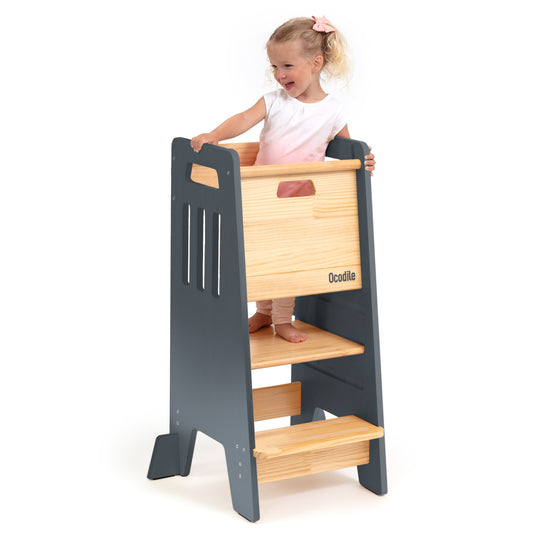
A learning tower or toddler helper brings a child to counter height in a more secure way than balancing on a dining chair. The change can be dramatic in daily life. A child who used to pull at you while you cooked can now wash vegetables, stir batter, or watch closely without being held.
Ocodile makes standing towers designed to let children participate at counter height with enclosed support, which is one example of how brands apply child-sized principles to home routines.
This kind of setup often helps with:
- Mealtime connection because children can join prep instead of waiting at the edge of the room
- Language growth through simple kitchen talk, naming foods, actions, and tools
- Cooperation since helping often reduces the urge to interfere
Small tables and chairs for real work
A child-sized table and chair set becomes a work zone. That might sound formal, but in family life it usually means snacks, puzzles, crayons, play dough, sticker books, and tea parties that don't take over the dining table.
Children tend to settle more easily when the furniture fits their body and the task fits the space. They can climb in and out on their own, stay close to materials, and return for short bursts of focused activity through the day.
A few examples of what this looks like:
- Morning. Your child sits down to eat toast and fruit without needing to be lifted into place.
- Midday. They do a puzzle, get up, come back, and continue.
- Late afternoon. You need ten minutes to finish a task, and they have a familiar spot that supports independent play.
A short video helps make that practical side easier to picture.
Floor beds and reachable bedrooms
The bedroom is another place where scale matters. A low bed gives a child more freedom to get in and out without waiting to be lifted. Pair that with a low shelf, a few accessible books, and limited clothing choices, and mornings often become less combative.
The key isn't giving unlimited access to everything. It's preparing the room so the child can succeed with what is available.
A useful child-sized piece solves one repeated family friction point. Start there, not with a full room redesign.
Step stools and bathroom access
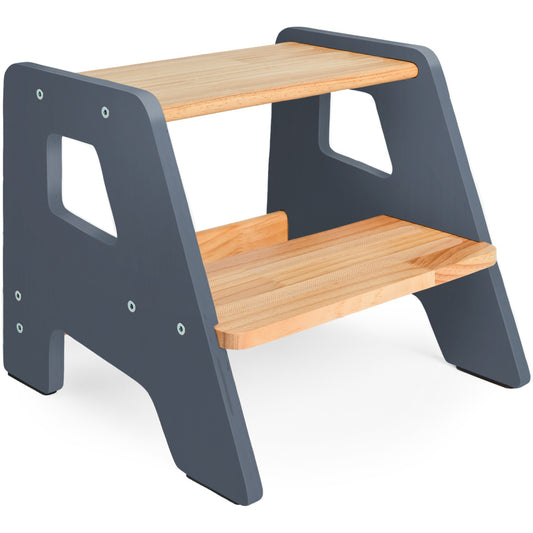
Bathrooms create some of the most repeated dependence in a child's day. Step stools can make handwashing, teeth brushing, and even simple cleanup more manageable. When children can reach water and see what they're doing, routines feel less like something done to them and more like something they can take part in.
That's where child sized furniture benefits become very practical. The right piece doesn't just support development in theory. It changes the tone of breakfast, bedtime, cleanup, and getting out the door.
A Practical Guide to Choosing the Best Furniture
The hardest question parents ask isn't usually what to buy. It's whether buying child-sized furniture is worth it when children grow so quickly.
That's a fair concern. But the cheapest option on paper isn't always the lowest-cost option in daily life.
A 2025 analysis of early childhood centers found that using dedicated child-sized furniture was linked with significantly lower rates of minor injuries and less adult supervision time, which improved efficiency and reduced long-term care costs, according to this discussion of why kid-sized furniture matters. That's in childcare settings, but the logic makes sense at home too. If furniture reduces unsafe climbing and cuts down on constant adult intervention, the value isn't just about how long the item lasts.
What to prioritize first
When you shop, I'd focus less on matching sets and more on the problem each piece solves.
- Start with your highest-friction routine. If mornings are chaotic, a step stool or dressing area may matter most. If dinner prep is the hardest point, kitchen access may come first.
- Check fit before style. A beautiful chair that leaves your child dangling won't deliver the ergonomic or functional gains you want.
- Look for adjustability when possible. Height-adjustable tables and chairs can support changing needs over time, which can make a purchase more practical.
The hidden costs of adult miniatures
Some furniture marketed for children is really just a smaller-looking version of adult furniture. It may not be proportioned well, easy to move, or safe at child level.
The hidden costs can show up as:
- More hovering because the setup still isn't usable without help
- More unsafe improvising because children climb or kneel to compensate
- Less follow-through because tasks remain physically frustrating
A simple buying checklist
| Question | Why it matters |
|---|---|
| Can my child use it without me lifting them? | Supports real independence |
| Do their feet have support when seated? | Helps posture and stability |
| Are finishes smooth and child-safe? | Reduces everyday hazards |
| Is it stable during active use? | Matters for energetic toddlers |
| Will it solve a repeating daily problem? | Increases practical value |
If you're comparing table-and-chair options specifically, this guide to the best toddler table and chairs is a useful starting point because it frames the decision around function, not just appearance.
The best buying decision is rarely “Which piece will last the longest?” A better question is, “Which piece will make daily life safer, calmer, and more usable for my child right now?”
Creating a Home That Grows with Your Child
Your four-year-old heads to wash their hands before dinner, reaches for the soap, and pauses. The sink is too high. The towel is out of reach. A simple routine turns into another request for help.
That pattern adds up over months and years. A home that fits a child's body saves small bursts of effort all day long, and those savings matter. Fewer awkward climbs can mean fewer bumps and less strain. Furniture that a child can use also tends to stay useful longer, because routines settle faster and parents are less likely to replace pieces that looked cute but never worked well.
A supportive home is readable at child height. A child should be able to tell where to sit, where to put shoes, where to wash hands, and where to help without decoding an adult setup built far above their eye level. Children learn this the same way they learn a well-organized classroom. Clear spaces reduce friction. Repeated success builds skill.
That may look very simple. One stool at the sink. One hook low enough for a coat. One bedside setup that lets a child get in and out safely. One small work surface in the kitchen where helping feels natural instead of risky.
Materials and proportions still matter. Choose pieces with smooth finishes, rounded edges, good stability, and low-toxicity materials. As noted earlier, child-focused sizing standards exist for a reason. They are based on how children sit, reach, balance, and move, not just on how furniture looks in a catalog. Poor fit often creates hidden costs at home: more adult lifting, more climbing to compensate, and more wear from using furniture in ways it was never designed to handle.
Bathrooms are a good example. If you are extending this child-accessible approach into wash spaces, ideas for designing family bathrooms in Vancouver can help you plan layout, reach, and routine from a child's point of view.
The long-term goal is not a certain aesthetic. It is a home where your child can participate with less strain, less waiting, and fewer physical barriers. That supports confidence, protects growing bodies, and often saves money over time because you buy with function in mind instead of replacing frustrating pieces later.
If you're ready to make one practical change, explore Ocodile for child-focused pieces such as standing towers, floor beds, and step stools that support safer participation in everyday routines.