




 - Monica
 - Lindsay

The Ultimate Guide to a Children's Art Cart
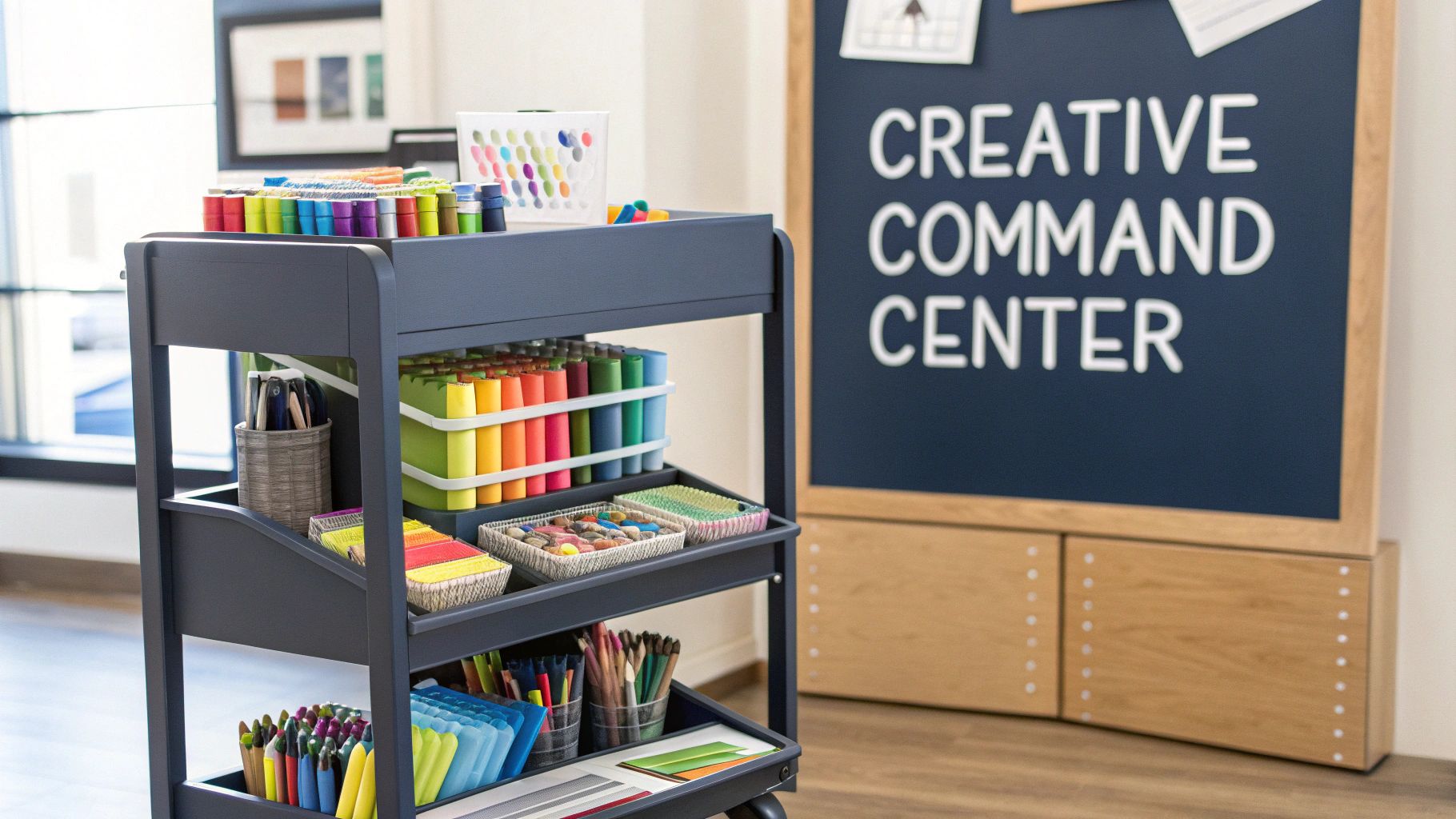
A children's art cart is a game-changer for any home with a budding artist. It’s a simple, mobile station designed to hold all their creative supplies, instantly turning any corner of your house into a mini art studio. Think of it as a creative command center on wheels, keeping everything from crayons and paper to paint and glue sticks tidy and right at their fingertips.
So, What Exactly Is a Childrens Art Cart?
Picture this: your child gets a sudden burst of creative energy. Instead of you scrambling to find paper in one closet and crayons in another, they can just wheel their own little studio right to the kitchen table. That’s the magic of a children’s art cart. It’s not just another storage bin; it’s a tool that brings order to craft time chaos, making art an easy, everyday activity.
It’s basically a personal, rolling art station built for little hands and big ideas. When every marker and paintbrush has its own spot, it completely changes the dynamic. Art becomes less of a special, messy event and more of a simple, go-to option for independent play.
More Than Just a Place to Put Things
An art cart is so much more than a simple storage unit—it’s a launchpad for independence. When kids can see and reach their own supplies, they develop a sense of ownership over their creative projects. This is a huge confidence booster and a key part of their development.
The benefits quickly become obvious in your daily routine:
- Builds Independence: Kids learn to pick their own materials and make their own artistic choices without having to ask for help every two minutes.
- Teaches Responsibility: The cart naturally introduces the idea of "a place for everything." They learn that cleaning up is just part of the creative process as they put their supplies back where they belong.
- Sparks Spontaneity: With everything ready to go, a sudden idea for a drawing or collage can happen right away. A dull afternoon can turn into a colorful adventure in minutes.
- Cuts Down on Screen Time: A colorful, well-stocked art cart is an incredibly inviting alternative to tablets and TV. It naturally pulls kids toward hands-on, imaginative fun.
An art cart isn’t about containing a mess; it's about liberating creativity. It gives kids the structure they need to feel confident and the freedom they crave to explore.
A Tool That Grows with Your Child
One of the best things about an art cart is how it adapts over time. It’s not a one-and-done piece of gear; it evolves right along with your child's skills and passions.
For a toddler, you might stock the lower shelves with chunky, washable crayons and big sheets of paper. As they become a preschooler, you can add safety scissors, glue sticks, and some modeling clay. That same cart can later be re-stocked for an elementary schooler with watercolors, detailed craft kits, and sketchbooks.
This flexibility makes the cart a long-lasting and valuable part of their childhood. It becomes a familiar, reliable hub for their imagination, supporting new skills while reinforcing great habits from the very beginning.
The Real Developmental Benefits of an Art Cart
A children's art cart is so much more than a neat way to store markers and glitter. It’s actually a powerful developmental tool hiding in plain sight. When a child wheels their cart over to a table, they’re kicking off a process that builds essential skills, all while just having fun. This little mobile studio is a catalyst for growth in so many areas, from physical dexterity to emotional smarts.
Think about something as simple as a toddler grabbing a chunky crayon. That’s not just scribbling; it’s a workout for their fine motor skills. The small muscles in their hands and wrists are getting stronger and more coordinated, which is exactly what they’ll need later for writing their name, tying their shoes, or buttoning up a coat.
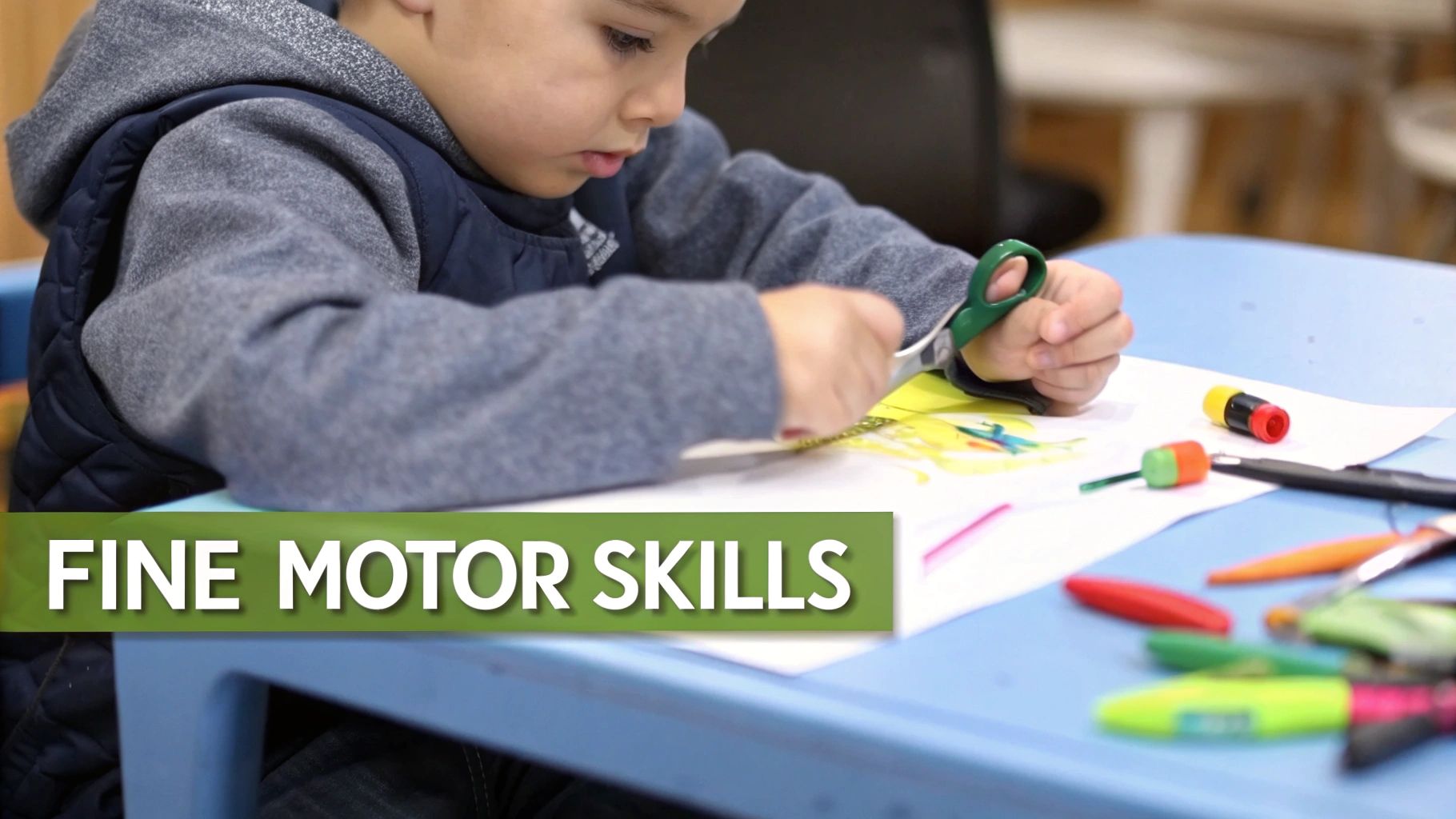
This link between creative play and physical development is huge. Every snip with safety scissors, every bead they thread on a string, and every squeeze of a glue bottle helps refine their hand-eye coordination. It’s all setting the stage for bigger skills down the road.
Fostering Cognitive Growth and Problem Solving
Beyond the physical stuff, a well-stocked art cart is like a playground for the brain. When a child is trying to figure out how to stick googly eyes on a paper plate monster, or how to mix blue and yellow paint to get green, they are actively problem-solving. This isn't abstract learning from a book—it's hands-on experimentation with real cause and effect.
These little creative challenges build crucial connections in the brain. Here’s a quick look at how an art session translates into brain-building:
- Decision-Making: Just choosing between markers or crayons, or picking out colors for a drawing, gives kids practice in making choices and seeing the results.
- Planning and Execution: Maybe your child has a vision for a castle made of cardboard tubes. They have to think through the steps—cutting, gluing, decorating—to make it happen. That’s a great exercise for their executive functioning skills.
- Critical Thinking: When a project doesn't go quite right, like a paper tower that keeps falling over, the child has to figure out why and try a different way. That's critical thinking in action.
A children's art cart creates a safe space for trial and error. It shows kids that making mistakes is a normal and necessary part of learning, which helps build resilience and a can-do attitude.
This focus on skill-building is a big reason why the children's arts and crafts market is booming. The industry was valued at roughly USD 12.81 billion in 2023, mainly because parents and educators see how these activities boost kids’ minds and creativity.
An Outlet for Emotional Expression
Sometimes, feelings are just too big or confusing for words, especially for little kids. An art cart gives them a non-verbal way to get those feelings out. A page full of angry red scribbles or a peaceful blue painting can say more than a child is able to articulate.
Creating art becomes a safe and healthy way to process emotions. It lets children explore happiness, sadness, frustration, or excitement constructively. This process helps them develop emotional regulation, a huge part of mental well-being. By giving shape and color to their inner world, they start to understand their own feelings—and the feelings of others—a little better. For a dedicated space that encourages this kind of focused, self-directed activity, you might also find our guide to choosing a https://ocodile.com/blogs/ocodiles-blog/montessori-activity-table helpful.
If you’d like to learn more about the educational impact of these kinds of hands-on activities, you may want to check out this guide on the developmental benefits of crafts.
Ultimately, a children's art cart is an investment in your child's whole development. It nurtures the artist, the thinker, and the emotionally aware person all at once. It’s a great reminder that some of the most important lessons are learned not at a desk, but with a paintbrush in hand.
How to Choose the Perfect Art Cart
Picking out the right children's art cart might feel like a big deal, but it really doesn't have to be. If you focus on just a few key things, you can find the perfect mobile studio that works for your family, your home, and your child’s creative spirit. Think of it less like buying a piece of furniture and more like choosing the right tool to unlock their imagination.
The real goal here is to find a cart that’s safe, easy for them to use, and gets them excited to create. A well-chosen cart naturally invites creativity and even makes cleanup feel like part of the fun. Let’s walk through what you need to look for so you can feel great about your choice.
Material and Durability
Your first big decision is what the cart is made of. Most art carts you'll find are either metal, plastic, or wood. Each one has its own vibe and is better suited for different homes and ages.
- Metal Carts: These are usually the toughest and most stable options out there. Their solid build can definitely handle some rough-and-tumble play, making them a fantastic long-term investment. A cool bonus with many metal carts is that they're magnetic—perfect for sticking on magnetic cups or bins.
- Plastic Carts: These are lightweight and often easier on the wallet, which means young kids can often move them around all by themselves. They are also ridiculously easy to clean, a massive win when you're dealing with the inevitable paint spills or marker streaks. The trade-off is they might not be quite as sturdy as their metal cousins.
- Wooden Carts: People often pick wooden carts because they just look great and can blend right in with your home decor. They’re generally pretty sturdy but can be heavier and might get stained by art supplies if they aren't sealed properly.
The availability of these materials can sometimes shift with bigger market trends. For instance, the supply chain hiccups during the COVID-19 pandemic made lots of children's products, including art supplies, a bit harder to find. Thankfully, things have settled down, and you can read more about recent art market trends in this report.
Size and Accessibility
The size of the art cart is a huge deal, both for how you'll use it and for safety. It has to fit comfortably in your space without turning into a clunky obstacle, but even more importantly, it needs to be the right height for your child.
A cart that’s too tall is just going to frustrate a toddler who can't reach the good stuff on the top shelf. On the flip side, a cart that’s too small might not hold the ever-growing collection of supplies for an older kid. For toddlers and preschoolers, find a cart that's low and stable, where they can see and grab everything easily.
If you want to create a full-on creative zone, pairing a cart with a dedicated toddler's art desk can make the space even more inviting and functional for your little artist.
Key Takeaway: The best art cart is one a child can manage on their own. If they can reach the supplies and wheel it around themselves (with you nearby, of course), they'll feel a sense of ownership and be way more excited to use it.
Mobility and Safety Features
Since the whole point of a children's art cart is that it moves, the wheels are something you need to look at closely. You definitely want casters that roll smoothly, but the most critical feature is that they can be locked down tight.
Lockable wheels are a non-negotiable safety feature. They stop the cart from rolling away when you don’t want it to, especially if a little one is leaning on it for support. This is super important for toddlers who are still getting the hang of their balance. Always check that the locking mechanism is easy for you to use but strong enough to keep that cart parked securely during art time. A wide, stable base is another great feature that helps prevent tipping, making sure the cart stays a safe and reliable part of their play space.
Stocking Your Art Cart for Maximum Creativity
Once you've picked out the perfect little mobile station, the real fun begins: filling it with a world of creative possibilities. Stocking the cart isn’t just about cramming it full of supplies. It's about curating a collection that sparks curiosity, supports development, and grows right alongside your child.
Think of it like setting up a little creative buffet. You want a variety of textures, colors, and tools that invite them to explore, but not so many that they feel overwhelmed. A thoughtfully stocked art cart is a powerful tool for self-directed play, turning any afternoon into a journey of imagination.
Building a Foundation with Age-Appropriate Supplies
The single most important rule here is to match the supplies to the child. What’s perfect for a five-year-old could be frustrating—or even unsafe—for a toddler. When you’re stocking up, choosing the right age-appropriate art supplies is everything.
For Toddlers (Ages 1-3)
At this stage, it’s all about safety and sensory exploration. Think big, chunky, and non-toxic.
- Jumbo Crayons and Washable Markers: Their small hands are still developing that pincer grasp, so large, easy-to-hold tools are a must.
- Finger Paints: This is such a fantastic sensory activity. Just be sure to choose non-toxic, edible-safe options for your own peace of mind.
- Large Sheets of Paper: Give them tons of space to make those big, expressive marks without feeling confined.
- Stickers with Large Backings: Peeling and sticking is a surprisingly good workout for their fine motor skills.
For Preschoolers (Ages 3-5)
By now, their fine motor skills are getting much more refined. They’re ready for tools that demand a bit more control and precision.
- Safety Scissors: Introduce them to cutting with child-safe scissors made specifically for little hands.
- Glue Sticks and School Glue: These are perfect for collage projects and learning how different materials stick together.
- Modeling Clay or Play-Doh: This is a powerhouse for strengthening hand muscles and exploring 3D creation.
- Washable Tempera Paint and Brushes: Time to move beyond finger painting! Using brushes helps connect their hands and eyes in a new way.
This decision tree infographic can help you visualize the key choices when picking out the cart itself—long before you even think about supplies.
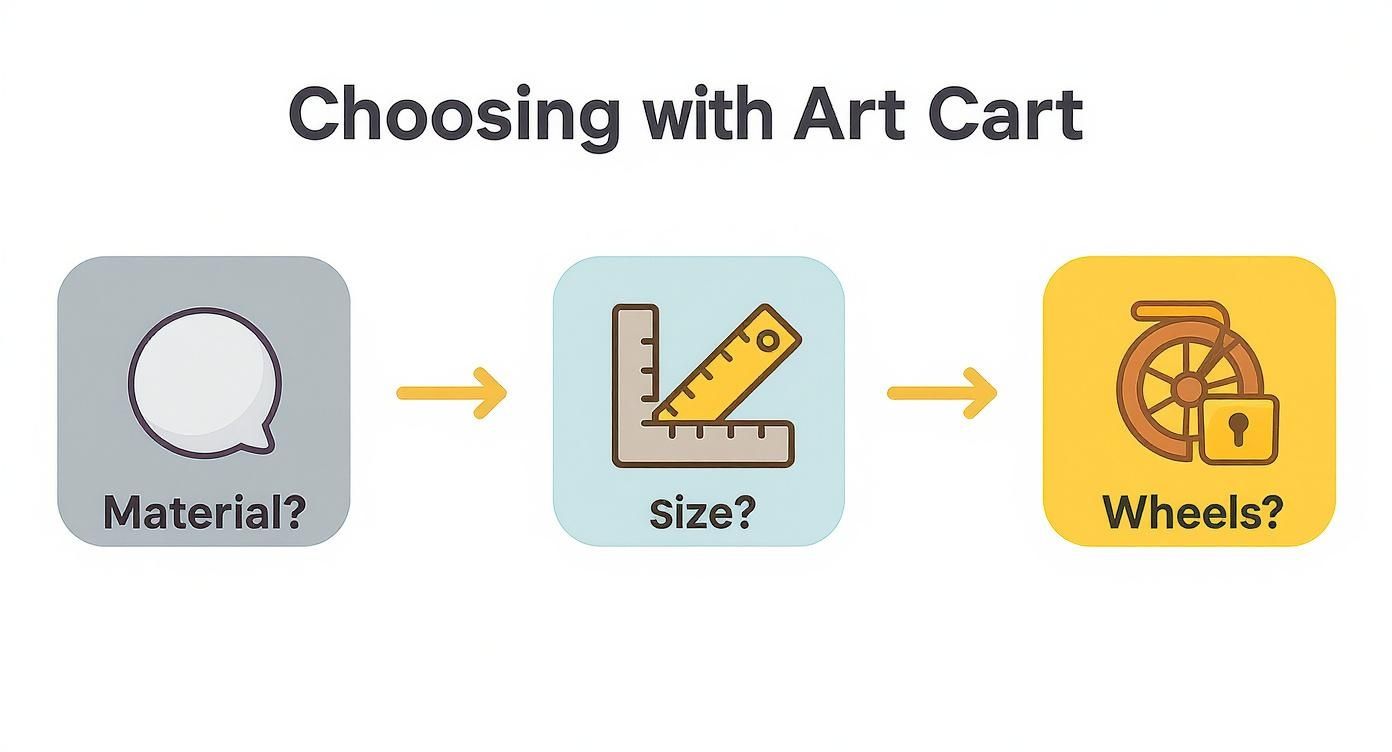
As you can see, foundational features like material, size, and wheel safety are the very first things to consider.
Expanding the Creative Toolkit for Older Kids
As children get into their school years, their abilities and interests explode. Your art cart can evolve right along with them to support more complex projects.
For School-Aged Kids (Ages 6+)
They are now ready for a wider range of materials that allow for more intricate, detailed work.
- Watercolor Paints: Introduce the magic of color mixing and blending with a simple watercolor set.
- Colored Pencils and Fine-Tip Markers: These tools open the door to more detailed drawings and greater precision.
- Craft Kits: Simple beading, friendship bracelet, or mosaic kits offer a great structured creative project.
- Sketchbooks: Encourage them to keep a dedicated book for their ideas. This fosters a real sense of artistic practice and gives them a place to see their own progress.
The goal isn't just to provide supplies, but to offer the right tools at the right time. This thoughtful approach builds confidence and keeps frustration at bay, ensuring that art remains a joyful experience.
The Power of Simplicity and Rotation
It's tempting to buy every cool craft supply you see, but an overstuffed art cart can actually backfire. A mountain of choices can lead to "decision fatigue," where a child feels too overwhelmed to even get started. Sometimes, less is more.
A well-chosen selection of high-quality basics is far more effective. It encourages kids to be more resourceful and see the potential in what they have. A simple piece of paper can become a drawing, a sculpture, a collage, or a paper airplane.
To keep things fresh, try rotating the supplies every few weeks.
- Store the Extras: Keep a bigger stash of art supplies tucked away in a closet or bin.
- Curate the Cart: Select a small, focused group of items to feature on the cart. Maybe one week is all about painting and collage, while the next focuses on drawing and sculpture.
- The Big Reveal: When you swap out the old for the new, it feels like getting a whole new set of toys. This simple trick renews their interest and keeps the cart from becoming just another piece of furniture.
This strategy not only maintains excitement but also gives you a chance to subtly introduce them to new skills and materials.
Finally, don't forget about the creative potential hiding in your recycling bin. Incorporating everyday items is a fantastic way to stock the cart on a budget while teaching valuable lessons about sustainability. Cardboard tubes, egg cartons, old magazines, and fabric scraps can be transformed into amazing creations. This shows kids that creativity isn't about having the fanciest supplies—it's about seeing the artistic possibilities all around them.
Smart Organization Tips for Your Art Cart
Picking out a great art cart is the first step, but the real magic begins when you get it organized for creativity. A tidy, functional system isn't just about looking nice; it empowers your child to find what they need, create without friction, and—most importantly—clean up on their own. The goal is a space that’s as easy to use as it is to maintain.
Think of it like a chef's kitchen. When every ingredient and tool has its own spot, the whole process just flows. I'll walk you through some practical, easy-to-implement strategies to turn that art cart from a potential mess into an inspiring hub for your child's imagination.
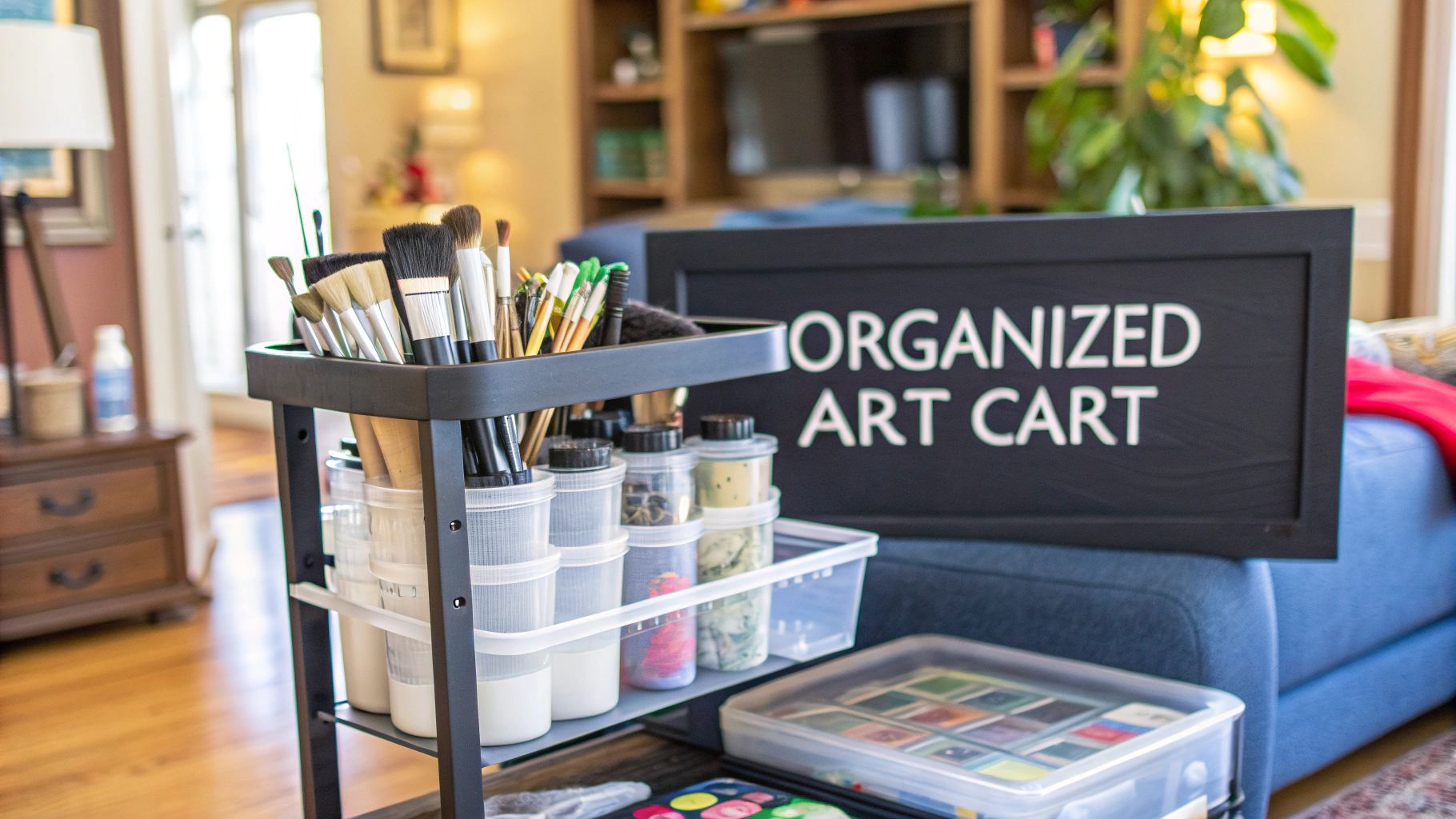
Create a System They Can See and Understand
For kids, "out of sight, out of mind" is a powerful truth. If they can’t see their supplies, they probably won't use them. That's why visibility is the secret to a system that encourages both independent creativity and cleanup.
Start with clear containers for things like pom-poms, crayons, and beads. When a child can see all the colorful materials just waiting for them, they're instantly drawn in. It's a simple trick that turns storage into an invitation to create.
Here are a few visibility-first ideas:
- Clear Jars and Bins: Use acrylic or plastic jars for smaller items. This keeps things contained while adding a nice splash of color to the cart.
- Lazy Susans: Pop a small turntable onto one of the shelves. This lets your child easily spin it around to see all their options, like different paint pots or glue sticks, without having to dig through everything.
- Open Baskets: For bigger items like yarn or fabric scraps, shallow, open-topped baskets work perfectly.
Make Every Inch Work Harder
A well-organized art cart uses every bit of available space—including the sides. This is where you can get really creative and add functionality that’s perfect for your specific supplies.
If your cart is metal, you've hit the jackpot. Use magnetic cups and containers that clip right onto the sides. They are perfect for holding things that need to stay upright and accessible, like paintbrushes, markers, and colored pencils, keeping them from getting lost at the bottom of a bin.
Pro Tip: For non-metal carts, you can get the same effect with adhesive hooks or small command strips to hang lightweight buckets or pouches. This creates a similar "grab-and-go" system for their favorite tools.
This approach ensures even a compact art cart can hold a surprising amount without feeling cluttered. For more brilliant ideas on taming a growing art collection, our guide on art supply storage for kids has even more solutions.
Turn Tidying into a Learning Game
Organization is more than just neatness; it's a fantastic chance to teach skills like sorting, categorizing, and responsibility. By making cleanup feel like a game, you can help foster habits that will stick.
One of the most effective methods is color-coding. Just assign a color to different types of supplies. For instance:
- Red Bins: Could hold all the drawing tools, like crayons and markers.
- Blue Bins: Might be for all the painting supplies, like brushes and paints.
- Yellow Bins: Can be for collage materials—glue, scissors, and stickers.
This visual system is super intuitive for young children, even before they can read. It transforms tidying up from a chore into a simple matching game. You can also stick picture labels on each container showing what goes inside. This gives them a clear, easy-to-follow guide for putting everything back in its home, making your art cart a truly self-sustaining creative zone.
Common Questions About Children's Art Carts
Bringing an art cart into your home is exciting, but let's be honest—it can also feel like you're willingly inviting chaos over for a permanent stay. It's totally normal to have questions before you dive in. How do you stop the glitter from taking over your entire house? Are the supplies actually safe? And will your kid even use it after the first week?
Let's get right into these common concerns. We'll give you some clear, practical answers to help you feel confident that this little cart will be a source of joy, not just another thing on your to-do list.
How Do I Keep the Art Mess from Taking Over My House?
This is the big one, right? The key isn’t to prevent messes—that's impossible—but to contain them. It all comes down to setting up simple boundaries and routines from the get-go. The cart is your organizational tool, but you still need some ground rules for how and where the creativity happens.
Start by designating a specific "art zone." This doesn't have to be a whole room; it can just be the kitchen table or a corner of the playroom. The rule is simple: supplies from the cart stay in the art zone.
Here are a few more tips to keep the creative explosion contained:
- Use a Protective Mat: A washable splat mat, an old tablecloth, or even a big piece of cardboard makes cleanup so much easier.
- Introduce Art Smocks: An old, oversized t-shirt works perfectly. It signals that it's okay to get messy and saves their clothes from the latest masterpiece.
- Make Cleanup Part of the Fun: Treat cleanup as the final step of the art project. Putting crayons back in their cup or washing brushes can be a really satisfying part of the process, especially when you do it together.
Are the Art Supplies on the Cart Safe for My Child?
Safety is everything, especially with little ones who still love to explore the world with their mouths. When you're stocking your children's art cart, choosing materials that are non-toxic and age-appropriate is non-negotiable.
Always look for products with the AP (Approved Product) Seal from the Art and Creative Materials Institute (ACMI). This little seal means the product has been checked out by a toxicologist and is considered safe. For younger kids, just stick to anything specifically labeled "washable" and "non-toxic."
Your job is to curate a safe space for them to create. When you pre-select only child-safe materials for the cart, you’re giving them the freedom to explore without you having to constantly hover and say "no."
For kids under three, steer clear of tiny items like small beads or googly eyes that could be choking hazards. As your child gets older, you can slowly start introducing a wider variety of materials.
Will My Child Get Bored with the Art Cart?
It's a classic fear: the shiny new toy loses its sparkle in a week. The great thing about an art cart, though, is that it’s not a single toy. It's a creative hub that can change and evolve all the time.
The best way to keep things interesting is supply rotation. Don't put everything you own on the cart at once. Keep a bigger stash hidden away and swap out a few items every couple of weeks. When you bring back an old favorite or add something new, the whole cart suddenly feels fresh again.
Another great trick is to offer simple "invitations to create." You could leave a few items on the table next to the cart—maybe some leaves from the yard, paper tubes, and tape—to spark a new idea. This little nudge can help them see their same old supplies in a whole new light. The history of art in education has proven time and again how it builds creativity and hand-eye coordination. It's no wonder the global arts and crafts market for children was valued at nearly USD 15 billion in 2023 and is expected to hit about USD 25.8 billion by 2032. You can read more about the growth of the children's art market to see its expanding role in how kids develop.
With a little bit of planning, your art cart will become a beloved and manageable part of your home—an investment in creativity that will pay off for years.
At Ocodile, we believe in creating safe, beautiful, and practical products that help children explore their world with confidence. Our thoughtfully designed furniture supports your child’s independence and makes it easier for families to share in the joy of everyday moments, including creative ones. Discover how our products can transform your home into a nurturing space for learning and play at https://ocodile.com.