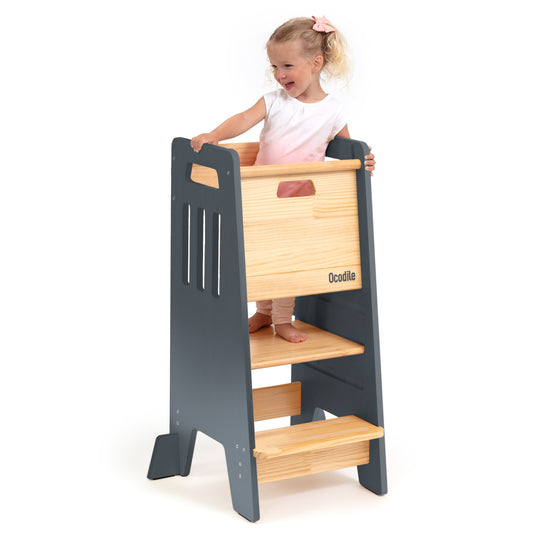

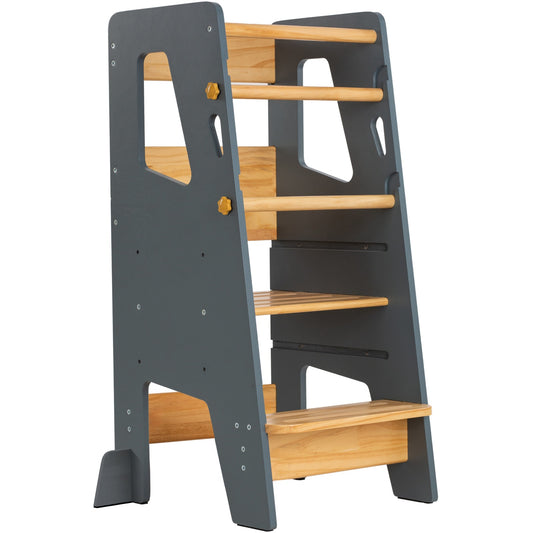


Is Your Toddler Ready for a Learning Tower?
Maybe you’re tired of lifting your toddler to the sink every time they want to wash hands, or you’ve caught them dragging a dining chair toward the counter while you make breakfast. If you searched “learning tower what age,” the practical answer is this: many toddlers are ready somewhere around 18 months to 3 years, but age matters less than balance, climbing control, listening skills and close supervision.
A learning tower is not meant to make a toddler fully independent in the kitchen. It is meant to give them a steadier, more contained place to stand during supervised routines, like rinsing fruit, stirring batter, brushing teeth at the sink or watching you prepare lunch.
Learning Tower What Age: The Short Answer for Parents
Most families start considering a learning tower when a child can stand steadily, climb with help or independently and follow simple directions such as “stand still,” “hands on the rail” and “wait for me.” For many toddlers, that lines up around 18 months or older, but some children need more time.
A learning tower is not for infants. Babies who cannot stand securely, climb down safely or understand basic safety limits are not ready for this kind of furniture. If your child is still cruising, wobbling often or trying to sit on every step, a tower can wait. Ocodile has a deeper explanation of why a learning tower is not for infants yet if you are comparing stages.
When parents ask “learning tower what age,” they are usually asking a second question too: “Can my child use this without tipping, slipping or turning it into a climbing toy?” That second question is the one that should guide your decision.
| Child’s stage | What it may look like | Learning tower readiness |
|---|---|---|
| Infant or early cruiser | Pulls up, wobbles, cannot follow safety directions | Not ready |
| Young toddler | Walks steadily, climbs with help, follows simple one-step directions | Possibly ready with close supervision |
| Older toddler | Climbs up and down with control, stays focused for short tasks | Often ready for supervised use |
| Preschooler | Uses steps more confidently and understands routine rules | Usually ready if within product limits |
Readiness Signs That Matter More Than the Birthday
Your child’s age gives you a rough starting point, but daily behavior tells you much more. A 20-month-old who climbs slowly, waits for help and stays engaged at the sink may be more ready than a 2.5-year-old who constantly jumps, leans hard over rails or tries to climb onto the counter.
Look at how your child moves when they are excited, not only when they are calm. Kitchen routines involve noise, water, snacks and interesting objects. A child who can stand well in the living room may act differently when the blender is running or when a favorite food is just out of reach.
Your toddler may be ready if they can do these things
A simple readiness check can prevent a lot of frustration:
- Stand flat-footed without constant support
- Step up and down with control, either alone or with your hand nearby
- Follow short directions such as “stay in the tower” or “hands on the counter”
- Stay interested in a short task for a few minutes
- Understand that the tower is for standing, not jumping or rocking
- Accept help getting in and out when needed
The best answer to “learning tower what age” is really a mix of age, motor skills and temperament. If your toddler is steady but impulsive, you can still use a tower later or only for very short tasks where your full attention is available.
When Your Toddler Is Not Ready Yet
It is completely fine to wait. A learning tower should make routines calmer and safer, not add one more thing you have to wrestle with before breakfast.
Your child may need more time if they climb over furniture constantly, throw their body side to side, refuse to stay inside the tower or try to reach dangerous items even after redirection. A child who melts down every time a task ends may also need shorter practice sessions before using a tower becomes useful.
In the meantime, you can still include your child in real-life tasks from the floor or at a low table. They can wipe a spill with a small cloth, put spoons in a drawer, tear lettuce into a bowl, match socks or wash plastic cups in a shallow bin. The goal is participation at a level that fits their body and attention span.
Learning Tower vs. Step Stool: Which Is Better at This Age?
A step stool can be useful for quick up-and-down routines, like reaching the bathroom sink for a brief hand wash. A learning tower usually makes more sense when your toddler will stand for longer, shift weight or use both hands for a task.
If “learning tower what age” brought you here because your toddler keeps climbing on chairs, this comparison is important. Dining chairs and adult stools are not designed for toddlers to stand and lean from. A tower adds a more defined standing space, and many designs include side supports or rails that can help a child understand where their body belongs.
| Situation | Step stool may work | Learning tower may work better |
|---|---|---|
| Quick handwashing | Yes, with supervision | Yes, especially for wiggly toddlers |
| Brushing teeth | Sometimes | Often, because the child stands longer |
| Helping at the kitchen counter | Less ideal | Usually better for supervised tasks |
| Climbing practice only | No, not the main purpose | No, use it for real routines |
| Small bathroom space | Often easier to store | Depends on footprint and layout |
For a fuller comparison, Ocodile’s guide on when a step tower makes more sense than a step stool can help you match the furniture to the task.

Safety Rules Before the First Use
A learning tower is still elevated furniture, so supervision is not optional. Stay close enough to step in quickly, especially during the first few weeks. Toddlers learn by repeating routines, and they also test limits when something feels new.
Place the tower on a flat, dry floor and push it close enough to the counter so your child does not lean forward to reach. Keep it away from the stove, oven, hot pans, sharp tools, breakable dishes and cords. If water spills under the tower, pause the activity and dry the floor before continuing.
A good rule is to start with boring, low-risk tasks. Let your toddler rinse blueberries, spread soft butter with a child-safe utensil, pour pre-measured oats into a bowl or brush teeth with you standing next to them. Save hot cooking, knives and crowded counters for grown-ups.
If you are setting up a tower in the kitchen, this guide to positioning a children’s kitchen tower at the counter walks through placement details that parents often overlook.
What to Look for in a Learning Tower
The right tower should feel sturdy, stable and practical in your actual home. A beautiful design is nice, but everyday use matters more. You will notice the difference when your toddler shifts weight to reach the faucet or turns to ask for more strawberries.
For families searching “learning tower what age,” the most helpful features are the ones that support a child who is still learning body control. A wide, stable base can help reduce wobble when a toddler leans. Guardrails or side supports create a clearer boundary than an open stool. An adjustable platform can help the tower keep fitting as your child gets taller, which is why many parents describe a good tower as something that “grows with my child.”
Material and finish matter too. Solid wood often feels more furniture-like and can blend into a kitchen or bathroom instead of looking like temporary baby gear. A child-safe coating matters because toddlers touch, lean on and sometimes mouth household surfaces more than adults expect.
Setup and delivery are worth thinking about as well. Kids’ furniture should arrive protected and be checked carefully before use. Even outside the furniture world, custom corrugated packaging specialists focus on matching packaging to the product, which is a useful reminder for parents to inspect corners, rails, hardware and finish before bringing any new item into a toddler’s routine.
How to Introduce a Learning Tower Without Chaos
Your first few uses should be short. Place the tower, explain the rule in one sentence and give your toddler one simple job. “You can stand here and put the banana slices in the bowl” is easier to follow than a long safety speech.
Stand nearby and narrate what you want to see: feet on the platform, hands on the counter, body inside the tower. If your child tries to climb out, rock or reach for unsafe items, calmly end the activity and try again another day. Ending the activity is not a punishment, it teaches that the tower has a clear purpose.
A learning tower what age decision can also change by room. A toddler may be ready to use one at the bathroom sink for handwashing before they are ready to help at a busy kitchen counter. Match the task to the child’s attention span and the amount of risk in the space.
Think Beyond the Tower: Is Your Home Ready for More Child Access?
A learning tower is often one of the first pieces parents consider when they want their child to do more without being lifted all day. That same idea shows up in other parts of the home too: a low hook for a jacket, a small basket for shoes, a reachable towel near the sink or a bed your child can enter without climbing over a high rail.
If your toddler is starting to manage more routines on their own, sleep furniture may eventually become part of the same conversation. Ocodile’s Twin Size Montessori-Inspired Floor Bed with Safety Guardrails for Kids is designed with full guardrails, rounded post edges and two easy entries on one long side, which can make getting in and out of bed feel more accessible for a growing child.
For older kids or siblings sharing a room, the Solid Wood Twin Over Twin Bunk Bed For Kids is a different stage-based option. Its low bottom bunk is designed to make shared-room sleeping feel less crowded while giving younger kids a more reachable lower sleep space.
None of this means you need every child-sized item at once. It simply helps to think about where your child is asking to participate, where you are constantly lifting them and where a safer, more practical setup could make daily routines smoother.
A Parent-Friendly Decision Checklist
Before buying or using a learning tower, ask yourself how it will be used on an ordinary weekday. The best tower is the one that fits real routines, not a picture-perfect idea of cooking together.
Use this quick decision check:
- My child can stand and climb with reasonable control
- My child can follow simple safety directions most of the time
- I can supervise closely during every use
- I have a flat, dry place to position the tower
- I will keep it away from heat, knives, cords and breakables
- The tower’s size and platform height fit my counter or sink area
- I am choosing it for real tasks, not as an unsupervised climbing toy
If you can say yes to those points, your toddler may be ready to try short, supervised sessions. If not, waiting a few months is a wise choice, not a missed opportunity.
Frequently Asked Questions
Learning tower what age is usually best? Many toddlers are ready around 18 months to 3 years, but the better test is whether your child can stand steadily, climb with control, follow simple directions and use the tower only with close adult supervision.
Can a 12-month-old use a learning tower? Most 12-month-olds are not ready because they are still developing balance, climbing control and safety awareness. If your child is not walking steadily or cannot follow simple limits, wait.
Is a learning tower safer than standing on a chair? A learning tower is designed to give toddlers a more defined standing space than an adult chair, but it still requires supervision. Chairs can slide, tip or invite unsafe climbing, so they are not a good substitute for toddler-height furniture.
How long should my toddler stay in a learning tower? Start with a few minutes. Short tasks like rinsing fruit or brushing teeth help your child learn the routine without getting restless. You can add time as they show more control and attention.
When should we stop using a learning tower? Stop using it when your child exceeds the product’s limits, climbs out repeatedly, rocks it on purpose or no longer fits comfortably. Always follow the manufacturer’s age, height and weight guidance.
A Practical Next Step
If your child is walking steadily, trying to help at the counter and tired of being lifted for every sink routine, a learning tower may be a good next step. If you are still comparing designs, focus on stability, guardrails, platform height, materials, storage and how it will fit into your real kitchen or bathroom.
Ocodile’s toddler furniture is designed for everyday family routines, with practical details such as solid wood construction, child-safe coating, free US shipping, 60-day returns and a 5-year warranty. Start by comparing what your child is ready to do now, then choose the furniture that makes that routine safer, steadier and easier to repeat.