



Discover kids kitchen stand: Safe & Fun for kids
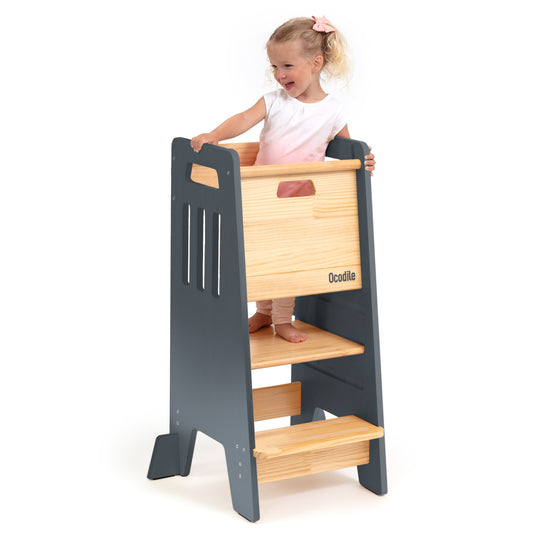
Ever tried to cook dinner with a toddler clinging to your leg? Or maybe you've attempted the precarious one-armed hold while trying to stir a pot. We've all been there. Now, imagine your little one standing safely right beside you at the counter, happily "helping" without you needing to hold them. That’s exactly what a kids kitchen stand—often called a learning tower—is for. It’s a sturdy, secure platform designed to bring your child up to counter height, so they can finally join in on all the kitchen action.
Why a Kids Kitchen Stand Belongs in Your Home
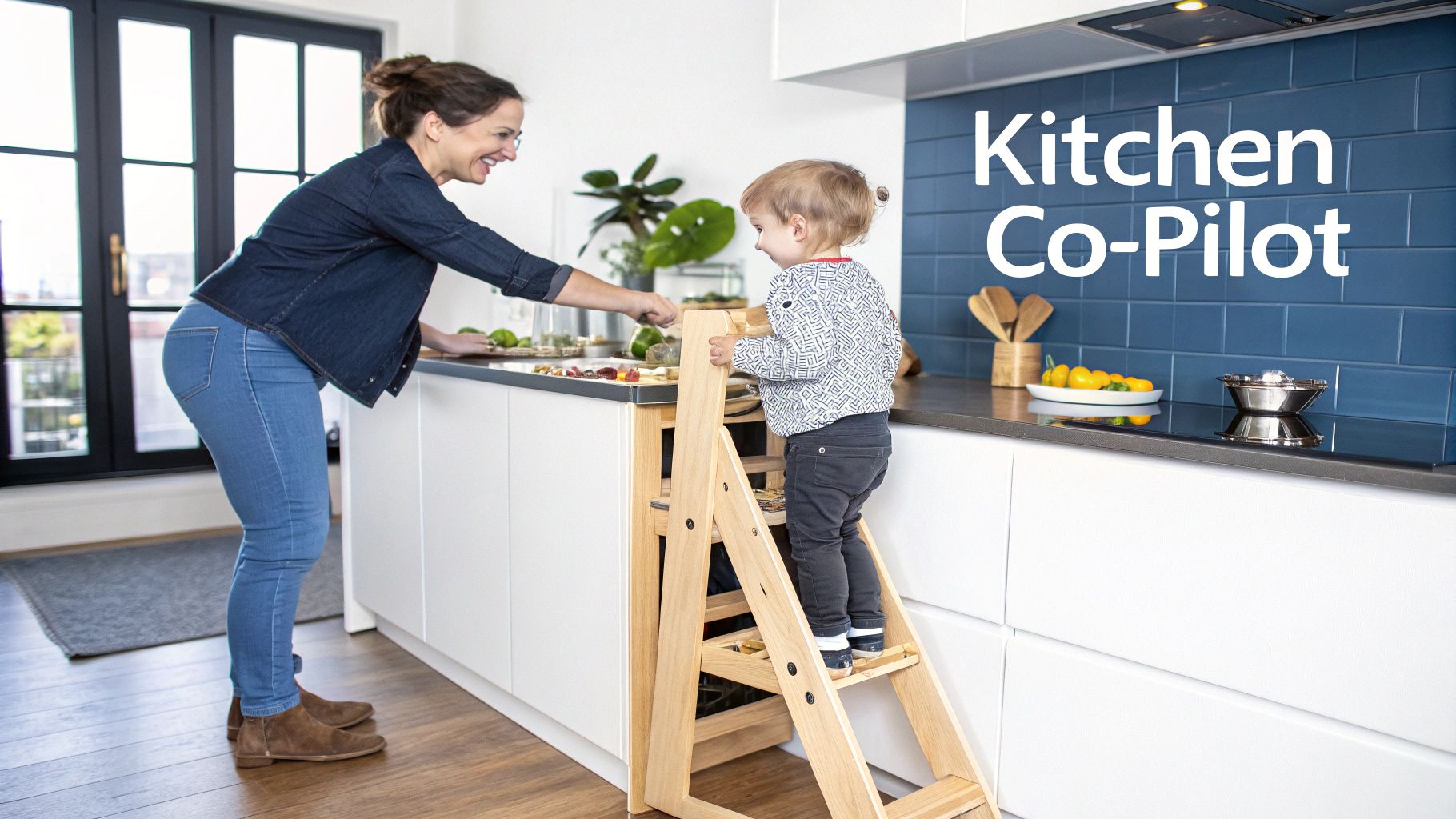
This isn’t just another piece of kid gear; it's a game-changer for connection and learning. Think of it as your child’s secure co-pilot seat in the kitchen. A wobbly chair or a regular step stool just doesn't cut it—they weren't built with a wriggly toddler in mind. A proper kitchen stand, on the other hand, is engineered for stability and safety, letting your little one engage their hands and mind without you worrying about a fall.
This simple tool transforms the kitchen from a "watch-only" zone into a hub of real participation. It bridges that frustrating height gap that so often separates our kids from the action, inviting them right into the heart of the home.
Fostering Independence and Curiosity
One of the best things about a kitchen stand is seeing your child’s independence blossom. Toddlers have that powerful, built-in desire to "do it myself," and this stand gives them a safe space to do just that. When they can wash a strawberry or stir some flour on their own, it’s a massive boost to their confidence and self-esteem.
This idea fits perfectly with Montessori principles, which champion practical, real-life skills as the bedrock of learning. Giving a child the ability to perform real-world tasks gives them a sense of competence and purpose that's truly incredible to watch.
A kitchen stand doesn't just elevate a child physically; it elevates their role in the family. It tells them their contributions matter, their curiosity is a good thing, and they are capable members of the household team.
By bringing them up to your level, you open up a whole new world of sensory exploration and skill-building. These aren't just sweet memories in the making; they are the building blocks of a capable, confident person.
Building Skills and Family Bonds
The kitchen is a natural classroom, and with a kids kitchen stand, your child gets a front-row seat. The everyday routine of making a meal becomes a rich, hands-on learning opportunity that touches on so many areas of development.
- Motor Skills: Simple things like stirring batter, washing veggies, or kneading dough are fantastic for strengthening both fine and gross motor skills.
- Cognitive Growth: Following a recipe (even a simple one) introduces concepts like sequencing, counting, and new vocabulary for all sorts of foods and actions.
- Family Connection: There's something special about working side-by-side. It creates priceless bonding moments and teaches cooperation in a really natural way.
Honestly, when you think about what you really need in a family kitchen, a kids kitchen stand should probably be on your expanded kitchen essentials checklist. It's an investment that pays you back in skills, confidence, and cherished family time, turning ordinary routines into the best kind of learning adventures.
Exploring the Developmental Benefits for Your Child
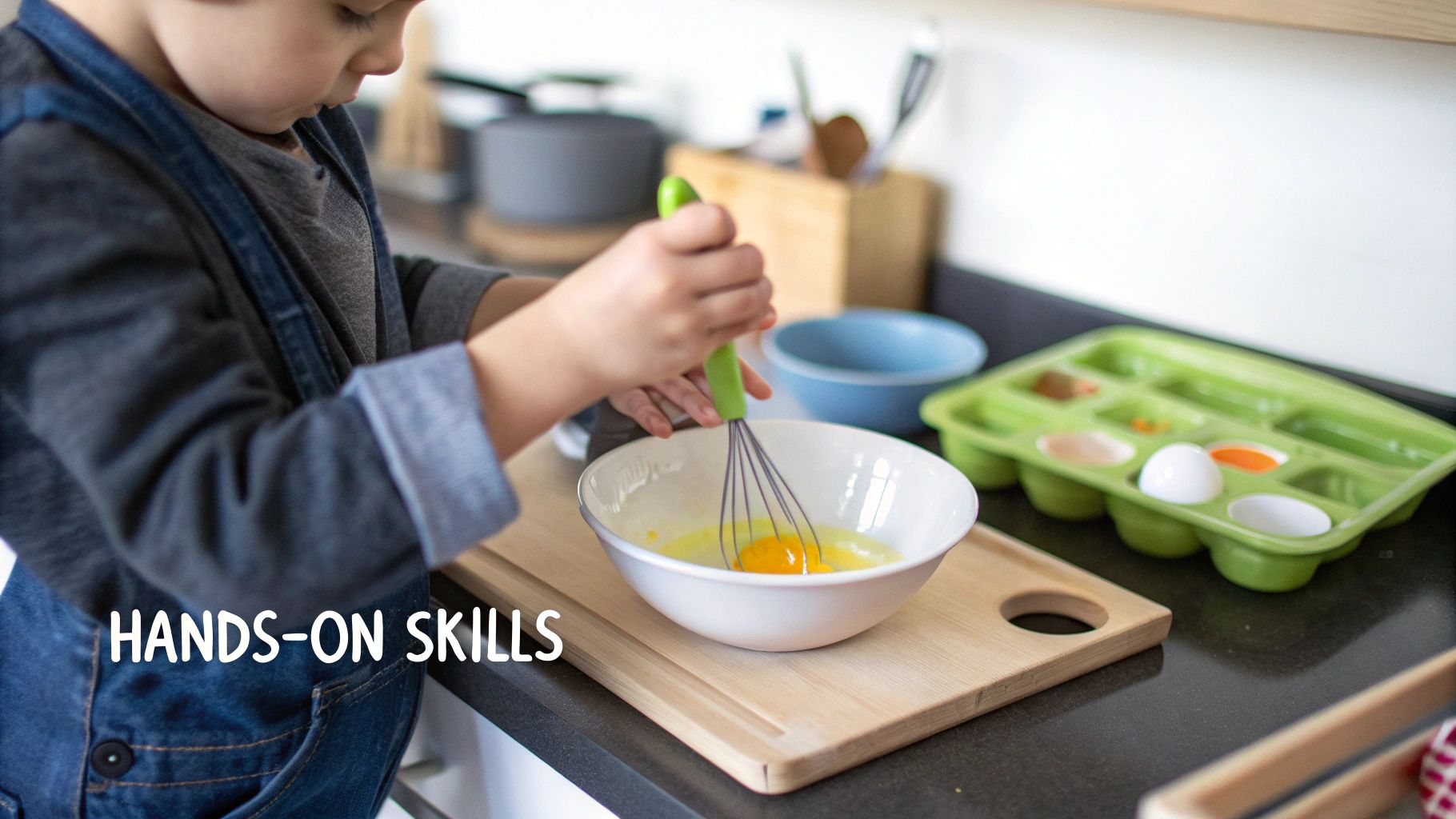
A kids kitchen stand is so much more than a simple piece of furniture; it's a launchpad for your child's growth. By safely bringing them up to counter height, it opens up a whole new world of hands-on activities that are crucial for hitting key developmental milestones. Suddenly, every little task becomes a valuable lesson in motion.
Think about something as simple as whisking eggs. That single motion requires wrist rotation, grip strength, and hand-eye coordination—all essential parts of developing fine motor skills. Kneading dough, sprinkling cheese, or spreading butter all work in a similar way, building dexterity in a fun, natural setting.
Building Strong Bodies and Minds
While their little hands are busy, their larger muscles are also getting a solid workout. Just learning to climb in and out of the kitchen stand is a big deal for building gross motor skills. This one action strengthens their legs, core, and sense of balance, which all contributes to their overall physical confidence.
The kitchen is also an incredible classroom for cognitive development. Following even the simplest recipe introduces foundational concepts that build a strong mental framework for learning down the road.
- Sequencing and Planning: Adding ingredients in the right order ("First, we add the flour, then we pour the milk") teaches the basics of how processes work.
- Early Math Skills: Counting scoops of flour or measuring cups of water makes abstract numbers tangible and real.
- Vocabulary Expansion: Your child will pick up new words for ingredients, tools, and actions—like "sift," "zest," and "fold"—expanding their language abilities without even trying.
This whole approach is deeply rooted in the Montessori philosophy, which sees practical life skills as a cornerstone of education. When children get to do real, purposeful tasks, they don't just learn a skill; they develop a profound sense of their own capability and self-worth.
By participating in genuine household activities, children learn that their contributions are meaningful. A kids kitchen stand provides the platform for this learning, transforming them from passive observers into active, valued family members.
That feeling of accomplishment is a powerful motivator. The pride they feel from making their own snack or actually helping with dinner is something that builds lasting self-esteem, one small success at a time. This growing interest in tools that foster interactive play is being seen across the market. The global toy kitchens and play food market, for example, was valued at around USD 3.47 billion in 2025 and is projected to hit USD 4.66 billion by 2035, all driven by a demand for these kinds of enriching play experiences. You can explore more about the toy kitchen market trends to see how this preference is shaping children's products.
Nurturing Social and Emotional Growth
Beyond the individual skills, the shared experience of working together in the kitchen fosters crucial social and emotional development. These are the moments where the real magic happens. Working side-by-side teaches patience, cooperation, and the art of taking turns.
When you and your child collaborate on a recipe, you’re building more than just a meal—you’re strengthening your bond. These shared activities create a positive loop of communication and trust, turning the kitchen into the true heart of the home.
A kids kitchen stand is the key that unlocks this shared space, turning everyday routines into cherished opportunities for growth, learning, and love. It’s an investment in your child’s development that pays dividends in confidence and connection for years to come.
Essential Safety Features for Any Kitchen Stand
When you bring a piece of furniture into your home for your child, safety isn’t just a nice-to-have feature—it’s the whole point. A kids kitchen stand is built to be a secure little haven for your curious helper, but its safety all comes down to the design and how it's built. Before you even think about adding one to your cart, it’s crucial to know exactly what to look for.
This isn't about finding a product with a few safety stickers slapped on; it's about really understanding the core elements that prevent tumbles and bumps. From the base that keeps it firmly on the ground to the rails that create a safe cocoon, every single detail matters. The right stand gives you priceless peace of mind, letting you relax and enjoy the fun of cooking together.
Stability: The Unshakeable Foundation
The absolute most important safety feature of any kitchen stand is its stability. Toddlers are pure, wobbly energy—they lean, wiggle, reach, and dance. A good stand has to be engineered to handle all that unpredictable movement without even a hint of tipping over.
Look for a model with a wide, sturdy base that spreads out beyond the tower's main frame. This creates a low center of gravity, which makes it incredibly hard to topple. You’ll often see this achieved with splayed legs or special stabilizing "feet" on the corners.
A kitchen stand should feel as solid as a small table. If you can give it a little push and it rocks, it’s not stable enough for an active toddler. This is the one feature you can’t compromise on—it’s the foundation of your child’s safety.
And while you're at it, always check the manufacturer’s weight limit. A quality stand should be rated to hold well over a toddler's weight, ensuring it stays strong and reliable for years.
Guardrails and Enclosures: Your Child’s Safety Net
Once your little one is up on the platform, the enclosure around them is their main line of defense. A truly secure kitchen stand will have a four-sided safety rail system. Think of it as a protective barrier that prevents falls from any direction—front, back, or sides.
But just having rails isn’t enough; how they’re designed is what really counts.
- Rail Height: The top rail should hit your child somewhere around their mid-torso or chest. This is high enough to stop them from leaning too far or tumbling over the top.
- Solid Construction: Give the rails a good shake. They should be firmly attached, with no large gaps where a small body could slip through or get stuck.
- Removable Safety Bar: Many towers have a back bar or gate that comes off to let your child climb in and out. This is a great feature, but the lock needs to be strong and tricky enough that a curious toddler can't figure it out.
For anyone who wants to get into the nitty-gritty of these features, our guide on what makes a great toddler tower for the kitchen breaks it down even further.
Material Integrity and Certifications
Finally, the stuff the stand is made of has a direct impact on its safety. Whether it’s wood or plastic, the materials have to be strong, durable, and completely non-toxic. We all know little ones love to mouth and chew on just about anything, so you have to be sure the finishes are safe.
Look for stands made from solid wood or high-grade, BPA-free plastic. The surfaces should be sanded totally smooth to avoid splinters, and all the edges should be rounded to soften any accidental bumps. It's also critical that any paint or sealant used is lead-free and non-toxic. A reputable brand will be upfront about this.
To be extra sure, keep an eye out for safety certifications. In the United States, the ASTM F963-17 certification is the gold standard for children's products. It means the item has passed a whole battery of tough safety tests. Seeing this certification gives you that extra layer of confidence that the stand you choose was truly built with your child's well-being as the number one priority.
How to Select the Right Kids Kitchen Stand
Choosing the perfect kitchen stand for your little helper can feel like a big deal, but it really boils down to a few key things. If you focus on the material, how it adjusts, and its overall size, you can find a model that fits your child, your home, and your wallet without any stress. Let’s walk through what really matters.
Materials: Wood vs. Plastic
The first big decision you'll make is what it's made of. Most of the time, you're choosing between solid wood and durable plastic, and each has its own perks. This choice affects how long the stand will last, how it looks in your kitchen, and how you'll clean up after messy projects.
Solid wood stands are loved for being super sturdy with a classic look that blends right into most kitchen decor. They just feel more substantial. Many parents find that a well-built wooden stand can last through several kids, making it a great long-term investment.
Plastic models, on the other hand, are usually much lighter, which is a big plus if you plan on moving the stand around a lot. They're also a breeze to clean—a quick wipe is usually all it takes to handle spills. While they might not have that timeless wooden aesthetic, they often come in fun, bright colors that kids adore.
It's no surprise that parents are thinking more about these choices. The U.S. kids' storage furniture market—a category that often includes items like these stands—was valued at a whopping USD 1.90 billion in 2023. And it's set to grow by 19.7% each year through 2030 as more families look for practical, high-quality pieces for their kids. You can dive deeper into this trend by reading the full research on the kids' furniture market.
Here's a quick look at how the common materials stack up against each other.
Comparing Kids Kitchen Stand Materials
| Material | Durability | Average Cost | Safety Considerations | Maintenance |
|---|---|---|---|---|
| Solid Wood (Birch, Pine) | Very high; can last for years and through multiple children. | Moderate to High | Sturdy and stable, but ensure it has a non-toxic, lead-free finish. | Wipe with a damp cloth; avoid harsh chemicals. |
| Plywood | High; strong and resistant to warping. | Moderate | Look for formaldehyde-free, CARB-compliant plywood for safety. | Easy to clean; smooth surfaces prevent splinters. |
| Bamboo | Very high; harder than most woods and naturally antimicrobial. | Moderate to High | An eco-friendly and safe option, but check for smooth, rounded edges. | Simple wipe-down; resistant to water damage. |
| HDPE Plastic | High; resistant to stains, scratches, and fading. | Low to Moderate | Lightweight and generally safe, but ensure it's BPA-free. | Very easy to clean with soap and water. |
Ultimately, whether you lean toward the natural durability of wood or the easy-care convenience of plastic, the best choice is the one that fits your family's lifestyle.
The Importance of Adjustability
After material, the single most important feature is adjustability. Kids grow like weeds, and a stand that's a perfect fit at 18 months will be way too short by the time they turn three. An adjustable kitchen stand solves this problem beautifully.
These models have a platform that you can move up or down to different height settings. This is crucial because it ensures the safety rail is always at the right spot—right around their mid-torso—offering the best protection as they shoot up in height.
A stand that grows with your child isn't just a convenience; it's a smart investment. It maximizes the product's lifespan, delivering better long-term value and ensuring your child can use it safely and comfortably for years, not just months.
While a non-adjustable stand might seem cheaper upfront, you might find yourself needing to buy a new one much sooner. Investing in an adjustable model from the start usually saves money and hassle in the long run. If you're comparing different styles, our guide to the best learning tower options can give you more insight.
Finding the Right Fit for Your Space
Last but not least, think about your actual kitchen. Before you click "buy," grab a tape measure and figure out where the stand will live. You want to make sure it fits comfortably without turning into a roadblock in a busy part of the kitchen.
This simple flowchart can help you decide what kind of stand makes the most sense for the room you have.
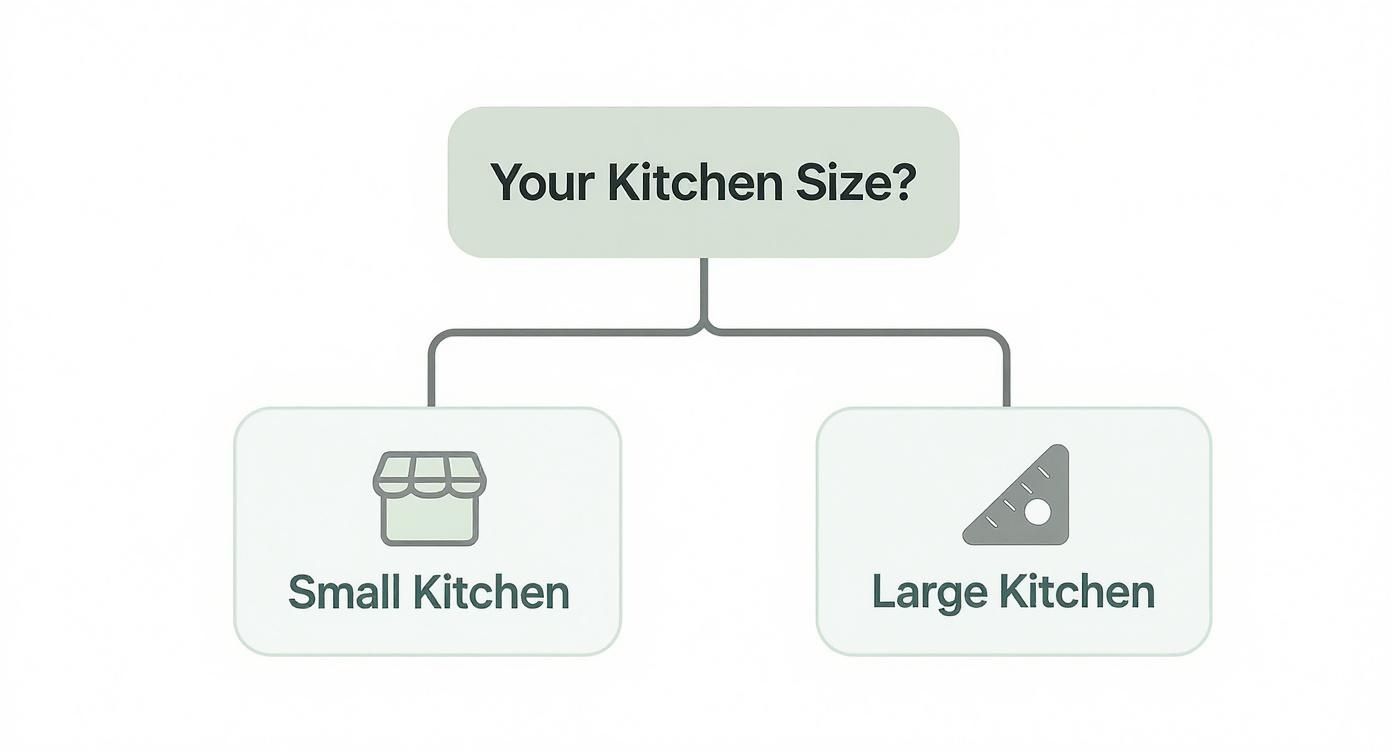
As you can see, if you're tight on space, a foldable model might be your best friend. For those with bigger kitchens, a wider, stationary stand could be a perfect fit.
If you are working with a smaller kitchen, a foldable kitchen stand is a fantastic solution. These models collapse down so you can tuck them into a pantry or closet when they're not being used, which is a lifesaver for keeping your floor space clear. If you have plenty of room, you can go for a sturdier, non-folding design that becomes a regular feature in your kitchen.
Using Your Kitchen Stand Safely and Effectively
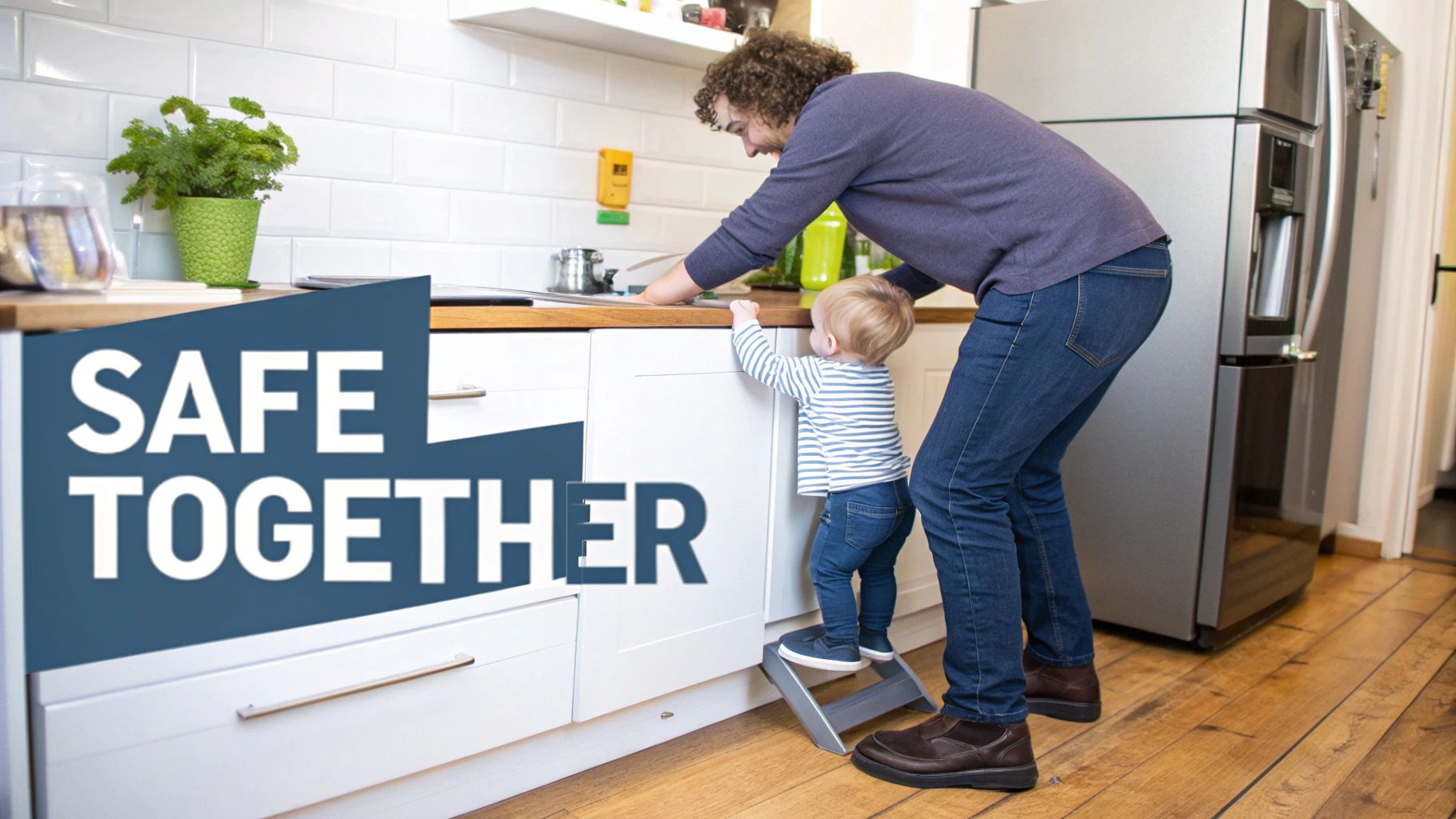
Bringing a new kitchen stand home is such an exciting moment! It’s the start of so many shared memories waiting to be made. To make sure all those experiences are happy and safe ones, it’s a good idea to set a few ground rules right from the beginning. Think of it less like a piece of furniture and more like a special tool that needs to be used with care.
First things first, let's talk location. Your kids kitchen stand needs its own safe harbor in the hustle and bustle of the kitchen. That means placing it a good distance away from any obvious dangers. Always keep it away from the stove, hot appliances like the toaster or air fryer, and definitely clear of the area where you're chopping with sharp knives.
Setting the Rules of the Road
Just like you’d teach your child how to cross the street safely, they need clear and simple rules for their kitchen stand. Take a moment to show them the right way to climb in and out, making sure they know it’s all about slow and careful movements. It’s so important they understand that the stand is for standing still and helping—not for jumping, wiggling, or leaning out.
And the biggest rule of all? Adult supervision is non-negotiable. A kitchen stand is fantastic for keeping them secure, but it’s no substitute for an attentive parent. Being right there ensures you can guide them, stop any unsafe reaching, and, most importantly, share in the fun.
The goal is to create a predictable and secure environment. When a child knows the rules and feels safe, they can focus all their energy on learning and having fun, making every kitchen session a success.
By setting these simple but firm boundaries from day one, you build a foundation of safety that becomes second nature for both of you. This helps their kitchen helper remain a tool for empowerment, not a source of worry.
Engaging in Age-Appropriate Tasks
The real magic happens when your child gets to dig in and do meaningful things alongside you. The trick is to pick activities that are both fun and safe for their age and skill level. Start with simple, low-risk jobs that build up their confidence and fine motor skills.
Here are a few great starter ideas:
- Washing Produce: This is a fantastic sensory activity! Just give them a bowl of water and some fruits or veggies to swish around.
- Stirring Cold Ingredients: Mixing dry ingredients for cookies or whisking a salad dressing is a perfect job for a little helper.
- Sprinkling and Adding: Let them be in charge of sprinkling cheese on pasta or adding pre-measured ingredients to the bowl. It gives them a real sense of ownership.
- Mashing Soft Foods: Mashing bananas for banana bread or avocados for guacamole with a child-safe masher is always a hit.
A great way to make the most of your stand is to get your child involved in making dinner. You can find tons of easy kid-friendly dinner recipes to get you started. By giving them these little jobs, you're not just keeping them busy; you're empowering them to become a genuine kitchen helper and nurturing a lifelong love for cooking.
Simple Cleaning and Maintenance Tips
From flour dust to sticky fingerprints, your kids kitchen stand is going to get messy. That’s a guarantee. Keeping it clean isn't just about appearances—it’s about making sure your little one has a safe, hygienic space to learn and explore. A simple routine will protect your investment and keep the stand looking great for years.
Daily wipe-downs are your best friend. For most messes on both wood and plastic stands, all you really need is a damp cloth and maybe a little mild soap. Just make sure you're using food-safe cleaners to avoid exposing your child to any harsh chemicals.
A Deeper Clean for Different Materials
The material of your kitchen stand will guide your cleaning approach. What works for a tough plastic model might not be the best for a beautiful wood one.
- For Wooden Stands: A gentle touch is key. Stay away from abrasive sponges that could scratch the finish. After wiping it down with a damp cloth, be sure to dry it completely. You don't want water seeping into the wood and causing problems down the line.
- For Plastic Stands: These are usually a bit more forgiving. You can use a standard all-purpose cleaner for those stubborn, dried-on messes, but always double-check that it's non-toxic and give the surface a good rinse afterward.
For more detailed advice on specific materials, you can check out our guide on toddler tower cleaning and upkeep.
Performing Regular Maintenance Checks
Beyond the daily clean, a little periodic maintenance goes a long way for long-term safety. I’d suggest setting a reminder to do a quick inspection once a month or so.
Gently wiggle the legs and guardrails to check for any looseness. If you find any, tighten up the screws that might have shifted with all that enthusiastic use.
Also, run your hand over the surfaces, especially on wooden models, to feel for any splinters or cracks. Catching these small issues early prevents them from becoming bigger headaches later.
A well-maintained kitchen stand is a safe kitchen stand. Think of these quick checks as a mini safety audit. It gives you peace of mind and ensures the structure is solid for every new cooking adventure.
This focus on durability is something we're seeing across the board. The global kids' furniture market, which includes products just like these, was valued at USD 36.5 billion in 2024. It's expected to hit USD 74.2 billion by 2034, mostly because parents are looking for quality items that last. You can discover more insights about kids' furniture market growth and see why quality is such a big deal for families today.
Of course. Here is the rewritten section, crafted to sound like an experienced human expert and match the provided blog post examples.
Common Questions About Kids Kitchen Stands
Even after seeing all the benefits, you might still have a few questions rolling around in your head. That's completely normal. Getting clear, honest answers helps you feel confident you're making a great choice for your little one.
We've pulled together the most common questions we hear from parents to clear up any lingering doubts. Let's get them answered so you can get back to planning all the fun.
What Age Is Best to Start Using a Kitchen Stand?
Most toddlers are ready to try a kitchen stand around 18 months, but the real green light is when they can stand confidently on their own two feet without any wobbling. It's less about a specific age and more about their physical stability. You want them to be steady and balanced before introducing a new height.
This is exactly why choosing a model with an adjustable platform is so important. It lets you set the standing height perfectly, so the safety rails are always right at your child's mid-torso for the best protection. Always double-check the manufacturer's age and weight recommendations, and remember, supervision is key.
Is a Kitchen Stand Safer Than a Chair or Stool?
Yes, absolutely. A well-designed kitchen stand is worlds safer than a regular chair or a wobbly step stool. This isn’t just marketing speak; it comes down to smart, intentional engineering. Chairs and stools are often top-heavy with a narrow base, making them dangerously easy for a squirmy toddler to tip over.
A proper kitchen stand is built from the ground up to prevent these exact accidents.
- Wide, Anti-Tip Base: They have a much larger footprint, which creates a low center of gravity that makes tipping extremely difficult.
- Four-Sided Enclosure: With safety rails on all sides, your child is in a secure little space, which stops them from falling out, no matter which way they lean.
- Stable Platform: The solid, flat surface gives them a firm place to stand, so they can use both hands freely without having to focus on their balance.
This purpose-built design turns what would be a risky balancing act on a stool into a safe, contained activity. It gives you a peace of mind that a simple chair just can't offer.
Should I Choose a Wood or Plastic Kitchen Stand?
The wood versus plastic debate really comes down to what you value most: durability, aesthetics, or ease of maintenance. Wooden stands are often loved for their sturdiness and classic look that blends in nicely with kitchen furniture. A well-made wooden stand feels solid and built to last.
On the flip side, plastic stands are usually lighter, making them a breeze to move from the kitchen to the bathroom. They are also incredibly easy to wipe down and often come in bright, playful colors that kids adore. No matter which material you lean toward, the most critical thing is to make sure it's made with non-toxic, child-safe materials—think lead-free finishes on wood or BPA-free plastic.
Ready to make your kitchen the new hub of family learning and fun? The Ocodile learning tower is designed with your child's safety and growing independence at its core, mixing beautiful craftsmanship with the practical features every family needs.
Explore the Ocodile collection and find the perfect kitchen stand for your family today!