



Montessori Stepping Stones for Child Development
Montessori stepping stones are so much more than just toys. They’re actually purposeful tools that help your child build balance, coordination, and a real sense of physical confidence. These simple objects invite kids into a world of open-ended, active play, which is the bedrock of developing gross motor skills.
Unlocking Development Through Play
At first glance, Montessori stepping stones might just look like a pile of colorful blocks or wooden discs. But through a child's eyes? They see a winding river that needs crossing, a mountain range to conquer, or a chain of islands in a giant ocean. That simple design is completely intentional, and it gets right to the heart of Montessori education: learning happens through meaningful, child-led discovery.
They aren't just playthings; they are physical puzzles just waiting to be solved. Every single time a child figures out how to get from one stone to the next, they're firing up a complex process in their mind and body. They have to judge the distance, test their balance, and constantly adjust their movements based on what their body is telling them. This is learning at its most pure—active, hands-on, and totally self-motivated.
More Than Just a Game
This kind of play is fundamental to a child's growth. Instead of being told what to do, your child becomes the architect of their own game and their own challenges. This cycle of trial and error builds so much more than physical skill; it also develops resilience and sharpens problem-solving abilities.
- Fosters Independence: Kids get to decide where to put the stones and how to get across. This gives them a powerful sense of control and accomplishment.
- Encourages Purposeful Movement: Every step is a deliberate action. It strengthens muscles, improves coordination, and fine-tunes their sense of balance.
- Builds Spatial Awareness: Figuring out a path of stepping stones helps children understand where their body is in relation to the objects around them.
The real beauty of these tools is their simplicity. There are no buttons to push or screens to watch. Their value comes from what the child brings to the table—imagination, curiosity, and that natural drive to just move and explore.
To really get why these stepping stones are so amazing, it helps to understand the philosophy of play-based learning. These simple objects are a perfect real-world example of how a structured play environment can lead to some incredible developmental leaps.
Connecting to Core Montessori Principles
Stepping stones are a direct line to Dr. Maria Montessori's belief that movement and brain development are completely intertwined. She saw that children learn best when their minds and bodies are working together. The stones create a "prepared environment" where a child is free to follow their instincts to climb, balance, and explore in a safe way.
This freedom to try things out without a fear of getting it "wrong" is crucial. When a child wobbles on a stone, they aren't failing—they're learning. Their brain and body are making tiny adjustments in real-time, building new neural pathways, and strengthening their proprioceptive sense (their internal GPS for where their body is in space). These little experiences lay the groundwork for a lifetime of physical confidence and a genuine love for being active.
How Stepping Stones Build Essential Skills
At their core, Montessori stepping stones are serious developmental tools disguised as a simple, fun game. A child might just think they’re playing "don't touch the lava," but they’re actually getting a complex workout for their brain and body. This is where the magic of purposeful play happens—building a rock-solid foundation for skills they'll use their whole life.
Every leap from one stone to the next is a tiny lesson in balance, coordination, and agility. These are the cornerstones of gross motor skills, which involve the large movements of the arms, legs, and torso. Unlike just walking on a flat floor, stepping stones add a dynamic challenge that really pushes a child’s abilities forward.
This isn't just about getting better at playground games, either. It’s about building the physical confidence that bleeds into everyday independence. A child who’s steady on their feet is more likely to help carry in a bag of groceries, climb into their own car seat, or navigate a crowded room without a problem. For more great ideas, check out our guide to toddler gross motor activities.
Developing a Sixth Sense: Proprioception
Beyond just balance, stepping stones are amazing for developing proprioception. Think of it as your body's built-in GPS—that subconscious sense telling you where your limbs are without you having to look. When a child places a foot on a stone, their brain gets instant feedback from muscles and joints, helping it map out the body's position in space.
This "sixth sense" is what allows for smooth, coordinated movement. It’s what lets a child kick a ball without staring at their feet or weave through a busy playground without bumping into everyone. Playing with stepping stones helps fine-tune this internal system, making physical actions feel more natural and intuitive.
A well-developed proprioceptive system allows a child to move with grace and confidence. They can trust their body to respond accurately, which reduces hesitation and encourages them to take on new physical challenges.
Better proprioception means better body control and a lot less clumsiness. It's a fundamental skill that underpins everything from learning to write (knowing how much pressure to put on the pencil) to mastering a new sport.
Boosting Cognitive Skills and Problem-Solving
The benefits don't stop at the physical, either. Every path a child creates across the stones is a puzzle they solve in their head first. They have to judge distances, plan their route, and adapt on the fly if a step feels wobbly or too far away.
This is executive function in action—a set of mental skills that includes working memory, flexible thinking, and self-control. Think about what a child does when mapping out a course across the stones:
- Strategic Planning: They look at the layout and mentally plot the safest or most fun path.
- Risk Assessment: They have to decide if a jump is too risky or if a stone looks stable enough to land on.
- Sequential Thinking: They need to remember the order of steps to get to the other side successfully.
This kind of active problem-solving builds neural pathways that support academic and social skills later on. In fact, a national study found that kids in public Montessori programs scored significantly higher in reading, memory, and executive function than their peers in traditional schools. You can see the full findings and learn more about the sharp early outcomes of Montessori education.
Ultimately, playing with Montessori stepping stones teaches children to think before they act, evaluate a challenge, and trust their own judgment. It's a powerful lesson in self-reliance, proving that some of the most important skills aren't learned at a desk, but through joyful, purposeful movement.
Choosing the Best Stepping Stones for Your Child
Picking out the right Montessori stepping stones can feel like a surprisingly big decision. With so many options out there, you want to be sure you’re getting a set that’s safe, fun, and a perfect match for where your child is at developmentally. Let's walk through the key things to look for so you can choose with confidence.
Every detail matters, from the material and texture to the height and shape. Getting these elements right means you'll find a set that not only sparks their imagination but also supports their growing skills for a long, long time.
Material Matters The Most
The first fork in the road is usually the material. Wood, silicone, plastic, and foam are all common, and each has its own vibe and practical considerations. Your choice here will really define the durability, safety, and sensory feel of the stones.
- Wooden Stepping Stones: These are the classic choice, often made from beautiful birch or beechwood. They’re durable, look great in any room, and fit right in with the Montessori philosophy of using natural materials. They give a firm, steady surface that offers clear feedback to little feet. Just make sure you look for a set with a non-toxic finish and good anti-slip pads on the bottom. If you love the natural look, exploring a range of wooden climbing toys can help you create a beautifully cohesive play space.
- Silicone or Rubber Stepping Stones: If safety and versatility are at the top of your list, these are a fantastic option. They are naturally non-slip, which is a huge plus for active kids on hardwood or tile floors. The surface is a bit softer, offering a more forgiving landing for wobbly toddlers, and they’re usually waterproof and a breeze to clean.
- Plastic Stepping Stones: Often lighter on the wallet, plastic stones bring a pop of color and can come in all sorts of fun textures. High-quality, sturdy plastic is a perfectly good choice, but it’s really important to double-check that it’s BPA-free and has a solid, non-slip base.
Here’s a quick comparison to help you weigh the options:
Comparing Stepping Stone Materials
| Material Type | Pros | Cons | Best For |
|---|---|---|---|
| Wood | Durable, eco-friendly, aesthetically pleasing, provides firm feedback. | Can be heavier, may require anti-slip pads, potentially more expensive. | Families prioritizing natural materials and a classic Montessori feel. |
| Silicone/Rubber | Excellent non-slip grip, waterproof, easy to clean, soft surface. | Can attract dust/hair, might be more flexible than some prefer. | Active indoor play on hard floors and for younger, less stable toddlers. |
| Plastic | Lightweight, budget-friendly, often colorful and textured. | Durability can vary, potential for BPA, can feel less "natural." | Families looking for a cost-effective option with lots of variety. |
| Foam | Very lightweight, softest landing, good for very young children. | Least durable, can be easily damaged or bitten by curious toddlers. | Supervised play for the youngest toddlers just learning to step and balance. |
Ultimately, the best material is the one that fits your family’s reality—your budget, your space, and your safety needs. Think about whether they’ll be an indoor or outdoor toy, as that can make the decision much clearer.
Safety First and Foremost
No matter what material you lean toward, safety has to be the number one priority. A thoughtfully designed set of stepping stones will have key features built right in to protect your little explorer as they hop, leap, and balance their way across the room.
Here’s what to look for on your safety checklist:
- Non-Slip Grips: This is a total deal-breaker, especially for indoor use. You want to see a full rubber or silicone ring around the base, not just a few tiny pads. This gives it the best possible grip and stops it from sliding out from under an energetic jump.
- Rounded Edges and Corners: Sharp corners are just a bad idea on a kid's toy. Smooth, rounded edges are a clear sign of a child-safe design.
- Weight Capacity: Take a quick look at the manufacturer's weight limit. It’s good to know the stones can handle your child’s weight, and maybe even an adult who accidentally steps on one.
- Stable Base: The stones need a wide enough base so they don't easily tip over if your child steps on the very edge.
This guide can help you visualize what works best at different ages.

As you can see, younger kids do best with low, wide stones that build confidence. Older, more coordinated children are ready for the fun challenge of varied heights, which really fine-tunes their balance and motor skills.
Considering Size, Height, and Texture
Finally, don’t underestimate the power of variety! A set that mixes up the sizes, heights, and even the textures of the stones makes for a much richer and more interesting play experience.
For little ones just finding their feet, a simple set of low, uniform stones is perfect. It lets them build confidence without too much challenge. As they get more sure-footed, introducing stones of different heights encourages them to think about where they’re stepping and how to shift their balance—that’s motor planning in action!
Textured surfaces can also add a wonderful sensory element to the game. Some sets are designed to feel like real river rocks or have patterns that little feet will love to explore. This kind of variety is what keeps the toy engaging for years. You can create endless new obstacle courses just by rearranging the stones, keeping the challenge fresh and exciting.
Fun Activities to Spark Imagination and Movement
Once you have a set of Montessori stepping stones, the real adventure begins. These simple tools are a blank canvas for your child’s imagination, ready to become anything from a bridge over a bubbling brook to a secret path through a magical forest.
Moving beyond just making a straight line is where you unlock their full potential for fun and skill-building. The key is to present activities as exciting games, not structured lessons. This keeps things child-led and joyful, letting all those developmental benefits happen naturally.
Let’s explore some creative ideas, broken down by age, to keep the challenge fresh and engaging for years to come.
Gentle Beginnings for Toddlers
For the youngest explorers (roughly 18 months to 3 years), the focus is all on simple sensory experiences and building that core confidence. The goal isn't about complex rules—it’s about getting comfortable with the feeling of different heights and surfaces under their feet.
Your presence and encouragement are the most important part of the game. Start by placing just two or three low, wide stones very close together on a soft surface like a carpet.
- Color Matching Path: Call out a color and cheer them on as they step on that specific stone. This simple game reinforces color recognition while they get a feel for balance.
- Sensory Steps: If you have stones with different textures, let them explore barefoot. Talk about how each one feels—is it bumpy, smooth, or swirly? It adds a wonderful sensory dimension to their physical play.
- Animal Walks: Weave movement into a fun story. “Can you roar like a lion and stomp to the blue stone?” or “Let’s tiptoe like a little mouse to the yellow one.” This connects gross motor skills with imaginative fun.
For toddlers, success is simply participation. Every wobble, every tentative step, and every successful crossing is a massive achievement that builds the foundation for more complex physical confidence later on.
Imaginative Adventures for Preschoolers
Preschoolers (ages 3 to 5) are primed for games with more storytelling and simple rules. Their imaginations are running wild, making it the perfect time to introduce story-based challenges. This is where Montessori stepping stones truly shine as tools for creative expression and problem-solving.
You can now spread the stones farther apart and mix in varied heights to create more of a physical challenge. The games can also become more collaborative, teaching social skills like taking turns.
- Island Hopping: The floor is an ocean full of hungry sharks! The stones are the only safe islands. Can you hop from one to the next without falling in? This classic is fantastic for developing dynamic balance and motor planning.
- Follow the Leader: This is a wonderful game for two or more. The leader creates a path by stepping on the stones in a specific sequence, and everyone else has to copy their exact movements. It’s a fun way to work on memory and observation.
- Mail Delivery Route: Give your child a few “letters” (just pieces of paper) and designate spots in the room as mailboxes. Their job is to deliver the mail by only stepping on the stones. This adds a sense of purpose to their movement.
Dynamic Challenges for Older Kids
For older kids (ages 5 and up), you can really ramp up the complexity. The stepping stones can become the centerpiece of challenging obstacle courses that test not just physical abilities but also memory, strategy, and agility.
Combine the stones with other household items like pillows to crawl over, chairs to duck under, or a line of tape to walk along like a balance beam.
- Memory Maze: Create a specific sequence (e.g., red, blue, green, yellow). Your child has to memorize the path and cross it in the correct order. Start with a short sequence of three or four and make it longer as they master it.
- The Floor is Lava Obstacle Course: This is the ultimate stepping stone challenge. Design a course that winds around furniture and through different rooms. The goal is to get from start to finish without ever touching the floor, requiring some serious strategic thinking and physical control.
- Timed Trials: For a competitive twist, use a stopwatch to time how long it takes to complete a specific course. This encourages them to improve their speed and efficiency, challenging them to find the quickest and most stable route.
Safe and Creative DIY Stepping Stone Ideas
You don't have to break the bank to bring the magic of Montessori stepping stones into your home. With a dash of creativity and a sharp eye for safety, you can create some fantastic DIY versions using materials you might already have. This isn't just about saving money; it's about crafting a custom play experience that fits your child and your space perfectly.
The secret to a great DIY project is simple: make sure each stone is stable, non-slip, and tough enough for all that toddler energy. If you get these safety basics right, you’ll have a tool for purposeful movement that you can feel totally confident about. From rustic wood slices to soft, living-room-friendly fabric options, let's jump into a few simple and effective ideas.
Crafting Wooden Slice Stepping Stones
For a beautiful, natural feel, sealed wood slices are a wonderful choice. They give that authentic, earthy feedback similar to commercial wooden sets and help connect kids with natural materials—a cornerstone of the Montessori approach.
Here’s how to make your own safe set:
- Get the Wood: You can find pre-cut wood rounds at most craft stores or even cut your own from a solid log. You’re aiming for a thickness of 1 to 2 inches to keep them from tipping.
- Sand It Smooth: Give every surface a thorough sanding. Pay extra attention to the edges to round them off completely. No splinters allowed!
- Seal for Durability: Apply a couple of coats of a non-toxic, child-safe sealant. This step is key for protecting the wood from spills and making cleanup a breeze.
- Add Non-Slip Grips: This is a non-negotiable step. Cut a non-slip material like cork shelf liner or thick felt to cover the entire bottom of each slice and secure it with a strong adhesive.
The end result is a gorgeous, sturdy set of stepping stones that provide excellent sensory input for little feet.
Indoor-Friendly Fabric Alternatives
Working with hard floors? Or maybe you just want a quieter, softer option? Fabric-based stepping stones are the perfect answer. They’re gentle on your floors, easy to tuck away, and ideal for apartments or smaller play areas.
Here are two easy fabric ideas to consider:
- Sturdy Beanbag Stones: Sew durable fabric like canvas or denim into different shapes—circles, squares, you name it. Fill them with rice, beans, or poly-pellets until they're firm enough to stand on but have enough give to stay put. Just be sure to double-stitch those seams to handle all the stomping.
- Felt Circle Grips: For a super simple, no-sew project, cut large circles from thick, stiff felt. Then, attach a non-slip rug gripper material to cover the entire bottom of each one. They don’t add height, but they’re perfect for creating paths on slippery floors and playing color recognition games.
The real goal of any DIY project is to replicate the function, not necessarily the exact form. A well-made set of fabric beanbags can challenge balance and coordination just as effectively as a wooden set, proving that purposeful play is about the experience, not the expense.
Building a Complete Montessori-Inspired Space
Montessori stepping stones are fantastic, but their real magic happens when they're part of a bigger picture—a whole home environment designed around your child. It's helpful to stop thinking about a collection of individual toys and start seeing your home as an integrated space where every item has a purpose. The independence and physical confidence your child builds with stepping stones should echo everywhere they go.
This big-picture approach is the heart of the Montessori philosophy, which has seen some incredible growth. Today, there are around 15,763 Montessori schools across 154 countries, with nearly 4,000 of them right here in the United States. This isn't just a trend; it's a worldwide shift toward creating environments where kids can truly find their footing.
Connecting the Dots for Independence
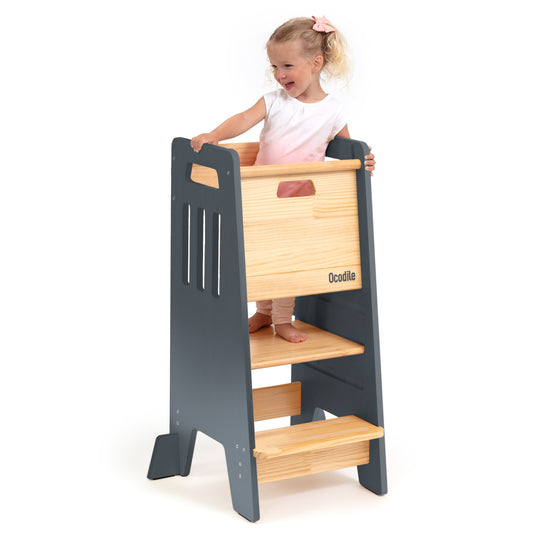
Think about it: just as stepping stones create a physical path for your child to explore, other pieces of child-focused furniture create pathways for them to join in on family life. An Ocodile learning tower, for example, is literally a "step up" into the kitchen world. It lets your child safely wash veggies or stir batter right beside you, serving the same core purpose as the stones—empowering movement and building that "I can do it myself" attitude.
To pull this off effectively, a little understanding space planning goes a long way. It’s all about arranging things so they make sense and are easily accessible from a child's perspective.
A well-designed Montessori space sends a powerful message to a child: "You are capable, you are trusted, and you belong here." Every piece of furniture, from low shelves to a small step stool, reinforces this feeling of competence and belonging.
Creating a Purposeful Environment
When every item in a room is chosen with intention, you start to see the benefits multiply. A child who has mastered crossing a set of Montessori stepping stones brings that same balance and confidence to climbing their learning tower or reaching for a book on their own shelf.
It all works together. Consider these key pieces for a complete space:
- Accessible Shelving: Low, open shelves aren't just for looks. They empower children to choose their own activities and, just as importantly, learn to put them away. It's a simple way to foster a sense of order and responsibility.
- Child-Sized Furniture: A small table and chair create a "workstation" that's just for them. It gives them a designated spot for focusing on anything from drawing to sorting objects.
- Practical Life Tools: Think small. A little pitcher for pouring water, or a tiny dustpan for cleaning up spills, transforms everyday chores into exciting, skill-building activities.
By thoughtfully curating your child’s environment, you’re doing so much more than just giving them toys. You’re building a foundation for lifelong independence and a genuine love for learning. To dive deeper, check out our guide on Montessori education at home.
Got Questions? We’ve Got Answers.
Jumping into the world of Montessori toys can bring up a few questions. It’s totally normal! Here are some clear, straightforward answers to the most common things parents ask about Montessori stepping stones, so you can get started with total confidence.
What’s the Right Age to Introduce Stepping Stones?
You can bring out the stepping stones as soon as your child is a confident, steady walker. For most little ones, this happens around 18 months. At this stage, keep it simple: start with low, wide stones placed close together on a soft surface like a rug or carpet.
Once they get a bit older, usually around age two or three, their balance and coordination really take off. This is the perfect time to mix things up! Introduce stones with different heights, textures, and shapes to keep the challenge fresh and exciting.
Are Stepping Stones Safe on Hardwood or Tile Floors?
Yes, they absolutely can be—but only if they’re designed for it. The single most important feature to look for is a high-quality non-slip base. You want something made from silicone or rubber that covers most of the bottom surface.
This is what stops the stones from sliding out from under your child when they’re hopping and playing. Of course, you should always keep an eye on young children during their stepping stone adventures to ensure everything stays safe and fun.
A good set of stepping stones should grip the floor firmly, giving your child a stable foundation for every step and leap. That peace of mind lets them focus purely on the joy of movement and exploration.
How Many Stepping Stones Should I Start With?
For toddlers and preschoolers just getting started, a set of five to six stones is perfect. This gives you enough to create simple paths and fun games without being too overwhelming for a young child to figure out.
A set this size offers plenty of room for creative layouts. As your child gets older and their imaginary obstacle courses become more complex, you can always add more stones to expand the fun.
How Are Stepping Stones Different From a Balance Beam?
While both are fantastic tools for building balance, they teach the skill in different ways. A balance beam is all about developing linear balance—it challenges a child to stay stable while moving forward and backward along a single, straight path.
Montessori stepping stones, on the other hand, build dynamic balance. They require a child to constantly shift their weight, judge distances, and plan their next move to a completely separate spot. It’s a unique mix of motor planning and core balance, making it a much more multi-faceted developmental challenge.
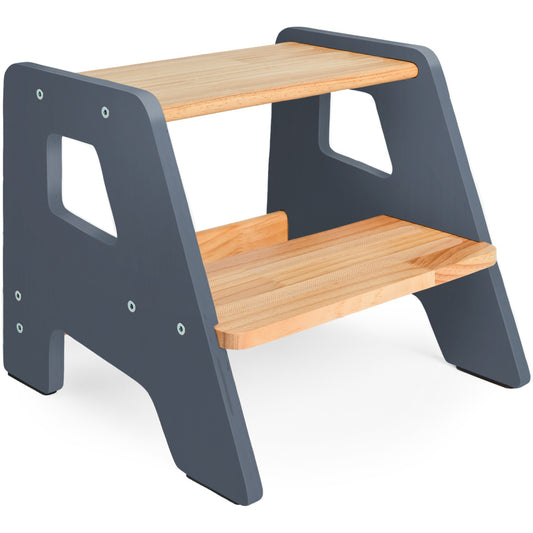
At Ocodile, we’re all about creating furniture that champions these same ideas of independence and confident movement. Our learning towers and step stools are designed to give your child a safe step up, empowering them to join in on family life right alongside you.
Explore our collection and start building a complete, child-led space today.