




 - Monica
 - Lindsay

Your Guide to Choosing a Pikler Triangle Climbing Set
A Pikler triangle climbing set is a fantastic tool for early development, specifically designed to give your toddler a safe outlet for their natural urge to climb. It’s far more than just a toy; it’s a simple, brilliant structure that builds independence, confidence, and gross motor skills, all through self-directed play.
The Ultimate Play Gym for Growing Toddlers
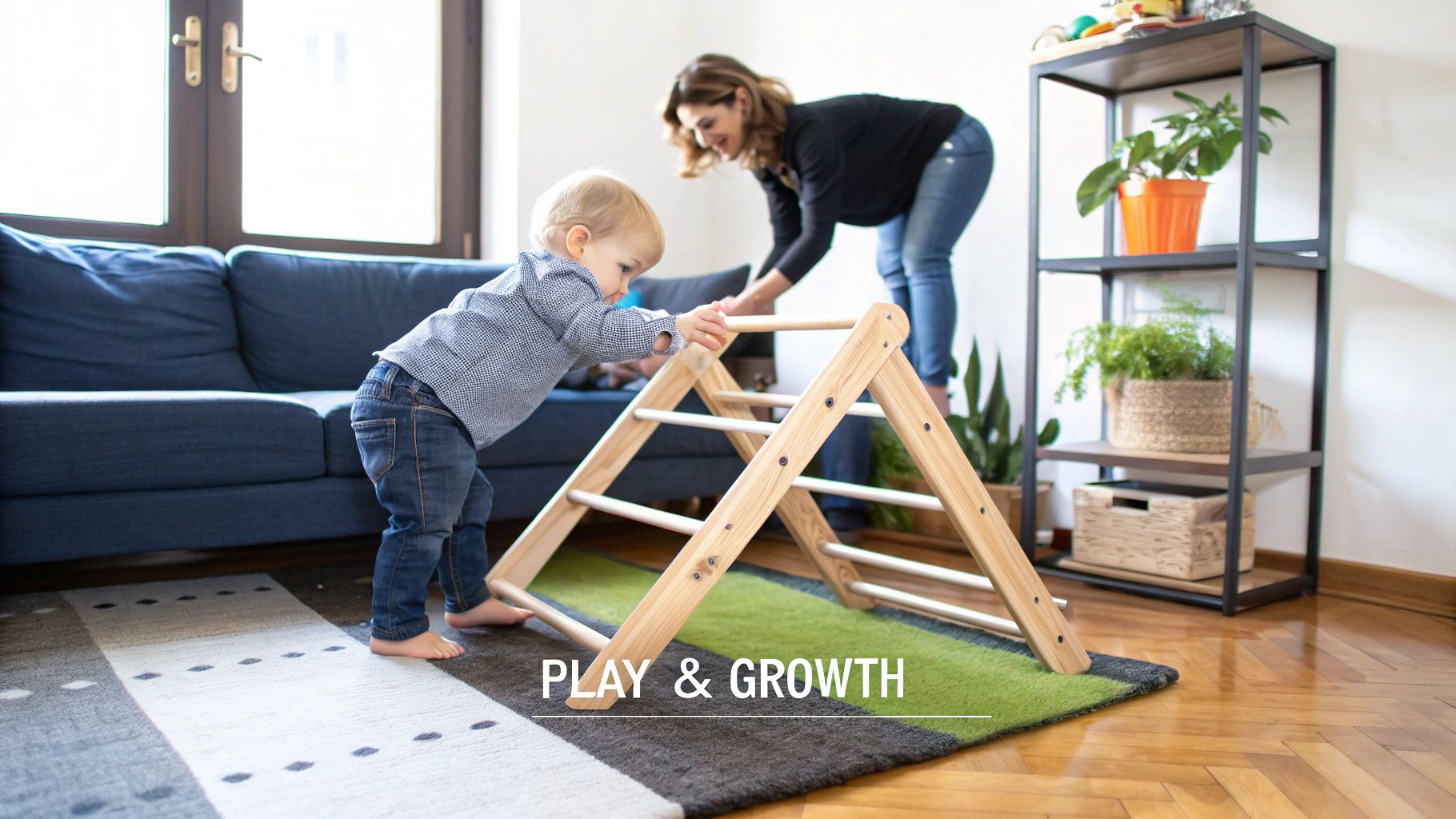
If you’ve got a toddler, you know the scene all too well: the irresistible urge to scale the sofa, conquer the coffee table, and test the limits of every piece of furniture in sight. This isn't your little one being naughty—it's a deep-seated developmental drive to explore, build strength, and figure out what their body can do. As a parent, you want to encourage this growth while keeping them safe.
This is where the Pikler triangle climbing set shines. It’s a simple, beautifully designed wooden structure that provides the perfect outlet for that climbing instinct. Instead of saying "no, don't climb that," it offers a secure and appropriate place for children to master movement on their own terms.
A Philosophy of Independent Play
The Pikler triangle was developed by Hungarian pediatrician Dr. Emmi Pikler, who was a firm believer in respecting a child's ability to develop naturally. She observed that kids who are allowed to move freely and without unnecessary intervention develop better motor skills, balance, and a stronger sense of self-awareness.
The core idea is simple: provide the right environment, and a child will learn and grow at their own pace. The triangle isn’t meant for adults to place a child on top of; it’s a tool for the child to discover their own limits and celebrate their own achievements.
This philosophy has really caught on with parents everywhere. In recent years, the global Pikler Triangle market hit an impressive USD 153.2 million, which shows a major shift toward child-led developmental toys. It’s clear there’s a growing appreciation for play structures that are both safe and purposeful. You can learn more about how these sets support family adventures on Ocodile's blog.
More Than Just a Climber
At its heart, a Pikler triangle climbing set is a versatile launchpad for imagination and physical development. It helps children build:
- Gross Motor Skills: Climbing, pulling up, and navigating the rungs strengthens core muscles and improves coordination.
- Confidence and Independence: Mastering the challenge of climbing gives kids a profound sense of "I did it!" that builds real self-reliance.
- Risk Assessment: In a controlled setting, children learn to evaluate their own abilities and make safe decisions about their movements.
This guide will walk you through everything you need to know, from the developmental perks and safety guidelines to choosing the perfect Pikler triangle for your family.
So, What Exactly Is a Pikler Triangle?
First things first, a Pikler triangle isn't just another toy to clutter up your playroom. Think of it as your child’s very own developmental playground, one that grows right along with them. It’s a simple, brilliantly designed climbing frame built to give kids a safe space to explore movement on their own terms—without any adult direction getting in the way.
This simple A-frame is the brainchild of Dr. Emmi Pikler, a pediatrician who believed deeply in letting children move freely. The triangle empowers them to discover their own limits, test their strength, and build rock-solid confidence. When your little one decides to pull up, place a foot on that first rung, or even climb to the top, it’s their decision. That’s how they build a real sense of independence and self-trust.
The Foundation of Free Movement
The genius behind the pikler triangle climbing set is how incredibly simple it is. Unlike those busy, overwhelming playground structures, its A-frame shape is totally intuitive. A baby might use the bottom rungs to pull themselves up to a stand, while a toddler could be confidently scrambling up one side and down the other.
This entire progression happens at the child's pace. The triangle itself doesn't demand anything; it just sits there, offering an opportunity. It’s an approach that nurtures crucial developmental skills without the pressure to perform.
The Pikler triangle respects a child’s innate wisdom. It trusts that they know what their bodies are ready for and provides a secure environment for them to prove it to themselves, one rung at a time.
This hands-off method of self-discovery is fundamental for building not just physical strength but emotional resilience, too.
More Than Just a Climber
While climbing is its main gig, the Pikler triangle is a true powerhouse for imaginative play. It’s one of those rare items that can transform into anything your child can dream up, which is why it remains a favorite for years.
The design naturally encourages some key physical skills:
- Gross Motor Skills: All that climbing engages the large muscle groups in the arms, legs, and core, improving overall strength and coordination.
- Proprioception: This is a big word for the body's ability to know where it is in space. Figuring out how to navigate the rungs helps kids develop an internal map of their bodies, which is vital for balance and fluid movement.
- Balance and Coordination: Every single step up or down requires your child to shift their weight and coordinate their hands and feet, refining their balance in a safe, repeatable way.
But it goes way beyond the physical. One day, it’s a cozy fort draped with a blanket—the perfect secret hideout for story time. The next, it’s a tunnel for a grand jungle adventure or the frame of a bustling little market stall. It’s a launchpad for creativity just as much as it is for physical exploration, making it a seriously valuable addition to any home.
How Climbing Play Fuels Child Development
A Pikler triangle climbing set is so much more than a simple wooden frame. It's a powerful engine for your child's development. When you see a little one navigating its rungs, you're watching a complex dance of physical, cognitive, and emotional growth happening in real-time. Every single climb is a lesson, and every small victory builds a foundation for lifelong skills.
The most obvious benefits are physical, of course. As your child grasps a rung and pulls themselves up, they're firing up their core, arm, and leg muscles. But this isn't just about building strength; it’s about refining those crucial gross motor skills—the large movements essential for walking, running, and jumping.
Think of it as a personal gym, perfectly scaled for a child's growing body. The simple act of climbing is a full-body workout that enhances coordination, improves balance, and sharpens their hand-eye-foot coordination. This physical confidence spills over into everything they do.
Building Brainpower One Rung at a Time
Beyond the physical workout, climbing is a serious cognitive exercise. A child looking at a Pikler triangle doesn't just see a ladder; they see a puzzle that needs solving. "Which rung should I grab next? Where does my foot go? How do I get to the other side?" These questions are the sparks that ignite critical thinking and problem-solving skills.
This process also introduces them to the concept of risk assessment in a completely safe and controlled environment. They learn to gauge their own abilities and make decisions based on what feels secure. This builds a healthy sense of self-awareness, teaching them to trust their instincts and understand their own physical limits.
Climbing also supercharges their spatial awareness—that innate understanding of where their body is in relation to the world around them. Navigating the structure helps them mentally map their movements, a skill they’ll use for everything from playing sports to just weaving through a crowded room.
Fostering Emotional Strength and Resilience
The emotional benefits are perhaps the most profound. Every time a child masters a new height or makes it all the way over the top, they feel a powerful surge of self-confidence. This isn't praise coming from a parent; it's a deep, internal sense of accomplishment that says, "I did that all by myself."
This journey also fosters incredible resilience. There will be moments of hesitation, and maybe a slip or two. Learning to get back up and try again builds genuine grit. The Pikler triangle becomes a safe space to practice overcoming small challenges, teaching them that effort leads to success.
A child who conquers the Pikler triangle isn't just reaching the top of a wooden frame. They are building a belief in their own capability—a foundational confidence that will support them long after they've outgrown the climber.
The history of this philosophy supports its modern value. Since Dr. Emmi Pikler first introduced her climbing triangle in the 1940s, these sets have become global favorites, with the foldable market alone reaching $265 million. This growth reflects a worldwide appreciation for tools that empower children's development safely. You can learn more about the market's evolution and what it means for families in this detailed report. As your child engages in this kind of active play, supporting their overall physical development extends to ensuring they have the right gear, including the Best Baby First Walking Shoes for healthy foot development. You can also explore how this approach aligns with educational philosophies by checking out our guide on the Pikler triangle and Montessori methods.
How to Choose the Perfect Pikler Triangle Climbing Set
Choosing the right Pikler triangle climbing set can feel like a big deal. It’s more than just a toy; it’s an investment in your little one’s development that will be part of your home for years. The good news is, if you focus on a few key areas—materials, construction, and safety—you can feel confident you're picking a set that will bring tons of safe, happy playtime.
This decision tree visualizes how a Pikler triangle nurtures a child's holistic growth, touching on physical, cognitive, and emotional development.
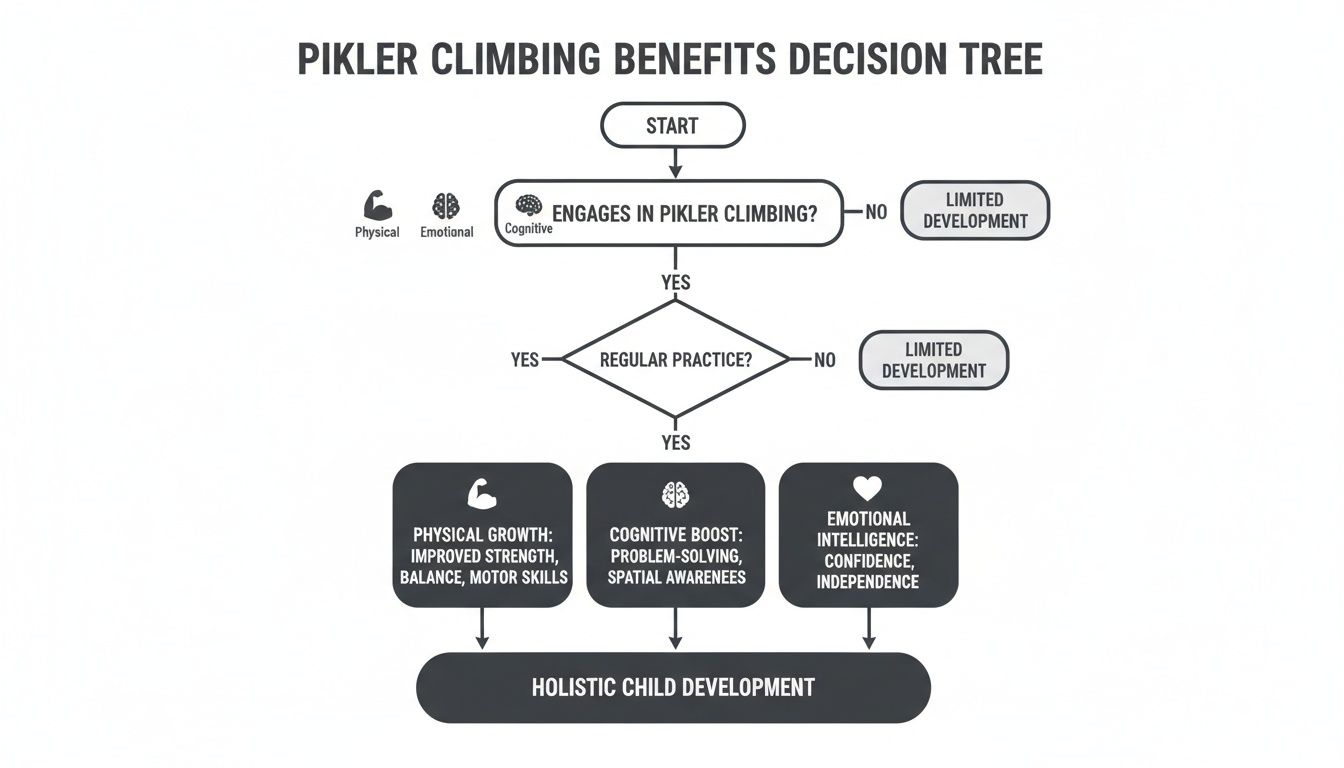 As you can see, the benefits all connect. Building physical strength boosts emotional confidence, and figuring out the next move sharpens both their mind and their coordination.
Materials Matter Most
The heart of a great Pikler triangle is the wood it’s made from. You want something strong, durable, and completely safe for curious hands and mouths. The choice of wood directly affects the climber's stability and how long it will last.
- Hardwoods (Like Birch or Beech): These are the gold standard for a reason. Hardwoods are dense, tough, and stand up to dents and scratches. A set made from something like Baltic birch is truly built to withstand years of climbing, making it a choice you can rely on.
- Softwoods (Like Pine): While often cheaper, pine is much softer and will show dings and wear pretty quickly. For something that’s going to see constant action, a sturdier hardwood is almost always the better long-term investment.
Just as important is the finish. Look for sets treated with non-toxic, child-safe paints and sealants. A zero-VOC (Volatile Organic Compounds) finish means no nasty chemicals are being released, so you can have total peace of mind while your child plays.
Smart Construction and Stability
A well-designed Pikler triangle is engineered from the ground up for stability. The angles, the spacing of the rungs, and the overall frame are all carefully planned to create a secure climbing experience.
Dowel spacing is a critical safety detail. The rungs need to be close enough for small hands and feet to get a solid grip, but not so close that little arms or legs could get stuck. Also, run your hand over the frame—you want smooth, rounded edges everywhere to avoid scrapes and splinters.
A well-built Pikler triangle feels solid. It shouldn't wobble or creak when your child climbs on it. This stability is what gives them the confidence to explore and test their boundaries safely.
The weight limit is another clue to its quality. Top-tier Pikler triangles are built to last, with some premium models supporting up to 350 lbs. This isn't just a number; it speaks to the quality of the materials and the strength of the design.
Finding the Right Size and Style
Pikler triangles come in different sizes, so you'll want to find one that fits both your child's stage of development and your living space. A standard-sized triangle is usually the most versatile, working well for little ones from about six months all the way up to five or six years old.
The other big question is whether to get a foldable or a fixed model, which really just comes down to your space.
- Foldable Models: These are a lifesaver for smaller homes or apartments where every square foot counts. A high-quality foldable triangle will have secure locking mechanisms, making it just as sturdy as a fixed one when it's set up. The best part? You get your floor space back when playtime is over.
- Fixed Models: If you have a dedicated playroom, a non-foldable triangle can be a fantastic permanent feature. It’s always ready for an adventure, offering that built-in rigidity and stability.
For families trying to save space without compromising on sturdiness, a well-made foldable set is often the perfect answer. You can dive deeper into this by checking out our guide on the benefits of a foldable Pikler triangle.
Choosing the right Pikler triangle comes down to spotting quality craftsmanship. To make it a bit easier, here’s a quick checklist comparing the features of a high-quality set versus a lower-quality one.
Feature Checklist for Your Pikler Triangle Set
| Feature | What to Look For (High-Quality) | What to Avoid (Lower-Quality) |
|---|---|---|
| Wood Type | Solid hardwoods like Baltic Birch or Beech. | Softwoods like Pine; MDF with glues. |
| Finish | Non-toxic, zero-VOC, water-based paints & sealants. | Vague "non-toxic" claims; strong chemical smells. |
| Edges & Rungs | Smooth, rounded edges; securely fitted dowels. | Sharp corners; rough spots or potential for splinters. |
| Stability | Solid, sturdy frame that doesn't wobble or creak. | Wobbly construction; feels lightweight or flimsy. |
| Weight Limit | High weight capacity (e.g., 200+ lbs), clearly stated. | Low or unstated weight limit. |
| Foldable Lock | Secure, easy-to-use metal or wood locking mechanism. | Flimsy plastic locks or no locking mechanism at all. |
| Assembly | Clear instructions; pre-drilled holes that align perfectly. | Confusing instructions; misaligned parts. |
Ultimately, the best choice is one that combines durable materials, thoughtful construction, and a design that fits your family's life. A great Pikler triangle will quickly become a beloved part of your home for years to come.
Bringing Your Pikler Triangle into Your Home
Once your Pikler triangle climbing set arrives, the real fun begins. Getting this beautiful piece of equipment into your daily life is simple, and with a little creativity, it will quickly become the heart of your child’s play space. It has a way of turning ordinary moments into opportunities for joyful exploration.
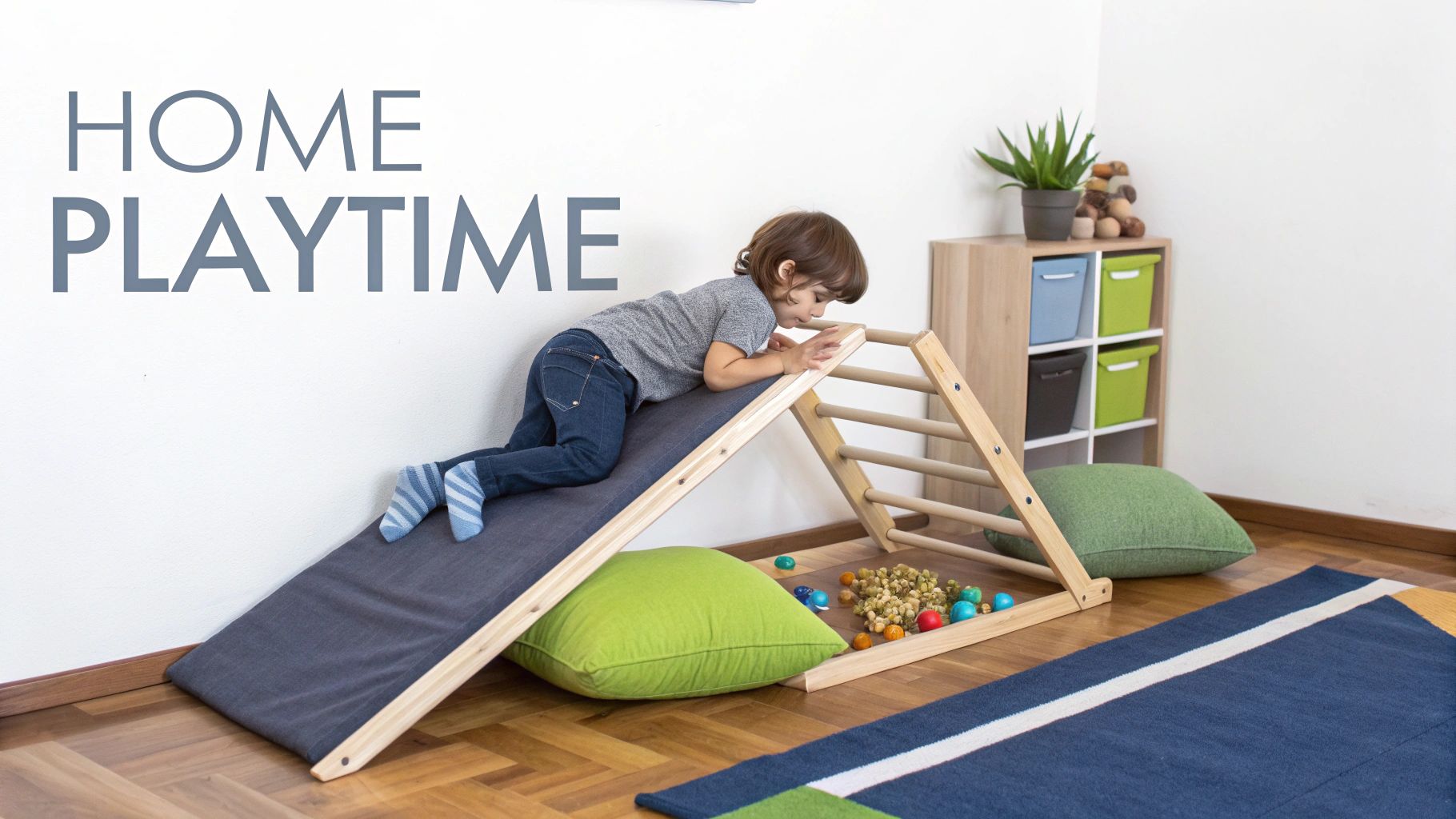
Setup is usually a breeze. Most high-quality sets, like those from Ocodile, come with clear instructions and pre-drilled holes that line up just right. Once it's built, maintenance is minimal—a quick wipe-down with a damp cloth is all it takes to keep the natural wood clean and ready for the next adventure.
Evolving Play from Infancy to Preschool
The true magic of the Pikler triangle is how it grows with your child. It’s not a toy they’ll outgrow in a few months but a long-term companion on their developmental journey, adapting its purpose as their skills blossom.
For the youngest explorers (around 6-12 months), the triangle is a perfect baby gym. Lay your little one on a soft mat underneath it and hang engaging sensory toys from the lower rungs. This encourages them to reach, bat, and track objects with their eyes, building core strength and coordination long before they even think about climbing.
As they become more mobile, those same rungs provide the ideal support for pulling up to a stand. This phase is crucial for strengthening their leg muscles and building the confidence they need for those first tentative steps.
The Pikler triangle meets your child exactly where they are. It never pushes them beyond their abilities but patiently waits, offering the next challenge whenever they feel ready to take it on.
Once they hit the toddler and preschool years, the possibilities explode. The triangle becomes the ultimate tool for imaginative and physical play, evolving from a simple climber into the centerpiece of countless adventures.
Creative Activity Ideas for Your Pikler Set
Ready to inspire some fun? The Pikler triangle climbing set is a blank canvas for creative play. Here are a few age-appropriate ideas to get you started, showing how the set can be used in different ways as your child grows.
For Infants and Early Walkers (6 months - 2 years):
- The Sensory Station: Hang ribbons, soft bells, or textured fabrics from the rungs for your baby to explore while lying on their back.
- Pull-Up Practice: Place a favorite board book or a soft toy on the first rung to motivate them to pull themselves up to a standing position.
- Peek-a-Boo Central: Use a lightweight blanket to play peek-a-boo through the rungs, fostering object permanence and a few giggles.
For Toddlers (2 - 4 years):
- The Cozy Fort: Drape a large sheet or blanket over the triangle to create an instant fort, reading nook, or secret cave. Add some pillows and a flashlight for extra magic.
- The Obstacle Course: Combine the triangle with a ramp or slide. Encourage your child to climb up one side and slide down the other, building motor planning and sequencing skills.
- Animal Adventures: Pretend the triangle is a mountain to climb, a bridge over a rushing river, or a tunnel to crawl through like a bear. This turns physical activity into a storytelling adventure.
For Preschoolers (4 - 6 years):
- Advanced Obstacle Courses: Get more complex by adding cushions to jump on, a crawling arch, and other elements. You can even time them to see how fast they can complete the course!
- Color and Number Games: If your triangle has colored rungs, call out a color and have them climb to it. Or, place numbered stickers on the rungs and ask them to climb to a specific number.
- The Grand Escape: Use the ramp as a slide for toy cars or balls, creating a fun little physics experiment while they play.
By introducing these simple ideas, you can ensure the Pikler triangle climbing set remains a dynamic and engaging part of your child’s world for many years. It’s so much more than just a climber; it’s a foundation for a childhood filled with movement, imagination, and self-discovery.
A Parent's Guide to Pikler Triangle Safety
When you bring a **Pikler triangle climbing set** into your home, your child's well-being is naturally the first thing on your mind. The wonderful thing about this structure is that it’s designed with safety at its very core. It empowers kids to explore their own physical limits in a controlled space, teaching them how to gauge risk on their own terms.Still, setting up a safe play zone is a parent’s job. The most critical step is placement. Always set up the climber on a soft but stable surface, like a thick rug, a dedicated play mat, or carpet. If you have hardwood or tile, make sure you cover the area to cushion any potential tumbles.
Just as important is clearing the space around it. Position the triangle well away from hard furniture, sharp corners, walls, and windows. Think of it like creating a "fall zone"—this gives your child plenty of open space to explore without the risk of bumping into something else.
Supervision Without Interference
One of the central ideas of the Pikler philosophy is trusting your child. For parents, this means supervising their play without constantly jumping in to help. Your job is to be a calm, reassuring presence nearby, not a director telling them how high to go or where to put their feet next.
This approach is often called "supervision without interference." It gives your child the space to listen to their own body and make decisions based on their comfort level. Believe it or not, they are the best judge of their own abilities, and this process builds incredible self-trust and confidence.
Your calm presence gives your child the security they need to explore freely. By trusting them to lead, you are teaching them to trust themselves, which is a foundational lesson in both safety and self-reliance.
When you resist the urge to "help" them or place them on a higher rung, you let them experience the pure joy of accomplishment when they reach a new milestone all on their own. This hands-off but attentive approach is the real key to using the Pikler safely and effectively.
Safety Dos and Don'ts Checklist
For a quick rundown, here’s a simple checklist to make sure every climbing session is a safe one. Running through these points helps create that secure environment where your little one can truly thrive.
- DO place the climber on a soft, level surface.
- DON'T use it on slippery or hard floors without a mat.
- DO ensure the area around the triangle is clear of any hazards.
- DON'T place it near walls, stairs, or furniture with sharp edges.
- DO give all the screws and bolts a quick check regularly to make sure they're tight.
- DON'T let children play on it with wet clothes or slippery socks.
- DO supervise your child at all times while they play.
- DON'T interfere unless there is a genuine risk of harm.
Anchoring larger furniture is another crucial piece of the puzzle for overall home safety. You can learn more about how to secure furniture to the wall in our detailed guide. This ensures that as your child’s climbing confidence grows, your entire home remains a safe space for all their adventures.
A Few Common Questions About Pikler Triangles
Even after digging into all the details, it's totally normal to have a few questions pop up. We get it. You want to feel 100% confident you're making the right choice for your family. So, we’ve put together a quick guide to the most common things parents ask us about bringing a pikler triangle climbing set home.
The magic of a Pikler triangle is how it grows with your child, but knowing exactly where to begin is key. Let's tackle everything from the best starting age to picking the perfect accessories.
What Age Is Best to Introduce a Pikler Triangle?
You can introduce a Pikler triangle as early as 6 months old. Think of it as a beautiful, functional baby gym at this stage. You can lay your little one underneath and hang sensory toys from the rungs to encourage them to reach, bat, and kick, strengthening their core long before they’re on the move.
Once they start trying to pull up, they'll naturally use the rungs to hoist themselves to a standing position. Independent, active climbing usually kicks in around 1 to 2 years of age. From there, the climber remains a favorite for years, offering new challenges and imaginative play setups for kids all the way up to age 5 or 6.
Foldable vs. Non-Foldable: Which Is Right for Me?
This one really just boils down to your living space. A foldable Pikler triangle is a lifesaver for smaller homes or apartments where you need to make every square foot count. When playtime wraps up, you can simply tuck it away in a closet or slide it under a bed.
A non-foldable version, on the other hand, has a natural sturdiness and is always ready for action. It’s a great choice if you have a dedicated playroom where it can live permanently. Either way, you can feel good about your choice—any high-quality foldable model will have secure locking mechanisms to make sure it's just as stable and safe as its stationary counterpart.
What Are the Must-Have Accessories?
While a standalone triangle is fantastic on its own, adding a ramp truly opens up a whole new world of play. The most popular and versatile add-on is a reversible ramp. These usually have a smooth slide on one side and a climbing surface on the other, like rock holds or simple rungs.
A slide/climber ramp instantly doubles the fun and the developmental challenges. It transforms the triangle from a simple up-and-over structure into a more dynamic obstacle course, encouraging new types of movement and problem-solving.
You can always add other pieces, like a climbing arch, down the road. But if you’re just starting out, the triangle and a single reversible ramp will give your child more than enough to explore for years to come.
How Do I Encourage a Hesitant Child to Climb?
The golden rule here is to never, ever push or force it. The whole philosophy behind the Pikler triangle is about child-led discovery. Your only job is to place the climber in their play space and let them approach it on their own timeline.
A great way to spark their interest is to model play without making it about them. Place a favorite stuffed animal on a low rung or toss a blanket over the top to turn it into an instant cozy fort. This makes the climber feel less like a "challenge" and more like just another part of their imaginative world. Trust their innate curiosity—they will start to climb when they feel physically and emotionally ready.
At Ocodile, we believe in creating tools that empower children and bring families closer. Our thoughtfully designed climbers are built to support every stage of your child's development safely.
Explore Ocodile's collection of safe and beautiful climbing sets today!