



Your Complete Guide to the Foldable Pikler Triangle
A foldable Pikler triangle is, in many ways, your child's first personal gym. Think of it as an adjustable, wooden climbing frame designed to support their natural physical development, but with a modern twist: it can be easily folded and tucked away. It’s the perfect solution for today's homes where space is often at a premium.
Unlocking Your Child's Potential
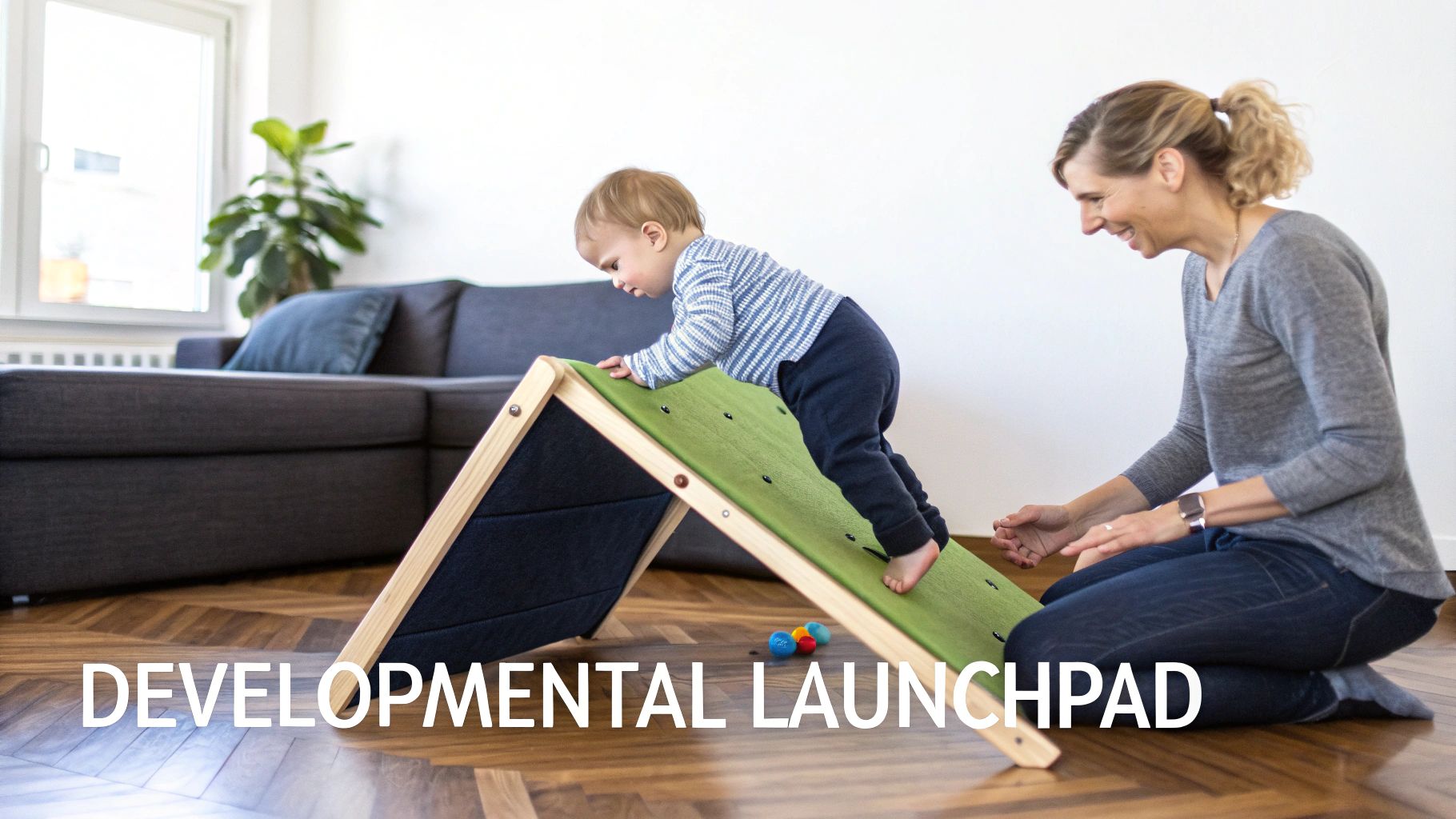
This simple piece of equipment is more like a developmental launchpad than just another toy destined to be forgotten in a few weeks. It’s a dynamic tool that adapts as your child grows and their abilities change. The whole concept was inspired by the work of Hungarian pediatrician Dr. Emmi Pikler, whose philosophy was built on respecting a child’s innate ability to learn and explore on their own terms.
Dr. Pikler championed the idea that children should be free to discover their physical capabilities at their own pace. The triangle offers a safe environment for this kind of exploration, encouraging them to move freely and build confidence without an adult constantly directing them.
The 'foldable' part is a real game-changer for families. You get all the developmental benefits of a classic Pikler triangle without having to dedicate a permanent spot for it in your living room.
The Core Purpose of a Foldable Climber
At its heart, the main goal of a foldable Pikler triangle is to nurture gross motor skills. These are the big movements that involve the arms, legs, and the whole body.
From the very beginning, it acts as a sturdy support for a baby learning to pull themselves up to a standing position. As they get bigger, it transforms into a ladder to conquer, a mountain to climb, or a tunnel to crawl through.
This simple yet powerful structure supports key developmental milestones:
- Physical Confidence: By figuring out the rungs at their own speed, children learn to trust their bodies and even start to assess risk for themselves.
- Gross Motor Skills: Climbing builds the crucial strength, balance, and coordination needed for walking, running, and jumping.
- Independent Play: It fosters self-directed activity, letting kids challenge themselves and solve problems without waiting for instructions.
The real magic of the foldable Pikler triangle is its simplicity. It doesn’t have flashing lights or loud sounds; instead, it offers a blank canvas for your child’s physical and imaginative growth, all while respecting the constraints of your home.
More Than Just a Climbing Frame
Beyond the physical benefits, this versatile piece of equipment is a huge spark for creativity. One day it’s a treacherous mountain to scale, the next it’s a cozy reading nook or the frame for a secret fort.
This open-ended design is what gives it such longevity, keeping your child engaged from their baby days right through their preschool years.
Ultimately, a foldable Pikler triangle is an investment in your child's autonomy and physical literacy. It's a tool that quietly says, "I trust you to learn," giving them a safe and practical way to become a capable and confident little person.
To really get why the foldable Pikler triangle is such a big deal, we have to go back to the 1930s and meet the amazing woman behind it, Dr. Emmi Pikler. This simple wooden climbing frame isn't just a toy—it’s the physical expression of a deep-seated belief in what children are capable of.
Dr. Pikler, a Hungarian pediatrician, came up with her ideas by carefully watching children, not by actively teaching them to sit, stand, or walk like most people did back then. She was a huge advocate for uninterrupted movement and letting kids explore on their own terms.
She was convinced that if you give children a safe, prepared space, they instinctively figure out how to develop their own motor skills. This wasn't about being hands-off; it was about showing profound respect and trust in a child's unique developmental clock.
A Surprising Discovery About Safety
Dr. Pikler didn't just guess about this stuff; her work was based on real-world data. While looking at accident statistics in Budapest during the 1930s and 40s, she stumbled upon something fascinating.
Kids from lower-income families, who were free to play on the streets, actually had fewer serious injuries like broken bones compared to wealthier children who were constantly watched over by governesses indoors.
This discovery backed up her main theory: when you give children the freedom to move and explore, they build better physical awareness, coordination, and a keen sense of risk assessment. They learn their own limits by actually testing them, which makes them more competent and—surprisingly—safer.
"The Piklerian approach is fundamentally about trusting the child. It’s a shift from 'Let me help you' to 'I know you can do it,' and the triangle is a physical representation of that trust."
From Philosophy to Play Equipment
The Pikler triangle came directly out of this way of thinking. It wasn't designed to teach a child to climb, but to allow them to climb whenever they felt ready. The structure itself is just a simple, passive invitation to explore.
It offers a safe and predictable place where a child can practice:
- Pulling Up: Using the lower rungs to get steady on their feet.
- Climbing: Building strength and coordination by going up at their own speed.
- Descending: Figuring out the tricky problem of getting back down safely.
- Risk Assessment: Learning to understand what their body can and can’t do.
This is exactly why the Pikler triangle has become such a beloved piece in homes that follow Montessori and RIE (Resources for Infant Educarers) principles. It fits perfectly with the idea of the child as the main character in their own learning story. Check out our guide on how the Montessori approach and the Pikler triangle are a perfect match for child development.
The foldable Pikler triangle simply takes this powerful concept and adapts it for the modern family, making sure every child has a safe space to build confidence from the ground up.
Why Choose a Foldable Pikler Triangle
While the core idea behind the Pikler triangle hasn't changed, the way it fits into our homes certainly has. When it comes down to it, the decision to get a foldable Pikler triangle usually boils down to one incredibly important factor: practicality. For most of us, space is a premium, and having play equipment that doesn't permanently take over the living room is a huge win.
Picture this: after a day full of climbing adventures, you can actually get your living room back. Instead of having to maneuver around a fixed wooden structure, you just fold the triangle up. In less than a minute, it can disappear under a bed, stand neatly in a closet, or lean against a wall. That simple flexibility is the number one reason so many families go with a foldable model.
Beyond Just Saving Space
The magic of a foldable design goes way beyond just tucking it away neatly. It brings a whole new level of portability and adaptability to the table that you just don't get with a fixed frame. This turns the climbing triangle from a static piece of furniture into a versatile tool that fits your family's life.
Think about these real-world scenarios:
- Easy Portability: Heading to the grandparents' for the weekend? A foldable triangle fits right in the trunk of the car, bringing a familiar and fun activity to a new place.
- Flexible Play Zones: You can set up an awesome play area anywhere in the house and pack it away just as fast. This is great for preventing overstimulation, as the play space doesn't have to be a permanent fixture in your child's environment.
- Seasonal Use: Take it outside for some backyard fun when the weather is nice. When winter rolls around, it’s easy to bring it back inside without needing to find a permanent home for it.
When you're looking for toys that truly support development, a foldable Pikler triangle really shines. It’s not just a climber; its ability to adapt to your space and lifestyle makes it one of the best educational gifts for 3-year-olds, growing with them while fitting into your life.
Foldable vs. Non-Foldable Models
To feel really confident in your choice, it helps to see the main differences laid out side-by-side. What works best for you will ultimately depend on your home, your lifestyle, and how you see your little one using the triangle.
Let's break it down.
Foldable vs. Non-Foldable Pikler Triangle: A Quick Comparison
This little chart compares the key features of both types to help you figure out which one is the right fit for your family.
| Feature | Foldable Pikler Triangle | Non-Foldable Pikler Triangle |
|---|---|---|
| Storage | Folds flat for super compact storage under beds or in closets. | Needs a dedicated, permanent spot in a room. |
| Portability | Lightweight and easy to transport for trips or outdoor play. | Bulky and pretty tough to move from one place to another. |
| Setup | You’ll need to unfold it and secure the lock before each use. | It's always ready for play with zero setup needed. |
| Stability | High-quality models have secure locking mechanisms. | Often seen as slightly more stable because of the fixed joints. |
At the end of the day, the choice comes down to what makes the most sense for your day-to-day life.
The best choice is always the one that gets used the most. A foldable Pikler triangle ensures that even families in smaller apartments or homes can provide this incredible developmental tool without sacrificing their living space.
How to Choose a Safe Pikler Triangle
When you’re bringing a climbing frame into your home, nothing matters more than your child's safety. This is your practical buyer's guide—a mental checklist to run through so you can find a high-quality, secure foldable Pikler triangle that will stand up to years of play. It’s not just about how it looks; it’s about the details you might not spot at first glance.
Let's start with the official stamps of approval. You'll see certifications like ASTM (American Society for Testing and Materials) in the US and CE (Conformité Européenne) in Europe. These aren't just fancy acronyms. They are your guarantee that the product has gone through rigorous testing for everything from its physical structure to the chemical safety of its components.
A product with these certifications has been vetted against established safety benchmarks, which offers some serious peace of mind.
Materials and Construction Matter
The heart of a safe climber is its material. I always recommend looking for models made from solid hardwoods like birch or beech. These woods are incredibly durable and strong, which is exactly what you want when an enthusiastic toddler is scaling it. While some are made of plywood, make sure it's high-grade and sturdy.
Just as important is the finish. Always, always opt for a triangle with non-toxic, water-based paints or finishes. Little ones explore with their mouths, so making sure there are no harmful chemicals like lead or phthalates is completely non-negotiable.
Beyond the raw materials, take a close look at the construction:
- Smooth, Rounded Edges: Run your hand over every surface. You're looking for perfectly smooth, sanded wood with no sharp corners or splinters that could harm little hands.
- Secure Locking Mechanism: For a foldable Pikler triangle, the locking system is everything. It needs to be rock-solid and easy for an adult to use, but impossible for a curious child to accidentally unlock.
- Proper Rung Spacing: The rungs should be spaced thoughtfully—close enough for small legs to climb confidently but not so close they could cause entrapment. A diameter of about 1 inch (2.5 cm) is pretty standard, giving tiny hands a comfortable and secure grip.
This little decision tree can help you visualize whether a foldable or non-foldable model is the right fit for your family.
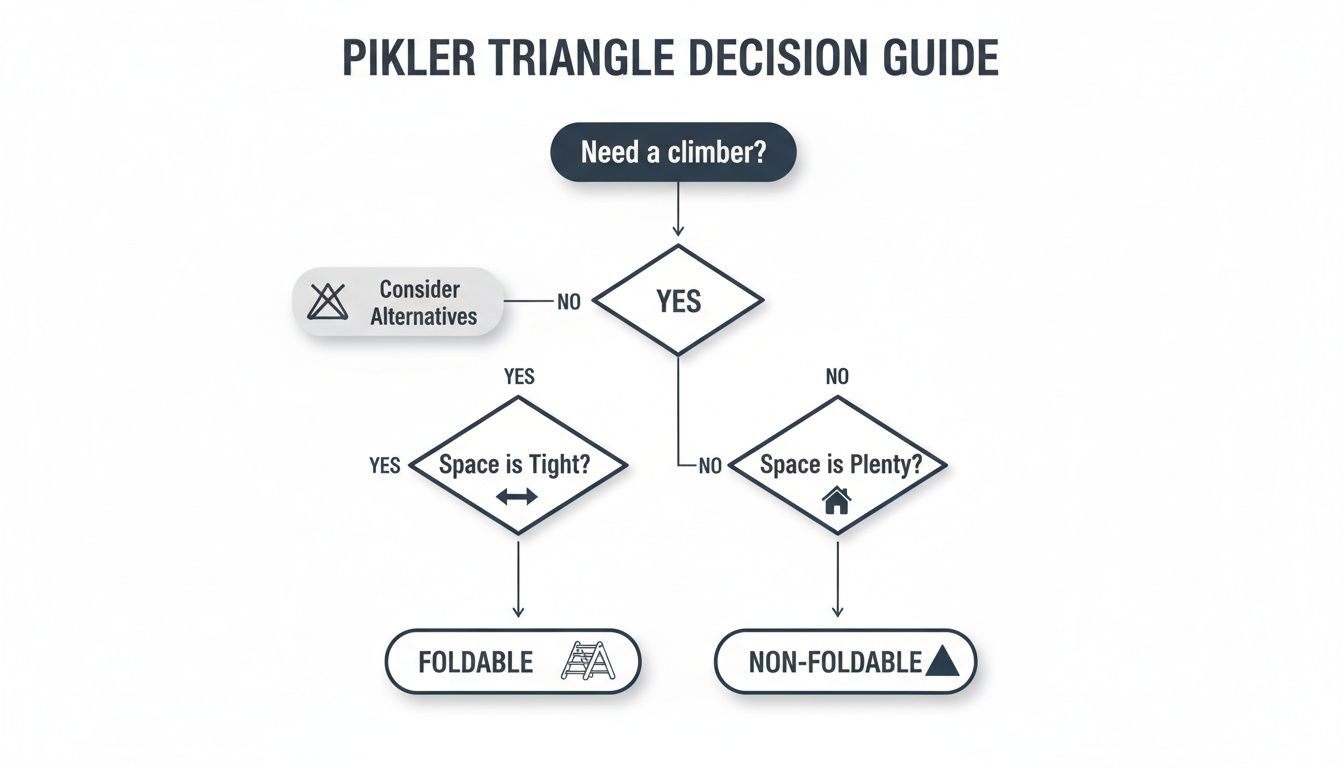
The main takeaway here is that a foldable model is often the best choice when storage and flexibility are your top priorities. You can find a variety of safe options in a complete Pikler triangle set that meets these tough standards.
A well-made Pikler triangle is an investment in your child's physical development. Prioritizing certified materials and thoughtful construction ensures that investment is, above all, a safe one.
Using the Pikler Triangle at Every Age
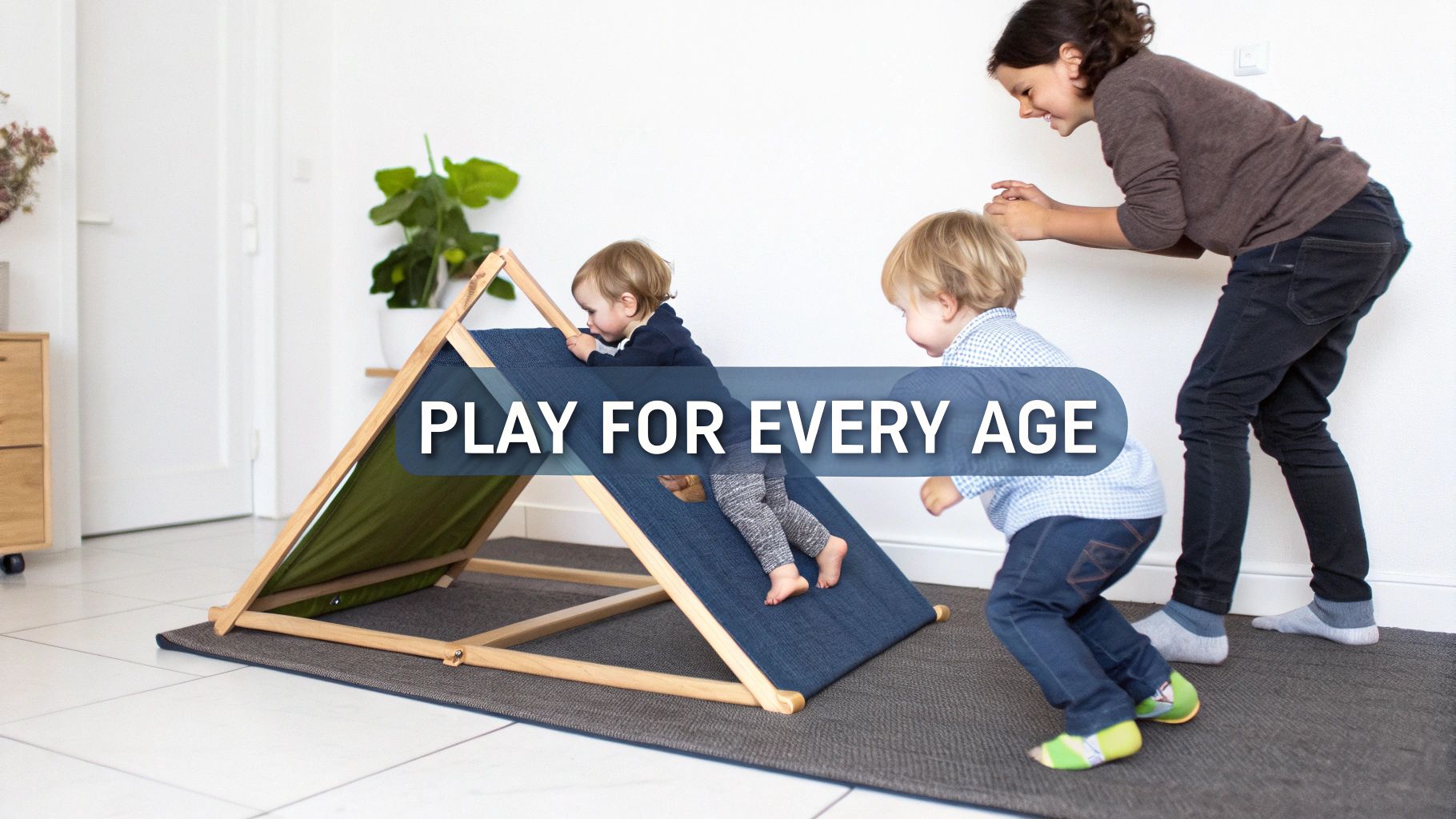
One of the best things about a foldable Pikler triangle is how it grows right alongside your child. This isn't some toy they'll get bored with in a few months. Think of it more like a developmental partner, adapting to new skills and challenges year after year. Its real magic is in its ability to be exactly what your child needs, right when they need it.
This journey starts much earlier than most parents realize. The Pikler Triangle is a proven tool for mastering gross motor skills. In her original work, Dr. Pikler watched babies master the rungs entirely on their own—pulling up as early as 6-7 months and climbing by 9-10 months. These children built strength 25-30% more effectively than kids who were constantly "helped."
More recently, US parents have noticed something similar: 85% of toddlers with Pikler triangles are walking independently by 12-15 months, a bit ahead of the 18-month national average.
From Infancy to First Steps (6-12 Months)
In the very beginning, it’s not really about climbing at all. It’s about stability and discovery. For a baby just learning to sit up or crawl, the triangle is a fascinating new landmark in their world.
- Pulling to Stand: Those low rungs are at the perfect height for tiny hands to grab and pull up to a standing position. This simple act is a powerhouse for building leg and core strength.
- Sensory Exploration: A lot of parents hang soft toys or colorful scarves from the rungs, instantly turning it into a simple baby gym that encourages reaching, grabbing, and batting.
At this stage, the triangle is a safe, predictable anchor in their environment, empowering them to explore movement on their own terms.
The Toddler Years of Adventure (1-3 Years)
This is when the Pikler triangle really hits its stride as a climbing frame. Once your toddler gets steady on their feet, their play becomes much more dynamic. They'll start by testing out the first few rungs, figuring out what their bodies can do, and eventually, they'll conquer the peak.
This phase is all about building coordination, balance, and problem-solving skills. A toddler learns how to get up, but just as importantly, they have to figure out how to get back down safely—a huge cognitive and physical puzzle for them to solve. For a more detailed look at the milestones, you might want to explore the best Pikler triangle age guide for your child.
Preschool and Imaginative Play (3+ Years)
For preschoolers, the foldable Pikler triangle evolves again. It goes from being a gym to being a stage for their wild imaginations. The physical challenge is still there, but now it serves a bigger purpose in their creative stories.
The climber becomes a mountain they have to conquer, the frame of a secret fort, a spaceship control center, or even a cozy reading tent. Just drape a blanket over it, and you've created an entirely new world that can spark hours of play.
This amazing adaptability is what keeps the triangle a beloved fixture in the playroom long after they've mastered the basic climb. It just keeps adapting to their needs, making it one of the most lasting and truly meaningful first birthday gifts you can give.
Caring for Your Foldable Pikler Triangle
Think of your Pikler triangle like any beautiful piece of wooden furniture in your home. With a little care, it'll stay a safe and beloved part of your child's world for years to come, protecting your investment in their development.
A simple wipe-down is usually all it needs. Grab a soft, damp cloth and maybe a drop of mild, child-safe cleaner to clean the rungs and frame. Just be sure to steer clear of harsh chemicals or abrasive sponges—those can strip the non-toxic finish and damage the wood. This quick step keeps it hygienic and always ready for the next adventure.
Regular Safety Inspections
Because your Pikler triangle has moving parts, a quick check-up every few weeks is a really good idea.
- Check the Joints: All that folding and unfolding can sometimes loosen things up. Give the screws and bolts a quick check to make sure they're nice and tight.
- Inspect the Wood: Run your hands over the frame and rungs. You're looking for any little splinters or cracks. It’s rare with a quality piece, but it's always better to catch these things early.
- Test the Lock: This is probably the most important part. The locking mechanism is what keeps the triangle sturdy and safe. When you set it up, make sure you hear or feel it click securely into place, and give it a little wiggle to ensure it’s not going anywhere.
Your goal is to create a 'yes space'—an environment where your child is free to explore safely. Regular checks on their equipment are a key part of maintaining that trust and security.
Finally, when playtime is over, think about storage. Fold it up and keep it somewhere dry and indoors. You'll want to avoid places with extreme temperatures or dampness, as that can cause the wood to warp over time.
A Few Common Questions
Jumping into the world of developmental toys can feel a little overwhelming. When it comes to something like a foldable Pikler triangle, you want to be sure you're making a smart, safe choice for your family. Let's walk through some of the questions we hear most often to help you feel confident.
Is a Foldable Pikler Triangle Safe for My Child?
Absolutely, as long as it’s a quality piece and you use it the way it's intended. Real safety begins with the product itself. You want to look for one made from solid wood with non-toxic finishes—bonus points if it has safety certifications like ASTM or CE.
The single most important feature on a foldable Pikler triangle is the locking mechanism. It’s what keeps the climber from collapsing when your little one is halfway to the top. A secure, sturdy lock is non-negotiable.
Once you have it home, always set it up on a soft, flat surface, like a rug or a play mat, and give it some space away from hard furniture or walls. It's also a good idea to stay close by, especially when they're first learning. You don't need to hover, but being nearby to offer a steady hand gives them the confidence to explore.
What Is the Best Age to Introduce a Pikler Triangle?
You can bring a Pikler triangle into your home as early as 6 months old. It might sound young, but at that age, it's the perfect, sturdy object for them to grab onto and pull themselves up. From there, it just grows with them.
- Infants (6-12 months) will use it to practice pulling to a stand and exploring textures with their hands.
- Toddlers (1-3 years) start to climb, which is a huge step for their coordination, balance, and learning to assess their own limits.
- Preschoolers (3+ years) will take it to a whole new level, turning it into a fort, a rocket ship, or a mountain in their imaginative games.
That's the real magic of it—the triangle meets your child right where they are developmentally and offers new possibilities as they get bigger and more confident.
How Much Weight Can a Foldable Pikler Triangle Hold?
This can vary a bit from brand to brand, but a well-built foldable Pikler triangle should hold at least 100 pounds (about 45 kg). Some of the more robust models can handle even more, which is great if you have multiple little climbers who want to play at the same time.
Before you buy, just double-check the weight limit the manufacturer provides. A higher weight capacity is usually a good sign that it’s made with durable materials and solid construction, meaning it's built to last through years of energetic play.
Ready to create a safe and exciting space for your child to grow? The Ocodile foldable Pikler triangle is built with the highest safety standards in mind and is designed to be a part of your family for years. Explore our collection and find the perfect fit for your home at Ocodile.com.