



Pinch Point Safety Guide for Parents and Safe Furniture
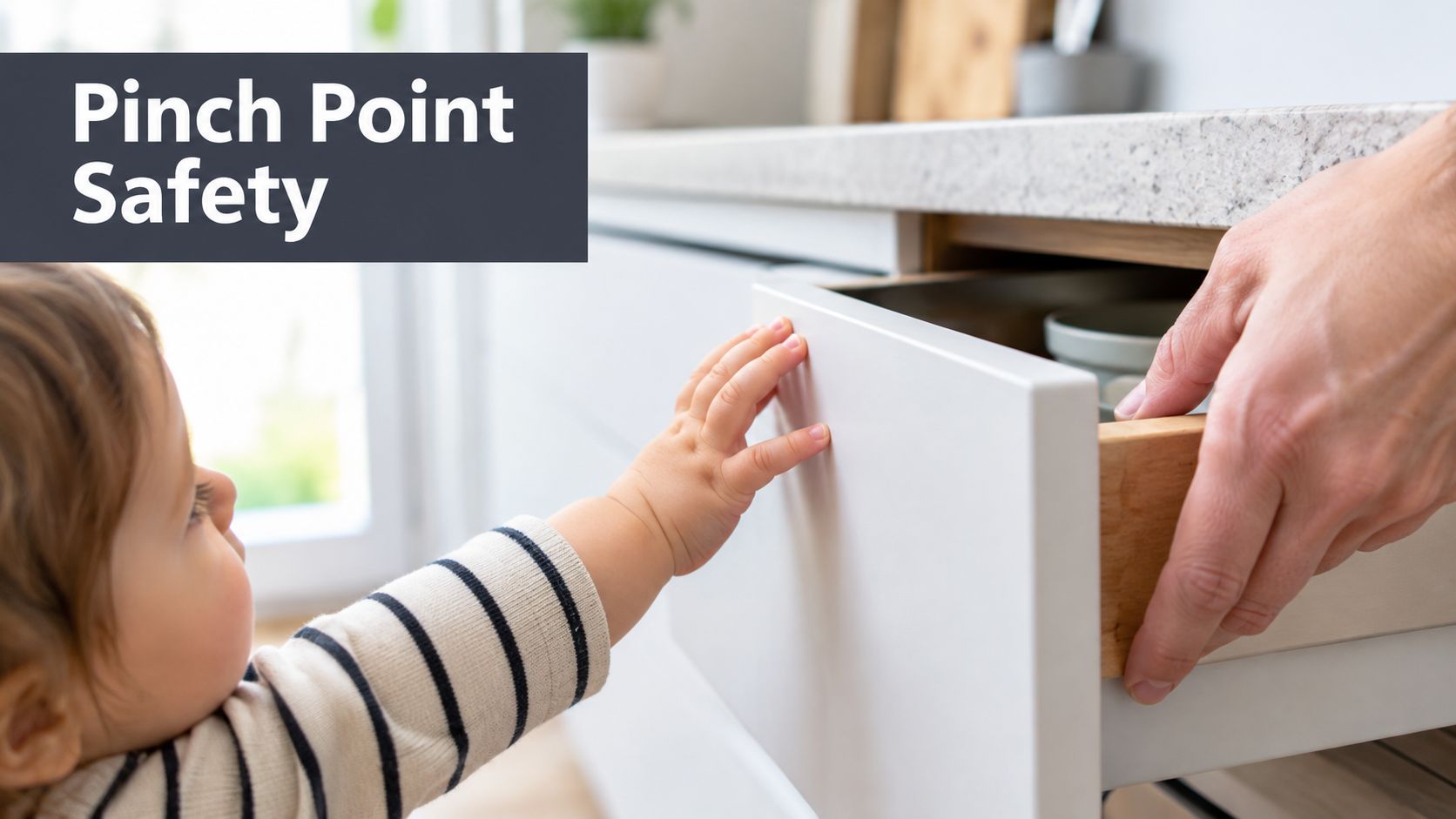
Your toddler reaches for a kitchen drawer while you close it, or places a hand near the hinge of a cabinet. The movement seems ordinary, yet the space between moving and fixed parts can close quickly around a small finger. That's a pinch point, and understanding it helps parents make everyday furniture safer without turning home life into a list of frightening warnings.
Table of Contents
- Introduction Why Pinch Points Deserve Your Attention
- What a Pinch Point Is and How It Works
- Where Pinch Hazards Hide in Childrens Furniture
- Why Young Children Face Higher Injury Risks
- How to Childproof and Prevent Pinch Injuries at Home
- What Safe Design and Testing Looks Like When You Shop
- Simple Inspection Checklist and First Aid for Pinch Injuries
Introduction Why Pinch Points Deserve Your Attention
Pinch point safety belongs in kitchens, playrooms, bedrooms, and childcare spaces because children learn through touch. A drawer handle, folding leg, or cabinet door invites exploration. The goal isn't to stop that curiosity. It's to make sure furniture gives children room to practice independence without exposing their hands to avoidable closing paths.
The U.S. Consumer Product Safety Commission has tracked pinch points as a recognized injury mechanism for decades. In a long-running review of playground equipment, about 5% of equipment-related injuries were associated with pinch points, protrusions, sharp edges, or sharp points, and the agency recommended that accessible pinch, crush, and shearing points should not be present (U.S. Consumer Product Safety Commission review).
That principle applies beautifully to children's furniture. Parents, caregivers, and furniture designers can look at a piece in the same simple way: What moves, what stays still, and where could a child's hand become trapped?
The answer often appears in a hinge, drawer runner, folding joint, or adjustable lock. Once you know how to spot those areas, you can choose safer designs, add sensible guards, and teach gentle habits without discouraging a child's desire to participate.
What a Pinch Point Is and How It Works
Think of a pair of scissors. As the blades close, the space between them becomes smaller. A finger placed in that path can be pinched, crushed, or cut. Furniture usually moves more slowly than scissors, but the basic mechanism is similar.
A pinch point is a place where a body part can become caught between moving parts, between moving and stationary parts, or between material and moving parts.
OSHA uses this broader definition for machinery and identifies hazards such as ingoing nip points that require guarding (OSHA pinch-point guidance). For a child's chair, drawer, or tower, the same idea can be translated into one question: Can a finger enter the gap while the parts are moving together?
Three related hazards
- Pinch point: A finger or hand becomes trapped between two closing surfaces.
- Crush point: A weight or force presses down on a body part.
- Shearing point: Two surfaces slide past each other, creating a cutting action.
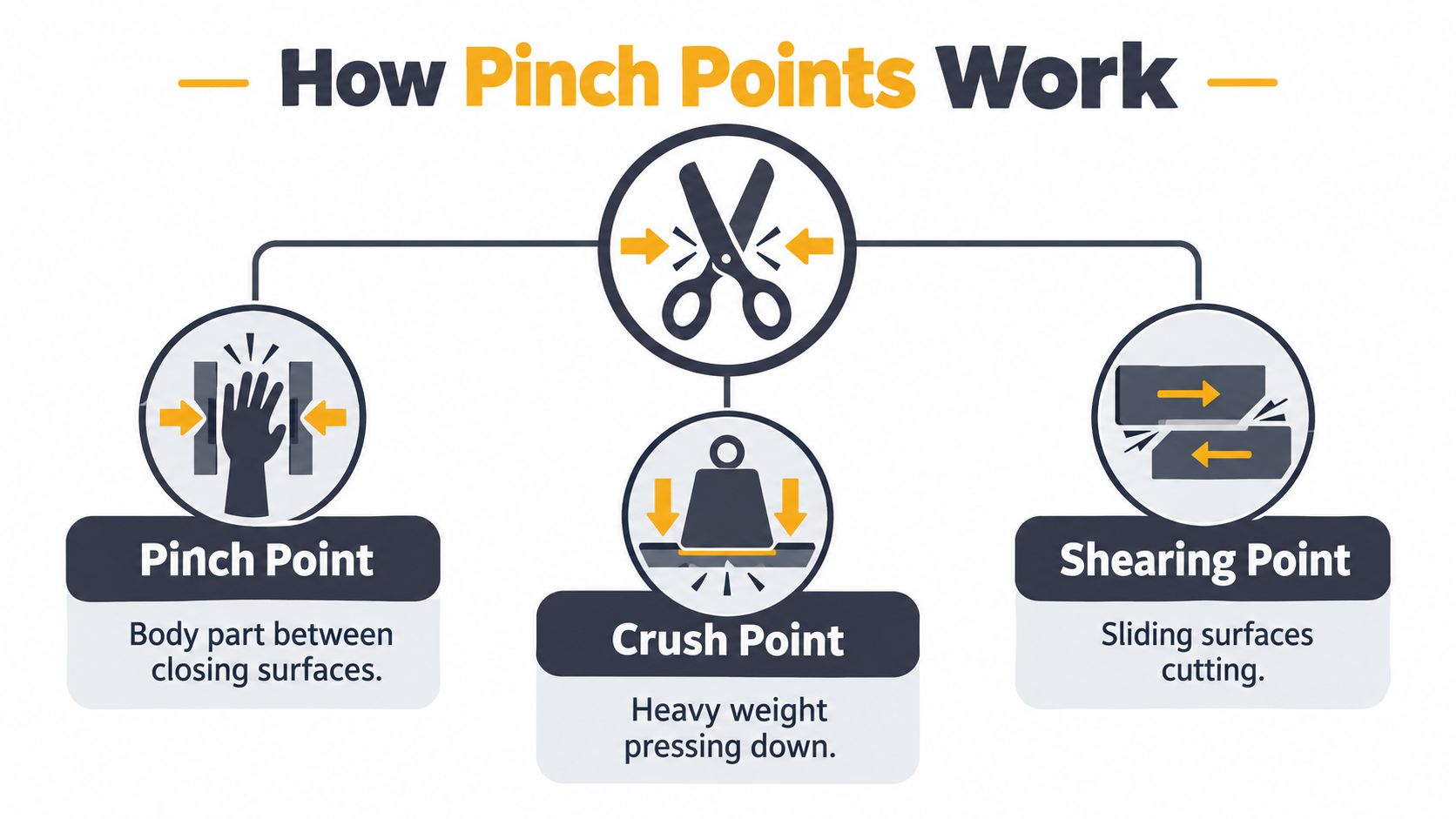
Furniture can create all three. A folding stool may close like scissors. A heavy lid may press downward. A sliding panel may move across a fixed edge and shear anything caught between them.
Small gaps deserve special attention because a child's finger may fit inside before the space closes. U.S. guidance for children's folding chairs and stools identifies an accessible gap greater than 0.210 inches, or 5.30 mm, and less than 0.375 inches, or 9.53 mm, as a scissoring, shearing, or pinching hazard when rigid parts move through that area (federal proposal for children's folding chairs and stools).
Where Pinch Hazards Hide in Childrens Furniture
The most useful inspection begins with motion. Don't look only at whether furniture appears sturdy. Watch what happens when a door swings, a drawer slides, a platform folds, or a height lock shifts.
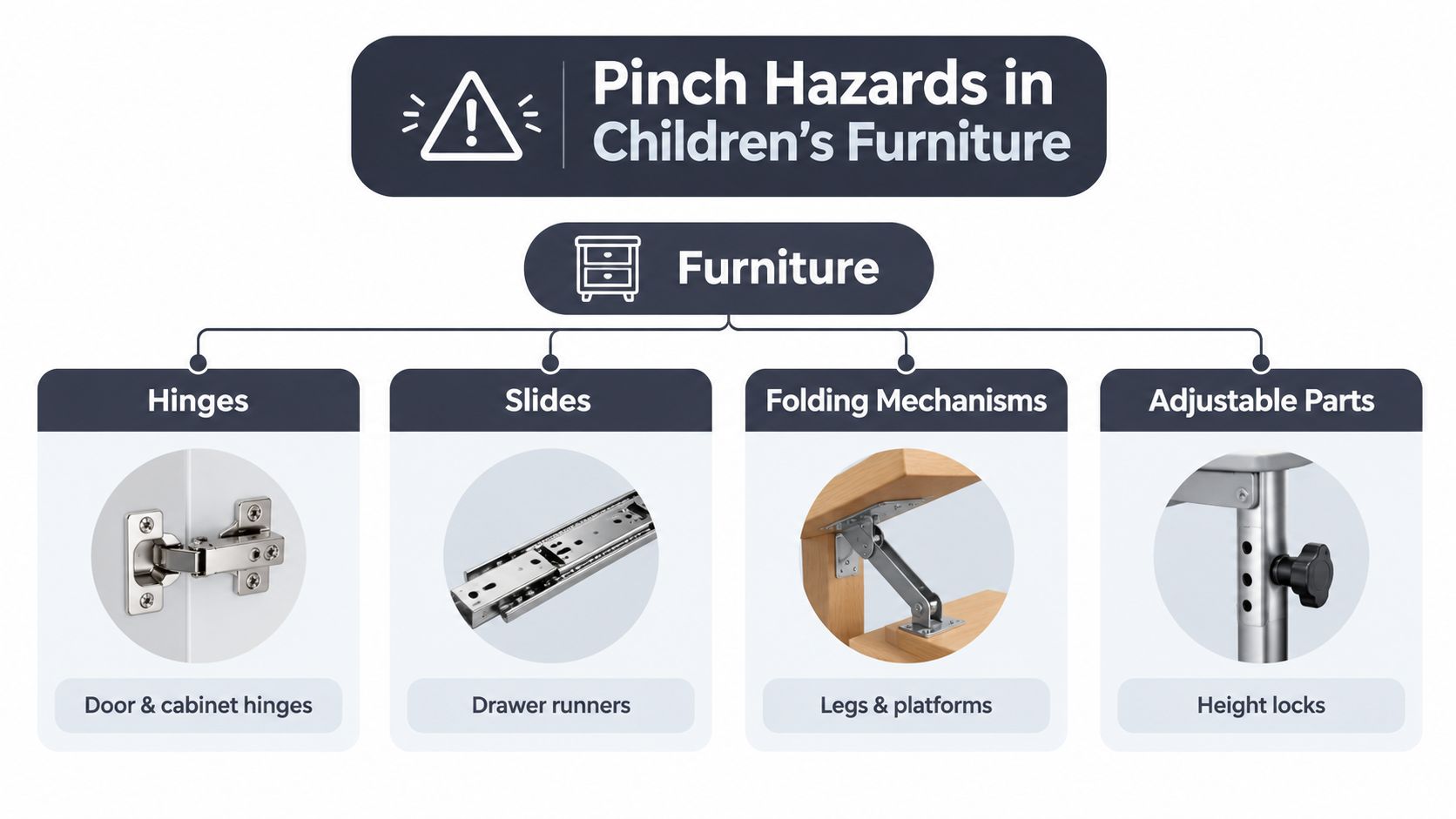
Common zones to examine
Hinges appear on cabinet doors, storage chests, and safety doors. A child naturally places fingers at the edge of a door while opening or closing it. Safer construction covers, recesses, or otherwise blocks access to the hinge-side closing path.
Drawer slides create a second hidden zone. A child may pull a drawer with one hand and steady the cabinet with the other, placing fingers near the runner. Smooth, controlled movement and a lock or stop can reduce access to the closing path. For a closer look at the hardware itself, see 10-inch drawer slides.
Folding legs and platforms can move toward one another with surprising force. Folding furniture should be fully opened, stable, and secured before a child uses it. A learning tower or step stool deserves the same attention as a folding chair because a child's hands often explore the frame while climbing.
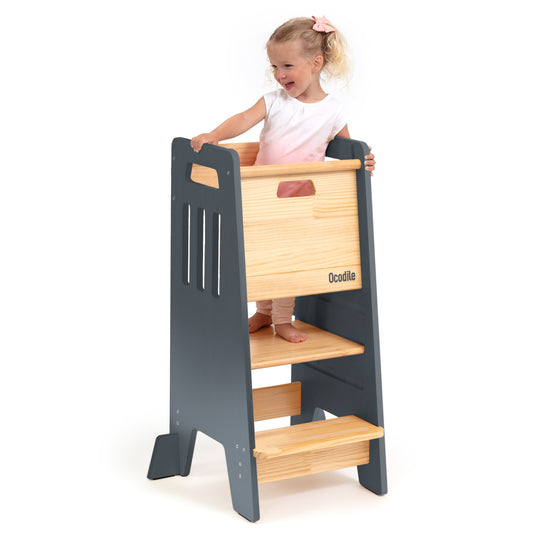
A Standing Toddler Tower with Sliding Safety Door is designed to let children climb up independently and join household activities, so the sliding door and surrounding frame should be checked for accessible closing gaps.
Adjustable-height mechanisms and joints where a side panel meets a base also deserve a slow-motion test. If a part can shift, lock, or drop, keep fingers away from the meeting surfaces and look for recessed hardware or guarded movement.
A child's sleeping space can contain moving components too, especially during setup or adjustment. When selecting a mattress for a floor bed, families may also want a resource on non-toxic baby mattresses, while keeping the bed's joints, rails, and frame connections part of the safety check.
Why Young Children Face Higher Injury Risks
Young children aren't careless. They're explorers with small hands, developing coordination, and a strong wish to do things independently. A toddler may see a hinge as something to touch, a drawer as something to open, and a folding platform as a place to climb.

Door injuries show why age and mechanism matter. An analysis of U.S. National Electronic Injury Surveillance System data estimated 1,392,451 emergency-treated door-related injuries among children ages 17 and under from 1999 to 2008, averaging roughly one injury every 4 minutes. Children age 4 or younger represented 41.6% of those injured, and pinching in the door was the most common mechanism, accounting for 54.8% of cases (door-related injury analysis).
The consequences can be serious. Among admitted patients in that analysis, the most common diagnoses were amputations at 32.0% and lacerations at 25.2%, which is why a small hinge or closing gap deserves thoughtful attention rather than casual reassurance.
Compare the design, not just the appearance
| Riskier detail | Safer detail |
|---|---|
| An exposed hinge children can touch | A covered or recessed hinge |
| A drawer that drops or slams | Controlled movement with a suitable lock or stop |
| A folding joint accessible during use | A stable frame with movement secured |
| A height adjustment children can reach | A protected lock that stays engaged |
| A sharp or rough meeting edge | Smooth, finished surfaces with guarded clearances |
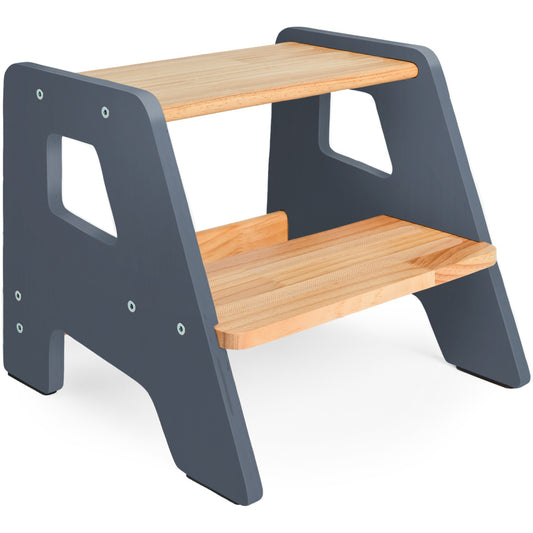
A 2-Step Wooden Stool for Toddlers supports everyday independence for children age 2 and older by helping them reach sinks, toilets, beds, and kitchen counters. The same principle applies to any stool: access should be paired with stability and careful attention to the places where parts meet.
How to Childproof and Prevent Pinch Injuries at Home
Start with the furniture your child uses most. You don't need tools for a first inspection, and you don't need to change every room at once.
A quick hands-on check
- Look first. Find every hinge, runner, folding joint, latch, and adjustable part.
- Move slowly. Open, close, fold, or adjust each piece while watching the gap.
- Check access. Ask whether a small finger could enter the closing path.
- Test protection. Confirm that guards, stops, locks, and latches stay in place.
- Change the habit. Show your child where to place hands, using “hands on the handle” rather than “don't touch.”
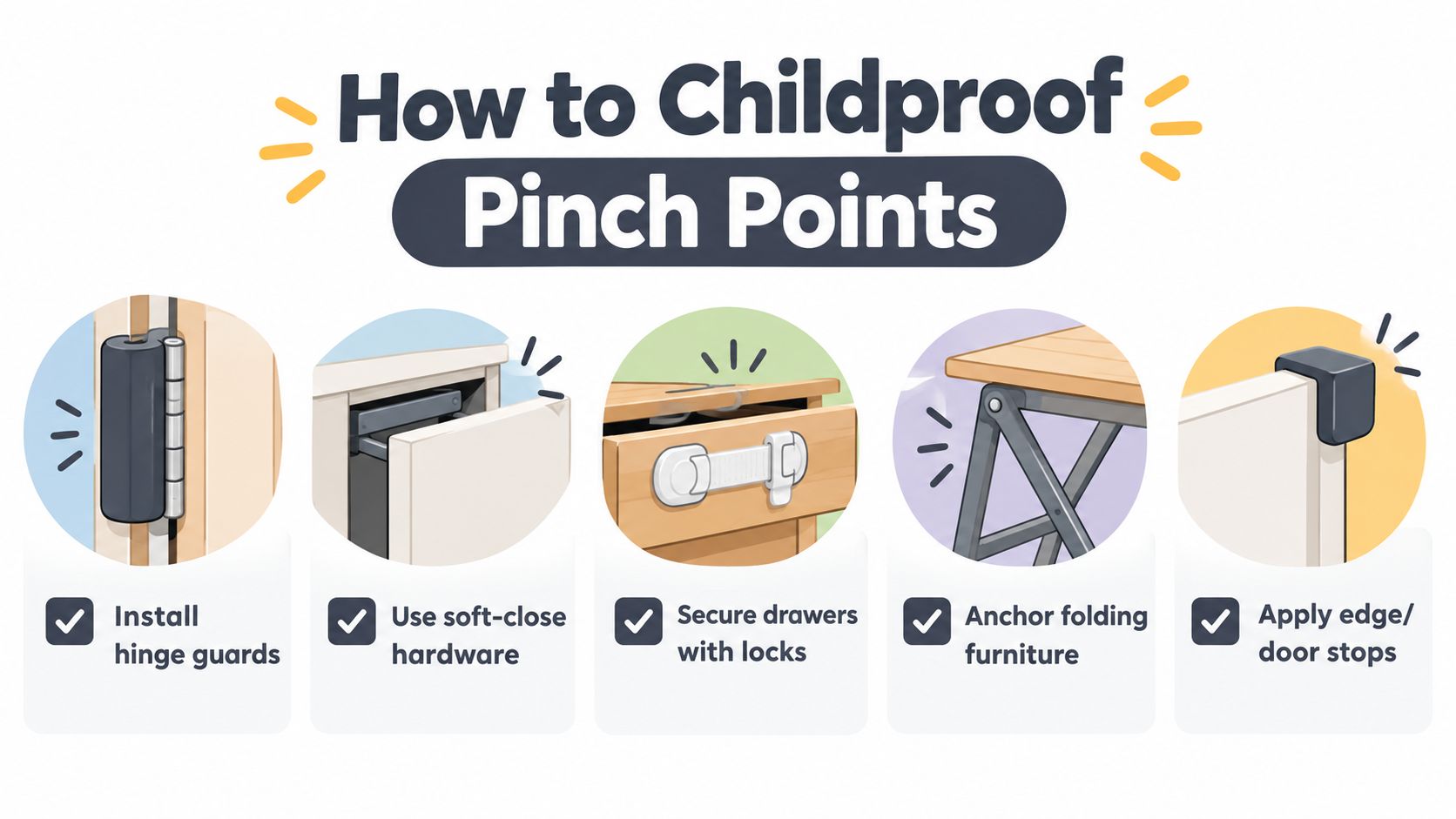
Hinge guards, soft-close hardware, drawer locks, and door stops can reduce exposure. Folding furniture should be anchored or secured when appropriate, and loose clothing, jewelry, and hair should stay away from moving joints. Workplace guidance also warns that these items can be pulled into pinch points, a useful reminder for adults supervising children around moving furniture (West Virginia University EHS guidance).
Practical rule: Guard the space, slow the movement, then teach the habit.
Machine-guarding principles use barriers and safety devices to keep people away from dangerous moving parts. OSHA's construction rule, 29 CFR 1926.300(b), lists guarding methods such as barrier guards, two-hand controls, and electronic safety devices (OSHA construction guarding guidance). At home, the equivalent may be a hinge cover, a lock, or keeping a folding mechanism out of reach until it's secured.
For broader room-by-room ideas, use this guide to childproofing your home. A Twin Size Montessori-Inspired Floor Bed with Safety Guardrails for Kids is described as a first bed for toddlers age 2 and older that helps eliminate fall risk while children practice sleeping independently. Its rails and frame should still be inspected for accessible joints and closing parts.
Here's a short visual reminder for the five main prevention steps:
What Safe Design and Testing Looks Like When You Shop
A safe-looking piece of furniture still needs a closer examination. Look for stable construction, smooth finishes, covered hardware, guarded joints, and controlled movement. Solid wood and durable materials can support longevity, but material alone doesn't remove a pinch hazard.
Ask how the furniture was tested. A responsible design process checks pinch, crush, and shearing risks across the full range of motion, not only when the product is standing still. The federal folding-chair proposal is useful because it focuses on accessible gaps throughout movement, which is exactly the condition parents should observe at home.
Questions to ask before buying
- Can a child reach the hinge or closing joint?
- Does the product remain stable while a child climbs, opens, or adjusts it?
- Do doors and panels move in a controlled way?
- Are locks easy for an adult to verify?
- Are edges smooth, and are fasteners recessed or covered?
- Does the manufacturer describe relevant safety testing and ASTM or US and Canada compliance?
Ocodile designs Montessori-inspired children's furniture around early independence, using solid wood and stating that products undergo rigorous testing and ASTM and US and Canada compliance processes. Its stability testing methods offer useful context for thinking about how furniture should behave when children climb, reach, and move.
The Crib Size Wooden Floor Bed with Safety Rails for Kids Age 1–3 is designed to fit the same crib mattress a child already knows, supporting a crib-to-bed transition. Families should still inspect rails, corners, and frame connections before use.
Safety habits extend beyond indoor furniture. An outdoor play equipment safety checklist can help families apply the same movement-and-gap thinking to outdoor structures.
Simple Inspection Checklist and First Aid for Pinch Injuries
Give each piece of furniture a short check. Look for exposed hinges, gaps, loose screws, and damaged stops. Feel for rough edges or parts that wobble. Move slowly through the complete opening, closing, folding, and adjustment path. Check gaps where fingers could enter, then test locks to make sure they engage and remain secure.
If you find a concern, stop using the furniture until you can tighten, cover, reposition, or replace the hardware. Keep folding pieces secured when they're not in use, and repeat the inspection after moving furniture, cleaning, or changing an adjustment.
If a pinch occurs, stay calm and release the trapped finger without forcing the mechanism. For a minor wound, clean it gently, protect it with a clean covering, and use a cold compress to help with swelling. Seek prompt medical care for a deep cut, deformity, severe pain, loss of movement, or a suspected fracture. For serious bleeding or an amputation, seek emergency help immediately.
A calm response teaches children that safety is a practical part of exploration, not a reason to stop exploring. Small checks, guarded movement, and clear hand-placement habits can protect both a child's body and their growing confidence.
Ocodile offers Montessori-inspired children's furniture designed to support independence with attention to stability, durable materials, and child-safe construction. Visit Ocodile to explore furniture that helps children participate, climb, reach, and rest while your family keeps pinch point safety in view.