



Best Step Stools Target 2026: Safety & Montessori Guide
Your toddler wants to wash hands alone. Or stir pancake batter. Or reach the toothbrush cup without asking for help every time. You open Target, search for a stool, and suddenly everything looks similar. Some are foldable. Some are cute. Some look sturdy enough. That's where many parents get stuck.
A step stool seems simple, but it sits right in the middle of two important jobs. It needs to keep a child safe and help that child do more independently. If either part is missing, the stool becomes frustrating, or worse, risky.
A lot of advice online talks about stools as general household tools. Parents need something more specific. Child use brings different questions about tipping, slippery floors, little hands, daily bathroom routines, and whether the stool can live in your home without looking like garage equipment. If you're searching for step stools at Target, that's usually what you're really trying to solve.
Giving Your Toddler a Safe Step Up
Most families start looking for a stool at the exact moment a child starts saying, “I do it myself.” That's a good sign. It means your child wants to participate in real life, not just watch from below.
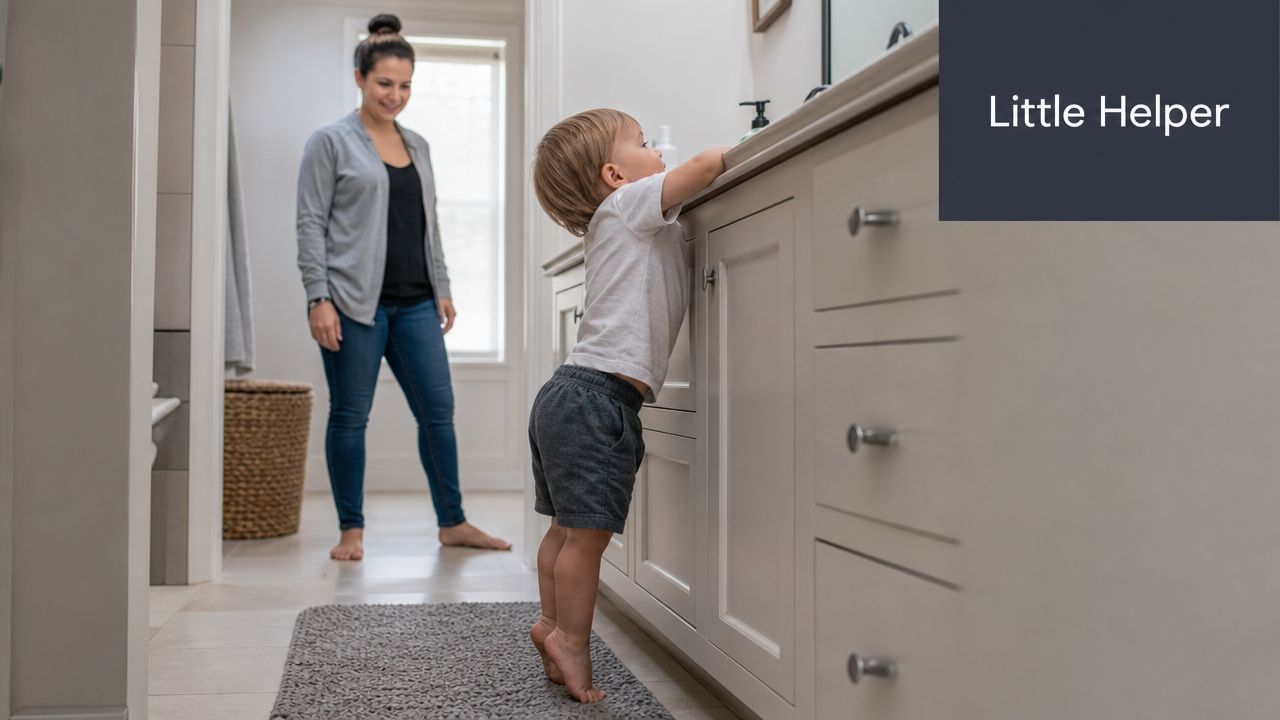
The tricky part is that many products sold as stools were designed for general household tasks, not for a wiggly toddler who climbs, pivots, reaches sideways, and forgets where the edge is. That's why parents often feel uneasy even when a stool looks fine at first glance.
The gap is real. The available safety guidance often focuses on adult or senior use rather than child-specific risk, supervision, and design tradeoffs, which leaves parents needing more practical help for everyday routines like handwashing and kitchen participation, as noted in the HBACA stool safety guidance.
What parents usually want
Most parents aren't shopping for a “tool.” They're shopping for a routine that works better.
- Bathroom help: A child can reach the sink without being lifted.
- Kitchen inclusion: A child can watch or help while you cook.
- Daily independence: Less waiting for an adult to position them for every small task.
- A calmer home: The stool stays out where it's useful and doesn't feel out of place.
That last point matters more than people think. If a stool is too ugly, too bulky, or too annoying to move, it gets tucked away. Then your child can't use it consistently.
Practical rule: The safest stool is one your family will use correctly every day, in the same place, for the same routines.
A good stool supports independence in a controlled way. It doesn't replace supervision. It makes supervision easier, because the child has a stable, predictable place to stand.
That's the lens to use when comparing step stools at Target. Don't ask only, “Can my child reach?” Ask, “Can my child reach without twisting, slipping, or balancing on the edge?”
Why a Generic Household Stool Can Be Risky
A generic household stool often works well for an adult who understands balance and uses it for a quick task. A toddler is different. Toddlers don't step up, complete one neat action, and step down. They sway, lean, bounce a little, and turn their body while their feet stay planted.
That's why a stool that seems “good enough” for an adult may be a poor fit for a child.
Why child movement changes the safety equation
Children use stools dynamically. They don't just stand. They climb up with momentum, shift weight while reaching for soap, and sometimes step backward without looking.
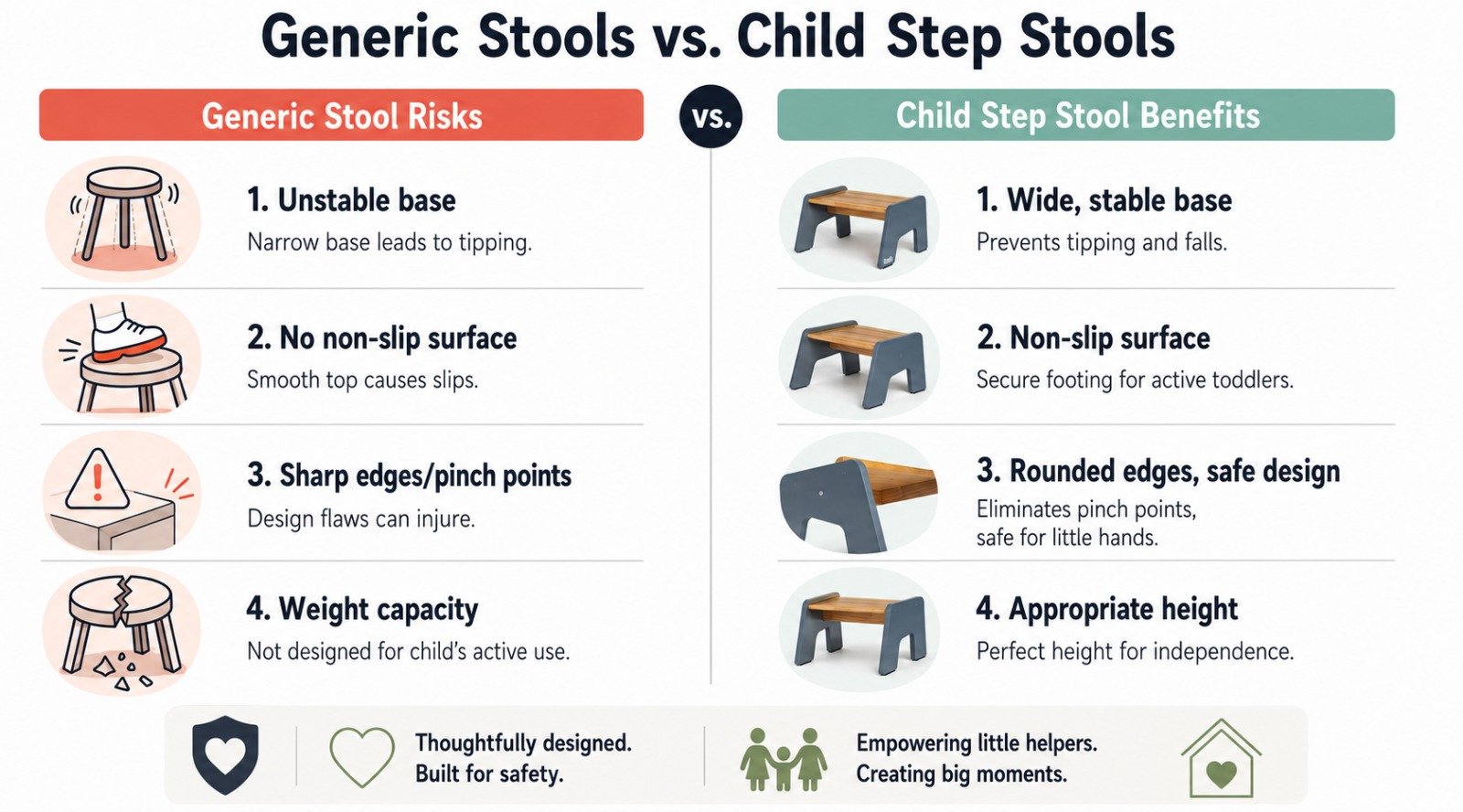
A generic stool can create problems in several ways:
- Narrow base: It may feel stable under a centered load but become shaky when a child leans.
- Smooth standing surface: Socks, wet feet, or bathroom drips make slips more likely.
- Pinch points: Foldable designs can create spots where little fingers get caught.
- Wrong height: A child may need to stretch from the top instead of standing comfortably.
These aren't rare-parent worries. They're predictable child behaviors.
“Looks sturdy” isn't the same as being safe
A stool can look solid and still fail under real use. In 2011, Target recalled about 206,000 wooden step stools with storage after the U.S. Consumer Product Safety Commission said the stools could break apart or collapse under user weight. Target had received 26 incident reports, including 14 involving children. Injuries included two fractured wrists in adults, plus scrapes and bruises for others, according to the CPSC recall notice.
That recall is useful because it corrects a common assumption. Wood doesn't automatically mean safer. Furniture styling doesn't automatically mean stronger. Even a stool sold by a familiar retailer can have a structural problem.
A child doesn't test a stool the way an adult shopper does in the aisle. A child tests it by living on it.
What to avoid in a child's daily routine
If you're buying for bathroom or kitchen use, be cautious with stools that have these traits:
| Stool feature | Why it can be a problem for toddlers |
|---|---|
| Fold-flat utility design | Can introduce finger hazards and side-to-side wobble |
| Small top platform | Gives less room for foot placement and turning |
| Slick finish | Reduces grip when feet are damp |
| Tall but narrow shape | Raises the child higher without improving stability |
The main takeaway is simple. A child's stool should be chosen as child equipment, not borrowed from the adult utility category.
Your Checklist for a Truly Safe Step Stool
When you're comparing options, it helps to stop thinking in brand names and start thinking in features. Parents often feel overwhelmed by product pages because the useful information is scattered. A simple checklist makes it easier to spot what matters.
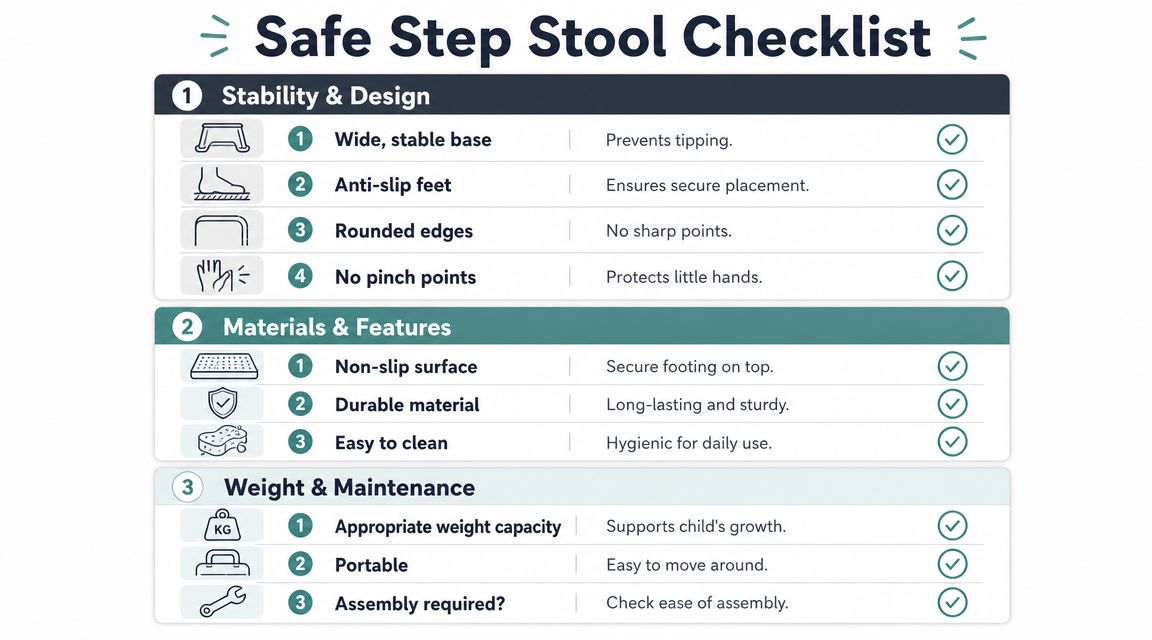
Start with stability
If a stool isn't stable, nothing else can make up for that.
Look for a wide base that gives the stool a grounded feel, as children don't stand still in the center. They lean forward to spit into the sink, turn sideways to grab a towel, and shift one foot while climbing down. A broader footprint helps the stool stay planted through those movements.
Check the bottom too. Anti-slip feet are especially important in bathrooms and kitchens where tile, laminate, or spilled water can reduce traction.
A quick real-life test is useful. Put the stool where it will live. Press down on each edge with your hand. If it rocks easily on your floor, your child will feel that instability too.
Pay attention to the standing surface
The top should help your child stay put, not slide around.
A better stool has a textured or non-slip surface. That gives small feet more grip, especially during quick up-and-down use. It also helps when a child is barefoot, in socks, or slightly damp after washing up.
Rounded edges matter more than many listings suggest. Children often carry a stool, drag it, hug it, or bump into it while turning. Rounded corners and smooth finishing lower the chance of those everyday knocks becoming painful.
Choose a stool for the moments when your child is distracted, not just for the moment when they're standing perfectly still.
Think about height in a practical way
Parents sometimes assume taller is better because it gives “room to grow.” In practice, too much height can make a stool less safe.
A good height lets your child reach the sink or counter without stretching from their toes. If they still have to overreach once they're standing on top, the stool isn't solving the problem. It's just moving the instability upward.
For many families, the right choice depends on where the stool will be used most:
- Bathroom-first use: Lower profile, easy to move, steady on wet floors
- Kitchen-first use: More standing room and a more contained design if the child stays up longer
- Multi-room use: Lighter weight and simple carrying shape
Materials should support daily use
Material affects both safety and maintenance. A stool for children should be easy to wipe, hard to tip, and solid enough to handle repeated climbing.
Wood can feel warm and blend nicely into a home. Metal can feel more utility-oriented. Plastic can be convenient, but some designs feel too light under active use. There isn't one perfect material. What matters is whether the stool feels stable, well-finished, and consistent under load.
If home design matters to you, it's worth thinking about the stool as part of the room rather than as a random accessory. Parents planning bedrooms and shared child spaces may also find useful advice on kids' room design and growth when they're choosing pieces that need to work over time.
Don't skip load rating
This is one of the most misunderstood details on product pages. Parents sometimes see a high weight capacity and assume it doesn't matter because their child is small. It does matter.
Many quality stools meet the ANSI Type 3 standard for household duty up to 200 lb, and that rating acts as a practical sign of structural integrity rather than just marketing, as shown on the Target listing for the COSCO 2-Step Household Folding Steel Step Stool. In plain language, a stronger structure is less likely to deform, loosen, or collapse when weight shifts during climbing.
That matters because children don't load a stool gently. They hop onto it, push off from it, and sometimes hang onto the sink while one foot twists.
A short buying checklist you can save
Before you buy, ask:
- Does it stay planted? Check for a wide base and anti-slip feet.
- Can small feet grip the top? Prefer textured standing surfaces.
- Are there sharp edges or pinch areas? Foldable designs need extra scrutiny.
- Is the height appropriate for one main job? Sink, counter, or toilet routine.
- Will it be easy to clean? Bathroom and kitchen stools get messy fast.
- Does the structure inspire confidence? Load rating can tell you a lot.
- Will it fit your home well enough to stay out? Good design supports consistent use.
If you want a deeper child-focused comparison of designs, this guide to the best step stool for kids is a helpful companion when you're sorting through the options.
Navigating the Step Stool Selection at Target
Shopping Target for a stool can feel oddly confusing because the store often treats the category as part of general home convenience. You might find stools grouped with utility items, home improvement products, or family home goods rather than in one child-centered place.
That retail setup shapes how people shop. Target's assortment and convenience features such as same-day options position step stools as easy add-ons, which can encourage impulse buying rather than careful comparison, as reflected in the Target category page for ladders and step stools.
What to look for online
Product pages usually give you enough clues if you know where to focus.
Start with the basics. Look for dimensions, material, whether the stool folds, and whether the standing surface appears textured or smooth. If the listing includes a weight capacity, treat that as useful structural information, not filler.
Then look at the photos with a parent's eye. Ask:
- Does the top platform look roomy enough for a child's feet?
- Does the base appear wider than the top?
- Would this be stable on tile or wood?
- Is it made for a quick adult task, or for repeated child use?
Customer reviews can help, but they need filtering. A review that says “works great for changing lightbulbs” tells you almost nothing about toddler bathroom use. A review that mentions wobble, slipping, awkward folding, or daily family routines is much more relevant.
What to check in store
In-store shopping gives you one big advantage. You can interact with the stool physically.
Press on the corners. Look underneath. Notice whether the finish feels slick. If it folds, check whether a child's hand could wander into moving parts. If it's very light, ask yourself whether that lightness helps portability or hurts stability.
A useful mental split is this:
| If the stool is sold like this | Treat it like this |
|---|---|
| Utility or hardware accessory | Adult household equipment first |
| Decorative child furniture | Better candidate for family routines |
| Foldable convenience item | Needs extra scrutiny for finger safety and wobble |
| Bathroom helper or toddler-access item | More likely designed around child use |
Convenience is nice, but it shouldn't decide the purchase. The stool still has to earn a permanent place in your child's daily routine.
When parents search for step stools at Target, they're often balancing safety, appearance, and speed. Speed is the easiest factor to satisfy. The harder and more important job is choosing something your child can use calmly and repeatedly.
Fostering Independence with Montessori Principles
A step stool can change the tone of your day. The child who used to tug at your sleeve can walk over, climb up, and join in. Handwashing becomes less of a lifting routine. Snack prep becomes shared work instead of waiting. That's why this purchase often matters more than it seems.
Montessori-inspired homes often focus on a prepared environment. That means children get access to the tools they need to participate in real tasks at their own level. A stool is one of the clearest examples of that idea because it turns “too small to join” into “able to try.”
Independence works best when the setup is calm
A good stool does more than lift a child higher. It gives them a predictable place to stand. That predictability supports confidence.
Children often behave more carefully when the environment makes sense to them. If they know where their feet go, where their hands go, and how they get up and down, routines become smoother. That's especially useful in bathroom transitions and kitchen moments that already require your attention.
For parents working through self-care routines at the same time, this broader potty training guide for parents can be useful because stool use and bathroom independence often develop together.
Why purpose-built design matters
Popular mass-market items can still have meaningful safety issues. A recall of over 300,000 Cosco 2-Step Kitchen Steppers sold through major retailers including Target followed 34 reports of the stool breaking, including 2 head injuries, according to The Independent's recall coverage.
That doesn't mean every mass retail stool is unsafe. It means parents shouldn't assume popularity equals suitability for child routines.
A purpose-built toddler-access design often solves a different problem from a standard utility stool. It may give the child more enclosed standing space, more predictable footing, and a setup that works for longer interactions rather than quick adult reach tasks.
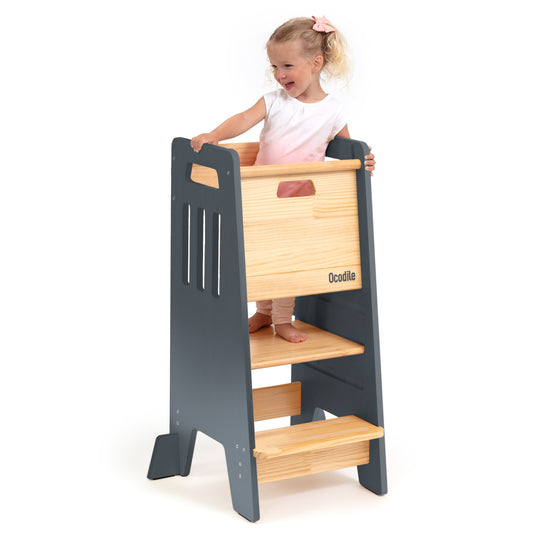
If you want to compare that kind of setup more closely, this guide to a Montessori learning tower helps explain when a tower may make more sense than a simple stool.
After a few minutes of reading, it also helps to see one in use.
Independence doesn't mean giving children free rein. It means giving them a safe, appropriate way to participate while you stay close.
That mindset changes the purchase. You're not just buying height. You're building access.
Finding a Partner in Independence
Choosing a stool isn't just about buying hardware; it's about selecting a tool that fits into your family's daily rhythm. Whether you need a simple step for handwashing or a more enclosed tower for kitchen participation, the goal remains the same: empowering your child to do things themselves safely.
At Ocodile, we’ve built our furniture around this exact philosophy, that the spaces children inhabit should foster their natural desire for independence. We design our step stools and learning towers not just to offer height, but to provide a secure, stable foundation for those "I can do it" moments.
When you’re evaluating your options, consider how a design integrates into your specific household needs:
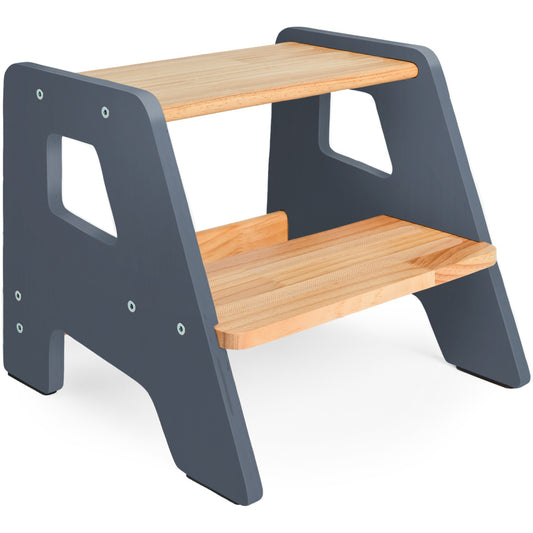
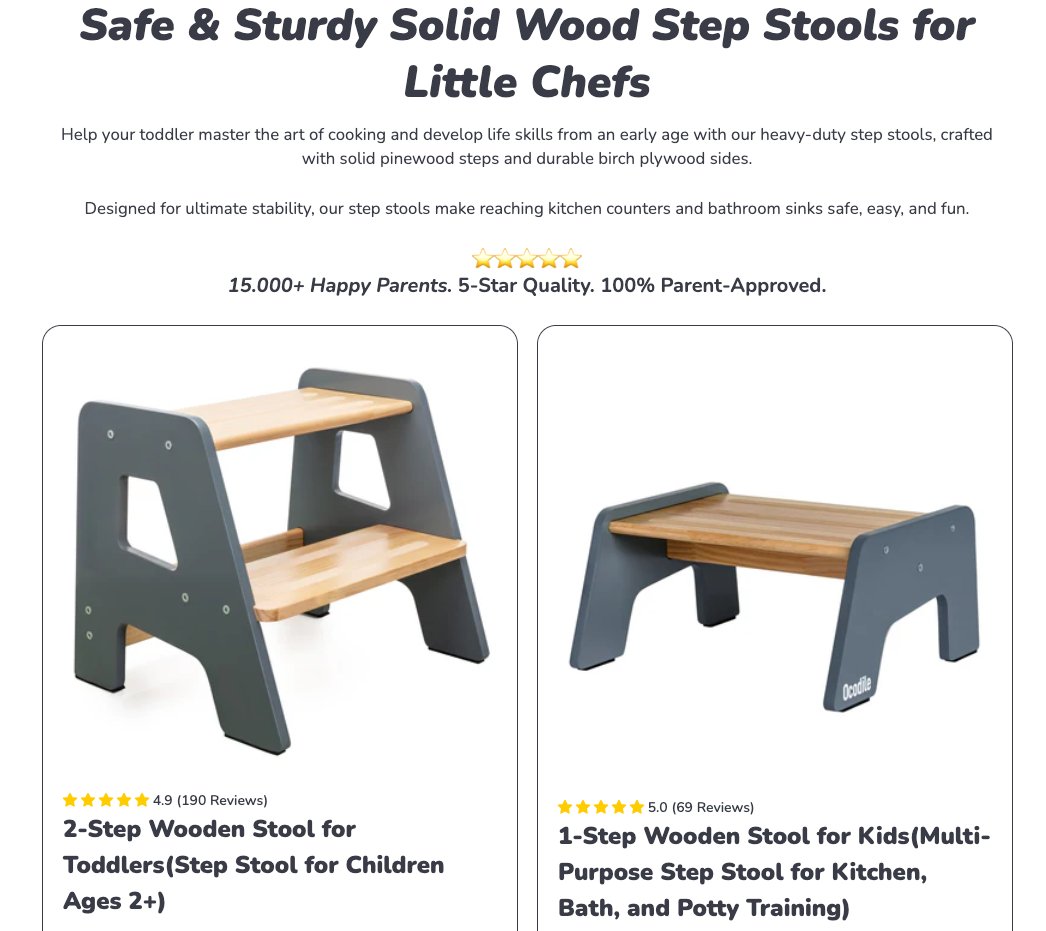
- For the Bathroom: Focus on stability and ease of movement. A simple, sturdy stool like our 1-Step Stool or 2-Step Stool models, can provide that reliable boost for teeth brushing and handwashing, blending into the bathroom without clutter.
- For the Kitchen: Participation often requires longer periods of standing. This is where a learning tower, such as our OC2 or OC6 designs, shines. By providing enclosed sides, these offer a secure "safe zone" that allows your child to watch, help with prep, or engage in sensory play while you stay focused on the cooking.
- For Shared Spaces: Your furniture should belong in your home. We prioritize clean lines and solid wood finishes because we believe independence shouldn't come at the cost of your home's aesthetic.
Ultimately, the best choice is the one that stays out in the open, not because it's a toy, but because it’s a necessary, functional piece of your family’s daily routine. When a stool is beautiful, sturdy, and perfectly suited to the task, it stops being "clutter" and starts becoming part of the home's flow. Your child gains the confidence to participate, and you gain a partner in the daily tasks of growing up.
If you're ready to choose a stool or tower that supports safe independence at home, explore Ocodile for child-focused furniture designed to help families with everyday routines like handwashing, kitchen participation, and shared learning moments.