



Sustainable Wood Furniture: A Family Buying Guide
You're standing in a store or scrolling late at night, trying to choose a toddler tower, a floor bed, or a small shelf that won't fall apart the first time your child climbs, spills, or chews on it. Every listing says eco-friendly, natural, or sustainable, but the labels don't tell you whether the piece is safe for daily use, easy to repair, or built to survive years of family life.
Table of Contents
- Why Sustainable Furniture Matters for Your Family
- What Sustainable Wood Furniture Means
- Understanding Wood Certifications and Standards
- Choosing Safe Materials and Finishes for Children
- Why Durability and Repairability Define True Sustainability
- How to Evaluate Sustainable Furniture Before You Buy
- Ocodile's Approach to Sustainable Children's Furniture
Why Sustainable Furniture Matters for Your Family
A toddler tower sits in the middle of family life. Small hands pull on the rails, snack crumbs land on the seat, water spills across the surface, and the same piece gets wiped down again and again.
That is why sustainable wood furniture matters in a home with children. The best choices do more than use responsibly sourced materials. They also support cleaner indoor spaces, safer finishes, and a longer useful life, which matters when a chair, table, or storage piece lives in a nursery, bedroom, or kitchen for years.
The bigger problem is what happens after the furniture has served its first owner. European research links wood furniture to a major share of furniture production value, and the same research context reports large amounts of furniture waste each year, with most of it burned or sent to landfill and only a small share recycled PMC study. For families, that means a low-cost purchase that wears out quickly can create more waste, more cleanup, and more replacement shopping than a sturdier piece that stays in use.
Practical rule: If a piece of furniture cannot handle spills, climbing, and repeated cleaning, it is not really family-friendly, even if the marketing sounds green.
Children also live close to furniture surfaces. Their hands touch tabletops, their faces rest near finishes, and they test every joint, corner, and fastener. A safe finish, solid construction, and repair options matter because they affect both daily use and how long the piece can stay in the home. For families who want to understand what makes a piece last, solid wood furniture basics give a useful starting point. When a product is durable and responsibly sourced, it fits family routines better and reduces the chance that you will be shopping for a replacement before your child has even outgrown it.
What Sustainable Wood Furniture Means

A piece of sustainable wood furniture is not defined by a green-looking label or a single material choice. It comes together through three connected parts, responsible sourcing, low-impact production, and product longevity. If one part is weak, the whole claim becomes weaker.
Start with the wood source
Responsible sourcing means the wood comes from managed forests, reclaimed stock, or supply chains that can be checked, instead of vague “natural” claims. Public standards make that easier to measure. The EU Green Public Procurement criteria require at least 50% of wood in the final furniture product to come from sustainably managed sources, and some higher-tier criteria raise that to 70% EU furniture GPP criteria.
That matters because a label by itself does not show whether the wood was traced carefully from forest to finished piece. A real sustainability claim should connect the source, the chain of custody, and the furniture the family brings home.
Look at the whole product, not just the species
The environmental impact of furniture is concentrated before the item even reaches the room. A life-cycle assessment in Scientific Reports found that the pre-production stage accounted for a large share of total impact across the furniture pieces studied. The European Commission's furniture procurement criteria also say that 80% to 90% of furniture's environmental impacts are tied to materials and components JRC furniture report.
For families, that shifts the core question. The species matters, but so do the adhesives, the hardware, the finish, and how much processing the product needed before it was ready for daily use. A chair or shelf can look simple and still carry a heavy footprint if the materials and production steps are inefficient.
Longevity is part of sustainability
A piece made from certified wood still falls short if it wears out fast or cannot be repaired. Families with young children feel that quickly, because furniture does not sit in a corner. It gets climbed on, wiped down, knocked against, and tested every day.
That is why durability belongs inside the definition of sustainability, not beside it as a bonus feature. If a piece is designed for years of use, it avoids the waste and repeat buying that come with short-lived furniture. For a clearer foundation on construction, this guide to what solid wood furniture is helps show why material choice and build quality belong together.
Understanding Wood Certifications and Standards

A certification label can turn a general promise into something you can check. That matters in a nursery, because a shelf, cot, or kids' chair has to be safe, durable, and responsibly sourced at the same time.
What the label is really checking
The strongest certifications look at both the source of the wood and the chain that keeps certified material separate from uncertified material. The EU Green Public Procurement furniture criteria set clear expectations for public buyers, and they show how sourcing rules can distinguish between basic compliance and stronger verified sourcing. That framework helps explain why some labels feel more meaningful than others, especially for families trying to compare products that all sound environmentally friendly on the surface.
A parent usually does not need the whole policy history. What matters is whether the company can show where the wood came from, how it was handled, and whether the certified material stayed identifiable through production. That kind of paper trail lowers the risk that a product uses “certified” as a loose marketing word instead of a real sourcing standard.
Why FSC comes up so often
FSC comes up often because it is widely used in furniture sourcing and chain-of-custody systems. It is one of the standards that helps buyers trace wood back through the supply chain instead of relying on a logo alone. The A diagram explaining the differences between FSC 100%, FSC Mix, and PEFC wood certification standards for consumers. makes that easier to see, because the label type changes what level of sourcing claim is being made.
That distinction matters in practical terms. FSC 100% means the product is made from fully certified material, while FSC Mix allows a blend that still has to meet sourcing rules. For a family buying furniture that will be climbed on, wiped down, and used every day, the question is not just whether the wood is certified, but whether the claim is specific enough to mean something real.
Standards can help, but they do not solve everything
A label can tell you the wood came from a better-managed supply chain, but it cannot tell you whether the piece is repairable, safe to refinish, or built for daily family use. The furniture itself still has to pass the parent test, stable, sturdy, and easy to live with.
For families trying to compare safety questions with sourcing questions, this guide to furniture flammability standards is a useful companion. It helps separate two issues that are often discussed as if they are the same, even though a sustainable label does not automatically say anything about how a piece behaves in the home.
If you are comparing nursery pieces, the nursery baby registry checklist can also help you check whether a product fits real family use, not just the claims on the packaging.
Choosing Safe Materials and Finishes for Children

Children don't treat furniture gently. They slide, climb, tap, and mouth edges, so the material choice has to work harder than it does in a guest room.
Compare the core material, not just the surface
Birch plywood is often a practical choice because it's strong and stable, and parents like its smooth finish for frequent touchpoints. Solid pine is renewable and familiar, but it benefits from a non-toxic sealant if you want the surface to stand up to sticky hands and routine cleaning. Bamboo grows quickly and stays lightweight, which makes it attractive for some families, but the build quality still depends on how the material was engineered and finished.
The broader lesson is that the primary wood matters, but so do adhesives, coatings, and hardware. The Australian forestry review found that wood had the lowest environmental impact among the examples studied, while non-wood components like metal, plastic trim, glues, and varnishes can increase the burden FWPA review.
Avoid materials that complicate indoor air quality
Parents often ask about MDF because it appears in budget furniture. The concern is that MDF can involve formaldehyde-containing binders, which is why many families prefer solid wood or plywood with safer adhesives. Water-based and low-VOC finishes are the cleaner route for nurseries and bedrooms, especially when children spend long hours near the surface.
For a deeper look at finishing options, this guide to non-toxic wood finishes is worth reading because finish choice affects both the look and the day-to-day safety of the piece.
Parent check: If a seller won't tell you what finish was used, assume the finish deserves more scrutiny, not less.
A good shopping list also helps. The nursery baby registry checklist is a useful reference when you're deciding which pieces belong in a child's room and which ones can wait, because the safest purchase is often the one you planned for instead of the one you rushed.
Why Durability and Repairability Define True Sustainability
A certified wood product that fails early can create more waste than a less polished piece that lasts. That's the part many marketing pages skip, and it matters most in a family home where furniture gets used hard every day.
Long life beats perfect branding
Recent furniture research and policy discussion point toward mandatory eco-design, durability, reparability, and recyclability requirements, not just wood-origin claims Circular Economy report. That shift makes sense. If a toddler tower loosens quickly, or a shelf can't be tightened or refinished, the environmental cost starts all over again when you replace it.
The point isn't that certified wood doesn't matter. It does. But the wood is only one part of the story, and a family usually feels the outcome through daily use, not through a label.
What repairable furniture looks like
Repairable furniture usually has replaceable screws, accessible joints, sturdy hardware, and finishes that can be maintained instead of stripped away. If a product can be tightened, refreshed, or refinished, it has a better chance of staying useful through the rough years.
That's why a practical repair resource matters. If you already own a piece that needs a second life, Arsh Art Cabinet Refinishing options show how refinishing can extend furniture use instead of sending it to the landfill.
A child's table that can be repaired is more sustainable than a prettier one that gets discarded at the first sign of wear.
For parents, repairability also changes the budget math. A furniture item that survives hand-me-down use, repainting, or a hardware swap often earns its place far longer than a disposable alternative. That's the sustainability most families live with.
How to Evaluate Sustainable Furniture Before You Buy

A good checkout decision usually comes from a few direct questions, not from the prettiest product photo.
Ask for proof, not adjectives
- Ask about wood source and certification. Ask whether the wood is FSC-certified, reclaimed, or independently documented through chain-of-custody records.
- Request finish and material safety data. If the seller can't explain the coating or adhesive, keep looking.
- Check joinery quality. Screws, dowels, and solid joints matter more than decorative brackets or marketing language.
- Ask about repair support. Spare parts, touch-up kits, and repair guidance are signs the brand expects the piece to last.
- Compare lifespan to price. A cheaper piece that breaks early usually costs more in the long run.
Look for the details that signal real quality
Stable legs, smooth edges, and hardware you can tighten are better signs than a glossy photo. If you're shopping online, zoom in on the underside, joints, and finish description. If you're in a store, press on the corners and check whether the piece shifts.
Quick filter: If the product page talks a lot about style but very little about materials, finish, and repair, the sustainability claim is probably shallow.
For families, sustainable wood furniture stops being a slogan and becomes a buying method. You're looking for a product that fits your child, your home, and the reality that kids test furniture every day.
Ocodile's Approach to Sustainable Children's Furniture

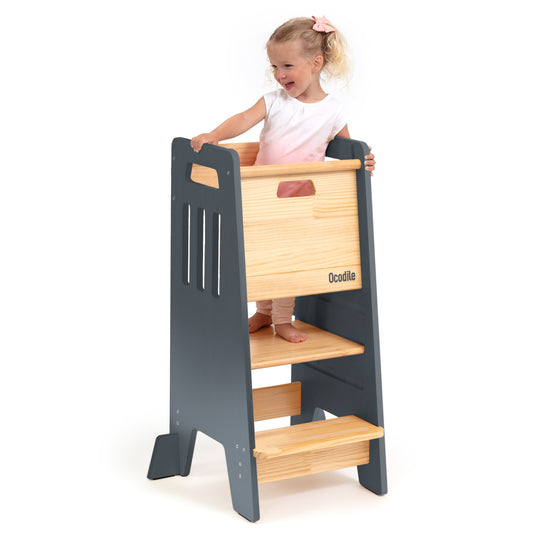
Ocodile's children's furniture fits the same logic families should use everywhere else. The brand focuses on solid pine wood and birch plywood, and it states that its children's furniture uses non-toxic, low-VOC finishes, which lines up with the material and finish priorities parents care about most.
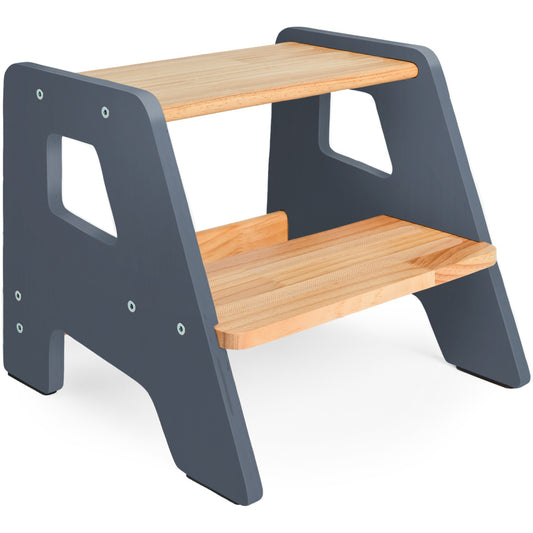
The product types also make sense for family life. Standing towers, floor beds, and step stools are everyday-use pieces, so durability and safety matter as much as appearance. A design that supports independence only works if it holds up to repeated climbing, touching, and cleaning.
That's the overlap between sustainability and child safety. A well-built children's piece should be practical, repair-friendly, and comfortable to use in the room where your family lives.
If you're comparing children's furniture right now, take a look at Ocodile and use the same checklist you'd use for any sustainable wood furniture purchase, wood source, finish safety, and long-term durability. The right choice should make daily family life easier, not just look responsible on a product page.