



Furniture Flammability Standards: Your 2026 Safety Guide
You're standing in a store, or scrolling late at night, trying to compare a reading chair, a small upholstered bench, maybe a child-sized armchair for a bedroom corner. One tag says it meets a flammability rule. Another mentions chemicals. A third product has no label you recognize at all.
That's where many parents get stuck. The words sound technical, but the question underneath is very simple. Will this furniture help protect my child, or expose them to something I don't want in my home?
Furniture flammability standards exist because soft, upholstered products can become dangerous in a fire much faster than they look. The confusing part is that modern safety rules are no longer just about making furniture “less flammable” in the old-fashioned sense. They're also about how that result is achieved, including whether a product relies on barrier design and smolder resistance instead of added flame-retardant chemicals.
If you've ever felt unsure about what a label really means, you're not overthinking it. You're asking the right question.
Why Furniture Flammability Matters for Your Family
A lot of parents first notice this issue while shopping for something ordinary. A nursery glider. A compact sofa for a playroom. A cushioned reading nook seat. You spot a law label or a product note about fire testing, and suddenly the decision feels more serious than color, price, or fabric texture.
That instinct makes sense. Upholstered furniture sits in the center of family life. Kids climb on it, nap on it, spill on it, and press their faces into it. If something goes wrong in the home, these soft materials can become part of the hazard.
The reason safety agencies pay close attention to upholstered furniture is stark. Fires originating from upholstered furniture are the leading cause of home fire fatalities in the United States, accounting for approximately 600 deaths per year. Despite representing only 2% of all home structure fires, these incidents result in a disproportionately high 18% of total home fire deaths, according to the U.S. Consumer Product Safety Commission upholstered furniture guidance.
That tells us something important. These fires aren't the most common, but they are especially dangerous.
Why soft furniture can be so risky
Soft furniture combines several materials in one place:
- Outer fabric that you touch every day
- Padding or fill underneath
- Foam or resilient materials that can react differently to heat and smoldering
- Seams and openings where a weak point can form
From a product design perspective, that combination matters. A chair isn't one material. It's a layered system. If one part lets heat or smoldering get through too easily, the whole piece can behave differently in an emergency.
Practical rule: A flammability label isn't just paperwork. It's a clue about how the product was engineered under the fabric you can see.
For families, this isn't about fear. It's about buying with a clearer picture of what those labels are trying to prevent. Good safety standards are there to reduce the chance that a small ignition source turns into a fast-moving upholstery fire before a parent has time to react.
The Goal of Flammability Standards Explained
When people hear “flammability standard,” they often assume it means fireproof. It doesn't.
A better way to think about furniture flammability standards is this. They act like a speed bump for fire. They don't promise that a fire can never happen. They're meant to slow ignition and slow spread, especially from smoldering sources, so people have more time to notice a problem and get out.

What “passing” really means
If a piece of upholstered furniture is compliant, that doesn't mean you can treat it casually around heat. It means the materials and construction are intended to resist ignition better than an unregulated or poorly designed piece.
That difference matters in real life because many home fire events don't begin as dramatic open flames. They can begin as heat or a smoldering source that sits on the surface long enough to work downward. A standard tries to interrupt that path.
Here's the parent-friendly version:
- The surface matters. The cover fabric is the first line of contact.
- The layers underneath matter too. If heat reaches padding or foam too easily, the risk changes.
- Time is paramount. Even a delay can matter when adults need to wake up, locate children, and move.
Why this matters beyond the label
A lot of buying guides flatten the conversation into pass or fail. That misses the point. Two products can both meet a rule, but they may get there in different ways. One may use a thoughtful barrier system. Another may lean on treated materials. For a parent, that difference can affect both peace of mind and questions about what sits in the home every day.
Furniture that meets a standard should be viewed as part of a broader home safety plan, not as a substitute for supervision, smoke alarms, and safe habits.
If you want to pair furniture choices with practical emergency planning, this guide on how to safely put out home fires is a useful complement. It helps translate product safety into household action.
The simplest mental model
Think of compliant upholstered furniture as being designed to resist the first mistake better. Not every accident becomes a disaster. Good standards try to keep it that way.
Decoding the Rules in the US UK and EU
Parents often expect one universal label for upholstered furniture. That's not how the market works. Different regions use different frameworks, and the biggest source of confusion is scope. In other words, what products the rule applies to.
In the United States, the federal rule applies to upholstered furniture intended for indoor home or public use, but some products that look similar are excluded. The CPSC notice on the federal upholstered furniture standard makes that distinction clear. It explicitly excludes futons, outdoor cushions, and certain durable infant and toddler products like highchairs and play mats.
That matters if you're shopping for floor seating, kid loungers, or soft accessories and wondering why there's no familiar flammability tag.
What this means when you shop
A parent might compare these items side by side:
- a small upholstered armchair for a reading corner
- a floor play mat
- a highchair with padded inserts
- a removable lounge cushion for a window seat
They all involve soft materials. They don't all fall under the same rule.
So if one product carries a clear upholstered furniture compliance label and another doesn't, that doesn't automatically mean the unlabeled one is unsafe. It may belong to a different product category with different requirements or exemptions.
Don't ask only, “Does it have the label?” Ask, “Is this product type even covered by that furniture rule?”
Furniture flammability standards at a glance
| Region | Key Standard | Primary Focus | Common Label/Indicator |
|---|---|---|---|
| US | Federal upholstered furniture rule incorporating TB 117-2013 | Smolder resistance for covered upholstered furniture in scope | A flammability or law label referencing compliance with applicable upholstered furniture requirements |
| UK | UK furniture flammability framework for domestic and commercial upholstered products | Ignition resistance with a more prescriptive regulatory culture | Product compliance documentation or retailer specification notes |
| EU | Country-specific and standard-based approach across the EU market | Varies by product category, intended use, and applicable testing route | Technical documentation, conformity information, or seller-provided compliance details |
The UK and EU parts of this table are intentionally broad because parents often shop across retailers, marketplaces, and imported brands. The practical step isn't memorizing every national standard. It's checking whether the seller clearly identifies the intended market and applicable compliance route for the exact product you're buying.
A simple way to avoid category confusion
If you're furnishing a child's room, sort products into two buckets:
- Upholstered furniture in scope such as sofas, chairs, and similar indoor seating with upholstered seat, back, or arms
- Lookalike soft products outside the rule such as some mats, pads, or exempt child products
That same category awareness helps when you compare upholstered pieces with simpler alternatives such as a natural wood toddler bed, which raises very different safety questions than cushioned seating.
And if you're equipping a childcare space, clinic waiting area, or family business, furniture compliance should sit alongside broader building safety work like commissioning fire alarm systems, because the room's response system matters too.
The Truth About Flame Retardant Chemicals
Many parents still assume that if furniture is safer in a fire, it must contain more flame-retardant chemicals. That idea is outdated.
Modern furniture flammability standards in the US shifted the focus toward smolder resistance, not the older habit of depending heavily on chemical flame-retardant approaches. Earthjustice explains that TB 117-2013 shifted focus to smolder resistance and allowed manufacturers to comply without using the flame-retardant chemicals that were common under older rules, a change that addressed concerns about chemical exposure in homes, as noted in its overview of the improved furniture flammability standard.
That change is one of the most important things a parent can understand.

Why the old assumption lingers
For years, people heard a simple message: chemicals added for flame resistance equal safety. It sounded logical. If a substance helps slow burning, more of it must be better.
But furniture design is rarely that simple. A product can resist a smoldering ignition source because of:
- Barrier construction
- Material layering
- Fabric and fill interaction
- How seams and cushions are engineered
That's a very different design philosophy from saturating components with additives and calling it a day.
The better question to ask
Instead of asking only whether a product “meets flammability standards,” ask this:
- How does it comply
- Does it use added flame-retardant chemicals
- Is the fire performance coming from design choices instead
Those questions are especially relevant in spaces where children spend long hours close to surfaces, touching them, leaning on them, and breathing near them.
A useful companion read is this guide to non-toxic children's furniture, which helps connect chemical awareness with broader material choices in the home.
The safest-sounding product isn't always the one with the strongest chemical language on the label. Often, it's the one with the clearest design story.
What parents can take from the shift
The modern approach gives families a healthier framing. You do not have to choose between fire safety and thoughtful material decisions as if they are opposites. In many cases, manufacturers can pursue compliance through smarter construction rather than older chemical-heavy habits.
That doesn't mean every product on the market follows best practice. It means parents should stop treating “flame retardant” as an automatic badge of quality. Sometimes it's just a vague phrase attached to outdated assumptions.
For everyday buying, that changes the conversation from “Is this protected?” to “What kind of protection is built in, and what does that mean for my child's environment?”
How Furniture Is Tested and What Labels to Look For
Most parents never see the testing side of upholstered furniture. They only see the tag left behind. But once you understand the basic logic, labels become much easier to interpret.

What the tests are trying to find out
At a simple level, testing asks questions like these:
- Will the outer fabric resist a smoldering source long enough to avoid deeper ignition?
- If heat reaches the inside, is there a protective barrier in place?
- Are there weak points at seams, undersides, or cushion edges?
One detail many parents don't hear is that compliance with TB 117-2013 is often achieved through a barrier layer on all sides of the upholstered structure, according to the National Upholstery Association's explanation of the upholstered furniture flammability standard. For attached cushions, coverage needs to protect the relevant exposed areas. For detachable or flippable cushions, the whole cushion may need coverage, including the bottom.
That design detail matters because upholstered furniture behaves like a system. If the barrier coverage is incomplete, one missed area can become the weak spot.
What to look for on the product
When you inspect a sofa, armchair, or upholstered kid seat, check these places:
-
Under the seat or base
Law labels and compliance tags are often attached in this area. -
Inside zippered cushions if the manufacturer permits access
You may see evidence of an inner sock, liner, or barrier material. Don't open anything the brand says should remain sealed. -
On the product page or specification sheet
Online sellers often state whether the item meets an applicable upholstered furniture rule. - In the care and materials section Chemical treatment disclosures may appear in this section, if they're disclosed at all.
If you want a broader view of how safety evaluation works beyond fire performance, this overview of stability testing methods is useful. It reminds parents that a safe product has to perform well in more than one way.
A hidden barrier can be a good sign
Parents sometimes worry when they hear the word barrier. They imagine something industrial or harsh. In practice, a barrier is often just an internal protective layer doing quiet work beneath the visible fabric.
Here's a good visual explainer of how fire testing is approached in upholstered products:
A reassuring label tells you the product was tested. A useful label, plus clear material disclosure, tells you how the manufacturer approached the problem.
If a seller can't explain whether compliance comes from barrier construction, material choice, or chemical treatment, that's a sign to ask more questions before buying.
A Parent's Checklist for Buying Safe Furniture
Shopping gets easier when you stop trying to decode every technical phrase and start using a short filter. You don't need to become a fire scientist. You need a repeatable way to assess whether a product is transparent, appropriate for its category, and thoughtfully made.

The checklist I'd use for my own home
-
Match the rule to the product type
If you're buying an upholstered chair, look for compliance information that fits upholstered furniture. If you're buying a play mat or highchair accessory, don't assume the same label should appear. -
Ask how the product complies
This is the question many shoppers skip. Is the design relying on barrier construction, material selection, or added chemical treatment? -
Read the materials section carefully
Look for plain language on fabric, foam, and treatments. If the wording feels vague, ask customer support to clarify. -
Check where the label is attached
On upholstered products, inspect the underside, seat base, or attached law label. Online, scan the technical details rather than just the marketing copy. -
Pay attention to overall build quality
Torn seams, loose covers, and damaged cushions can change how a product performs over time. Safety doesn't live in the label alone. -
Consider the whole room
The best furniture choice still belongs inside a safer home setup with alarms, escape planning, and regular checks. This Restore Heroes property safety checklist is a practical way to review the bigger picture.
What good buying confidence feels like
Good furniture shopping shouldn't leave you guessing. By the time you check out, you should be able to answer three questions comfortably:
| Question | What you want to know |
|---|---|
| Is this item in the category covered by upholstered furniture rules? | The product type matches the label or disclosure being shown |
| How does it meet the requirement? | The seller can explain the design approach in plain language |
| Does it fit my family's material priorities? | You understand the tradeoff between fire performance and chemical exposure |
If a company explains its safety choices clearly, that's usually a better sign than a product page full of dramatic safety buzzwords.
Confidence is the ultimate win. You can look at a label, understand what it likely means, notice when a product falls outside that rule, and ask better questions about materials and construction. That's how parents make calmer, safer decisions.
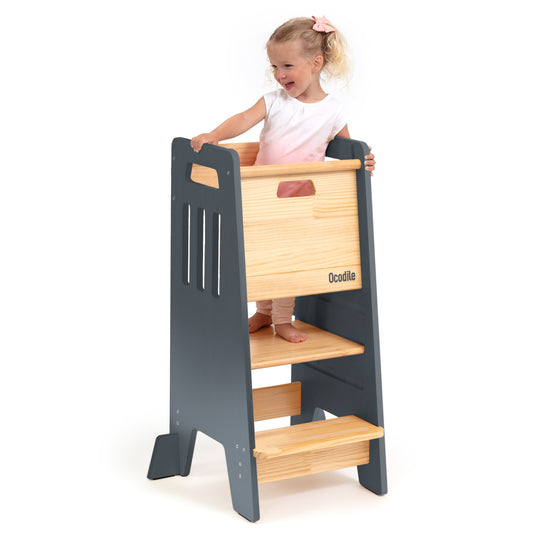
If you're looking for children's furniture designed with safety, practicality, and family life in mind, explore Ocodile. Their approach focuses on child-friendly design, thoughtful materials, and products that help little ones participate safely in everyday routines at home.