



A Parent's Guide to the Perfect Thin Mattress for Floor Beds
A thin mattress for floor is exactly what it sounds like: a minimalist, firm, and low-profile mattress designed to be used directly on the ground. This approach is a huge departure from traditional cribs and is deeply rooted in Montessori principles, aiming to foster a child's autonomy right from the start.
Why Are So Many Parents Choosing Floor Beds?
Putting a thin mattress on the floor is more than just a style choice—it's a conscious parenting strategy that's completely changing the look and feel of modern nurseries. The whole idea is to center the room around the child, creating a space that isn't just for sleeping but for safe exploration and growth.
When you take away the physical barriers of a crib, a floor bed gives your little one total freedom of movement. It’s a core concept in the Montessori philosophy, which is all about nurturing a child's natural drive for independence.
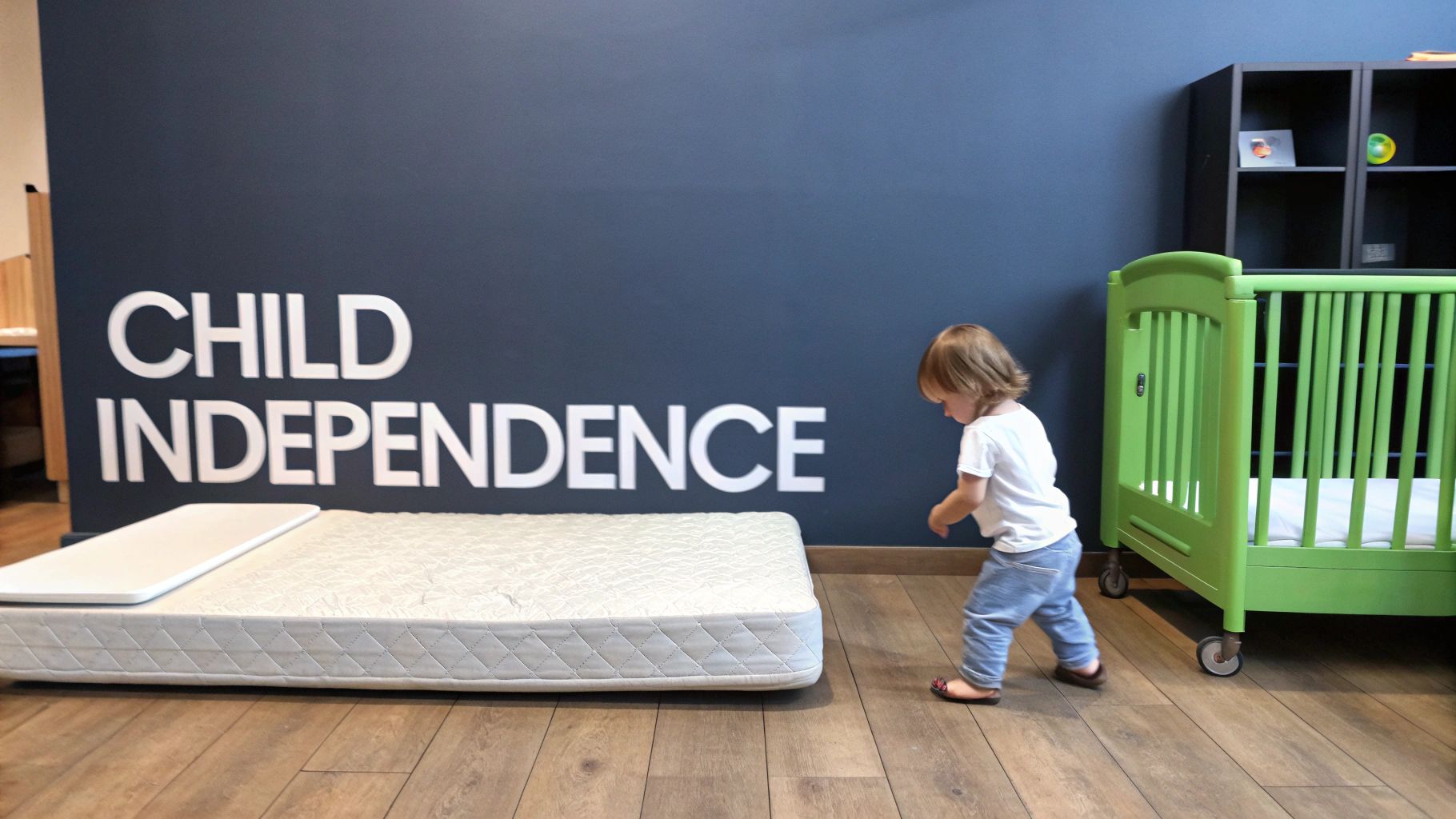
A floor bed lets a toddler get in and out of bed all on their own, respecting their abilities and building self-reliance. This one simple switch can make a world of difference for their confidence and sense of ownership over their own little space.
Fostering Independence and Safety
The real magic behind this shift is how it combines safety and autonomy. Unlike a traditional bed, a floor bed completely removes the risk of falling from a height—a major worry for any parent with an active toddler. This built-in safety gives you incredible peace of mind, especially when you're making that big transition out of the crib.
It also helps your child develop decision-making skills from a very young age. They learn to listen to their bodies, deciding for themselves when it's time to rest and when it's time to play, all within the safe bubble of their childproofed room. This approach supports a gentle, respectful sleep routine that works with your child, not against them.
By making the bed accessible, parents are sending a powerful message of trust. They are communicating that the child is capable of managing their own rest, which is a foundational step toward building lifelong independence and self-regulation.
A Truly Child-Centric Environment
At the end of the day, a thin mattress for floor helps create a room that is genuinely the child's own. It's a space designed at their level, where they can freely and safely interact with everything around them. This is a big contrast to a typical nursery, which is often set up more for adult convenience.
You can learn a lot more about the benefits when you compare the floor bed vs crib setup. It’s a transition that turns the bedroom from just a place to sleep into a sanctuary for rest, play, and personal growth, all within a safe and accessible environment.
From Ancient Wisdom to Modern Nurseries
The idea of sleeping on a thin mattress right on the floor might feel like a new trend, but it's actually a practice with roots stretching back centuries. Long before it became a staple in Montessori nurseries, families all over the world chose this minimalist approach for its benefits to health, posture, and a more intentional use of space. It’s a time-tested way of sleeping that has nurtured well-being for generations.
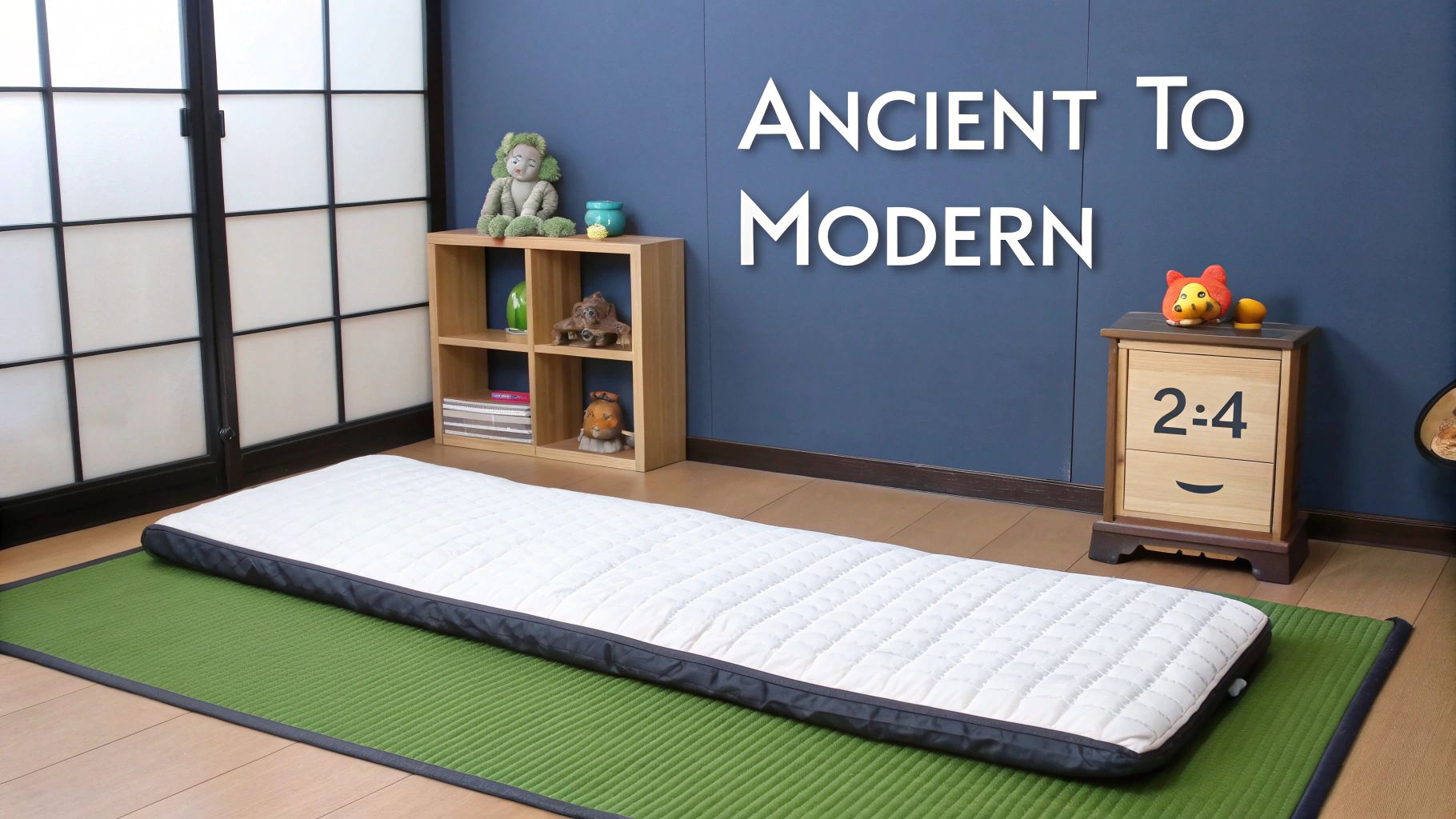
Nowhere is this connection between ancient practice and modern child development clearer than in Japanese culture. Floor sleeping has deep historical roots there, with the traditional tatami mat and futon system dating all the way back to the 8th century. By the Edo period, it's estimated that over 80% of households used this kind of setup.
This wasn't just about saving space; it was about promoting the kind of spinal alignment that is so crucial for a child's healthy growth—a goal that perfectly mirrors the principles Montessori parents follow today.
The Philosophy of Grounded Sleep
At its heart, the philosophy is simple: create a sleep environment that supports the body’s natural state. Cultures that slept on the floor understood that a firm, flat surface encourages proper spinal alignment and stops the back from sinking into an unhealthy curve. This is especially important for infants and toddlers, whose bones and muscles are still developing.
By providing a consistently supportive surface, a thin mattress for floor use helps a child’s body maintain a neutral posture throughout the night. This isn't just about comfort; it's about laying the foundation for a lifetime of good posture and musculoskeletal health.
When you look into the history of floor sleeping, it’s hard not to be inspired by the Japanese tradition of Shiki futon mattresses. These weren't just beds; they were multi-functional tools for living. During the day, they could be rolled up and put away, turning the bedroom into a living room or playspace. This clever design fosters a sense of order, minimalism, and respect for one's environment.
Bridging Tradition and Modern Parenting
It's this same spirit of intention that draws so many modern parents to the floor bed. It’s a conscious move away from restrictive cribs and toward an environment that encourages freedom, independence, and physical well-being. The firm support valued centuries ago is now the same support recommended by pediatric experts for safe infant sleep.
The core principles have stayed surprisingly consistent over time:
- Promotes Natural Alignment: Just like a traditional futon, a modern firm floor mattress prevents a growing child's spine from developing an unhealthy curve.
- Encourages Freedom of Movement: The open accessibility of a floor bed is very similar to the functional, open living spaces of historical Japanese homes.
- Fosters Independence: A child who can safely get in and out of bed on their own is learning autonomy—a core value in both Montessori education and many traditional cultures.
By choosing a floor bed, you’re not just following a trend. You're tapping into a long, proven tradition of providing a simple, safe, and supportive sleep environment that honors a child’s natural development.
Creating a Safe Sleep Space on the Floor
As a parent, your number one job is keeping your little one safe. That's the top priority, always. When you opt for a floor bed, you’re already taking a big step by getting rid of the risk of falls. But a truly safe setup is about more than just laying a mattress on the ground. It’s about creating a protective bubble—turning the entire room into a space where your child can sleep, wake up, and explore without you having to worry.
The very heart of this safe space is the mattress. Pediatric experts are all on the same page here: a firm sleep surface is essential for babies and toddlers. It's a key factor in reducing the risk of Sudden Infant Death Syndrome (SIDS). A firm mattress gives their tiny, developing bones the support they need and, critically, prevents their face from sinking into the material, which could block their airway.
Childproof the Entire Room
Think of the whole room as the new crib. A floor bed gives your child amazing freedom to get up and wander, which means every single corner has to be completely and totally childproofed. This isn't just a suggestion; it's non-negotiable for creating a stress-free environment where their independence can safely blossom.
A good safety sweep involves a few key moves:
- Secure All Furniture: Heavy pieces like dressers, bookshelves, and toy chests absolutely must be anchored to the wall. This prevents them from tipping over if your child decides to use them for climbing practice.
- Cover Electrical Outlets: Protect those curious little fingers. Use safety plugs or sliding outlet covers on every single socket.
- Manage Cords: Cords from blinds, lamps, and baby monitors are a serious hazard. Get them completely out of reach. Wind them up tightly, use cord shorteners, or find another solution.
- Clear the Area: The space right around the mattress needs to be an empty zone. No soft bedding, no pillows, no stuffed animals, and definitely no bumpers. The only thing on the sleep surface itself should be a snug-fitting fitted sheet.
When you do this, you’re not just childproofing—you're creating a "yes space." It's a room where your child is free to explore without you constantly having to say "no" or hovering over them with anxiety.
Ensuring Proper Airflow and Hygiene
Here’s something many parents don't think about right away: ventilation. When a mattress is placed directly on the floor, especially on carpet or another surface that doesn't breathe, moisture can get trapped underneath. That moisture comes from body heat and sweat, and over time, it can become a perfect breeding ground for mold and mildew. Yuck.
A simple but crucial habit to get into is airing out the mattress regularly. At least once a week, just prop the mattress up against a wall for a few hours. This lets the underside breathe and dry out completely.
If you want an even better, set-it-and-forget-it solution, think about putting a low-profile slatted base or a breathable mat underneath the mattress. This tiny addition makes a huge difference by creating an air gap that lets moisture escape, keeping the sleep environment clean and healthy.
Add in regular vacuuming and a waterproof, breathable mattress protector, and you've built another layer of defense against dust mites and allergens. By taking these straightforward but vital steps, you can rest easy knowing your child’s sleep space is not just comfy and supportive, but perfectly safe too.
Choosing The Right Materials And Firmness
When you start looking for a thin mattress for floor use, the number of options can feel a bit overwhelming. But you can cut through the noise by focusing on two key things: the materials inside and the firmness on the outside. These are the details that directly affect your child's safety, comfort, and the overall hygiene of their sleep space.
Think of the mattress material as the very foundation of their healthy sleep environment. Each type has its own strengths, so the best choice really comes down to what you prioritize—is it breathability, hypoallergenic properties, or something that will last for years?
Common Materials In Floor Mattresses
Let's walk through the most common materials you'll come across.
- High-Density Foam: This is a super popular and often budget-friendly option. High-density polyurethane foam gives that excellent firm support, which is absolutely critical for infants. Just be sure to look for certifications like CertiPUR-US®, which is your guarantee that the foam is made without a list of harmful chemicals.
- Natural Latex: Sourced from rubber trees, latex is a premium choice known for being incredibly durable and naturally resistant to nasty stuff like mold and dust mites. It has a responsive, supportive feel that's firm yet comfortable, making it a fantastic long-term investment.
- Organic Cotton & Wool: For parents who want to go the all-natural, chemical-free route, mattresses made with organic cotton and wool are perfect. Cotton provides a soft, breathable surface, and wool is amazing—it acts as a natural flame retardant and helps regulate temperature, keeping your child cool in the summer and cozy in the winter.
To help you compare these options at a glance, here’s a quick breakdown of what each material brings to the table for a floor bed.
Mattress Material Comparison For Floor Beds
| Material | Key Benefit | Best For | Consideration |
|---|---|---|---|
| High-Density Foam | Firm support and affordability | Parents seeking a reliable, budget-conscious, and certified-safe option. | Look for CertiPUR-US® certification to ensure no harmful off-gassing. |
| Natural Latex | Durability and hypoallergenic | Families wanting a long-lasting, eco-friendly mattress resistant to dust mites and mold. | Tends to be a higher-priced, premium investment. |
| Organic Cotton & Wool | Breathability and temperature regulation | Parents prioritizing a 100% natural, chemical-free sleep environment. | Wool provides natural flame resistance without added chemicals. |
Ultimately, the right material aligns with your family’s priorities, whether that's sticking to a budget, investing in longevity, or creating a purely organic sleep space.
Why Firmness Is Non-Negotiable
While adults might spend ages debating soft versus firm mattresses, the choice for infants and toddlers is crystal clear: firmer is always safer. A mattress that's too soft can actually conform to the shape of a baby's head or face, which increases the risk of suffocation and SIDS.
A firm, flat surface provides the essential support for their developing bones and spine. It also ensures they can easily move their head and push themselves up—both are crucial milestones in their motor development. A good test? When you press on the mattress, it should snap back quickly without leaving a deep handprint. If you want to dive deeper, our complete guide covers the best mattress for a floor bed and gets into more detail on these safety standards.
This graphic really simplifies the three pillars of a safe floor bed setup.
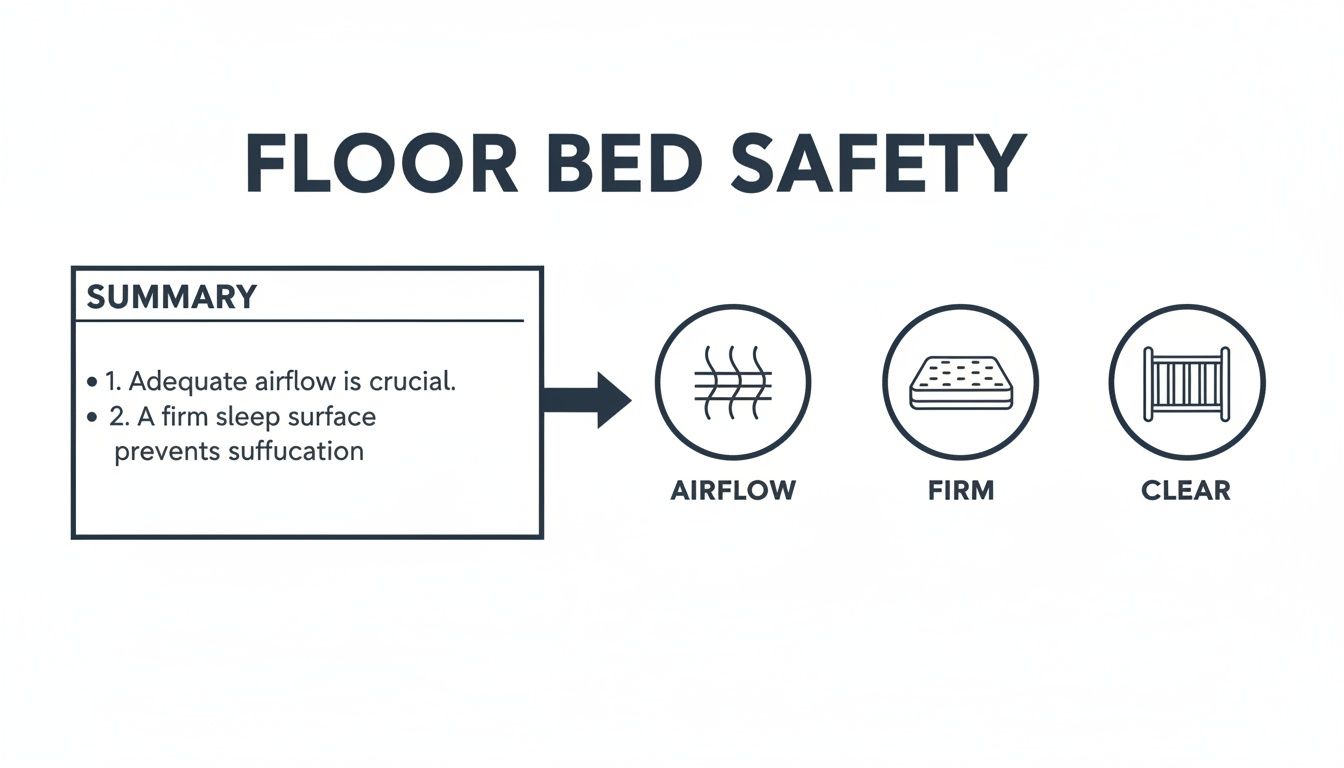
As you can see, a safe sleep space depends just as much on proper airflow and a clear environment as it does on the mattress itself.
Finding a thin mattress that truly supports a restful night is all about understanding how to choose the right mattress for your sleeping style and then adapting those principles for a child’s unique needs. By prioritizing a firm surface and certified, breathable materials, you're building a foundation for healthy sleep that will give you complete peace of mind.
Keeping Your Floor Mattress Clean and Hygienic
A thin floor mattress needs a little extra love to keep it fresh, clean, and healthy for your child. Because it sits right on the floor, the most important part of its care is preventing moisture from getting trapped underneath. This one simple habit protects your mattress and ensures your little one's sleep space stays wonderfully clean.
The main challenge is trapped moisture. Our bodies naturally release a bit of heat and sweat as we sleep. Without a bed frame letting air flow underneath, that moisture can get stuck between the mattress and the floor. Over time, that can lead to musty smells or even mold and mildew.
Create a Simple Cleaning Routine
Thankfully, keeping your floor mattress in great shape is surprisingly easy. A simple, consistent routine is all it takes.
- Air It Out Weekly: This is the most crucial step. Once a week, just prop the mattress up against a wall for a few hours. This lets the underside breathe and dry out completely, which is the #1 way to prevent mold.
- Vacuum Regularly: While the mattress is airing out, it's the perfect time to vacuum its surface and the floor where it usually sits. This gets rid of dust, allergens, and any stray crumbs.
- Rotate and Flip: Every few months, give the mattress a 180-degree turn. If it’s a double-sided model, flip it over, too. This helps it wear evenly and keeps it from developing permanent dips or soft spots.
Use the Right Protective Gear
Think of the right accessories as a shield, guarding your mattress against the inevitable spills and accidents that come with having kids. A quality mattress protector isn't just nice to have—it's essential.
A waterproof yet breathable mattress protector is your best defense. It stops liquids from soaking into the mattress core but still allows air to circulate. This is a game-changer for managing moisture and preventing the growth of bacteria and dust mites.
You'll also want to make sure you're using a snug-fitting sheet. Loose bedding can be a safety hazard, so a tight fitted sheet is the only thing you need for an infant or toddler's sleep space.
As you create a clean and safe floor bed area, you might also find our guide on choosing the best infant foam floor mats helpful for rounding out your child-friendly room.
By following these simple steps—regular airing, consistent cleaning, and using a high-quality protector—you can easily keep your thin floor mattress in perfect condition. It’s a little bit of proactive care that ensures your child has a comfortable, hygienic, and safe place to rest and grow for years to come.
Got Questions About Floor Mattresses? Let's Talk.
Even with all the benefits, it's completely normal to have questions when you're thinking about a new sleep setup for your child. Making the switch to a thin mattress for floor use is a big decision, and you want to feel confident you're doing it right. So, let's walk through some of the things parents ask about most.
Think of this as your go-to guide for troubleshooting common concerns and getting the practical details you need. We'll cover everything from thickness and safety to keeping it clean, so you can move forward with total peace of mind.
What Is The Ideal Thickness For a Child's Floor Mattress?
For infants and toddlers, the sweet spot is a thin yet supportive mattress between 3 to 5 inches thick. This range offers plenty of comfort while staying firm enough to prevent a child from sinking in—a critical safety measure for reducing SIDS risk and promoting healthy spinal alignment.
A mattress in this range also keeps the bed low to the ground, so your child can get in and out on their own safely. This is a core part of building the independence that Montessori principles are all about. It's best to steer clear of overly thick or plush mattresses, as they can be suffocation hazards and won't provide the firm support a growing body needs.
Is Sleeping On a Floor Mattress Bad For a Child's Back?
Quite the opposite! A high-quality, firm thin mattress on the floor can be fantastic for a child's back and posture. A firm surface provides consistent, even support for the spine and encourages it to maintain its natural alignment during sleep. This is a world away from a soft mattress that allows for sagging.
This idea isn't new; it's deeply rooted in traditions from cultures that have practiced floor sleeping for centuries, where it has long been linked to good posture. The most important factor is choosing the right mattress. As long as it is firm and supportive, a floor bed provides a flat, stable surface that is highly beneficial for a child's developing musculoskeletal system.
How Do I Prevent Mold From Growing Under a Floor Mattress?
Preventing mold is one of the most common worries, but it's entirely manageable with a simple routine. The key to stopping mold before it starts is ensuring there is always good airflow around and under the mattress.
First, if you can, avoid placing the mattress directly on carpet or a non-breathable surface. Even a very low-profile slatted bed base can make a huge difference. If you are placing it directly on a hard floor, you’ll just need to air it out regularly.
Propping the mattress up against a wall for several hours at least once or twice a week is the most effective trick. This simple step allows the underside to dry out completely, releasing any trapped moisture from body heat and humidity.
Using a breathable mattress protector also helps manage moisture. It's a good habit to regularly check the underside of the mattress and the floor beneath it for any signs of dampness, especially if you live in a humid climate.
At What Age Can a Child Start Using a Floor Bed?
A child can move to a floor bed much earlier than you might think—often way sooner than a traditional toddler bed. Many families make the switch as soon as their child starts crawling or pulling up, which is typically between 6 to 10 months of age.
The main advantage of starting this early is safety, as it completely eliminates the risk of falling from a height. A floor bed in a fully childproofed room gives your little one the freedom to safely explore their environment whenever they wake up. This fosters a powerful sense of autonomy, letting them choose when to rest and when to play, which is a huge step toward independence from a very young age.
Ready to create a safe and empowering sleep space for your child? The Ocodile floor bed is designed with your child's safety and independence in mind, perfectly complementing a thin, firm mattress. Explore our collection and find the perfect foundation for your little one's room today.