



A Parent's Guide to Choosing the Best Toddler Standing Tower
We've all been there: you're trying to get dinner ready, and a tiny person is wrapped around your leg, desperate to see what’s happening up on the counter. A toddler standing tower is one of those parenting game-changers. It safely brings your little one right into the heart of the home, turning what used to be a daily juggle into a chance to learn and connect.
Giving Your Toddler a Seat at the Counter
This isn't just about managing the chaos of holding a curious toddler while you cook. It's about finding a real solution that builds their independence. We’ll walk through how a standing tower, or learning tower, boosts safety, helps with all sorts of developmental skills, and genuinely strengthens that family bond. Let's turn that countertop chaos into genuine connection.
You’re not alone in looking for one, either. These towers are popping up in more and more homes as parents embrace tools that help their kids feel more capable. In fact, the market for toddler learning towers is expected to hit a whopping $2.16 billion by 2033. This huge number just shows how much families are shifting their approach to early childhood development right at home. You can dig into more of the data on this trend over at Dataintelo.com.
Why a Standing Tower is a Game Changer
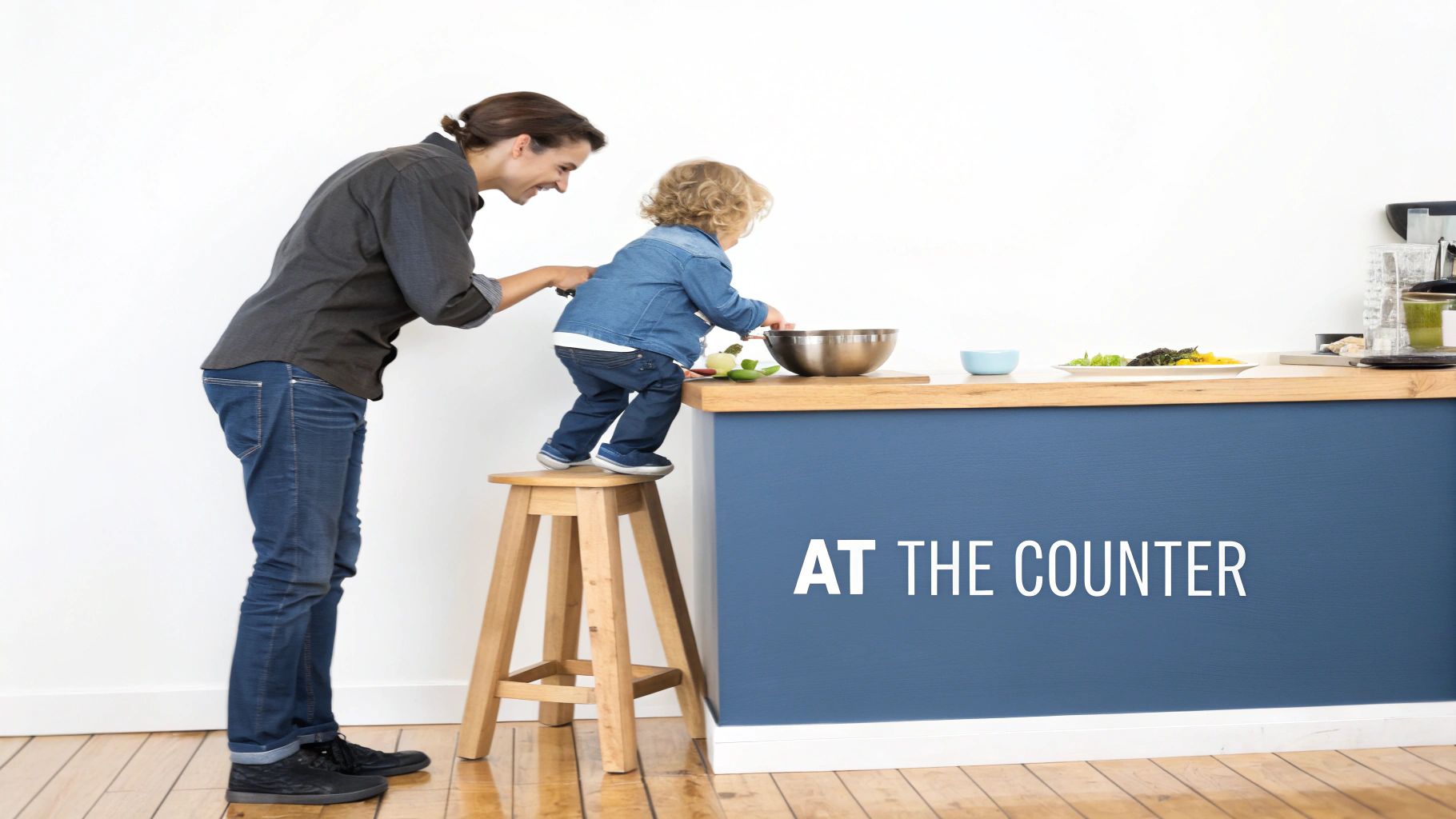
Think about it. Instead of having your child teetering on a wobbly kitchen chair, a standing tower gives them their own secure, enclosed platform. That stability means their hands are free, and their mind is clear to focus on what’s in front of them, whether that’s "helping" stir pancake batter or rinsing a few berries. This whole idea fits perfectly with the Montessori philosophy of hands-on, child-led learning.
The benefits become obvious pretty quickly:
- Fostering Independence: Your child can safely climb in and out to participate in activities without constantly needing to be held, which is a huge confidence booster.
- Enhancing Safety: A dedicated, enclosed structure is worlds safer than a regular stool or chair. No question about it.
- Creating Connection: Doing things together at the counter—even simple tasks—builds incredible family bonds and creates memories that stick.
The real magic of a standing tower is how it turns your child from a passive observer into an active participant. It gives them a front-row seat to family life, making them feel included, valued, and capable.
Of course, keeping toddler gear clean is always on the list. For other common items like high chairs, you can find some great advice on how to clean high chair straps simply and safely.
And if you’re curious about all the ways to bring this tool into your daily routine, you might enjoy our guide on the learning tower kitchen helper.
Understanding the Toddler Standing Tower
So, what exactly is a toddler standing tower? Think of it as your child's personal, secure lift to the countertop, but it’s so much more than a simple step stool. It's a thoughtfully designed piece of furniture with a very important job.
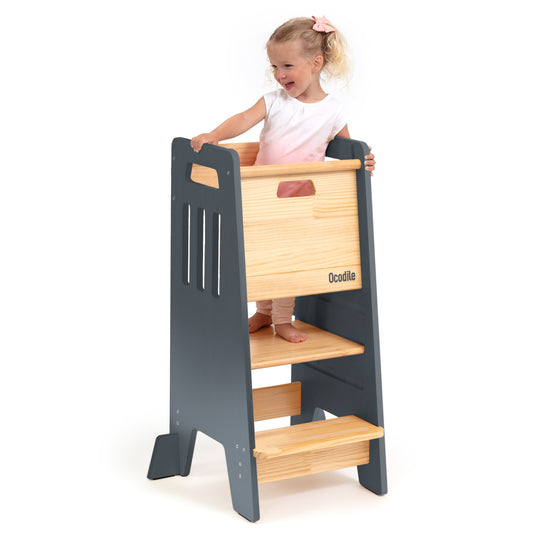
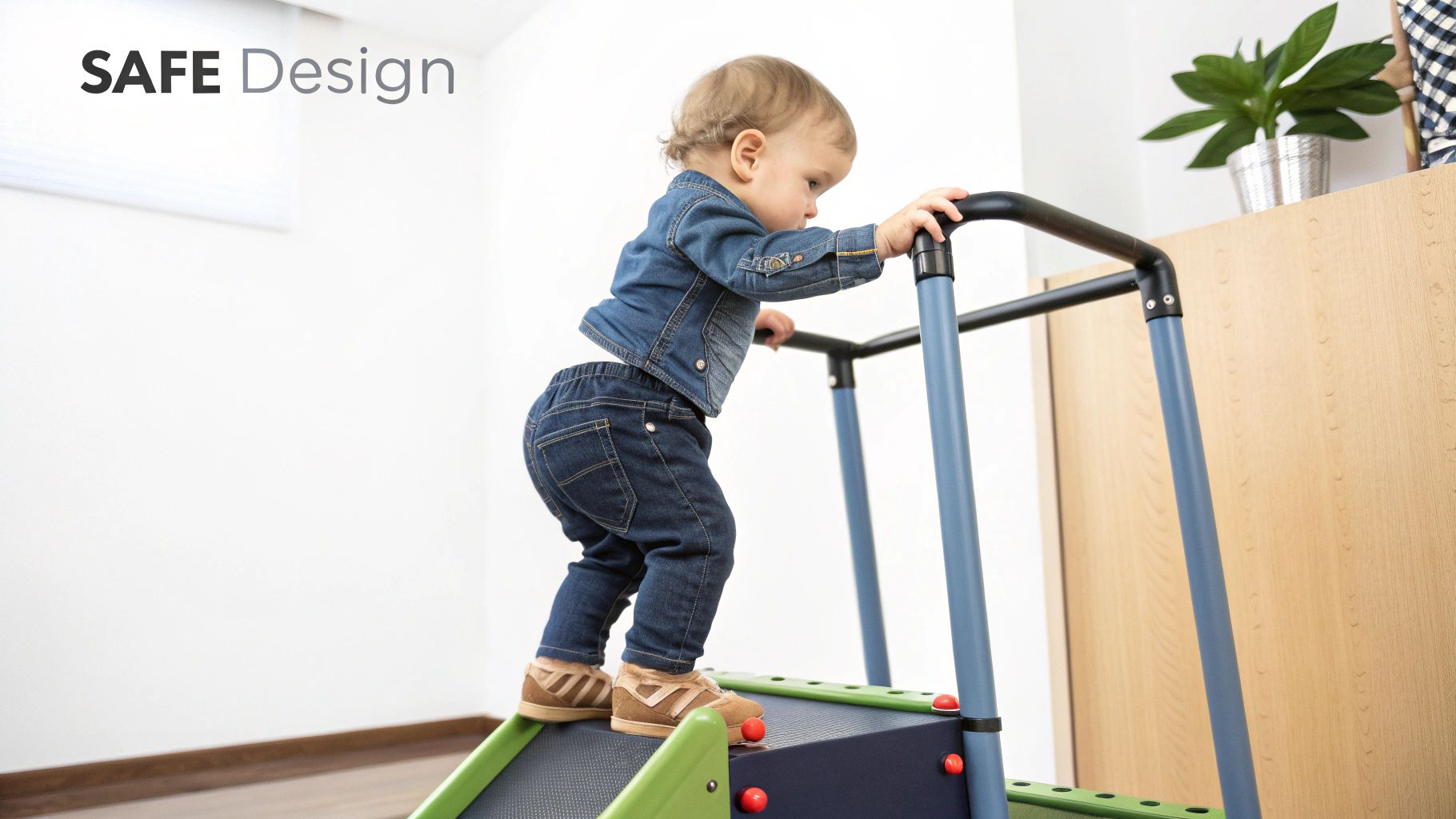
At its heart, a toddler standing tower is a sturdy structure with a four-sided safety frame. This enclosure is the magic ingredient, creating a protective railing that prevents the tumbles and falls that are all too common when a curious toddler tries to use a kitchen chair to see what's happening up high.
This secure design is what truly sets it apart. It frees up your child's hands, letting them focus completely on the activity at hand—whether that’s stirring batter, washing vegetables, or just watching you cook—without having to cling on for balance.
Core Components of a Standing Tower
Every great standing tower combines a few essential elements that work together to create a safe and empowering space for your little one. Knowing what these parts do helps you see why it’s such a game-changer for early development.
Let's break down the key features:
- A Stable, Wide Base: This is the foundation of safety. A wide footprint keeps the tower from tipping over, even when there's an enthusiastic and wiggly toddler inside. It's the most critical design element for stability.
- An Adjustable Standing Platform: Kids grow like weeds, and an adjustable platform allows the tower to grow right along with them. This feature ensures the safety rail is always at the perfect height (around their mid-torso), extending the tower's usefulness for years.
- Surrounding Safety Rails: These bars or panels create the cozy enclosure that keeps your child secure. They provide a barrier on all sides, turning a potentially risky perch into a safe, contained spot for exploration.
The real genius of the toddler standing tower is how these components transform a simple boost into a powerful developmental tool. It provides just enough support to ensure safety while giving your child the freedom to engage with their world on their own terms.
This structure directly empowers toddlers, giving them a profound sense of capability and independence. This idea lines up perfectly with Montessori principles, which focus on hands-on, child-led learning. By safely bringing them up to counter-height, you're inviting them to become active participants in daily family life. You can learn more about how a tower supports this philosophy in our post about what is a learning tower.
Prioritizing Non-Negotiable Safety Features
When you bring something into your home for your toddler, safety isn't just a feature—it's everything. A toddler standing tower is designed to give your child a boost, so getting to grips with its core safety components is non-negotiable. We're not talking about optional extras here; these are the absolute essentials that prevent accidents and give you peace of mind.
The first thing to look at is stability. Think of a skyscraper—it needs a wide, solid base to keep from toppling over. A learning tower is exactly the same. The best designs have a broad, anti-tip base that spreads out wider than the top, creating a low center of gravity. It's a simple bit of physics that makes all the difference between a secure experience and a dangerous tip-over.
Unfortunately, not all towers are built to the same standard. A sobering Consumer Reports study found that out of 16 popular models, a shocking 87.5% failed critical stability or entrapment tests. This really shows the massive gap between thoughtfully engineered towers and those that pose a serious risk. Reading the full safety findings helps you understand just how crucial rigorous testing is.
Stability and Structural Integrity
A tower’s sturdiness goes beyond just its footprint. The materials and the way it's all put together play a huge part in its long-term safety and how well it holds up to daily use.
- Solid Construction: Look for towers made from high-quality wood or other durable, reinforced materials. Flimsy construction is a recipe for wobbling and, eventually, structural failure.
- Secure Fasteners: All the screws, bolts, and joints should be tough and fit snugly. It's a good habit to check them regularly to make sure everything stays tight, as the daily hustle and bustle can sometimes loosen things up.
- Weight Capacity: A high weight limit, often 150 pounds or more, is a great sign of a sturdy build. It tells you the tower can safely support your growing child—and maybe even you, when you need a quick step stool.
We also have a guide that goes into more detail on how to assess a toddler tower's materials and stability.
Preventing Entrapment and Falls
Besides tipping, other potential hazards like entrapment and falls are big concerns. The design of the enclosure and any openings need to be carefully thought out to keep little bodies safe.
Proper spacing is critical. The U.S. Consumer Product Safety Commission (CPSC) has strict standards for children's products to prevent a child’s head or limbs from getting stuck. The openings in a tower's safety rails should either be small enough that a child’s body can't slip through or large enough that their head won’t get trapped.
A well-designed toddler standing tower should function like a cozy, secure nest. It provides freedom of movement within a protected space, eliminating gaps that could lead to a fall or entrapment.
Non-Toxic and Child-Safe Finishes
Finally, think about what the tower is coated with. Toddlers explore the world with their hands and mouths, so it's vital that all paints, stains, and finishes are non-toxic and child-safe.
Look for certifications like Greenguard Gold, which signals low chemical emissions, or for products that clearly state they use lead-free, non-toxic finishes. This way, even if your little one decides to taste-test their new perch, you know they won't be exposed to anything harmful. This commitment to safe materials is a true hallmark of a quality, thoughtfully designed product.
How to Select the Perfect Tower for Your Home
Choosing the right toddler standing tower can feel like a pretty big decision, but if you break it down into a few key areas, the whole process gets a lot easier. Think of it like picking out a car seat—safety, how long it will last, and how it fits your family’s lifestyle are what really matter. You want something that not only keeps your little one secure but also fits right into your daily routine and home.
The first big choice usually comes down to materials. Most towers are made from solid wood, high-quality plywood, or durable plastic. Wood and plywood offer fantastic stability and that warm, classic look that blends into most kitchens. Plastic models are often lighter and super easy to wipe down, but they might not have the same long-term sturdiness you’d get from a wooden tower.
This quick visual guide breaks down the most important safety checks for any tower you're considering.
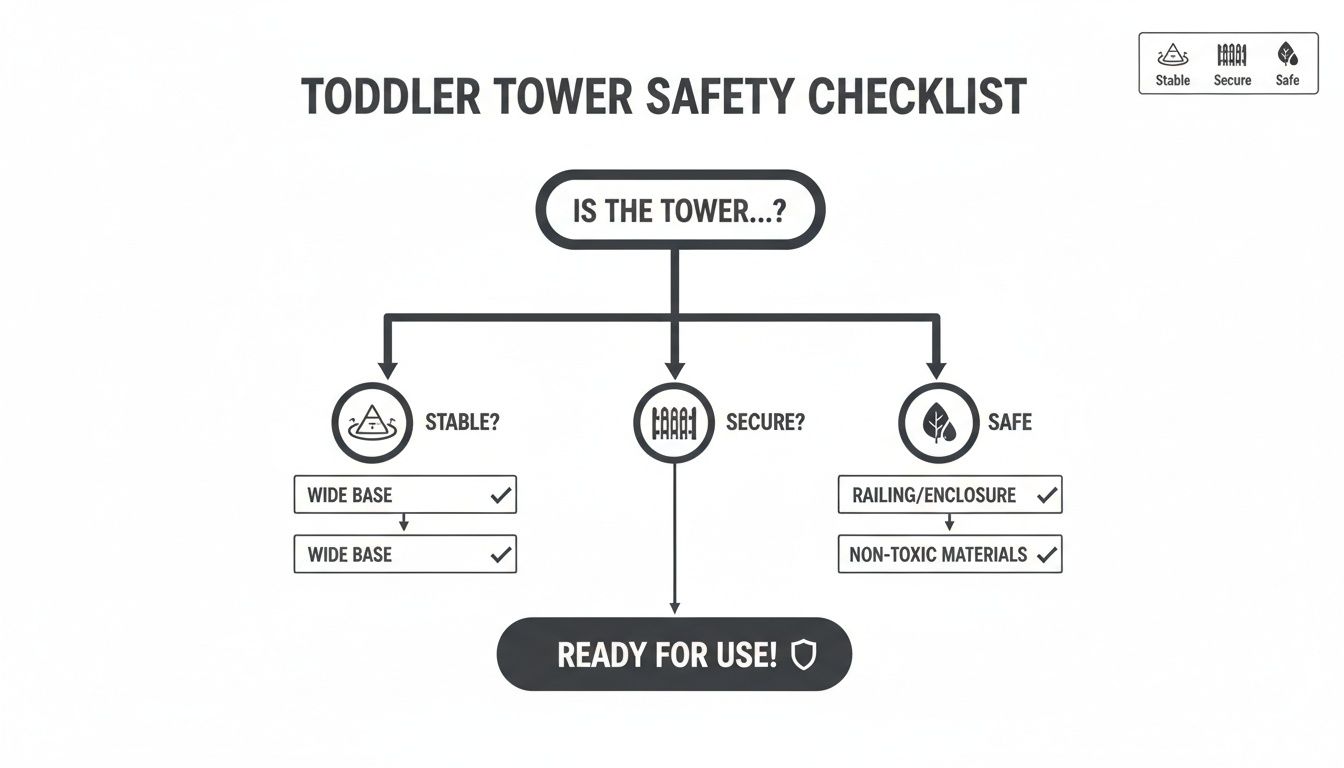
As the checklist shows, a trustworthy tower needs a stable base, a secure enclosure for your child, and construction from non-toxic materials. Getting these three things right is the foundation for giving your child a safe space to explore their independence.
Finding the Right Fit for Your Child and Space
Beyond what it’s made of, adjustability is a game-changer for getting the most use out of your tower. A toddler standing tower with an adjustable platform grows right alongside your child. It ensures the tower stays at a safe and useful height, from their first wobbly attempts to stand all the way through their confident preschool years. That means you can get years of use from a single purchase, which is always a smart investment.
Next up, think about the tower's footprint. Do you have a big, open kitchen or a cozier apartment space?
- Stationary Towers: These tend to have a wider, more stable base but will take up a dedicated spot. They’re perfect if you have the room and plan on having the tower out and ready for action all the time.
- Foldable Towers: These are a lifesaver for smaller kitchens or for families who want to tuck the tower away when it’s not being used. While convenient, just double-check that the folding mechanism is solid and doesn't make the tower feel wobbly.
The perfect tower isn't just about a list of features; it's about how those features fit into your family's real life. A beautiful, sturdy stationary tower might become a source of frustration in a tight kitchen, while a foldable one could be an unnecessary hassle if it's being used all day, every day.
To help you sort through these options, here’s a quick comparison of the key features to look for.
Feature Comparison for Choosing a Toddler Tower
| Feature | What to Look For | Why It Matters | The Ocodile Approach |
|---|---|---|---|
| Material | Solid wood or high-quality plywood. Check for non-toxic, child-safe finishes. | Durability, stability, and safety are paramount. Natural materials often blend better with home decor. | We use premium, sustainably sourced wood with smooth, non-toxic finishes for a tower that's both safe and beautiful. |
| Adjustability | A platform with at least 2-3 height settings. Look for an easy adjustment mechanism. | A tower that grows with your child provides years of use and ensures they are always at a safe, ergonomic height. | Our towers feature multiple height adjustments that are simple to change, supporting your child from 18 months to 6 years. |
| Safety Enclosure | Four-sided railings, including a removable back bar. No large gaps where a child could slip through. | A secure enclosure prevents falls and gives toddlers the confidence to stand and move freely. | Safety is our priority. The Ocodile tower has a fully enclosed design with rounded edges and a secure back bar for peace of mind. |
| Stability | A wide, splayed base or anti-tip feet. The tower should feel solid and not wobble. | A stable tower is a safe tower. It needs to withstand a toddler's wiggles, leans, and enthusiastic "help." | Our design includes a wide base and angled feet engineered to prevent tipping, even with the most active little helpers. |
| Footprint | Consider the overall dimensions (width and depth). Look for foldable options if space is tight. | The tower needs to fit comfortably in your kitchen or bathroom without becoming a tripping hazard. | We focus on a sleek, space-conscious design that provides maximum stability without an oversized footprint, fitting well in modern homes. |
Choosing the right features from the start ensures you'll have a tower that your family loves and uses safely for years.
Making an Informed Decision
Finally, it never hurts to see what other parents are choosing. Market trends can offer a glimpse into what’s working best for families in the real world. Recent sales data shows a strong preference for durable, multifunctional designs that support a child’s natural desire for independence.
For instance, Ocodile's Adjustable Height Toddler Standing Tower recently landed the 4th spot on Amazon, with an impressive 1,033 units sold in just one month. Not far behind, Cosyland's foldable version sold 809 units, showing just how much families value space-saving options. These numbers point to a clear trend: parents are investing in quality, Montessori-inspired tools for their little explorers. For a deeper dive, you can check out more details on best-selling toddler tower trends and what they signal about what families are looking for today.
Boosting Development and Family Connection
A toddler standing tower is so much more than a piece of furniture—it's a launchpad for growth and a bridge for connection. By safely bringing your little one up to counter height, you open up a whole world of developmental benefits, all woven right into your daily routines.
Suddenly, simple activities transform into rich learning opportunities.
Imagine making pancakes together. As your toddler stands securely beside you, their small hands gripping a whisk, they aren't just making a mess. They’re building crucial fine motor skills, strengthening the very hand-eye coordination and muscle control that structured playtime sometimes misses.
Turning Routines into Learning Moments
When you ask them to help count scoops of flour, you’re introducing early math in a way that actually makes sense to them. Hearing you name the ingredients—"This is the flour," "Here is the milk"—grows their vocabulary without them even realizing it. These aren't lessons from a book; they're real experiences that stick.
This kind of hands-on participation helps your child grow in so many ways:
- Cognitive Growth: Following simple recipe steps teaches them about sequencing and cause-and-effect (add eggs, get batter!).
- Sensory Exploration: The feel of sticky dough, the smell of baking cookies, and the sight of colorful vegetables create a fun, multi-sensory learning moment.
- Language Development: Chatting about what you're doing provides a constant stream of new words and back-and-forth conversation.
The real beauty of a toddler tower is how it dissolves the barrier between your world and theirs. It invites them to be an active creator in the family's daily life, not just a spectator.
Working side-by-side sends a powerful message: "You are capable. You are helpful. You belong here." This feeling of contribution is a massive boost to their self-esteem and deepens their sense of security within the family.
Forging Stronger Family Bonds
Beyond the developmental milestones, these shared moments are where the real magic happens. This is focused time together, away from screens and other distractions. A toddler standing tower creates a natural hub for connection, turning mundane chores into rituals you’ll both look forward to.
You’re not just preparing a meal; you’re building a foundation of communication and teamwork. These experiences at the counter become the backdrop for laughter, conversation, and lasting family memories. The simple act of washing vegetables together can become a treasured part of your day, strengthening your bond and turning ordinary moments into something special.
Creative Ways to Use Your Standing Tower
While the kitchen is usually where families first fall in love with their toddler standing tower, its usefulness goes way beyond just helping with dinner. This single piece of furniture can quickly become a go-to tool for learning, play, and independence in just about every room of your home.
Think of it as your child’s personal launchpad for all sorts of daily routines. By moving the tower from room to room, you empower them to join in on activities that were once out of reach, turning boring tasks into fun moments for growth.
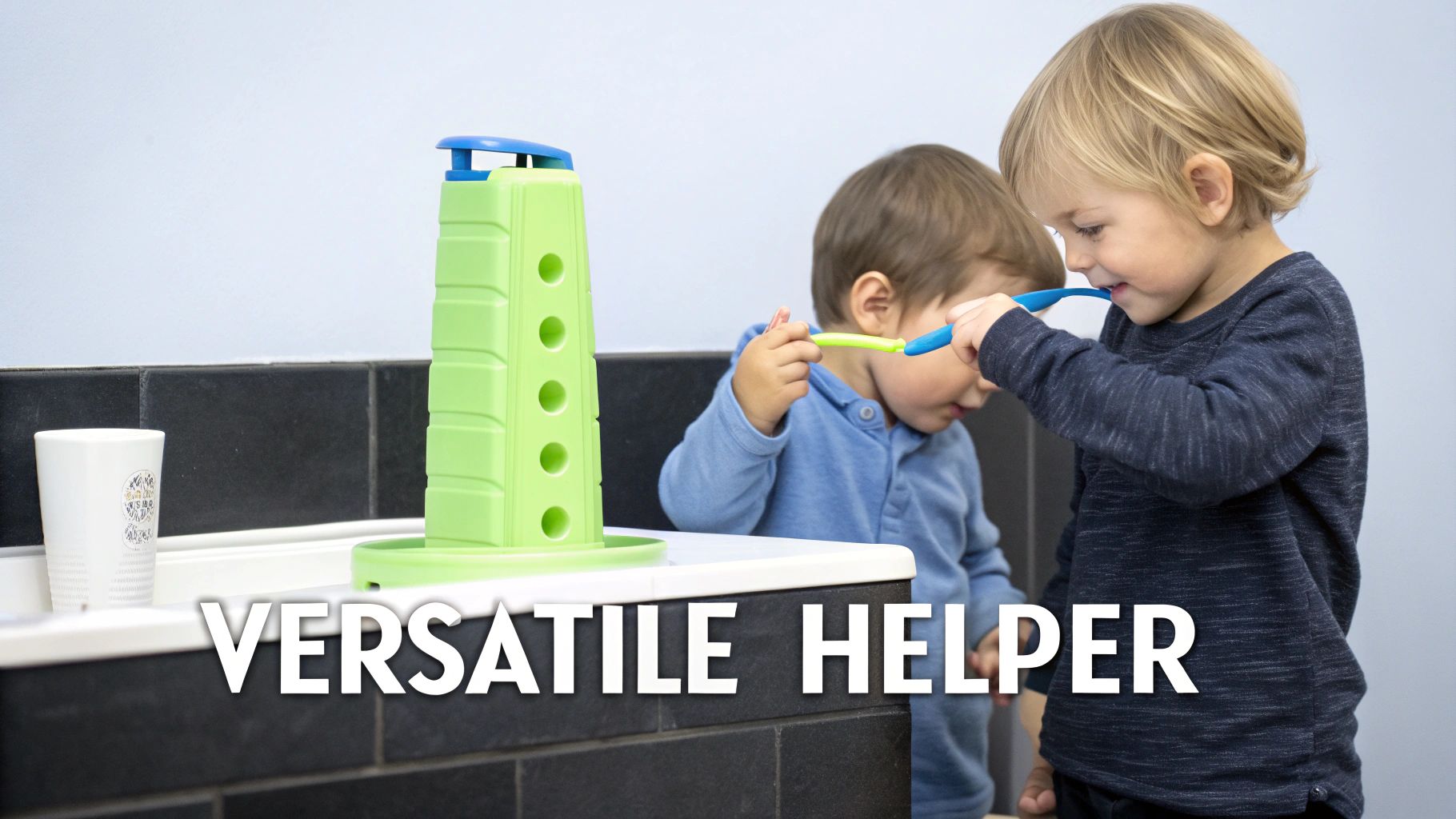
Beyond the Kitchen Counter
So, are you ready to see how one piece of furniture can adapt to your family's entire day? Here are a few ideas to get you started.
-
The Bathroom Helper: Pop the tower in front of the bathroom sink and suddenly you have a safe station for independent hand-washing and teeth-brushing. This little boost gives them control over their own hygiene, building confidence and good habits right from the start.
-
The Junior Artist's Station: Slide the tower up to a craft table or even a window. It gives them the perfect vantage point for painting, drawing, or watching the birds in the backyard. The secure frame means you can worry less about tumbles and focus more on their budding creativity.
-
The Sensory Lab: Back in the kitchen, fill the sink with a little water and some bubbles for a contained sensory play session. They can splash and pour to their heart's content without you having to hold them precariously over the basin.
The real magic of a well-designed toddler standing tower is just how adaptable it is. It meets your child right where they are, giving them the secure footing they need to confidently explore the world around them.
A standing tower also makes a fantastic platform for working on projects together. You can turn meal prep into a blast with a fun Sandwich Tower Masterpiece activity and watch their kitchen skills grow. By rethinking its purpose, the tower becomes more than just a kitchen helper—it becomes a central part of daily life, play, and connection.
Of course, here is the rewritten section with a more human, natural, and expert tone, following the style of the provided examples.
Your Top Questions About Toddler Towers
When you're thinking about bringing a learning tower into your home, you're bound to have a few questions. It’s a big decision, and getting clear answers helps you feel confident you're making the right choice for your family. Let's walk through some of the most common things parents ask.
The first question that usually pops up is about timing. When is my little one actually ready for this?
When Can My Toddler Start Using a Standing Tower?
Most toddlers are ready to climb into a standing tower when they can stand confidently on their own, usually somewhere between 18 and 24 months. But really, it’s less about a specific age and more about their physical stability. You know your child best.
The most important thing is to always be there to supervise. You'll want to make sure the tower's safety rail sits at their chest or mid-torso level for the best protection. This is exactly why an adjustable platform, like the one on all Ocodile towers, is such a game-changer—it allows the tower to grow right alongside them, keeping them safe at every stage.
Another big question we hear is whether a learning tower is genuinely safer than just pulling a kitchen chair up to the counter.
Yes, it’s significantly safer. A regular kitchen chair or a step stool is a tipping hazard waiting to happen. A proper toddler standing tower is engineered specifically for safety, with a wide, sturdy base that prevents tipping and a four-sided enclosure to keep your child securely inside.
This thoughtful design means they can focus on whatever you're doing together—stirring batter, washing veggies, you name it—and use both hands freely without you having to worry about them losing their balance and taking a tumble.
How Do I Keep a Wooden Standing Tower Clean?
Finally, parents often wonder about keeping it clean. We all know how messy toddlers can be!
Thankfully, cleaning your wooden tower is simple. For everyday spills and splatters, a quick wipe with a soft, damp cloth is all you need. If you’re dealing with something a bit more stubborn, a little mild soap or a non-toxic all-purpose cleaner will do the trick.
Just try to avoid using any harsh chemicals or abrasive sponges, as they can wear down the wood's beautiful finish over time. It’s also a good idea to periodically check that all the screws are nice and tight. A little bit of care will keep your tower sturdy and safe for years of family fun.
Ready to transform your daily routines into moments of connection and learning? The Ocodile standing tower is designed with your child’s safety, budding independence, and your home’s aesthetic in mind. Explore our collection and find the perfect fit for your family today!