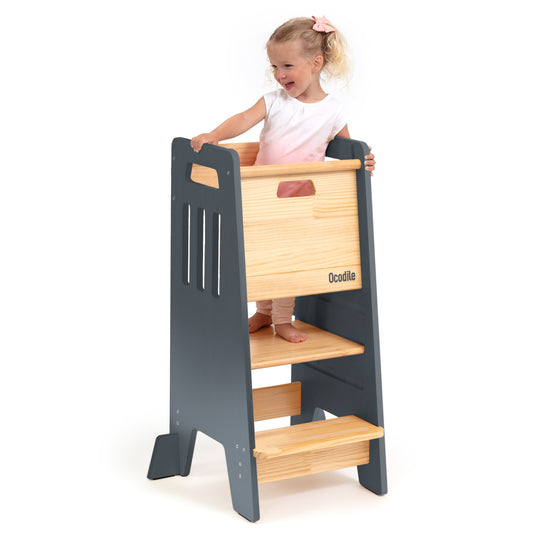




7 Everyday Jobs Toddlers Can Do From a Learning Kitchen Tower
If your toddler drags a dining chair toward the counter, asks to “help,” or wants to be lifted to the sink every five minutes, you are not alone. A learning tower can turn those moments into small, useful jobs, giving your child a safer place to stand while you stay close and guide the activity.
The best toddler jobs are simple, real and short. Think washing strawberries, stirring pancake batter, spreading cream cheese, wiping a spill or brushing teeth at the sink. The goal is not to keep your child busy with pretend work. It is to give them a real role in family routines, without balancing them on a chair or holding them on your hip while you try to make dinner.
Before You Start: Using a Learning Tower Safely
A toddler tower is only helpful when your child is ready to stand steadily, climb with control and follow simple directions such as “hands on the rail” or “feet stay inside.” If you are unsure, this guide on how to check whether your toddler is ready for a tower can help you look at balance, climbing ability and everyday listening skills.
For most families, the learning tower belongs at a clear counter, kitchen island or sink area where the task is calm and the parent can stay within arm’s reach. It should never be placed near the stove, hot pans, sharp knives, boiling water, cords or small choking hazards.
A few ground rules make daily use much easier:
- Place the tower on a flat, dry floor before your child climbs in.
- Keep the activity short, especially at first.
- Give one tool and one job at a time.
- Stay close enough to guide hands, stop climbing or move unsafe items.
- Treat the tower as a standing spot, not a jungle gym.
Safety does not mean saying no to everything. It means choosing jobs where your toddler can touch, pour, scrub, tear, stir or wipe without being near the parts of the kitchen that are not toddler-friendly.
7 Everyday Jobs Toddlers Can Do From a Learning Tower
Start with jobs your child already wants to imitate. If they watch you rinse produce, let them rinse. If they reach for the spoon, let them stir something low-risk. With a learning tower, the job should be simple enough that your toddler can do part of it while you handle the setup, the sharp tools and the cleanup.
| Toddler job | Best spot | Parent setup | What your child practices |
|---|---|---|---|
| Washing produce | Sink | Small bowl, colander, cool water | Scrubbing, rinsing, hand control |
| Stirring batter or yogurt | Counter | Stable bowl, pre-measured ingredients | Two-hand coordination, patience |
| Tearing greens or herbs | Counter | Washed leaves, empty bowl | Fine motor skills, food prep |
| Spreading soft toppings | Counter | Child-safe spreader, soft food | Grip, pressure, independence at meals |
| Building snack plates | Counter | Age-safe foods, small portions | Sorting, counting, decision-making |
| Washing hands or brushing teeth | Bathroom sink | Soap, towel, toothbrush ready | Self-care routines |
| Wiping and cleanup | Counter or sink | Damp cloth, safe items only | Responsibility, follow-through |
1. Wash Fruits and Vegetables
This is one of the easiest first jobs because the setup is simple and the task feels real. Put a small colander in the sink, add a few strawberries, blueberries, carrots or cucumbers, then let your toddler rinse them under cool water.
For younger toddlers, keep the water flow gentle and use only a handful of produce. For preschoolers, add a vegetable brush and let them scrub potatoes, apples or carrots. The benefit is practical for you because produce gets rinsed, and practical for them because they can see a clear beginning and end.
2. Stir Batter, Oatmeal or Yogurt
Toddlers love stirring because it feels like cooking without needing heat. Set a sturdy bowl away from the counter edge, give your child a spoon or spatula, then let them stir pancake batter, muffin mix, oatmeal, yogurt with fruit or a simple dip.
A learning tower works especially well here because your child can stand at counter height and use both hands instead of reaching up from a low stool. Keep raw eggs, hot foods and breakable bowls under adult control. If your toddler gets too excited and starts flinging the spoon, pause the task, reset the bowl and try again later.
3. Tear Lettuce, Herbs or Soft Bread
Tearing is satisfying, low-risk and genuinely useful. Give your toddler washed lettuce leaves for salad, basil for pasta, cilantro for tacos or soft bread for croutons. They can place the pieces into a bowl while you prepare the rest of the meal.
This job is helpful when you need your child near you but not in the way. It also lets them explore smell, texture and food names without pressure to eat. Some toddlers are more willing to taste foods they helped prepare, but that is a bonus, not a promise.
4. Spread Soft Toppings
A child-safe spreader and a soft topping can turn snack time into a small skill-building routine. Try cream cheese on toast, hummus on a cracker, peanut butter if it is safe for your household, avocado on bread or soft butter on a roll.
The trick is to prepare the food so the task is manageable. Pre-toast and cool bread if needed, put a small amount of topping in a separate dish and show your child how to hold the spreader. Expect uneven coverage. The real win is that your toddler is trying a meal task before asking you to do every step.

5. Build a Snack Plate
Snack plates are a great way to involve toddlers without turning the kitchen into a cooking project. Place a few age-appropriate foods on the counter, such as sliced banana, soft cheese pieces, crackers, steamed vegetables or berries cut as needed for safety. Then ask your child to move them onto a plate or into small cups.
This can be as simple as “three berries in this cup” or “put the crackers on the blue plate.” You are adding language, counting and choice to something you were already doing. Stay mindful of choking hazards, especially round, hard or slippery foods, and prepare everything to a safe size before your child handles it.
6. Wash Hands and Brush Teeth at the Sink
A tower can be useful outside the kitchen too. At the bathroom sink, your toddler can climb up, turn on the water with help, pump soap, rub hands, rinse and dry with a towel. For toothbrushing, they can stand at the sink and practice the routine while you still do the thorough brushing afterward.
This is one of the most parent-friendly uses because it reduces lifting. Instead of holding your child at the sink or balancing them on the edge of the counter, you can stand beside them and coach the routine. Keep the floor dry, use only a stable setup and supervise closely because bathrooms can get slippery.
7. Wipe Counters and Help Clean Up
Toddlers often want to help after the exciting part is over. Give them a damp cloth and a clear section of counter, table or high chair tray to wipe. They can also rinse a plastic cup, put napkins in a drawer or carry spoons to the table if they are safe to handle.
Cleanup teaches a simple pattern: we do the job, then we put things back. It also gives an active toddler a useful role when you are finishing dinner or packing snacks. Avoid glass, knives, hot surfaces and cleaning sprays. A damp cloth is usually enough for toddler participation.
How to Make These Jobs Work on Busy Weekdays
A learning tower works better when the routine is predictable. If your toddler has to wait while you find a bowl, clear the counter and decide what they can touch, frustration builds quickly. Set up the safe part first, then invite them over.
Try giving the task a short name: “berry washing,” “yogurt stirring,” “counter wipe” or “toothbrush time.” Toddlers often respond well when they know exactly what their job is. Keep the wording simple and repeat it every time.
It also helps to lower your expectations for neatness. A toddler will spill water, press too hard, stir too fast and wipe the same spot twelve times. That is part of the process. If the mess will stress you out, choose a dry job, such as tearing lettuce or placing napkins, instead of a water job.
Pay attention to which jobs your child asks to repeat. Some children love water tasks, some prefer mixing and others enjoy sorting or carrying. That habit of matching activities to a child’s interests continues well beyond the toddler years, and this article on discovering strengths through structured activities explains how guided routines can help young people recognize what they are good at over time.
Toddler Tower vs. Step Stool for These Jobs
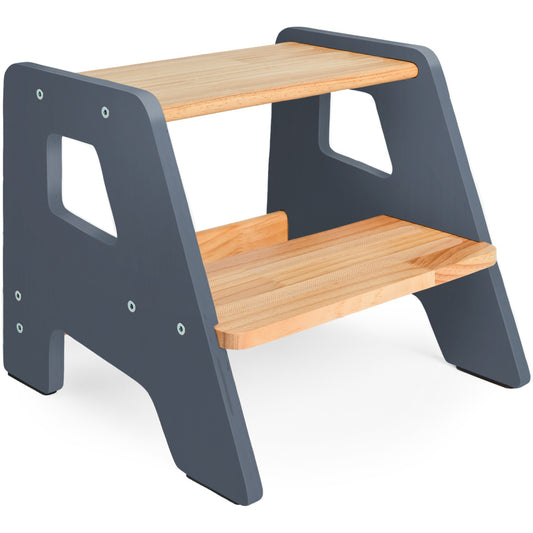
A step stool can work for quick reach, such as turning on a faucet with a parent nearby. For longer counter jobs, many parents prefer a tower because the enclosed design adds a clearer standing space and can feel more secure for an active toddler who shifts weight, turns around or uses both hands.
That does not mean every child needs the same setup. A cautious preschooler may do fine with a step stool for handwashing. A younger toddler who wants to stir, rinse or help at counter height may be better served by a more stable standing platform with side support.
If you are comparing options, look at the actual routines you want to support. Do you need something for the kitchen, bathroom or both? Will it stay out all day or be folded away? Is your child still learning to climb down slowly? Your answers matter more than a product label.
What to Look for if You Want These Jobs to Feel Easier
The right learning tower should feel sturdy, stable and easy to use in the rooms where you actually spend time. Parents often care most about a solid feel, a safe standing area, materials that hold up to daily use and a design that fits their kitchen without becoming a tripping hazard.
Helpful features to compare include guardrails, a child-safe finish, a footprint that feels steady, an appropriate platform height and a design that is easy for adults to move when needed. If storage space is tight, a foldable design may be worth considering. If your child will use it through different stages, adjustability can also matter.
For a fuller buying checklist, Ocodile’s guide to finding the best learning tower walks through stability, materials, sizing and other details parents commonly compare before choosing one.
A Simple Weekly Routine to Try
If you are not sure where to begin, choose one repeatable job for each part of the day. This keeps the tower from becoming a novelty item and turns it into a normal part of family life.
A simple rhythm could look like this:
- Morning: wash hands and help spread toast.
- Lunch: place fruit on a snack plate.
- Afternoon: rinse produce or tear lettuce.
- Dinner: stir a cool mixture or wipe the counter.
- Bedtime: stand at the sink for toothbrushing practice.
You do not need to do all of this in one day. In fact, it is usually better not to. Pick one job, repeat it for a few days and let your child get good at it before adding another.
Frequently Asked Questions
What age is best for a learning tower? A learning tower is usually best for toddlers who can stand steadily, climb with control and follow simple safety directions. Readiness matters more than age, so watch your child’s balance, listening skills and ability to climb down safely.
Can toddlers use a tower without help? No. A toddler should always be supervised while using a tower. It gives them a safer standing place than an improvised chair, but it does not replace an adult staying close.
What jobs should toddlers avoid from a tower? Avoid jobs near hot pans, stovetops, sharp knives, boiling water, glass, electrical cords, cleaning chemicals and small choking hazards. Choose cool, simple tasks where you control the setup.
Is a tower only for the kitchen? No. Many families also use one at the bathroom sink for handwashing, toothbrushing practice or face washing. The same safety rules apply: flat floor, dry area, close supervision and no climbing or leaning.
What if my toddler makes a mess every time? Start with dry jobs, smaller portions and shorter time windows. A 3-minute job that ends calmly is better than a 15-minute activity that leaves everyone frustrated.
Make Everyday Help Feel Safer and More Realistic
A toddler who wants to help is not trying to slow you down. They are trying to be part of what the family is doing. The right setup can make that easier on your back, safer than improvised chairs and more satisfying for your child.
If you are ready to create a home setup that helps your toddler reach the sink, join you at the counter and practice real-life tasks, you can explore Ocodile’s Montessori-inspired children’s furniture designed for everyday family routines, with free US shipping, 60-day returns and a 5-year warranty.