



Affordable Montessori Furniture: Safety & Savings
You've probably done some version of this already. You search for Montessori room ideas, see calm photos with wooden shelves and tiny tables, and then click on a product page that makes your stomach drop a little. One shelf costs more than your grocery bill for the week. A learning tower looks lovely, but suddenly the whole room feels out of reach.
That frustration is real, and it doesn't mean you're doing Montessori “wrong.” A Montessori space isn't a luxury look. It's a way of helping your child do more for themselves. The furniture matters because it supports independence, not because it signals a certain style or budget.
A practical Montessori home can start small. One low shelf. One child-sized place to sit. One safe step stool in the kitchen. If you're trying to sort through what's worth buying, what's safe to buy secondhand, and what can wait, this guide will help you make those decisions with a clear head.
Why Affordable Montessori Furniture Matters More Than Ever
Many parents want the same thing. They want a home that feels calm, supports independence, and doesn't require a complete room makeover to get there. That's exactly why affordable Montessori furniture matters right now.
The interest isn't small or niche anymore. The global Montessori furniture market was valued at USD 1.45 billion in 2025 and is projected to reach USD 2.75 billion by 2034, with a 7.8% CAGR over the forecast period, according to Intel Market Research's Montessori furniture market report. That matters because it points to something parents already feel on the ground. More families want child-sized, functional furniture, and the market is responding with more accessible options.
That growth also changes the conversation. Years ago, Montessori furniture was often treated like a premium category reserved for dedicated enthusiasts. Now it sits in a broader market that includes simpler, lower-cost pieces for everyday homes. You can see the same shift in how families approach Montessori education at home. They're looking for practical ways to support independence without turning the house into a showroom.
Practical rule: If a piece helps your child reach, carry, sit, climb safely, or put things away on their own, it's doing real Montessori work, even if it didn't come from a specialty catalog.
Affordable doesn't mean careless. It means you're paying attention to value. It means knowing when a plain low shelf does the job beautifully, and when a higher-use item deserves more of your budget. That's a far more useful standard than “buy cheap” or “buy premium.”
What Really Makes Furniture Montessori
Montessori furniture isn't a brand category. It's furniture chosen from the child's point of view.
Think of a professional chef's kitchen. Tools are placed where the chef can reach them quickly. The layout reduces friction. The setup supports focused work. A Montessori room works the same way for a child. The environment should make it easier for them to act independently, not wait for an adult to hand them everything.

Independence comes first
The first question to ask is simple. Can my child use this without me?
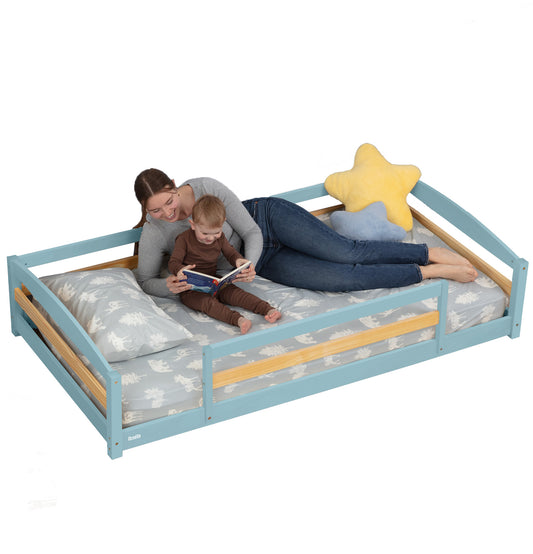
A Montessori-aligned shelf lets a child choose a toy, carry it to a mat, and return it later. A child-sized chair lets them sit down and stand up without climbing or asking for help. A floor bed lets them get in and out on their own. The furniture should reduce dependence in ordinary moments.
That's why many classroom-inspired spaces use open, reachable pieces instead of oversized nursery furniture. If you want a broader sense of how these choices affect the room as a whole, these tips for kids' bedroom decor are a useful companion to Montessori thinking because they focus on function as much as appearance.
Accessibility shapes behavior
A closed bin full of toys often creates rummaging and overwhelm. A low shelf with a few visible choices invites slower, more intentional use.
Expert guidance on Montessori classroom furniture and home setups consistently points back to this idea. Open shelving, low placement, and simple organization support a child's ability to choose and return materials independently.
A few features make a big difference:
- Low open shelves help children see what's available at a glance.
- Shallow baskets or trays keep each activity contained.
- Clear floor space gives children room to carry, turn, and sit comfortably.
- Limited clutter makes the room easier to understand.
When children can reach what they need and put it back where it belongs, the room starts teaching without a lecture.
Child-scale matters more than style
Adults often buy furniture by asking if it fits the room. Montessori asks whether it fits the child.
That means a table isn't “right” just because it's labeled toddler. It needs to match the child's body and movement. A shelf isn't “Montessori” because it's wooden. It needs to be low enough to use comfortably.
Natural materials support real use
Wood is often preferred not because it looks expensive, but because it tends to feel steadier and more durable in daily life. Plastic can work in some situations, but many Montessori families find that simple wood pieces hold up better and feel more grounded in the room.
That's the core idea. Montessori furniture is less about matching sets and more about choosing pieces that help a child move, reach, carry, and participate with confidence.
Your Non-Negotiable Safety and Material Checklist
Price matters. Safety matters more.
The biggest worry with affordable Montessori furniture is whether lower cost means lower quality in the ways that count. That's a fair concern, especially for pieces your child will climb on, lean against, drag across the floor, or use every day.
Independent Montessori guidance repeatedly emphasizes that child furniture should be sturdy, accessible, and preferably wood-based. One home Montessori source warns that plastic options are less durable and less sturdy, and a shelving guide says furniture must be heavy enough not to tip over or be safely anchored, as summarized in this Montessori home safety discussion.

Start with the material
When you're comparing two similar-looking pieces, the material often explains the price difference.
Solid wood usually costs more, but it often handles everyday wear better. Engineered options can lower the price, but they need a closer look. What matters most for parents is not technical perfection. It's whether the piece feels sturdy, smooth, and well-finished, and whether the materials are clearly described.
The safest mindset is practical:
- Choose wood when possible because it tends to feel more stable and last longer.
- Be cautious with very flimsy plastic for high-use items like shelves or towers.
- Read the material description carefully instead of relying on product photos.
- Skip vague listings that don't explain what the piece is made from.
If non-toxic materials are high on your list, Ocodile has a helpful overview of non-toxic kids furniture that can help you ask better questions before you buy.
Test stability like your toddler would
Parents often inspect furniture like adults. Toddlers test it very differently. They pull. They lean. They climb. They use a shelf as a support bar while standing up.
So do a toddler-style check.
- Push from the side and see if the piece wobbles.
- Press lightly on the front edge to notice any tipping tendency.
- Check all joints and screws for looseness.
- Anchor taller storage pieces if there's any chance of climbing or tipping.
A good budget buy is one that stays boring in use. No wobble, no surprise movement, no sharp snagging points.
Look at the edges and hardware
A low shelf can still be a poor choice if the finish work is rough. Run your hand along every edge. Check corners, undersides, and cutouts where little hands naturally land.
Pay attention to:
- Rounded or softened corners instead of hard sharp points
- Smooth edges without splinters or peeling laminate
- Secure hardware that doesn't stick out
- No loose detachable parts that could come free with repeated handling
These details matter more than branding. I'd rather see a plain secondhand wooden shelf with smooth edges and a solid base than a trendy new piece that looks beautiful but shifts under pressure.
Don't confuse cheapest with most affordable
A piece that needs replacing quickly often costs more in the long run. A shelf that chips, warps, or becomes unstable after a short period may have been cheap at checkout, but not affordable over time. The same goes for a tower or chair that your child outgrows immediately because it doesn't adjust or because it was never very usable to begin with.
That's the checklist. Safe materials, stable construction, smooth finish, sensible design. If a piece passes those tests, it deserves your attention whether it came from a handmade shop, a local marketplace, or a flat-pack retailer.
How to Budget for Your Montessori Space
Most families don't need a complete set. They need a plan.
A general pricing guide for affordable Montessori setups reports these ranges: floor beds at $100 to $500, shelves at $50 to $300, learning towers at $100 to $250, and toddler table-and-chair sets at $50 to $200, with prices rising based on solid wood versus MDF, height adjustability, and added safety features, according to Kinderhuis' Montessori furniture cost guide.

Typical cost of affordable Montessori furniture 2026
| Furniture Item | Low-End Price Range | Mid-Range Price Range |
|---|---|---|
| Floor bed | $100 | $500 |
| Shelf | $50 | $300 |
| Learning tower | $100 | $250 |
| Toddler table and chair set | $50 | $200 |
This table is useful for planning, but it doesn't answer the most important budget question. Which pieces deserve more of your money?
Spend according to use, not aesthetics
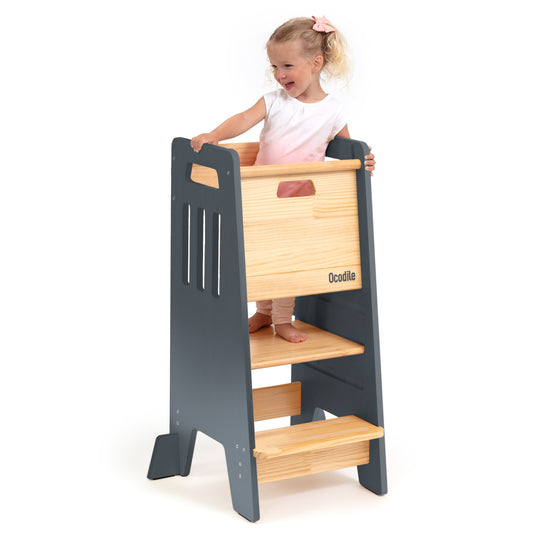
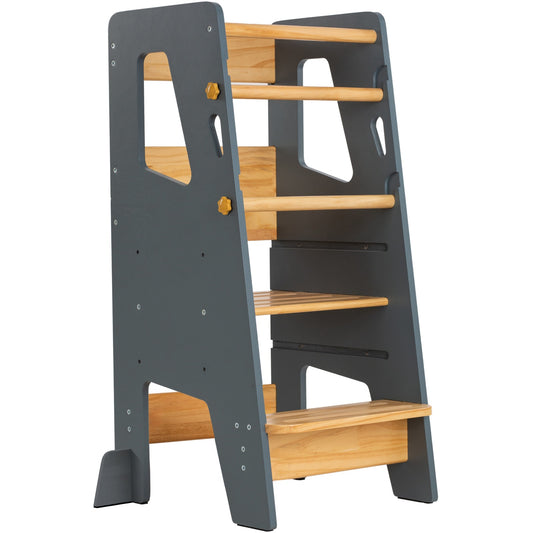
A learning tower usually sees hard daily use. Children climb it, shift their weight inside it, and use it during meals, washing, baking, or kitchen prep. That often makes it a better candidate for a higher-quality purchase than, say, decorative wall storage.
A simple shelf is different. If it's low, stable, and smooth, it may not need premium features. You can often save money there and put more of your budget toward a piece that takes more physical stress.
A helpful way to think about value:
- High-use climbing items often justify a bigger budget.
- Basic storage pieces can often be simpler.
- Adjustable furniture may last through more than one stage.
- Overbuilt matching sets usually aren't necessary.
Buy for the job the piece has to do. A shelf displays. A tower carries movement and risk. They don't need the same budget logic.
Think in terms of total cost of ownership
Parents often ask, “What's the cheapest option?” A better question is, “What will still be useful, safe, and intact after regular use?”
If a low-cost item needs early replacement, can't be adjusted, or never worked well for your child, its value drops fast. A slightly pricier piece can be more affordable if it handles daily use better or stays relevant as your child grows.
That doesn't mean spending more across the board. It means matching your spending to function. In a modest setup, one sturdy tower, one low shelf, and one workable child-sized table can do much more than a room full of furniture bought too quickly.
Smart Shopping Upcycling and DIY Strategies
A Montessori space doesn't need to be purchased all at once. In fact, many families do better when they build it gradually.
Budget-focused Montessori guidance says families can simplify the play space, use local consignment or secondhand channels, and upgrade over time rather than buying everything at once, as shared in Montessori in Real Life's budget guide. That phased approach takes pressure off your budget and usually leads to better choices.

Path one, thrift with a sharp eye
Secondhand shopping works best when you know what to ignore and what to notice.
Good finds often include plain wooden shelves, small side tables, stools, and compact book displays. You're not hunting for pieces labeled Montessori. You're looking for low, sturdy, simple items with good bones.
Check these first:
- Joint strength by gently testing for wobble
- Surface condition for peeling laminate, deep chips, or rough edges
- Height and reach to make sure the child can use it
- Refinishing potential if the shape is good but the finish is tired
If you repaint or seal a secondhand piece, choose child-safe finishes and let them cure fully before use.
Path two, make small DIY changes with big payoff
You don't need advanced woodworking skills to improve a room. Some of the best Montessori DIY projects are simple conversions.
A narrow spice rack can become a forward-facing book display. A low bench can become an entry seat for shoe changes. A basic cube shelf can work well when placed horizontally instead of vertically. If you enjoy hands-on projects, these budget DIY home decor ideas can spark practical ideas that fit a family home without making everything feel homemade in the messy sense.
A few beginner-friendly upgrades go a long way:
- Sanding edges to soften corners and remove rough spots
- Shortening visual clutter by removing extra bins or accessories
- Adding wall anchors to make existing storage safer
- Using trays and baskets to turn a basic shelf into a more orderly activity area
This kind of DIY is less about crafting perfection and more about improving function.
A short visual demo can help if you're more comfortable learning by watching:
Path three, adapt mainstream furniture thoughtfully
Big-box and flat-pack stores often carry pieces that can work well in Montessori homes, especially shelves, stools, and low storage. The key is to evaluate them with your safety checklist instead of assuming they're right out of the box.
For example, a compact shelf may work beautifully if it's used horizontally and anchored properly. A step stool may support independence in the bathroom or kitchen if the footprint is stable and the surface isn't slippery. A child table can work if the proportions are right and the chair is easy to move without tipping.
You don't need a matching collection. You need a room where the child can act with less adult help.
That's what makes upcycling and DIY so useful. They shift the question from “Where do people buy Montessori furniture?” to “What do I already have access to that can become more child-centered?”
Getting the Size and Room Layout Right
A room can have the right furniture and still feel hard for a child to use. Layout matters that much.
Expert guidance says Montessori furniture should be sized to the child, with open shelving and shallow baskets to support independent use. Practical benchmarks place toddler desk and chair height around 16 to 18 inches, while low shelves and floor beds help children access materials without adult help, according to KidKen Montessori's guide to Montessori furniture.
Use the floor as your measuring tool
Before buying anything, mark the footprint with painter's tape. That quick step helps you see whether a shelf blocks movement, whether a table leaves enough room for a chair to pull out, and whether your child can walk through the room carrying materials without bumping into furniture.
In small rooms, less usually works better:
- Keep pathways clear so children can move freely.
- Choose one low shelf instead of several storage pieces.
- Use shallow containers so materials stay visible.
- Leave open floor area for play, dressing, or quiet work.
Let the child's reach guide placement
Adults often place things where they look balanced. Children need them where they can use them.
Books should be visible. Toys should be reachable. Clothes, if you're setting up a child-accessible wardrobe area, should be easy to pull and return. The same principle applies whether you're styling a playroom, bedroom, or nursery. For a broader home design view, That Blanket Co nursery advice includes helpful ideas for creating a room that feels calm and functional without overfilling it.
A minimalist layout often does more than a fuller one. One correctly sized table and one well-placed shelf can support more independence than a room packed with child furniture that's too tall, too deep, or too crowded to use comfortably.
How Ocodile Blends Montessori Values with Practical Budgets
The most helpful way to judge affordable Montessori furniture is simple. Does it support independence, stay safe under daily use, and make sense for your budget over time?
That standard cuts through a lot of noise. It keeps you from overspending on looks alone, and it also keeps you from buying a flimsy piece that creates frustration or safety concerns. A Montessori room works because the furniture is accessible, steady, and well chosen, not because every item came from the same collection.
That's where a focused brand can be useful for core pieces. Ocodile makes children's furniture such as standing towers, floor beds, and step stools with child-friendly design, practical function, and materials intended for family use. For parents who want a ready-made option instead of piecing together every item secondhand or through DIY, that kind of approach fits the framework above. It gives you a direct way to compare core products against the questions that matter most: safety, function, and longevity.
You don't need to do everything at once. Start with the piece your child will use most. Keep the room simple. Choose furniture that helps your child participate in daily life with less help and more confidence. That's the heart of it.
If you're looking for child-focused pieces that support independence without turning your home project into a full renovation, take a look at Ocodile. Their collection can give you a practical starting point for essentials like standing towers, floor beds, and step stools while you build your Montessori space over time.