



Art & Drafting Tables: A Parent's Guide for Kids 2026
You're probably familiar with the scene. A child sits at the kitchen table with crayons, a half-finished drawing, a cup of water, and a trail of paper scraps. You want to support the creativity, but you also want the workspace to feel calmer, safer, and easier for them to use without constant help.
That's where art & drafting tables come in. For young children, the right table isn't just a surface, it's a small piece of independence. In Montessori-style homes and classrooms, a child-sized creative space can help children choose materials, settle into work, and put things away with less adult prompting. It can also protect the rest of the house from becoming the art room.
The Power of a Dedicated Creative Space
A dedicated art table changes the rhythm of the day. Instead of spreading materials across the sofa, floor, or dining table, your child has one clear place to work, return, and tidy up. That simple boundary helps children concentrate because they aren't asking, “Where do I put this?” every few minutes.
In practical terms, a child who can reach the table, chair, and supplies without help is more likely to start an activity on their own. That matters in early childhood, because independence builds through repeated small successes, not big lectures. A low, stable workspace also sends a clear message, “This is your place to make things.”
The market reflects that families, schools, and studios still value structured drawing surfaces. The global drawing boards market was valued at USD 1.2 billion in 2024 and is projected to reach USD 2.5 billion by 2033, according to the cited market report from Verified Market Reports. That doesn't tell you which table to buy, but it does show that organized creative surfaces still matter in education and artistic development.
For families planning a room that supports both beauty and function, resources on designing cohesive residential and commercial spaces can also help you think about how a child's table fits into the feel of the home. A workspace can be practical and visually calm at the same time.
A strong creative corner doesn't need to be large. It needs to be reachable, easy to understand, and dependable enough that your child can trust it every day.
Art Tables vs Drafting Tables What Parents Should Know
A lot of parents hear “drafting table” and think it sounds more serious, sturdier, or somehow more educational. The term does have a real history. Drafting tables were originally built for technical illustration, architecture, and sketching, and their defining feature is the tilting top, which was created to help people inspect detailed work up close without leaning too far over a flat desk (Studio Designs).
That design makes sense for adults doing precision work. It's less straightforward for a young child who wants to color, paint, glue, or move quickly from one material to another. A child's creative process is often more physical and less exact. They need room to experiment, not just room to angle paper.

The core difference
An art table is usually about accessibility, stability, and open-ended use. A drafting table is built around angle control and precision. That sounds like a small distinction, but it changes how the child interacts with the furniture. A tilting surface can be useful for older kids doing careful drawing, but for many younger children it adds complexity they don't need.
The right table is the one the child can use safely, confidently, and repeatedly without adult setup.
The distinction matters because the user is not an architect or an engineer. The user is a child who may stand, sit sideways, lean, or switch activities halfway through a project. A table that stays steady and invites repetition usually fits that stage better than one designed for technical drafting.
If you're comparing products, the internal guide on children's drafting table can help you narrow the field. The key is to ask whether the table serves your child's actual habits, not the adult word attached to the product.
Safety First Essential Features for a Child-Safe Art Table
The safest child art table is the one that doesn't ask a child to work around sharp edges, unstable parts, or complicated moving hardware. Young children lean, climb, twist, and slide. Their furniture needs to expect that behavior instead of pretending it won't happen.

What to check before you buy
Start with the edges. Rounded corners and smooth transitions matter because a bump against a sharp edge is far more likely when a child is excited, moving fast, or getting up from the chair. This is one of the simplest design choices to evaluate, and it is essential.
Next, look at the finish. A child table should use child-safe, non-toxic finishes, ideally products marketed for low-emission indoor use. Kids touch the surface, rest their faces near it, and sometimes put objects on it that later go into their mouths. You want a surface that's built with that reality in mind.
Also test the base. A wide, stable frame helps resist tipping when a child leans on the edge or presses down while drawing. This is especially important for toddlers and preschoolers, who use their whole bodies when they work. A table that wobbles becomes a distraction at best and a hazard at worst.
Features that create problems
Avoid overly clever mechanisms if the table is for a young child. Pinch points, tight hinges, and complex tilt adjustments belong on furniture used by older children or adults who can manage them carefully. A drafting-style surface can be fine in the right context, but if it introduces moving parts a child can't safely control, the design is working against you.
For busy parents, this simple rule helps:
- Choose simple movement: If the table adjusts, make sure the mechanism is smooth and easy to understand.
- Choose easy cleaning: Marker, paint, and glue should wipe off without much drama.
- Choose dependable structure: A child should be able to lean, shift, and reach without the table reacting.
After you narrow the shortlist, trust your hands as much as the product description. If a table feels sharp, tippy, or awkward to manage, your child will feel that too.
A helpful visual demonstration is available in this video, especially if you're comparing shapes and common workspace setups.
Ergonomics for Growing Bodies Sizing and Adjustability
Good ergonomics for children doesn't mean copying adult drafting setups. It means giving a child a posture that feels natural during a variety of activities, from coloring to cutting to building with paper. The most useful setup is usually a stable table with the right height and a chair that lets the child sit well without hanging from the furniture.
The professional reason for tilt is real. A drafting table's adjustable tilt range is typically 0°–60°, and that angle helps adults reduce neck flexion while improving visual accuracy for precision drawing, according to Aosom's drafting table guide. For children, the priority shifts. They usually need a flat, steady surface at the correct height so they can keep their shoulders relaxed and use both hands comfortably.

A simple posture check
Use three quick cues when you sit your child at the table.
- Feet flat: Their feet should rest on the floor or a stable foot support.
- Knees relaxed: The child shouldn't be perched high with dangling legs.
- Elbows comfortable: Their arms should reach the table without shrugging the shoulders.
If a child has to lean forward hard to reach the surface, the table is too high or the chair is too low. If their shoulders rise up while they draw, the setup is asking too much from their upper body. Small mismatches add up during long art sessions.
A lot of families like height-adjustable furniture because it can grow with the child. That's useful, especially in shared spaces where one table might serve different siblings at different times. The key is not adjustment for its own sake, but adjustment that stays simple enough for family life.
The internal guide on children's homework desks is useful if you're thinking beyond art and want one workspace that can support drawing, early writing, and quiet table work. For many homes, the best setup is a table that handles several child activities without feeling like a miniature office.
If a child can sit down, reach the surface, and begin work without fidgeting for setup, the furniture is probably doing its job.
Creating a Montessori-Inspired Creative Corner
A Montessori-inspired art space starts with access. Supplies should be visible, organized, and close enough that your child can choose them without asking for help every time. That doesn't mean leaving everything out all at once. It means arranging the room so the child can understand the options and return materials when they're done.
Set up the space for independence
Put the table near low shelving or a small storage unit. Use trays or baskets to separate materials, paper in one place, drawing tools in another, and clean-up items where your child can see them. When materials are grouped clearly, children tend to use them more purposefully.
The best rooms feel calm, not crowded. Open shelving works better than deep bins for younger children because they can see what's available. If the art corner is part of a larger playroom, keep the table visually distinct so it reads as a work area rather than a dumping ground.
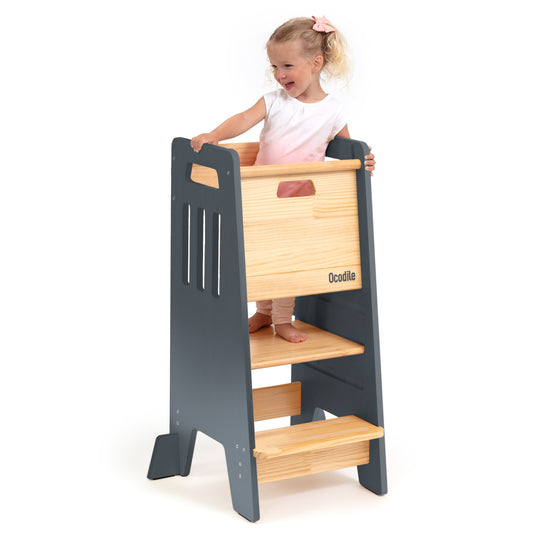
A useful option for some families is the child-sized table and chair setup described by Ocodile in its guidance on Montessori table and chair. The principle is straightforward, furniture should support the child's reach, posture, and ability to start independently.
Good activities for a child art table
Keep the activities open-ended so the table invites exploration, not performance. A few reliable choices include:
- Watercolor painting: Good for brush control, color mixing, and calm concentration.
- Play-Doh sculpting: Useful for hand strength and three-dimensional thinking.
- Collage making: Great for tearing, arranging, and choosing materials.
- Crayon drawing: A simple way to build confidence and fine-motor practice.
- Sticker work and paper scenes: Helpful for planning and storytelling.
- Cut-and-paste projects: Best for older preschoolers and early school-age children with supervision.
The point is to let the child own the process. When the workspace is organized and the tools are reachable, the table becomes more than furniture. It becomes a place where a child can make decisions, clean up after themselves, and return tomorrow ready to work again.
Shopping and Maintenance Tips for Busy Families
A good purchase decision starts with three things, safety, fit, and ease of care. If the table is too large for the child or too awkward for the room, it won't get used well. If it's hard to wipe down, parents will resent it. If it feels unstable, no amount of clever styling will fix that.
Look for durable materials that can handle repeated wiping and daily use. Finished wood and laminate are common choices because they're practical and usually easier to maintain than unfinished surfaces. The table should also fit the room with enough space for a chair, movement, and a little spill zone.
A simple care routine
You don't need a complicated maintenance plan to keep a child art table in good shape. A few habits go a long way.
- Wipe after each project: Clear away crumbs, paper bits, and damp paint before they dry.
- Use a protective layer: A washable vinyl mat or kraft paper can help preserve the surface during messy work.
- Check the hardware regularly: Make sure screws stay tight and the table doesn't rock.
- Inspect the finish: If the surface starts to wear, clean it gently before stains settle in.
Crayon, marker, and paint usually come off more easily when they're cleaned sooner rather than later. Parents often find that a predictable cleanup routine helps children treat the table with more respect too. That's part of the learning, not separate from it.
A well-chosen art table can serve a child for years if it stays safe, clean, and the right size for the work they're doing. If you want a child-focused workspace that supports independence and fits naturally into family life, explore Ocodile's current furniture options and choose the table that matches your child's age, reach, and daily creative habits.