




 - Monica
 - Lindsay

A Parent's Guide to the Bed on Floor Sleep Method
Placing a mattress directly on the floor—or on a super low-profile frame—is what we mean by a bed on floor sleep space. The whole point is to give a child the freedom to get in and out of bed all by themselves. It might have started as a niche idea in Montessori circles, but it’s quickly becoming a go-to for parents who want to nurture a little one's independence and confidence right from the start.
Why Parents Are Choosing the Floor Bed
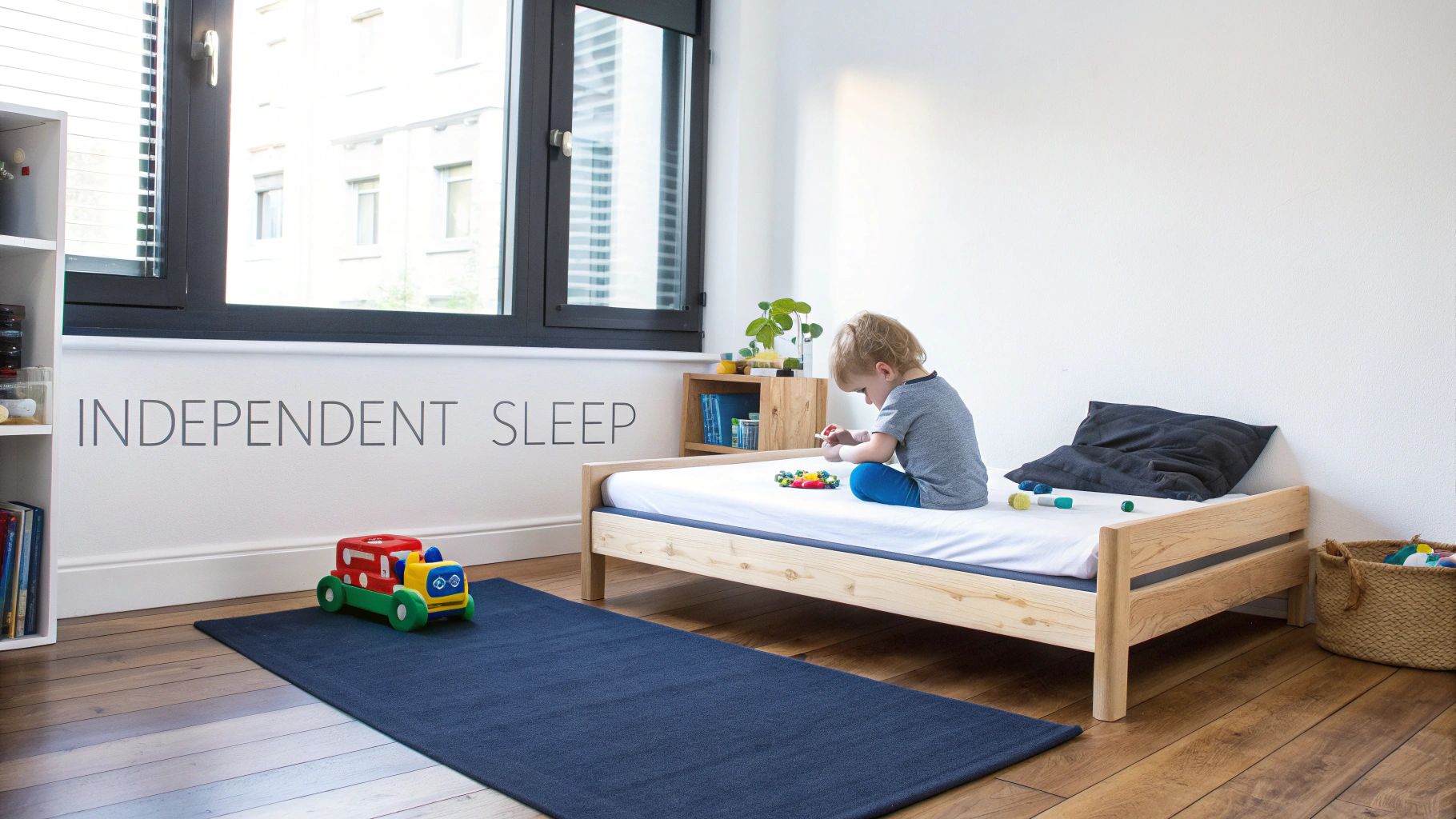
Choosing a floor bed is much more than a design decision; it’s really about a parenting philosophy centered on empowerment. It marks a shift from containing a child to creating a space that honors their built-in drive to explore and figure things out. Think about it like a baby learning to crawl. They don't just stay put—they move, they discover, and they interact with their world on their own terms.
A traditional crib, with its high walls, is a barrier. It’s designed for safety, of course, but it also limits a child's freedom and can create a sense of dependency. A child in a crib has to wait for an adult to come get them. But a child with a floor bed can wake up, scoot out, and safely explore their room, maybe grabbing a book or playing with a quiet toy.
A Foundation for Independence
This small tweak to their sleeping arrangement can unlock some pretty big developmental milestones. When you give a child control over when they get in and out of bed, you're helping them build a solid sense of self. This simple freedom helps develop:
- Autonomy and Confidence: Making their own choices about resting and waking builds real self-esteem.
- Body Awareness: Safely figuring out how to get on and off a low surface is fantastic for their physical coordination.
- A Positive Sleep Association: The bed becomes their cozy spot they can access anytime, not a cage they get put into.
The core principle here is trust—trusting your child to navigate their environment and trusting that you've created a safe space for them to do it. It’s about seeing their entire bedroom as their sanctuary, not just the crib.
This approach fits perfectly with what we do here at Ocodile—creating products that support a child’s journey toward safe, independent exploration. Getting the key differences is crucial, and you can dive deeper into the floor bed vs crib debate in our detailed guide. Moving to a bed on the floor isn't just about changing furniture; it's about nurturing a confident, curious, and independent little person from day one.
The Montessori Philosophy in Your Child's Bedroom
A bed on the floor is so much more than a new place for your child to sleep; it’s a cornerstone of the Montessori method brought right into your home. This entire approach, pioneered by Dr. Maria Montessori, revolves around the idea of a "prepared environment." It’s about thoughtfully designing a space that nurtures a child’s natural curiosity and their drive to grow independently. In this setup, the bedroom isn't just a bedroom—it becomes their very first classroom for life.
Think about a traditional crib. With its high bars, it’s essentially a container. It keeps a child in one spot, but it also fences them off from their own room, limiting their ability to interact with their surroundings. The Montessori philosophy flips this idea on its head. It sees the child's room as a safe, accessible world just waiting to be explored, and the floor bed is the key that unlocks it all.
This isn't just a niche idea anymore; it's gaining real traction with modern parents. The rise of the floor bed is directly connected to the booming Montessori furniture market, which has blossomed into a billion-dollar industry. Global sales for Montessori-inspired pieces—like floor beds, standing towers, and step stools—are projected to hit around USD 1.5 billion in 2025, with no signs of slowing down. For a deeper dive into these market trends, you can check out this detailed report.
Fostering Autonomy and Respect
At its core, the Montessori method is about respecting the child as a capable, whole person. A floor bed is a physical representation of that respect. It removes the barrier between your child and their environment, sending a powerful message: "This is your space. You are free and trusted to explore it."
When a child can climb out of bed on their own, without having to cry out for a grown-up, they're practicing their very first lesson in independence. That simple act builds a foundation for more complex decisions they'll make down the road.
"Never help a child with a task at which he feels he can succeed." - Maria Montessori
This famous quote from Dr. Montessori captures the spirit of the floor bed perfectly. It empowers children to listen to their own bodies—to lie down when they’re tired and to get up when they feel rested and ready to engage with their world.
This newfound freedom is a catalyst for so many crucial developmental skills:
- Body Awareness: Safely figuring out how to get on and off a low surface helps children understand their own physical abilities and boundaries.
- Problem-Solving: If they wake up in the night, they might choose to look at a book or play with a quiet toy instead of crying out of frustration from being "stuck."
- Confidence: Every small, independent success—like getting out of bed to greet the morning sun—builds up their sense of competence and self-worth.
The Prepared Environment in Action
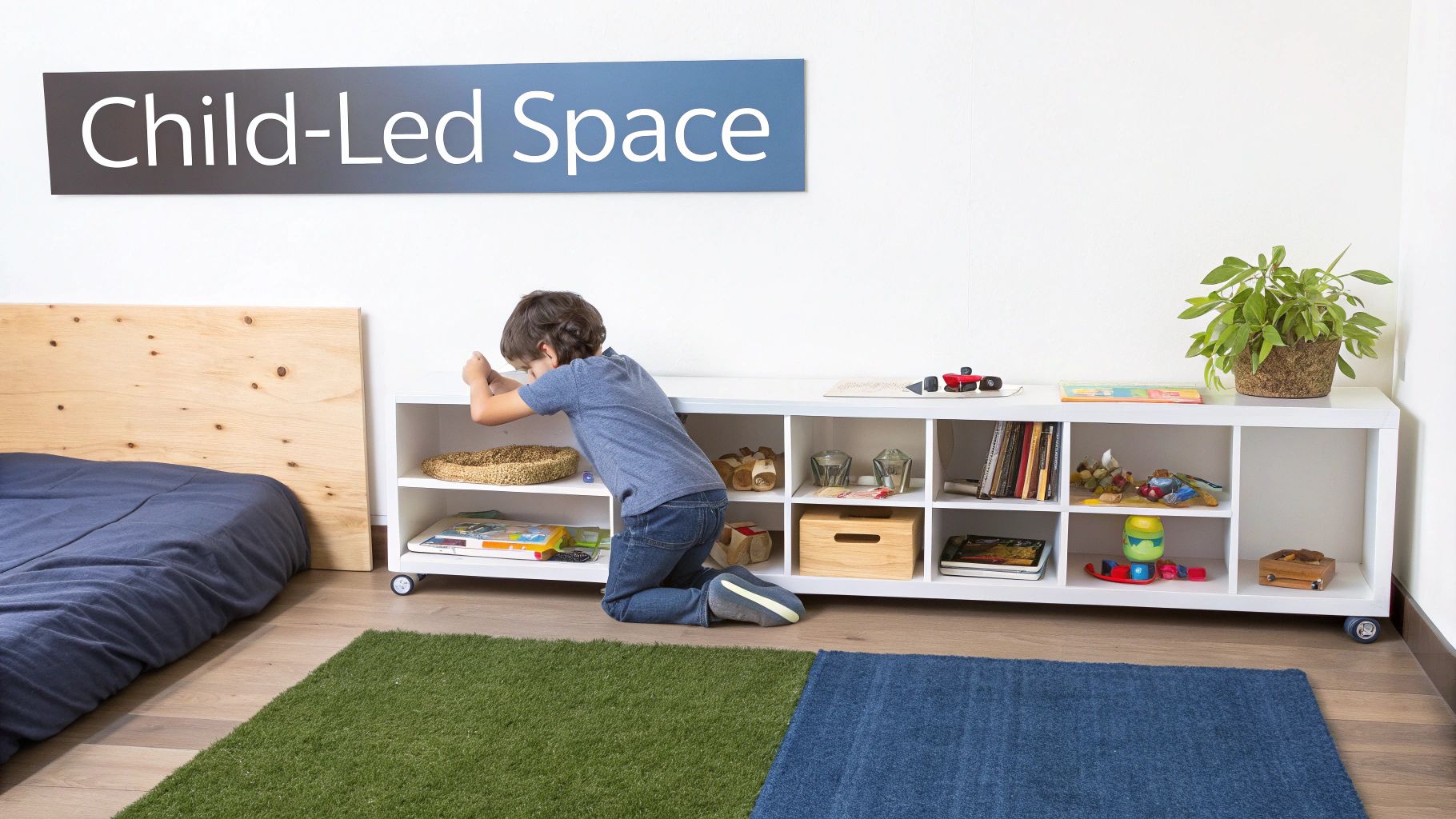
Creating a true Montessori-inspired bedroom goes beyond just swapping out the crib. The entire room needs to be designed from your child's perspective, making it a cohesive, child-led space. This is where the concept of a "prepared environment" really comes to life.
Picture a room where everything is at their level. Low shelves display a small, curated selection of toys and books. A tiny table and chair are ready for creative projects. And the bed on the floor serves as a cozy, accessible home base. This kind of setup encourages purposeful movement and self-directed play.
This is the exact philosophy that inspires Ocodile's entire line of products. From our carefully designed floor beds to our standing towers that bring kids up to counter height in the kitchen, every single piece is crafted to support this journey of exploration. Our designs help you create a harmonious environment where living and learning happen naturally, raising a new generation of confident, independent thinkers.
Weighing the Benefits and Potential Risks
Deciding to put a bed on the floor for your little one isn't just about changing furniture. It’s a bigger decision about creating a sleep space that encourages independence while keeping them safe. When you know what to expect—the good and the not-so-good—you can feel confident you're making the right choice for your family.
The biggest win here is how it nurtures your child’s independence. When they can get in and out of bed on their own, they start listening to their own bodies. You might find your toddler wakes up from a nap and quietly grabs a book instead of crying to be rescued from a crib. It’s these small moments that build a positive, self-reliant relationship with sleep and their own room.
The Clear Advantages of a Floor Bed
Beyond fostering that sense of autonomy, a floor bed has some really practical upsides. For many parents, the biggest sigh of relief comes from knowing there’s virtually no risk of fall-related injuries. We all know that toddler climbing phase can be stressful, but a floor bed completely removes the danger of a fall from a high crib.
It also makes those middle-of-the-night wake-ups a little easier on everyone. Instead of awkwardly leaning over crib rails, you can just lie down next to your child for a quick cuddle or some reassurance. This simple shift can make moving from co-sleeping to their own bed a much smoother, more connected process.
Many families find this freedom actually leads to better sleep. Active sleepers aren't woken up by bumping into crib bars, and their entire room becomes a safe, accessible sanctuary, which can really help reduce bedtime battles.
Navigating the Potential Downsides
Of course, with all this new freedom comes a new set of things to think about. The focus on safety shifts from the bed itself to the entire room. Since your child can now explore whenever they like, thorough childproofing isn't just a good idea—it's absolutely essential.
Another thing to consider is airflow and hygiene. A mattress placed directly on the floor can sometimes trap moisture, which could lead to mold or mildew over time. It’s also closer to floor-level dust, allergens, and drafts, which might be a concern if your child has sensitivities.
Key Takeaway: A floor bed is only as safe as the room it's in. Think of meticulous childproofing as the real foundation of a successful floor bed setup.
To help you sort through it all, here's a quick look at the pros and cons side-by-side.
Floor Bed Pros and Cons at a Glance
This little table breaks down the main points, helping you see the full picture and how to tackle any potential issues head-on.
| Benefit | Potential Risk | How to Address It |
|---|---|---|
| Enhanced Independence | Child may wander at night | Establish a consistent bedtime routine and ensure the room is completely safe for unsupervised exploration. |
| Greater Safety from Falls | Exposure to floor-level hazards | Meticulously childproof the entire room—anchor furniture, cover outlets, and remove all potential dangers. |
| Positive Sleep Association | Mattress mold and mildew risk | Use a low-profile slatted frame, like those from Ocodile, to promote airflow and prevent moisture buildup. |
| Easier Comforting | Exposure to dust and drafts | Maintain a regular cleaning schedule and consider using an air purifier to improve indoor air quality. |
As you can see, every potential challenge has a simple, practical fix.
Practical Solutions to Common Concerns
The good news is that for every potential downside of a bed on the floor, there's a straightforward solution. It’s all about being proactive.
Take the mattress ventilation issue, for instance. This one is easily solved. Using a low-profile slatted frame, a key part of Ocodile's designs, lifts the mattress just enough to let air circulate freely underneath. This tiny bit of elevation is one of the best ways to stop moisture from getting trapped, keeping the mattress fresh and clean.
Dealing with dust and allergens just comes down to your cleaning routine. Regularly vacuuming the mattress and the area around the bed makes a huge difference. Choosing a firm mattress with a washable, hypoallergenic cover is another smart move, giving you an extra layer of protection. By tackling these concerns from the start, you can fully embrace all the wonderful benefits of this sleep philosophy.
How to Create a Safe Floor Bed Environment
When you switch to a bed on floor, your safety mindset has to shift a little. Instead of just securing a crib, you're now turning the entire bedroom into a safe sleep space. Think of the room itself as the new crib—a complete sanctuary where your little one is free to explore without risk, day or night. This takes a thoughtful, ground-up approach to childproofing.
The first step is getting the foundation right. A firm, breathable mattress is non-negotiable for supporting your child safely. But just placing it directly on the floor can sometimes restrict airflow, which might lead to moisture and mildew. Nobody wants that.
A simple, low-profile slatted frame is the perfect fix. Ocodile’s floor beds, for example, are designed to lift the mattress just enough to let air circulate underneath. This tiny bit of elevation keeps the mattress fresh and dry, tackling one of the biggest worries parents have about floor beds. If you're wondering what to look for, you can check out our guide on finding the best mattress for a floor bed.
This little chart shows how a bit of proactive thinking turns potential risks into real benefits for your child.
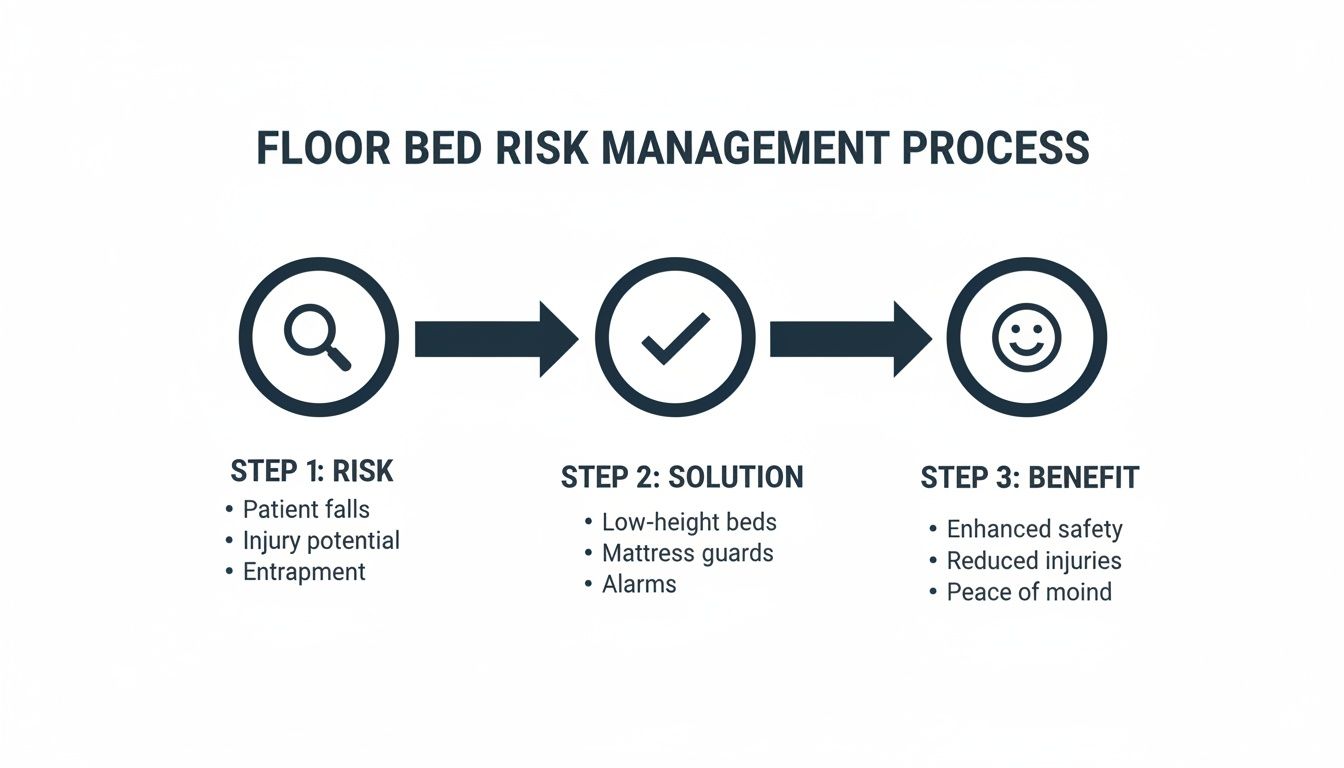
As you can see, once you address common issues like airflow or room hazards, you create a sleep environment that's both secure and empowering.
Your Essential Room Safety Checklist
With the bed sorted, it's time for a top-to-bottom safety sweep of the room. Your child will have unsupervised access to this space, so every single detail counts. Think of this checklist as your must-do list for a truly safe floor bed setup.
Here's how to tackle it, step by step:
- Anchor All Furniture: Dressers, bookcases, even that little toy chest—everything needs to be securely anchored to the wall. The U.S. Consumer Product Safety Commission reports a child is sent to the ER every 60 minutes from a furniture or TV tip-over. Anchoring is a simple fix for a huge hazard.
- Secure Electrical Outlets: Every outlet your child can reach should have safety plugs or sliding covers. Curious toddlers are naturally drawn to these little holes, making this an absolute must.
- Manage Cords and Wires: Window blind cords, phone chargers, and lamp wires are all serious strangulation and tripping risks. Tie up and secure every cord well out of reach. Better yet, switch to cordless window coverings.
- Remove Choking Hazards: Get down on your hands and knees and see the room from their perspective. You'll be surprised what you find. Scoop up any small items, loose toy parts, or anything else that could be a choking hazard.
A truly safe room empowers your child to explore their independence without constant supervision. By anticipating risks and addressing them beforehand, you create a space where both you and your child can rest easy.
Creating a Cozy and Inviting Space
Safety is paramount, but the feel of the room also plays a huge part in encouraging good sleep. You want the space to feel calm, secure, and inviting. A soft, non-slip rug next to the bed on floor gives them a warm spot to land their feet in the morning.
Since they’ll be sleeping so close to the ground, the flooring material itself is worth considering. Looking into low VOC flooring options is a great way to improve the air quality and create a healthier sleep space overall.
Here are a few more tips for making the room a true sleep sanctuary:
- Accessible Storage: Use low shelves or bins for a small, curated selection of quiet toys and books. This lets your child find a calm activity on their own if they wake up early.
- Calm Lighting: A soft night light can be comforting without disrupting sleep. Just make sure any lamps are stable and their cords are tucked safely away.
- Minimalist Approach: Try to avoid clutter. A simple, organized room is far less stimulating and much more restful. You can always rotate toys every few weeks to keep things fresh without overwhelming the space.
By combining rigorous safety measures with thoughtful, cozy touches, you can transform your child’s bedroom into the perfect home for a floor bed—a space that fosters independence, ensures safety, and promotes a lifetime of healthy sleep.
Choosing a Floor Bed Designed for Safety
Once you've fully childproofed your child's room, the next step is picking out the right bed on floor frame. It’s easy to think all floor beds are pretty much the same, but that’s not quite true. A really well-designed bed does more than just hold a mattress—it's built to tackle common parent worries head-on, turning a simple piece of furniture into a tool for safe, independent sleep.
Sure, you could just put a mattress directly on the floor. While that works, it can bring up issues with airflow, cleanliness, and your little one rolling onto a cold floor. This is where purpose-built frames, like those from Ocodile, come in. They’re designed from the ground up to solve these exact problems by building safety right into the design. It's where smart construction gives parents some much-needed peace of mind.
A low-profile slatted base, for example, is a must-have for a good floor bed. Lifting the mattress even just a few inches off the floor allows air to circulate underneath. This is a game-changer for preventing trapped moisture, which is what causes mold and mildew, keeping the whole sleep space healthier and fresher.
Materials and Construction Matter
What your child's bed is made of is just as important as how it's designed. Kids will be sleeping, playing, and probably even chewing on their bed frame, so it's critical that the materials are non-toxic and completely child-safe. Always look for beds with water-based, non-toxic finishes.
Solid construction is another huge piece of the puzzle. A sturdy frame built from solid wood is going to hold up to everything a toddler can throw at it—from jumping to climbing. Ocodile beds, for instance, are made with high-quality, durable wood to make sure they stay a safe and stable part of your child’s room for years.
A well-crafted floor bed isn't just a piece of furniture; it's a commitment to your child's safety and well-being. The best designs blend Montessori principles with practical solutions, creating a space that nurtures independence while eliminating preventable risks.
This focus on quality materials means the bed is not only safe for your child to be around but also helps maintain better indoor air quality, which is a big deal in a little one's bedroom.
Designs That Address Parental Concerns
It's completely normal for parents to worry about their child rolling out of bed, even when it's only a tiny drop. The best floor bed designs anticipate this concern and include features that add a layer of security without getting in the way of independence.
Here are a few thoughtful design elements to look for:
- Low-Profile Guardrails: These aren't like tall crib rails. They're gentle barriers that offer a sense of security and stop accidental roll-offs, but are low enough for a child to easily climb over on their own.
- House Frames: These are incredibly popular for a reason—they create a cozy, den-like vibe kids love. Beyond just being cute, the base of the frame also acts as a subtle boundary, making the sleep space feel more defined and contained.
- Corner Placement: Some floor beds are designed to fit perfectly into a corner, using the room's walls as natural barriers on two sides.
When you see features like these, you know the designers have a real understanding of both a child’s developmental journey and a parent's anxieties. And when it's time to pick a mattress, things like support and breathability are key; a guide on deciding between spring and foam mattresses can be really helpful here.
By choosing a bed designed with these practical safety features, you’re not just buying a place for your child to sleep. You're creating an environment that supports their growth, respects their budding autonomy, and gives you the confidence to fully embrace this empowering approach to sleep.
Common Questions About Floor Beds
Making the switch to a bed on floor setup is a big step, and it’s bound to come with a few questions. It's a whole different way of thinking about sleep, so it's completely natural to want all the details before you dive in. We’ve pulled together the most common questions we hear from parents just like you to give you clear, reassuring answers.
This isn’t just some fleeting trend; it’s a real shift in how families approach sleep. Over the last decade, putting a child’s bed on the floor has gone from a niche Montessori concept to a major movement. In fact, the baby floor bed market is growing faster than the rest of the bedding industry, with projected revenue growth of about 5.1% annually between 2024 and 2032. The specialized Montessori floor bed segment is even bigger, estimated to hit USD 500–600 million by 2025 and expected to grow by 8–12% each year through 2033.
Let's get into the specifics you're probably wondering about.
At What Age Can My Child Start Using a Floor Bed?
This is the number one question on every parent's mind. The best answer isn't a magic number but a matter of your child's developmental readiness. While some families start right from birth, many find the sweet spot for the transition is somewhere between 18 months and 3 years old.
The biggest clue is mobility. Once your little one is walking confidently and can get on and off low furniture safely, they’re a perfect candidate for a floor bed. Another clear sign is when your toddler starts trying to climb out of their crib. At that point, a floor bed becomes a much safer option by getting rid of the risk of a fall altogether.
If you are thinking about a floor bed for an infant, the room has to be extremely minimalist and rigorously childproofed. No matter the age, a safe room is the cornerstone of a good floor bed experience. For a more detailed look at the timing, you might find our guide on when to transition to a floor bed helpful.
How Do I Keep the Mattress Clean and Prevent Mold?
Moisture and airflow are huge safety factors with any bed on floor. A mattress placed directly on the floor can easily trap humidity and sweat, which is the perfect recipe for mold and mildew. This is a serious concern, but thankfully, the solution is simple and effective.
Your best defense is making sure air can circulate freely underneath the mattress.
- Use a Slatted Frame: This is the ideal solution. A low-profile slatted bed frame lifts the mattress just enough to keep air moving, preventing any moisture from getting trapped. Ocodile’s floor beds are designed exactly for this reason.
- Air it Out Regularly: If you decide against a frame, you have to commit to a routine. Once a week, lift the mattress and lean it against a wall for a few hours to let it fully air out.
- Invest in a Protector: A high-quality, breathable, and waterproof mattress protector is non-negotiable. It protects the mattress from spills and diaper leaks but still lets it breathe.
- Clean Consistently: Regularly vacuum the mattress, the frame, and the floor underneath to keep dust mites and allergens under control.
By making ventilation a priority from day one, you eliminate one of the biggest potential risks of a floor bed and create a much healthier place for your child to sleep.
Will My Child Get Out of Bed and Play All Night?
This is a totally valid worry, and the short answer is: yes, they probably will at first. When you give your child a floor bed, you’re giving them a wonderful new freedom, and it’s only natural for them to test the limits. This exploration is a normal, healthy part of their development.
The key to getting through this phase is a calm, consistent approach. A solid, predictable bedtime routine helps signal that it's time to sleep, not play. If your child does get up, gently and quietly guide them back to bed with as little fuss or interaction as possible.
Think of it like teaching any new skill. It takes a little time, but your child will soon learn that their bed is for sleeping and their room is a calm, safe space for when they wake up. Many parents are surprised to find that after a brief adjustment period, their child develops a more positive and independent relationship with sleep.
Are Floor Beds Safer Than Cribs for Babies and Toddlers?
When it's set up correctly, a bed on floor can absolutely be safer than a traditional crib. It completely eliminates the single biggest danger associated with cribs: falling from a height. The safety focus just shifts from containing the child in the bed to making the entire room safe.
A floor bed is only as safe as its environment. The room itself effectively becomes the crib, so it needs to be meticulously prepared for a child to explore unsupervised.
Here are the non-negotiable safety steps:
- Anchor All Furniture: Dressers, bookshelves, and toy chests must be securely fastened to the wall to prevent them from tipping over.
- Cover Electrical Outlets: Use safety plugs or sliding covers on every outlet your child can reach.
- Secure All Cords: Window blind cords, baby monitor wires, and phone chargers are all potential hazards. Tie them up high and completely out of reach.
- Remove Hazards: Do a sweep of the room and clear out any small toys or objects that could be a choking hazard.
For younger children, placing the mattress in a corner or using a bed frame with very low guardrails can add an extra layer of security. Always stick to safe sleep guidelines: place your baby on their back on a firm mattress with a tight-fitting sheet, and no loose bedding, pillows, or bumpers.
Ready to create a safe and empowering sleep space for your little one? The thoughtful designs from Ocodile incorporate these safety principles from the start, offering slatted frames for ventilation and sturdy, child-safe construction. Explore our collection of floor beds and start your child’s journey toward independent sleep today. Learn more at https://ocodile.com.