



Best Wooden Furniture Brands: A Family-Safe Guide
You're probably doing what many parents do. One browser tab has a pretty oak dresser, another has a Montessori floor bed, a third says “solid wood” in big letters, and a fourth has reviews that leave you more confused than when you started. You want furniture that looks calm and warm in your home, but you also want to know your child can climb near it, bump into it, and grow with it safely.
That's why most “best wooden furniture brands” lists miss the point for families. They rank style, heritage, or luxury feel. Parents usually need something more practical. Is it stable? Is the finish something you feel comfortable bringing into a nursery? Will the drawer still work after years of tiny hands yanking it open? Will this piece still make sense when your toddler becomes a school-age kid?
Wooden furniture is also a bigger market than ever, which means more options and more marketing to sort through. Technavio projects that the wooden furniture market will grow by USD 126.8 billion between 2024 and 2029, driven by interest in durable and eco-friendly products, which means families have more choices but also more need to spot real quality for themselves, according to Technavio's wooden furniture market analysis.
A good guide shouldn't just hand you brand names. It should help you judge any piece with a parent's eye. If you're also building out a baby room, this companion roundup of nursery furniture brands for parents is a useful place to compare how different companies approach child-focused design.
Choosing Furniture That Grows with Your Family
A friend of mine once bought a beautiful wooden dresser for her child's room because the photos looked perfect. Warm finish. Clean lines. Lovely brass pulls. When it arrived, the first thing she noticed wasn't the color. It was how top-heavy it felt when the drawers were open. Suddenly the question changed from “Does this match the rug?” to “Would I feel okay with my child near this every day?”
That's the buying moment for parents. The best wooden furniture brands aren't always the fanciest or the ones with the longest history. The best ones for family life make daily use easier and safer. They think about climbing, spills, sleep routines, toy storage, and the fact that children don't use furniture gently or predictably.
What parents usually mean by best
When parents say they want the best, they often mean a mix of these things:
- Safe to live with: Stable, well-balanced, and designed with child use in mind.
- Built for repeated use: Strong enough for years of opening, sitting, leaning, and occasional rough treatment.
- Easy to maintain: A surface that can handle ordinary family messes without becoming stressful.
- Adaptable: A piece that still works as your child's needs change.
The right furniture should lower your stress, not add another thing to monitor all day.
This is why family-safe buying works better than prestige buying. A high-status brand can still make a piece that isn't a great fit for a kid's room. A lesser-known maker can build something far more practical because they pay attention to child height, rounded edges, storage access, and hardware for wall anchoring.
Think in seasons, not snapshots
Kids change fast. Today you need a low shelf your toddler can reach. Later, you may want the same shelf to hold books, school projects, or folded clothes. A good wooden piece should move through those stages with you.
That's also why wood remains appealing to many families. It feels grounded. It can look better with age. And if the construction is good, it often stays useful long after the “baby room” phase ends.
Beyond the Brand Name What Truly Defines Quality
The furniture industry is crowded. IndustrySelect reports that the U.S. has 5,649 furniture and fixtures manufacturers, which helps explain why quality isn't limited to a handful of famous labels. The smarter approach is learning the markers of a well-made piece, regardless of the logo, as outlined in IndustrySelect's look at U.S. furniture manufacturing.
That's good news for families. It means you don't have to chase prestige. You can evaluate what's in front of you.

The five things that matter most
When I look at wooden furniture for kids, I don't start with style names like modern farmhouse or mid-century. I start here:
-
Safety standards
Does the brand explain finish safety, stability, and included hardware? If a company is vague here, I get cautious fast. -
Material sourcing
“Wood” is not a useful description. You want specifics. Birch, oak, maple, pine, plywood, MDF. Clear labels usually signal a more transparent maker. -
Craftsmanship and joinery
Good furniture is held together in ways that can survive movement, pressure, and time. Cheap furniture often depends too heavily on basic fasteners in stress points. -
Longevity and durability
Can the piece handle normal family life? Can it be tightened, repaired, touched up, or refinished? -
Environmental impact
Families often care not just about what enters the home, but also where it came from and how it was made.
A useful parent filter
Here's the shortcut I use: if a brand spends more time talking about “timeless elegance” than materials, finish details, and construction, I keep looking.
A strong product page should answer practical questions such as:
- What kind of wood is it made from
- How is it finished
- What hardware comes with it
- How should it be anchored or assembled
- What age or use case is it designed for
Practical rule: If you can't tell what a piece is made of, how it's finished, or how it's secured, you don't know enough to buy confidently.
This mindset also helps with budget decisions. A smaller, thoughtful brand can outperform a big household name if it gives you better safety details, sturdier construction, and a design that suits real family life.
Decoding Safety Standards and Child-Friendly Materials
For parents, safety isn't one item on the checklist. It's the checklist. A dresser can be solid wood and still be a poor family choice if it's unstable. A lovely toy shelf can look harmless and still have harsh corners at toddler forehead height.
One fact should keep this issue front and center. According to the CPSC, U.S. emergency rooms treat an estimated 56,000 children under age 5 each year for furniture or TV tip-over injuries, a reminder that anti-tip hardware and low-center-of-gravity design are not optional, as noted in this family-focused furniture safety discussion.
A visual checklist can help when you're comparing product pages.

Safety isn't just about labels
Parents often get stuck on words like “natural” and “non-toxic.” Those can be helpful signals, but they're not enough on their own. What you want is plain disclosure.
Look for product details such as:
- Low-emission materials: Some brands specify low-emission standards or formaldehyde-conscious manufacturing for composite materials.
- Finish information: Water-based and low-VOC finishes are often easier for parents to feel comfortable with than vague “safe finish” language.
- Rounded design choices: Corners, edges, handle shape, and drawer stops all matter in daily use.
- Anchoring support: Dressers, bookcases, and tall storage should include anti-tip kits and clear installation guidance.
If you want another retailer perspective on what solid-wood quality cues look like in practice, Tyner Furniture's guide to solid wood furniture brands is a useful supplemental read.
The difference between safe-looking and safer design
Some furniture looks simple and calm but still ignores the way children move. Safer design usually includes a few quiet choices:
| Design feature | What it does for families |
|---|---|
| Rounded corners | Lowers the chance of painful bumps during play |
| Lower center of gravity | Makes tip-over less likely than tall, top-heavy shapes |
| Wide base | Improves stability on everyday flooring |
| Included anti-tip kit | Helps parents secure furniture the right way |
| Easy-grip handles | Reduces pinched fingers and awkward pulling angles |
Here's a helpful video if you want to think more visually about child furniture safety and setup:
What to read on the product page
When I'm shopping online, I scan in this order:
- Start with the safety notes: Does the brand mention anchoring, edge shape, and finish details?
- Read the materials line carefully: “Wooden” can mean many different things.
- Check assembly instructions if available: Good brands often show how they expect the piece to be secured and used.
- See whether the company writes for parents plainly: Clear language usually means clearer internal standards.
If you're comparing materials and finishes specifically for children's rooms, this guide to non-toxic kids furniture helps decode what those terms often mean in practical shopping language.
Built to Last Judging Construction and Durability
A child can turn an ordinary chair into a ladder, a table into a fort wall, and a drawer into a step. That doesn't mean furniture should support unsafe use, but it does mean construction matters more in family homes than in staged photos.
The most useful quality signal is how a brand handles wood movement. Guidance from wood-furniture specialists emphasizes kiln-dried hardwood and joinery that tolerates seasonal expansion and contraction because that reduces warping, splitting, and joint failure risk. You can often spot better construction through continuous grain patterns across edges and the substantial weight of the piece, as explained in Biltrite Furniture's solid wood brand guide.

Solid wood versus engineered wood
Parents often hear “solid wood” and assume it always means better. Sometimes it does. Sometimes a well-made engineered component is the more practical choice.
Here's the plain-English version:
- Solid wood is like a real leather shoe. It can age well, often feels sturdier, and may be repairable.
- Engineered wood is more like a well-designed sneaker. It can be stable, practical, and cost-effective if made properly, but quality varies a lot.
How to inspect a piece
If you're shopping in person, use your hands and eyes.
- Check the edges: Continuous grain often suggests a more honest solid-wood construction.
- Open the drawers: Good drawers should move smoothly and feel aligned.
- Lift one side slightly if allowed: Better-built pieces often feel heavier and more grounded.
- Look underneath: Hidden areas often reveal whether the maker cut corners.
A piece that looks polished on the front but messy underneath usually tells you where the budget went.
Joinery matters more than marketing
Joinery is just the method used to connect wood parts. Parents don't need to become woodworkers, but a few terms are worth recognizing.
| Construction detail | What it usually suggests |
|---|---|
| Dovetail drawer joints | Stronger drawer-box construction |
| Mortise-and-tenon style framing | Durable frame connections |
| Thin back panels with weak fasteners | Less reassuring on tall storage |
| Staples and minimal reinforcement | Often a sign of cost-cutting |
Kiln drying matters for a simple reason. Wood holds moisture. If that moisture isn't controlled before construction, your furniture may react more dramatically to seasonal humidity. In family terms, that means drawers that stick, panels that shift, and joints that loosen sooner than you'd like.
Match the material to the job
Not every piece needs the same build.
- For dressers and bookcases: Prioritize stability, anchoring support, and stronger joinery.
- For tables and stools: Look for hard-wearing surfaces and repairable finishes.
- For child-height furniture: Favor sturdy legs, broad footing, and surfaces that don't feel flimsy.
The best wooden furniture brands don't just choose nice wood. They use the right construction for the way families live.
Sustainable Choices and Ergonomic Design for Kids
Parents often face a frustrating tradeoff. One product sounds greener but seems less durable. Another looks sturdy but says very little about sourcing or emissions. That's why “best” should include both environmental thinking and how well a piece fits a child's body and habits.
A useful reality check is that many guides still treat solid wood as the automatic winner. But shoppers are increasingly weighing cost, stability, and environmental footprint too. Sustainability certifications have become an important buying signal, and families also need help deciding when solid wood is the right call and when a well-made certified engineered piece may be the smarter buy, as discussed in this overview of furniture brands and sustainability-minded shopping.
When solid wood makes sense
Solid wood often makes the most sense when you want:
- Repairability: Scratches, dents, and wear can often be managed over time.
- Long-term use: A piece meant to stay in the home through several stages.
- A natural look that ages gracefully: Families who prefer patina over perfection often like solid wood.
If you already have wood surfaces at home and want a realistic idea of how wear gets handled over time, this wood scratch guide for Richmond homeowners gives a helpful look at restoration thinking that also applies to furniture care.
When engineered wood can be the smarter buy
A good engineered or hybrid piece may be the better option if you need:
- Greater dimensional stability: Useful in homes with changing humidity.
- A lower price point: Especially for pieces your child may outgrow quickly.
- Efficient material use: Some engineered options make productive use of wood fiber and other inputs.
The key is certification and transparency. “Engineered” by itself doesn't tell you enough. A brand should explain what materials it uses, how they're finished, and where the product fits in family use.
Ergonomics for children
Ergonomics sounds technical, but the idea is simple. Furniture should fit the child using it.
That means:
- A shelf your toddler can reach without climbing
- A stool with a stable stance
- A floor-level bed that supports independent access
- A table and chair set sized for small bodies, not mini versions of adult furniture
Good kids' furniture doesn't just shrink adult design. It supports how children move, reach, sit, and learn.
Families interested in child-centered material choices often also enjoy exploring sustainable wood toys, because the same questions about sourcing, finishes, and durability show up there too.
A Child-Focused Brand Example Ocodile
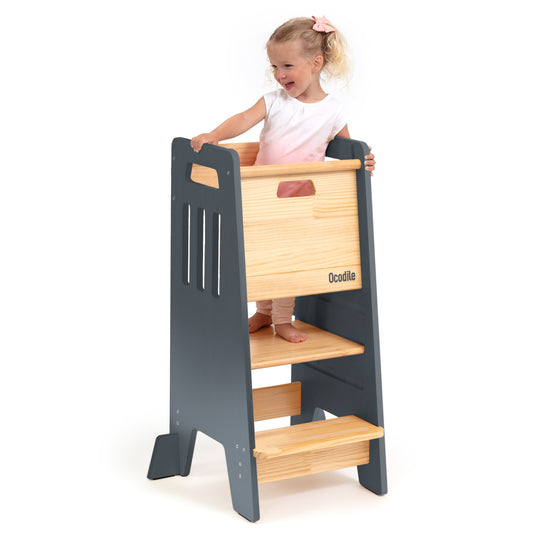
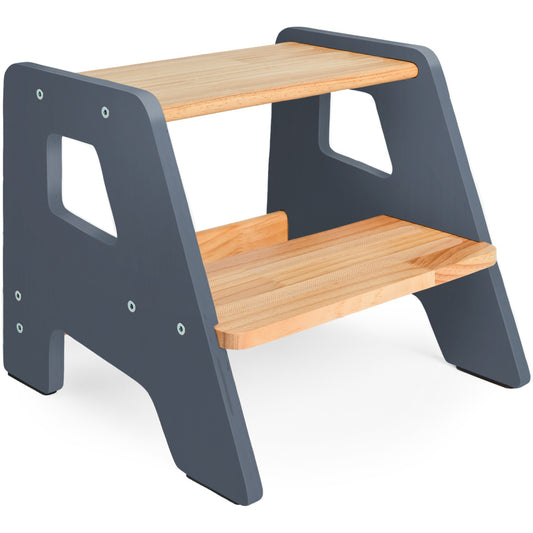
One way to make all of this less abstract is to look at a child-focused brand through the lens we've been using. Ocodile is a furniture company founded in 2021 in Transylvania that makes wooden products for children and families, including standing towers, floor beds, and step stools, with an emphasis on child-friendly design, practical use, and materials that meet safety standards.

What makes that useful as an example isn't brand prestige. It's the design logic. A standing tower supports participation in kitchen routines. A floor bed supports independent access. A step stool helps children reach common spaces more safely than improvised climbing.
Why this example works
This kind of brand helps parents see what family-centered furniture looks like in practice:
- Purpose-built design: The pieces are made for children's routines, not adapted after the fact.
- Practical scale: Height, reach, and use case are tied to real child behavior.
- Material focus: Products are described in terms that parents can evaluate, such as wood type and intended safety use.
If you're also thinking about how wood choices affect the whole home environment, these eco-friendly wood flooring options offer a broader sustainability perspective that pairs well with furniture planning.
The takeaway isn't that one company fits every family. It's that the best wooden furniture brands for kids usually start with the child's daily experience, then build outward from safety, durability, and independence.
Your Family's Furniture Evaluation Checklist
When you're tired, busy, and comparing too many tabs, a short checklist helps more than a long sales description. Use this table for any brand, whether it's a well-known furniture company, a boutique nursery maker, or a local woodworker.
Wooden Furniture Evaluation Checklist for Families
| Evaluation Criteria | What to Look For | Why It Matters for Families |
|---|---|---|
| Material clarity | Specific terms like birch, oak, maple, plywood, or MDF instead of vague “wood” | Clear labeling helps you judge durability, maintenance, and value |
| Finish disclosure | Plain information about finishes, coatings, and low-emission choices | Parents can make more informed decisions about what enters a child's room |
| Tip-over safety | Anti-tip kit included, wall-anchoring guidance, low-center-of-gravity design | Tall furniture needs active safety planning in homes with young kids |
| Edge and corner design | Rounded corners, softened edges, recessed or safer handle shapes | Reduces painful daily bumps and makes rooms easier to navigate |
| Joinery and build quality | Dovetail drawers, reinforced framing, sturdy hardware, aligned panels | Better construction usually means longer life and fewer frustrating failures |
| Wood preparation | Kiln-dried hardwood or a clear explanation of material stability | Helps reduce warping, sticking drawers, and joint problems over time |
| Child fit | Child-height access, appropriate proportions, easy-to-reach shelves or steps | Supports independence and lowers the urge to climb unsafely |
| Repairability | Refinishable surfaces, replaceable parts, touch-up-friendly materials | Families get longer use from the purchase |
| Cleaning and maintenance | Care instructions that make sense for spills, fingerprints, and ordinary wear | Furniture should fit family life, not require constant worry |
| Sustainability signals | Responsible sourcing details or credible certification language | Helps families balance longevity, cost, and environmental values |
| Assembly transparency | Clear instructions, anchoring notes, realistic setup guidance | Good setup is part of safety, not an afterthought |
| Brand transparency | Product pages that answer practical questions directly | Clear brands are often easier to trust than brands using only lifestyle language |
A quick way to use the checklist
If a piece scores well on style but poorly on the points above, it's probably not the right family purchase. I'd rather buy a simpler bookshelf with better stability and material disclosure than a prettier one that leaves me guessing.
You can also use a three-question filter before buying:
- Would I feel calm with this in my child's room every day
- Can this piece handle normal family use without becoming fragile
- Does the brand explain enough for me to buy with confidence
The best wooden furniture brands for families earn trust through details, not through prestige alone.
If you want child-focused wooden furniture built around everyday family routines, Ocodile offers products like standing towers, floor beds, and step stools designed to support independence, practical use, and safer exploration at home.