



Child's Bookcase with Bins Storage: Safety & Organizing
By the end of the day, the floor can look like a tiny tornado came through. Board books are fanned open under the coffee table. Blocks are mixed with animal figures. A puzzle is missing two pieces, and someone has tucked a stuffed rabbit into the laundry basket for reasons only toddlers understand.
Most parents aren't trying to create a showroom. They're trying to make daily life work. They want a room where children can play freely, find what they need, and help clean up without a battle every single time. That's where a bookcase with bins storage setup starts to shine. It isn't just a place to stash things. It's a system that gives books, toys, and little collections a clear home.
Taming the Toy Chaos An Introduction
A bookcase with bins often solves a very specific family problem. Open shelves alone can turn into jumbled stacks. Toy boxes invite dumping. Tiny baskets disappear into closets. But when you combine visible book storage with easy-to-reach bins, the room starts to make more sense for the child using it.
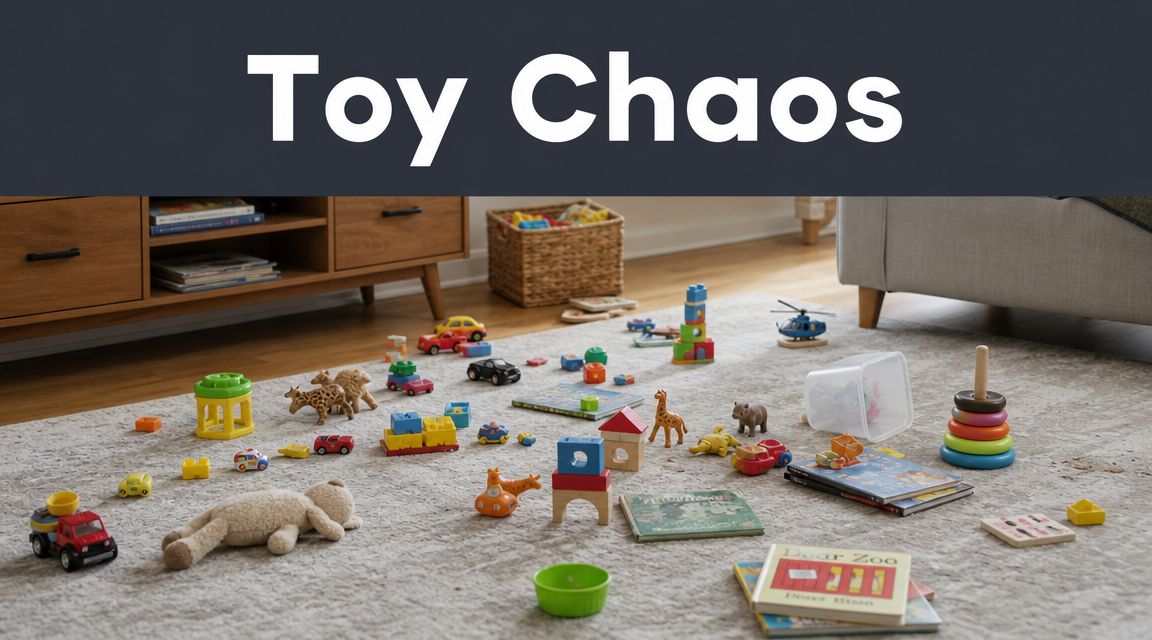
I've seen this pattern in homes and classrooms over and over. A parent says, "We have storage, but nothing stays organized." Usually the issue isn't a lack of containers. It's that the system doesn't match the way young children move, choose, and put things away. Toddlers need to see their options. They need to reach them without climbing. They need cleanup to feel simple enough that they'll try.
That need for order isn't new. The earliest documented book storage dates back to ancient Egypt in the 4th century BC, and by 544 CE, China had developed revolving bookcases, showing that people have long adapted furniture for access and efficiency, as noted in this history of book storage traditions. Families today may be organizing picture books instead of papyrus rolls, but the basic challenge is familiar. We all want important things close at hand without letting them take over the room.
Why this kind of storage works in real life
A mixed system tends to work better than a single giant catch-all.
- Books stay visible: Children are more likely to revisit books when covers or fronts are easy to see.
- Bins absorb the messy categories: Cars, blocks, dolls, pretend food, and art supplies don't all stack neatly on shelves.
- Cleanup gets faster: When each group of items has one clear home, adults spend less time sorting after bedtime.
A good storage setup doesn't force a child to organize like an adult. It translates the room into a language the child can understand.
For families who want more practical routines around toys, these tips for a more organized household can help you build habits around the furniture you already have.
Think system, not furniture
When parents buy storage in a rush, they often focus on color, price, or whether it matches the rug. Those details matter, but they don't fix the daily friction. The bigger question is this: can your child use it safely and independently?
That's why a bookcase with bins is worth looking at as more than decor. It can reduce visual clutter, support simple choices, and give children their first real experience of caring for their own space. That's a small household shift with a big ripple effect.
More Than Tidiness The Developmental Benefits
Children don't experience storage the way adults do. Adults see furniture. Children see permission, limits, and possibility. A low shelf says, "You may choose." A reachable bin says, "You can put this back yourself." That difference matters.
The idea behind accessible, separated storage has deep roots. Historical book furniture evolved toward easier access and clearer organization, including the revolving bookcase patented by John Danner in 1876, a design milestone described in this Britannica-linked bookcase history. The modern child's bookcase with bins follows the same practical principle. Divide items clearly, keep them reachable, and make selection easier.
Independence starts with access
A toddler can't be independent in a room built entirely for adults. If every book is too high, every toy is packed too tightly, or every cleanup tool requires help, the child stays dependent even when they're eager to try.
A well-sized bookcase with bins supports independence in simple ways:
- Choice becomes manageable: Instead of digging through one deep toy chest, a child can pick one bin or one shelf.
- Success feels immediate: It's easier to return animals to the animal bin than to decode a crowded closet.
- Confidence grows naturally: Repeating "I can do it" moments builds trust in their own abilities.
In Montessori-inspired homes, this kind of access isn't about making children do chores early. It's about respecting their drive to participate in everyday life.
Practical rule: If a child can remove an item independently, they should also have a realistic way to return it independently.
Sorting is early learning
Bins do more than hide clutter. They teach classification.
When children separate cars from blocks, puppets from puzzles, or crayons from stickers, they're practicing early cognitive skills. They're noticing what belongs together. They're learning categories, contrasts, and routines. Those are the same kinds of mental actions that later support reading, math, and language organization.
You don't need a complicated labeling system to get this benefit. Even a simple setup works:
- one bin for building toys
- one for pretend play
- one for art tools
- one shelf for current favorite books
Children begin to map the room in their minds. They remember where things live. They start anticipating cleanup rather than resisting it because the task has structure.
Visible limits can calm play
Too many choices can flood a young child. That's when you see wandering, dumping, or toy-hopping without real engagement. Separate bins create gentle boundaries. They break a large collection into smaller invitations.
A child who sees a few clearly presented options often plays with greater engagement than a child standing in front of a huge pile. That's one reason teachers and experienced parents often prefer low, divided storage over oversized toy chests.
A bookcase with bins storage setup can also help adults rotate materials more thoughtfully. You don't have to display everything at once. In fact, most toddlers do better when they don't.
A Parent's Guide to Safety and Construction
You finally get the toys sorted. Books are lined up, bins are tucked in, and the room feels calmer for about ten minutes. Then your toddler uses the lower shelf as a step, yanks a bin forward with both hands, and suddenly the question is no longer "Does this look nice?" It's "Will this stay put, stay clean, and stay safe in real family life?"
A bookcase with bins storage unit has to do more than hold things. It becomes part of your child's daily environment, almost like another teaching tool. If it is steady, easy to wipe down, and sized for safe access, it supports independence. If it wobbles, traps dust, or invites climbing, it can work against both safety and learning.
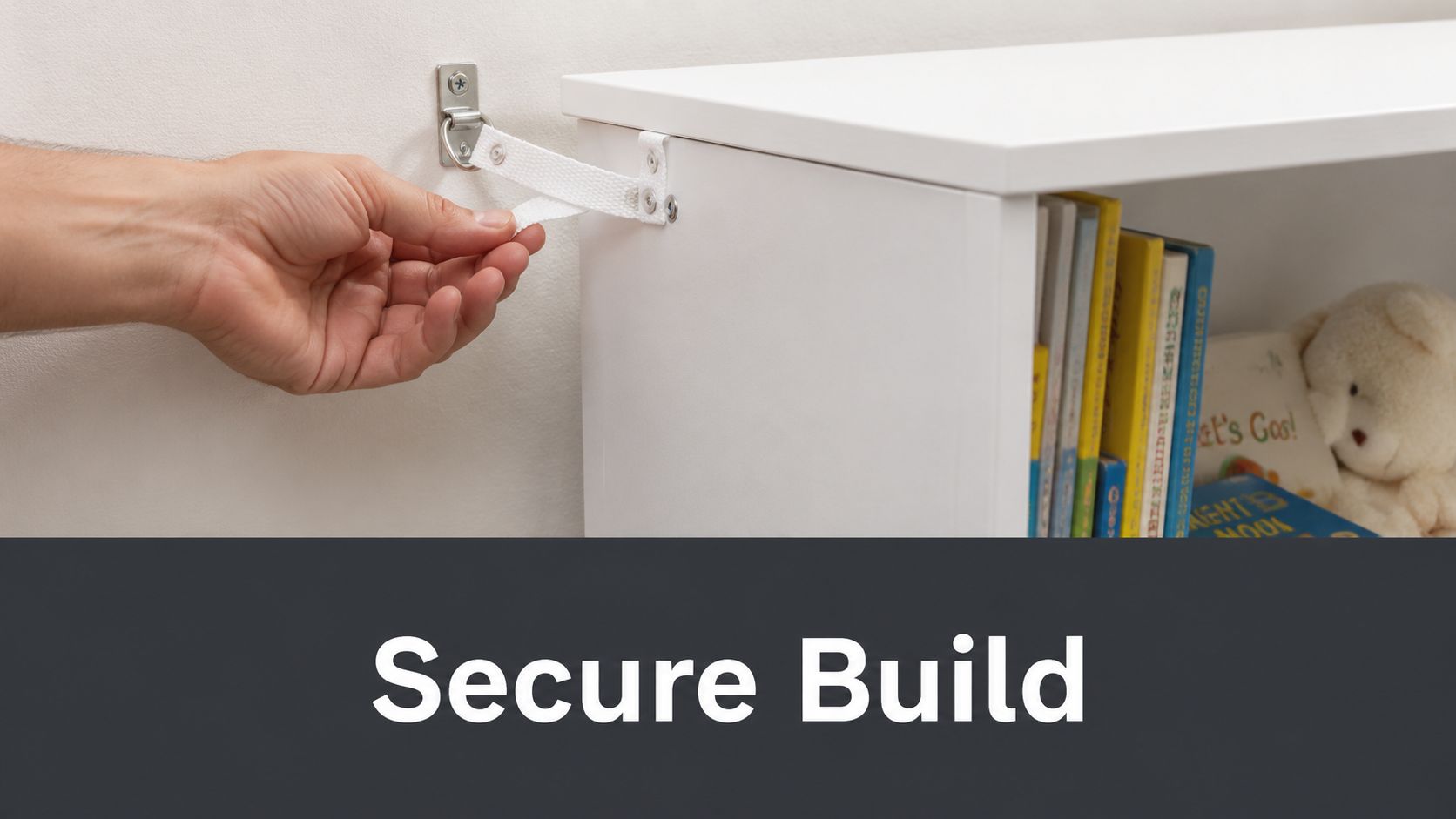
One safety point deserves your full attention. U.S. consumer safety data reported an average of 44 tip-over-related deaths per year from 2013 to 2020, with young children making up a large share of injuries, according to this consumer safety guidance video. That is why low furniture should still be treated with the same care parents give to gates, cabinet latches, and outlet covers.
What to inspect before you buy
Start with the frame, not the color.
A child uses storage in a very physical way. They pull, lean, squat, drag bins out halfway, and sometimes rest their whole body against the front while choosing a toy. Furniture that looks fine in a staged photo can feel flimsy once a toddler interacts with it several times a day.
Check these details closely:
- Low, stable proportions: A shorter unit usually has a lower center of gravity and is less likely to feel tippy.
- Rounded or softened edges: Corners at face height matter in small bedrooms and busy play corners.
- Thick panels and secure joints: Daily bin use puts repeated stress on screws, dowels, and shelf connections.
- Included anti-tip hardware: This shows the maker expects the unit to be anchored and supports safer setup.
The material matters too, especially for health and cleaning. Solid wood often holds up well over time. Engineered wood can also work well if the finish is smooth, sealed, and easy to wipe. Fabric bins feel softer, but they are not always the best place for heavy items or anything that tends to shed crumbs, glitter, or dampness.
Cleaning deserves more attention than it usually gets. Low shelves sit in the zone where dust settles, shoes pass by, and snack fingers land. A surface that wipes clean in one pass is much easier to live with than one full of grooves, raw edges, or fuzzy fabric. If you're setting up a nursery or play area, keeping a list of best child-friendly cleaners can help you choose products that clean well without leaving behind harsh residues where children play.
Load limits are not all the same
This part confuses many parents because storage units often look sturdier than they really are.
Shelves and bins handle weight in different ways. Books sit with steady downward pressure. Pull-out bins shift weight forward, especially when a child tugs them open or presses on the front edge. That means one part of the unit may be perfectly suitable for board books, while another is better for stuffed animals or dress-up clothes.
A children's cubby bookcase sold by Target notes in its product specifications that the top panel holds less weight than the combined storage area, and the removable bins are intended for lighter toy storage than fixed shelves on this kids' storage organizer listing. The lesson is simple. Read the weight guidance for each shelf or bin, not just the overall product title.
A good rule at home is this:
Heavy hardcover books belong on fixed shelves close to the bottom. Light toys, puppets, blocks with large pieces, and soft items fit better in bins.
That setup protects the furniture and makes the whole unit feel more stable during use.
For the same reason, anchoring matters even with shorter pieces. If you have ever delayed that job because it felt fiddly or intimidating, this guide on how to secure furniture to a wall breaks it into manageable steps.
A short visual can also help make the setup process feel less intimidating:
Signs a unit may not suit your child
Sometimes a piece is technically well made and still wrong for the child using it.
| Concern | What to watch for |
|---|---|
| Too tall | Your child climbs or stretches unsafely to reach favorite items |
| Too deep | Books and toys disappear into the back, so children dump everything to find one item |
| Too soft in structure | Fabric bins sag, tip, or collapse under heavier toys and books |
| Too top-heavy | The frame feels front-pulled when bins are removed or when a child leans on it |
The best setup supports the kind of independence young children can manage. They should be able to choose a book, pull out a bin, and help with cleanup without turning the furniture into climbing equipment or a tipping risk. In that sense, construction is not just about durability. It shapes how safely your child can practice everyday responsibility.
Finding the Perfect Fit for Your Home
A storage unit can be safe on paper and still feel wrong in your house. The right fit depends on your child's height, the room layout, and what you want the furniture to hold day after day.
One commercially listed kids bookcase with fabric bins measures 25" wide, 11" deep, and 31" high, dimensions shown on this children's book organizer listing. That size aligns with the commonly recommended 10 to 12 inch depth for standard book storage. In practical terms, a shallower unit keeps books accessible without pushing the center of mass too far forward, and a low height makes it easier for toddlers to use without climbing.
How to choose the size
Start with the child, not the wall space.
Ask yourself three questions:
- Can my child reach the top usable area from the floor?
- Will books fit without sticking out awkwardly?
- Can the room still breathe once this piece is in place?
A unit that looks small in a product photo can feel bulky in a nursery or shared family room. That's why I tell parents to mark the footprint on the floor first with painter's tape. It takes a minute and saves a lot of frustration.
Placement rules that make everyday use safer
Where you place a bookcase with bins storage unit matters as much as which one you buy.
- Set it against a solid wall: This supports anchoring and reduces side-to-side movement.
- Keep it away from windows: You don't want furniture becoming a climbing aid near glass or cords.
- Avoid placing it beside larger climbable furniture: A nearby chair, toy kitchen, or bench can turn a low unit into a stepping point.
- Leave enough front clearance: Children need room to pull out bins, sit, browse books, and stand back up without bumping into other pieces.
If a child has to twist, stretch, or wedge themselves into a corner to use the shelf, the setup will invite rougher handling over time.
A simple installation routine
Parents often put off anchoring because it feels technical. It doesn't have to be.
- Unbox and sort hardware first: Don't guess which parts are extra.
- Assemble on a level surface: A slightly uneven setup can create wobble before the unit even reaches the wall.
- Load lightly at first: Test how the frame feels before filling every compartment.
- Anchor before regular use: Waiting "until the weekend" is how a temporary risk becomes a long-term one.
If you're comparing room layouts or storage styles, this article on a bookcase for a kid's room can help you think through size and placement in a child-centered way.
One more practical note. If your child is in a strong climbing stage, lower and wider is usually a better match than narrow and tall. Even a beautiful unit isn't the right fit if it constantly invites unsafe behavior.
Mastering Bins and Organization Strategies
The bins are where this system either works beautifully or falls apart. Parents often spend a lot of time choosing the frame and almost none choosing the containers. But the bin material affects cleaning, durability, and how pleasant the shelf is to use every day.
The health piece matters too. The EPA notes that indoor pollutant levels can be 2 to 5 times higher than outdoors in some cases, a point highlighted in this indoor air quality guidance summary. Because young children spend so much time close to floor-level furniture, it's worth paying attention to dust collection, wipeability, and material odor when choosing bins.
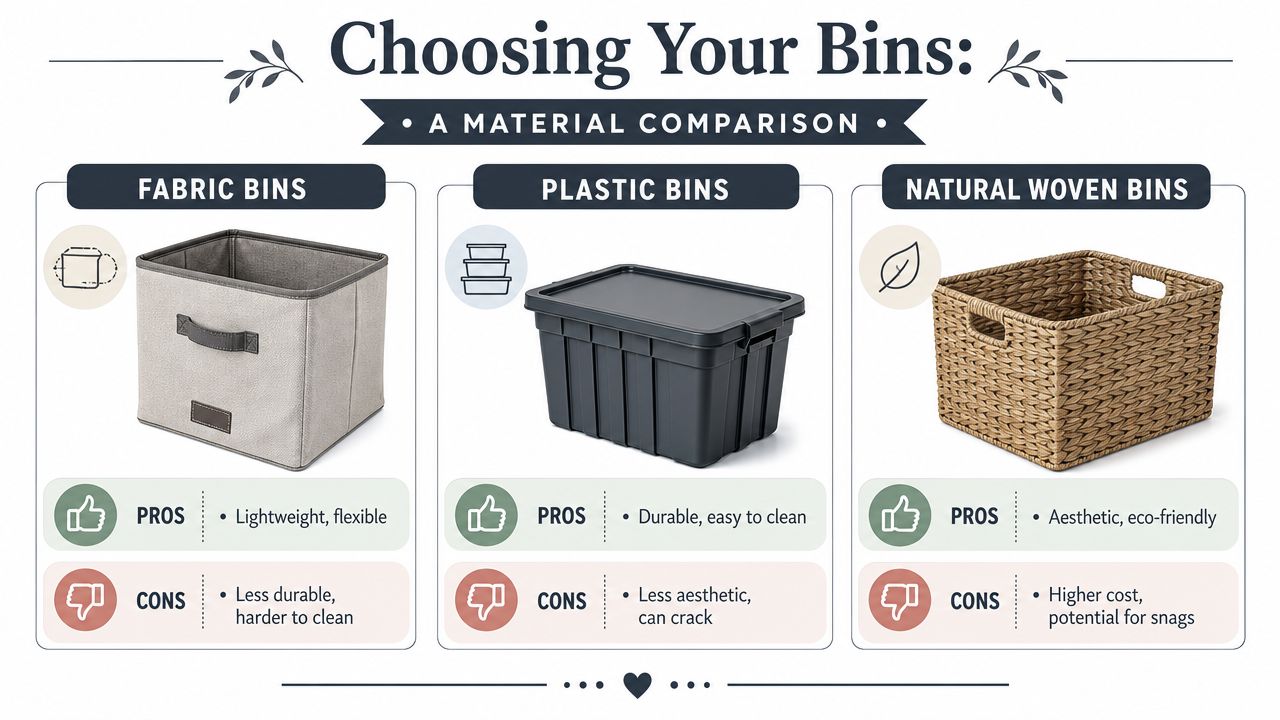
Fabric, plastic, or woven
No single bin type is right for every family. Each has tradeoffs.
| Bin material | Where it works well | Watch for |
|---|---|---|
| Fabric | Soft toys, dress-up items, lightweight accessories | Can trap dust more easily and may be harder to wipe clean |
| Plastic | Art supplies, sensory tools, messy toys, bathroom-adjacent storage | May crack over time and can look more utilitarian |
| Natural woven | Living rooms, shared spaces, calm visual style | Can snag, shed, or hold dust in textured surfaces |
How I think about each option
Fabric bins feel gentle in toddler spaces. They're lightweight and often easy for small hands to pull forward. I like them for stuffed animals, play silks, and chunky pretend food. I don't love them for heavy books or anything that leaks, flakes, or sticks.
Plastic bins are practical workhorses. They wipe down quickly and don't absorb spills the same way softer materials can. They're useful when your child loves markers, glue sticks, play dough tools, or loose craft pieces. The tradeoff is that they can look less warm in a bedroom or family room.
Natural woven bins give a room a softer, more furniture-like look. They can work nicely for older toddlers or preschoolers who handle materials gently. But in a room with daily rough use, they may require more maintenance than parents expect.
Choose bin material based on what goes inside it, not just what looks good empty on a website.
Organization habits that actually stick
A good system doesn't require a daily reset from an adult. It should guide the child toward success.
Here are strategies that hold up in real homes:
- Use picture labels for pre-readers: A photo of blocks on the block bin removes guessing.
- Limit categories: "Animals" works better than splitting toy safari, farm, and ocean creatures into separate homes for a very young child.
- Store favorites at eye level: The easiest-to-reach spots should hold the items your child uses most.
- Rotate rather than cram: If the shelf is packed, children tend to dump to find what they want.
- Keep cleanup visible: Return toys while your child watches and narrate what you're doing in plain language.
Matching the setup to age and stage
Toddlers usually do best with broad categories and fewer visible choices. Preschoolers can often handle more detailed sorting, especially if the labels are clear. In mixed-age homes, I like to put the younger child's simple bins low and place more complex materials higher where an adult can supervise access.
If you want more ideas for layouts and storage combinations, this guide to toy storage organizers offers examples that can work across playrooms, bedrooms, and shared family spaces. One option in this category is Ocodile's wall-mounted kids bookcase, which uses ledges rather than bins and can suit families who want books visible while keeping floor storage separate.
A final tip from classroom life. Don't label every empty bin before you've lived with the system for a week or two. Children tell you quickly which categories are useful and which ones are adult overthinking.
FAQs Common Parent Concerns Answered
By the time parents reach this point, the question is usually not, "Will it hold toys?" It is, "Will this setup help my child use the room safely without turning cleanup into a daily battle?" That is the right question. A bookcase with bins affects not just tidiness, but how a child moves, chooses, reaches, and practices independence in the space every day.
What if my child dumps every bin out?
Dumping is often a clue. For toddlers, it can mean the choices are too broad, the category is hard to understand, or the fun is in the cause-and-effect of emptying and filling.
Start smaller. Put out fewer bins, and make each one easy to read at a glance. A bin full of animals is easier for a young child to understand than a mixed bin of small figures, cars, and puzzle pieces.
If dumping has become a habit, stay close and model a simple rhythm. Take one item out. Use it. Put it back. Young children learn routines the same way they learn songs. Through repetition, not lectures.
How do I introduce the system without a fight?
Keep the first days light.
Walk the shelf with your child and name only a few homes for a few favorite things. "Books go here. Blocks go here. Animals go here." That kind of short, steady language gives a toddler something concrete to hold onto.
It also lowers stress. A room that is easy to read helps children feel more in control, and that often leads to better cooperation.
Start with success, not perfection. If your child puts away two things happily, the system is doing its job.
Can this furniture grow with my child?
Often, yes. What changes first is how you use it. The same bin that once held chunky rattles may later hold train tracks, craft tools, or card games with many pieces.
The part parents sometimes miss is weight. As children grow, their materials often get smaller, denser, and heavier. A shelf that felt fine for stuffed animals may not be the right place for stacked hardcover books, wooden blocks, or a full bin of magnetic tiles. Check the weight guidance listed by the maker and keep heavier items lower. That protects the furniture, reduces tip risk, and makes the space safer for a child who likes to pull, lean, or climb.
What if I want Montessori-style independence but my child still climbs?
Independence works best with limits that match development. Safe independence means your child can reach what is meant for them without being tempted to scale the shelf for something better.
If climbing keeps happening, make the top boring and the lower shelves useful. Put the favorite materials within reach. Remove anything from the top that invites grabbing. Then look around the room. A nearby chair, toy kitchen, or low sofa can turn a shelf into the next step on a climbing path.
Sometimes the shelf is not the whole problem. Some children are telling you, very clearly, that their bodies need more chances to climb, push, and carry in safer ways.
Is a bookcase with bins better than a standard open bookshelf?
For many young children, yes. It gives two kinds of storage two different jobs. Books can stay visible and easier to choose. Toys and loose parts can stay contained, which helps children see where things begin and end.
That separation supports development too. A clear book area invites quiet browsing. A clear bin area supports sorting, categorizing, and cleanup routines. If your main goal is displaying books, a ledge shelf may still be the better fit. If your child uses many toy types or gets overwhelmed by visual clutter, bins often make the room easier to understand and safer to use.
The best setup is one your child can read almost like a map. They should be able to find what they need, use it with some independence, and put it back without climbing, guessing, or dumping everything to get started.
If you're building a calmer, safer play space and want child-focused furniture ideas, Ocodile offers practical options designed around independence, everyday family use, and safety-minded design.