



Children's Learning Tower: Safe Steps to Independence for Toddlers
If you’ve ever tried to cook dinner with a curious toddler clinging to your leg, you know the struggle. They desperately want to see what's happening up there on the counter, and you desperately need both hands. This is where a learning tower, sometimes called a kitchen helper, comes in. It’s a simple, brilliant solution to a daily parenting challenge.
What Is a Childrens Learning Tower?
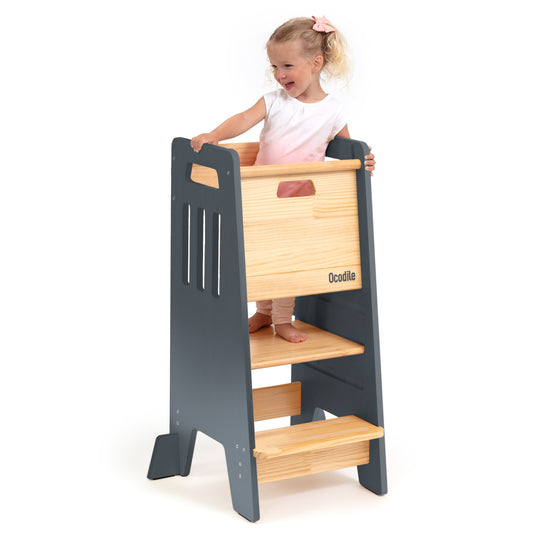
A children's learning tower is a safe, sturdy platform designed to bring your toddler up to counter height, letting them participate in all sorts of daily activities right alongside you. It closes the gap between their world and yours, turning them from a spectator into an active helper.
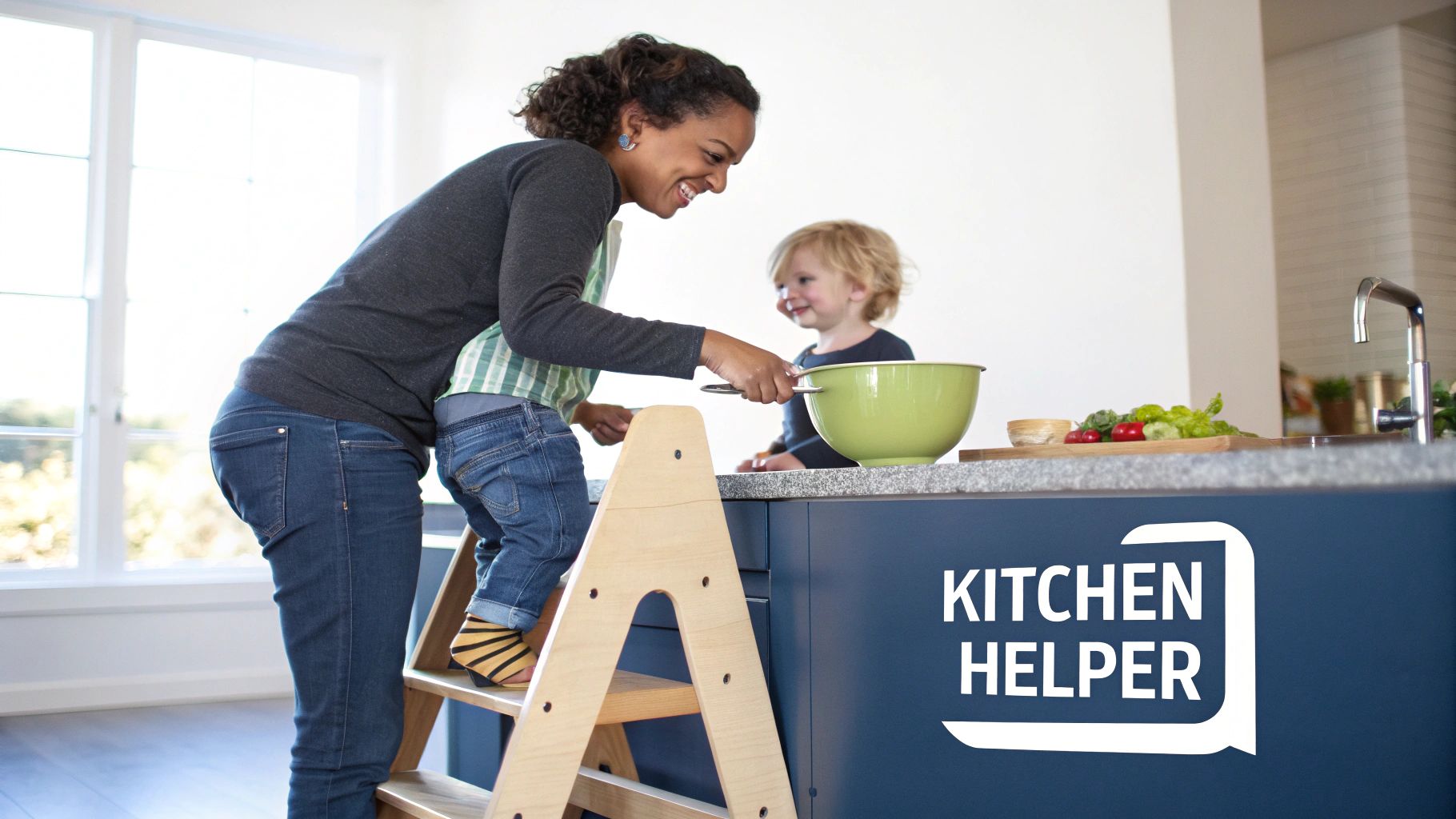
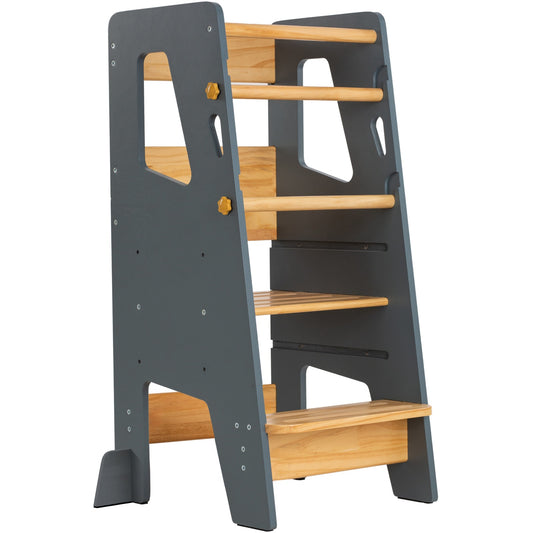
Unlike a wobbly kitchen chair or a basic step stool, a learning tower is built with safety as the top priority. Think of it as your child’s own little secure balcony in the kitchen. It has a stable base and railings on all four sides to prevent tumbles, giving them a safe space to stand and use their hands freely.
From Passive Observer to Active Participant
The real magic of a learning tower is how it shifts your child from just watching to actually doing. When they can finally see and reach the counter, a whole new world of hands-on learning opens up. That whining frustration melts away and is replaced by confident engagement.
Suddenly, they’re not just underfoot. They can now:
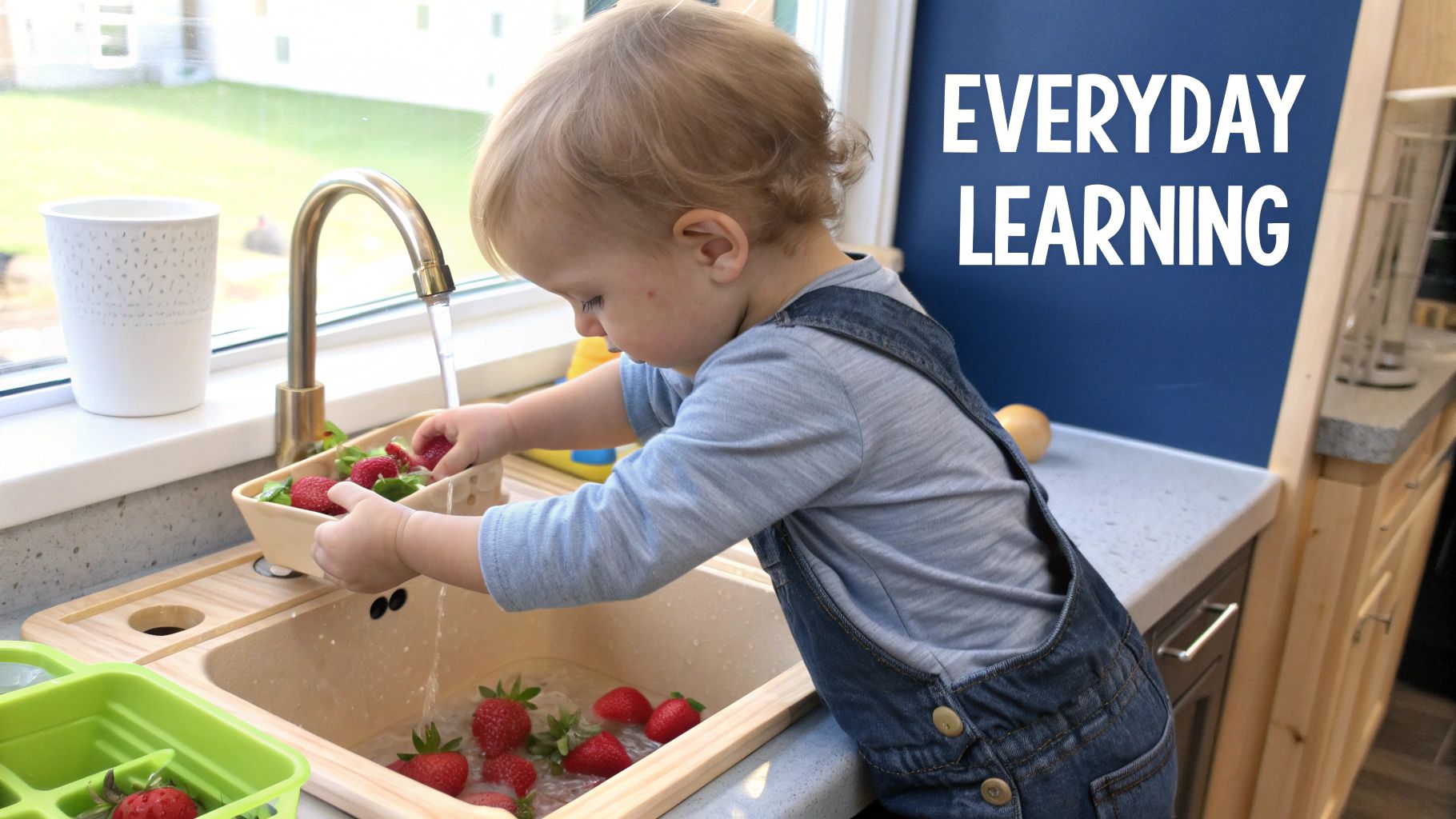
- Wash veggies at the sink with you.
- Stir the pancake batter for breakfast.
- Get hands-on with crafts at the big table.
- Brush their own teeth at the bathroom counter.
This isn’t just about keeping them busy. It’s about making them feel like a capable, valued part of the family. They’re no longer “in the way” but are contributing, learning practical life skills, and making memories with you.
A learning tower is so much more than a piece of furniture. It’s a tool that builds independence, refines motor skills, and creates those priceless little moments of connection.
It's no wonder these towers are becoming a staple in modern homes. The global market for toddler learning towers is expected to grow by 7.2% each year from 2025 to 2033, reaching an estimated $2.16 billion. This trend shows just how many families are looking for ways to turn daily routines into meaningful bonding time. You can discover more insights about this growing market and its drivers.
Exploring the Developmental Benefits
A children's learning tower is so much more than just a piece of furniture; it’s a launchpad for your child's growth. By bringing them up to counter height, it transforms your daily routines into amazing opportunities for development, nurturing their mind, body, and spirit in some truly remarkable ways.
The tower essentially gives them a front-row seat to the real world. When your little one is "helping" you in the kitchen, they aren't just playing—they're soaking up practical lessons that build a powerful foundation for learning.
Cognitive and Motor Skill Growth
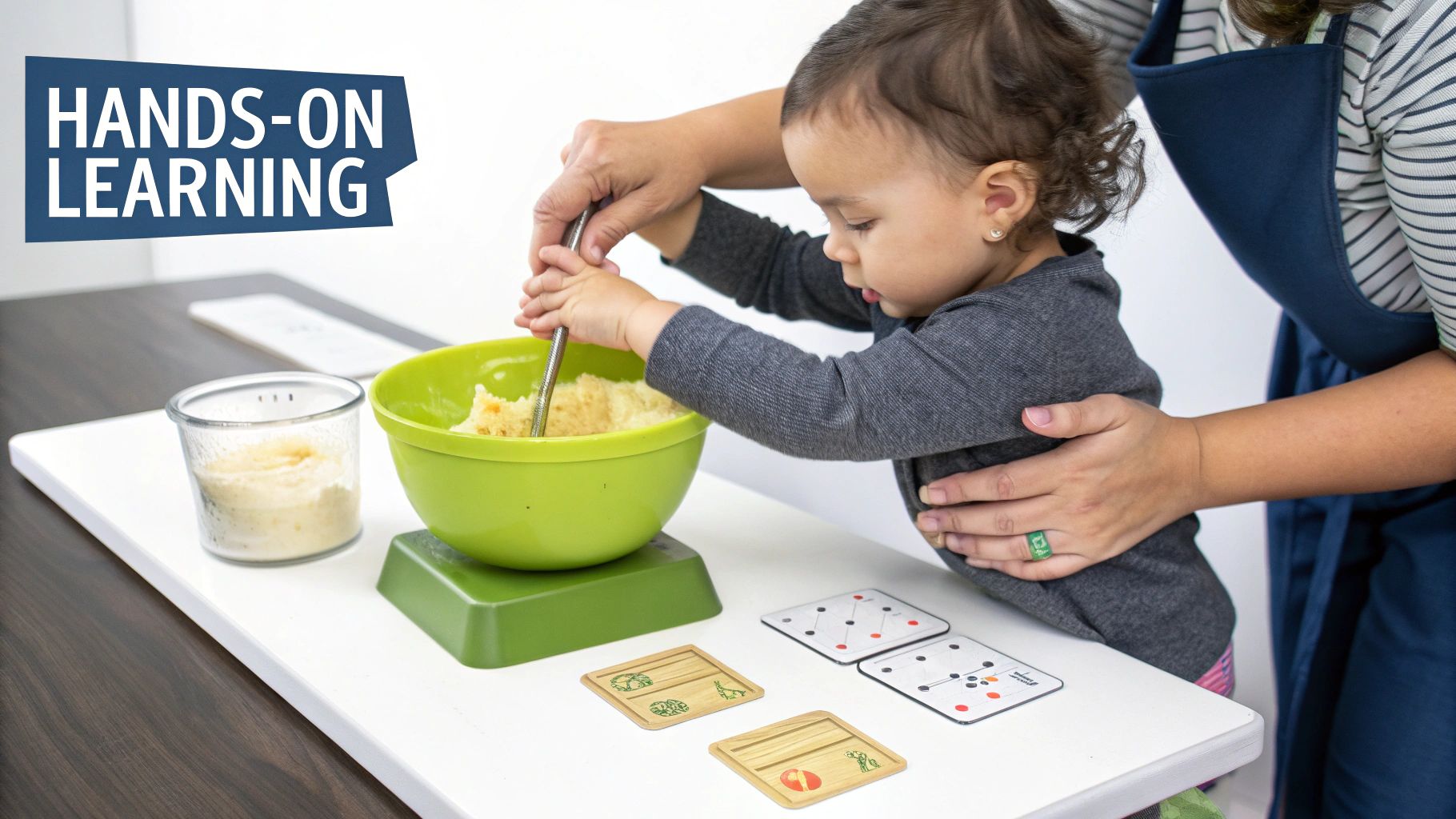
Every little task at the counter is a lesson in disguise. Scooping flour isn’t just making a mess; it’s an introduction to measurement. Counting out two eggs becomes a spontaneous math lesson. Following a recipe step-by-step teaches them about sequencing and logic—skills that are absolutely crucial for problem-solving down the road.
At the same time, all these activities are a fantastic workout for their developing muscles. A learning tower provides a safe, stable platform for kids to tackle tasks that sharpen their fine motor skills. Gripping a whisk, pinching herbs, or carefully pouring water all build hand-eye coordination and dexterity.
The impact of this hands-on time is huge. Research suggests that children using elevated platforms can develop hand-eye coordination up to 25% faster than peers learning at floor level. These same kids also show 20-30% gains in their vocabulary just from observing and interacting with you.
Building Confidence and Emotional Intelligence
Maybe the most important benefit of all is the incredible boost to your child's emotional well-being. When your toddler successfully adds an ingredient or helps wash some veggies, their face just lights up with this amazing sense of accomplishment. Suddenly, they aren't just a small kid in a big world—they're a real, capable contributor to the family.
This feeling of being needed and valued is absolutely essential for building healthy self-esteem. They learn about responsibility and see firsthand how their actions contribute to a shared goal, like making dinner for everyone to enjoy.
By participating in family tasks, children develop a deep sense of belonging and capability. This isn't just about learning to cook; it's about learning they are an important part of the family unit.
This simple act of including them strengthens your family bond and helps nurture a confident, secure, and helpful little person. If you're interested in how a children's learning tower fits into this philosophy, you should check out our guide on the Montessori learning tower. This foundation of confidence and independence is something that will support them for years to come.
How to Choose a Safe Learning Tower
When you bring anything new into your home for your child, safety is always—always—the top priority. A children's learning tower is designed to give your little one a secure boost, but not all are built the same. A poorly designed tower can introduce risks like tipping or getting stuck, turning a helpful tool into a hazard.
Knowing what makes a learning tower truly safe helps you see past the marketing fluff and focus on the features that actually matter. It's about more than just how it looks; it’s about solid construction and thoughtful design that keeps your child protected while they explore their world.
This is especially critical when you look at the data. Some safety tests revealed that up to 70% of tested towers posed significant risks, failing essential tip-over and entrapment assessments. Choosing a well-designed tower can reduce the chance of kitchen accidents by up to 40%, making it one of the most important decisions for your family’s peace of mind. You can read the full safety report and its findings here.
Stability Is Your Foundation
The single most important safety feature of any learning tower is its stability. If it wobbles or tips easily, it’s a serious danger. The key to preventing this is all in the design of the base.
Look for a tower with a wide, sturdy base that extends out further than the top platform. This creates a low center of gravity, making it much harder for an excited toddler to tip over, even if they lean against the sides. The legs should be solid, with anti-tip feet or a design that spreads the weight evenly.
Before buying, check the tower's weight and dimensions. A heavier tower, usually made from solid wood or high-quality plywood, is generally far more stable than a lightweight plastic one.
A wide base is like the strong roots of a tree—it anchors the tower, ensuring your child stays securely upright even as they wiggle, reach, and get excited. This foundational stability is non-negotiable.
Enclosure and Entrapment Prevention
Once you’ve confirmed the tower is stable, take a close look at its enclosure. A safe learning tower has to protect your child from falling out, no matter which way they lean.
This means you should be looking for a design with four-sided safety rails. An open back or big gaps on the sides are falling hazards, especially for younger toddlers who are still getting the hang of their balance. The railings should be high enough to reach your child's mid-chest, creating a secure barrier.
Pay close attention to the spacing of any slats or cutouts in the design. Any gaps should be small enough that a child’s head or limbs can’t get stuck. And try to avoid designs with ladder-like rungs on the sides—these can tempt little ones into unsafe climbing onto the counter. For a detailed comparison of different designs, check out our guide on choosing the best learning tower for your home.
Materials and Finishes Matter
Finally, think about what the tower is actually made of. Your child will be touching, leaning on, and probably even taste-testing their tower, so the materials have to be completely safe.
Opt for towers built from solid wood or durable, multi-layered plywood. Make sure all finishes—paints, stains, and sealants—are non-toxic, lead-free, and child-safe. Good brands will clearly state that their products meet or exceed safety standards. Smooth, rounded edges are also a must-have to prevent scrapes and bumps during all that enthusiastic helping.
Here's a quick checklist to help you evaluate the key safety and design features when you're shopping around.
Learning Tower Safety Checklist
| Feature | What to Look For | Why It Matters |
|---|---|---|
| Base Design | A wide base that extends beyond the top platform. Anti-tip feet or splayed legs. | Prevents the tower from tipping over, even with an active child. |
| Enclosure | Four-sided protection with rails at mid-chest height. | Protects your child from falling out in any direction. |
| Gap Spacing | No large gaps or openings where a child's head or limbs could get trapped. | Prevents dangerous entrapment injuries. |
| Materials | Solid wood or high-quality, multi-layered plywood. | Ensures long-term durability and structural integrity. |
| Finishes | Non-toxic, lead-free, and child-safe paints and sealants. | Keeps your child safe from harmful chemicals if they chew on the tower. |
| Edges | Smooth, rounded corners and edges. | Prevents cuts, scrapes, and bruises from accidental bumps. |
Keeping these simple but crucial points in mind will help you find a learning tower that isn't just fun, but is a truly safe addition to your home.
Comparing Key Features and Materials
Once you’ve ticked the safety box, it’s time for the fun part: figuring out which children's learning tower will actually fit into your family's daily life. This is where you find the sweet spot between what works for your toddler right now and what will still be useful in a year or two. Small details like adjustability, the quality of the materials, and overall size really do make all the difference.
Think of an adjustable platform like a pair of shoes that magically grows with your child. A tower with several height settings is a smart investment, easily adapting as your little one shoots up from a wobbly toddler to a confident preschooler. It ensures they’re always at the perfect, ergonomic height to the counter, which is key for both safety and comfort.
Choosing the Right Material
The material of a learning tower is a big deal—it dictates durability, stability, and how it looks sitting in your kitchen. The two most popular choices you'll see are solid wood and high-quality plywood, and each has its own perks.
- Solid Wood: This is the classic choice. It's known for being incredibly sturdy and stable, giving it a real heirloom quality. The trade-off is that it can be a bit heavier to move around.
- Birch Plywood: Don’t let the "plywood" name fool you; this stuff is seriously strong. Made from many layers of wood pressed together, it’s exceptionally durable and resists warping. It often has a more modern look and is a bit lighter than solid wood without sacrificing stability.
Honestly, both are great options for a tower that's built to last. You might see some plastic models out there, and while they are lightweight and easy to clean, they just don't have the heft needed for true stability. That's why most families feel more comfortable with a high-quality wood tower.
This decision-tree visual breaks down the selection process, hitting on the most important features to look for.
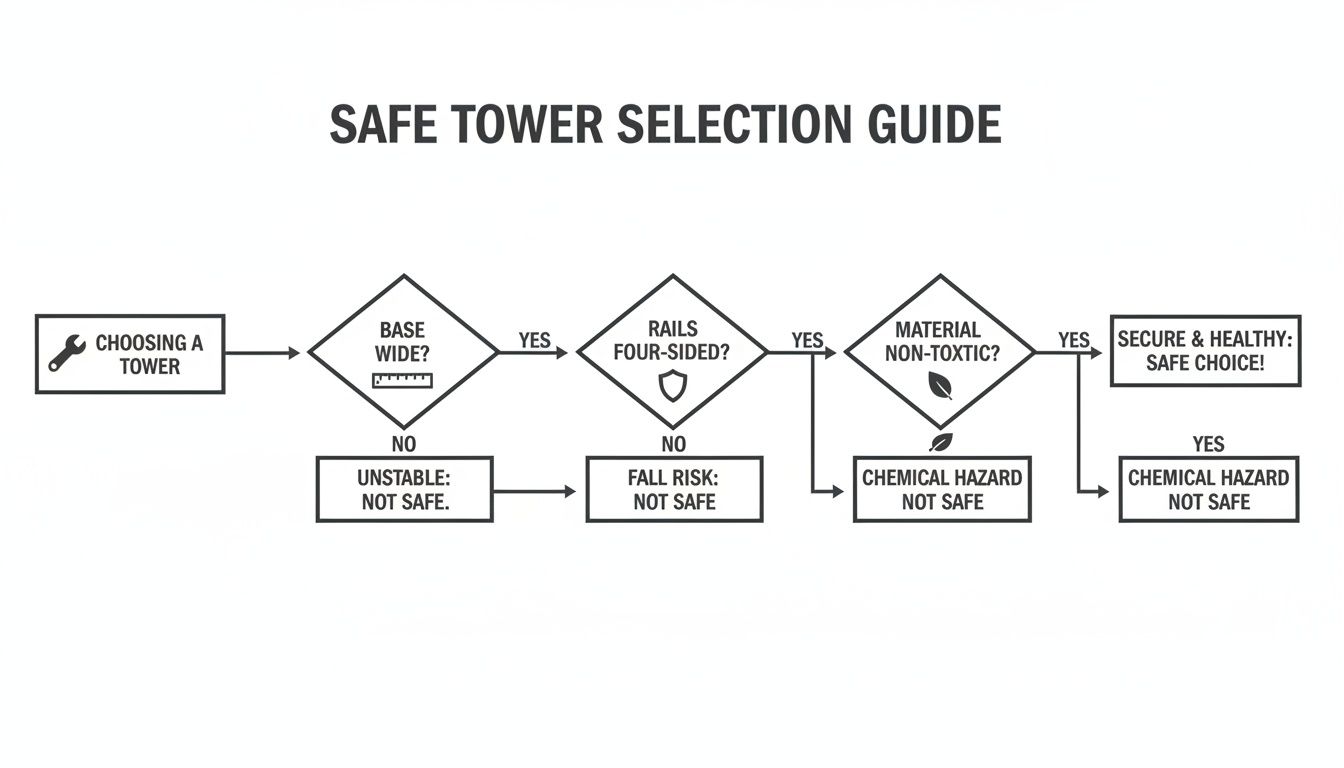
As the chart shows, it really boils down to a few non-negotiables: a wide base for stability, rails on all four sides, and non-toxic materials. Get those right, and you're well on your way.
Footprint and Practical Design
Last but not least, think about the tower’s actual footprint. Before you click "buy," grab a tape measure and check out the spot in your kitchen or bathroom where it will live. Some towers are built with a sleeker base for tight spaces, while others have a wider stance.
A great learning tower should feel like a natural part of your home, not a bulky obstacle. Consider how easily it can be moved and if its size complements your space.
You’ll also want to look for features that just make your life easier. A smooth, sealed finish is a lifesaver—it’s so much easier to wipe down after a messy baking adventure. Simple, clean lines without lots of little nooks and crannies will also save you cleanup time, making sure the tower stays a helpful tool instead of another chore.
Bringing the Learning Tower into Your Daily Routine
The real magic of a learning tower happens when it stops feeling like a special piece of equipment and becomes a natural part of your family's daily rhythm. It’s not just for the kitchen; think of it as a portable bridge that lets your child safely step up and join in on life, wherever it's happening.
By moving the tower from room to room, you're not just giving them a boost—you're giving them a sense of belonging and capability. Suddenly, they're not just watching you live; they're living right alongside you.
Beyond the Kitchen Counter
While the kitchen is where most learning towers live, its versatility is one of its best-kept secrets. Here are a few ways to get creative and foster that budding independence all over the house:
- In the Bathroom: Pop it by the sink, and suddenly your toddler can brush their own teeth or wash their hands without a precarious balancing act. It’s a game-changer for building solid hygiene habits.
- At the Craft Table: Give them a sturdy, counter-height view of their art supplies. They can focus on creating their next masterpiece instead of struggling to reach the glitter glue.
- By the Window: A learning tower becomes a safe perch for a curious mind. They can watch the birds, see the garbage truck come by, or just observe the world—all from a secure vantage point.
Involving them safely in these everyday moments is how you build essential life skills for children. Every new task they master adds another layer to their confidence.
The goal is to shift your mindset from "chores" to "invitations to help." A learning tower is the key that unlocks that door, turning a mundane task into a moment of connection.
Age-Appropriate Kitchen Activities
Back in the kitchen, the tower transforms your little one from a spectator into a genuine sous-chef. When they can actively participate, you'll find they take so much more pride and interest in the food you make together.
For Toddlers (18-36 months):
- Washing fruits and veggies in the sink
- Tearing up lettuce for a salad
- Stirring ingredients together in a big bowl (with a guiding hand)
- Mashing soft things like bananas or avocados
For Preschoolers (3-5 years):
- Measuring and pouring dry ingredients like flour and sugar
- Kneading dough for pizza or bread
- Using a child-safe knife to slice soft fruits
- Cracking eggs into a bowl (get ready for a little mess!)
These aren't just fun activities; they are foundational lessons in following directions, understanding measurements, and learning basic kitchen safety. Looking for more ideas? You can find plenty of other ways to connect through family engagement activities at home.
By making the learning tower a regular part of these moments, you're not just keeping them busy—you're building memories while raising a capable, confident little human.
Keeping Your Tower Sturdy and Safe for Years to Come
You’ve brought a learning tower into your home, and it’s quickly become a centerpiece of your daily routine. Think of it as a quality piece of furniture—a little care goes a long way in making sure it stays safe and sturdy for all the baking sessions and hand-washing lessons ahead.
It’s not complicated, either. A few simple habits will keep your tower in top shape, preventing wobbles or splinters and ensuring it’s just as secure as the day you first put it together.
The Quick Check-Up
Your most important task is a regular hardware check. Life with a toddler means lots of wiggling and movement, which can slowly loosen screws over time. Just once a month is all it takes.
- Tighten Up: Grab the Allen key or screwdriver that came with the tower and give every bolt a quick turn until it's snug. This is the number one thing you can do to stop any wobbling and keep the tower structurally sound.
- Feel for Splinters: Run your hand along the wooden surfaces, paying close attention to the platform where your child stands and the railings they hold onto. Catching any rough spots early keeps little hands safe.
- Look for Wear: Give the joints and the slots for the adjustable platform a quick once-over. You’re just looking for any signs of stress on the wood.
A simple, consistent check-up turns your tower from a purchase into a family heirloom. It’s what keeps it safe and ready for the next little helper, whether that's a younger sibling or a visiting cousin.
How to Clean Up After Messy Fun
Let’s be honest, kitchens are messy. Your learning tower is going to see its fair share of spilled flour, sticky fingers, and splattered sauce. Cleaning it the right way keeps it looking great and makes sure it's a hygienic spot for your child.
For a wooden tower, step away from the harsh chemical sprays. They can ruin the finish and aren't great for curious kids who touch everything. All you need is a soft cloth, a bit of mild soap, and some warm water. Wipe everything down, then—and this is key—dry it completely with another cloth. This prevents any moisture from soaking into the wood and keeps your children's learning tower looking brand new.
Still Have Questions? Let's Clear Things Up
Even after seeing all the ways a learning tower can change your day-to-day, it’s completely normal to have a few questions before you bring one home. We've put together answers to the most common things parents ask us.
When Can My Child Actually Start Using a Learning Tower?
Most toddlers are ready to climb aboard when they can stand steadily on their own two feet, which usually happens somewhere between 18 and 24 months. But honestly, it's less about a specific birthday and more about their physical confidence.
The real green light is when they are pulling up on everything, standing without wobbling, and are super curious about what you're doing up on the counters. Just be sure to double-check the tower’s specific age and weight guidelines, and make sure the top safety rail hits them about chest-high on the highest setting.
Isn't a Learning Tower Just a Fancy Step Stool?
Not at all, and knowing the difference is a huge deal for safety. A step stool is just that—a stool with steps. It’s open on the sides and really only meant for a quick, supervised boost. A learning tower is a completely different piece of equipment; it's a safety cage with four walls that securely encloses your child.
A step stool just gives them height. A learning tower gives them a safe, contained space to stand and work. It’s this enclosed design that prevents those scary backward or sideways tumbles.
This is what lets your child focus on an activity for more than a few seconds without you needing to have a hand on them the entire time. It makes the tower a far safer choice for any real, hands-on participation.
How Does This Fit with Montessori Ideas?
A learning tower is basically a must-have for anyone bringing Montessori principles into their home. Why? Because it’s all about fostering independence. It literally elevates children so they can take part in what Maria Montessori called "practical life" activities—things like stirring batter, washing vegetables, or scrubbing their own hands at the sink.
By bringing them into these everyday family routines, the tower shows them that they are capable and valued members of the family. It builds a powerful sense of belonging and confidence, which is right at the heart of the Montessori philosophy.
Are Wood Towers Really Better Than Plastic Ones?
While you'll see both out there, we're firm believers that a wooden tower is the better long-term investment for your family. A well-built tower made from quality birch plywood or solid wood offers strength and stability that you just can't replicate.
Plastic towers are usually lighter, sure, but they often don't feel as sturdy and might not stand up to years of daily use. For a piece of furniture that needs to safely support your growing child every single day, the robust, reliable build of a quality wooden tower is the way to go.
Ready to turn everyday chores into moments of fun and connection? The Ocodile learning tower is built with your child’s safety and budding independence as the top priorities, crafted from high-quality, durable materials that are ready for your family's journey.
Explore the Ocodile Learning Tower and bring joyful participation into your home today!