



Christmas Gifts for 2 Year Olds: A Practical Guide
A lot of parents start holiday shopping for a 2-year-old the same way. You walk into a store or open a gift guide with a clear goal, then hit a wall of blinking plastic, character tie-ins, giant boxes, and very confident packaging. Everything claims to be educational. Very little tells you whether your child will use it for more than a week.
At this age, christmas gifts for 2 year olds work best when they do two jobs at once. They support development, and they fit real family life. The sweet spot usually isn't the loudest toy on the shelf. It's the gift that invites movement, repetition, imitation, and everyday connection.
Navigating the Christmas Gift Maze for Your Toddler
The pressure around toddler gifts is oddly intense. You want Christmas morning to feel magical, but you also know what happens when too many toys land in one room at once. A 2-year-old gets overstimulated, the floor disappears, and the child who supposedly wanted everything ends up playing with tape, a spoon, or the box.

That tension is real because parents are spending real money. In 2024, 16% of U.S. parents planned to spend over $200 per child on Christmas gifts, according to Statista's survey on parents' Christmas spending per child. When the budget is meaningful, the choice matters more. It makes sense to look for gifts that will still matter in February, not just on Christmas morning.
What parents usually regret
The regret usually isn't, "I bought too little." It's more often one of these:
- Too many single-purpose toys that hold attention briefly but don't grow with the child
- Items that look fun in the box but frustrate a toddler's current skill level
- Duplicate play patterns like several button toys that all do the same thing
- Big gifts with no role in daily life, so they become furniture for clutter
Practical rule: If a gift doesn't support either repeat play, daily routine, or family interaction, it usually loses value fast.
A better filter for gift decisions
For a 2-year-old, the question isn't "What will impress them for five minutes?" It's "What helps them do more with their hands, body, words, and imagination?"
That shift changes everything. Suddenly, blocks make sense because they teach cause and effect. Books matter because they build language and closeness. Practical furniture starts to look less like an unusual gift and more like a tool for confidence.
The holiday gets simpler when you stop chasing more stuff and start choosing more meaning.
Understanding Your Two-Year-Old's World
Two is a busy age. A child this age is learning at full speed, but not in a neat, predictable line. One day they insist on doing everything themselves. The next day they melt down because their banana broke in half. Good gifts respect both realities.
The big drive is independence
If you've heard "me do it" lately, you're living with the central theme of age two. Toddlers want participation, not observation. They don't want to watch you stir, wipe, carry, stack, and open. They want in.
That matters because the strongest gifts at this age don't just entertain. They let a child act on the world. A stool, a simple puzzle, a toy broom, chunky crayons, nesting cups, or a pretend kitchen all work for the same reason. They turn curiosity into action.
Motor skills are getting sharper
A 2-year-old is refining both gross motor skills and fine motor skills. Gross motor work includes climbing, pushing, pulling, squatting, and balancing. Fine motor work shows up in page turning, block stacking, knob grasping, spoon use, sticker peeling, and beginning art play.
A useful way to judge a gift is to ask what kind of movement it invites.
| Gift type | What the child practices |
|---|---|
| Push or ride-on toys | Balance, coordination, body awareness |
| Blocks and simple builders | Hand control, planning, cause and effect |
| Art materials | Grip strength, mark making, sensory tolerance |
| Practical tools | Controlled movement, sequencing, imitation |
Language and pretend play are taking off
This is also an age of naming, copying, and storytelling. A toddler may not create a full pretend storyline yet, but they often feed a doll, stir an empty pot, tuck in a stuffed animal, or repeat phrases they've heard all week. That isn't random. It's how they process daily life.
Toddlers don't need complicated toys to build imagination. They need objects that leave room for them to decide what happens next.
Emotional regulation is still fragile
Two-year-olds often love repetition because repetition feels safe. They want the same book, same song, same stacking game, same routine. Gifts that allow repeated use without too much noise or visual chaos often last longer than novelty-heavy toys.
A strong test is simple. If a toy can be used in a calm mood, an energetic mood, and a clingy mood, it has staying power. That's one reason open-ended gifts work so well for christmas gifts for 2 year olds. They meet the child where they are that day.
Gift Categories That Champion Play and Learning
A good toddler gift doesn't need to do everything. It just needs to do one thing well and leave room for the child to return to it again. When parents ask me what tends to last, I usually think in categories rather than specific branded toys.

Active play that uses the whole body
Some toddlers need to move before they can focus on anything else. Gifts in this category help with coordination and confidence.
A few reliable examples:
- Push toys and ride-on toys for steering, stopping, and body control
- Soft climbing pieces for stepping up, stepping down, and controlled risk
- Balls and beanbags for chasing, carrying, dropping, and throwing
- Simple obstacle elements like stepping stones or tunnels
These gifts help children understand where their bodies are in space. That's useful not only for physical confidence, but also for calmer play later.
Building toys that teach more than stacking
Not all building toys ask the same thing from a child. Very stable blocks are great for early success. More challenging building sets introduce balance, weight, and adjustment.
Good Housekeeping notes that building toys that challenge weight distribution, like LEGO Duplo sets with rounded bases, help develop a 2-year-old's proprioceptive and vestibular systems, giving immediate feedback about balance and gravity through play, as described in its guide to the best toys for two-year-olds. That's one reason some toddlers stay engaged with these toys longer than adults expect. The toy tips, the child corrects, and the lesson is built into the play.
If you're also shopping ahead for an older sibling or cousin, this round-up of Christmas gift ideas for preschoolers can help you separate toddler-friendly picks from gifts better suited to the next stage.
Pretend play that reflects home life
Pretend play starts with imitation. Toddlers replay what they see.
Useful options include:
- Play kitchens
- Toy food and dishes
- Dolls with blankets or bottles
- Doctor kits with large, simple pieces
- Toy cleaning tools
The most-used pretend gifts are usually the ones closest to real life. Toddlers don't need a huge themed setup. A few sturdy items they recognize from home often go further.
For parents comparing play-based and problem-solving options, Ocodile has a helpful article on learning STEM toys that complements hands-on gift planning.
Creative and quiet gifts
These are the gifts that earn their place during slower parts of the day.
Try:
- Chunky crayons
- Washable markers
- Reusable stickers
- Large-piece puzzles
- Sensory bins with simple tools
- Board books and picture books
A book isn't filler in a gift pile. For many toddlers, it's the gift that gets used most consistently because it combines language, routine, and closeness.
Books are especially useful when Christmas gets overstimulating. A familiar lap, a short story, and a predictable rhythm can reset the whole morning.
Beyond Toys The Ultimate Gift of Independence
The most valuable gift for many 2-year-olds isn't a toy at all. It's something that lets them join real life more safely and more often. That's why practical furniture deserves a place in conversations about christmas gifts for 2 year olds.

A toddler doesn't care whether adults classify something as furniture or as a developmental tool. They care whether it helps them reach the counter, wash hands, climb into bed, or put on shoes without waiting to be lifted every time.
Why practical gifts often outlast toy trends
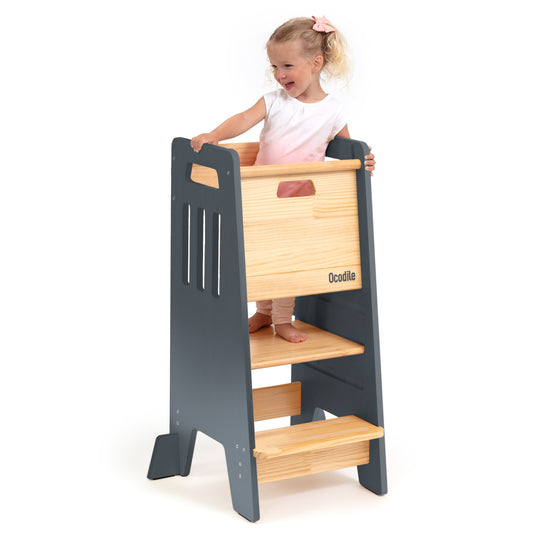
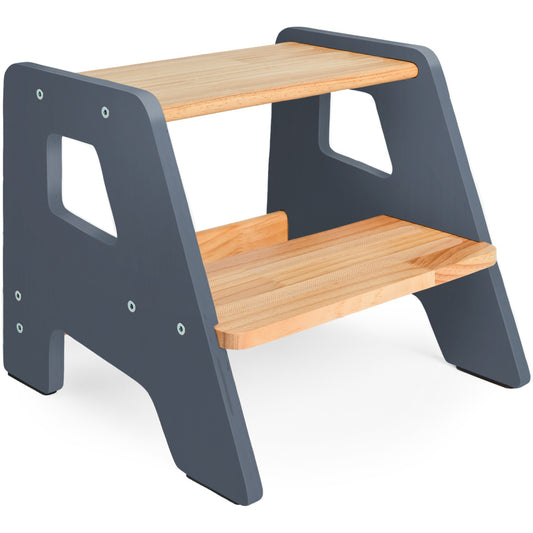
A learning tower, a child-sized step stool, or a low bed changes what a child can do in the flow of an ordinary day. That's a different kind of value than a battery-powered toy. It doesn't create a short burst of entertainment. It creates access.
That access can look like:
- Standing at the kitchen counter to rinse fruit or stir batter
- Reaching the sink for hand washing and tooth brushing
- Climbing in and out of bed with less adult help
- Joining family routines instead of being placed nearby to watch
This is one reason many families find that independence-based gifts feel bigger over time, not smaller. The child keeps growing into them.
Safety isn't a side note
This category does require more careful screening than an ordinary toy. According to Outside the Toy Box's guide to unique gifts for 2-year-olds, searches for "toddler learning towers" have grown 40%, yet many gift guides still skip important safety standards such as EN 71 in Europe and ASTM F963 in the U.S. If you're buying furniture for a toddler, don't settle for something that looks nice in a staged photo.
Look for:
- Anti-tip design
- Rounded edges
- Non-toxic finishes
- Clear stability and construction details
- A design that supports supervised daily use
One practical reference for parents considering this category is Ocodile's article on the learning tower kitchen helper, which explains how this type of furniture is used in family routines.
A quick visual helps here:
What works and what doesn't
A practical gift works when it solves a daily friction point. It doesn't work when it's too bulky for the space, unstable on the floor type in your home, or treated like a decorative object instead of a tool.
Worth remembering: The right independence gift should make family routines easier to include a toddler in, not harder to manage.
For many families, that makes a standing tower or step stool one of the most meaningful toddler gifts under the tree.
Smart Gifting Safety Budgeting and Beating Clutter
Holiday shopping gets easier when you use a filter instead of a feeling. Excitement is helpful. A checklist is better.
A practical safety screen
Before buying, check the gift the same way you would check a new piece of gear for your own home.
- Scan for small detachable parts if the toy includes accessories, snaps, or decorative add-ons
- Check material and finish details for items a toddler will touch daily
- Test for stability on anything meant for standing, climbing, or leaning
- Notice the sound and light level because some toys become overwhelming fast
- Think about cleanup since a gift that scatters everywhere tends to get put away for good
Fewer gifts usually work better
Many toy and parenting experts recommend 6 to 10 Christmas presents for a toddler, a guideline shared in Scary Mommy's article on how many gifts a child should get for Christmas. That range helps prevent overwhelm and clutter, and it pushes adults toward better choices instead of more choices.
A toddler doesn't measure Christmas by count. They measure it by attention, novelty, and whether they get time to explore each item.
Budget around use, not around category
One useful approach is to balance the pile across a few roles:
| Role | Example |
|---|---|
| Everyday use | stool, cup set, pajamas, books |
| Open-ended play | blocks, pretend food, crayons |
| Movement | ball, push toy, climbing item |
| Comfort | stuffed animal, quiet book corner item |
If holiday clutter is already a sore spot, pairing gift planning with a better storage reset helps. This guide on organize baby clothes is useful for creating room before new items come in, especially if gifts and daily essentials are competing for the same space. For toy overflow, Ocodile's ideas on toys storage organizers are worth browsing before Christmas week.
The goal isn't an empty room. It's a room where a child can see and use what they've been given.
Making Christmas Morning a Moment of Connection
Christmas morning with a 2-year-old rarely looks like the movie version. The child might ignore the "big" gift, want breakfast first, or become fixated on unwrapping paper very slowly. That's not a sign the moment failed. It's exactly what this age is like.

Slow the pace on purpose
Opening gifts one at a time works better than creating a giant pile and urging a toddler to keep going. At two, children often need time to inspect, repeat, carry, and circle back. If there are many presents from relatives, keep some aside for later in the day or even the next morning.
That small choice protects everyone's mood. It also lets you notice what your child connects with.
Use the gift right away
The fastest way to make a gift meaningful is to turn it into part of the day. If the child receives a learning tower or stool, use it during Christmas breakfast. Let them stand beside you while you stir pancake batter, rinse berries, or place cookie cutters on the tray. If they get a play kitchen, move a few safe utensils into it and mirror your holiday cooking nearby.
A few simple examples:
- New books become part of post-lunch quiet time
- Blocks come out while adults talk in the living room
- Art supplies appear after the excitement dips
- Practical furniture joins the family routine before the wrapping is even cleared
Some of the strongest Christmas memories come from what the child got to do with the gift on the same day, not just what they unwrapped.
Protect the atmosphere
Toddlers borrow regulation from the adults around them. If the room gets loud, rushed, or crowded, many children either spin up or shut down. A calmer pace usually creates a happier holiday than a bigger pile.
It helps to keep one corner of the day predictable. That might be the usual snack, the usual nap rhythm, or a familiar story before guests arrive. Christmas doesn't need to feel completely different to feel special. For a 2-year-old, safety and connection are a big part of the magic.
Your Guide to a More Meaningful Toddler Christmas
The strongest christmas gifts for 2 year olds don't need to be flashy. They need to fit the child in front of you. At this age, the most rewarding gifts usually support movement, repetition, pretend play, language, and the very strong desire to do things without help.
Keep these takeaways in mind:
- Choose for real life. Gifts that connect to daily routines usually last longer than novelty toys.
- Support independence. A stool, learning tower, or low-access setup can be as valuable as any toy.
- Look for open-ended play. Blocks, pretend items, art materials, and books leave room for growth.
- Protect against overwhelm. A smaller number of thoughtful gifts usually creates a better Christmas morning.
- Check safety carefully. This matters most with climbing, standing, or furniture-style gifts.
- Think about connection. The best gifts often create something bigger than play. They create shared moments.
A good toddler Christmas doesn't come from getting every choice right. It comes from choosing a few things with care, then being present enough to enjoy how your child discovers them.
Answering Your Top Gifting Questions
What are good gifts for a neurodivergent 2-year-old?
Sensory needs vary a lot, so the safest starting point is usually open-ended, low-pressure, repeatable play. Nourishing Minimalism's guide to non-toy gifts for toddlers notes that 1 in 36 U.S. children are identified with ASD, and suggests avoiding overwhelming lights in favor of items like a stable step stool paired with sorting bowls for calming, repetitive activities that support regulation and fine motor skills. In practice, that means choosing gifts that let the child control the pace.
How do I tell grandparents we don't want too many toys?
Be specific and warm. A simple script works: "We're trying to keep gifts practical and calm this year. Books, art supplies, pajamas, or one larger open-ended gift would be so appreciated." People usually respond better to a clear list than to a vague request for "less stuff."
Are experience gifts worth it at this age?
Sometimes, but they aren't always the easiest fit for a 2-year-old. At this age, many children benefit more from gifts they can repeat often in a familiar setting. If you do choose an experience, keep it simple, local, and low-pressure. A toddler often gets more from repeating a small activity than from attending a big event once.
Should one big gift replace several small ones?
Often yes, especially if the big gift supports daily life or open-ended play. One useful item with a clear purpose can carry far more value than several novelty gifts that compete for attention.
If you're looking for a gift that supports independence and fits naturally into family routines, take a look at Ocodile. Their focus is child-safe furniture for everyday participation, including standing towers, floor beds, and step stools designed to help young children join family life more actively and safely.