

 - Monica
 - Lindsay

Guidecraft Kitchen Helper: A Safe, Montessori-Inspired Learning Stool
So, what exactly is the Guidecraft Kitchen Helper? At its core, it's a smartly designed, adjustable safety tower that brings your curious toddler right up to counter height. Think of it as their own personal "command center" in the kitchen, a place where they can finally stop being a spectator and start being a hands-on participant.
It’s this simple shift that makes it so powerful. Suddenly, meal prep isn't just a chore for you; it becomes a shared experience and a genuine moment for connection.
What Is a Guidecraft Kitchen Helper and Why Is It So Popular?

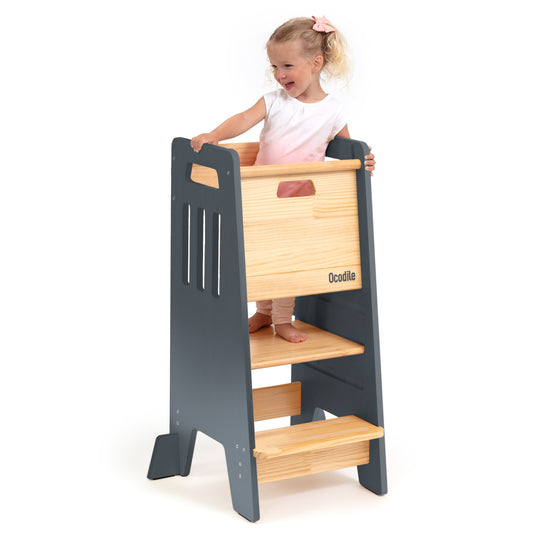
The Guidecraft Kitchen Helper is an elegant solution to a very common parenting problem: how do you let your little one safely join in on kitchen activities? We’ve all been there, trying to balance a squirming toddler on a wobbly chair. This tower replaces that precarious situation with a secure, four-sided enclosure, allowing them to stand at counter level, completely hands-free.
But it’s about so much more than just a height boost. It fundamentally changes the dynamic in your kitchen. Your child is no longer a passive observer but an active contributor. They can now wash vegetables, help stir batter, or just watch you cook up-close without needing to be held. It's a game-changer for building their sense of capability and belonging.
A Bridge Between Curiosity and Safety
The real magic here is how the Kitchen Helper bridges the gap between a toddler’s boundless curiosity and the very real need for a safe environment. Kids are hardwired to learn by doing, and the kitchen is a sensory wonderland of fascinating smells, textures, and activities. This tower gives them a secure platform to dive into that exploration.
Here’s a quick rundown of what makes this tool so special.
Kitchen Helper At a Glance
This table gives you a quick overview of the key features and the developmental benefits they offer your child.
| Feature | Benefit for Child and Parent |
|---|---|
| Secure, Four-Sided Enclosure | Provides peace of mind for parents and a safe, stable space for kids to stand and move without the risk of falling. |
| Adjustable Platform | Grows with your child, ensuring they are always at the perfect, comfortable height for the counter as they get taller. |
| Easy-to-Clean Finish | Spills and splatters are inevitable! A smooth surface means cleanup is quick and painless. |
| Child-Friendly Steps | Empowers toddlers to climb in and out on their own, fostering a sense of independence and "I can do it myself" pride. |
| Hands-Free Participation | Frees up your hands and allows your child to use theirs for important tasks like stirring, washing, and "taste testing." |
These features work together to create an environment where your child can thrive.
It’s all about empowering them in a safe space. A few key benefits really stand out:
- Fostering Independence: It gives toddlers the autonomy to climb in and out on their own, building their self-reliance.
- Enhancing Motor Skills: Simple kitchen tasks like stirring, pouring, and kneading ingredients are fantastic for developing fine motor coordination.
- Creating Bonding Moments: Shared activities at the counter turn routine meal prep into valuable quality time.
- Building Confidence: When a child successfully contributes to a family meal, it does wonders for their self-esteem.
By bringing children up to the action, a learning tower does more than just offer a view; it invites them to be part of the family's daily rhythm, making them feel valued and capable.
This hands-on approach aligns perfectly with Montessori principles, which champion "practical life" activities as a cornerstone of early childhood development. For more ideas on how a kitchen helper fits into this philosophy, you can learn more about the benefits of a learning tower in our detailed guide. The Guidecraft model is a fantastic tool for bringing that child-led learning right into the heart of your home.
What Goes Into Its Smart and Safe Design?

The trust parents have in the Guidecraft Kitchen Helper isn't just a happy accident. It’s built, quite literally, from the ground up with thoughtful engineering that puts your child's safety first. Every piece has a purpose, and they all work together to create a secure little world where your toddler can explore with confidence.
First off, let's talk about the foundation. These towers are made from durable solid hardwood and premium birch plywood. This isn't just for looks; it gives the tower a rock-solid base that won’t wobble under an enthusiastic little helper. It's built to hold up to 125 pounds, so you know it’s a sturdy piece of furniture that's meant to last for years.
On top of that, many Guidecraft models are GREENGUARD GOLD Certified. This is a big deal. It means they've been tested for over 10,000 chemicals and VOCs, which helps keep your indoor air cleaner. It's an extra layer of peace of mind that goes beyond just physical safety.
The Four-Sided Safety Enclosure
One of the most important design choices here is the four-sided enclosure. Think of it as your child's personal safety rail. A regular step stool leaves their back and sides wide open, but this design wraps around them, drastically cutting down the risk of a backward or sideways tumble. It lets them focus on stirring or squishing dough, not on keeping their balance.
This enclosure is backed up by a few other clever stability features:
- Anti-Tip Feet: These special feet flare out at the base, widening the tower's footprint. This makes it incredibly difficult to tip over, even if you have a very wiggly sous chef.
- Included Safety Net: For an extra bit of security, a mesh net can be attached across the back opening. This is a great little feature for younger toddlers who are still getting the hang of standing steady.
It's this all-around approach to containment that gives kids freedom within a super-secure space.
Growing with Your Child: The Adjustable Platform
Kids grow. Fast. A tool designed to be part of your family for years needs to grow with them, and the Guidecraft Kitchen Helper does just that with its adjustable platform. It’s more than just a convenience—it's a critical safety feature.
The rule of thumb for safety is to make sure the top rail of the Kitchen Helper is always at or above your child’s waist. The adjustable platform makes it simple to maintain this perfect, safe height as they shoot up.
The platform itself usually has a non-slip mat, which gives little feet a firm grip. It’s a small detail, but it makes a huge difference in preventing slips, especially when a splash of water or a bit of flour inevitably hits the floor during a fun kitchen project.
Designed for Real-Life Kitchens
Beyond the core safety stuff, Guidecraft has added features that just make sense for a busy family home. Most of their models are designed to fold up easily, which is a lifesaver for smaller kitchens or for times you just want it out of the way.
And here’s something you’ll love: many models ship 99% assembled. All you have to do is attach the anti-tip feet. That means you can go from opening the box to getting your little one involved in about five minutes flat. No frustrating instruction manuals or bags of confusing parts. Every detail, from the sturdy wood to the clever folding design, makes this tower feel like it was truly designed by people who get it.
Real-World Safety for Your Little Helper
While the Guidecraft Kitchen Helper is built like a little tank, real kitchen safety is always a team effort. The tower provides a secure space for your child to stand, but how and where you use it makes all the difference. It's about creating a safe zone where your little one can explore and learn with confidence.
First, let's get the basics down. Guidecraft suggests their towers are for kids 18 months and older, or basically whenever your toddler can stand confidently on their own two feet. It can handle up to 125 pounds, so it’s going to be part of your kitchen for a long time. But more important than age is your child's height. The top safety rail should always sit at or above their waistline. If they're growing and it starts to dip below, it's a clear sign to lower the platform.
Creating a Safe Kitchen Zone
Where you put the tower is everything. Think of it like parking a car—you need a spot that’s stable, out of the way of traffic, and far from any obvious dangers. The goal is to give them access to the fun stuff, like the sink or a clear bit of countertop for mixing, while keeping them well away from the not-so-fun stuff.
It also goes without saying that general kitchen awareness is key. Knowing things like how to prevent kitchen fires and other common risks makes the whole environment safer for everyone, not just your little helper.
Here's a quick checklist for smart placement:
- Stove and oven are a no-go zone. This is the golden rule. The tower should never be close enough for curious hands to reach hot surfaces, burners, or pots and pans.
- Keep away from sharps. Steer clear of knife blocks, utensil crocks, or any area where you keep sharp implements.
- Mind the small appliances. Toasters, blenders, and coffee makers—especially their cords—should be out of arm's reach.
- Find a flat, even surface. A wobbly floor can make even the sturdiest tower feel unstable.
Daily Safety Do's and Don'ts
Once you’ve found the perfect spot, a few daily habits will ensure every kitchen session is a safe one. And this is the big one: a learning tower is a tool for connection, not a babysitter. Your watchful eye is absolutely required.
Safety Tip: Never, ever leave a child unattended in the Guidecraft Kitchen Helper. It’s designed for supervised, interactive fun. Your presence is the most important safety feature.
Here are some quick do's and don'ts to keep in mind:
| Do | Don't |
|---|---|
| Check that the platform is at the right height. | Allow climbing on the outside of the tower. |
| Keep the floor around the tower clear of toys and spills. | Place it near drawers or cupboards a child could open. |
| Give the hardware a quick check for tightness now and then. | Let more than one child use a single-person tower. |
By making these simple practices part of your routine, you can turn your kitchen into a fantastic, safe learning environment. If you're still exploring all the options out there, you might find our guide on different toddler towers for the kitchen helpful in figuring out the perfect match for your family.
Bringing Montessori Principles Into Your Kitchen

The Guidecraft Kitchen Helper is so much more than a simple step stool. Think of it as a bridge, connecting the core principles of Montessori learning directly to the heart of your home: the kitchen. At its core, the Montessori method is all about child-led discovery and hands-on participation in real life. This tower makes that philosophy a daily reality.
When you safely boost your toddler up to counter height, you're doing more than just giving them a better view. You’re inviting them into a world of "practical life" activities—the real, purposeful work that builds true confidence and competence. They stop being passive observers and become active, valued members of the family team.
Empowering Through Practical Life Activities
Practical life skills are really the bedrock of Montessori education, teaching children how to care for themselves and their environment. The kitchen is one of the richest places to grow these skills, and the Guidecraft Kitchen Helper is the key that unlocks all that potential.
Just imagine your toddler carefully spooning flour into a bowl, washing their own snack plate at the sink, or helping you arrange sliced bananas on a platter. These aren't just cute moments for your camera roll; they are profound learning experiences.
"The hands are the instruments of man's intelligence." — Maria Montessori
This famous insight perfectly explains why getting their hands involved is so vital. When a child participates in these tasks, they aren't just copying your actions. They're building new neural pathways, refining their motor skills, and developing a powerful sense of self-worth.
You can find all sorts of inspiration for these practical life activities in Montessori to see how a learning tower can fit right into your daily rhythm.
From Spectator to Valued Contributor
A child standing securely in their kitchen helper tower feels a real sense of belonging. They're no longer on the outside looking in but are shoulder-to-shoulder with you, working together. This simple change in perspective has a massive impact on their emotional development.
This involvement also cultivates a whole host of crucial skills:
- Fine Motor Development: All that whisking, pouring, and scrubbing does wonders for strengthening hand and finger muscles.
- Concentration and Focus: Following a simple recipe step or carefully washing a handful of berries helps to stretch a child's attention span.
- Problem-Solving Skills: Figuring out how to hold a spoon and stir without spilling everything is a real-world physics lesson in action.
- Self-Esteem: The pride a child feels when they've actually helped make the family meal is just immeasurable. They learn that what they do matters.
To really lean into the Montessori approach, it helps to create an organized and accessible kitchen environment. A well-ordered space makes it easier for your child to find what they need and participate fully. You can even find clever ways to maximize your kitchen pantry space to keep ingredients and tools within their reach.
Ultimately, the Guidecraft Kitchen Helper is the facilitator for these moments, turning everyday chores into joyful opportunities for learning and connection.
Getting Set Up and Keeping It Clean
One of the best things about the Guidecraft Kitchen Helper is that it’s built for real families with real lives—which means you won't be spending your Saturday afternoon wrestling with a confusing instruction manual. Most models arrive 99% pre-assembled, a huge relief for anyone who dreads the words "some assembly required."
Your main job is simply attaching the anti-tip feet, and they even give you the tool to do it. This step is crucial. It only takes a few minutes, but it widens the tower's base, adding a ton of stability to prevent any wobbling or tipping. It's a quick, easy setup that gets your little one in on the action right away.
Before the first use, just give it a quick wipe-down with a damp cloth to get rid of any dust from the box. That’s it. You're ready for your first kitchen adventure together.
Keeping Your Tower in Top Condition
To make sure your Guidecraft Kitchen Helper stays a safe and sturdy part of your home for years to come, a little bit of care goes a long way. Let's be honest, kitchens are messy. Thankfully, cleaning the tower is just as simple as putting it together.
The non-toxic finishes are made to handle the splatters and spills that are just part of life with a toddler.
Here’s a simple cleaning routine to follow:
- For daily messes: A soft, damp cloth with a little mild soap and water is all you need. It’s perfect for wiping up food bits, sticky fingerprints, and water splashes.
- For tougher spots: If you've got a more stubborn mess, a gentle, non-abrasive cleaner will do the trick. Just be sure to test it on a small, hidden spot first.
- What to avoid: Stay away from harsh chemical cleaners, scratchy sponges, or soaking the tower with too much water. These can wear down the wood finish over time. Simple and gentle is the way to go.
Performing Regular Safety Checks
Beyond cleaning, it's a great habit to do a quick safety inspection every few months, especially if the tower gets a lot of use. Think of it as a mini check-up for your investment and, more importantly, for your little one's safety.
A two-minute check every few months can stop a small issue from becoming a bigger problem. It's a simple habit that ensures the tower stays as safe as the day you unboxed it.
During your check-up, keep an eye on these key areas:
- Check the Hardware: Give the screws and bolts a gentle wiggle to make sure they're still tight. The little vibrations from daily use can sometimes loosen things up over time.
- Inspect the Keepers: If your model folds and has locking keepers, check that they are in good shape and latch securely.
- Examine the Platform: Make sure the adjustable platform is sitting firmly in its slot and that the non-slip mat is still providing good traction.
With just a little bit of attention, your Guidecraft Kitchen Helper will be a reliable and beloved tool for countless baking projects, taste tests, and shared moments at the counter.
Learning Tower vs. Step Stool: What Is the Difference?
When you see a toddler happily stirring batter at the kitchen counter, it’s natural to wonder if a simple step stool could do the same job. While both give your child a much-needed height boost, their core designs serve fundamentally different purposes—think of it like the difference between a high chair and a regular dining chair.
A step stool is a tool for a quick "up and down" task. A learning tower, on the other hand, is a secure activity station built for participation.
Enclosed for Engagement vs. Open for Access
The biggest difference comes down to safety and stability. A traditional step stool is open on at least three sides, which means a child has to constantly focus on their balance. For a wobbly toddler who’s far more interested in splashing in the sink than their footing, this open design creates a real risk of backward or sideways falls.
In contrast, a learning tower like the Guidecraft Kitchen Helper is built with a four-sided safety enclosure. This design acts like a protective railing, wrapping around your child and keeping them safely contained. It completely removes the fear of falling, freeing them up to focus all their mental and physical energy on the activity at hand.
They can lean, reach, and move within this secure space without the constant risk of a tumble. This enclosed structure makes it a purpose-built environment for your little one to stay and participate for as long as their curiosity lasts.
A step stool offers a temporary lift. A learning tower provides a secure, contained workspace that invites a child to stay, learn, and safely participate for longer periods.
Learning Tower vs. Step Stool: A Conceptual Comparison
To really see the difference, it helps to break down their core concepts. A learning tower isn't just a "tall step stool"; it's a completely different piece of equipment designed with a child's developmental needs and safety in mind.
| Aspect | Learning Tower Concept (e.g., Guidecraft) | Traditional Step Stool |
|---|---|---|
| Primary Purpose | A developmental tool for safe, sustained participation at counter height. | A utility tool for quick, temporary height access. |
| Design Philosophy | Enclosed on all sides to create a secure, stable "activity station." | Open on most sides for easy on-and-off access. |
| Safety Focus | Fall prevention through a full safety railing system. | Relies entirely on the user's balance and coordination. |
| User Engagement | Encourages prolonged, hands-on involvement by removing the fear of falling. | Designed for brief tasks; not ideal for focused, longer activities. |
| Stability | Wide, sturdy base designed to prevent tipping, even with a moving child inside. | Smaller, lighter base; can be less stable and prone to tipping. |
| Best For | Cooking, crafts, washing hands—any activity where a child joins you at the counter. | Reaching a book on a low shelf or quickly grabbing an item. |
Ultimately, a step stool is a functional utility item for adults and older, more coordinated children. A learning tower is a developmental tool designed from the ground up to foster a young child's independence and love for hands-on learning in a safe, confidence-building way.
This visual guide breaks down the simple lifecycle of owning a Guidecraft Kitchen Helper, from initial setup to day-to-day care.

As you can see, it really comes down to three simple steps: assemble it correctly, clean it gently, and check it periodically to ensure it stays safe for years of fun.
Got Questions About the Guidecraft Kitchen Helper? We've Got Answers
To wrap things up, let’s go through some of the questions I hear most often from parents who are considering the Guidecraft Kitchen Helper. Getting these details straight can help you feel totally confident before bringing one home.
What Age Is the Kitchen Helper For?
Guidecraft designs its towers for toddlers who are 18 months and older, or really, as soon as your little one can stand up on their own with confidence. Thanks to the adjustable platform, it’s a piece of gear that grows right alongside them, often getting plenty of use until they’re five or even six years old.
The real key here is to make sure the top safety rail always sits at or above your child's waistline. That's your best guide for both safety and comfort.
Is the Guidecraft Kitchen Helper Safe?
Yes, absolutely. You can tell safety was the top priority in its design. Features like the four-sided enclosure—which is a huge peace of mind—the anti-tip feet, and the solid hardwood construction all work together to create a really secure space for your child.
Many of their models have also earned a GREENGUARD GOLD Certification. This is a big deal. It means they've been tested for over 10,000 different chemicals, so you can be sure you’re bringing a product into your home that contributes to cleaner indoor air for your family.
Can It Be Folded for Storage?
You bet. Most of the classic Guidecraft Kitchen Helper models are made to fold up easily. This is a lifesaver for anyone working with a smaller kitchen where every inch of floor space counts. When you're done mixing and making, you can just tuck it away.
Keep in mind, though, that the more compact Jr. models are the exception here—they have a fixed frame and don't fold.
Just a friendly reminder: the single most important safety feature is you. The tower is a wonderful tool for connection and shared activities, which means an adult should always be right there whenever a child is using it.
This quick rundown should cover the essential details parents need before welcoming this fantastic tool into their home.
Ready to transform your kitchen into a hub of learning and connection? Discover the perfect learning tower for your family at Ocodile. Explore our collection of child-safe furniture today!