




 - Monica
 - Lindsay

The Ultimate Guide to Choosing a Kid Kitchen Stand
Ever wish you had an extra set of hands in the kitchen? Imagine your toddler, safe and happy at counter height, actually helping you instead of tugging on your leg. That's the beauty of a kid kitchen stand—it's more than just a piece of furniture, it's a way to bring your little one into your world.
What Is a Kid Kitchen Stand?
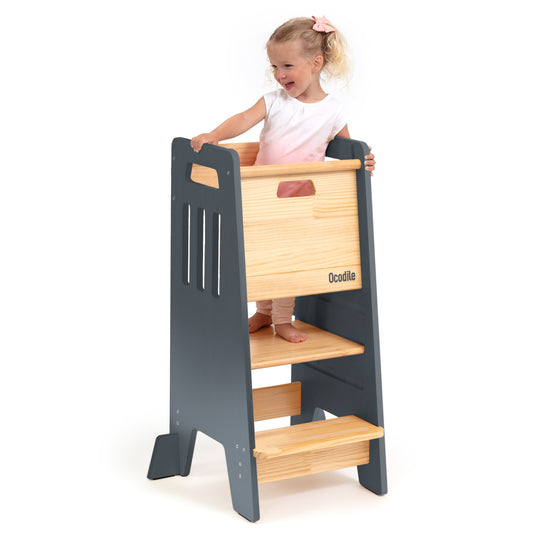
Think of a kid kitchen stand as a super-safe, enclosed step stool designed specifically for toddlers. It’s a sturdy platform that boosts your child up to the counter, but with safety railings on all sides to prevent any tumbles. This isn't your average wobbly stool; it’s a secure little tower that lets them explore safely.
By bringing them up to your level, you open up a whole new world of learning and connection. Suddenly, they can be a real participant. They can wash veggies, stir batter, or simply watch what you’re doing from a whole new vantage point, building confidence with every small task.
This infographic breaks down the two main goals of a kid kitchen stand: giving your child independence while keeping them completely safe.

As you can see, the whole point is to encourage their natural curiosity within a secure, protected space.
Kid Kitchen Stand vs. Regular Step Stool at a Glance
It's easy to wonder if you really need a kitchen stand when you have a step stool. This quick comparison table shows why they're worlds apart, especially when it comes to safety for your little one.
| Feature | Kid Kitchen Stand | Regular Step Stool |
|---|---|---|
| Safety | Fully enclosed with railings to prevent falls. | Open on all sides, high risk of falls. |
| Stability | Wide, sturdy base designed for active toddlers. | Smaller base, can easily tip over. |
| Height | Brings child to standard counter height. | Often too short or too tall. |
| Purpose | Designed for active participation and learning. | Meant for quick, supervised tasks. |
| Age Range | Ideal for toddlers (approx. 18 months to 4 years). | Better for older children who have good balance. |
While a step stool has its place, it just can't offer the security needed to let a toddler safely join in on kitchen activities.
A Gateway to Growth and Connection
The buzz around these stands isn't just a fleeting trend. It points to a bigger shift in how we think about involving our kids in daily life. The global kids' furniture market, which includes these stands, was valued at $78.03 billion in 2025 and is expected to grow to a massive $177.68 billion by 2030. This shows just how much parents are looking for products that help raise independent, capable kids.
The real purpose of a kid kitchen stand is to turn everyday tasks into moments you can share. It reduces the stress of trying to cook with a small child underfoot and helps create memories you'll both cherish.
These stands are often called "learning towers," which is a perfect name for them. They create a safe spot for your child to stand, learn, and grow right alongside you. If you're curious to learn more, we have a great article that dives deeper into what a learning tower is and all its benefits.
The Real-World Developmental Benefits of Counter-Height Help
A kid kitchen stand is so much more than another piece of furniture. Think of it as an investment in your child's development, turning simple kitchen chores into big learning moments.
When your little one can finally reach the counter safely, their whole world changes. They go from being a spectator on the floor to an active, helping member of the family. That simple boost in height unlocks a universe of hands-on experience.

Sure, toy kitchens are great for imagination—it’s a market projected to hit $3,468.7 million by 2025, after all. But a kitchen stand bridges the gap between pretending and doing. Parents consistently find that kids are far more engaged when they can actually participate in the real thing.
Boosting Skills With Every Task
Every little thing they do at the counter is a chance for them to grow. Simple actions, like stirring batter or helping to knead dough, are fantastic for building fine motor skills and hand-eye coordination. These are the exact skills they’ll need later for writing and tying their shoes.
You’ll also find yourself sneaking in early lessons without even trying:
- Math: Counting scoops of flour or watching you separate eggs introduces them to basic numbers and even fractions.
- Science: What’s more fascinating than watching dough rise or water come to a boil? It’s a real-time science experiment.
- Language: Following simple directions and learning the names of new ingredients is a natural vocabulary booster.
A kid kitchen stand is a perfect example of scaffolding in child development. It gives your child just enough support to tackle a task that would otherwise be out of reach, building their confidence one small step at a time.
This kind of supportive structure is what helps foster that amazing sense of accomplishment. You can dive deeper into the benefits of scaffolding in child development in our detailed guide.
Fostering Independence and Connection
Beyond just building skills, the emotional benefits are huge. When you let your child handle a task all on their own, like washing berries for their oatmeal, you give them a powerful dose of confidence and independence.
Getting them involved in making meals can also be one of the best strategies to encourage healthy eating and reduce mealtime fights.
Most importantly, working side-by-side in the kitchen strengthens your bond. It turns a daily routine into a time for connection and making memories you'll both cherish.
How to Choose the Right Kid Kitchen Stand for Your Home
Picking the right kid kitchen stand can feel like a pretty big decision. I get it. Think of it like choosing a car seat—your top priorities are always going to be stability, the materials it’s made from, and how long you'll actually be able to use it.

It’s no surprise that items like these are becoming a staple in modern homes. The market for kids' furniture is growing fast, with some researchers predicting it will hit $74.2 billion by 2034. It makes sense, especially when you learn that parents are often willing to spend up to 25% more for furniture they know is premium and safe. You can read the full research about the U.S. kids' furniture market on Grand View Research.
Prioritizing Safety and Durability
Your first thought should always be safety. No question. You’ll want to look for a kid kitchen stand with a wide, anti-tip base that keeps it firmly on the ground, even when you’ve got an excited toddler wiggling around inside. The best ones are typically made from solid wood and finished with non-toxic, child-safe paints.
Pay attention to the little things, too. They make a huge difference.
- Rounded Edges: Sharp corners are a definite no-go. Make sure all the edges are smooth and rounded off.
- Secure Railings: The safety rails should come up to at least your child’s mid-torso. This is key to preventing them from trying to climb or accidentally falling out.
- Sturdy Platform: The platform your child stands on needs to feel solid and secure, ready to support their weight as they grow.
A well-designed kitchen stand isn't just a stool; it's a secure enclosure. It’s built to contain a child’s wiggles and movements, giving you peace of mind while you cook together.
Considering Practicality and Growth
After safety, think about how the stand is going to work in your day-to-day life. An adjustable platform is a must-have feature, in my opinion. It allows the tower to "grow" with your child from around 18 months to five years or even older, which means you get so much more use out of it.
Before you click "buy," grab a tape measure and check your kitchen space. Lots of models have a compact footprint, and some are even foldable for easy storage—a lifesaver if you're working with a smaller kitchen. For a little more help picking the perfect model, check out our guide on the best learning tower options.
Essential Safety Rules for Using a Kitchen Stand
Bringing a kid kitchen stand into your home is exciting! It truly opens up a whole new world of shared activities at the counter. But just like baby-proofing a cabinet, the ticket to making every experience a good one is to establish some clear safety rules right from the start.
First things first, where you put the stand matters. You should always place the stand on a flat, level surface—a wobbly tower is a recipe for trouble. Make sure to position it a safe distance from the stove, any hot appliances, and the knife block. Think of it as creating a special, protected "helper zone" at the counter.
Supervise and Teach
This might be the most important rule of all: a kitchen stand is for supervised fun, not a playpen to leave your child in. Constant supervision is absolutely non-negotiable. Even the sturdiest stand with great railings can't prevent an accident if a little one is left on their own.
Active supervision isn't just being in the same room; it’s about being right there, within arm's reach. You're ready to guide their little hands or steady them if they wobble, making sure the kitchen stays a place for connection, not concern.
It's also a great idea to teach your child how to use their new stand correctly. A little practice goes a long way.
- Show them how to climb in and out safely. Go through the motions with them a few times until you can see they've got it down.
- Establish a "no leaning" policy. Gently remind them that the stand is for standing up tall, not for stretching way over the sides to grab something just out of reach.
Setting these simple boundaries early on ensures your kid kitchen stand will be a source of happy memories and learning for years to come.
Don't Just Stand There! Creative Ways to Use Your Kitchen Helper
So, you've got this great kitchen helper stand. But thinking of it as just a kitchen accessory is selling it short. This little tower is more than a step up to the counter; it's a portable station for all kinds of fun that can happen all over your house.
The fun definitely doesn't have to stop when you're done baking. Think of it as your child’s ticket to join in on all sorts of hands-on activities, safely boosted to the perfect height.
Once your toddler is standing securely at the counter, it’s a great chance to explore some easy cooking recipes for beginners. Getting them involved in simple meal prep is a fantastic way to build real-life skills and a bit of kitchen confidence.
But the real magic happens when you move the stand out of the kitchen. A little imagination can turn this single-use item into one of the most versatile pieces of kid gear you own.
From Sous Chef to Scientist and Artist
It’s surprisingly easy to switch gears. With just a few simple supplies you probably already have, you can repurpose the stand for activities that have nothing to do with food but everything to do with learning and play.
Here are a few ideas to get your creative juices flowing:
- Sink-Side Science Lab: Just pull the stand up to the kitchen or bathroom sink for some bubbly, splashy experiments. A few cups, some dish soap, and maybe a drop of food coloring create a perfect, contained mess for learning about cause and effect.
- Countertop Art Easel: Throw a placemat down to protect your counter, and you've got a stable art station. The railings provide extra support, so your little one can focus on painting, drawing, or squishing play-doh without wobbling.
- Indoor Gardening Bench: This is a wonderful way to teach your child about nature. Set up a small pot, some soil, and a few seeds. They can get their hands dirty scooping and planting, all from their own sturdy perch.
The real goal is to see the kid kitchen stand as a gateway to doing things together. It’s not just about the task; it’s about giving them a safe way to step into your world and participate.
Every new activity you try together helps build their independence and shows them that learning isn't just for school—it can happen anywhere. Suddenly, that simple stand becomes one of the most valuable things in your home.
Still Have Questions? Let's Talk Kitchen Stands
Even after seeing all the ways a kid kitchen stand can enrich your family's life, it's totally normal to have a few questions. Bringing any new piece of furniture into your home, especially for your child, is a big decision. We've gathered some of the most common questions we hear from parents to give you clear, straightforward answers.

Our goal is to help you feel confident and excited about finding the perfect fit for your home and your little helper.
When Is My Child Ready for a Kitchen Stand?
Most toddlers are ready for a kitchen stand once they can stand up confidently and steadily on their own. This usually happens around 18 months old, but the real key is your child's individual physical development, not just their age.
Always check the manufacturer's specific guidelines. Many stands have adjustable platforms designed to grow with your child, safely supporting them from their toddler days all the way up to age 5 or 6.
A good rule of thumb is to make sure the top safety rail hits your child around their mid-torso. This is the sweet spot for security, preventing any tumbles or clever climbing escapes.
Ultimately, you know your child best. If they are steady on their feet and showing a real interest in joining you at the counter, they’re probably ready for their new adventures.
Is This the Same as a Learning Tower?
Yes, exactly! You'll hear a few names for this product, and they all mean the same thing. "Kid kitchen stand," "learning tower," and "kitchen helper" all describe that sturdy, enclosed structure that gives your child a safe boost to counter height.
The name "learning tower" is especially popular in Montessori and child development circles. It’s a great term because it perfectly captures the whole idea behind the design: fostering hands-on learning and empowering a child's natural desire for independence in a safe way.
How Do I Keep a Wooden Stand Clean?
Keeping your wooden kitchen stand looking great is surprisingly easy. For daily cleanups after a messy baking session or art project, all you need is a quick wipe with a damp cloth and a little mild, non-toxic soap.
- Skip the Harsh Stuff: Abrasive sponges and strong chemical cleaners can strip the wood's finish over time, so it's best to avoid them.
- Tackle Sticky Messes: For those stubborn, sticky spots, a simple mix of equal parts water and white vinegar works like a charm without being too harsh.
- Always Dry Thoroughly: After you wipe it down, give the stand a quick pass with a dry cloth to protect the wood from moisture.
- Do a Quick Check-Up: Every so often, it's a good idea to check that all the screws and hardware are tight, ensuring the stand is just as sturdy as day one.
Will a Kitchen Stand Overwhelm My Small Kitchen?
Not at all! Many designers create kitchen stands with smaller homes and apartments in mind. You can easily find compact models with a small footprint or even foldable designs that you can tuck away when they're not in use.
The best first step is to measure the spot in your kitchen where you plan to use it. Then, just compare your numbers with the product dimensions online. While stability and safety are always the top priorities, you can definitely find a fantastic kid kitchen stand that works perfectly without crowding your space.
At Ocodile, we believe in turning everyday moments into opportunities for connection and growth. Our thoughtfully designed furniture helps you do just that.
Explore our collection of safe and stylish kid kitchen stands today!