



Kids Coat Hooks: Design & Installation Guide 2026
The front door opens, and everything seems to land at once, coats, backpacks, scarves, and the shoes that never quite make it back to the right place. If that sounds familiar, you're not dealing with a tidiness problem so much as a system problem. Kids coat hooks can turn that daily pileup into a child-sized routine that feels calmer for everyone.
A good hook setup does more than hold outerwear. It gives children a clear place to act, a clear job to finish, and a clear signal that their belongings matter. That's why thoughtful entryway storage often works best when it supports both family order and a child's growing independence, especially in Montessori-inspired homes.
Taming the Entryway Chaos
A busy morning usually starts in a very ordinary way. One child is missing a mittens pair, another is dragging a backpack across the floor, and an adult is trying to leave with a coffee in one hand and a coat in the other. In that moment, a wall of hooks can feel like a small miracle, but only if it's installed with children in mind.
The best setups work because they're simple to use without adult rescue. A child can hang a coat after coming home, take down a backpack before dinner, or put tomorrow's sweater where they'll find it. That's the value of kids coat hooks, they turn scattered belongings into a predictable routine.
A lot of parents start by looking for a pretty rack, then realize the layout matters more than the finish. If you're planning a bigger entryway system, a wall organizer such as the Farmhouse World wall organizer can help you think about hooks, shelves, and landing zones together instead of as separate purchases. For families who want to compare compact storage approaches, the idea of combining hooks with cubbies is explored in this guide to lockers and cubbies.
Practical rule: if a child can't reach it comfortably, they won't use it consistently.
That's why the problem isn't just clutter. It's friction. When the hook is too high, too crowded, or too awkward to use, the coat ends up on a chair or the floor, and the whole entryway starts slipping back into chaos.
Choosing the Right Type of Kids Coat Hook

The first decision isn't the color or the shape. It's the kind of hook that fits your family's daily load. A hook for a nursery jacket has different demands from a hook that needs to hold a backpack, lunch bag, and damp raincoat on the same afternoon.
Materials matter more than people expect
Wood hooks bring a soft, natural look and often blend well with calm, Montessori-style rooms. They're a good fit when you want the storage to feel quiet and warm rather than visually loud. Metal hooks usually feel sturdier and more modern, which can make sense in a high-traffic mudroom or shared family entry. Plastic hooks are lighter and often come in playful shapes, so they can work in bedrooms or playrooms where the goal is easy access and a child-friendly mood.
The right material depends on the load and the environment. A decorative plastic hook might be fine for a dress-up cape, while a more durable metal option is better for repeated use with heavier items. In a busy home, durability matters as much as style, because a hook that loosens quickly stops being useful.
Single hooks and multi-hook strips solve different problems
Single hooks are best when you want clear ownership. One child, one hook, one place for the coat. Multi-hook strips are better when space is tight or when you want to create a row of visible landing spots that children can understand at a glance.
A strip also helps when you need a visual routine. One hook can hold the coat, another can take the backpack, and a third can catch an extra sweater or wet item. That's why the shape of the hook system matters, not just the finish.
Decorative doesn't have to mean fragile
A playful design can still be practical. Animal shapes, rounded pegs, or painted wood can invite use without looking babyish. The key is to check whether the cute design still has enough projection and strength for daily hanging, especially if siblings of different ages will share the same wall.
A child-friendly hook should feel inviting, but it still has to work under real-life pressure, wet sleeves, overloaded backpacks, and rushed mornings.
Safety First Essential Considerations for Hooks

Safety has to come before style here. The U.S. Consumer Product Safety Commission has documented injuries involving coat hooks, including a 4-year-old who hit a head on one, an 8-year-old who sustained a head laceration after tripping into one, and a 10-year-old who caught a chest on a hook while jumping. Those examples are exactly why schools and childcare spaces pay so much attention to placement and design (CPSC injury examples and hook safety discussion).
What safe design looks like in practice
Rounded edges matter because children move fast and don't always watch where their hands, sleeves, and backpacks are going. A hook with sharp points or a long protruding profile creates more opportunities for bumps, snagging, and crowding at child height. Secure mounting matters too, because a loose hook becomes a hazard long before it becomes a convenience.
Some safety-focused hooks are built with load-limited release. One commercial safety hook is designed to hold articles up to 26 lb ± 2 lb and then automatically release and reset if the load is exceeded (product specification). That kind of reset behavior can reduce wall damage and help prevent a child from being pulled by a heavy or snagged bag.
Finishes and mounting choices also matter
A smooth, child-safe finish is easier to live with in a home where small hands touch everything. For families comparing finishes, this guide to non-toxic wood finishes is a useful companion resource when the hook itself is made from wood or includes a wooden backing.
You should also think about what hangs on the hook. A backpack, coat, and wet clothing together create a different load than a single sweater. In childcare rooms especially, the safest setup is the one that reduces protrusion, keeps the wall attachment solid, and leaves enough space that children aren't forced to reach around one another.
Safe hooks don't just protect the wall. They protect the child moving toward the wall.
The Perfect Height How to Mount Hooks for Every Age
The most common mistake is picking one height and assuming it will work forever. Children grow, shoulder reach changes, and mixed-age homes need a setup that doesn't force younger children to ask for help every time they come in. A good installation makes the hook easy enough to use without stretching, jumping, or dragging an item off the wall.
For families who want a stable mounting approach, a guide to wall mounting brackets is helpful background before drilling anything into drywall or stud-backed surfaces. Solid mounting is what turns a nice-looking hook into an everyday tool.
Recommended mounting height for kids coat hooks
| Child's Age Range | Recommended Hook Height |
|---|---|
| Ages 3 to 5 | 42.7 in |
| Ages 5 to 7 | 49 in |
| Ages 7 to 9 | 53 in |
| Ages 9+ | 60.9 in |
These age-based measurements come from a practical safety-hook guide and reflect the idea that hook height should follow shoulder-to-eye reach, so children can hang items without overreaching or relying on an adult (age-based hook height guidance). For mixed-age homes, another common benchmark is 36 to 42 inches for young children, 60 to 66 inches for adults, and accessible installations that stay within a 48-inch maximum reach range when needed (mixed-age height guidance, dual-row guidance).
Dual-row layouts solve a real family problem
A lower row gives children ownership. An upper row keeps adult coats out of the way. In a shared hallway, that two-level layout is often more useful than trying to make one row do everything. It also keeps the child's space visually obvious, which makes the routine easier to remember.
Helpful shortcut: if the hook is for a child to use alone, install it where their hands naturally land, not where an adult thinks it looks balanced.
Future-proofing matters too. You can install a lower row now and leave room for an upper row later, or create a small zone that can be adjusted as a child outgrows the first placement. That way the wall supports the child instead of forcing the child to adapt to the wall.
Smart Placement Ideas Beyond the Entryway

The front door gets most of the attention, but hooks can improve the rest of the house too. Bedrooms, playrooms, and bathrooms all have small clutter patterns that become easier when children have one obvious place to put things down.
In a bedroom, a few hooks can hold tomorrow's outfit, pajamas, or a cardigan that always ends up on the floor. In a playroom, the same idea works for dress-up costumes, art smocks, and tote bags. In a bathroom, children can use hooks for towels and robes, which keeps damp items off counters and makes cleanup feel natural.
Think in zones, not in isolated hooks
One hook is rarely enough for real life. Existing guidance for family and school entryways suggests that a minimum of two prongs, ideally three per unit helps keep items off the floor, one for a coat, one for a backpack or bag, and one for wet or extra clothing (hook capacity guidance). That advice lines up with what parents already see at home, because children rarely arrive with only one thing to hang.
A good question to ask is, “What happens to the second and third item?” If the answer is “they get dropped,” the hook system is too small for the job.
A simple way to map the house
Look at the spots where things accumulate most often. The bedroom may need a low hook by the closet. The playroom may need a row near the costume bin. The bathroom may need one or two hooks placed where a child can reach them after bathing. Once you start thinking this way, the house becomes a set of small landing zones instead of one overloaded catch-all area.
The point isn't to cover every wall. It's to place a few reliable anchors where your child lives. That's how hooks stop being decorative hardware and start becoming part of the family rhythm.
Fostering Independence with Montessori Principles
A child who can hang up a coat is practicing more than cleanup. They're learning that their actions change their environment in a meaningful way. That's the heart of a prepared environment, the Montessori idea that children do best when the home is organized so they can participate in real life instead of waiting on adults for every small task.
Accessibility builds confidence
When hooks are placed at a child's height, the child can complete the task from start to finish. They don't need to call for help, and they don't need to hand the coat to an adult just to see it disappear onto the wall. That small success matters because independence grows through repeated, ordinary experiences, not through a single big lesson. For more examples of practical life at home, the ideas in this Montessori practical life activities guide fit naturally with this approach.
A low hook also respects the child's scale. It says, “This space is for you too.” That message matters in a hallway, because the entryway is often where children first practice being part of the family routine in a visible, independent way.
How to make the routine stick
Keep the expectation simple. Coat on the hook, backpack on the hook, shoes in the same zone every day. Children learn by repetition, and the clearer the pattern, the quicker it becomes automatic.
A little verbal coaching helps at first, but the goal is for the space itself to do most of the teaching. A child-friendly wall hook near the door becomes a visual reminder that belongs belong here. That's a lot easier to internalize than a verbal reminder repeated ten times before school.
Montessori work is not about perfection. It's about giving the child a real task, a real tool, and a real place to succeed. Kids coat hooks fit that idea beautifully because they make self-care visible, manageable, and age-appropriate.
From Clutter to Calm and Capable Kids
A good hook setup does three jobs at once. It keeps the room safer, it keeps the home less chaotic, and it gives the child a place to practice independence every day. That combination matters more than a matching finish or a trendy shape.
The simplest way to keep the system working is to choose for safety, install for accessibility, and plan for capacity. A single hook can look neat and still fail at family life if it is too high, too weak, or too small for what your child needs to hang there. A better setup is one your child can use without reminders, because that is the system that will last.
If your entryway still feels like a dropping zone, simple ways to declutter can help you reset the larger space around the hooks, not just the hardware itself. That wider cleanup makes the new routine easier to keep, because children do better when the environment is clear enough to understand at a glance.
Your home does not need to be perfect to feel peaceful. It needs a few smart systems that support the people living in it, especially the smallest ones. When you set up kids coat hooks with care, you are not just organizing a wall. You are building a daily habit of responsibility, order, and confidence.
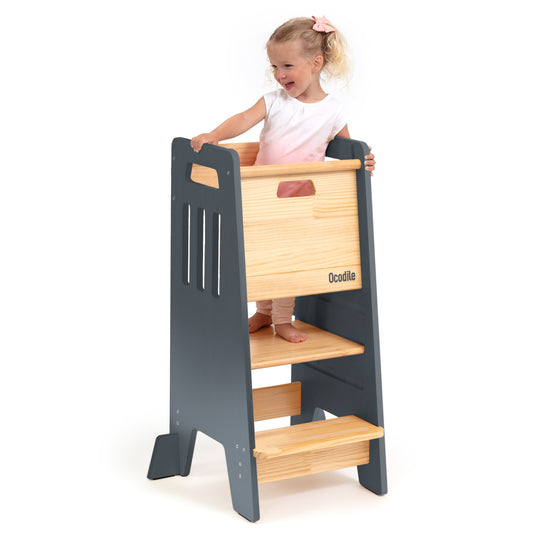
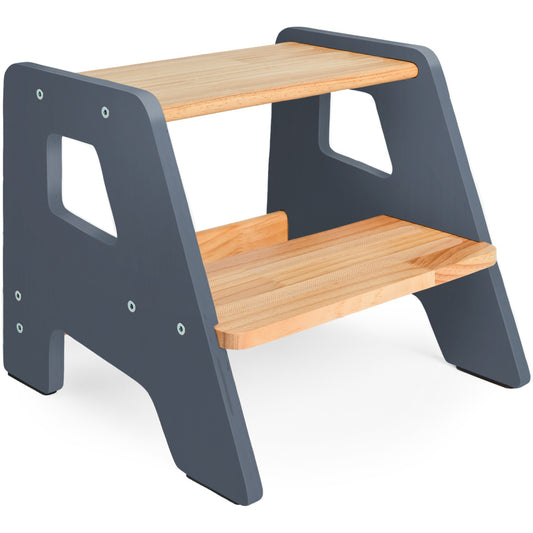
If you're looking for child-focused storage and furniture that supports real independence, Ocodile designs pieces with safety and everyday family use in mind. Visit Ocodile to explore practical solutions that help children participate more confidently in home routines.