


A Parent’s Guide to the Kitchen Helper Learning Tower
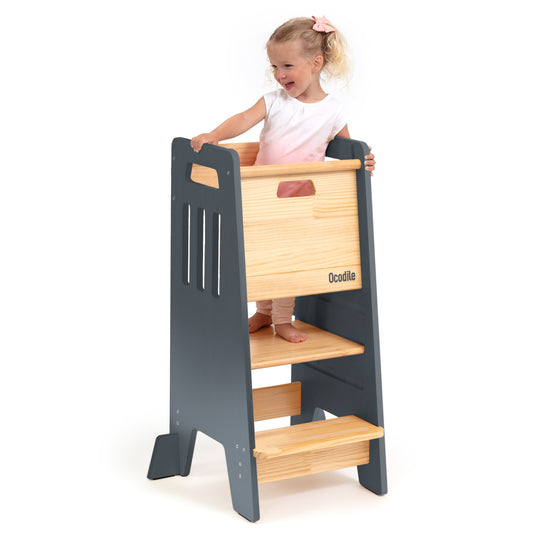
Ever wonder what a kitchen helper or learning tower actually is? Put simply, it’s a sturdy, enclosed stool designed to safely bring your toddler up to counter height, letting them join in on all the action. Think of it as your child's very own perch, a safe spot where they can explore, learn, and be right there with you in the heart of the home.
It’s no wonder this clever piece of furniture has become a must-have for modern parents who want to encourage independence and create more shared family moments.
Understanding the Kitchen Helper Learning Tower
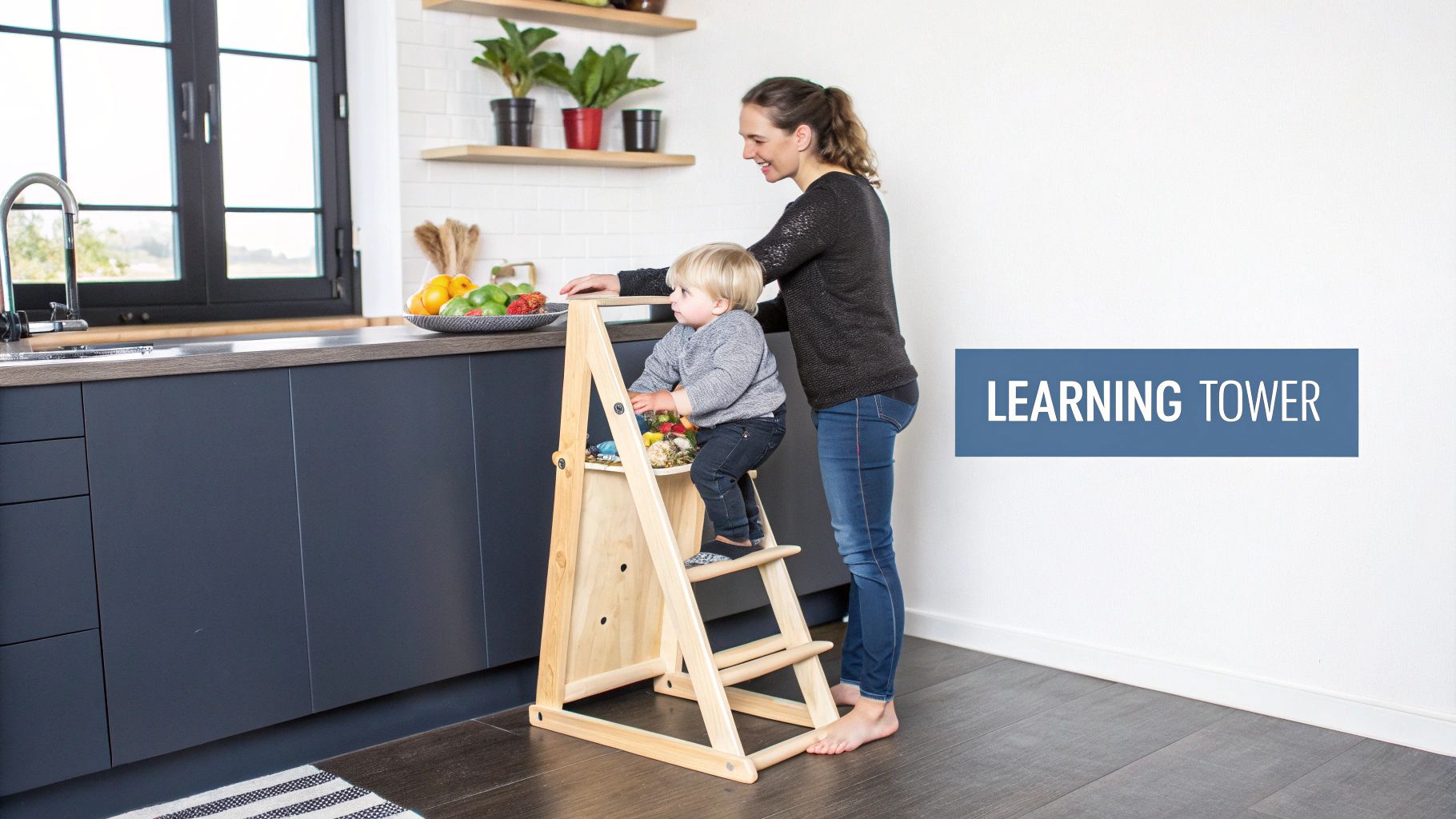
At its core, a kitchen helper is a bridge. It closes the physical gap between your toddler’s world down on the floor and your world up at the counter, instantly turning everyday chores into moments of connection.
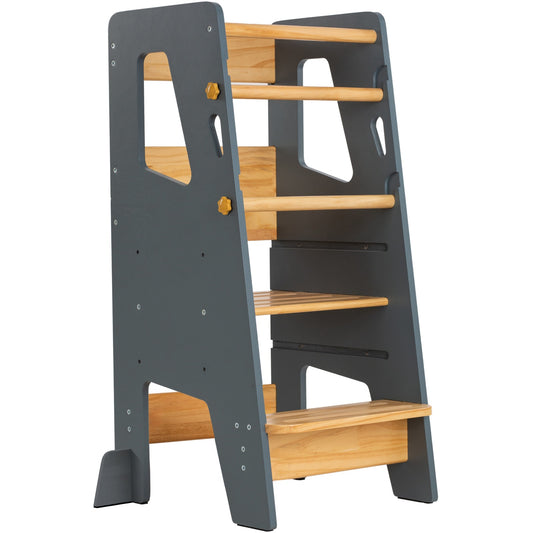
Unlike a wobbly chair or a tippy step stool, a learning tower has a secure, four-sided enclosure. This smart design dramatically cuts down the risk of falls, giving you peace of mind.
With the fear of falling gone, your child can finally use both hands freely. They can focus completely on the task, whether that’s stirring pancake batter, “helping” wash veggies, or just watching you cook dinner. By bringing them up to your level, you’re inviting them into your world, making them feel included and important.
More Than Just a Stool
A learning tower is so much more than a way to get your child to the right height. It's a powerful tool for their development, nurturing growth in some really important ways. When kids get to participate in real-world tasks, they build an incredible sense of confidence and capability.
This kind of hands-on involvement is a perfect match for Montessori principles, which champion practical life skills as a foundation for early learning.
The benefits are clear and hit on so many levels:
- Fosters Independence: They learn to do things for themselves, all within a safe and supportive space.
- Enhances Motor Skills: Scooping, pouring, and mixing are fantastic for refining both fine and gross motor control.
- Boosts Confidence: Helping with a family meal makes them feel valued, competent, and like a true part of the team.
- Strengthens Connection: Working side-by-side creates lasting memories and deepens that special parent-child bond.
It's not just parents who see the value; the market reflects this growing appreciation for early, hands-on learning. The global market for toddler learning towers hit about USD 1.16 billion in 2024, and it's on a clear upward trend. This boom shows just how much parents are prioritizing products that support both safety and skill development at home.
A learning tower doesn't just give your child a boost in height; it gives them a boost in confidence, independence, and connection. It turns observers into active participants.
By bringing your child to the counter, you create a shared workspace where curiosity can run wild. They get to ask questions, see how things work, and pick up practical skills that will stick with them for life. To really get to the bottom of it all, you can check out our detailed guide on what a learning tower is and its core benefits.
Learning Tower At-a-Glance
To give you a quick snapshot, here's a simple breakdown of what a kitchen helper is all about.
| Feature | Primary Benefit | Typical Age Range |
|---|---|---|
| Elevated Platform | Brings toddlers to counter height safely | 18 months to 6 years |
| Safety Enclosure | Four-sided rails prevent falls and tumbles | 18 months to 6 years |
| Adjustable Height | Grows with your child for long-term use | 18 months to 6 years |
| Sturdy Construction | Provides a stable base for active toddlers | 18 months to 6 years |
| Compact Footprint | Fits easily into most kitchen layouts | 18 months to 6 years |
This table covers the essentials, showing how a simple design can deliver so many benefits for your child’s development and your family's daily routine.
Exploring the Developmental Benefits for Your Toddler
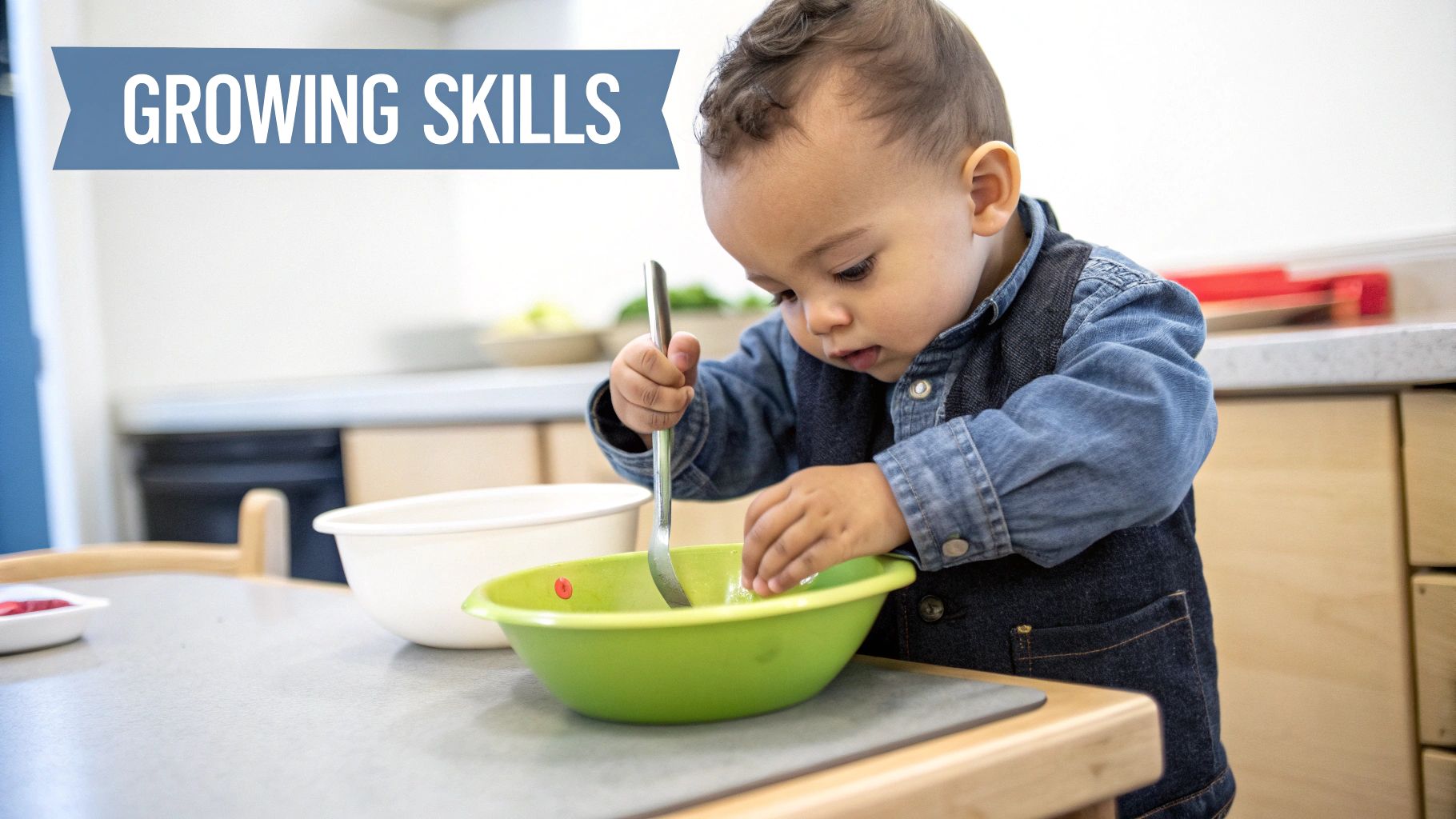
A kitchen helper is so much more than just a fancy stool. Think of it as a launchpad for your toddler’s development. By giving them a safe boost up to counter height, you're opening up a whole new world of hands-on learning that nurtures their mind, body, and confidence in some pretty amazing ways.
Little actions like stirring batter or rinsing vegetables suddenly become powerful moments for growth. It’s right there, standing shoulder-to-shoulder with you, where your child starts building the foundational skills they’ll use for the rest of their lives.
Boosting Motor Skills and Coordination
Honestly, the kitchen is a fantastic sensory playground. When your child is up in their learning tower, they get to try tasks that demand precision and control—the very things that are crucial for their physical development.
Take the simple act of scooping flour into a bowl. That single motion is refining their hand-eye coordination and strengthening all the tiny muscles in their hands and fingers, what experts call fine motor skills.
These aren't just one-off movements; they're the building blocks for bigger skills down the road, like learning to write or tying their own shoelaces. A kitchen helper provides the perfect, stable platform for them to practice these delicate maneuvers safely, over and over again.
By transforming the kitchen into a safe learning environment, a tower allows toddlers to master physical tasks that would otherwise be out of reach, turning observation into active participation.
Igniting Cognitive Growth and Early Learning
Beyond the physical stuff, the kitchen is a vibrant classroom for the mind. Following a simple recipe with you introduces the idea of sequencing and following instructions step-by-step—a core cognitive skill.
Counting scoops of sugar or sorting blueberries brings early math concepts to life in a way that’s tangible (and delicious!). You can ask, "Can you pass me three carrots?" or say, "Let's add two spoonfuls," making numbers a natural part of your daily conversation.
This hands-on approach makes abstract ideas finally click. They aren't just hearing about measurements; they are experiencing them. This direct involvement makes learning stick, laying a strong foundation for school later on. You can even introduce them to some essential cooking techniques for beginners and watch a little chef emerge.
Nurturing Emotional Intelligence and Independence
This might be the biggest benefit of all: the emotional and social growth that blossoms right there at the kitchen counter. When your toddler helps you get a family meal ready, they feel a real sense of belonging and contribution.
This shared time strengthens your bond, creating those precious connection points in the middle of a busy day. And their confidence? It soars when they see their efforts result in a finished meal that everyone enjoys.
That feeling of accomplishment is a huge motivator. It encourages them to take on new challenges and builds genuine self-esteem. As they master these small kitchen tasks, they are actively practicing independence in a safe, supported space. We have a whole guide on encouraging independence in toddlers that dives deeper into how these moments build capable, confident kids.
The kitchen helper is the tool that makes this journey possible. It gives them a designated, secure spot to explore their growing abilities, empowering them to say, "I can do it myself!"—all while feeling your steady presence right beside them.
Putting Safety First When Choosing a Learning Tower
Let’s be honest, when you’re a parent, your child’s safety radar is always on. So, when you bring a kitchen helper tower into your home, you're not just buying a piece of furniture—you’re trusting it to be a secure perch for your little explorer. But with so many designs out there, what really makes one tower safer than another?
It all comes down to the details. From the sturdiness of the base to the height of the guardrails, every single element plays a role in preventing tumbles and giving you peace of mind. Let’s walk through the absolute non-negotiables that separate a truly safe learning tower from a wobbly risk.
The Foundation of a Secure Tower
The single most critical safety feature is a wide, sturdy base. Think of it like a pyramid: a broader footprint creates a lower center of gravity, which makes the whole thing much, much harder to tip over. A tower with a narrow or lightweight base is a serious hazard, especially when you have an energetic toddler who loves to wiggle, lean, and reach for everything in sight.
Look for a model with splayed legs or an anti-tip design where the feet extend out beyond the main frame. This is a specific engineering choice meant to counteract the shifting weight of a curious child. For another layer of security, it’s always a great idea to learn how to secure furniture to the wall—a best practice that applies to all kinds of kids' furniture.
The stability of a learning tower isn't just a feature—it's the bedrock of its entire purpose. A tower that can't reliably support a curious, moving child fails its primary safety test.
Unfortunately, stability is a huge problem in the market. A 2023 test of 16 popular learning towers revealed that a shocking 13 failed stability tests when a 35-pound weight was applied. This shines a bright light on the very real risk of tip-overs and highlights a major issue: there isn't one unified federal safety standard for these products, which leads to a wild west of inconsistent quality. You can dive into the full toddler tower safety findings to get a clearer picture of the current landscape.
Essential Design and Material Standards
Beyond a stable base, a few other design elements are absolutely vital for keeping your little one safe. High-quality construction and thoughtful details can make all the difference.
Here’s a checklist of what to look for:
- Four-Sided Guardrails: The tower must have protective railings on all four sides to create a full enclosure. A tower with an open back is a major fall risk, especially for younger toddlers who are still finding their balance.
- Appropriate Railing Height: The top rail should hit around your child’s mid-torso or chest. If it's too low, they can lean right over it. Too high, and it gets in the way of them actually helping.
- Non-Slip Platform and Steps: The surfaces where your child stands and climbs need a textured, non-slip finish. Kitchens get messy and spills happen, so a good grip is essential to prevent slips.
- Safe Materials and Finishes: Make sure the tower is built from durable, solid materials like high-quality wood or BPA-free plastic. All paints and finishes must be non-toxic and child-safe—because you know your toddler is going to chew on it at some point.
- No Entrapment Hazards: Check the spacing between any slats in the guardrails. They should be too narrow for a child’s head to fit through, but not so tight that little arms or legs could get stuck.
What to Watch Out For
While good features make a tower safe, certain design flaws can introduce risks you just don’t need. When you’re shopping around, keep an eye out for these common red flags.
Steer clear of towers with:
- "Climbable" Sides: Designs with horizontal bars, big cutouts, or ladder-like rungs on the sides are a big no. They practically invite a curious toddler to climb out of the tower and onto the counter, which is a recipe for a serious fall.
- Sharp Edges or Corners: Run your hand over the tower. All edges should be rounded and smooth to prevent injuries from accidental bumps.
- Complex Folding Mechanisms: If you’re considering a foldable model, check that its locking mechanism is rock-solid and can’t be easily undone by a child. A tower that could collapse unexpectedly is incredibly dangerous.
- Lack of an Adjustable Platform: While not a direct hazard, a non-adjustable platform means the tower is only safe for a very short window of time. As your child gets taller, a platform that's too low makes the guardrails useless.
How to Select the Perfect Learning Tower for Your Home
Choosing the right kitchen helper learning tower is about finding the perfect fit for your family. This isn't just another piece of furniture; it's a long-term investment in your child's learning and your daily connection. The perfect tower should match your child's needs, slot seamlessly into your kitchen, and just plain work with your lifestyle.
Navigating the options can feel a little overwhelming at first. But if you break it down into a few key areas—materials, adjustability, and overall design—the decision becomes much clearer. With the right info, you can confidently pick a tower that will be a beloved and well-used part of your home for years.
Comparing Learning Tower Materials and Styles
A comparative look at common materials and key features to help you decide which tower best fits your family's needs and space.
| Material/Feature | Pros | Cons | Best For |
|---|---|---|---|
| Solid Wood (Birch, Beech) | Extremely durable, classic high-end look, very sturdy. | Can be heavy and is often the most expensive option. | Families looking for a "buy it for life" heirloom piece that can be passed down. |
| Plywood (Baltic Birch) | Excellent strength and stability without the high cost or weight of solid wood. Offers a clean, modern aesthetic. | Quality can vary; lower-grade plywood may not be as durable. | Most families, as it offers a fantastic balance of durability, style, and price. |
| Plastic | Lightweight, easy to clean, and the most budget-friendly option. | Less durable and sturdy than wood. May not offer the same longevity. | Shorter-term use or as a secondary tower at a grandparent's house. |
| Stationary Design | The most stable and sturdy option. | Not easily moved or stored. Takes up a dedicated spot. | Homes with ample kitchen space where the tower can have a permanent home. |
| Foldable Design | Great for small spaces; can be tucked away in a closet or pantry. | The folding mechanism can be a potential weak point. Must ensure it has a secure, child-proof lock. | Apartments, small kitchens, or anyone who values a clutter-free counter area. |
| Convertible Design | Multi-functional—often turns into a desk/chair, extending its usefulness. | Can be bulkier and more complex to convert. May be less stable than a dedicated stationary tower. | Families who want maximum value and function from a single piece of furniture. |
The material you choose really sets the tone for your tower's durability, weight, and how easy it is to wipe down after a messy baking session. The market for the kitchen helper learning tower is pretty diverse, with a lot of great manufacturers based right in the United States. Companies like Guidecraft, KidKraft, and Sprout offer a huge array of models, which means you can find something for just about any budget, with prices ranging from $15 to over $200. You can discover more about the learning tower market landscape if you want to dive deeper.
The Importance of an Adjustable Platform
If there's one feature you absolutely shouldn't skip, it's an adjustable platform. Think of it as the tower's secret to growing up. A tower with a fixed platform height has a very short lifespan because your child will outgrow it in a flash.
An adjustable platform lets the tower grow right alongside your kid. You can lower the standing surface as your toddler gets taller, making sure the guardrails always stay at a safe height around their torso. This single feature transforms the tower from a short-term toddler accessory into a tool that can serve your child from 18 months well into their preschool years. It’s what really maximizes your investment.
A tower that grows with your child isn't just a convenience—it's a commitment to years of shared moments. The adjustable platform is what makes this long-term connection possible.
Finding the Right Design for Your Space
Beyond the nuts and bolts of materials and adjustability, the overall design determines how the tower will actually function in your home. Different models are built for different needs, especially when it comes to space.
No matter the design, though, some safety features are just non-negotiable.
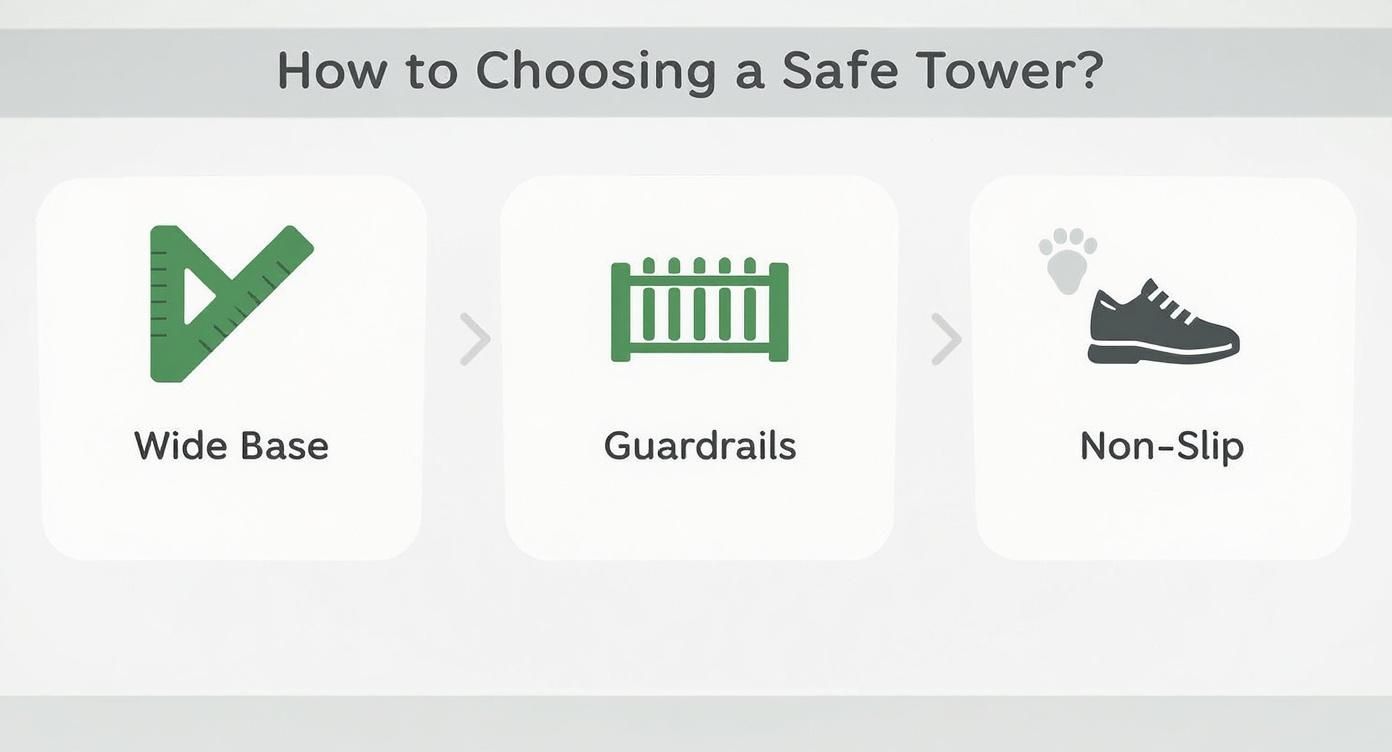
This really drives the point home: a wide base for stability, secure guardrails to prevent tumbles, and non-slip surfaces are the foundation of a safe tower. Always look for these three things first.
From there, you can think about which style works best for your home:
- Stationary Towers: These are your classic, rock-solid designs. They have a fixed structure and are meant to stay in one spot, making them a fantastic choice if you have a dedicated area in your kitchen where your little one helps out.
- Foldable Towers: A lifesaver for smaller kitchens or for families who just want to tuck the tower away. These models collapse for easy storage, but always double-check that the locking mechanism is secure and not something a curious toddler can figure out.
- Convertible Towers: These are the multitaskers of the learning tower world. Many of them cleverly transform into a small desk and chair, giving you a ton of extra functionality that extends their usefulness long after your child can reach the counter on their own.
By thinking through the material, making sure the platform is adjustable, and picking a design that fits your home's layout, you'll find the perfect kitchen helper that promises years of safe, fun, and connected family time.
Integrating the Learning Tower into Your Daily Routine
Once your new kitchen helper learning tower arrives, the real fun begins. Making it a natural part of your family’s life is about more than just setting it up in a corner; it's about creating small, consistent rituals that invite your child right into your world. This is where the tower stops being a piece of furniture and becomes a hub for connection, learning, and shared joy.
The key is to start simple. The first few times your toddler climbs in, the sheer novelty of being at counter height is an activity in itself. Just let them stand beside you while you make a snack. This kind of low-pressure introduction helps them get comfortable in their new, elevated space without feeling overwhelmed.
From there, you can slowly introduce tiny, manageable tasks. The goal isn't perfect results; it's about the process and the simple act of doing things together. This hands-on involvement makes them feel like a capable and truly valued member of the family team.
Making Every Day a Learning Adventure
You can weave the learning tower into almost any part of your day, not just meal prep. Think of all the small moments where your child could participate if they just had a safe boost. The possibilities are genuinely endless and will evolve as your child grows and picks up new skills.
Age-Appropriate Activities to Try:
-
For Young Toddlers (18-24 months): At this stage, it's all about sensory exploration and simple cause-and-effect. Their main job is to watch, touch, and get familiar with new textures and smells.
- Washing veggies in a big bowl of water
- "Helping" you stir ingredients with a large spoon
- Playing with a small piece of dough or other safe sensory materials
- Handing you ingredients from a pre-portioned bowl
-
For Older Toddlers (2-3 years): Now they can take on tasks with a bit more responsibility. Their fine motor skills are getting better, allowing for more precise actions.
- Pouring pre-measured liquids into a bowl
- Mashing soft foods like bananas or avocados with a fork
- Spreading butter or jam on toast
- Decorating cookies with sprinkles (expect a mess, and that's okay!)
The most meaningful learning happens when children are active participants, not passive observers. The tower closes the gap, allowing them to engage their hands and minds in real, purposeful work.
Setting Up for Safe and Happy Participation
To make the experience a good one for everyone, a safe and predictable environment is a must. This means setting up a designated "toddler zone" at the counter and creating clear, simple rules from day one. Consistency is your best friend here.
Tips for a Secure Toddler Zone:
- Clear the Decks: Before you invite your little one up, move all sharp objects, hot items, and cleaning supplies far out of reach. Create a clean, open workspace just for them.
- Establish Ground Rules: Keep the rules simple and consistent. Phrases like "Feet always stay flat on the platform" or "We keep our hands to ourselves" are easy for young kids to understand and remember.
- Supervise Actively: A learning tower is a fantastic safety tool, but it's not a babysitter. Always provide direct, attentive supervision when your child is using it. Staying within arm's reach lets you offer help and prevent any adventurous attempts to climb out.
By thoughtfully weaving the kitchen helper learning tower into your daily rhythms and setting clear boundaries, you create a powerful space for growth. You’re not just making meals; you’re cooking up confidence, nurturing curiosity, and making memories that will last a lifetime.
Of course. Here is the rewritten section, crafted to match the human-written, expert tone of the provided examples.
Common Questions About Kitchen Helper Learning Towers
Even after seeing all the ways a learning tower can change your daily life, it's totally normal to have a few more questions. Is my child ready? Is it worth the money and the space? We get it. This is where we tackle the most common things parents ask us, clearing up those last-minute hesitations so you can feel great about your decision.
Think of this as the final chat over a cup of coffee, where we get into the nitty-gritty details. We’re covering everything from when to start to how to clean it, giving you the practical, straightforward answers you're looking for.
At What Age Can My Child Start Using a Learning Tower?
This is easily the question we hear most often. Generally, most toddlers are ready for a kitchen helper learning tower around 18 months, or whenever they can stand on their own two feet without wobbling.
But forget the calendar for a second—it’s really about their developmental stage, not just their age. Look for signs that they’re steady on their feet, walking confidently, and starting to show an interest in climbing everything in sight. Those are the green lights that tell you they have the physical control to use a tower safely.
This is exactly why choosing a tower with an adjustable platform is so important. It lets you set the height just right from day one, making sure the safety rails are always at their mid-torso. That adaptability is what makes a tower a brilliant long-term tool, useful from those early toddler days straight through the preschool years.
Is a Learning Tower Worth the Investment and Space?
A learning tower is so much more than another piece of kid gear—it’s an investment. It’s an investment in your child's confidence, in your time together, and in their early learning. Yes, there's an upfront cost, but the daily value it adds is huge. It turns making dinner from a solo chore into a shared experience, building skills and memories that stick around long after they've outgrown it.
A learning tower doesn't just take up space in your kitchen; it creates space for connection, growth, and priceless family moments that would otherwise be missed.
Worried about a small kitchen? That's a fair point. The good news is, designers have gotten pretty clever. You can find plenty of fantastic foldable or convertible models that tuck away easily in a pantry or even turn into a little desk. They’re a practical choice even for the coziest of homes.
How Do I Clean and Maintain My Learning Tower?
Keeping your learning tower looking good is surprisingly easy. What you do depends on the material it’s made of, but most routines are quick and painless.
For towers with a finished wood or plastic surface, a simple wipe-down is usually all you need. A damp cloth and a little mild soap will take care of sticky fingerprints and food spills. Just be sure to dry it afterward. That’s it—it’s ready for the next kitchen adventure.
Beyond the daily wipe-down, it’s smart to do a quick safety check every now and then.
- Check Hardware: Give all the screws and bolts a little twist to make sure they’re still tight and the tower feels solid.
- Inspect Surfaces: Run your hand over wooden models to check for splinters and look for any cracks in plastic ones.
- Test Stability: Give the tower a gentle shake. It shouldn’t wobble or feel loose at all.
These simple habits will keep the tower safe and sturdy for years to come, so it’s always a secure spot for your little helper.
Can I Use a Regular Stool Instead of a Learning Tower?
It’s a tempting thought: "Why not just pull a chair over to the counter?" While a stool or chair does give your child a boost, it’s missing the most critical thing: safety features designed for a wobbly, curious toddler.
The difference is all in the design. A kitchen helper learning tower is built specifically for little kids on the move. It has a wide, sturdy base that prevents tipping and—most importantly—four-sided railings that create a safe little cocoon. That protective enclosure is what stops the slips and tumbles that happen so easily on an open stool, especially when your child is busy mixing or watching and not thinking about their balance.
When your child is going to be hands-on at the counter, a learning tower provides a level of security that a chair or stool just can’t match. It’s purpose-built for peace of mind, making it the safer, more responsible choice.
Ready to transform your kitchen into a hub of learning and connection? The Ocodile learning tower is designed with your child’s safety and independence in mind, blending beautiful craftsmanship with practical features that grow with your family.
Explore the Ocodile Learning Tower and start making memories today!