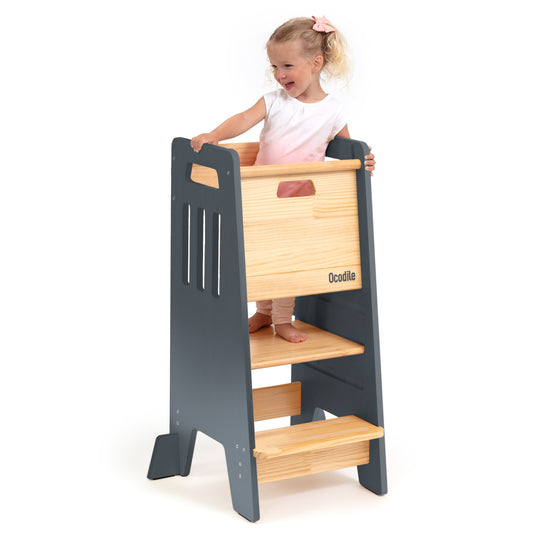


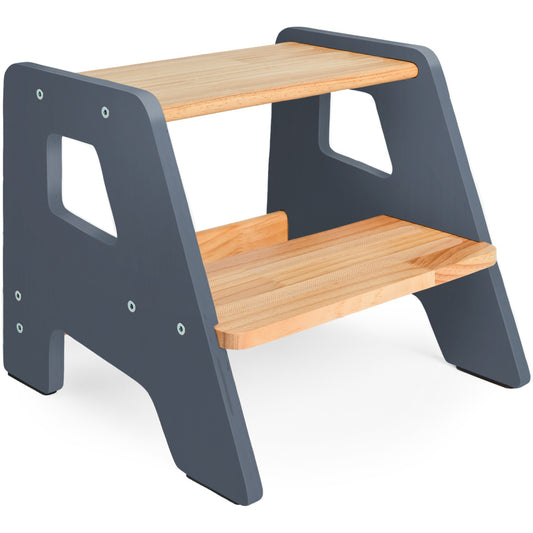


Best Large Kids Table: Your Buying Guide
You’re probably looking at one of two situations right now. Either your child has outgrown the tiny toddler table that worked for snacks and crayons, or you’re tired of projects spilling across the dining table and want one surface that can handle puzzles, coloring, building, early homework, and the occasional lunch without feeling temporary.
That’s where a large kids table earns its place. The right one isn’t just a bigger version of a toy table. It becomes a family work surface sized for children, useful enough for years, and sturdy enough to stay in your home long after the toddler phase passes. A bad one, though, becomes clutter, a tipping risk, or a table your child never wants to sit at because it feels wrong.
I design children’s furniture with daily life in mind, and the same pattern shows up again and again. Parents rarely regret buying a table that fits well, cleans easily, and stays stable. They do regret buying a table that looked cute online but was too tall, too flimsy, or too small to support real use.
Finding the Perfect Fit Sizing Your Large Kids Table
Size comes first. Before color, style, storage, or whether it matches your kitchen, the table has to fit the child who’s using it.
For younger children, the sizing isn’t guesswork. Children’s tables for ages 2 to 5 must follow child-specific dimensions, with a minimum 10.5-inch seat height and 17-inch table height, plus allowances for 11.5-inch hip breadth and 5.5-inch thigh clearance. The same guidance notes that exceeding these dimensions by 20% increases fall risk by 35%, and that undersized tables can lead to poor posture and entrapment hazards, based on the cited standards and regulations in Texas Administrative Code guidance.
That matters because children don’t adapt to bad furniture the way adults do. They slide forward, kneel, hook a foot around a chair leg, lean on the edge, or abandon the table entirely.
Start with posture, not room dimensions
A good fit is easy to spot. When your child sits down:
- Feet should rest securely on the floor or a stable foot support.
- Knees should bend naturally, not jam upward under the table.
- Elbows should land slightly above the tabletop for drawing, eating, and simple tabletop work.
- Shoulders should stay relaxed, not lifted.
- There should be visible clearance between thighs and the underside of the table.
If you see a child reaching upward to color, the table is too tall. If their knees are crowded and their belly presses the edge, the table is too low or the chair is too high. Both create fatigue fast.

A practical sizing chart for everyday buying
The table below is a useful buying shortcut for a large kids table intended to serve children from preschool into early elementary years.
| Child Age Range | Ideal Chair Seat Height | Ideal Table Surface Height |
|---|---|---|
| 3 to 5 years | 10 to 12 inches | 18 to 20 inches |
| 5 to 7 years | 12 to 14 inches | 20 to 22 inches |
| 7 to 10 years | 14 to 16 inches | 22 to 24 inches |
These ranges work well because they reflect how children grow in real use, not just how a product gets labeled online. A table marketed as “for kids” can still be awkward if it sits closer to adult side-table height.
Practical rule: If you’re choosing one large kids table for mixed ages, prioritize the youngest daily user for safety, then add slightly taller chairs later rather than starting with a table that’s too high.
How to measure before you buy
You only need a tape measure and a chair your child already uses comfortably.
- Measure floor to knee bend while your child sits with feet flat.
- Measure floor to elbow in that same seated position.
- Compare those numbers to the chair seat height and table surface height.
- Check underside clearance so thighs don’t crowd the apron or support rails.
- Leave room for movement, especially if the table will be used for crafts and meals.
A large table often has a thicker top and heavier framing than a small play table. That’s good for strength, but it can steal legroom if the apron is deep or placed too low. Parents often miss that detail because product listings highlight tabletop size, not knee clearance.
What works in a long-term family table
For a table meant to bridge toddlerhood to early school years, I usually recommend thinking in layers:
- For younger children now: keep the table surface low enough for safe seated use.
- For older siblings too: use chair options that can change sooner than the table.
- For long sessions: avoid bench seating unless it has proper support. Individual chairs usually give better posture.
- For shared use: choose a rectangular top over a tiny square. It’s easier to divide into art, snack, and puzzle zones.
A large kids table should feel welcoming, not oversized. Bigger isn’t better if the height is wrong.
If you want a deeper reference for how child-sized furniture dimensions work in everyday setups, Ocodile has a helpful guide on children’s table height.
Choosing Materials and Finishes That Last
Once the size is right, materials decide whether the table survives real family life. A large kids table gets used harder than most furniture. Children drag markers across it, tap cups on the edge, climb onto the chairs, push toy trucks over the surface, and leave wet craft supplies behind.
That’s why I look at material choice less as a style decision and more as a durability system. The surface, the core, the edges, and the finish all matter.
There’s also a clear reason more parents are thinking this way. Market data for 2025 to 2026 showed a 42% spike in demand for “grow-with-me” kids furniture, reflecting families who want pieces that last longer, according to the cited market summary in IKEA’s kids tables category context. The gap I see in the market is the same one many parents feel. Lots of products are built for toddler use only, not for the stretch into homework, board games, and family-style activities.
Comparing the main material options

Here’s how the most common materials tend to perform in practice.
| Material | What works well | Common trade-off |
|---|---|---|
| Solid birch or similar hardwood | Strong legs, repairable, ages well, warmer appearance | Higher cost, heavier to move |
| Plywood | Good structural stability, strong when well built, holds up better than many budget boards | Edge finish matters a lot |
| MDF | Smooth painted finish, affordable, common in low-cost furniture | Vulnerable to swelling, edge damage, and long-term wear |
| Plastic | Easy wipe-down, lightweight, often useful for temporary setups | Can feel less stable, less durable over time, often less adaptable visually |
What I’d choose for daily family use
For a large kids table meant to stay in the home for years, solid wood legs with a plywood or solid wood top is one of the most practical combinations. You get the strength where the table takes force most often, at the base and joints, without making the whole piece unnecessarily bulky.
MDF can look fine on day one. The problem usually shows up later. Once edges chip or moisture gets into a seam, the table starts aging quickly. That may be acceptable for a short phase, but it’s not my first choice for a long-term family hub.
Plastic has its place, especially in high-mess areas or temporary play zones, but many plastic tables feel too light for multi-child use. On a larger footprint, low weight can work against stability.
Check the finish as carefully as the wood
Parents often focus on the material and forget the finish. For children’s furniture, that’s backwards. The finish is what little hands touch, what food lands on, and what you clean every day.
Look for:
- Sealed surfaces that wipe clean easily after paint, glue, and snack spills.
- Low-odor finishes that don’t leave a strong chemical smell after unboxing.
- Smooth edge treatment so the finish doesn’t chip at corners first.
- Repairable surfaces if you want the table to last through several stages.
A table that’s technically durable but impossible to clean won’t stay in active use. Families keep the pieces that are easy to reset after a messy afternoon.
Construction details that matter more than the material label
A cheap “solid wood” table can still be a poor buy if the joinery is weak. A well-made plywood table can outlast a poorly made hardwood one.
When I evaluate build quality, I check:
- Leg attachment points: wobble usually starts here first.
- Underside bracing: especially important on large rectangular tops.
- Edge profile: rounded and sealed edges hold up better.
- Surface flatness: important for drawing, puzzles, and block play.
- Weight balance: enough mass to feel planted, not so much that moving it becomes a struggle.
If non-toxic finishes are high on your list, Ocodile’s article on non-toxic kids furniture is a solid companion read before you buy.
Essential Safety Standards for Peace of Mind
Parents usually notice color first and stability second. It should be the other way around.
A large kids table has greater potential for tipping, more edge area to grab, and more chances for climbing or rough play. That doesn’t make it dangerous by default. It does mean you should judge it like real furniture, not like a toy accessory.
The stakes are serious. Furniture tip-overs caused 459 child deaths between 2000 and 2018, with 93% of victims under age 5, and a CPSC expert noted that a child dies every two weeks from such an accident. The same CPSC material states that large, unanchored tables have a 2.8x higher tip risk, while anchoring to a wall can reduce this incidence by 85% in applicable setups, according to the presentation materials from the U.S. Consumer Product Safety Commission.
The features I treat as non-negotiable
A safe large kids table should have the following basics:
- Rounded corners: square corners land at face height for many young children.
- Wide, planted legs: narrow inward-tucked legs can look elegant but reduce confidence when children lean on the edge.
- Good friction at the floor: non-slip pads matter more on hard flooring.
- No sharp hardware exposure: check the underside and attachment points.
- Stable chairs that match the table: a secure table paired with tippy seating is still a bad setup.
Stability is a design issue, not just a behavior issue
Parents sometimes say, “My child just knows not to climb.” That’s hopeful, but it’s not a safety strategy. Children lean, pull, and test boundaries while playing. A table needs to tolerate that reality.
What tends to work:
- Four legs set close to the corners
- A base wide enough for the tabletop size
- Weight distributed low
- Joinery that resists side-to-side sway
What tends to fail:
- Oversized tops on light frames
- Decorative pedestal bases for child use
- Folding mechanisms that feel loose over time
- Tall add-on storage fixed to the tabletop
Don’t judge stability with a gentle shake in a showroom. Push lightly on the edge from different sides, then imagine a child leaning chest-first to grab a marker on the far side.
When wall anchoring makes sense
Not every table is designed to anchor, and a standard table placed in the center of a room often won’t be. But if a larger activity table sits near a wall, includes vertical components, or forms part of a built-in play zone, anchoring can add protection.
The same safety mindset applies across the room. If you’re reviewing your whole setup, not just the table, this guide on how to childproof your home is worth keeping open while you assess surrounding shelves, cords, and nearby furniture.
Certifications and safety language to look for
Product listings can be vague, so read carefully. Meaningful signs include references to:
- ASTM standards
- CPSC compliance language
- Lead and finish safety information
- Clear assembly instructions
- Specific warnings about intended age or use
If a listing only says “kid-friendly” or “safe for children” with no detail, I’d keep looking. Real safety claims usually come with design specifics, testing language, or material disclosures.
Creating a Hub for Growth with Montessori Principles
A large kids table can do something a lot of smaller play tables can’t. It can support independence and collaboration at the same time.
That combination matters in Montessori-style homes. A child needs furniture that feels accessible and usable without adult help, but family life also asks for shared work, sibling play, snack prep, crafts, and the kind of side-by-side activity that happens naturally when children have enough room.

There’s a real gap here. The current conversation around Montessori furniture still leans heavily toward small tables for one child, even though parents frequently ask for solutions that work for 4 to 6 children and can support collaborative use with safe, scaled-up design details like rounded edges and height-adjustability, as reflected in the market gap described by BusyWood’s Montessori table category context.
What Montessori gets right about table design
At its best, Montessori furniture removes friction. A child can approach it, use it, clean it, and leave it without needing a rescue every few minutes.
For a large kids table, that means:
- Child-reachable height
- Enough surface area for defined activity zones
- Clear access from multiple sides
- Simple, calm design without visual clutter
- Materials that feel real, not disposable
A large table becomes especially useful when one child wants to draw, another wants to sort puzzle pieces, and an adult wants to sit nearby without taking over the space.
Bigger can still be child-led
Some parents worry that a larger table will feel too adult. That only happens when the proportions or setup drift away from the child.
A child-led large table still works if you keep the environment intentional:
- Put art tools in low baskets, not overhead bins.
- Leave open space on the surface instead of crowding it with fixed organizers.
- Use a tray for one focused activity and keep another area open for free work.
- Choose chairs children can move with confidence.
If you’re shaping a Montessori-inspired setup at home, Ocodile has a useful guide on the Montessori table and chair approach.
Collaboration is the missing piece
Small tables are good for solitary work. Large tables add social learning. Children can pass materials, negotiate space, wait for turns, and work beside one another without crowding.
That matters for siblings, playdates, and mixed-use family routines. One child can roll dough while another paints. A parent can join briefly, then step back. The table supports independence without forcing isolation.
Here’s a visual example of the kind of child-centered setup many parents aim for:
“The best child-sized table is the one children can use without asking for help every single time.”
That’s the test I come back to. If the table invites use, supports concentration, and makes shared activity calmer, it’s doing more than filling space.
Planning Your Space and Inspiring Activities
A large kids table only works if it lives in the right spot. Good furniture can disappear into the wrong layout and become a magnet for clutter instead of activity.
In many homes, the best place isn’t a dedicated playroom. It’s the edge of family life. That might be near the kitchen, along one side of the living room, or in a flexible corner that can handle both creative mess and quick cleanup.
That mixed-use role makes even more sense when you consider how modern families live. In 2021, 80% of U.S. households with children owned tablets, compared with 57% of households without children, according to the U.S. Census Bureau’s household tablet ownership report. Families often need one surface that can handle screen-based learning, paper projects, snacks, and hands-on play in the same week, sometimes in the same hour.

Three layouts that work in real homes
The kitchen-adjacent table works well for younger children. A parent can prep food, answer questions, and supervise painting or snack time without moving to another room. This setup also helps the table become part of everyday rhythm rather than a special-occasion play surface.
The living room edge setup is often the most practical in smaller homes. The trick is zoning. Use a rug, low shelf, or wall art to define the children’s area so the table feels intentional instead of temporary.
The flexible learning corner suits homes with preschoolers and early elementary kids. During the day it handles worksheets, puzzles, and drawing. Later it can host board games or a family craft session.
What children actually do at a large kids table
A good large table invites more variety than a small one. I’ve seen the most successful setups support a rotating mix of:
- Open-ended art: big paper rolls, watercolor trays, cutting practice, sticker work
- Construction play: magnetic tiles, train tracks, blocks, LEGO sorting
- Meals and snacks: especially when children benefit from a consistent child-height eating space
- Early school tasks: tracing, letter practice, reading response sheets, simple homework
- Collaborative play: board games, puzzle building, pretend bakery or shop setups
The easiest way to keep it usable
The secret isn’t storage built into every side of the table. It’s restraint.
Keep only the daily-use tools close by. Too many bins, caddies, and tabletop extras make the surface feel busy and reduce the flexibility that makes a large kids table valuable in the first place.
I usually suggest this simple arrangement:
- One basket for drawing tools
- One tray for current work
- One nearby shelf for rotating materials
- A clear central zone for open use
Leave at least one part of the tabletop empty most of the time. Children use empty space better than adults expect.
If you’re planning a learning corner or multi-use family area, these creative homeschool room setup ideas can help spark layout ideas without pushing you into a full classroom look.
A note on screens and tabletop use
Tablets are part of family life for many households. The goal isn’t to design a “screen table.” It’s to make room for both digital and hands-on activity without one replacing the other.
That’s where a large surface helps. A child can use a tablet for guided learning, then shift to paper, manipulatives, or building materials on the same table. The space supports transitions naturally, which is often what makes routines smoother.
Your Practical Buying and Setup Checklist
When you’re ready to choose a large kids table, keep the decision simple. Most buying mistakes come from skipping one of the basics and getting distracted by looks alone.
Before you buy
- Check the height first: confirm the table and chair dimensions suit your child’s current seated posture.
- Think beyond this year: if you want long-term use, choose a size and construction that still make sense for early school tasks.
- Read the material description carefully: look for clear information on wood type, composite materials, and finish.
- Inspect the edges in product photos: rounded, smooth edges are preferable to sharp, boxy profiles.
- Study the base: a large top needs a stable frame, not just a nice-looking surface.
- Match chairs to the table: don’t assume any kids chair will work well just because the style matches.
Before assembly
- Pick the final location early: assemble with room flow in mind so you don’t end up dragging a heavy table across the house.
- Check floor level: wobble sometimes comes from uneven flooring, not bad furniture.
- Open and sort hardware: missing pieces are easier to spot before half the frame is built.
- Set aside felt or non-slip pads if needed: they help protect flooring and improve stability.
During setup
- Tighten joints evenly: uneven tightening can twist the frame slightly.
- Test from every side: press lightly on corners and long edges to feel for sway.
- Confirm chair tuck-in clearance: chairs should slide in without catching knees or apron rails.
- Remove packaging fasteners completely: staples, plastic ties, and caps often get missed.
After setup
- Watch one real use session: drawing, snack time, or puzzle play will show you quickly if the proportions are right.
- Edit the surroundings: remove climbable temptations nearby if the table sits next to shelving.
- Keep cleaning supplies simple: a damp cloth and child-safe routine work better than harsh products.
- Recheck hardware periodically: especially in the first stretch of regular use.
The right large kids table doesn’t need to be flashy. It needs to fit, stay steady, clean easily, and earn its spot every day.
If you’re looking for children’s furniture built around safety, independence, and daily family use, take a look at Ocodile. We design practical pieces that help children participate more confidently in everyday life, with the calm, durable style parents want to keep in their homes.