



Low to the Ground Beds A Parent's Guide to Safe Sleep
Think of a low-to-the-ground bed as exactly what it sounds like: a sleeping space that’s just a few inches off the floor. It’s designed to give young children safe, independent access to their own bed, which is a big deal in Montessori-inspired homes.
What Are Low to the Ground Beds and Why Parents Love Them
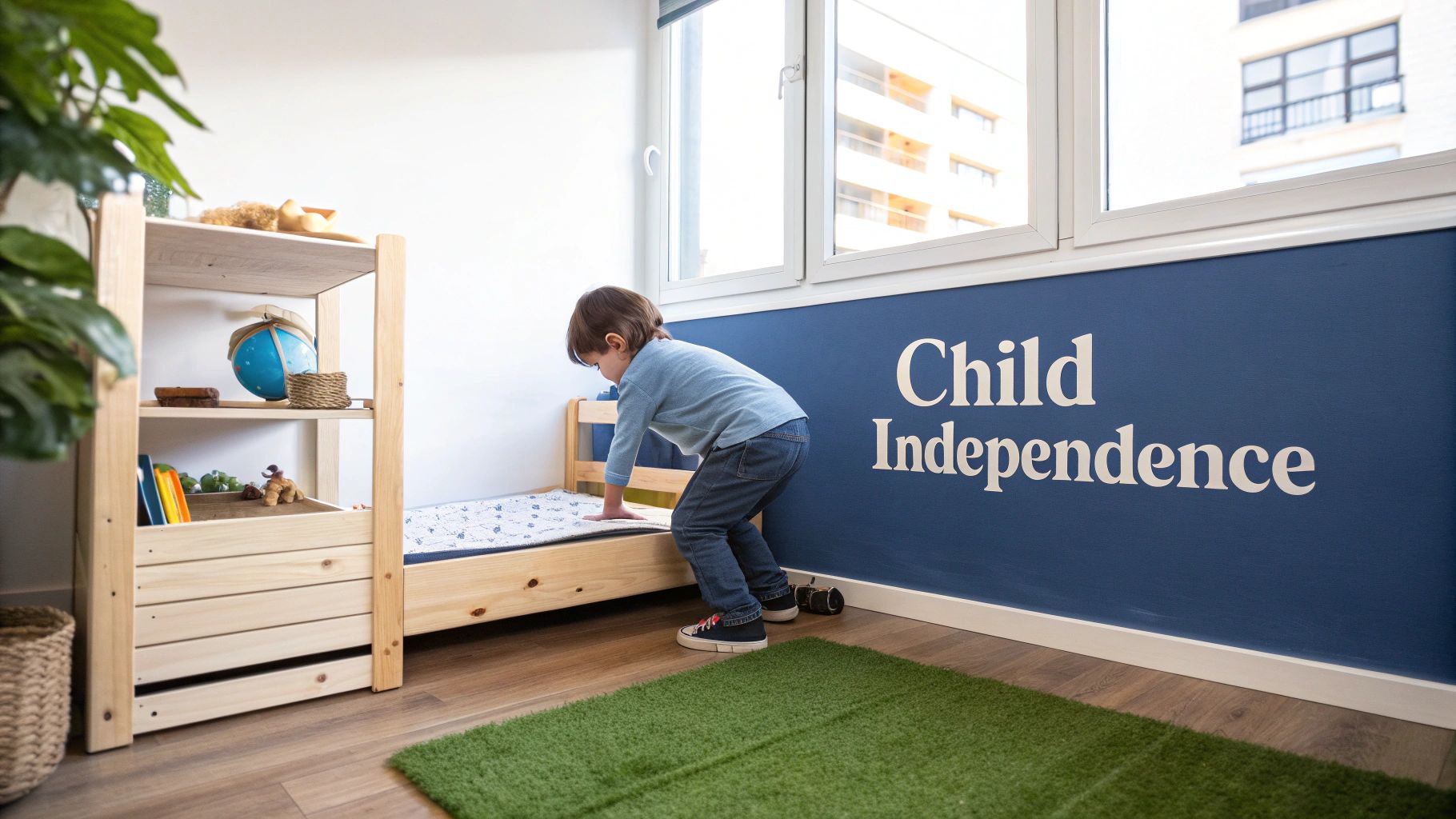
Try to see your child's bedroom from their point of view for a moment. A traditional crib can feel like a fortress with towering walls, where every entry and exit requires a grown-up’s help. A low to the ground bed completely flips that script.
It’s less of a container and more of a home base—an accessible, safe spot that is entirely theirs. This simple shift in design is incredibly powerful. It shows you trust your child's ability to know when they need rest and when they’re ready for play.
When a toddler can get into bed on their own when they're tired or safely get out when they wake up, they’re practicing real autonomy. This freedom is at the heart of the Montessori philosophy, which is all about creating a child-led environment where kids can learn and explore at their own pace.
Fostering Independence and Safety
The appeal here goes way beyond philosophy and into practical, everyday benefits. Parents are looking for furniture that not only looks nice but also actively helps their child hit key developmental milestones. These beds are a direct path to a child’s growing sense of independence and physical confidence.
Here are the key reasons they’re so popular:
- Empowering Autonomy: Kids learn to listen to their bodies, choosing when to rest without feeling trapped. This builds self-regulation skills right from the start.
- Enhancing Safety: With such a minimal height, the risk of injury from falling out is practically gone—a huge relief compared to taller beds and cribs.
- Building Confidence: Successfully moving in and out of their own space gives toddlers a major boost in confidence and body awareness.
A low to the ground bed respects a child's natural developmental path. It removes physical barriers, allowing them to take ownership of their environment and build a positive relationship with their sleep space from the very beginning.
This proactive approach to safety and development is why floor beds have become so common. Shockingly, falls from standard beds are responsible for over 80,000 emergency room visits each year for children under 5 in the US alone.
In response, parents in Europe and North America have driven a 25% increase in the adoption of these low-profile designs since 2020. They just make sense. You can find more insights about the floor-level beds market and its growth to see how the trend is catching on.
The Real-World Benefits of a Floor Bed
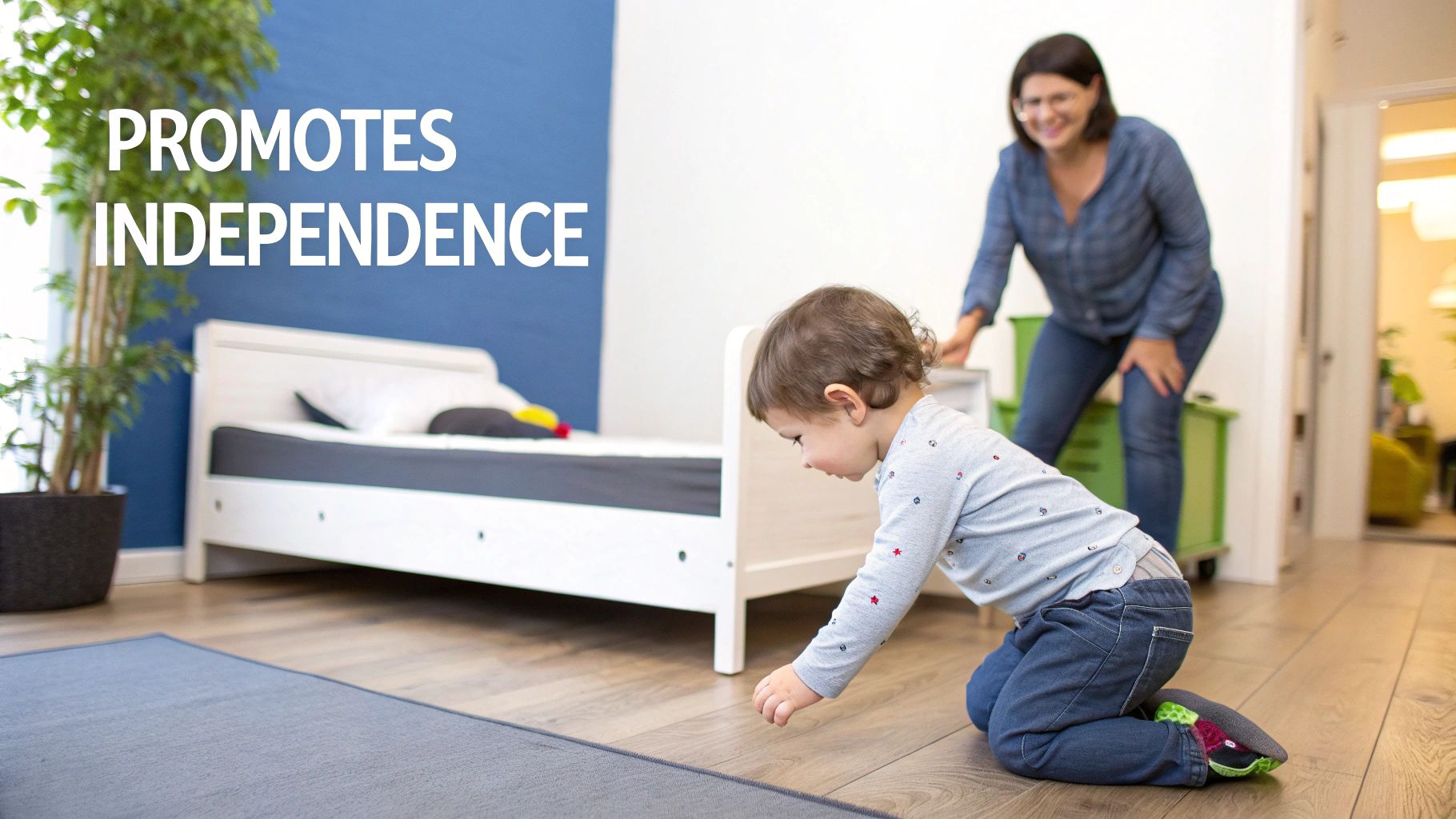
Beyond their simple, modern look, low to the ground beds bring a wave of practical benefits that can totally shift the vibe in your child's room. These aren't just abstract ideas—they're real, tangible improvements that boost healthy development and give you, the parent, some serious peace of mind.
Think of it this way: a floor bed is less about containing your child and more about empowering them. It respects their growing abilities, letting them make choices about their own body and space. This simple switch can turn bedtime from a battle of wills into a calm, natural end to the day.
When a child can get out of bed on their own when they wake up, they start to learn about their daily rhythm in a much more organic way. This little bit of autonomy is huge for building their confidence and fostering a healthy relationship with their own personal space.
Boosting Developmental Milestones
One of the first things you'll notice is how a floor bed supports physical skills. A toddler figuring out how to crawl or walk can practice getting on and off their low bed. It's a safe, accessible challenge—much better than attempting to scale the side of a crib. This simple act helps build gross motor skills, coordination, and body awareness.
This freedom also fuels their cognitive growth. When a child can choose to look at a book in their reading nook or grab a toy from a low shelf after waking up, they're making independent decisions. This process nurtures problem-solving skills and a sense of "I can do this," showing them that their choices matter.
The impact can be pretty profound. While traditional cribs are linked to over 3,000 injuries from falls each year in the US, floor beds can slash these incidents by as much as 90%. It's no surprise that 85% of Ocodile’s functional bed users report easier mornings and fewer night wakings.
By removing physical barriers, a floor bed sends a powerful message of trust. It tells a child, "I trust you to understand your body's needs for rest and play," which is a cornerstone of building their confidence and independence.
A New Standard in Bedroom Safety
Safety is, without a doubt, the number one reason parents make the switch. That nagging fear of a child falling from a crib or a high toddler bed is a real source of anxiety. A floor bed pretty much eliminates this risk, turning what could be a danger zone into a safe haven.
Just think about the physics of a fall. From a standard crib, a fall can cause a serious injury. From a floor bed that's only a few inches off the ground, a roll-off is more like a gentle slide, especially if you have a soft rug next to it. That difference is a total game-changer for your peace of mind.
To make it even clearer, let's break down the advantages of low to the ground beds versus more traditional options.
Low to the Ground Beds vs Traditional Beds
This table gives a quick, side-by-side look at how these two sleep setups stack up.
| Feature | Low to the Ground Bed | Traditional Crib/Toddler Bed |
|---|---|---|
| Independence | Encourages autonomy and self-regulation | Restricts movement, child relies on adult |
| Safety | Virtually eliminates the risk of fall-related injuries | Significant fall risk from climbing or rolling |
| Motor Skills | Promotes safe practice of crawling and walking | Limits opportunities for physical exploration |
| Accessibility | Child can get in and out of bed on their own | Requires adult assistance to get in and out |
| Confidence | Builds self-efficacy and decision-making skills | Can create dependence on parental cues |
| Transition | Smoother transition to a "big kid" bed | Can be a difficult and abrupt transition |
Ultimately, the choice comes down to fostering an environment that feels both safe and empowering for your little one.
Creating a secure space is everything. By choosing a bed that is safer by design, parents can relax, which helps create a calmer atmosphere for the whole family. For a deeper dive into how these beds compare, check out our guide on the differences between a floor bed vs a crib.
How to Choose the Right Mattress and Materials
Picking out the right pieces for your child’s low to the ground bed is a lot like choosing ingredients for a family meal. You want what's best, healthiest, and safest. The mattress and frame aren't just details—they're the very foundation of a healthy sleep space. Getting this part right means your child is sleeping on surfaces that truly support their growth and well-being.
The mattress is, without a doubt, the most critical piece of the puzzle. For babies and toddlers, the rules are simple and firm: the mattress must be firm, flat, and breathable. A plush, soft surface might look inviting, but it's a serious suffocation hazard for little ones who can't easily push themselves up if their face sinks in.
Think of it this way: a firm mattress gives their developing spine the same solid support they’d get from the floor. A soft mattress, on the other hand, is like quicksand—it can mold too closely around their body, trapping them in unsafe positions and making it hard to move.
Decoding Mattress Types and Certifications
Once you start shopping, you'll see a bunch of different mattress types. While they all have their pros and cons, your focus should stay locked on safety and non-toxic materials. Look for official certifications that prove the product has been tested for nasty chemicals.
Here’s a quick look at the most common options:
- Innerspring: These are the traditional choice, and for good reason. They offer great firmness and allow for plenty of airflow. Just make sure the coil count is high enough to give even support without creating uncomfortable pressure points.
- Foam: High-density foam can be a solid pick, but you absolutely have to look for certifications like CertiPUR-US®. This seal guarantees the foam is made without ozone depleters, heavy metals, or nasty flame retardants.
- Organic and Natural Materials: Mattresses made from organic cotton, wool, or natural latex are a fantastic choice for their breathability and lack of synthetic chemicals. The GREENGUARD Gold certification is the gold standard here, signaling that the product has passed strict third-party tests for volatile organic compound (VOC) emissions.
A certification isn't just a fancy sticker. It's your peace of mind that the mattress your child spends hours on every single night isn't releasing harmful chemicals into their air. This is a huge part of creating a truly safe sleep environment.
The growing interest in these beds is part of a much bigger picture. In 2023, the global mattress market hit an incredible USD 46.07 billion, with parents’ growing awareness of sleep health being a major driver. Studies show that 70% of parents who switch to floor beds report their kids sleep better, and these beds can also lower SIDS risks associated with bed-sharing. It’s no surprise that global online sales of low to the ground beds have shot up by 22% since 2020. You can read more about the growing mattress market and its drivers.
Selecting the Ideal Bed Frame Material
Just as crucial as the mattress is the frame it sits on. It might be tempting to just place the mattress directly on the floor, but that’s not a great idea. A frame lifts it just enough to allow for airflow, which is essential for preventing mold and mildew, especially if you live somewhere humid.
When it comes to frame materials for a low to the ground bed, solid wood is the undisputed champion. Woods like pine, beech, or birch are tough, sturdy, and built to last. They create a stable base that can handle everything a toddler throws at it—from gentle sleep to enthusiastic jumping.
Beyond the wood itself, you need to look closely at the finishes.
- Look for Non-Toxic Finishes: The frame should always be finished with water-based, non-toxic paints and sealants. This is non-negotiable, especially when you have a teething toddler who might decide to gnaw on the rails.
- Ensure a Smooth Surface: Run your hand over every surface. You're checking for splinters, sharp corners, or any rough patches. Quality craftsmanship means every inch is sanded smooth for little hands.
- Prioritize Sturdy Construction: Give it a good shake. A well-built frame will be solid, with no wobbles or loose parts. This isn't just about durability; it’s about providing a secure and clearly defined sleep space for your child.
Beyond just the materials, understanding how to choose mattress firmness is key for both safety and comfort. A mattress that’s too soft is a hazard, but one that’s rock-hard might not be comfortable. For a deeper dive into this, don't miss our guide on finding the best mattress for a floor bed.
Creating a Safe and Engaging Montessori Bedroom
A low-to-the-ground bed is a fantastic starting point for a room built around your child's independence. But to really see it shine, the entire room needs to be a safe, engaging space for them to explore. Think of it less like a bedroom and more like your child's first personal universe. Our job is to make that universe as safe and stimulating as possible.
This all starts with safety. Before you even think about where the toys will go, you need to become a hazard detective. Get down on your hands and knees and see the world from their perspective—you'll be surprised what you notice from down there.
Every heavy piece of furniture, like a dresser or bookshelf, has to be anchored securely to the wall. This is non-negotiable. Toddlers are natural-born climbers, and a tipping piece of furniture is a serious danger.
Securing the Environment for Safe Exploration
Once the big items are squared away, it’s time to zoom in on the smaller details. Outlets are like magnets for tiny, curious fingers, so make sure every unused one has a child-resistant cover. You'll also want to tie up any dangling cords from blinds or curtains high out of reach.
A truly safe Montessori room is one where you can confidently say "yes" to your child's explorations. Child-proofing isn't about restriction; it's about creating a prepared environment where their natural curiosity can flourish without constant adult intervention.
For a super detailed walkthrough, our guide on Montessori floor bed safety has checklists and tips to make sure every corner of the room is ready for your little one.
Designing a Room That Inspires Curiosity
With the safety basics covered, we get to the fun part: creating a space that nurtures your child’s growing mind. A Montessori bedroom is pretty minimalist. Everything is accessible and has a purpose, empowering your child to do things for themselves.
The bed itself is the foundation of this setup, and choosing the right one is key.
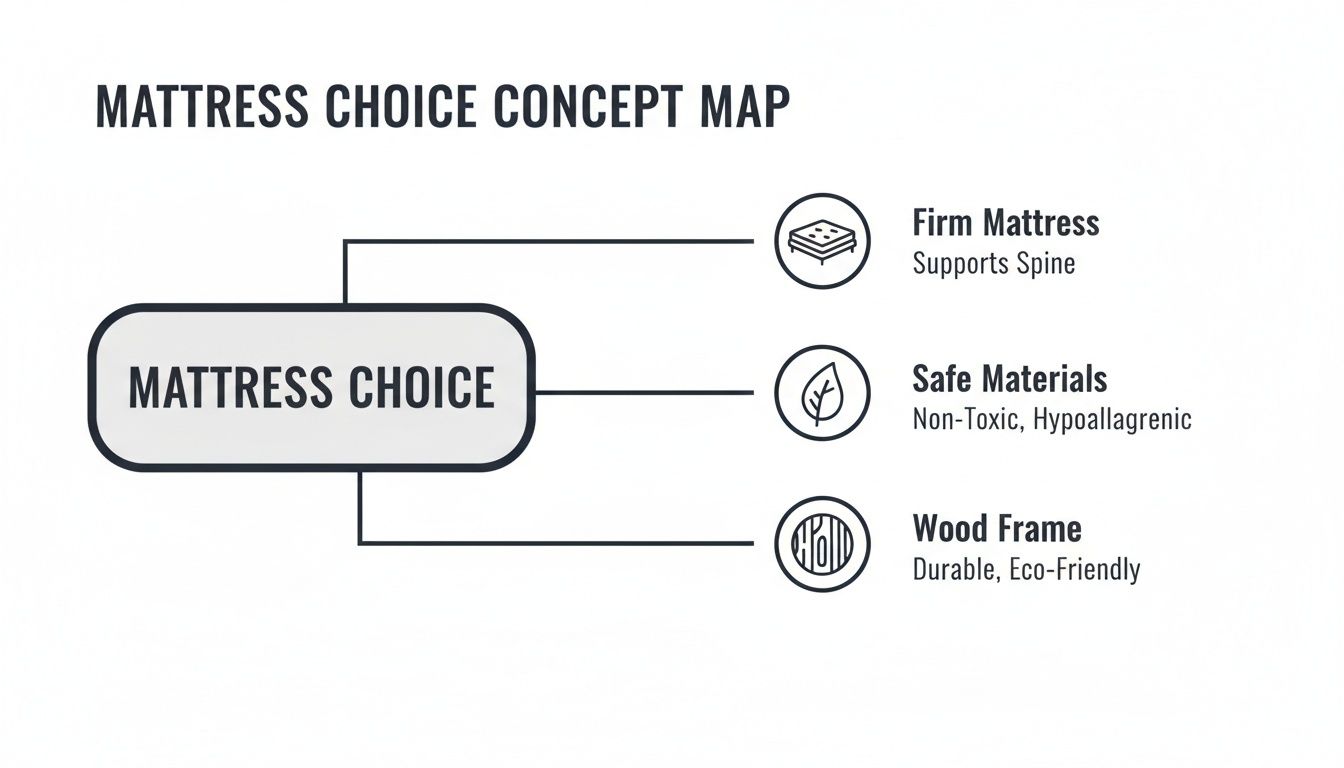
Starting with a firm mattress, safe materials, and a solid wood frame gives your child a secure "home base" from which all their adventures can begin.
From there, you can build out the rest of the room. Ditch the giant, overwhelming toy box in favor of low, open shelves. Put out just a few age-appropriate toys at a time and swap them out every week or so. This is called toy rotation, and it keeps things feeling new and interesting without causing overload.
Here are a few more ideas to bring the space to life:
- A Cozy Reading Nook: A couple of floor cushions and a forward-facing bookshelf in a quiet corner can be so inviting. Seeing the book covers makes kids much more likely to pick one up.
- Art at Their Level: Frame a few simple pictures or some of your child’s own masterpieces and hang them where they can actually see them. It sends a powerful message that this is their space.
- Child-Sized Furniture: A small table and chair create the perfect spot for puzzles, drawing, or other quiet activities that help build concentration.
- A Touch of Nature: A small, non-toxic plant or a basket with interesting finds like smooth river stones or pinecones helps connect them to the natural world.
When you thoughtfully prepare their room, you're doing so much more than just decorating. You're building an environment that respects their abilities, supports their development, and gives them the incredible gift of independence.
Making the Transition to a Floor Bed Smoothly
Moving your toddler from their familiar crib to a low to the ground bed is one of those big, bittersweet milestones. It’s a huge step toward independence for them, but let’s be honest, it can feel a little nerve-wracking for us parents. With a bit of planning and a lot of patience, you can make this change feel more like an exciting adventure than a stressful ordeal.
The first question on every parent's mind is, "When?" There's no magic number, but most little ones are ready somewhere between 15 months and 3 years old. Instead of getting hung up on their age, watch for your child's developmental cues. The most urgent sign is a safety one: if they’re trying to climb out of their crib, it's time to switch. Immediately.
Other signs can be more subtle. You might notice your toddler showing a fierce desire for independence in other ways, like insisting on dressing themselves or climbing into their car seat alone. This growing autonomy is a fantastic indicator that they’re ready for the freedom and responsibility of their own sleep space.
Preparing for a Positive Switch
Once you’ve decided the time is right, the real secret to a smooth transition is preparation. The goal is to build up a lot of positive feelings around the new bed long before their first night in it. You want the floor bed to feel like a special upgrade, not a sudden and confusing change.
Get your child involved right from the start. Let them "help" you unbox the frame or watch as you put it together. An even bigger win? Let them pick out new bedding with their favorite characters or colors. This gives them a sense of ownership and gets them genuinely excited about their new "big kid" bed.
Think of this as more than just changing furniture; you are upgrading their role in the family. By involving them in the setup, you're telling them, "This is your special space, and we trust you with this new freedom."
Before you go all-in for nighttime sleep, try introducing the new low to the ground bed during lower-pressure times of the day.
- Naptime First: Start by using the new bed just for naps. It’s a great, low-stakes way for them to get used to the feel of their new space without the pressure of a full night.
- Quiet Time Spot: Make the bed a cozy spot for reading books or quiet play. This helps build the association that their bed is a safe, comforting, and happy place to be.
- Keep Routines Consistent: When you do make the switch for good, stick to your established bedtime routine like glue. The familiar pattern of a bath, books, and cuddles provides a huge sense of security during a time of big change.
Navigating the Newfound Freedom
The biggest adjustment for most families is that moment when your toddler realizes, "Hey, I can get out of bed whenever I want!" This is completely normal—and expected! It's a brand-new novelty, and they are absolutely going to test the boundaries. The key is to respond with gentle, boring consistency.
When they get up, calmly and quietly lead them back. Use a simple, repetitive phrase like, "It's nighttime; we stay in our bed." Try to avoid turning on bright lights, getting into long conversations, or offering snacks, as any of that can accidentally reward the behavior.
It might take a few nights—or even a week or two—of this gentle redirection. Be patient with them and with yourself. This phase is a crucial learning opportunity where they begin to understand their body's need for rest and the limits of their new independence. By staying calm and consistent, you're teaching them how to embrace their freedom responsibly.
Answering Your Top Questions About Floor Beds
Making the move to a floor bed can feel like a huge step, and it's totally normal to have a long list of questions. You're not just swapping out a piece of furniture; you're thinking about your child's safety, their growing independence, and what's best for their development. This section is all about tackling those common concerns head-on, giving you clear, straightforward answers so you can feel great about your decision.
We'll get into the practical stuff that really matters, from the right age to start, to how to handle that newfound nighttime freedom. Let's dive in.
At What Age Can My Child Safely Use a Floor Bed?
This is usually the first question on every parent's mind, and the answer has more to do with your child’s development than a specific date on the calendar. While some Montessori families introduce a floor bed as soon as a baby is mobile, the most common and recommended time for the switch is between 18 months and 3 years old.
The biggest clue isn't their age, but their readiness. If you see your little one trying to climb out of their crib, that's your sign. At that point, a crib actually becomes a safety hazard, and a low-to-the-ground bed is a much safer place for them to be.
Remember, the bed is just one part of the equation. The most critical piece for safety is making sure the entire bedroom is thoroughly childproofed. Until your child is ready for this transition, a certified safe crib or bassinet is still the gold standard for infant sleep.
How Can I Stop My Child From Rolling Off the Bed?
The thought of your child rolling out of bed can be a little nerve-wracking, but this is actually one of the biggest safety perks of a floor bed. Because it's so low, a "roll-out" is more of a gentle slide onto the floor than a dangerous fall. Kids are surprisingly resilient and often don't even wake up!
To create an even softer landing spot and a gentle visual cue, you can try a few simple things:
- Place a soft rug or a few firm floor cushions next to the open side of the bed.
- Choose a frame with low-profile guardrails. Many floor bed frames have subtle, beautifully designed rails that prevent rolling out but still let your child climb in and out on their own.
- Position one side of the bed against a wall to naturally close off some of the open space.
It doesn’t take long for children to develop amazing spatial awareness. They quickly learn the edges of their bed and instinctively adjust how they sleep.
Will My Child Constantly Get Out of Bed at Night?
This is a real concern, and honestly, something many families experience during the first week or two. When your child realizes they can get up whenever they want, they will almost certainly test that new freedom. It's a completely normal and healthy part of learning independence.
The key to getting through this phase is to be consistent and calm. There's no need for frustration; a gentle, predictable routine is your best friend here.
When your child gets out, your job is to be their calm, reassuring guide. Just walk them back to their bed with as little fuss as possible—no big conversations, no snacks, and no bright lights. A simple, repeated phrase like, "It's nighttime, we stay in our beds," helps set the boundary without turning it into a battle.
Most kids get the hang of it within a week or two. The freedom of a floor bed often helps them build a much more positive relationship with their sleep space. They start to see it as their own safe spot, not a cage, which can lead to much better, more independent sleep habits down the road.
Is It Safe to Just Put a Mattress on the Floor?
Placing a mattress directly on the floor might seem like the easiest way to create a floor bed, but it comes with a big, hidden risk. Mattresses need to breathe. When you lay one flat on the floor, you completely cut off the airflow underneath.
This lack of ventilation traps moisture from body heat and the air, creating the perfect environment for mold, mildew, and bacteria. It's a serious health concern that will also ruin your mattress over time.
A proper low-to-the-ground bed frame is designed specifically to solve this problem. It lifts the mattress just enough—often only an inch or two—to allow that crucial air to circulate. That tiny gap makes all the difference in keeping their sleep environment healthy.
Beyond ventilation, a frame offers a few other nice benefits:
- It defines the sleep space, creating a clear boundary between where your child rests and where they play.
- It keeps the mattress from sliding around the room.
- It just looks more finished and intentional, turning a mattress on the floor into a real piece of furniture.
Choosing a well-designed frame made from non-toxic materials is the best way to ensure your child's sleep space is both safe and healthy.
At Ocodile, we design beautiful, practical furniture that grows with your family. Our low-to-the-ground beds are crafted with your child's safety and independence in mind, helping you create a nurturing environment where they can thrive. Explore our collection and find the perfect foundation for your child’s room at https://ocodile.com.