





 - Monica
 - Lindsay

montessori floor bed toddler: A Complete Guide for Parents
So, what exactly is a Montessori floor bed for a toddler? It's really simple: just a firm mattress placed either directly on the floor or on a very low-to-the-ground frame. The goal is to give your little one the freedom to get in and out of bed all by themselves.
This approach flips the script on the traditional crib. Instead of a confined sleeping space, the entire bedroom becomes a safe, accessible environment that honors your toddler's budding independence.
Understanding the Montessori Floor Bed Concept
At its heart, the Montessori philosophy is built on a deep respect for the child as a complete person. Dr. Maria Montessori believed kids flourish when they're given freedom within safe, thoughtfully prepared limits. A floor bed is the perfect expression of this idea.
It’s a fundamental shift from containment (the crib) to empowerment (a bed they can actually control).
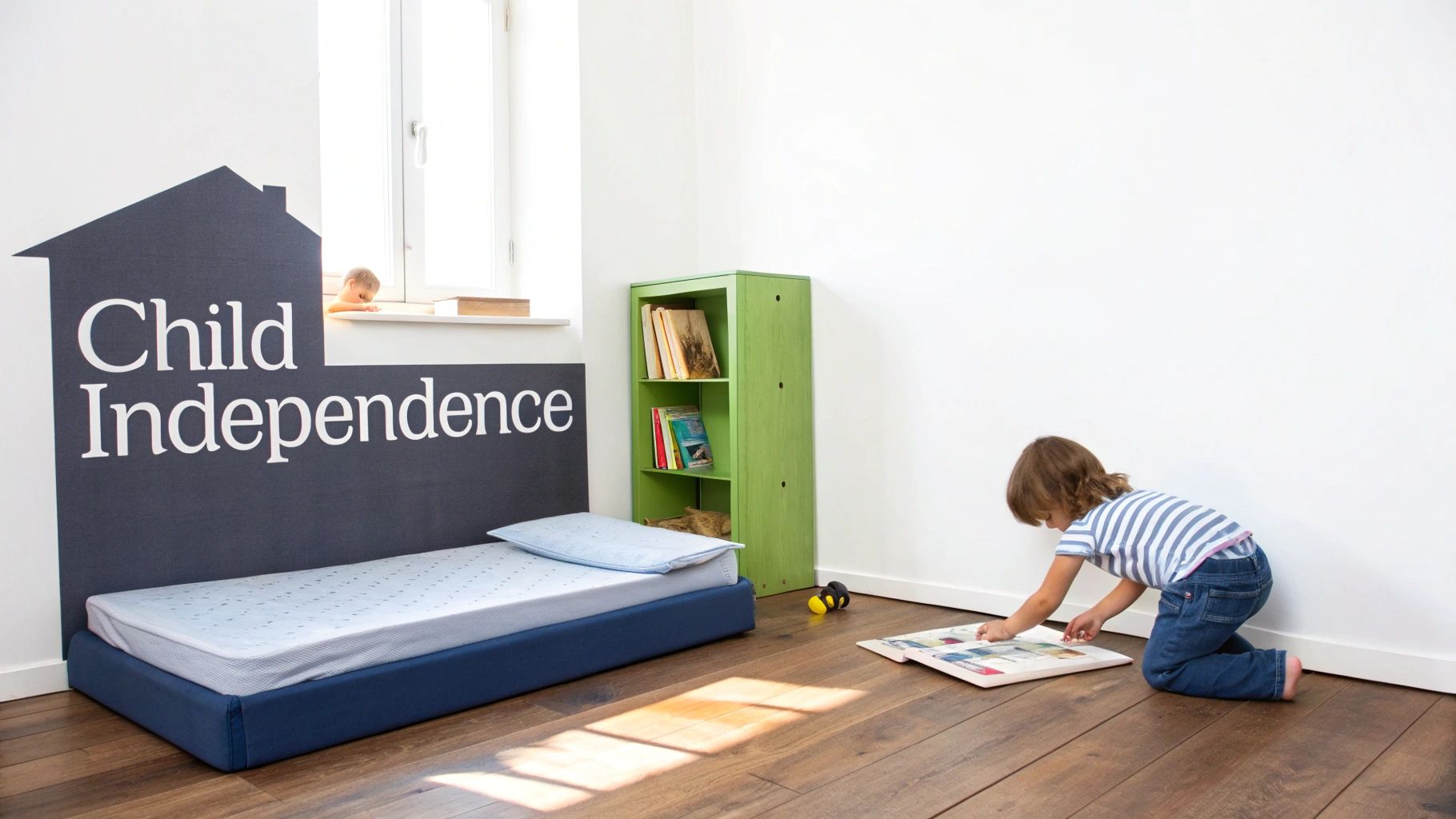
Think of a crib as a playpen for sleeping. It’s a safe box, but the adult decides when the child goes in and when they come out. A floor bed, on the other hand, is more like their own personal studio apartment. They have the liberty to choose when to rest and when to wake up and explore their room. This simple change can have a huge impact on their development.
And it’s an idea that’s really catching on. Roughly 25% of households now use some form of Montessori education in their homes, which is driving a real demand for this kind of furniture. It shows a bigger shift in parenting toward child-centric principles that encourage independent learning and safe exploration.
A New Perspective on Sleep
The floor bed philosophy helps your child build a positive relationship with sleep and their bedroom. Instead of being a place of confinement, their bed becomes a cozy home base inside a larger, explorable world.
- Fosters Independence: Your toddler starts learning to listen to their own body's cues for sleep and waking.
- Builds Confidence: Successfully navigating their own space—like climbing into bed when they're tired or finding a quiet toy when they wake up—builds a powerful sense of self-reliance.
- Encourages Responsibility: It gives them a sense of ownership over their personal space from a very young age.
By removing physical barriers, we are also removing psychological ones. A floor bed sends a powerful message to your toddler: "We trust you. This is your space, and you are capable of navigating it."
To really see how different this is, a side-by-side comparison is helpful.
Montessori Floor Bed vs Traditional Crib at a Glance
This table breaks down the core differences between the two sleep setups.
| Feature | Montessori Floor Bed | Traditional Crib |
|---|---|---|
| Primary Goal | To foster independence and respect the child's autonomy. | To provide a safe, contained sleep space controlled by the parent. |
| Accessibility | Fully accessible; the child can get in and out independently. | Inaccessible; the child is placed in and taken out by an adult. |
| Movement | Encourages freedom of movement within a child-proofed room. | Restricts movement to within the crib's four walls. |
| Child's Role | Active participant in their sleep routine. | Passive recipient of the parent's sleep schedule. |
| Room Environment | The entire room is the "safe space," designed for exploration. | The crib is the "safe space" within the larger room. |
| Transition | Often used from infancy, eliminating the "crib-to-bed" transition. | Requires a distinct transition to a toddler bed when the child can climb out. |
Seeing them laid out like this makes the philosophical divide pretty clear. For a deeper dive, you can explore our detailed comparison of the floor bed vs crib.
Ultimately, choosing a Montessori floor bed for your toddler is about more than just furniture. It’s a decision to create an environment that honors their natural drive for independence, nurtures their curiosity, and builds a foundation of trust from the very beginning.
How a Floor Bed Boosts Toddler Development
A Montessori floor bed is so much more than a place to sleep. Think of it as a tool that actively shapes your little one's growth, day in and day out. Just by taking away the bars of a traditional crib, you open up a whole new world of developmental opportunities that build confidence, autonomy, and a genuinely positive connection with their own personal space.
Picture your toddler waking up. In a crib, their first move is often to cry out for help—they're physically stuck. But with a floor bed, they have a choice. They can wake up, swing their little legs over the side, and quietly find a book on a low shelf or grab their favorite teddy bear. This small act is a huge lesson in self-reliance.
This freedom is what helps build bodily autonomy—the simple but profound understanding that they are in control of their own body and its movements. It's a cornerstone for developing a strong sense of self.
Cultivating Independence and Confidence
Letting a toddler get in and out of bed on their own is a massive confidence booster. Every single time they successfully navigate their bed, it reinforces the message that they are capable and competent. This isn't just about physical movement; it’s about making their own decisions.
They quickly learn to listen to their body's signals. A tired toddler can choose to go lie down. A well-rested toddler can choose to get up and start their day. This fosters a deep connection to their own needs, a skill that will serve them for the rest of their lives.
- Problem-Solving Skills: Figuring out how to maneuver on and off the mattress helps sharpen their spatial awareness and gross motor skills.
- Emotional Regulation: Having the freedom to leave their bed can ease feelings of being trapped, which can mean less bedtime anxiety for everyone.
- Positive Sleep Association: The bed becomes a cozy, safe spot they can go to willingly, not a cage they're put into.
This simple change transforms their bedroom from a place they are put in to a space that is truly theirs. For more ideas on this, check out our guide on encouraging independence in toddlers—it’s full of practical tips that pair perfectly with a floor bed setup.
Fostering Gross Motor Skills and Spatial Awareness
A Montessori floor bed toddler is constantly practicing essential physical skills without even trying. The simple act of getting into bed involves coordination, balance, and strength. They learn to judge distances and get a real sense of how their body moves in relation to the things around them.
Think about the difference between being placed in a crib versus climbing into a floor bed.
- Lowered into a Crib: This is a passive action. The child has no control.
- Climbing into a Floor Bed: This is an active process. They have to lift their legs, use their arms for support, and shift their body weight.
This daily practice is like a mini-gymnastics session. It strengthens their core muscles and improves their motor planning—the brain's ability to imagine, plan, and carry out a new physical action.
A floor bed respects a toddler's natural drive to move and explore. It aligns with their developmental timeline by providing a safe environment where they can practice newly acquired physical skills on their own terms.
Building a Foundation for Respect and Responsibility
When a toddler has a space that’s actually designed for them, they learn to respect it. A floor bed is the centerpiece of a room that sends a clear message of trust. And that trust encourages them to take ownership and care for their own little environment.
You might start to notice your toddler straightening their own little blanket or arranging their stuffed animals before climbing into bed. These are the very first signs of responsibility taking root.
By giving a montessori floor bed toddler this level of freedom, you aren't just changing how they sleep. You are actively supporting their journey toward becoming a confident, independent, and capable person. This simple piece of furniture empowers them to take their first real steps in navigating the world on their own, right from the safety of their room.
Creating a Safe Floor Bed Environment
Switching to a Montessori floor bed isn't just about changing where your toddler sleeps; it's about embracing a whole new way of thinking about their bedroom. When the bed has no bars, the entire room effectively becomes the crib. This means you need to get serious about childproofing, turning the whole space into a secure "yes space" where your child's freedom is balanced with your peace of mind.
The goal is to get ahead of their curiosity. Think of it from their perspective—down on your hands and knees. What looks tempting? What could be a hazard? This isn't just about covering outlets; it's a complete safety audit of their environment.
This simple idea—giving them freedom within a safe space—is the first step toward building the confidence they need for real independence.

The Room Is the New Crib
The number one rule of a floor bed is to treat the four walls of the room like the four rails of a crib. Every single thing inside that room must be safe enough for them to explore without your direct supervision.
- Anchor All Furniture: This is absolutely non-negotiable. Bookshelves, dressers, and even toy chests have to be securely anchored to the wall. It’s not a question of if your toddler will try to climb, but when.
- Secure Cords and Wires: Any and all cords—from baby monitors to lamps—need to be completely out of reach. Use cord concealers to hide them away, and make sure blind cords are tied up high.
- Cover Electrical Outlets: Every unused outlet needs a solid cover. I'd recommend slide covers or box-style protectors that are much tougher for little fingers to figure out.
For a more detailed checklist that goes room by room, check out our post on how to childproof your home.
Mattress and Bed Placement Safety
Once the room is locked down, it's time to focus on the bed itself. A few simple rules here can prevent the most common hazards.
The goal is to eliminate any risk of entrapment or suffocation. A firm mattress and smart placement are just as crucial as anchoring the furniture.
Always use a firm mattress that fits snugly inside its frame if you have one. A soft or saggy mattress can be a suffocation risk, especially for younger toddlers.
Here’s your quick safety checklist for the bed area:
- Mind the Gap: Keep all sides of the mattress away from walls or other furniture. A toddler can easily get trapped in that small space, which is a serious hazard. Position the bed in the middle of the room if you can.
- Choose a Firm Mattress: A firm, flat surface is critical for safe sleep, especially for kids under two. Steer clear of plush toppers or memory foam that could mold around a child's face.
- Minimalist Bedding: For toddlers, less is more. A simple fitted sheet and a wearable blanket or sleep sack are the safest choices. Hold off on pillows, loose blankets, and stuffed animals in the sleep space until they're older.
This shift toward floor beds isn't just a fleeting trend. The global Montessori floor bed market is expected to hit around $2.2 billion by 2033, growing at a rate of over 8.5% each year. It’s clear that more and more parents are looking for furniture that supports both independence and safety.
Beyond the Physical Room
A truly safe space also considers the things you can't see. The air your toddler breathes is a huge part of their health, especially since they spend so much of their time close to the ground.
Maintaining good indoor air quality is vital. You can explore a comprehensive guide to indoor air quality solutions to make sure their room is a healthy space in every sense. Even simple things, like vacuuming regularly with a HEPA filter and opening a window for fresh air, can make a huge difference.
How to Make a Smooth Transition to a Floor Bed
Moving your toddler from the familiar comfort of a crib to their very first "big kid" bed is a huge milestone. It’s a pretty big change for them, and let’s be honest, for you too!
Approaching it with patience and a solid game plan can make all the difference. Think of it less like flipping a switch overnight and more like gently guiding them down a new, exciting path. The real key is to create a positive, happy feeling around the new bed from the moment it enters the room.
This transition is about so much more than a new piece of furniture. It’s a nod to their budding independence. When you handle it with a bit of care and planning, this move can feel like a fun adventure for everyone involved.
Spotting the Signs of Readiness
So, how do you know when it’s time to make the switch? There’s no magic number on a birthday cake that tells you they’re ready. Instead, your toddler will give you some pretty clear signals that they’re craving the freedom a floor bed offers.
The most obvious (and urgent) sign is a safety one. Is your little one suddenly channeling their inner mountaineer and trying to climb out of their crib? If so, it's officially no longer a safe space. A fall is a real risk, and that’s your cue to find a sleep solution that keeps them low to the ground.
Another big tell is a growing desire for independence. You might hear "I do it!" a lot more, as they try to get into and out of chairs or climb onto the sofa by themselves. A montessori floor bed toddler setup is the perfect way to support this powerful developmental drive, giving them control over their own space.
The best time to transition is when it feels like a natural response to your child's needs—like climbing or wanting to do things "by myself." This helps the change feel like the next logical step, not a sudden or confusing disruption.
To help you pinpoint the right moment, here’s a quick checklist of things to look for.
Signs Your Toddler Is Ready for a Floor Bed
| Readiness Sign | What to Look For | Why It Matters |
|---|---|---|
| The Great Escape Artist | Your toddler is consistently trying, or successfully, climbing out of their crib. | This is the biggest safety red flag. A crib is no longer safe once they can get out on their own. |
| Craving Independence | They insist on getting into bed themselves or show frustration with being "stuck" in the crib. | A floor bed empowers them to manage their own body and space, which is a core Montessori principle. |
| Understanding Boundaries | They can understand simple instructions like "It's time to stay in bed now." | This shows they're cognitively ready to handle the freedom of an open bed without constant supervision. |
| Waking Up Content | They wake from naps or in the morning and can play quietly in their crib instead of crying to be let out. | This suggests they can handle being alone in their room and won't immediately panic upon waking. |
| Showing Interest | They seem curious about older siblings' beds or show interest in their new floor bed. | Genuine interest makes the transition feel like a positive "upgrade" rather than something being taken away. |
If you’re nodding along to a few of these, it's probably a great time to start planning the move.
Gentle Transition Strategies
Once you’ve decided the time is right, a slow and steady approach is usually the winner. The goal is to make the new bed feel familiar and inviting, not strange or scary.
Here are a few tried-and-true ways to ease them into their new sleeping arrangement:
- Make it a Play Zone First: Before they ever sleep in it, make the floor bed a fun, no-pressure spot. Spend time there together during the day, reading stories, snuggling, or playing with quiet toys. This builds a happy connection long before bedtime rolls around.
- Start with Naps: Naps can feel less intimidating than a full 12-hour night. Let your toddler take their daytime naps in the floor bed for a few days or even a week. It gives them a chance to get used to the new freedom in small, easy doses.
- Keep the Crib for Comfort (Temporarily): For some kids, just seeing the old, familiar crib in the room provides a sense of security. You can leave the empty crib in the room for a few days while they adjust, then quietly move it out once they’re sleeping soundly in their new bed.
Navigating Common Challenges
The newfound freedom of a floor bed can be a little too exciting for some toddlers. The most common challenge? The "jack-in-the-box" phase, where your child gets out of bed over and over again. This is completely normal—they’re just exploring their new superpower!
Consistency is your best friend here. If they get out, calmly and quietly guide them back with as little fuss as possible. Try to avoid turning it into a fun game or a long conversation. A firm but gentle "It's time for sleep" helps them learn the new boundary.
This is also when a rock-solid bedtime routine becomes non-negotiable. The predictability of a routine—a bath, pajamas, a book, and a final cuddle in their awesome new bed—is a powerful signal to their brain that it's time to wind down.
Exploring different toddler sleep training methods can also give you tools to create a predictable and loving routine, empowering your toddler to embrace their new bed with confidence.
Of course. Here is the rewritten section, crafted to sound like an experienced human expert while following all your requirements.
Designing a Complete Montessori Toddler Bedroom
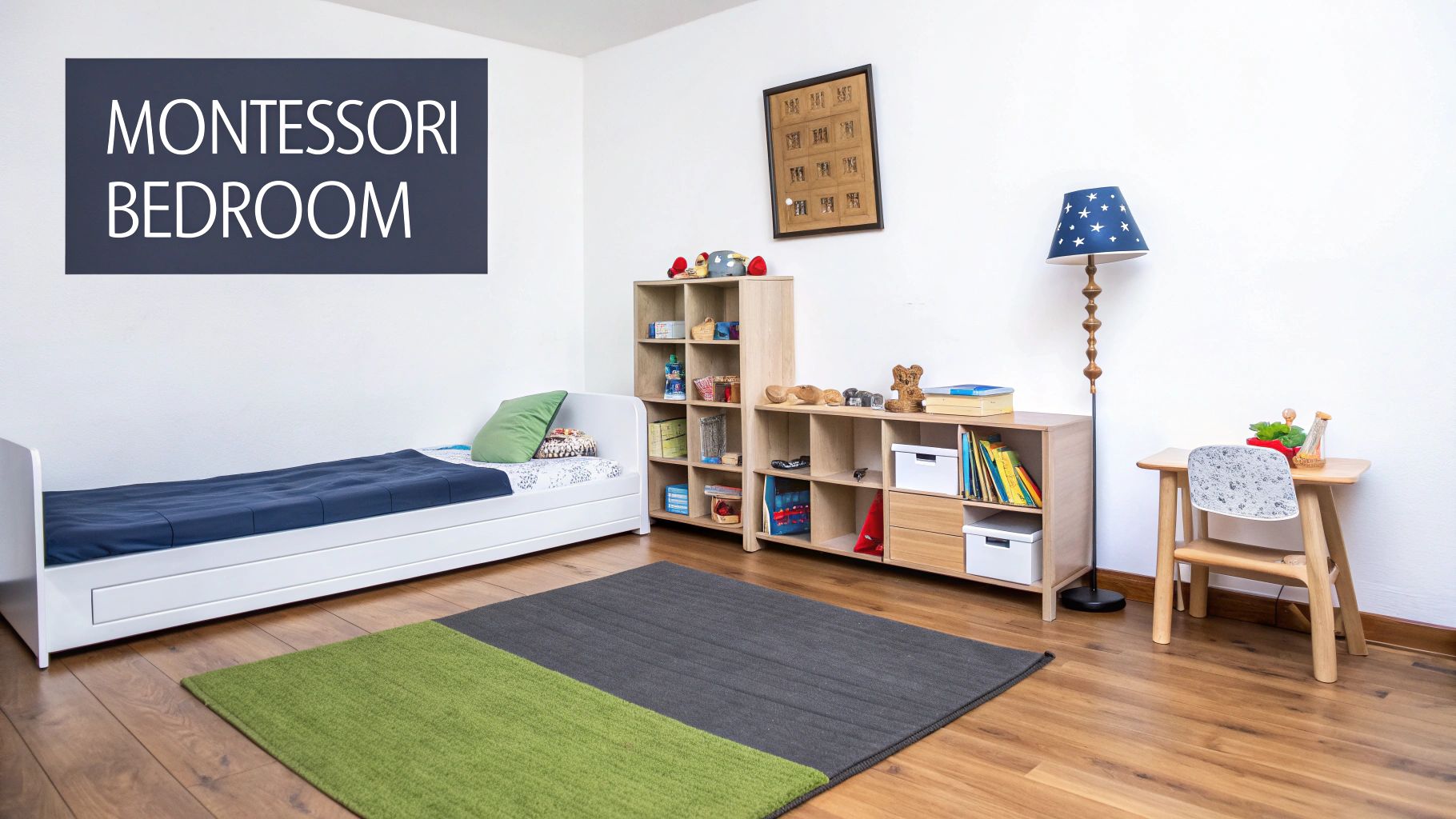
While the Montessori floor bed for your toddler is the centerpiece, the rest of the room is the stage where their independence truly takes flight. A genuine Montessori bedroom is so much more than just a collection of furniture; it's a world built just for them—a carefully prepared environment that nurtures concentration, independence, and a genuine love for learning. The whole idea is to see the world from their height and arrange everything accordingly.
Picture this: your toddler walks into their room and everything is within their reach. Low, open shelves display a handful of carefully chosen toys and books, inviting them to explore without feeling overwhelmed. Over in the corner, a small, child-sized table and chair create the perfect spot for focused work, like drawing or puzzles. This kind of setup empowers them to make their own choices, building a sense of capability and ownership over their little world.
Creating a Child-Centered Space
To really nail the Montessori room design, you have to get on your toddler's level—literally. The space should feel calm, uncluttered, and beautiful, which naturally encourages focus and a respect for their surroundings.
- Low, Open Shelves: Ditch the giant toy box. Instead, use low shelving to display a limited number of toys. This simple switch makes cleanup less of a battle and helps your child clearly see their choices.
- Accessible Wardrobe: A low-hanging rod or a small set of drawers allows your toddler to help choose their own clothes. It’s a small thing, but it’s a powerful step toward self-sufficiency.
- Child-Sized Furniture: A tiny table, a matching chair, and even a little step stool to reach a low light switch all send a clear message: "This space is for you."
This philosophy of creating beautiful, functional spaces for our kids is really catching on. In fact, the global Montessori floor bed market was valued at about $1.2 billion in 2024 and is on track to more than double, hitting $2.7 billion by 2033. This boom shows a massive shift in how parents think about home design, prioritizing child development and safety. You can read the full research on this growing market trend to see just how big this movement is becoming.
The Power of a 'Yes Space'
Ultimately, the goal is to create a complete ‘yes space.’ This is an environment where every single thing is safe for your toddler to touch, explore, and interact with on their own terms. When the room is fully childproofed and everything is at their level, you’ll find yourself saying "no, don't touch that!" a whole lot less.
A 'yes space' removes the friction between a toddler's natural curiosity and the need for safety. It builds trust and confidence, allowing them to learn through hands-on exploration without constant redirection.
This doesn't mean the room becomes a free-for-all. Quite the opposite. It’s a thoughtfully organized space where the boundaries are cleverly built into the design. For example, by rotating a few toys on the shelves each week, you keep things fresh and engaging without causing overstimulation. It's a simple trick that respects their need for order while feeding their endless curiosity.
Got Questions About Montessori Floor Beds? We’ve Got Answers.
Even with all the clear benefits, making the switch to a floor bed can feel like a pretty big leap for a parent. It’s completely natural to have questions about what this new freedom actually looks like day-to-day. Let’s tackle some of the most common concerns we hear from parents.
At What Age Can My Toddler Use a Floor Bed?
There’s no magic number here, but many families make the move when their toddler starts trying to climb out of the crib. This usually happens somewhere between 18 and 24 months. That said, some parents start much earlier, even as early as 5-10 months, once their baby is crawling and mobile.
The most important factor isn't their age, but how well the room is childproofed. If your little one can move around freely, safety has to come first.
What if My Toddler Keeps Getting Out of Bed?
This is probably the number one worry, and you can breathe easy: it's completely normal and totally expected. They have a brand-new freedom to explore! The trick is to stay calm and consistent.
When they get up, gently and silently guide them back to bed. Try to keep the interaction minimal—no big conversations or fuss. A really solid bedtime routine helps signal that it's time for sleep, not play. Over time, the novelty wears off, and they learn their bed is their cozy spot for rest.
This exploratory phase is a normal part of learning boundaries. A consistent, loving response teaches them that while they have freedom, the bed is for rest.
Will My Child Be Too Cold on the Floor?
A totally valid question, but one that’s easy to solve. To keep your child from getting chilly, you can place a thin rug or a breathable mat under the mattress. This creates a simple but effective thermal barrier.
Also, make sure the room's temperature is comfortable and dress your toddler in warm-enough sleepwear. For younger kids, a sleep sack is often a much safer and warmer choice than loose blankets.
Can I Just Put a Mattress Directly on the Floor?
Yep, you absolutely can! A mattress right on the floor is the simplest way to do it and works perfectly fine. The one thing you have to watch out for, especially if you live somewhere humid, is airflow. You need to prevent any chance of mold growing underneath.
You can do this by propping the mattress up against the wall to air out daily or by using a very low slatted frame. Many purpose-built floor bed frames are designed to sit just an inch or two off the ground, which promotes that crucial air circulation while still being easy for a toddler to get in and out of.
Ready to create a safe and empowering sleep space for your toddler? The thoughtfully designed furniture from Ocodile helps you build a beautiful and functional Montessori environment. Explore our collection of floor beds and child-friendly furniture at https://ocodile.com and give your child the gift of independence.