



Your Complete Guide to a Non Toxic Foam Play Mat
When you're on the hunt for a non toxic foam play mat, you just want a straight answer. So what does that actually mean? A genuinely safe mat is made from high-quality materials, like formamide-free EVA foam, that have been independently tested and verified. This means it’s completely free from nasty chemicals like BPA, phthalates, and lead, giving you one less thing to worry about.
This guide is designed to help you confidently choose a healthy space for your little one to grow and play.
Your Guide to a Safer Play Space
Choosing the right play mat can feel like a huge task, but it's one of the most important decisions you'll make for your child's environment. Think about it: your baby will spend countless hours on this surface—crawling, tumbling, and exploring every corner. That's why making sure their play area is truly non-toxic is so essential. It’s the very foundation of a healthy playroom.
Thankfully, parents are driving a huge shift toward safer products. The global baby play mat market was valued at USD 2,150 million in a single year and is expected to hit USD 3,450 million within six years, largely because of this growing awareness. Research shows that a staggering 82% of parents are actively looking for BPA-free, hypoallergenic, and non-toxic materials. It’s no surprise that EVA foam mats now hold about 40% of the market share due to their trusted safety profile. Learn more about baby play mat market trends.
Key Differences in Play Mat Materials
Not all mats are created equal, and the differences can be a bit confusing. To simplify things, it helps to see a direct comparison of the most common materials out there.
Here’s a quick breakdown of what separates a certified safe option from a potentially harmful one. Think of this table as your go-to reference as we dive deeper into what makes a non toxic foam play mat the best choice for your home.
Safe vs Potentially Harmful Play Mat Materials
| Material | Key Characteristics | Common Toxins to Watch For |
|---|---|---|
| High-Quality EVA Foam | Soft, durable, excellent cushioning, and verified non-toxic when certified. | Formamide, Phthalates, Lead |
| PVC (Vinyl) | Inexpensive and easy to clean, but often contains harmful plasticizers. | Phthalates, Lead, VOCs |
| Polyurethane Foam | Offers good cushioning but may contain flame retardants and VOCs. | Flame Retardants, Formaldehyde |
| Natural Fibers (Cotton, Cork) | Eco-friendly and breathable but may lack sufficient cushioning and durability. | Pesticides (if not organic) |
Looking at this, it becomes clear why certified, high-quality EVA foam stands out. While other materials might seem appealing at first glance, they often come with hidden risks that are best avoided when it comes to your child's play space.
What 'Non Toxic' Really Means for Play Mats
The term "non-toxic" gets thrown around so much these days that it can start to feel like just another marketing buzzword. For a non toxic foam play mat, however, it’s a specific promise of what is not in the product. It means the mat was made without a whole checklist of chemicals known to be harmful, especially to babies and toddlers whose little bodies are still developing.
Think of it like grocery shopping. You probably choose whole, organic foods over processed snacks with a long list of ingredients you can't pronounce. Looking closely at the materials in your play mat is just as important, because your child is going to be interacting with it so intimately—touching it, drooling on it, and breathing right up against its surface for hours every single day.
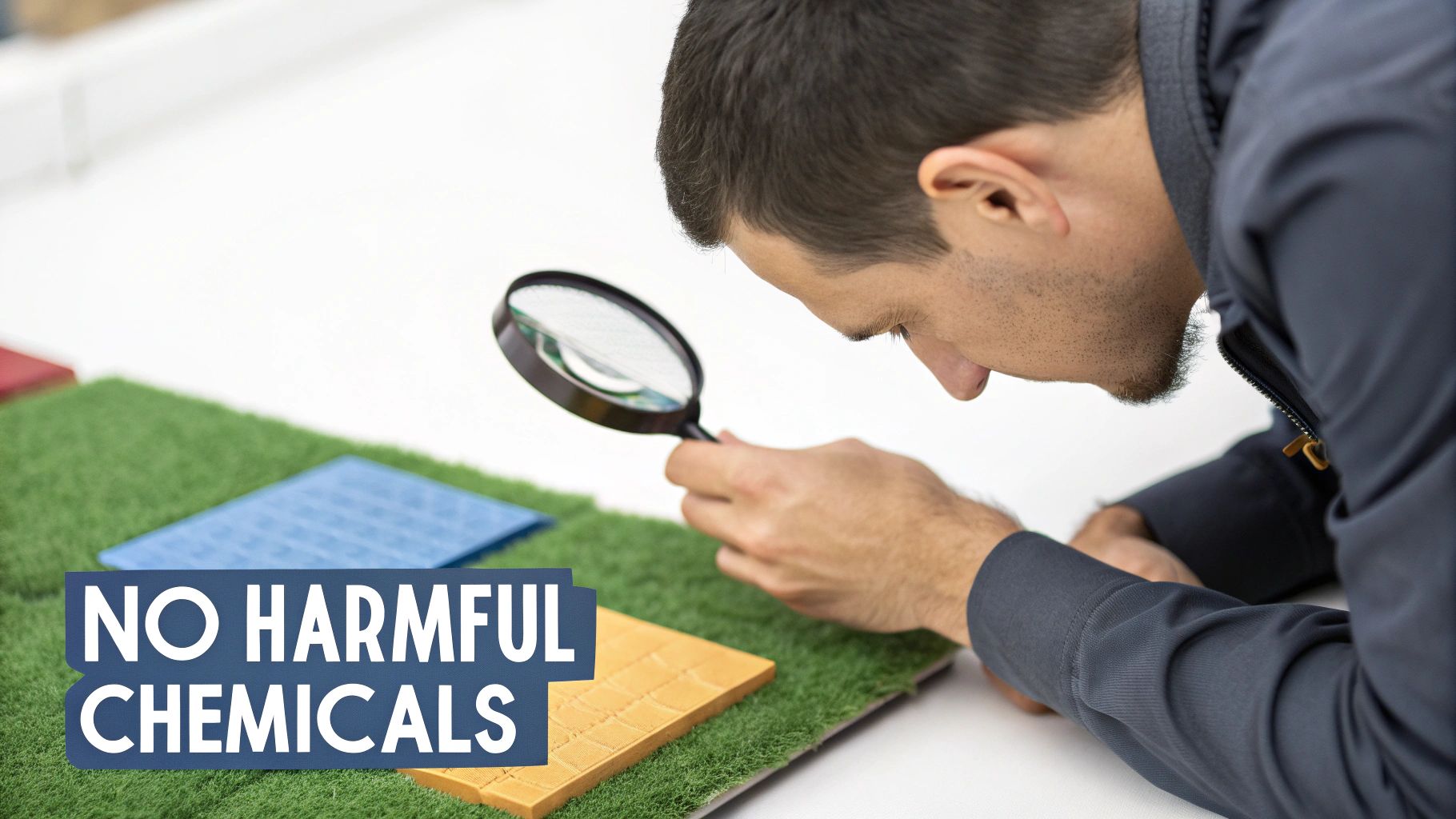
The Main Chemicals to Avoid
When a brand says their mat is non-toxic, they’re usually talking about a few key offenders. Getting familiar with these helps you see past the hype and start asking the right questions.
- Formamide: This chemical is often used to make foam softer, but it can be a skin and respiratory irritant. It can also "off-gas" from the mat, releasing fumes into your home’s air.
- BPA (Bisphenol A): Commonly found in plastics, BPA is a known endocrine disruptor. In simple terms, it can mess with the body's natural hormones.
- Phthalates: These are another group of chemicals used to make plastics more flexible and durable. Like BPA, they are also endocrine disruptors linked to developmental concerns.
- Lead and Other Heavy Metals: Lead is a powerful neurotoxin that is especially dangerous for children’s developing brains, even at very low levels of exposure.
- VOCs (Volatile Organic Compounds): These are gases that are released from certain solids or liquids. You know that "new car smell"? That's often VOCs. They can cause a range of short- and long-term health effects.
A truly non-toxic product isn't just about what's in it; it's also about what's left out. The absence of these harmful chemicals is what defines a safe play surface and contributes to a healthier indoor environment for your entire family.
Creating a Healthier Play Environment
Choosing a safe play mat is a fantastic first step. But creating a truly non-toxic play space involves looking at the bigger picture, like other potential indoor air pollutants. For example, learning how to remove VOCs from your home is key for complete peace of mind. This kind of holistic view ensures the entire space supports your child's health and well-being.
This principle of creating a safe, nurturing space extends to all the things your child uses daily. If you’re carefully putting together a healthy nursery, you might be interested in our guide to choosing other https://ocodile.com/blogs/the-little-space/non-toxic-kids-furniture. Ultimately, a non-toxic play mat is the foundation of a thoughtfully designed, secure, and healthy space where your child can truly thrive.
Navigating the World of Safety Certifications
So, how can you be sure a brand's "non-toxic" claim is actually the real deal? Lots of companies make promises, but the only proof that really counts comes from independent, third-party certifications.
Think of these certifications as a seal of approval from an unbiased expert. They’ve already done the tough work of testing the product for a whole list of nasty chemicals, so you don’t have to play a guessing game.
Spotting these official logos on a non toxic foam play mat means it has passed strict testing standards set by an organization with nothing to gain. It’s your best tool for cutting through the marketing fluff and getting straight to the facts about a product's safety.
The Gold Standards in Mat Safety
While you might see a few different certifications out there, two are especially critical when it comes to play mats. They each tackle a different, but equally important, piece of the safety puzzle: what the mat is made of and the air your child breathes around it.
-
OEKO-TEX Standard 100: This is one of the world's most recognized labels for materials tested for harmful substances. It guarantees that every single part of the product—from the foam to the finish—has been checked for a long list of chemicals known to be harmful to our health. If you see this label, you can breathe easy knowing the mat is free from a huge range of regulated and non-regulated substances.
-
Greenguard Gold: This one is all about indoor air quality. It certifies that a product has incredibly low chemical emissions, often called Volatile Organic Compounds (VOCs). Since your little one will be spending hours playing and breathing right next to their mat, Greenguard Gold certification is a huge indicator of a healthier home environment. If you want to get into the details, you can learn more about what makes Greenguard Gold Certified products such a smart choice.
A certification is so much more than a logo; it's a promise. It shows a brand is committed to being transparent and willing to have their safety claims verified by an outside expert, giving you solid proof that their product is truly safe for your family.
Why This Matters Beyond Just Play Mats
Getting familiar with these safety standards is a skill that pays off well beyond the playroom. This knowledge becomes a huge asset when you’re choosing other essentials for your baby, where materials and chemical safety are just as critical.
For instance, the exact same principles apply when you're figuring out how to choose a crib mattress for health and safety. The right certifications ensure your baby's sleep space is just as pure and safe as their play space.
Ultimately, by making certified products a priority, you're building a foundation of safety that runs through your entire home. It empowers you to make confident, informed choices for everything your child touches, wears, and uses, day in and day out.
What's the Best Material for a Play Mat?
The heart of any truly safe play mat is what it’s made of. Think of it like a chef choosing the best ingredients—the safest mats start with high-quality, non-toxic materials designed to handle years of play. For a non toxic foam play mat, that usually means finding a material that gives you great cushioning and proven safety.
High-quality, formamide-free EVA (Ethylene Vinyl Acetate) foam is a top contender for many families. It gives you fantastic cushioning for those inevitable tumbles and is incredibly durable, holding up to all the rough and tumble of playtime. But, a word of caution: not all EVA foam is created equal. The premium, certified kind is specifically made to be free from nasty chemicals you might find in lower-grade foam, making it a reliable and soft spot for your little one.
What About Other Safe Materials?
Beyond EVA, another excellent choice is XPE (Cross-linked Polyethylene) foam. People love XPE because it’s super lightweight, surprisingly durable, and has a waterproof surface that makes cleaning up spills a breeze. It’s also completely non-toxic and odorless, which is a fantastic combo of practical and safe.
If you lean more towards natural materials, there are some wonderful options out there, though they come with their own set of pros and cons.
- Organic Cotton: Incredibly soft and breathable, an organic cotton mat is a dream for sensitive skin. The tradeoff? They don't offer much cushioning for falls and can be a lot harder to keep clean compared to waterproof foam.
- Cork: Cork is a great sustainable and naturally antimicrobial choice. It's firm and supportive, which is great for stability, but it won’t give you that pillowy softness of foam that many parents look for, especially with babies.
How Parents Are Driving Innovation
The huge push from parents for safer baby products has really shaken things up in a good way. Manufacturers are now specifically creating things like BPA-free EVA foam, organic cotton, and other hypoallergenic materials to meet the demands of parents who won't settle for less. In Europe, for instance, there's a clear trend towards sustainable choices, with a whopping 68% of consumers preferring organic and eco-friendly products. This shift, driven entirely by parents like you, has made it easier than ever to find a high-quality, non toxic foam play mat. You can read more about these market trends here.
At the end of the day, the "best" material really comes down to what your family needs. Whether you’re after the cloud-like softness of certified foam to cushion tumbles or the eco-friendly appeal of natural fibers, understanding your options is the first step to making a choice that fits perfectly into your home.
Practical Safety Tips for Your Play Area
Choosing a non toxic foam play mat is a fantastic first step, but creating a truly safe space for your little one is all about how you use it day-to-day.
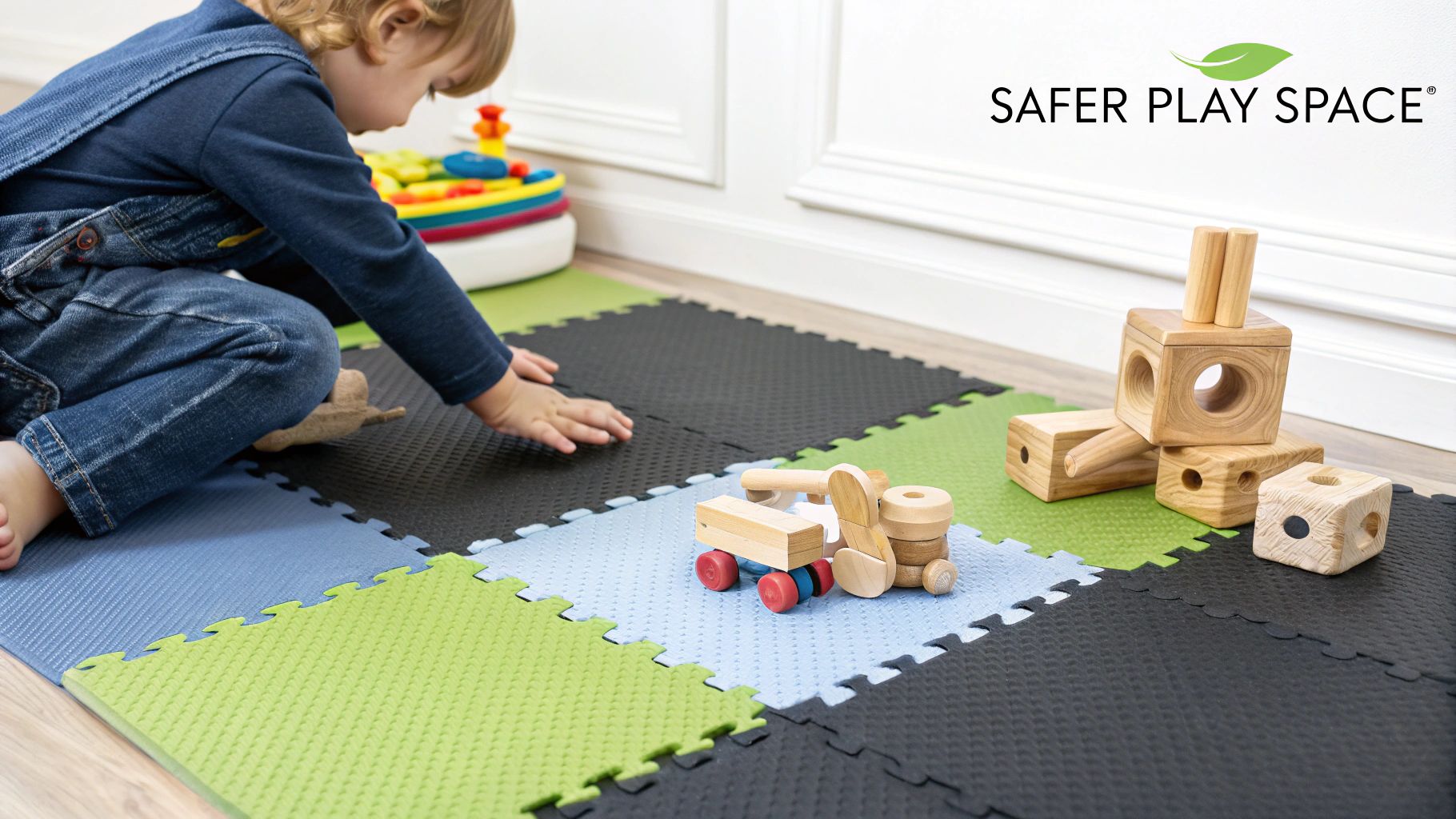
It all starts with a proper setup. Whether you've got a single-piece mat or the interlocking tile kind, make sure it lies completely flat against the floor. You want to get rid of any raised edges that could trip up a wobbly toddler who's just finding their feet.
If your mat has interlocking pieces, give them a quick check to ensure they fit together snugly and securely. There shouldn't be any gaps where tiny fingers could get pinched, and definitely no small, loose bits that could break off and become a choking hazard. It's a small check that makes a huge difference.
Ensuring Cushioning and Cleanliness
Another key safety feature is the mat's thickness. A thicker foam mat provides much better impact absorption, softening the tumbles that are an inevitable part of learning to roll, crawl, and walk. That extra cushion gives you peace of mind while your child explores.
This diagram breaks down some of the most common materials you'll find in non toxic play mats.
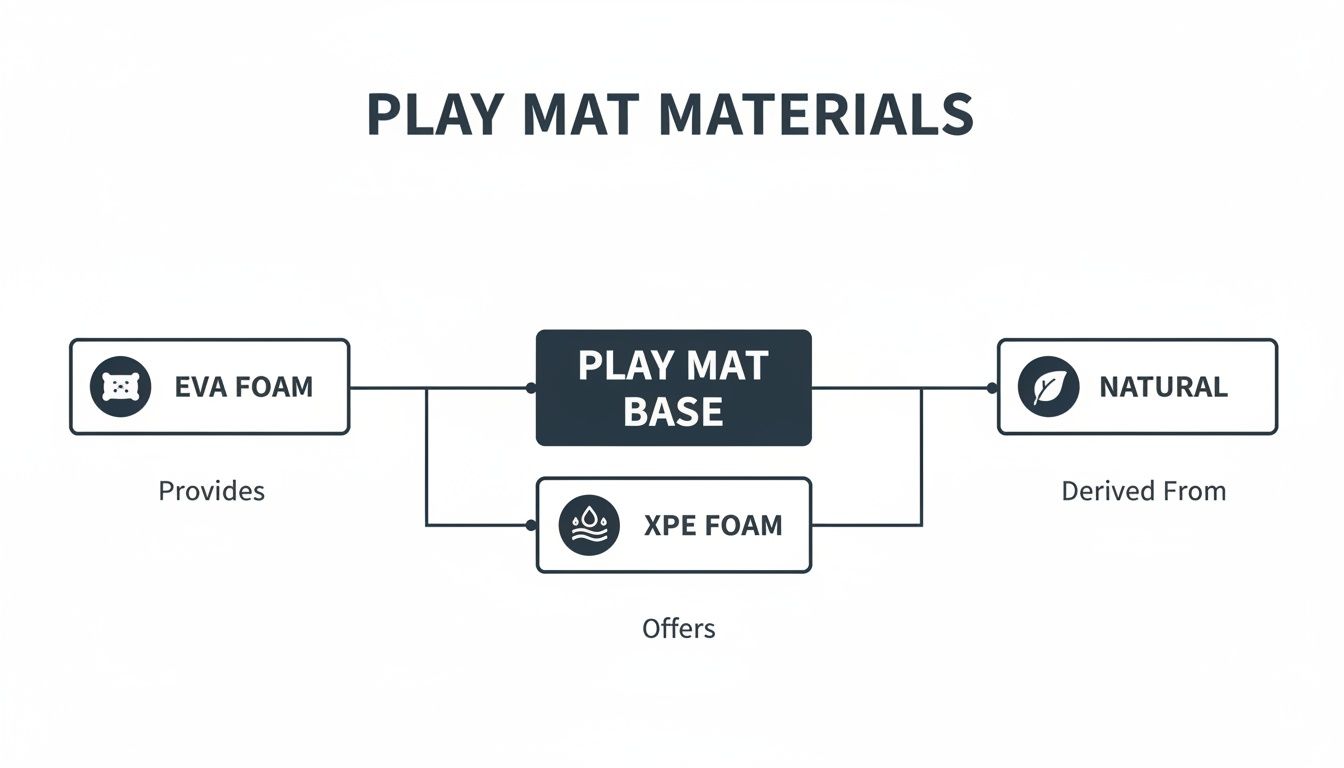
As you can see, materials like EVA and XPE foam are chosen for specific reasons—like cushioning and water resistance—which help with both safety and easy clean-up.
Finally, keeping the mat clean is non-negotiable for a healthy environment. It’s best to avoid harsh chemical cleaners, as they can break down the foam over time and reintroduce the very toxins you were trying to avoid.
A simple mix of mild soap and water is really all you need to wipe away spills and messes. This gentle approach keeps the mat in good shape and makes sure the surface is always safe for your child's delicate skin.
These practical steps are just one piece of the puzzle. For a more complete look at creating a secure home, our guide on how to childproof your home has plenty more tips for total peace of mind.
How a Non-Toxic Mat Supports Child Development
A great play mat is so much more than just a soft spot for your baby to land. Think of it as a developmental tool, one that can turn a simple patch of floor into a space dedicated to growth, learning, and exploration. This is where the idea of a non-toxic foam play mat really connects with child-led learning philosophies like Montessori.
The goal is to create what's called a "prepared environment"—a space intentionally designed to nurture a child’s natural curiosity and independence. By offering a defined, comfortable, and safe zone, a play mat clearly says to your little one, "This space is for you." It’s an open invitation to play and explore on their own terms.
Fostering Freedom of Movement
One of the biggest wins is the freedom of movement a mat provides. From the very first days of tummy time to the excitement of rolling over, a cushioned surface is non-negotiable. It gives them a firm yet forgiving foundation to push up, strengthen their neck and core muscles, and eventually get crawling.
A play mat is not just padding; it’s a runway for milestones. It provides the confidence and security a child needs to test their physical limits, from their first wobbly attempts to sit up to their triumphant first steps.
This freedom is the key to developing gross motor skills. Without a comfortable spot, a baby might be less willing to practice these movements—the very building blocks of physical confidence and coordination. A good mat simply removes the hard, cold floor as an obstacle to their amazing progress.
Creating a Calm and Focused Play Space
A thoughtfully designed non-toxic foam play mat also does wonders for cognitive development. Many mats feature calm, uncluttered designs with simple patterns or soothing colors. This isn't just about aesthetics; it's an intentional choice to minimize the overstimulation that can come from busy, chaotic surroundings.
A less distracting surface helps a child zero in on what they're doing, whether it's exploring a wooden toy, figuring out a puzzle, or just watching their own hands. This ability to focus is a foundational skill for all learning that comes later. By providing an uncluttered and safe "yes" space, the mat empowers your child to play independently and explore their world at their own pace. It’s a purposeful investment in their growth, not just another piece of baby gear.
Alright, you’ve done the research and you know what to look for in a safe play surface. Now for the final, most important step: putting on your detective hat. Before any non toxic foam play mat makes it into your home, it’s time to ask the manufacturer some tough questions. Any brand that’s truly proud of its safety standards will have no problem answering.
Think of it like this: marketing claims are just the book cover. You need to open it up and read the pages. The good news is, cutting through the fluff is easy when you know exactly what to ask. These questions give you the power to demand real answers and make sure the mat you choose is as safe as it claims to be.
Your Pre-Purchase Safety Checklist
Don't ever feel shy about reaching out to customer service. A company that stands by its product and cares about its customers will be happy to hear from you.
Here are the must-ask questions:
-
Is this mat certified free of formamide, BPA, and phthalates? This is your non-negotiable opening question. It gets right to the heart of the most common—and most harmful—chemicals lurking in cheap foam. A simple "yes" isn't good enough; push for the specifics.
-
Can you provide documentation for its safety certifications? This is where you separate the talk from the truth. A legitimate company should have no issue sending you a link to their OEKO-TEX, Greenguard Gold, or other third-party testing certificates.
-
What are your recommendations for non-toxic cleaning? This is a clever two-part question. First, it gives you practical advice. Second, it shows whether the company has thought about the entire life of their product. The only right answer involves simple, gentle cleaners like mild soap and water.
When you ask these direct questions, you put the burden of proof back where it belongs: on the manufacturer. It's a simple but powerful way to guarantee the play mat you buy is genuinely safe, not just cleverly labeled.
How a Trusted Brand Responds
A brand that truly cares about your child's health won't just have the answers—they'll have this information displayed clearly on their website for everyone to see. Transparency is key. A company like Ocodile, for instance, makes certified, safe materials the foundation of their products from day one.
Their response would confidently point to their certifications, confirm their materials are free from nasty chemicals, and give you straightforward, gentle cleaning instructions. This kind of openness makes your job easy. It lets you choose a non toxic foam play mat that gives you genuine peace of mind.
At Ocodile, we believe creating a safe and nurturing environment for your child should be simple. Our products are designed with the highest safety standards in mind, giving you the peace of mind you deserve. Explore our collection of child-safe furniture today.