



Small Floor Bed Ideas for a Compact Nursery
If the crib, glider, dresser and toy basket are already competing for the same few feet, a small floor bed can make a compact nursery feel more usable without giving up a safe, child-centered sleep zone. The idea is simple: keep the mattress low, reduce bulky furniture and leave enough open floor for your toddler to move, play and climb in and out with less help.
The best setup starts with three decisions: where the mattress fits, how your toddler will move through the room and what furniture can leave the nursery. If you are still choosing between a crib and a low bed, this comparison of a floor bed vs crib can help you think through the bigger transition before you plan the layout.
Why a small floor bed can make a compact nursery easier to use
A compact room does not need to feel packed. A low sleep setup can reduce the visual bulk that makes a nursery feel crowded, especially if the bed frame is simple and close to the floor. Instead of tall crib rails taking up wall space and sightlines, the sleep area sits lower, which can make the room feel calmer and more open.
A small floor bed also changes the daily routine. Your toddler can practice getting into bed, reaching a favorite board book from a low shelf or climbing out safely when it is time to get up. That does not mean the room becomes unsupervised free-for-all space. It means the room should be planned more like a toddler-safe zone, with fewer hazards at child height.
Start with the mattress footprint
Before you look at colors, canopies or cute bedding, measure the room. Mark the mattress footprint on the floor with painter's tape and walk around it like you would during a real bedtime routine. Can you sit beside your child? Can you open the closet door? Can you reach the hamper without stepping over toys?
| Mattress size | Approximate dimensions | Best fit in a compact nursery |
|---|---|---|
| Crib or toddler mattress | 28 x 52 inches | Very small rooms or toddlers transitioning from a crib mattress |
| Twin mattress | 38 x 75 inches | Longer use, narrow rooms or a wall-hugging layout |
| Full mattress | 54 x 75 inches | Better for shared reading time, but often too wide for tight nurseries |
In a narrow nursery, a small floor bed usually works best when it leaves one clear walking path from the door to the bed. That path matters at 2 a.m., when you are carrying laundry, checking on a cough or trying not to step on a wooden train.
Compact nursery layout ideas that actually work
The corner sleep zone
A corner layout uses two walls to visually frame the bed, which can make the sleep space feel cozy without adding extra furniture. This works well when the door swings away from the bed and the closet is on the opposite side of the room.
Keep the mattress or frame positioned according to the manufacturer's guidance and avoid gaps where a child could become trapped. If the bed sits near a wall, check the edges often as bedding shifts and your child moves at night.
The long-wall layout
If the nursery is rectangular, place the bed along the longest uninterrupted wall. This keeps the center of the room open for getting dressed, reading or practicing simple tasks like putting pajamas in a hamper.
This layout is especially useful when you want one low shelf across from the bed. Your child can see a few choices without every toy in the house being available at bedtime.
The closet-side layout
Some compact nurseries work best when the bed sits near the closet and the dresser moves out of the room. In small homes, the nursery does not have to hold every item your child owns. Pajamas, diapers, wipes and sleep sacks may be enough.
Before buying a small floor bed, decide what absolutely needs to stay in the nursery. If the answer is sleep essentials only, you may be able to choose a calmer layout and avoid cramming in furniture that makes the room harder to use.
Make the room safe before you make it cute
A floor bed changes the safety question. Instead of asking only, “Is the bed safe?” you also need to ask, “Is the whole room safe if my toddler gets out of bed?” For toddlers and preschoolers, the room should be simple, anchored and easy to scan.
Start with the basics: anchor tall furniture, secure blind cords out of reach, cover outlets, check window access and keep heavy decor away from the sleep area. Use low shelves rather than tall bookcases when possible and avoid placing lamps, cords or climbable storage right beside the bed.
For babies under 12 months, follow safe sleep guidance from your pediatrician and the American Academy of Pediatrics, including a firm, flat sleep surface and no loose blankets, pillows or soft items in the sleep space. Many families consider floor beds during the toddler stage, when the child is transitioning out of a crib and the room can be fully childproofed.
Nursery safety is not the same as whole-home security, but the mindset is similar: check weak points before there is a problem. Families doing a broader safety audit can look at categories covered by home security providers such as Locked Safe Holland, including alarms, cameras and access control, then separate those concerns from day-to-day childproofing inside the toddler's room.

Storage ideas that keep the floor open
Storage is usually the hardest part of a compact nursery. A low bed saves visual space, but the room can still feel crowded if every corner fills with bins. The goal is not more storage. It is fewer things in the sleep space.
A small floor bed works best with storage that supports the bedtime routine rather than competing with it. One basket for books, one small hamper and a drawer or bin for pajamas may be enough. Extra toys can live in a closet, playroom or family room.
Use vertical space carefully
Wall shelves can help, but keep them away from the area above the bed unless they are installed securely and used only for lightweight decor. In earthquake-prone areas or homes with very active climbers, low closed storage is often the more practical choice.
Hooks can be useful for a robe, sleep sack or small backpack, as long as they are installed at a safe height and do not create a climbing invitation.
Think about mattress airflow
If a mattress sits directly on the floor, moisture and airflow deserve attention. Many families choose a low frame or slatted base because it lifts the mattress slightly while keeping the sleep surface close to the ground. If you use a mattress directly on the floor, lift and air it out regularly and follow the mattress manufacturer's care instructions.
For more styling and bedding inspiration, Ocodile's guide to floor bedding ideas covers cozy sleep setups without turning the bed into a pile of pillows and blankets.
What to look for in a small floor bed for a tight room
A good compact nursery bed should solve space problems, not create new ones. Look for a size that fits the room with walking space around key areas. Check the total footprint of the frame, not only the mattress size, because side rails, headboards and decorative shapes can add inches.
The right small floor bed should feel sturdy and simple. Parents often describe the best toddler furniture as solid, stable, easy to use and well made. Those qualities matter in a small room because there is less margin for awkward corners, wobbling furniture or pieces that block the door swing.
Helpful features to consider include:
- A low profile that lets your child climb in and out with less lifting from you
- Smooth edges and a child-safe finish suitable for everyday use
- Guardrails or partial rails if they match your child's needs and the bed design
- A frame size that leaves space for sitting, changing clothes and opening drawers
- A simple shape that does not turn the bed into a climbing structure
A compact nursery is also a place where “cute” should not win over usable. If a bed looks beautiful but blocks the closet, crowds the glider or leaves no safe path to the door, it is probably too large for the room.
Keep independence outside the nursery too
A floor bed can help your toddler do one daily task with less lifting: getting in and out of bed. But in a small home, independence usually spreads across routines. Your child may also want to wash hands, help stir pancake batter or stand beside you while you pack lunches.
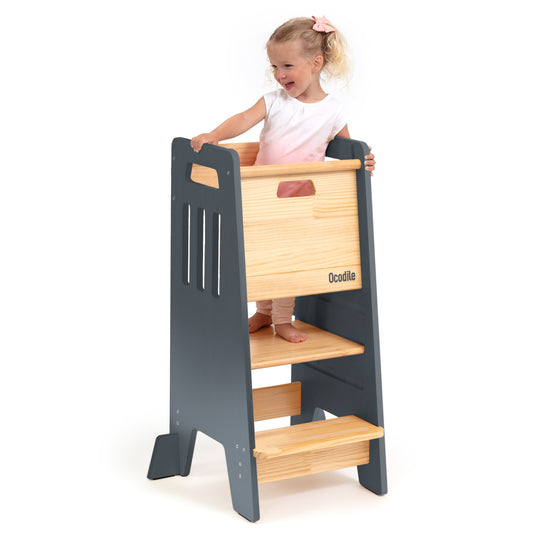
That is where the right helper furniture can reduce the temptation to drag a dining chair across the kitchen. If space is tight, the Adjustable Foldable Kitchen Tower is relevant because its foldable design can be easier to store between uses. For families who want a dedicated adjustable kitchen stool helper, the Montessori Toddler Tower - Adjustable Kitchen Stool Helper gives toddlers a more purpose-built way to reach counter height during supervised kitchen routines.
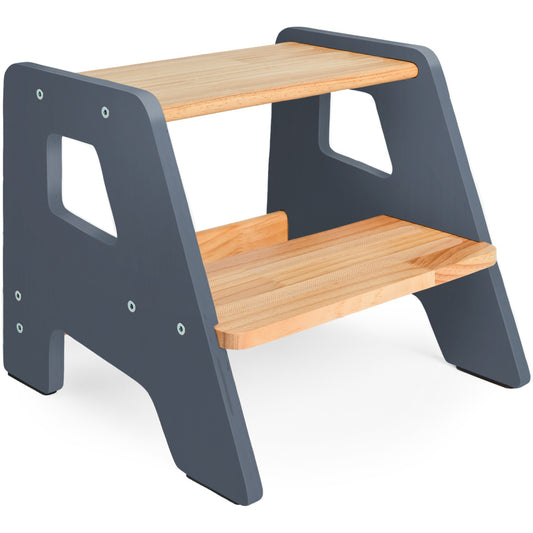
These pieces are not replacements for supervision. They simply help create safer, more predictable setups than improvised climbing, especially when your toddler wants to be part of everyday tasks.
Small nursery mistakes to avoid
The most common compact nursery mistake is filling the room like a full-size bedroom. A toddler does not need a nightstand, large dresser, bookcase, toy chest and display shelves all within arm's reach of the bed.
Another mistake is leaving too many choices visible at bedtime. If your child can see every toy, stuffed animal and puzzle from the mattress, the room may invite play when you are hoping for sleep. Keep the sleep zone boring in the best possible way: cozy, predictable and easy to reset.
Watch for these issues during your layout test:
- A door that cannot open fully because the bed is too close
- A closet drawer that hits the mattress or frame
- A rug that bunches near the bed and creates a tripping spot
- Loose cords near the mattress
- Heavy wall decor above the sleep area
- Storage bins that become steps for climbing
If the room fails the nighttime test, adjust before adding more furniture. Walk the path in low light, sit where you will read stories and make sure you can reach your child quickly without stepping over clutter.
A simple compact nursery plan
If you want a starting point, try this layout: place the bed along the longest wall, keep one low basket of books beside it, move extra toys out of the room and use the closet for clothing overflow. Add a soft rug only if it lies flat and does not crowd the walking path.
A small floor bed should make the nursery easier for both of you. Your toddler gets a bed they can enter on their own, and you get a room that is simpler to clean, easier to navigate and less dependent on lifting your child for every step of the bedtime routine.
Frequently Asked Questions
What size floor bed is best for a compact nursery? A crib or toddler mattress is usually the smallest option, while a twin gives more room to grow if the nursery can handle the length. Measure the full frame footprint, not only the mattress, before choosing.
Can a floor bed go in the corner of a room? Yes, many families use a corner layout in compact nurseries. Check for unsafe gaps, follow the bed manufacturer's placement guidance and make sure the room is fully childproofed.
Is a floor bed safe for babies? For babies under 12 months, follow your pediatrician's guidance and safe sleep recommendations, including a firm, flat surface without loose bedding or soft objects. Many parents wait until the toddler stage to use a floor bed.
How do I keep a small nursery from feeling cluttered? Keep only sleep-related items in the room, use low storage, limit visible toys and preserve a clear walking path from the door to the bed. A compact nursery works best when it has fewer jobs.
Do I still need a crib if I choose a floor bed? Not always. Some families move from crib to floor bed when their toddler is ready, while others keep a crib longer. The right choice depends on your child's age, sleep habits, climbing behavior and how safely the room can be childproofed.
Ready to plan a calmer small nursery?
Start with measurements, not furniture. Tape out the bed size, test the walking path and remove anything that does not support sleep, dressing or bedtime care. If you want furniture designed around toddler independence and everyday safety, Ocodile offers Montessori-inspired children's furniture with free US shipping, 60-day returns and a 5-year warranty.