



Discover floor bedding ideas for Safe, Stylish Kids' Rooms
At its heart, the idea behind floor bedding is beautifully simple. It's usually just a mattress on the floor, inspired by the Montessori approach to give a child independence and keep them safe. This setup creates a child-centric environment where little ones can get in and out of their own sleep space, building a sense of autonomy right from the start.
Why Floor Beds Are More Than Just a Trend
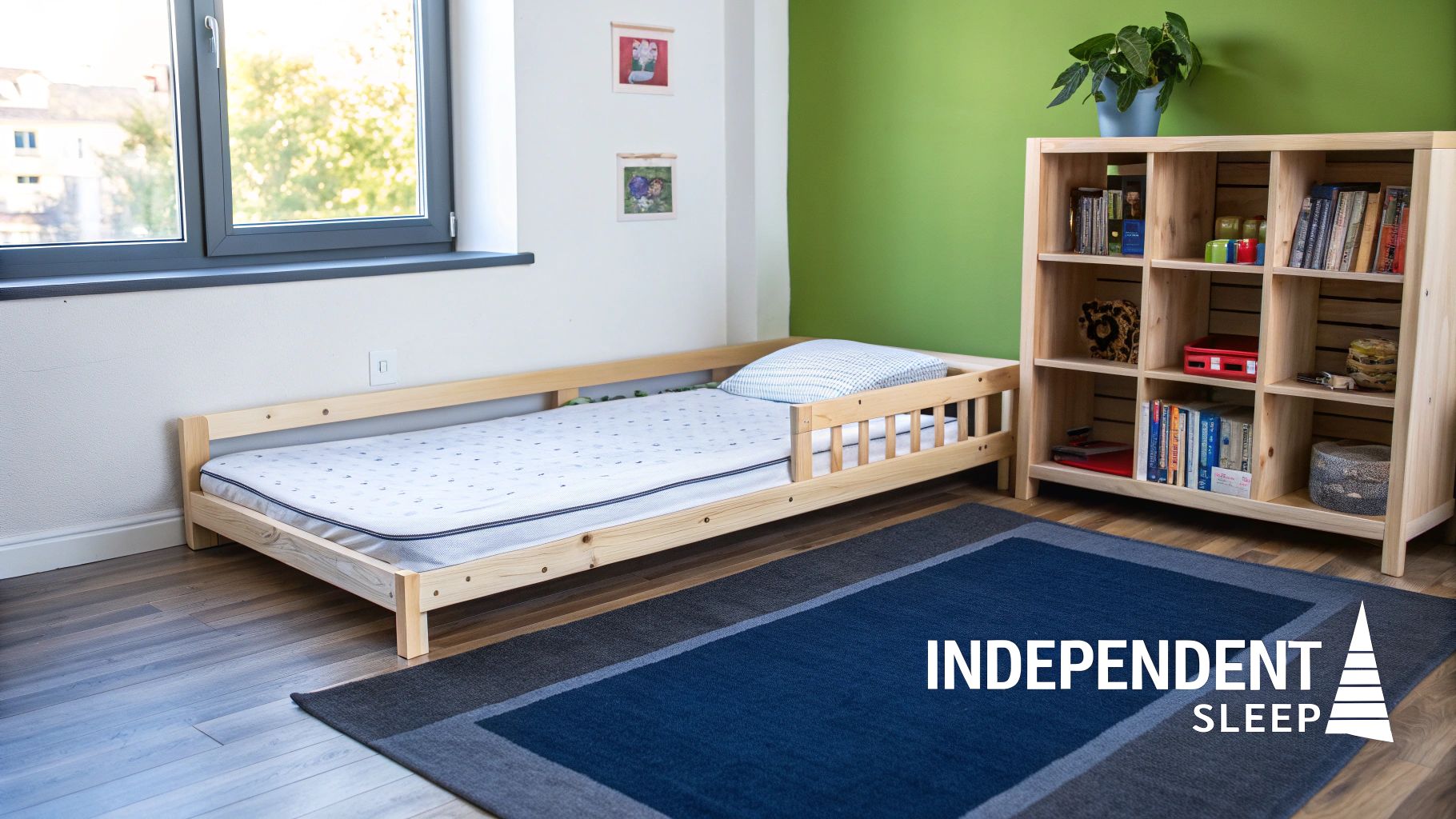
Choosing a floor bed isn't just about looks; it's a real parenting strategy that comes from a deep understanding of child development. It’s a deliberate move away from the traditional, restrictive crib toward a space that respects a child's natural urge to move and explore.
The whole point is to empower your child. With a bed at their level, they learn to listen to their body’s cues for rest and waking. They can climb into bed when they’re tired and get up to play quietly when they wake, all without needing to call for you. This simple freedom is a huge confidence booster.
The Rise of Child-Centered Sleep Spaces
Floor beds, which you'll often hear called Montessori floor beds, have really taken off since the early 2010s. They just fit so well with parenting philosophies that put a child's independence first. In North America alone, parents reported a 40% increase in switching to floor beds between 2020 and 2025.
A huge driver for this is safety. The low height slashes fall risks by up to 85% compared to traditional cribs. It’s not just about a piece of furniture; it’s about starting to see the bedroom through your child’s eyes.
A floor bed transforms the entire room into a safe, accessible world for your child. It's not just a place to sleep—it becomes their personal sanctuary for rest, play, and learning.
So what's really pushing this trend? A few key things:
- Enhanced Independence: Kids get to be in charge of their own sleep and wake-up times.
- Improved Safety: Getting rid of the risk of falls from a high crib is a massive relief for parents. Our detailed comparison between the two can help you weigh the pros and cons: https://ocodile.com/blogs/the-little-space/floor-bed-vs-crib
- Respect for the Child: This approach honors a child’s abilities and encourages them to learn at their own pace.
If you want to dive deeper into the benefits and get the full picture, this comprehensive ultimate guide to floor beds is a fantastic resource. It’ll walk you through creating a space that’s beautiful, practical, and safe.
Choosing the Right Mattress and Frame
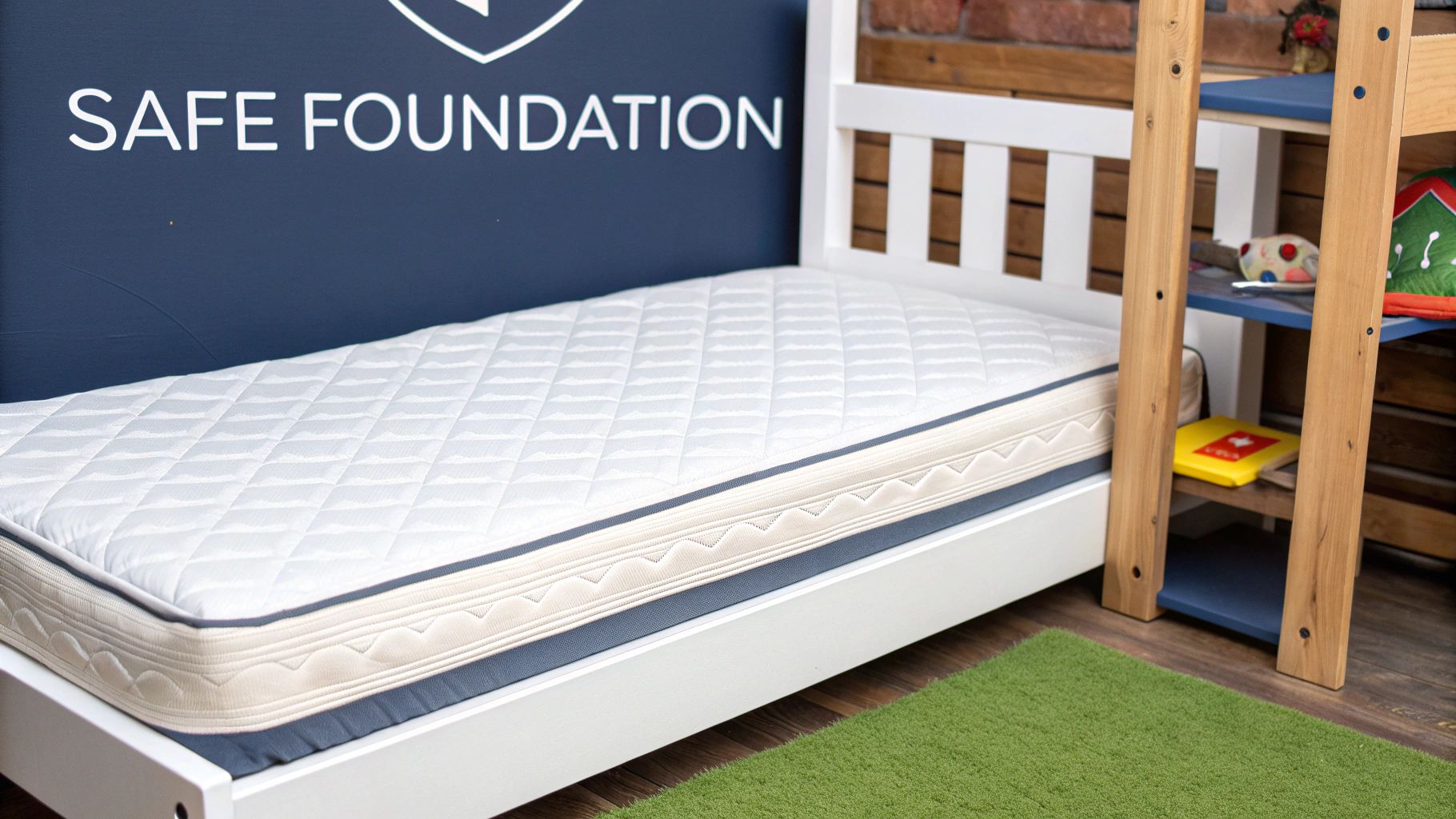
The heart of any floor bed is, without a doubt, the mattress. This one choice has a bigger impact on safety, comfort, and your little one's well-being than anything else. If you get this part right, everything else falls into place much more easily.
For infants and toddlers, the most critical factor is mattress firmness. A soft, squishy mattress might look cozy, but it's a serious suffocation hazard. For any child under two, the mattress needs to be firm enough that it doesn’t create an indent when they're lying on it.
A simple test? Press your hand down firmly in the middle and along the edges. If it springs back right away without holding the shape of your hand, you're on the right track. This is a non-negotiable for safe sleep.
Selecting Safe Mattress Materials
Beyond firmness, what’s inside the mattress is just as important. Think about it—your child will spend thousands of hours breathing in whatever their mattress is made of. It’s smart to prioritize materials that are non-toxic and breathable for their long-term health.
I always recommend looking for mattresses with certifications that guarantee low chemical emissions. Keep an eye out for these labels:
- GOTS (Global Organic Textile Standard): This means the cotton is organic and processed without a bunch of nasty chemicals.
- GREENGUARD Gold: This is a big one. It certifies that the mattress has met strict standards for low VOC (volatile organic compound) emissions, which means cleaner air in your child's room.
- CertiPUR-US®: If you’re looking at foam, this seal ensures it’s made without ozone depleters, heavy metals, or harmful flame retardants.
This shift toward healthier materials isn't just a niche trend. The global home furnishings market is projected to grow from USD 132.51 billion in 2025 to USD 140.86 billion in 2026. In the Asia-Pacific region, urbanization has actually boosted floor bed usage by 30% since 2022, as families in smaller spaces embrace them. You can find more market insights over at The Business Research Company.
The right mattress doesn’t just provide a place to sleep; it creates a healthy micro-environment. Investing in organic cotton, wool, or certified hypoallergenic foam is an investment in your child’s well-being.
To help you sort through the options, here's a quick comparison of common mattress materials.
Mattress Material Comparison for Floor Beds
| Material Type | Key Benefits | Considerations | Best For |
|---|---|---|---|
| Organic Cotton | Hypoallergenic, breathable, naturally firm. Free of pesticides and harsh chemicals. | Can be more expensive. May compress over time, so quality matters. | Families prioritizing a 100% natural, chemical-free environment. |
| Natural Latex | Durable, supportive, and naturally resistant to dust mites and mold. Great airflow. | Can be heavy and pricier. Ensure it's 100% natural latex, not synthetic. | Children who need firm support and parents looking for a long-lasting option. |
| High-Density Foam | Lightweight, affordable, and widely available. Offers consistent firmness. | Look for CertiPUR-US® certification to avoid harmful off-gassing. | Budget-conscious families who still want to ensure safety standards are met. |
| Innerspring | Excellent airflow and firm support. Often a more traditional choice. | Can be bouncy. Ensure coils are well-covered and edges are supportive. | Toddlers who are transitioning from a crib and are used to this feel. |
Choosing the right material really comes down to your family's priorities, whether that's sticking to a budget or creating a fully organic sleep space.
Finding the Perfect Frame
While some parents put the mattress directly on the floor, I often suggest using a low-profile frame. A frame lifts the mattress just an inch or two off the ground, which is crucial for airflow. This simple step helps prevent mold and mildew from building up underneath, especially if you have carpets or live in a humid area.
When you're looking for a frame, a few styles work really well for floor beds:
- Slatted Platform Frame: This is the most practical choice. These simple frames give you fantastic ventilation. Just make sure the slats are no more than 2.5 inches apart to give the mattress proper support.
- Solid Wood Frame: A basic, beautiful wooden frame is durable and does a great job of defining the sleep space without adding much height. It just feels grounded and secure.
- House or Tent Frame: These are so much fun! A whimsical house frame can make the transition to a "big kid bed" feel like a special adventure, creating a cozy little den your toddler will love.
The goal is to find a frame that keeps the mattress breathing while still being low enough for your child to get in and out of bed independently. If you want more specific recommendations, you might want to check out our guide on choosing the best mattress for a floor bed.
Creating a Truly Safe Sleep Environment
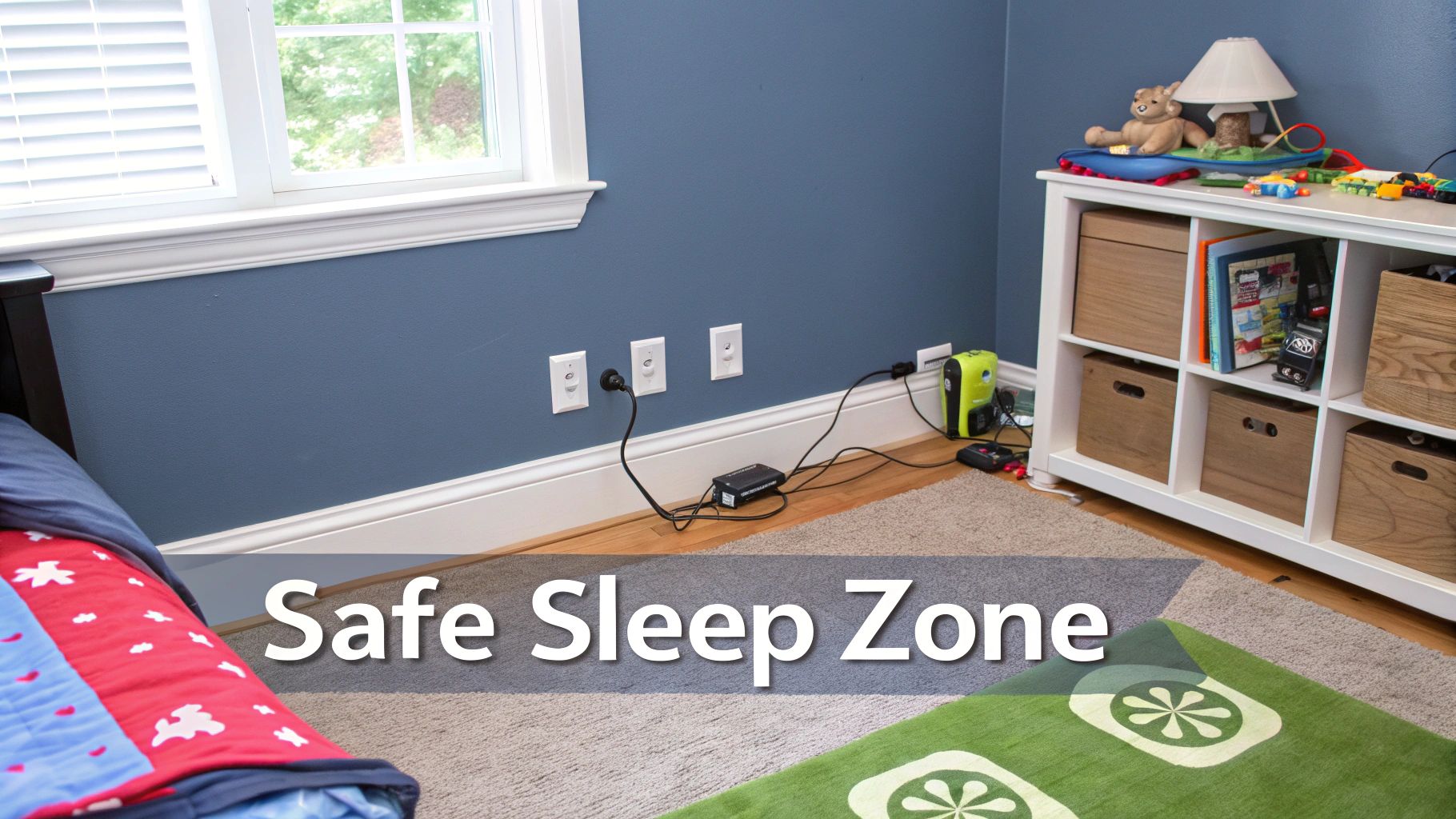
A floor bed’s safety isn't just about the mattress—it’s about the entire room. Once your child can hop out of bed on their own, their whole bedroom effectively becomes the crib. This means you need to meticulously childproof every corner, turning the space into a genuine safe haven for them to rest and play, even when you're not in the room.
The best way to start? Get down on your hands and knees and see the world from their perspective. What looks tempting? What’s within reach? This simple shift in viewpoint will quickly reveal potential hazards you might otherwise miss.
Securing the Room Itself
First up, tackle the big stuff. Any furniture that could possibly tip over—dressers, bookshelves, even toy chests—needs to be securely anchored to the wall with anti-tip kits. You might be surprised, but even low, heavy pieces can pose a real risk to a determined toddler.
Next, it’s time to deal with electrical hazards. Every single unused electrical outlet needs a cover. I’ve found that sliding outlet covers are a much better choice than the simple plug-in caps, which can become choking hazards themselves if a curious child pries them out. Take a close look at all your cords, too. Make sure they are tucked away, secured, or hidden behind furniture where little hands can't grab and pull.
The goal is to eliminate any potential for climbing, pulling, or electrical shock. Think of the room as a large playpen where your child is safe to explore, even when you aren't there.
This proactive, room-wide approach is catching on. As the market for bedding products—including innovative floor beds—is projected to hit USD 144.66 billion by 2033, the focus on holistic safety is growing right alongside it. In fact, European data shows a 28% reduction in home injuries since 2018 safety campaigns started emphasizing this kind of room-wide childproofing.
Strategic Bed Placement
Where you put the bed is just as critical as the mattress itself. The sweet spot is usually in a cozy, protected corner of the room, well away from any immediate dangers.
Here are a few placement rules I always follow for optimal safety:
- Away from Windows: Never, ever place a bed directly under a window. This gets rid of the risk of falls and, just as importantly, prevents access to blinds or curtain cords, which are serious strangulation hazards.
- Clear of Heaters: Make sure the bed is a safe distance from any radiators, vents, or space heaters. This prevents any chance of burns and helps avoid overheating while they sleep.
- No Wall Entrapment: While it’s tempting to push the mattress right up against a wall, safe sleep guidelines recommend keeping a clear space all around it. This is crucial to prevent a child from accidentally getting trapped between the mattress and the wall.
Speaking of a safe sleep environment, keeping the mattress clean is a big part of the picture. Knowing how to clean a mattress like a pro helps keep the sleep surface hygienic and free of allergens.
By tackling these potential risks head-on, you’re creating more than just a sleep area; you’re building an environment that safely supports your child’s growing independence. For a more detailed checklist, our guide on Montessori floor bed safety is a great resource to help you feel completely confident in your setup.
Bringing Your Floor Bed Ideas to Life
Now for the fun part. With the big safety checks out of the way, you can dive into styling the floor bed and creating a space that’s as beautiful as it is practical. This is your chance to bring all those floor bedding ideas to life and turn a simple mattress into your child's favorite little sanctuary.
The secret to a beautifully styled floor bed is all in the layering. You’ll want to start with high-quality, breathable textiles that feel amazing against the skin. I always recommend organic cotton fitted sheets as a base—they're incredibly gentle and you don't have to worry about harsh chemicals.
From there, you can build up warmth and texture with things like lightweight quilts or cellular blankets. Of course, for any baby under 12 months, the immediate sleep space needs to stay completely clear of loose bedding. But for toddlers, a soft, perfectly-sized quilt adds a wonderful layer of coziness.
Weaving a Cohesive Theme
A floor bed shouldn't look like an afterthought. You want it to feel like it truly belongs in the room. The easiest way to pull this off is by picking a cohesive theme that ties everything together. And no, this doesn't mean you have to go all-out with a specific cartoon character.
Sometimes the simplest themes have the most staying power. A color palette inspired by nature—think soft greens, earthy browns, and sky blues—can create an incredibly calming vibe. You can then pull this theme out from the bedding into the rest of the room.
Consider these pieces to build a unified look:
- A Plush Area Rug: Placing a big, soft rug under and around the floor bed really defines the sleep zone. It also gives your little one a warm, comfy surface to land on when they roll out of bed.
- Wall Decals or Murals: I love removable wall decals. They're a fantastic, low-commitment way to inject some personality. A simple mountain range, a few scattered stars, or some whimsical animal silhouettes can instantly elevate the whole space.
- Soft, Ambient Lighting: A nightlight with a warm glow or a string of fairy lights (tacked safely out of reach, of course) can make the area feel secure and a little bit magical. Try to avoid harsh overhead lighting, especially as you get close to bedtime.
When you coordinate these elements with the colors and textures of your floor bedding, the whole room just clicks and feels intentional.
Your child's floor bed is more than just a place to sleep—it's the heart of their personal space. Styling it thoughtfully transforms it into a hub for comfort, imagination, and quiet play.
Designing a Multifunctional Cozy Zone
One of the best things about a floor bed is that it naturally becomes more than just a bed. Because it's at their level, it's the perfect spot for reading, quiet play, and just chilling out. Leaning into this is one of my favorite floor bedding ideas.
You can create a whole "cozy zone" by surrounding the bed with accessible, kid-friendly things. A low, forward-facing bookshelf nearby lets them easily grab their favorite stories. Throw in a few large floor cushions or a soft pouf to create extra seating for story time. A small basket with a couple of soft toys can also encourage calm, independent play.
This approach doesn't just make the bed area more inviting; it reinforces its role as a safe, comforting space in their world. It becomes the perfect spot for your child to wind down after a busy day, which helps build a really positive connection with their bed and the whole bedtime routine.
How to Transition Your Child to a Floor Bed
Moving your little one from a crib to a floor bed is a big step, and it’s totally normal to feel a mix of excitement and "what have I done?" The whole idea is to take a gentle, slow approach that makes your child feel safe and secure. Remember, you're not just swapping out their bed; you're giving them a little piece of the world to explore on their own terms.
Of course, the transition isn't a one-size-fits-all deal. A six-month-old who’s just figuring out how to roll has completely different needs than a two-year-old who’s suddenly decided the crib bars look a lot like a climbing frame. For infants, it’s about creating a safe sleep space. For toddlers, it’s about honoring that fierce, growing need for independence.
Easing into the New Space
A great way to start is by simply making the new floor bed a happy, familiar place during the day. Plop down on the mattress together and read some stories or play with a few quiet toys. You’re building a positive connection with the space long before you even bring up the idea of sleeping there.
Once it feels like a friendly spot, try introducing naps on the floor bed first. Naps are shorter and feel less intimidating for a child than a whole night, making them the perfect trial run. This gradual introduction lets them adjust without the pressure of a long separation in the dark.
A consistent, calming bedtime routine is your best friend through this whole process. It acts as an anchor for your child, giving them predictability and comfort even when their little world is changing.
If your routine is bath, story, and a song, keep it exactly the same. The only thing that changes is where they lie down at the end—the cozy new floor bed instead of the crib. That consistency sends a clear message: even though the bed is different, the love and safety of bedtime haven't changed a bit.
Navigating New Freedoms and Common Hurdles
It's going to happen: your child will realize they can get out of bed all by themselves. This is a normal, expected part of the journey. The first few nights, you might feel like a yo-yo, calmly and quietly guiding them back to bed over and over. Just stay patient and consistent.
The novelty of this newfound freedom eventually wears off. To help it along, make sure the room is a pretty boring place at night. Good blackout curtains can make the room less tempting for middle-of-the-night adventures, and keeping only quiet, simple toys accessible means there's less to distract them from sleep. This is where you can see your floor bedding ideas come to life in a practical way.
This simple timeline below can help you style the new bed over a few days to make it feel extra special and inviting.
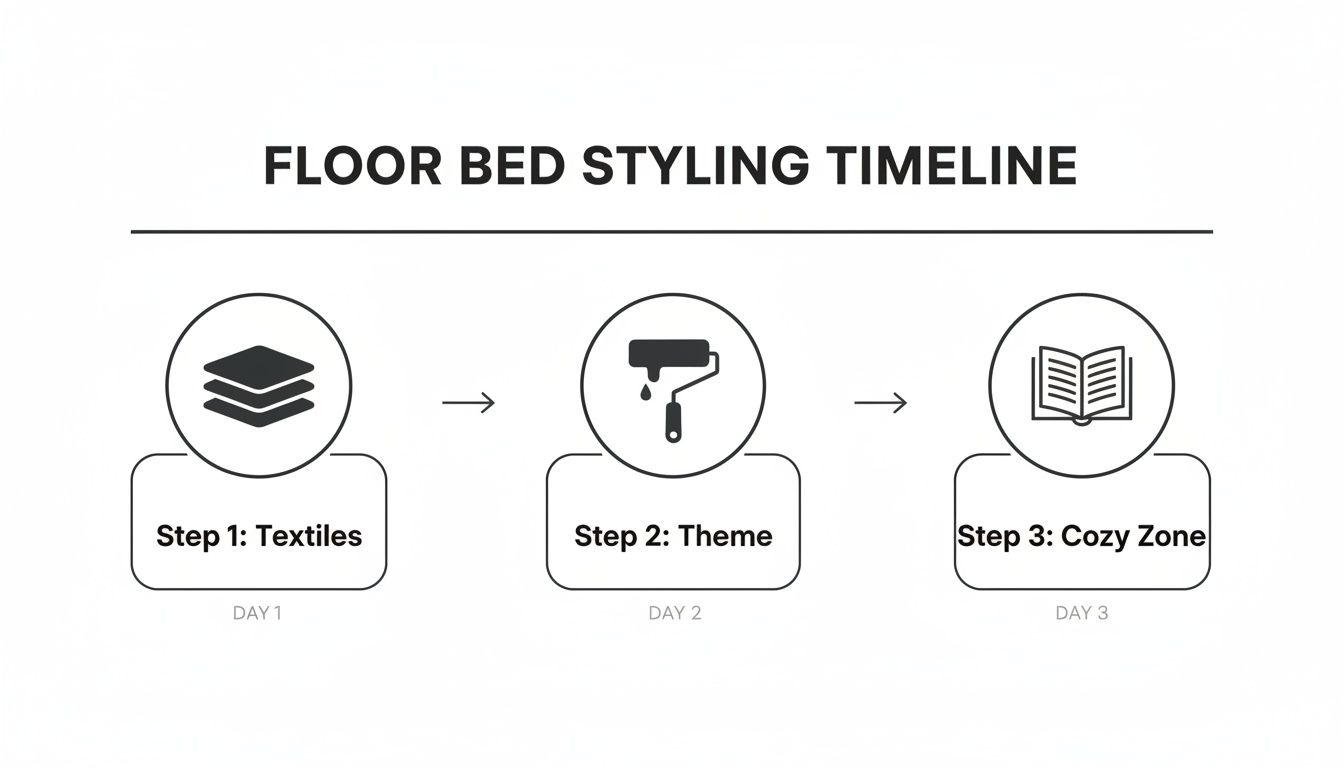
Breaking it down—layering textiles, picking a theme, and creating a cozy zone—can turn the space from just a mattress on the floor into an irresistible little sanctuary for your child.
The age of your child plays a huge role in how you approach this transition. A baby who can't yet crawl has different needs than a toddler who can open doors.
Floor Bed Transition Timeline by Age
This table offers a quick look at what to expect and how to handle the transition at different stages. It's a general guide, so always follow your child's unique cues.
| Age Group | Signs of Readiness | Transition Strategy | Common Challenges |
|---|---|---|---|
| 0-6 Months | Rolling or showing interest in moving. Often done from birth as part of a Montessori-inspired environment. | Place a firm mattress directly on the floor in a fully baby-proofed room. Lie down with the baby for comfort until asleep. | Ensuring the room is 100% safe, as the baby will eventually be mobile. Keeping the sleep area free of all hazards. |
| 6-12 Months | Sitting up, crawling, or pulling to a stand. Resisting being placed in the crib. | Start with naps. Use a sleep sack to limit mobility slightly. Maintain a very consistent and predictable bedtime routine. | The "pop-up" game where they constantly get up. Frequent night wakings due to the novelty of freedom. |
| 12-24 Months | Climbing or attempting to climb out of the crib. Showing a strong desire for independence ("me do it!"). | Involve them in setting up the "big kid bed." Let them choose their new sheets. Read stories on the bed during the day. | Testing boundaries by leaving the room. Difficulty settling down without the containment of the crib. |
| 2 Years & Older | Verbally asking for a new bed. Consistently climbing out of the crib. Fully understanding simple instructions and boundaries. | Create a "yes space" where everything is safe to touch. Use a visual toddler clock to signal when it's okay to get up. | Power struggles at bedtime. Coming out of the room repeatedly to ask for things. Adjusting to the lack of boundaries. |
Ultimately, moving to a floor bed is a journey you and your child take together. With a bit of planning and a whole lot of patience, you'll help them embrace their new freedom and create a sleep space they truly love.
Your Floor Bed Questions Answered
When you're thinking about floor beds, a few common (and important!) questions always seem to pop up. Getting clear, straightforward answers can make all the difference in feeling confident that this is the right move for your family.
Lots of parents ask about the right age to start. There isn't a single magic number, but the switch can happen as early as 5-10 months old. This is usually when a baby is mobile enough to crawl and can safely get in and out of bed on their own. The real key isn't their age, but their developmental readiness, plus a room that’s been meticulously childproofed.
For toddlers, the transition often happens between 1.5 and 3 years old, especially if they've started channeling their inner mountaineer and trying to climb out of the crib.
How Do I Keep My Child in Bed?
This is probably the biggest question, and it's a completely fair one. That newfound freedom can be pretty exciting for a little one! At first, you might find yourself quietly guiding your child back to their mattress more than a few times a night. This is a totally normal part of the learning curve.
The novelty of being able to get out of bed eventually wears off. A consistent, calming bedtime routine and a low-stimulation, 100% safe room are your most powerful tools for encouraging them to stay put and sleep.
A few things can make a huge difference here:
- Stick to a consistent bedtime routine. This sends a clear signal that it's time for sleep, not for another round of playtime.
- Keep the room dark and uninteresting. Think blackout curtains and only a few simple, quiet toys. You want their bed to be the most inviting thing in the room.
- Stay patient and calm. Every time you guide them back, you're gently reinforcing that nighttime is for resting. Over time, they absolutely get it.
Preventing Mold Under the Mattress
Moisture getting trapped under a mattress is a genuine concern, but it’s also entirely preventable. The secret is simple: airflow.
You should never place a mattress directly on the floor, especially on carpet or if you live in a humid climate. The best way to create that crucial airflow is with a low-profile slatted bed frame or a special breathable underlay made just for floor beds.
As an extra step, make it a weekly habit to prop the mattress up against a wall for an hour or so. This lets it air out completely and keeps everything fresh. It's a small routine that offers big peace of mind, ensuring your child's sleep space stays healthy and hygienic.
At Ocodile, we create beautiful, child-safe furniture designed to support your little one's independence. Explore our collection of thoughtfully designed floor beds and other Montessori-inspired pieces at https://ocodile.com.