



Your Guide to the Standing Classroom Desk for Young Learners
A standing classroom desk is a height-adjustable workspace that gives kids the freedom to learn while standing up. It's a simple, healthy alternative to the old-school seated desk, designed to turn a child's natural restlessness into focused energy.
Why Is Everyone Talking About Standing Desks for Kids

Picture a young child stuck in a traditional classroom chair. They fidget, rock, and squirm. This isn't necessarily a sign of a poor attention span; it's their body telling them it needs to move, something most classrooms are designed to prevent.
That constant struggle to sit still can be a huge distraction from learning. The standing classroom desk flips this script. It reframes a child's wiggles not as a problem, but as a tool. Instead of fighting their natural energy, kids can channel it by shifting their weight, stretching, or just standing, all while staying on task.
A New Approach to Learning Environments
This move toward active learning spaces is picking up steam in schools and homes alike. The idea is really straightforward: create an environment that actually supports a child's physical development instead of working against it. A standing desk isn't just furniture; it’s an instrument for healthier growth.
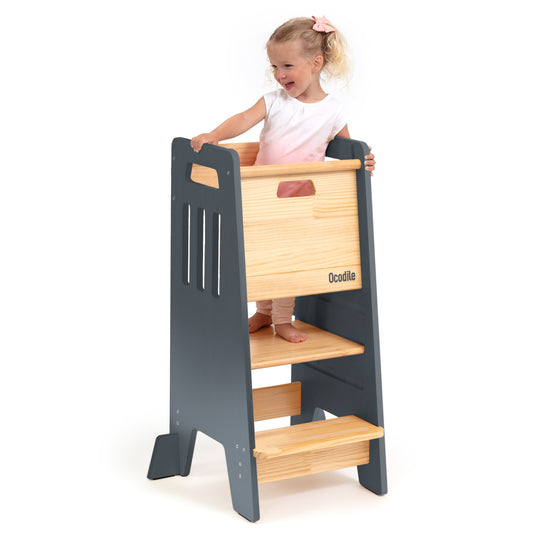
This lines up perfectly with principles that champion a child's independence and freedom. Think about how Ocodile’s standing towers empower toddlers to safely join in on kitchen activities. In the same way, a standing desk gives children control over their posture. It lets them listen to their bodies and choose to sit or stand, which builds autonomy and self-awareness.
The goal is to move from a static learning environment to a dynamic one. By accommodating a child's innate need for activity, we can help improve their focus, physical health, and overall well-being.
What Makes These Desks Different
You can't just prop up a normal desk and call it a day. A purpose-built standing classroom desk is engineered with a child’s specific ergonomic and safety needs at the forefront. The best ones share a few key features:
- Adjustability: The desk should grow with the child, making sure it can always be set to the perfect ergonomic height for them.
- Stability: A sturdy, wobble-free design is non-negotiable. It has to be safe, especially when energetic kids are using it.
- Child-Safe Materials: Look for desks with rounded corners and non-toxic finishes to keep the learning space completely safe for little ones.
As more parents and educators see the connection between physical movement and cognitive function, the standing classroom desk is becoming a must-have. It’s a smart move toward creating intentional spaces where children can truly thrive, both physically and academically.
The Science-Backed Benefits for Young Learners

You may have seen them popping up in modern classrooms, and it's not just a passing trend. The shift to a standing classroom desk is backed by solid evidence showing just how much they help young children. These benefits go way beyond just letting kids get their wiggles out; they impact physical health, focus, and even emotional well-being.
Think of it this way: a child's natural energy at a traditional desk is like a river blocked by a dam—stuck and unable to flow. A standing desk opens the gates, letting that energy move in a healthy, purposeful way.
One of the first things you'll notice is the boost to physical health. Standing naturally helps kids find better posture by getting their core muscles working and keeping their spine aligned. This active position is a great way to push back against the risks of a sedentary childhood, strengthening their little bodies in small but meaningful ways.
Enhancing Focus and Engagement
Here’s where it gets really interesting. There’s a powerful link between movement and a child's ability to concentrate. Study after study shows that when kids have the option to stand, they stay on task longer.
When children can naturally shift their weight, stretch a little, or make tiny adjustments, they’re far less likely to get restless and fidgety. In fact, some classrooms have seen student fidgeting drop by as much as 20% after bringing in standing desks. With fewer distractions, kids can dive deeper into their lessons.
This idea fits perfectly with the Montessori philosophy of “freedom of movement.” It’s a core belief that children learn best when they can physically engage with their world. A standing desk is a fantastic modern tool that supports this classic wisdom.
The Rise of Ergonomic Solutions
The demand for furniture that’s actually good for our bodies is growing fast. The global market for sit-stand desks, which includes the standing classroom desk, is expected to jump from $5 billion in 2025 to a massive $9 billion by 2033. This isn't just a number; it shows a real change in how we think about our kids' well-being in a world with more and more screen time.
This shift is something we at Ocodile have always believed in with our standing towers, which empower kids to safely join in on hands-on activities. Both tools give children the physical freedom to explore and learn on their own terms.
Research continues to point to great outcomes, including the benefits of a standing desk for productivity and reducing fatigue. By weaving movement into the school day, we help create a learning environment that is calmer, more focused, and simply more effective for every child.
How to Choose the Perfect Standing Desk for Your Child
Choosing the right standing desk feels a lot like picking out the perfect pair of shoes for a growing child. It needs to fit just right today, have some room to grow, and be sturdy enough for all their running, jumping, and playing. If you keep a few key things in mind, you can find a standing classroom desk that helps build healthy habits from the start.
The three most important things to look for are adjustability, stability, and the materials it's made from. An adjustable desk is really an investment that grows right alongside your child. A fixed-height desk might be perfect for a five-year-old, but it’ll be all wrong from an ergonomic standpoint by the time they’re seven.
Sizing It Up Just Right
Figuring out the perfect desk height is actually pretty simple. Have your child stand straight in front of the desk with their arms relaxed by their sides. The desk surface should be right at elbow level. When they place their hands on the desk to write or draw, their arms should naturally form a 90-degree angle. This simple trick is key to preventing slouching and easing strain on their little necks and shoulders.
A desk that’s too high will make a child shrug their shoulders up, while one that’s too low will cause them to hunch over. That 90-degree elbow rule is the gold standard for setting up a comfortable and healthy workspace.
Getting this alignment right makes a huge difference in their long-term comfort and focus. For a deeper dive into creating the ideal study spot, you can find more great ideas in our guide on choosing the right children's homework desks.
Stability and Safe Materials
Next up is stability. Let's be honest, a child's desk is so much more than a place for homework. It’s a craft station, a science lab, and a launchpad for all sorts of imaginative play. That means it absolutely cannot wobble.
A sturdy, well-built frame is non-negotiable. You need a reliable surface that won’t tip over, even when a child inevitably leans on it. This commitment to unwavering safety is something we build into every single Ocodile design.
Finally, take a close look at the materials. We recommend desks made from durable wood with non-toxic, child-safe finishes. Rounded corners are another must-have safety feature, helping to prevent bumps and scrapes during those more active moments. You’re looking for a desk that’s not just built to last, but built to keep your child safe.
To help lay out the options, we’ve put together a quick comparison of the most common standing desk types.
Choosing Your Child's Standing Desk Type
This table breaks down the different desk styles to help you decide which one best fits your child's age, your space, and how they'll use it.
| Desk Type | Best For | Pros | Cons |
|---|---|---|---|
| Adjustable-Height Desk | Long-term use from toddler to tween | Grows with your child; ensures perfect ergonomics. | Often a higher initial investment. |
| Fixed-Height Desk | A specific age group or temporary setups | Simple design; often more budget-friendly. | Becomes ergonomically incorrect as the child grows. |
| Desktop Converter | Using an existing traditional desk | Portable and flexible; cost-effective. | Can be less stable; may have a smaller work surface. |
By focusing on adjustability for growth, stability for safety, and high-quality materials, you'll find the perfect standing classroom desk to support your child's learning journey for years to come.
You’ve picked out the perfect standing desk—that’s a huge first step! But the job isn't quite done. Now it's time to turn that piece of furniture into a safe, inviting, and ergonomic "learning nest" for your child. How you set it up is just as important as the desk you chose.
The main idea is to get the ergonomics just right. Remember, the desk surface should be at the same height as your child’s bent elbows when they're standing straight. This creates that perfect 90-degree angle, which is the sweet spot for preventing any strain on their little necks and shoulders while they draw, write, or build.
Building a Comfortable and Safe Setup
Getting the height right is key, but a few simple accessories and safety checks can truly complete the space. These little touches are what transform a desk into a fully supportive workstation.
- Provide a Stool: The goal isn’t to stand all day long. An appropriately sized stool or an adjustable children's chair should always be nearby so they can easily switch between sitting and standing whenever they feel like it.
- Use an Anti-Fatigue Mat: Standing can be tough on little feet. A soft mat provides plenty of cushioning, making it much more comfortable to stand for longer and helping with circulation.
- Organize Cords and Cables: If you’re adding a lamp or any electronics, make sure to secure all the cords. Use some simple clips or ties to keep them tucked away and prevent any tripping hazards.
This little flowchart is a great way to double-check that your chosen desk ticks all the right boxes for a child-friendly setup.

As you can see, the best desk is one that’s adjustable, stable, and designed with safety in mind.
A Quick Safety Checklist
More and more families are looking for ways to get their kids moving, and the numbers show it. The standing desk market is expected to grow to $12.01 billion by 2025 as parents search for healthier solutions for their homes and classrooms.
Before you let your little one start using their new desk, it's a good idea to run through one final safety check. It only takes a minute and will give you complete peace of mind.
Safety First:
- Check for Pinch Points: If the desk is adjustable, show your child how to safely raise and lower it. Teach them to always keep their fingers clear of the moving parts.
- Confirm Rounded Corners: Run your own hand along every edge and corner. They should all feel smooth and rounded, which is a signature feature of Ocodile’s child-focused designs.
- Perform a Wobble Test: Give the desk a good, firm shake from a few different angles. It needs to feel solid and sturdy, ready to stand up to all the energy a young child brings to their activities.
By taking a few minutes to get the setup right, you're not just creating a great space for learning—you're making it a completely safe one, too.
Integrating a Standing Desk into Daily Routines
A new piece of furniture is only as good as its use, and a standing classroom desk is no different. The real magic happens when it becomes a natural, inviting part of your child’s world. The key is to introduce it as a fun new choice, not another rule to follow.
There’s no need to overhaul their entire day. Start small. Frame the desk as a special spot just for their favorite things.
Try beginning with short, engaging activities. Maybe suggest using the new desk for a quick 15-minute art project or a puzzle they love. This creates a positive vibe around the desk, making it an exciting option they want to use, not something they have to.
Fun Activities for a Standing Desk
A standing desk is the perfect stage for all sorts of hands-on activities, especially those that align with Montessori principles of focus and movement. Think of it less like a desk and more like a dedicated workstation for purposeful play.
Here are a few ideas to get you started:
- Practical Life Skills: Activities like sorting beans, pouring water between two small pitchers, or practicing on a dressing frame are fantastic. Standing gives kids a solid, stable base to really concentrate on those fine motor movements.
- Sensory Play: A tray with sand for tracing letters, a bin filled with different textured objects, or a station for modeling clay all work beautifully. Kids are often more engaged in sensory activities when they can shift their weight and move around the workspace.
- Focused Work: Building a tricky block tower, finishing a complex puzzle, or working with math beads. For some children, being able to stand helps them channel all that physical energy right into mental focus.
The best approach is simply to offer the standing desk as one of several options within a well-prepared environment. This really hits on the Montessori principle of fostering independence—you're letting the child choose the posture that feels best for their body and their work.
Creative Classroom and Home Setups
How you arrange the room can make all the difference. In a classroom, you could set up a few “standing zones” by grouping a couple of standing desks together. This makes using them feel completely normal and even encourages a bit of collaboration between peers.
Rotating stations are another fantastic strategy. You can arrange different activities around the room—some at seated tables, some on the floor, and some at standing desks. As children move between stations, everyone gets a natural turn to try standing. For more great layout ideas, check out our guide on creative preschool room design ideas.
If you’re setting one up at home, place the desk in a corner of the room where your child already loves to play or learn. By making it an easy and accessible part of their space, it will quickly become a go-to spot for all their creative projects.
A top-notch standing classroom desk is built to last, seeing your child through years of learning and play. But just like any beloved piece of furniture, it needs a little TLC to stay safe and in perfect working order.
Think of it like a quick bike check before a ride—you want to make sure the tires are full and the brakes work. A few minutes of prevention keeps the ride smooth and avoids any tumbles. The same goes for your child's desk, especially one that gets so much active use.
A Simple Seasonal Checklist
A quick check-up every few months is the easiest way to catch small issues before they grow. It's especially important for an adjustable standing classroom desk that has moving parts.
Here’s a simple checklist to run through:
- Tighten the Hardware: Grab a screwdriver or Allen key and gently check all the bolts and screws. Daily wiggles and movement can cause them to loosen over time, so a quick tighten keeps everything snug.
- Do the Wobble Test: Place your hands on the desktop and give it a firm but gentle shake. It should feel solid. If you notice a significant wobble, it's time to re-tighten those fasteners.
- Check the Adjustments: If you have an adjustable desk, test out the height mechanism. It should slide smoothly and lock securely into place without any slipping or catching.
A regular check is the foundation of long-term safety. Making this a quick seasonal habit ensures the desk stays as sturdy as the day you first set it up.
Teaching Your Child Safe Use
Just as important as tightening bolts is teaching your little one how to use their desk safely. This is especially true if it’s adjustable. Take a moment to show them how it works and, most importantly, where to keep their fingers clear of any moving parts when changing the height.
This little lesson gives them a sense of ownership and responsibility. When kids understand how to care for their things, they tend to value them more. It’s a great way to teach them respect for their tools and space while making sure they stay safe during independent work and play.
Of course. Here is the rewritten section, crafted to match the human-written style, tone, and voice of the provided examples.
Your Standing Desk Questions, Answered
As standing desks for kids become more common, it’s only natural for parents and teachers to have questions. It’s a new idea for many, so let's walk through some of the most common concerns to help you feel great about adding one to your child's space.
Will My Child Get Tired?
This is probably the top question we hear, and it’s a good one. The short answer is yes, they might! But that's part of the point. The goal isn't for a child to stand rigidly for hours on end.
The best way to use a standing desk is to always have a stool or a chair nearby. This empowers kids to listen to their bodies and sit down whenever they feel the need. It’s a wonderful, natural way to teach self-regulation—a skill they'll use for the rest of their lives.
Won't They Be Distracted?
It seems like standing would make a child more wiggly, not less. But what we see in practice is often the exact opposite. The freedom to gently shift their weight or sway a little actually helps children channel that restless energy productively.
Instead of fidgeting in a chair, they can move their bodies in a way that supports their focus. For many kids, this leads to better concentration and less disruptive behavior. The desk becomes a tool that helps them engage, rather than a distraction.
But Will They Actually Use It?
Parents often worry they'll invest in a standing desk only for it to become another piece of furniture that collects dust. The secret to making it a well-loved spot is all in the introduction.
Frame it as a fun new choice, not a mandatory "workstation." Start by using it for activities your child already loves, like painting, building with blocks, or playing with clay. Creating these positive first experiences makes it a space they'll want to come back to again and again.
This shift toward more active learning environments isn't just a small trend. The standing desk market is expected to hit USD 11,064.6 million by 2030, which shows just how many families and schools are seeing the benefits. You can read the full research about the growth of standing desks to see how quickly this idea is catching on.
The most successful integrations happen when the standing desk is just one of several choices. By offering options, you empower your child to decide what works best for their body and their task at that moment, building independence and body awareness.
A standing classroom desk isn’t about forcing a new habit. It’s about offering a healthier, more flexible way for your child to learn and play, giving their physical well-being and focus a simple but powerful boost.
At Ocodile, we design beautiful, safe, and practical furniture that fosters a child's natural curiosity and independence. Explore our collection to find the perfect addition to your learning space at https://ocodile.com.