



Ultimate Toddler Shoe Rack Guide: Tips for 2026
Your toddler is half-dressed, one shoe is missing, and the other one is under the bench where you can't reach it without moving three bags and yesterday's rain boots. That's usually the moment parents realize the problem isn't shoes, it's the system. A toddler shoe rack can turn that scramble into a small, repeatable routine where your child knows where shoes live, can see them, and can try to put them away without help.
Why a Toddler Shoe Rack Matters for Daily Routines
A good shoe setup changes the tone of the whole entryway. Instead of you hunting for pairs while your child is already distracted, the shoes have a predictable home, and your toddler gets a real chance to participate. That matters because independence starts with access, not with lecturing.
For families using a Montessori-style rhythm at home, the best storage is the kind a child can use on their own. Low, open storage lets toddlers see the choice, reach it, and return it after use. That simple loop supports self-dressing far better than a closed cabinet they can't open or a high shelf they can't reach.
Practical rule: if your child can't get the shoes out and back on their own most days, the rack is working for you, not for them.
A tidy entryway helps adults too, but the payoff is different. You spend less time re-stacking pairs, and your child starts to learn that shoes belong in one spot. If you also keep other changing-area surfaces clean, the same habit-based thinking applies well to routines like changing station cleaning protocols, where consistency matters more than perfection.
The goal isn't showroom order. It's a setup that survives real mornings, muddy shoes, and a toddler who wants to do it themselves.
How Fast Toddler Feet Grow and Why Storage Must Keep Up
Toddler shoes move fast because toddler feet move fast. A major kids' size guide notes that children ages 1 to 3 can outgrow shoes 2 to 3 times per year, while kids ages 3 to 10 typically outgrow shoes 1 to 2 times a year kids shoe size guide. That means a toddler shoe rack is not just holding today's pairs, it is holding a shifting mix of sizes, seasons, and hand-me-downs.
The storage itself often has to change too. The same guide says families usually replace or upgrade shoe storage every 2 to 4 years, which fits the way a toddler's collection grows from soft first walkers into sneakers, rain boots, and a backup daycare pair. For a child, shoes are in constant rotation. For a parent, that rotation is the whole job.

The broader footwear market points in the same direction. Global kids footwear sales reached about USD 50.6 billion in 2024 industry research report, and more than 1.8 billion pairs were sold worldwide. Toddlers ages 3 to 6 accounted for about 25% of total volume in that report. In the United States, the kids footwear market was estimated at around USD 12 billion in 2025 and supplied over 400 million pairs industry research report. Those figures explain why a toddler shoe rack has to support daily use, not just look neat.
A useful way to read that churn is to notice how quickly the shoes themselves change. Parents choosing museum-quality high top prints for a nursery wall may enjoy footwear as a visual motif, but the rack in the entryway has a different job. It needs to handle muddy soles, hand-me-downs, and pairs that are only useful for a short stretch of time.
A rack that fits today's pair and tomorrow's pair is the safer bet than a pretty shelf that only works for one stage.
Sizing and Safety Benchmarks for Toddler-Friendly Racks
A toddler shoe rack should start with reach, then move to stability. If a child cannot see the shoes and get to them without help, the rack is really adult storage with a child-friendly label. A low, open setup works best because it keeps pairs visible and easy to grab during the rush of getting out the door.
What to measure before you buy
Child access matters more than adult-style capacity. One source identifies 20 to 28 inches as an ideal child-accessible height for encouraging tidy habits, which is a helpful benchmark when you want a child to use the rack independently child-height guidance. That target is very different from entryway furniture built for adult eye level, and it makes the difference between a shelf a toddler uses and a shelf a parent has to manage for them.
Shoe-length clearance matters just as much. Commercial kids' racks commonly target shoes up to about 18 cm, and one compact toddler-focused organizer specifies 12.8 in W × 5.71 in D × 4.92 in H per layer with space for 2 pairs per layer kids' rack dimensions. If the shelf is too short, toddler shoes stick out, tip forward, and become harder for small hands to return to the right spot.
| Feature | Toddler-Friendly Target | Why It Matters |
|---|---|---|
| Child-accessible height | 20 to 28 inches | Lets toddlers reach shoes without a step stool |
| Shoe-length clearance | Up to 18 cm | Prevents protruding heels and tipping |
| Shallow, low-rise layers | Compact per-layer depth | Keeps shoes visible and easy to put back |
| Stable structure | Low flex, firm base | Reduces wobble during child handling |
| Simple open access | No complicated doors or latches | Supports independent use |
Load and structure matter for safety too. A concealed-storage kids' rack using PP plastic panels, a metal wire frame, and ABS connectors lists a 10 kg max static load per shelf and 80 kg total static load storage architecture example. That kind of build is useful when you want less flex and less tip risk, especially in a busy entryway where a toddler may pull, bump, or lean on the rack while learning the routine.
Good test: if the rack bends when your child pulls a shoe out, it is too flimsy for daily toddler use.
For families who like a more divided system, the locker and cubby format shows how separate spaces can help children understand where each item belongs. The same idea works only if the storage still sits low enough for a toddler to use without adult help. Advice on how to arrange shoes in your closet can help with order, but a toddler rack needs a simpler layout, because small children read the space by what they can reach, not by what looks organized from standing height.
The cleanest rule is simple. Choose the lowest safe design that still clears your child's shoe length, stays steady when pulled, and keeps the pairs visible enough for a toddler to understand the system.
Comparing Rack Types for Independence and Mess Management
A floor rack, a cabinet, a wall system, and an over-door organizer can all hold shoes, but they don't behave the same in a family entryway. The best one depends on whether you're solving for toddler reach, floor space, wet weather, or visual clutter. Families often want all four at once, which is why the trade-offs matter.
The most child-friendly option is usually the one that keeps shoes in plain sight at a low height. A floor-standing open rack is easy for toddlers to understand because the shoes are right there, but it also leaves clutter visible and can collect dirt if the area isn't managed well. A concealed cabinet hides everything, which can look calmer, but it only works if a child can open it and the doors don't become another barrier.

The locker and cubby format gives a useful reference point for families who want each child's things separated, but that setup still needs to be low enough for a toddler to use independently. The same goes for the common advice on how to arrange shoes in your closet, which is helpful for adult organization but not always enough for child-height access.
Format by format
- Floor-standing open rack: Best for reachability and quick put-away. It supports independence well, but it needs a tidy zone around it.
- Concealed cabinet: Best for hiding clutter. It can work in a neat hallway, though it's less intuitive for very young children.
- Wall-mount slim system: Best when floor space is tight. It keeps shoes up and visible, but it only works if the lowest tier sits within a child's reach.
- Over-door organizer: Best for vertical density. It's space-efficient, but it suits very light items and mounted storage more than self-serve toddler routines.
The included video is helpful if you're comparing compact storage ideas for a small entry or family closet.
A hanging organizer can also be impressive on paper. One fabric version offers 35 pockets in a 24.5 in W × 68.5 in H format, which is efficient for vertical storage but better suited to items that don't need floor-level autonomy space-efficient storage example. For toddlers, easy access usually beats maximum storage density.
Placement and Cleaning Routines That Keep the Rack Usable
A toddler shoe rack only works if it lives where the routine happens. Put it near the exit your family uses most, not in a pretty corner that nobody touches. If the shoes come off at the door, the rack needs to sit in that traffic path, with enough room for tiny hands and adult feet to move around it.
Make the rack part of a drop zone
The strongest setups have one clear home for shoes and one clear spot for the rest of the entryway clutter. A wall hook, tray, or basket nearby keeps the rack from turning into a catchall. The same basic logic appears in many small-entry organizing guides, and it's the reason a good rack feels calm instead of crowded.
In wet climates or muddy seasons, airflow matters. A storage guide recommends leaving space for air circulation and using a slim drip tray so moisture doesn't spread across the floor wet-shoe storage guidance. That detail is easy to skip until the first rainy week, when damp shoes start smelling like the whole hallway.

Keep the routine light
- Weekly wipe-down: Remove grit before it builds into sticky residue.
- Seasonal rotation: Pull out the pairs that no longer fit and move in the next size band.
- Muddy-season prep: Add a wipeable mat, and choose surfaces that clean quickly.
The toys storage organizers principle applies here too, because family storage works best when children can identify where one category ends and another begins. A toddler shoe rack is not just a shelf. It's a routine anchor, and it only stays useful if the system stays simple enough to maintain on a tired weekday evening.
How Ocodile's Design Principles Support Toddler Independence
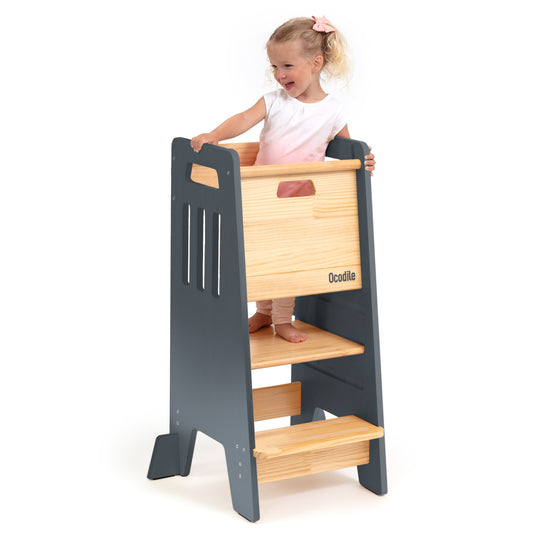
The strongest child furniture choices make independence feel natural, not forced. That's why Ocodile's focus on safe, practical, and aesthetically pleasing children's furniture lines up well with the way toddlers use a shoe rack. When a piece is built for small bodies and real routines, children can engage with it more confidently and adults don't have to keep resetting it.
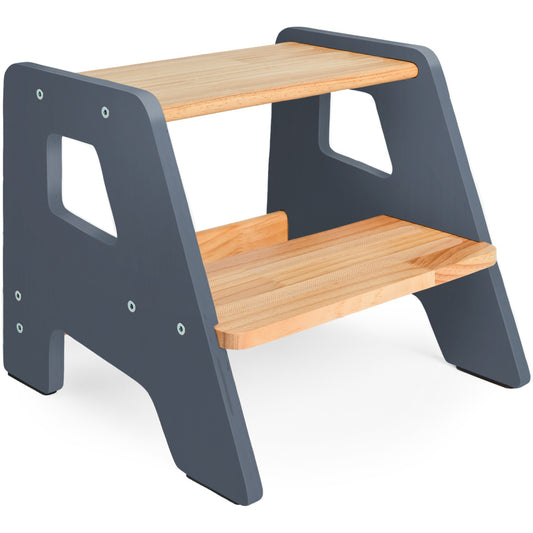
A Montessori-oriented home usually works best with furniture that invites use instead of restricting it. That's the logic behind child-sized pieces in general, and it's reflected in the benefits described in child-sized furniture benefits. A toddler shoe rack follows the same principle, low enough to reach, open enough to understand, and sturdy enough to survive repeated daily handling.
There's also a practical design lesson here. Furniture for young children should support exploration without making the entryway feel fragile or ornamental. Ocodile's broader product philosophy is built around safe everyday use and family-friendly function, which matters because children don't interact with furniture gently or predictably. They tug, sit, lean, and drag shoes across the floor.
A child-friendly home doesn't need more rules. It needs fewer barriers.
That's why the best toddler shoe rack isn't the one with the most compartments. It's the one that fits the child's height, respects the family's space, and makes the next step obvious. In a busy household, that combination is worth more than decorative polish.
Your Toddler Shoe Rack Decision Checklist
Before you buy, ask five quick questions. Can your child reach it without help? Do the shelves clear the length of your toddler's shoes? Does the rack stay steady when a small hand pulls a pair out? Is the surface easy to wipe after rain, mud, or daycare grit? Does the design fit the space you use every day?

If you can answer yes to most of those, you're probably looking at a rack that helps your child build the habit, not one that just hides the clutter. That's the standard for toddler storage. The right choice makes the morning easier, and it teaches your child where their things belong.
If you want a toddler shoe rack setup that supports real independence and fits beautifully into a family entryway, explore Ocodile. Their child-focused furniture philosophy is a strong match for parents who want safe, practical pieces that help little ones use their space with confidence.