



Toddler Tower Wooden: Your 2026 Safety Guide
Your toddler is tugging at your leg while you chop vegetables, asking to “help.” You want to say yes. You also know a dining chair, bar stool, or wobbly step stool isn't a safe answer.
That's where a wooden toddler tower can be so useful. It brings a small child up to counter height so they can wash produce, stir batter, or watch you cook without balancing on furniture that was never meant for that job. For many families, it becomes one of those daily-use pieces that supports both independence and together time.
But there's a catch that many parents don't realize until they start researching. The toddler tower market is not regulated the way many people assume children's products are. That means you can't rely on marketing words like “Montessori,” “sturdy,” or even “safety rail” by themselves. You have to know what you're looking at.
Welcome Your Little Helper to the Counter Safely
A good wooden toddler tower can turn kitchen time from constant redirection into shared work. Your child gets to see what you're doing. You get both hands free more often. And your toddler feels included instead of shut out of the action.

That's the appealing part. The harder part is choosing one safely.
According to this overview of toddler tower safety gaps, there are currently no official federal safety standards specifically governing toddler towers in the U.S., despite the Consumer Product Safety Commission recording 16 documented safety incidents between 2011 and 2024. That leaves parents in a market where stability and quality can vary a lot.
Why this matters more than the sales page
When a product category lacks a clear federal standard, features become voluntary. One brand may build a wide, heavy, well-balanced tower with sensible guard rails. Another may sell something that looks similar in photos but behaves very differently once a child leans, wiggles, or climbs.
That's why a toddler tower wooden model shouldn't be chosen like decor. The wood tone matters far less than the base width, enclosure design, finish safety, and overall build.
Practical rule: Treat a toddler tower like safety furniture first and kitchen furniture second.
What a careful parent should focus on
Start with these questions:
- Is it stable by design: Look for a broad footprint and a structure that looks hard to tip, not sleek and narrow.
- Does it enclose the child well: A toddler tower should help prevent slips and side falls, not just provide increased height.
- Are the materials child-safe: Little kids touch everything, chew on edges, and lean their whole body weight into surfaces.
- Can you inspect and maintain it easily: Screws, joints, and rails need regular checks.
A well-chosen tower can be a lovely Montessori-aligned tool. An unsteady one can create a false sense of security. That's the difference this guide is meant to help you see.
More Than a Stool Understanding the Toddler Tower
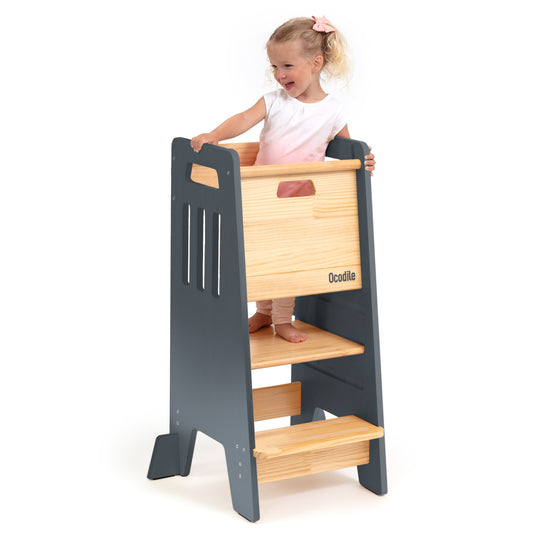
A wooden toddler tower is best understood as a small standing workspace for a young child. I often think of it as a child's personal kitchen balcony. It lifts them to the action, but it also surrounds them more than a basic stool does.

That distinction matters because many parents compare a tower to a step stool and wonder if the extra cost is really justified. In everyday use, they are not the same tool.
What it is
A toddler tower gives a child a raised platform plus surrounding structure. That enclosure is what makes it different from standing on a stool beside you at the sink.
Used well, it lets a toddler:
- Join real tasks like rinsing fruit, stirring oats, or sprinkling cheese
- Watch at adult height instead of guessing from floor level
- Practice independence in a way that feels meaningful, not pretend
This is one reason Montessori families are drawn to it. The child isn't being entertained separately. They're participating in real life.
What it is not
A toddler tower is not a high chair. It's not for restraining a child for meals.
It's also not a playpen or a parking spot while you step away. The point is active participation with close supervision.
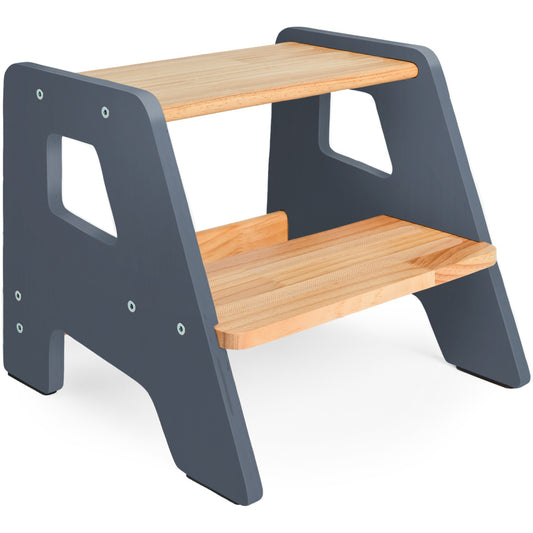
And it's definitely not just a prettier step stool. A step stool gives height. A tower is supposed to give height plus containment.
A standard stool helps a child reach. A toddler tower should help a child reach without leaving them so exposed.
Why children often love it so much
Toddlers spend much of the day hearing “not there,” “too high,” or “wait.” A tower changes that dynamic. Instead of pulling them away from the counter, you can invite them into a controlled position near you.
That tends to support a few things at once:
- Confidence: “I can do this with you.”
- Observation: they can watch hand movements, routines, and sequencing
- Practical life skills: pouring, washing, sorting, transferring, wiping
- Connection: many children desire proximity
If you've ever tried cooking while your child cried to be picked up, you know this isn't a small benefit. A good tower can reduce that struggle because it respects a toddler's very real desire to belong where the family activity is happening.
Decoding the Wood Materials and Finishes Matter
“Wooden” sounds reassuring, but it doesn't tell you enough. Different woods behave differently, and the finish on top matters just as much as the material underneath. For a toddler tower, you want a mix of strength, smoothness, and child-safe surface treatment.
Start with the edges and finish
For wooden children's furniture, safety guidance recommends rounded edges with a radius of at least 1.5mm and finish limits such as lead migration ≤0.05% and cadmium ≤0.01% to reduce injury and toxicity risks, as described in this summary of wooden toy safety certifications.
That may sound technical, but the practical meaning is simple. Sharp corners scratch skin. Poor coatings raise concerns when little hands and mouths explore the surface.
How common wood choices compare
Not every listing clearly explains the material, so you may need to read carefully. Some towers are solid wood. Others use plywood in key panels. Some combine materials.
| Material | Key Characteristics | Best For |
|---|---|---|
| Birch plywood | Usually smooth, consistent, and less prone to dramatic splitting than cheaper softwood pieces. Often used for panels and modern designs. | Parents who want a clean finish and predictable surfaces |
| Solid pine | Lightweight and common. It can work well, but softer wood may dent more easily over time. | Families looking for a simpler wooden option and willing to inspect wear |
| Bamboo | Often marketed as eco-conscious and attractive. Construction quality still matters more than the label. | Shoppers who like the look and verify the overall build carefully |
What parents often miss
A heavy-looking finish in photos doesn't always mean a stronger tower. And “natural wood” doesn't automatically mean non-toxic or well-made.
Look for signs that the maker has thought through child use:
- Smooth touch points: run your hand along rail tops, cutouts, and step edges
- Even finish application: rough patches can indicate poor prep or wear risk
- Visible joint quality: the tower shouldn't look hastily assembled or thin at stress points
- Hardware access: you should be able to check and tighten fasteners when needed
A useful companion read on practical material and care considerations is this guide to toddler tower materials, cleaning, and staying upright.
Don't buy wood tone. Buy build quality.
Parents naturally react to appearance first. Warm birch, pale pine, or a minimalist finish can all look lovely in a kitchen. But a toddler tower wooden design earns its place by how it performs when your child shifts weight, grips the rails, and climbs in daily.
The safest finish is the one that's smooth, well-applied, and paired with sturdy construction underneath.
If a tower looks beautiful but has sharp edges, flimsy side panels, or questionable coatings, the wood species won't save it. Start with safety details. Then choose the look you enjoy.
Your Essential Toddler Tower Safety Checklist
Your toddler climbs up, turns to show you a spoon, and shifts their weight to one side. That small movement is the test. A wooden toddler tower is only as safe as it is in motion, not while sitting still in a product photo.
An independent evaluation summarized in this reporting on toddler tower safety testing found that many popular models did not pass key stability and entrapment checks. That matters because toddler towers are not governed by a dedicated federal safety standard. Parents are often choosing in a category where marketing language sounds reassuring, but the safety details vary widely from one design to the next.

Start by judging the tower like a piece of climbing equipment, not a cute kitchen accessory. Children rarely stand still at counter height. They reach, pivot, press against the rails, and test limits without meaning to. A safe tower needs to stay steady through those ordinary toddler movements.
Stability is the first filter
A stable base works like a good step ladder. The support at the floor should do more work than the platform above.
Look for these signs:
- A broad footprint: the base should appear wider and more grounded than the standing area
- Feet designed to resist tipping: flared or cross-style supports can help keep the tower planted
- Enough frame weight: very light towers are easier for a child to shift
- Tight joints: visible wobble where panels meet is a warning, even before first use
Easy to move is not a safety feature if the same design also tips more easily.
Rail height should fit the child, not just the product photo
Guard rails are there to contain movement, not merely to signal that a tower is meant for toddlers. In the models described as safer in the testing coverage above, the rail height and overall enclosure did more to keep a child centered within the tower.
That is why an adjustable platform matters. As your child grows taller, the standing surface can be raised so the upper barrier still sits high enough on the torso to help prevent a forward or sideways spill. If the rail sits too low, the tower starts acting more like a stool with decoration around it.
A quick check helps. When your child stands inside, the enclosure should look purposeful and supportive, not low or easy to topple over.
More enclosure usually gives you a larger margin of safety
Many parents focus on the front opening because that is where the child gets in and out. Safety reviewers also pay attention to the full standing area. A design with stronger surrounding protection usually gives you more help if your child turns, loses balance, or backs up unexpectedly.
Be cautious with towers that rely on a minimal rear bar or sparse side coverage. Those models can look clean and modern while offering less containment during real use.
Surface safety still belongs on the checklist
Children grip rails, rub their hands along edges, and often mouth the wood. The finish matters because it sits exactly where little hands and mouths spend time. If a brand is vague about coatings, stains, or sealants, treat that missing information as a concern, not a minor detail. A practical place to learn what to ask about is this guide to non-toxic wood finishes for children's furniture.
It also helps to prepare for the ordinary bumps that happen around active toddlers. Learning essential child first aid gives you a useful backup skill if a slip or kitchen-related mishap happens nearby.
Here's a closer look at the kind of anti-tip thinking safety reviewers emphasize:
A shopping checklist you can actually use
Use this list on product pages, in stores, or while checking a secondhand tower:
- Examine the base first. A narrow or top-heavy shape deserves extra caution.
- Check how enclosed the standing area is. A fuller surround usually offers better protection than a single bar.
- Confirm platform adjustability. The rail should continue to sit at a useful height as your child grows.
- Read the finish details carefully. Clear material information is better than vague phrases like “kid-safe.”
- Inspect the hardware design. Screws and fasteners should look secure and reachable for future tightening.
- Notice cutouts and gaps. Openings should not create obvious places for limbs to catch.
- Treat conversion features carefully. Foldable or multi-use designs can be useful, but every extra moving part adds another place where weakness can develop.
One factual example in this category is Ocodile's standing toddler tower with a sliding safety door. The same checklist applies whether you buy that model, another brand, or a secondhand tower from a local seller.
Choose the tower that gives your child the strongest physical boundaries and the steadiest base under everyday movement.
If you're comparing options and want a wooden tower designed around child participation at home, Ocodile offers children's furniture focused on safe everyday use, including standing towers that support independence in shared family spaces.