



What is hands on learning? A Practical Guide for Parents
At its core, hands-on learning is simply learning by doing. It's the beautifully messy, wonderfully physical way children figure things out—exploring with their hands, experimenting with real objects, and moving their bodies, rather than just sitting still and listening.
From Passive Listener to Active Discoverer
Think about learning to ride a bike. You could read a book about it, memorize the parts, and study the physics of balance. But until you actually hop on, feel the wobble, and push the pedals yourself, that knowledge is just an idea. Hands-on learning is what closes that gap between knowing about something and truly understanding it.
This isn't some complicated teaching strategy meant only for schools; it’s the most natural way kids have been making sense of the world since the beginning of time. When a baby grabs a rattle just to see how it feels and sounds, that’s hands-on learning in its purest form. It shifts them from being a passive audience to being the active director of their own discoveries.

Hands On Learning vs Traditional Learning at a Glance
So, what’s the real difference between this active approach and the more traditional, passive learning we often picture? While listening to a lesson has its place, getting physically involved creates a much stickier, more memorable experience for a child.
This table breaks down the fundamental differences:
| Characteristic | Hands On Learning (Active) | Traditional Learning (Passive) |
|---|---|---|
| Child's Role | Direct participant, explorer, problem-solver | Observer, listener, memorizer |
| Process | Dynamic, sensory, and self-directed | Structured, linear, and instructor-led |
| Materials | Real objects, toys, natural elements | Worksheets, textbooks, screen-based media |
| Mistakes | Seen as valuable learning opportunities | Viewed as errors to be corrected |
| Outcome | Deep, personal understanding | Rote memorization of facts |
Ultimately, hands-on learning helps a child build a bridge from an abstract thought to a concrete reality. Each physical action is another plank laid on that bridge, making the connection stronger.
Stacking a block, stirring batter in a bowl, or planting a seed isn't just an activity. It's how a child proves a concept to themselves, turning a "what if" into an "I know."
This philosophy pairs perfectly with unstructured, child-led exploration. To see how these ideas connect, take a look at our guide on what is open-ended play, which is a fantastic framework for encouraging this kind of discovery at home. When we let our children get their hands dirty, we give them the power to ask their own questions and, most importantly, to find their own answers.
The Science Behind Learning by Doing
Ever wonder why letting your child get their hands messy actually helps them learn? It's not just about making memories (or a mess!); the answer is rooted in how their little brains are wired. When a child is actively doing something, their brain isn't just passively soaking up information—it's building stronger, more complex connections.
Think of your child’s developing brain like a brand-new neighborhood with only a few streets. Just hearing about a new idea is like seeing it on a map. But when they physically engage with that idea—stacking blocks, splashing in water, or squishing play-doh—they are actually out there paving a new road themselves. This makes the connection real, tangible, and much easier to find again.

This kind of active engagement lights up multiple parts of the brain all at once. The parts that process touch and texture, direct movement, and manage problem-solving all start working together. This teamwork strengthens the brain's internal network, making it faster and more reliable when it's time to remember what they've learned.
Research actually backs this up. Studies have found that students in hands-on activities are 1.5 times more likely to understand a concept better than those who just sit through a lecture. It’s not just about having fun; it’s about creating deep cognitive roots for knowledge to grow.
How Movement Builds the Brain
The connection between physical movement and brain growth is incredibly powerful. When your toddler carefully places one block on top of another, they’re doing so much more than just building a tower. They are running their own little physics experiment, figuring out gravity, balance, and what makes a structure strong.
This process is a cornerstone of their overall development:
- Fine Motor Skills: Grasping a crayon, picking up small pieces of food, or trying to button a shirt all strengthen the precise muscle control they'll need later for writing.
- Gross Motor Skills: Big movements like climbing, running, or carrying a basket build body awareness, coordination, and strength.
- Problem-Solving: What happens when the block tower falls over? Your child is immediately faced with a challenge: "What went wrong?" and "How can I fix it?" This is critical thinking in its purest form.
Every attempt, whether it works or not, sends a wave of information back to the brain. This feedback loop cements learning in a way that just watching a screen never could. It’s also where we, as parents, can offer gentle guidance. This approach is closely related to guided support in education, and you can learn more about how to structure these learning moments by reading our article on what is scaffolding in child development.
Ultimately, the science is clear. Learning by doing isn't just another educational trend; it's how our children are fundamentally designed to learn. By giving them opportunities to touch, move, and explore, we are literally helping them build better, stronger brains.
How Hands On Learning Builds Real Confidence
Beyond just making kids smarter, hands-on learning builds something that might be even more important: real, genuine confidence. Think about it. When a child manages to do something all by themselves, no matter how small, they get a powerful internal message: "I can do this." That feeling is the foundation for solid self-esteem.
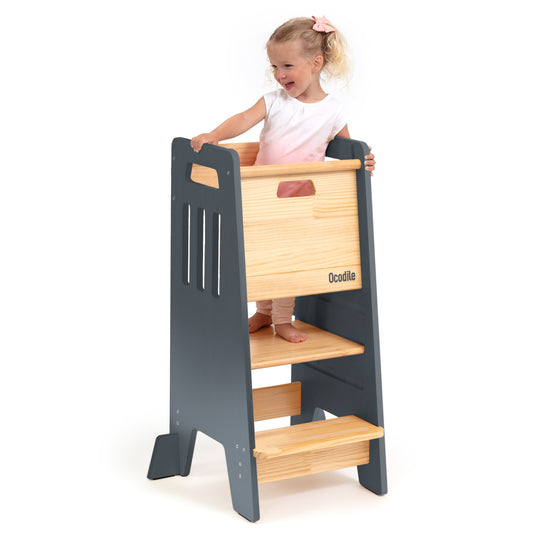
Imagine your toddler has only ever watched you pour their cereal. Now, picture them standing safely in a kitchen tower, focused intently as they pour their own Cheerios into a bowl. That look of concentration breaking into a huge, proud grin? That's everything. They didn't just get a snack; they got a big dose of independence and capability.
This switch from being a passive watcher to an active doer is a game-changer. Every little success, whether it's washing a carrot or helping put napkins on the table, proves to them that they are a valued, contributing part of the family.
The internal voice of a child doing hands-on work isn't, "Mommy did it for me." It's, "I did it myself." That tiny shift in perspective is exactly where lasting self-worth starts to take root.
Turning Chores into Confidence Boosters
This idea is a cornerstone of Montessori education, where everyday tasks are called "practical life" activities. These aren't chores to be complained about, but real opportunities for a child to master their surroundings and build self-reliance. When you set up your home to support this, you create a space where confidence just naturally blossoms.
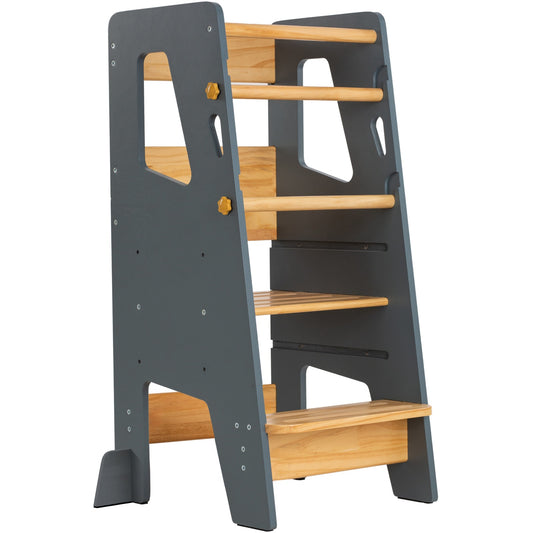
This really just means giving them the right tools for the job. A sturdy, safe step-stool lets them reach the sink to wash their hands without you having to lift them. A low shelf with their own plates and cups lets them take charge when they feel hungry or thirsty. It's all about creating a "yes" space where they feel empowered to try.
Hands-on experiences are also fantastic for teaching life skills and creating a sense of accomplishment, like with these easy recipes for kids to cook that build kitchen confidence. Getting in the kitchen together is a perfect, tangible way to put this kind of learning into practice.
The Power of Intrinsic Motivation
When a child builds confidence through their own actions, they start to develop intrinsic motivation. This is the drive to do something for the pure joy and satisfaction of doing it, which is so much more powerful than doing something for a sticker or praise.
You can see how this positive cycle works:
- Trying: A child decides to try a new skill, like zipping up their own jacket.
- Mastering: After a few fumbles, they finally get it. The zipper goes up!
- Feeling Capable: That success creates a feeling of competence and genuine pride.
- Seeking More: That great feeling makes them want to find the next challenge to tackle.
This cycle, fueled by hands-on experience, teaches kids to trust their own abilities. They learn that trying again pays off and that they are capable of figuring things out on their own. This builds a foundation of resilience that will support them for the rest of their lives.
Practical Hands On Activities for Every Age
Alright, we've talked about the "why" of hands-on learning. Now for the fun part: how do you actually make it happen at home? The best news is that you don’t need a closet full of expensive toys or complicated lesson plans. The most powerful activities usually come from everyday things you already have lying around.
The real goal here is to offer challenges that fit your child's age, letting them explore, try things out, and feel that amazing sense of accomplishment. For every age, the core idea is the same: give them a job they can see through from beginning to end. This is where learning gets real.
Toddlers (1-3 Years): Exploring Their World
At this age, it’s all about the senses. Toddlers are like little scientists, figuring out the world by touching, tasting, and listening. Their main job is to investigate everything around them.
Simple is almost always better.
- Sensory Bins: Fill a shallow bin with things like dry pasta, water, or sand. Add some scoops, cups, and little toys. They’ll start to understand concepts like "full" and "empty" while building up those tiny hand muscles.
- Simple Sorting: Grab a pile of large, safe objects—think colorful pom-poms or chunky blocks. Ask them to sort them by color or shape into different bowls. This is the very beginning of math skills and pattern-spotting.
- Pouring and Transferring: Set up a little station with two small pitchers. Fill one with water (or rice, for a less messy version). Just letting them practice pouring from one to the other is fantastic for hand-eye coordination and control.
These tasks might look simple to us, but for a toddler, they are big challenges that build focus and fine motor skills.
Preschoolers (3-5 Years): Playing with Purpose
Preschoolers are ready for activities with a few more steps and a clear goal. They absolutely love copying the real work they see you doing all day long. This is the perfect time to invite them into your daily routines as an active helper.
Here are a few ways to get them started:
- Kitchen Helpers: Let them wash vegetables in the sink, stir batter in a bowl, or knead a piece of dough. These tasks build hand strength and teach them how to follow simple steps in order.
- Beginner Gardening: Give them a small pot, a bit of soil, and a few big seeds like beans or sunflowers. Helping to water the plant and watching it grow is a profound lesson in patience and life cycles.
- Building Forts: Using blankets, pillows, and chairs to build a fort is a classic for a reason. It's a hands-on lesson in basic engineering, problem-solving, and teamwork.
These activities are absolutely packed with learning moments. For more ways to weave these into your day, you can find a ton of inspiration in our guide to Montessori practical life activities.
To help you find the right fit for your child, here’s a quick-reference table with ideas broken down by age.
Hands On Activity Ideas by Age Group
| Age Group | Activity Example | Skills Developed |
|---|---|---|
| Babies (6-12 mos) | Playing with textured balls or fabric scraps in a treasure basket. | Sensory exploration, grasping skills, object permanence. |
| Toddlers (1-3 yrs) | Pouring water between two cups at a water table or in the bath. | Hand-eye coordination, understanding volume, fine motor control. |
| Preschoolers (3-5 yrs) | Helping to measure and mix ingredients for a simple recipe. | Early math skills, following sequences, practical life skills. |
| Early Elem. (5-7 yrs) | Building a simple "bug hotel" in the yard with sticks and leaves. | Scientific observation, problem-solving, empathy for nature. |
Remember, these are just starting points! The best activity is one that genuinely captures your child's interest.
Early Elementary (5-7 Years): Figuring Out How Things Work
Kids in this age group are full of big questions. They don’t just want to do things; they want to know why they happen and how they work. Their hands-on activities can now include more critical thinking and basic scientific experiments.
- Sink or Float: Fill a tub with water and gather a bunch of different household objects. Have them predict if each item will sink or float, then test their ideas. It's the scientific method in its purest form.
- Nature Journaling: Go for a walk and collect interesting leaves, flowers, or rocks. When you get home, they can trace, draw, or write about what they found, mixing art with a bit of scientific observation.
Each of these small successes builds on the last, creating a powerful cycle of confidence. This flowchart shows exactly how it works.

It all starts with a small moment of "I did it!" which grows into a real feeling of capability, and finally, true independence. To dive deeper into this, exploring some fun Screen-Free Play activities for kids can offer a whole world of creative and engaging ideas.
Creating a Safe Space for Curious Minds
So, how do you actually turn your home into a launchpad for hands-on exploration without losing your mind? The secret is creating a "yes" space—an environment where your child’s natural curiosity is met with opportunity, not a constant stream of "no, don't touch that!"This means thoughtfully setting up your home to be safe, accessible, and supportive of their independence.
It really starts with getting down on your hands and knees and seeing your home from their eye level. When toys, books, and materials are organized on low shelves, it sends a powerful message: "This space is for you, and you are capable."
This simple shift empowers them to start their own activities, whether it's grabbing a puzzle or setting their own plate for a snack. Your role naturally changes from director to a supportive guide.
Child-Proofing with Purpose
We often think of child-proofing as locking things down, but it’s actually about creating freedom. When you proactively deal with potential hazards, you create a space where you can finally relax and your child can explore without you hovering over them.
But real safety goes way beyond just outlet covers and cabinet locks.
It's about choosing items designed with little people in mind. This means looking for furniture with rounded edges to soften the inevitable tumbles and finishes made from non-toxic materials, which is crucial for those curious toddlers who seem to explore everything with their mouths. These details make a space feel genuinely safe and welcoming.
A truly child-friendly home isn’t just a home with kids in it; it's a home that has been intentionally adapted to support their safe exploration and growth.
This is where thoughtfully designed furniture becomes so important. Instead of being obstacles, the right pieces become tools that invite your child to participate.
Furniture That Fosters Independence
The right furniture doesn't just fill a room; it opens up a world of possibilities for your child. It acts as a bridge, allowing them to safely join in on family activities and practice real-life skills. This is a core part of what hands-on learning looks like at home.
Consider these game-changing pieces:
- A stable kitchen tower: This is so much more than a simple stool. A secure tower brings your toddler right up to counter height, empowering them to wash veggies, stir batter, or just watch you cook. They're no longer a spectator but an active helper in the heart of the home.
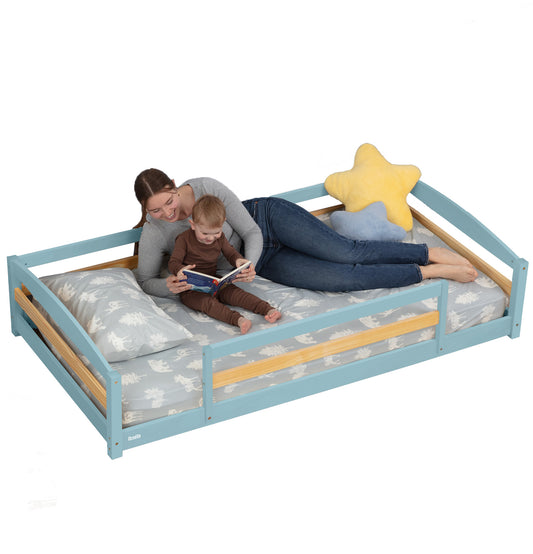
- A floor bed: Inspired by Montessori principles, a floor bed gives a child the freedom to get in and out of bed on their own terms. This simple change respects their ability to listen to their own body's needs for rest and play, fostering autonomy from a very young age.
- Accessible step stools: Placing a sturdy step stool by the bathroom sink or a light switch allows a child to master self-care routines. They can wash their hands or brush their teeth all by themselves, without waiting to be lifted.
Each of these items supports a child’s powerful drive to do things "by myself," turning everyday moments into powerful lessons in confidence and capability. By carefully setting up your space, you create an environment where learning happens naturally, safely, and joyfully.
Your Role as the Guide, Not the Director
When you start to bring more hands-on learning into your home, you'll notice a subtle shift in your role. You'll find yourself moving from being the director, who gives all the instructions, to becoming a trusted guide walking alongside your child.
This change in perspective is huge. You become a facilitator, someone who supports their natural, built-in curiosity.
Your most powerful tool isn't giving them all the answers—it’s learning to ask better questions. Instead of rushing in to fix a wobbly block tower, just take a step back and watch. Give your child the space to figure it out, to fail, and to try again. This quiet observation is an act of trust, and it’s incredibly empowering for them.
Sparking Curiosity with Open-Ended Questions
When you do step in, make it count. We need to move past simple yes-or-no questions and start asking open-ended ones that really make them think. This is a core part of guiding hands-on learning at home.
So, instead of asking, "Is that block blue?" try one of these conversation starters:
- "I wonder what would happen if we put the big block on the bottom?"
- "What do you think will happen next?"
- "How did you decide to build it that way?"
- "Tell me about what you're making."
Questions like these don’t have a right or wrong answer. They invite your child to talk through their process, make a guess, and put their ideas into words, which deepens their understanding.
In hands-on learning, the goal isn't just to finish something. It’s all about nurturing the process of thinking, experimenting, and discovering. Your questions are just a gentle nudge in the right direction.
Embracing the Beautiful Mess
Finally, being a good guide means learning to embrace the mess. Seriously. Flour on the floor, paint-covered hands, and dirt under their fingernails aren't signs of chaos. They're proof of learning in action.
A messy kitchen after baking together is the sign of a fantastic shared experience, one full of sensory exploration and connection.
By preparing for the mess—think splash mats or old t-shirts—you can relax and just let these priceless moments happen. This simple shift turns everyday activities into joyful discoveries and makes your bond even stronger. It shows your child that their exploration is more important than a perfectly tidy house.
Common Questions About Hands-On Learning
As you start bringing more hands-on activities into your home, you're bound to have some questions. It's totally normal! Here are a few of the most common ones we hear from parents, with straightforward answers to help you feel confident.
Isn't Hands-On Learning Just... Messy?
It definitely can be! But try to see the mess for what it is: a sign that real, active learning is happening. The trick isn't to avoid messes altogether, but to plan for them.
A splash mat under a painting easel, a designated "digging zone" in the backyard, or even just an old t-shirt worn as a smock can make cleanup a breeze. Honestly, the developmental boost they get from squishing clay or splashing in water is worth a few minutes of tidying. Plus, cleanup can be its own hands-on task, teaching responsibility and life skills!
Do I Need to Spend a Lot on Special Toys?
Not at all. In fact, some of the best tools for hands-on learning are probably already in your kitchen or recycling bin.
The real magic of hands-on learning isn’t in a toy's price tag. It’s in a child's freedom to explore an object's properties—not the object itself.
Just think about the potential in these "free" resources:
- Empty cardboard boxes can become forts, race cars, or giant canvases.
- Kitchen utensils like whisks, spoons, and colanders are perfect for sensory bins.
- Natural treasures like leaves, stones, pinecones, and water offer endless lessons in science and texture.
How Is This Different from Regular Playtime?
That's a great question. While hands-on learning is absolutely rooted in play, it’s usually a bit more intentional. It often involves what’s called a "prepared environment," where you thoughtfully set out materials to encourage a certain kind of exploration.
For instance, free play might be your toddler simply running a toy car across the floor. A hands-on approach could be setting up a small ramp with a few different cars, inviting them to discover concepts like gravity and motion on their own. You step back and become a quiet guide, letting their curiosity lead the way, whereas free play is entirely child-directed.
At Ocodile, we believe in creating safe, beautiful spaces where this kind of exploration can thrive. Our thoughtfully designed children's furniture empowers your little one to participate confidently in everyday family life. Discover our collection and build your family's "yes" space today.