



White Wood Rocker: A Parent’s Complete Safety Guide
You’re probably looking at a white wood rocker because you want something softer than a standard armchair and more beautiful than a bulky nursery recliner. Maybe you want one chair that works for late-night feeds, morning books, and the stage when your toddler insists on climbing into your lap with a stuffed rabbit and a snack cup.
That’s where many parents get stuck. Most white rockers on the market are made and described as adult outdoor furniture. They look charming, but a porch chair and a family chair aren’t the same thing. A family rocker has to handle motion, mess, tiny hands, and daily life inside the home. It also has to feel calm, safe, and easy to live with.
A good white wood rocker can absolutely do that. But you need to know what to look for, what to avoid, and which details matter more than the pretty paint.
The Modern White Wood Rocker Redefined for Families
The classic image is easy to picture. A white rocker on a porch, maybe next to a planter, built for one adult to sit with coffee. That image is fine, but it’s too narrow for family life.

Parents usually need something else. They need a chair that fits a nursery, reading corner, or playroom. They need a rocker that feels stable when a child leans on the arm, brushes past the runners, or tries to climb up beside them. They also need materials and finishes that make sense indoors, where children touch everything.
Why the usual shopping results miss the point
A market review found a clear gap. Over 50 adult-centric outdoor rockers are available, but there is little content or product focus on child-specific safety for indoor family use, even as the global Montessori market is growing 12% year over year according to the Hampton Bay market-gap reference. That explains why so many parents feel like they’re translating patio furniture into nursery furniture.
That gap matters because indoor family use changes the job of the chair. It’s not just about weather resistance or porch style. It’s about:
- Shared use: A parent may sit while holding a baby, reading to a preschooler, or comforting a sick child.
- Constant contact: Kids touch arms, runners, edges, and painted surfaces without hesitation.
- Movement around the chair: A toddler doesn’t treat furniture as display decor. They circle it, push it, lean on it, and test it.
- Long daily sessions: Nursery chairs often become the most used seat in the house.
A white wood rocker for family life should function like a safe harbor, not just a decorative accent.
What a family-ready rocker should mean
When I hear white wood rocker in a parenting context, I don’t think “porch.” I think secure indoor motion, cleanable surfaces, rounded touch points, and a shape that supports calm routines.
That shift changes what you screen for when shopping. Instead of asking, “Does it match the room?” start with a different set of questions:
- Can this chair handle child interaction safely?
- Will the finish stay smooth and easy to wipe?
- Does the shape reduce tipping and awkward climbing risks?
- Will it still make sense when the baby phase ends?
Looks can mislead
Two chairs can look almost identical online. One may be designed for relaxed adult porch use. The other may be built with more thoughtful stability, smoother finishes, and child-conscious detailing. Product photos rarely make that difference obvious.
That’s why it helps to treat a white wood rocker less like a decor purchase and more like a family tool. A beautiful rocker is nice. A beautiful rocker that supports bonding, quiet independence, and safer daily use is far better.
Material Safety Your Top Priority
The paint color gets attention first. The material underneath deserves more attention.
Parents often focus on style and dimensions, then skim the construction details. I’d do the opposite. With a white wood rocker, the safest choice usually comes from understanding what it’s made of, how it’s finished, and how that surface behaves when children touch it every day.
Wood versus poly-lumber in real family use
Wood can be a strong, appealing choice when it’s solid, well-finished, and responsibly sourced. One example, the Mainstays-style white wood rocker described by CozyDays, uses FSC-certified hardwood and weighs 22 lbs while supporting 250 lbs, which is a strong weight-to-capacity relationship for a stable rocker when properly designed, as noted by CozyDays’ traditional wood rocking chair details. FSC-certified hardwood also matters for families who care about responsible sourcing.
Poly-lumber gives you a different set of advantages. Advanced poly-lumber, like DURAWOOD®, resists bacterial growth with a 99.9% reduction per JIS Z 2801 tests and complies with EN 71-3 toy safety standards for heavy metal migration, which makes it appealing for childcare settings and health-conscious homes, according to the DURAWOOD® Poly Nest Rocking Chair reference.
For many parents, that’s the first big fork in the road. Do you want the natural feel of wood, or the lower-upkeep practicality of a high-quality poly material?
Comparing common rocker materials for child safety
| Material | Safety & Health | Durability | Maintenance |
|---|---|---|---|
| FSC-certified hardwood | Strong option when surfaces are sealed smoothly and the finish stays intact. Good fit for parents who want natural materials. | Can perform well with proper construction and ongoing care. | Needs regular attention to keep the surface protected and smooth. |
| Poly-lumber such as DURAWOOD® | Strong choice for hygiene-minded households because it resists bacterial growth and complies with EN 71-3 heavy metal migration standards. | Built for tough wear and less affected by moisture swings. | Low upkeep and simple to wipe clean. |
| Low-quality engineered boards | Best treated with caution if a listing is vague about composition and finish. Families should ask more questions before buying. | Performance depends heavily on build quality and edge sealing. | Can be harder to keep looking good if edges or coatings break down. |
A lot of confusion comes from product language. Terms like “wooden,” “eco,” or “painted finish” don’t tell you enough on their own. Parents need specifics.
Questions worth asking before you buy
If the product page is vague, ask the seller directly:
- What is the core material? Solid hardwood, plywood, poly-lumber, or something else.
- What safety standard does the finish meet? If a maker names EN 71-3, that gives you something concrete to evaluate.
- How are edges sealed? White finishes need to stay smooth at corners and along high-touch areas.
- Can the surface be wiped daily without degrading? That matters in homes with snacks, spills, and crayons.
If you want a broader guide to evaluating finishes and materials in children’s spaces, Ocodile’s article on non-toxic kids furniture is a practical companion read. For a wider look at thoughtful sourcing and construction in home furnishings, I also like this piece on Lee Industries sustainable furniture, because it helps parents think beyond color and into how furniture is made.
Practical rule: If a seller can’t clearly explain the material and finish, don’t assume the chair is family-safe just because it’s painted white.
Key Design Features for Ultimate Child Safety
You set the baby down after a feeding, your toddler wanders over with a book, and the rocker is suddenly doing three jobs at once. In that moment, a chair that looked charming on a product page has to prove it can behave calmly in real family life.
That is the decisive test.
A white wood rocker for indoor family use should feel controlled, predictable, and easy to live with. Adult outdoor rockers often focus on porch style and weather resistance. Parents shopping for a nursery or reading corner need something else. They need a rocker shaped for close daily use around babies, toddlers, bare feet, blankets, and small curious hands.
Start with motion you can trust
A safe rocker should settle into a gentle rhythm without sudden dips or a jumpy return. The curve of the runners works like the bottom of a cradle. A gradual arc helps the chair move in a way that feels steady instead of twitchy.
You can often spot this before you even sit down. Look at the side profile. If the chair seems tall and narrow, or if the runners look short and sharply curved, the motion may feel less controlled indoors where space is tighter and children move around the chair from every angle.
Shape matters as much as material
Good wood and a safer finish matter, but design decides how those materials behave in daily use. A child does not experience a rocker the way an adult shopper does. A child grabs the arm from below, presses fingers into side openings, climbs from the front, and leans against the moving base.
That is why a family-safe rocker needs more than a pretty silhouette.

A quick safety check before you buy
Use this short mental checklist when you see a rocker online or in person:
- Grounded proportions: The seat should look supported, not perched high above the runners.
- A planted base: Wider spacing and balanced side rails usually help the chair feel steadier.
- Rounded contact points: Arms, top rails, and front edges should feel softened where children naturally touch first.
- Limited finger traps: Check slats, side gaps, and the spaces near moving parts carefully.
- Controlled rocking range: The chair should encourage a gentle back-and-forth motion, not exaggerated swings.
- Smooth transitions between parts: Joints, corners, and lower rails should feel even when you run your hand across them.
One more practical check helps. Sit in the chair and stand up while holding something bulky, like a diaper bag or folded blanket. If getting in and out feels awkward, it will feel worse when you are carrying a sleepy baby.
Small hazards cause big interruptions
Parents often watch for tipping first. That makes sense, but everyday problems usually come from the smaller details.
A rough edge catches skin. A gap invites little fingers. A rocker placed too close to a wall can bump during use, and that is more likely indoors than on a porch. This is one reason the family version of the white wood rocker deserves its own standard. It is not just a smaller version of an adult rocker. It has to work safely in tighter rooms and around faster, less predictable movement.
The best designs stay uneventful. That is what you want.
Comfort supports safer use
Comfort is part of safety because an uncomfortable parent shifts more, braces more, and pushes off the floor more abruptly. Supportive arms and balanced motion help you stay settled during feeding, reading, or the long stretch of rocking a child back to sleep.
That same calm, readable design also fits Montessori-minded rooms. Children do better with furniture that has a clear purpose and a predictable form. If you are building a child-centered room around that idea, this guide to Montessori bedroom furniture for calm, accessible spaces can help you evaluate the chair as part of the whole room, not just as a standalone purchase.
A good family rocker should feel almost boring in use. Quiet motion. Smooth edges. No surprises. That is exactly what makes it so useful.
A Montessori Approach to the Family Rocker
The best family rocker often becomes important in a quiet way. Not because it’s flashy, but because everyone keeps returning to it.

In many homes, the rocker starts as the “feeding chair.” Then it changes jobs. It becomes the place for board books before nap, the seat where a child climbs up with a blanket after a rough morning, or the corner where a parent slows down enough to really listen.
A chair that supports connection and independence
That fits beautifully with Montessori thinking. Montessori spaces work best when furniture is purposeful, accessible, and calming. The point isn’t to fill a room with tiny objects. The point is to create an environment where a child can participate safely and meaningfully.
A white wood rocker can support that when it has a stable, approachable shape and is placed intentionally. A child learns that this is a place for quiet rhythm. They can approach it, sit beside it, lean into a story, or watch a parent rock a younger sibling.
If you’re shaping a child’s room around that idea, Ocodile’s guide to Montessori bedroom furniture offers useful room-level thinking beyond the chair itself.
What this looks like in daily life
One family might use the rocker first thing in the morning. The parent sits with a sleepy toddler, opens the curtains, and reads one short book before breakfast. The chair becomes a cue. We start gently here.
Another family may keep it in the living room instead of the nursery. In that case, the rocker stops being “baby furniture” and becomes shared furniture. One parent rocks with an infant. Later, a preschooler claims it for page-turning and stuffed-animal care. The same chair supports different kinds of independence over time.
The rocker as a calm anchor
Montessori homes often work well because they reduce friction. There’s a place for shoes, a shelf for books, a low hook for a bag. A rocker can serve the same purpose emotionally.
Try pairing it with:
- A small basket of books: Keep only a few titles nearby so the space stays calm.
- A soft throw: Useful for nursing, story time, or comforting a sick child.
- A nearby floor cushion: Gives an older sibling a place to join without crowding the rocker.
Children often use furniture the way adults use rituals. They return to the same object because it helps them predict what kind of moment is happening.
That’s why the right white wood rocker can outlast the nursery stage. It isn’t only a seat. It becomes part of your family’s rhythm.
Styling and Placing Your Rocker in a Modern Home
A white wood rocker earns its spot faster when it looks natural in the room instead of dropped in as “the baby chair.” Good placement helps with safety. Good styling helps you keep it there long term.

Where to place it first
Start with function. The chair needs enough room to rock without clipping a wall, curtain, crib, or storage bin. Keep the path around it clear so you’re not stepping over toys when holding a sleepy child.
A good location usually has:
- Open motion space: Let the rocker move freely front to back.
- Reachable essentials: Place a side table nearby for water, burp cloths, or a current read-aloud stack.
- Soft but clear lighting: You want enough light to see hands, feet, and edges at night without making the room feel harsh.
- Distance from cords and pull hazards: Lamps, monitors, and chargers shouldn’t dangle into a child’s reach.
Three easy style directions
Scandinavian calm
Use a white wood rocker with natural cotton, pale wood accents, and simple storage. Keep the palette light and quiet. This look works especially well in nurseries that need to feel restful during naps and bedtime routines.
Choose texture over clutter. Think knit blanket, linen cushion, and a low book ledge.
Cozy coastal
Pair the white finish with woven baskets, muted blue textiles, and soft sandy neutrals. This style feels airy without becoming theme-heavy.
A small striped pillow or woven side table can add warmth without crowding the chair.
Playful modern
Use the rocker as a clean base, then add personality through color. A mustard cushion, geometric rug, or cheerful art print can make the space feel lively while the chair still grounds the room visually.
If you’re refreshing an existing piece instead of buying new, this guide to vinyl wrap for furniture can help you think through surface updates and practical finish changes for home furniture projects.
Keep the room usable, not staged
The most successful nursery corners don’t look perfect all day. They stay usable all day.
Try this quick setup:
- Place the rocker where you naturally pause. Near books, not in a forgotten corner.
- Add one surface. A small table is enough.
- Limit nearby decor. Too many accessories create grab points and visual noise.
- Check the child’s eye level. Remove anything tempting, fragile, or tippable beside the chair.
A white wood rocker can be beautiful, but beauty matters most when it supports the everyday life happening around it.
Assembly and Long-Term Care for Lasting Safety
Assembly and maintenance aren’t annoying extras. They’re part of the safety system.
Many rocker problems don’t begin with bad design. They begin with rushed setup, skipped inspections, or the assumption that a chair that felt fine on day one will stay fine forever.
Assemble it like it matters
It matters because rocking furniture is under repeated motion. A chair can look solid and still have one connection point that isn’t fully seated or one fastener that loosens over time.
Before first use:
- Open every hardware packet carefully: Don’t guess that all parts are there. Confirm them.
- Tighten in sequence: Bring joints together evenly instead of fully tightening one side too early.
- Set the rocker on a flat floor: Test it where it will live.
- Rock it empty first, then seated: Listen for clicks, rubbing, or uneven motion.
- Check touch surfaces by hand: Feel every arm, edge, and lower section for roughness.
Family use wears a chair differently
A white rocker in a family home gets more than seated use. Kids push it. Shoes tap it. Snacks drip on it. It may move from room to room with the seasons. All of that affects the finish and the joints.
That’s one reason material choice matters over time. Common woods like acacia and fir can crack 25% faster under family-use stress than poly-lumber or properly sealed hardwoods, according to the Orson white acacia rocker reference. In plain language, a chair that looks durable in a listing may age badly in a real home if the finish and material aren’t suited to repeated wear.
A simple care routine parents can actually keep up
You don’t need a complicated schedule. You need a repeatable one.
Weekly reset
Wipe the chair with a soft cloth and a gentle cleaner appropriate for the finish. Focus on armrests, the front edge of the seat, and lower rails where hands and crumbs collect.
Monthly safety check
Sit in the rocker and test the motion. Then inspect for loose hardware, surface chips, hairline cracks, or rough spots.
Seasonal close look
Move the chair into bright light. Check the white finish for yellowing, stress at the joints, and any areas where the coating looks thin or worn.
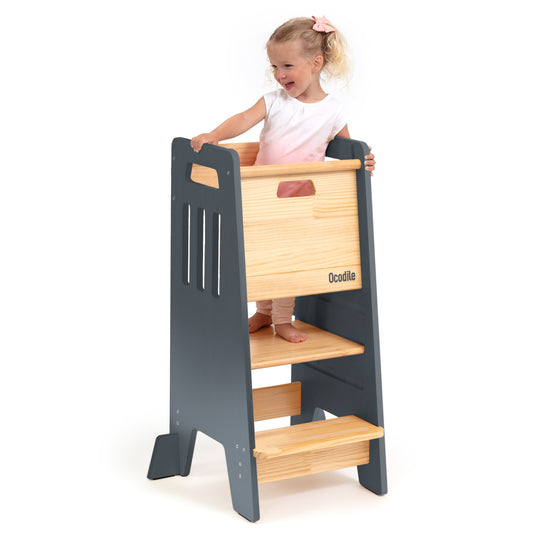
For parents already used to maintaining hard-working child furniture, Ocodile’s article on toddler towers material cleaning and staying upright has a useful mindset: regular checks prevent bigger problems.
Parent habit worth keeping: If the rocker starts sounding different, inspect it that day. Small changes in noise often show up before visible wear.
A well-kept rocker stays safer because you’re catching problems while they’re still small.
How Ocodile’s Design Aligns With Your Family’s Needs
Parents looking for a white wood rocker usually aren’t chasing a trend. They’re trying to solve a layered problem. They want something that looks calm in the home, feels dependable around children, supports independence, and doesn’t become a maintenance headache after a few months of real life.
That’s why the most helpful design philosophy starts with the family, not the furniture category.
A child-centered brand approach makes sense here because it asks better questions from the beginning. How will this feel in a room where children move freely? Can a parent use it every day without fighting the design? Does it support safe participation instead of forcing adults to constantly block access?
The values that matter most
The strongest match for family needs usually comes down to four ideas:
- Material clarity: Parents need to know what they’re bringing into the home.
- Safety in daily use: Rounded forms, stable construction, and smooth surfaces matter more than decorative detail.
- Montessori compatibility: Furniture should support calm independence, not create extra barriers.
- Long-term usefulness: The piece should still feel relevant after the newborn phase.
Those values closely reflect why many families are drawn to Ocodile in the first place. The company’s wider focus on child-friendly design, practical use, and safe exploration fits the same priorities that guide a smart rocker choice.
A good fit feels considered
What families usually want is simple to describe, even if it’s hard to find. They want furniture that respects children without looking childish. They want safety details that are built in, not added as an afterthought. They want products that support everyday family rituals, from getting dressed to reading together to resting after a long day.
That’s the bigger lesson behind choosing a white wood rocker well. The best piece isn’t just attractive. It fits the way your family lives.
Frequently Asked Questions About Nursery Rockers
A parent often reaches this stage late at night, looking at one more product page and trying to translate pretty photos into real life. Will this chair feel calm during feedings, hold up to snack crumbs, and stay safe once a curious toddler notices it moves? Those are the right questions to ask.
A nursery rocker is not just an adult outdoor rocker brought indoors and painted white. For family use, especially in homes where children are learning independence, the better choice is a rocker designed for close daily contact, easy cleaning, and safe boundaries.
Quick answers for the questions that come up most
| Question | Answer |
|---|---|
| Is a rocker or a glider better for a nursery? | It depends on your space and how your family will use the chair. A rocker gives a familiar back-and-forth motion and often looks lighter in the room. A glider can control movement in a different way, which some parents prefer. If young children will be nearby, inspect any moving parts closely and pay attention to possible pinch points. |
| Can a toddler use a white wood rocker alone? | An adult rocker should not become a play item. Supervised use is the safer choice. If your child is drawn to the chair, teach the rules plainly and repeat them often. Sit with help, keep fingers away from moving areas, and do not climb the back or stand on the seat. |
| What’s the safest finish for indoor family use? | Look for a finish the maker names clearly and can explain in plain language. Smooth, sealed, easy-to-wipe surfaces are usually the most practical for homes with children. If the brand mentions child-relevant standards, that tells you more than broad terms such as “eco” or “safe.” |
| Is white a bad color for a nursery rocker? | No. White shows spills sooner, which can help you catch messes before they turn into stains. The issue is not the color itself. It is whether the finish resists wear and wipes clean without a lot of effort. |
| How much room should I leave around the rocker? | Leave enough open space for the full rocking path and for you to stand up comfortably while holding a child. Do not press the chair tightly between other pieces of furniture. At night, clear access matters. |
| Can I put a rocker in the living room instead of the nursery? | Yes. Many families get more long-term use that way. A rocker in the living room can support reading, cuddling, and quiet breaks long after the baby stage ends. |
| What if my child keeps trying to climb on it? | Treat it like any piece of furniture that needs a clear boundary. Redirect, model safe use, and avoid placing it in the middle of a play route. During an intense climbing phase, limiting unsupervised access is often the wisest move. |
| How do I know a rocker is too porch-focused for indoor family use? | Read the product description carefully. If it talks only about patio style, weather resistance, or adult relaxation and says little about finish safety, smooth touch points, or child interaction, you may be looking at an outdoor chair that does not match family needs indoors. |
The questions behind the questions
Underneath all of these practical questions is a simple goal. Parents want a rocker that feels dependable in ordinary family life, not just attractive in a staged photo.
That usually means weighing three concerns at once. You want a chair that is safe around children, easy to live with through spills and daily use, and pleasant enough to keep in your home well beyond the newborn months. Safety comes first, of course, but comfort, durability, and placement all shape whether the rocker will become part of your family rhythm or end up ignored in a corner.
A good final check is to picture the chair on a tired evening. Can you trust its materials? Can you wipe it down without fuss? Does it fit the room in a way that supports calm routines and lets children learn respectful boundaries around it? If the answer is yes, you are probably choosing well.
Buy the rocker you can trust when you’re tired. That’s usually the right one.
If you’re building a home that helps children participate safely and confidently, Ocodile is worth exploring. Their approach to child-focused furniture reflects the same priorities that matter in a great family rocker: safety, independence, practicality, and thoughtful design that supports everyday life.