



Wipe Clean Changing Pad: A Parent's Guide to Safe Choices
At 2 a.m., a wet diaper, a wriggling baby, and a messy changing surface can make a simple routine feel like a small emergency. A wipe clean changing pad gives you a stable, waterproof place to work, but the best choice involves more than convenience. Materials, safety standards, fit, cleaning, and surface aging all matter.
Table of Contents
- Why a Wipe Clean Changing Pad Matters for Everyday Care
- What a Wipe Clean Changing Pad Is Made Of
- Safety Standards Every Changing Pad Should Meet
- How to Pick the Right Size and Fit
- Wipe Clean Pads Compared to Other Options
- Cleaning and Caring for a Wipeable Surface
- Quick Checklist and Common Questions
Why a Wipe Clean Changing Pad Matters for Everyday Care
A wipe clean changing pad has a non-absorbent surface that can be cleaned with a damp cloth, mild soap, or a suitable disinfectant after a change. Unlike a terry-cloth cover, loose towel, or folded blanket, it doesn't hold moisture and soil in its fibres.
That difference matters during the newborn stage, when caregivers may be changing nappies repeatedly through the day and night. This guide to how many dirty nappies newborn can help you prepare supplies without relying on guesswork.
A dedicated pad also creates a predictable station. It stays flatter than a folded blanket, is easier to inspect, and can reduce laundry. Still, a wipeable surface never replaces supervision. Keep one hand on your baby and keep creams, nappies, and wipes within reach.
What a Wipe Clean Changing Pad Is Made Of
Think of the pad as a simple sandwich:
- Top skin: PU feels like a soft raincoat. Vinyl feels more like a heavier shower curtain. Both repel liquid, but vinyl may involve plasticizers that deserve closer attention.
- Foam core: Usually foam cushioning, it works like a kitchen sponge inside the sandwich, softening a hard table without allowing the pad to sag.
- Backing: Polyester, mesh, or another layer can help the pad grip the furniture.
- Sealed seams: These protect the inner foam from moisture, provided the surface remains intact.
PE-coated products can offer a practical middle ground. Look for PVC-free and phthalate-free construction, because research found phthalate transfer increased with contact burden, duration, and sliding speed, while a textile layer reduced mechanically induced transfer in controlled testing.
| Material | Where It Appears | Key Trait | Watch For |
|---|---|---|---|
| PU | Soft wipeable skin | Flexible feel | Harsh cleaners can damage the film |
| Vinyl | Firm outer layer | Durable and waterproof | Plasticizer concerns |
| PE | Coated surfaces | Simple liquid resistance | Check seam quality |
| Foam | Inner core | Cushioning | Never immerse |
For practical background on foam thickness, see this one-inch foam padding guide.
Safety Standards Every Changing Pad Should Meet
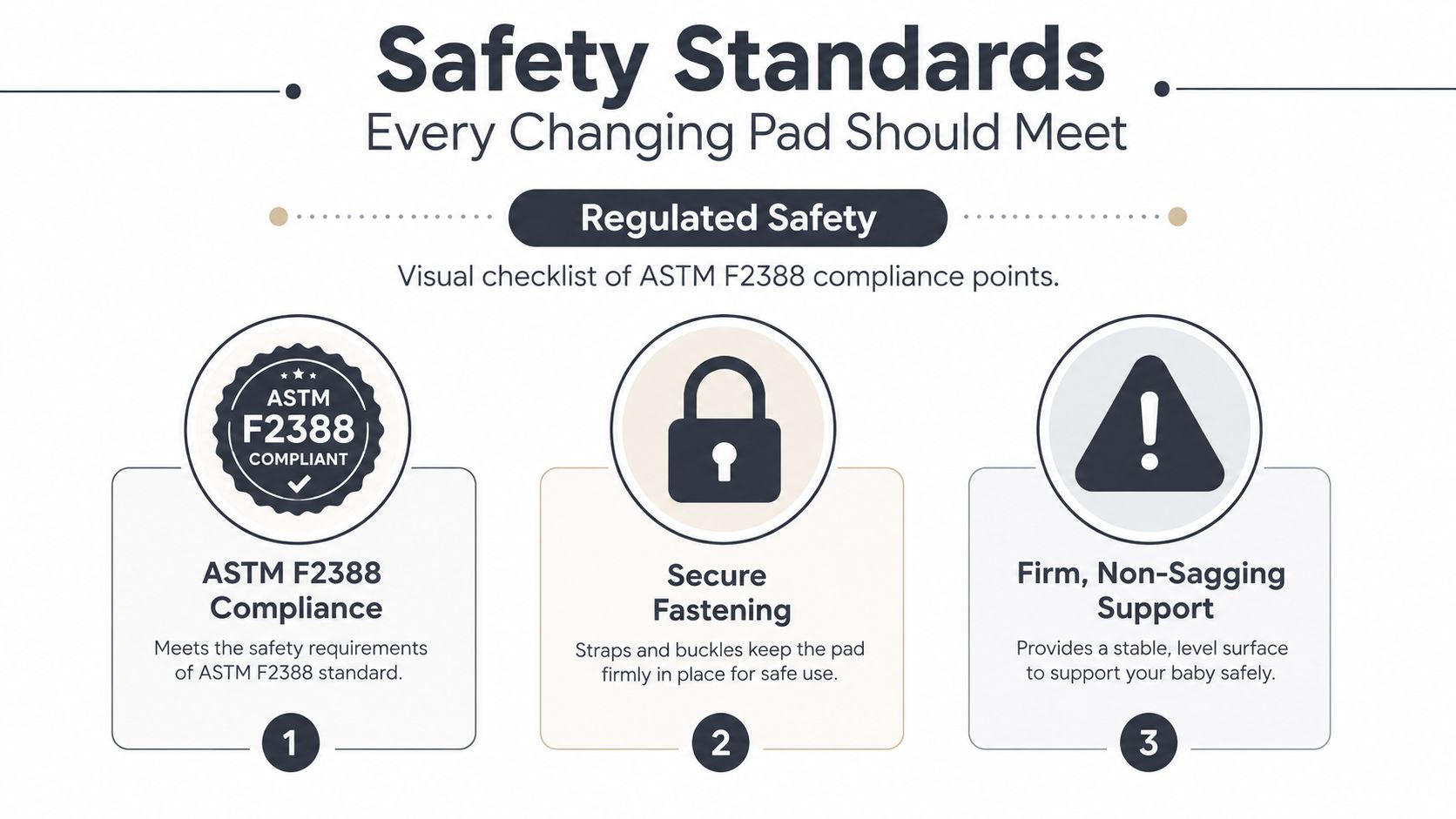
Changing pads aren't merely soft nursery accessories. The CPSC approved a federal safety standard on July 2, 2018, effective June 26, 2019, covering changing tables, accessories, add-on units, and contoured pads. Incident data included an estimated 39,010 emergency-department injuries involving children under age three from 2005 through 2016, plus 188 reports, including 7 fatalities, from January 2005 through November 2017 in the referenced safety specification.
ASTM F2388 addresses hazards such as collapse, falls, entrapment, and suffocation. In practice, check for firm support, secure fastening where supplied, a stable base, and clear compliance information. The pad should sit flat, without a soft centre that dips under pressure.
A wipeable surface makes routine inspection easier. While cleaning, look for tears, cracks, peeling, or exposed foam. For nursery styling ideas that include a white crib and changing table, focus on the furniture's stability as much as its appearance. You can also review this non-toxic changing pad guide.
How to Pick the Right Size and Fit
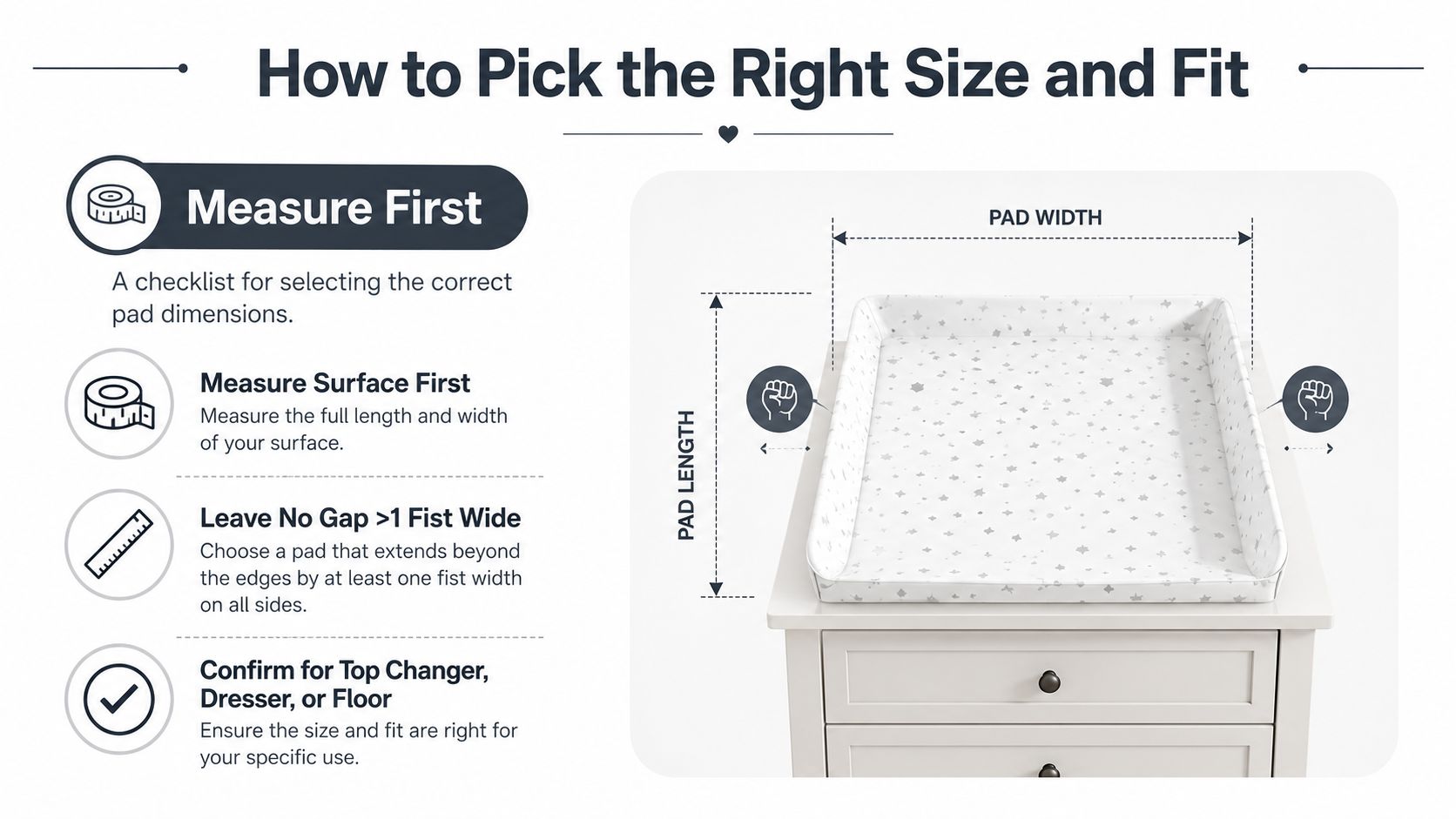
Measure the actual place where the pad will sit, whether that's a recessed changer, dresser top, or clean floor area. A contoured pad is useful for a wiggly infant, while a flat pad may suit travel or a wider surface with a fitted cover.
Check the surrounding barriers carefully. A wide gap beside the pad can become a rolling route, so the pad should fit closely and remain stable. Don't judge by length alone. The foam must support the baby without sinking at the hips.
Before buying, run three checks:
- Measure the usable surface, not just the furniture's outside dimensions.
- Confirm the raised edges and pad length suit your baby.
- Press the centre with one hand and test the corner for movement with the other.
For a closer look at changing pad cover materials guide, compare softness, washability, and compatibility with the pad's care instructions.
Wipe Clean Pads Compared to Other Options
A wipe-clean pad is the practical middle ground. It offers quick cleanup and can stay ready between changes, while a fabric-covered pad feels cosier but needs laundering after contamination. Disposable mats travel well, though they create ongoing waste and need replacing.
| Feature | Wipe Clean | Fabric-Covered | Disposable |
|---|---|---|---|
| Cleanup | Quick surface wipe | Full laundering | Throw away |
| Comfort | Moderate cushioning | Soft textile feel | Varies |
| Home use | Strong fit | Good with spare covers | Less convenient |
| Travel | Bulky for some setups | Foldable | Convenient |
| Aging concern | Cracks and peeling | Stains and dampness | Tearing |
A floor-level or low changing area can support a more child-led nursery routine as mobility grows. The important point is not a particular furniture style. It's choosing a stable setup that lets the caregiver work safely and keeps essentials close.
Cleaning and Caring for a Wipeable Surface
Keep the routine simple. After each change, wipe the surface with a damp microfibre cloth and mild, fragrance-free soap. Use a baby-safe disinfectant according to its label, then let the pad dry fully.
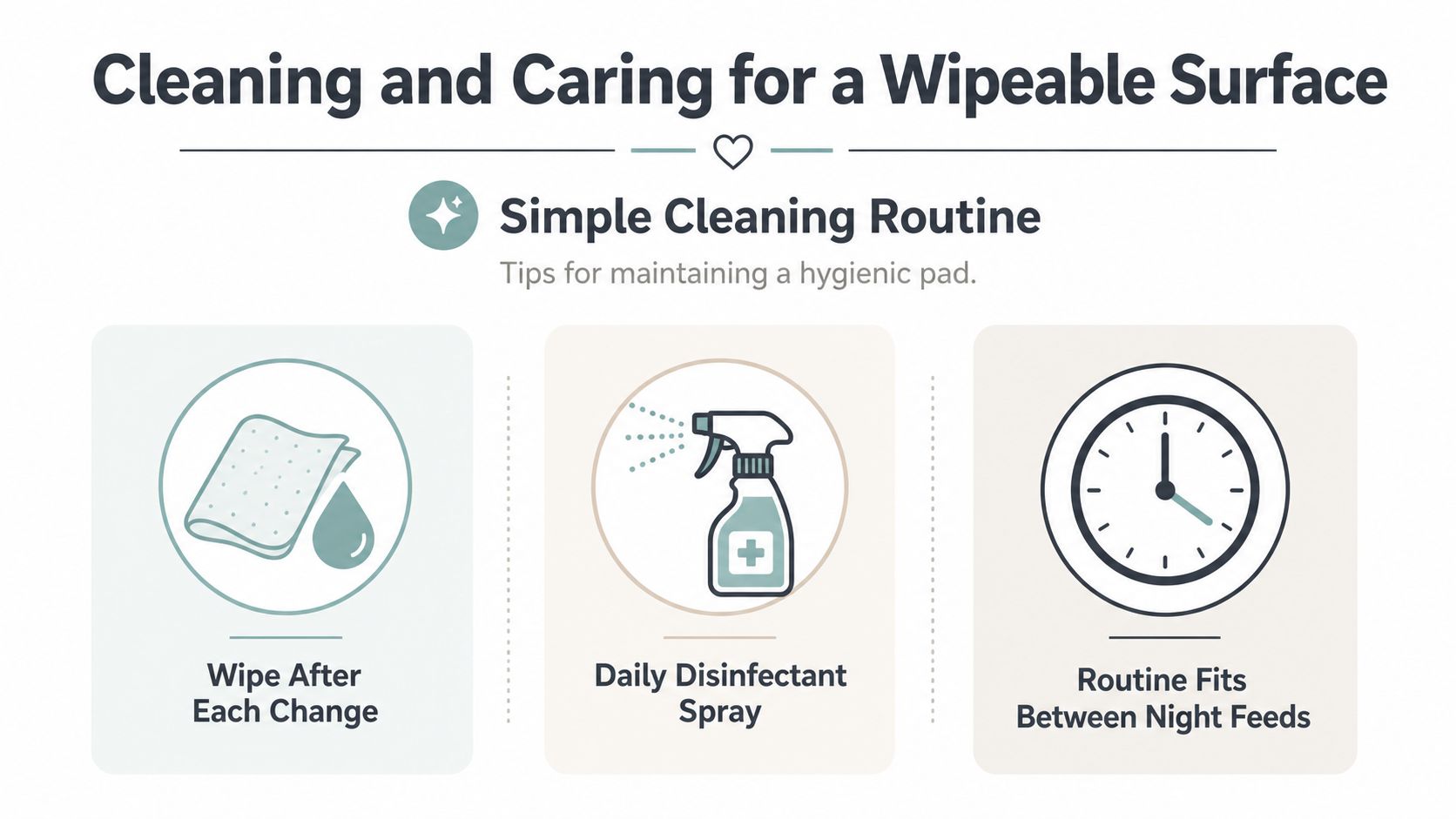
Avoid abrasive scrubbing and strong solvents. Cleaning guidance warns that harsh chemistry can damage wipeable coatings, so don't assume bleach or alcohol is harmless to PU or vinyl when cleaning a changing surface. Never immerse a foam-core pad, and dry it flat rather than folding it while damp.
Replace the pad when you notice persistent odour, tackiness, micro-cracks, peeling, or exposed foam. Those defects can trap residue and make proper sanitising difficult. For a low-level nursery arrangement, consider how a floor bed pad fits into the wider cleaning routine.
Quick Checklist and Common Questions
Before buying, check five things:
- Flat contact: The pad sits securely without dangerous gaps.
- Raised support: Contoured edges protect at least two sides.
- Wipeable skin: Water and the approved cleaner remove ordinary soil.
- Firm base: The centre doesn't sag and the pad doesn't slide.
- Safety information: The label identifies applicable ASTM F2388 compliance.
How often should I replace a wipe-clean pad
There's no universal replacement date. Replace it when the waterproof surface is cracked, peeling, permanently sticky, or difficult to clean.
Is vinyl safe against newborn skin
Safety depends on the formulation and construction. Prefer products that clearly state PVC-free and phthalate-free materials, and inspect the surface as it ages.
Is waterproof the same as wipe-clean
No. Waterproof describes liquid resistance. Wipe-clean also depends on a smooth, sealed surface that the manufacturer approves for surface cleaning.
Can it sit on a dresser or changing table
Yes, if the furniture is stable, the pad fits properly, and you follow both products' safety instructions. Never leave a baby unattended on a raised surface, even with a restraint, as safety guidance continues to stress active supervision for changing areas.
What should I do if it feels tacky
Stop using it for routine changes if the tackiness won't lift with approved cleaning. A deteriorating surface can retain residue and should be replaced.
Do travel pads follow the same rules
Check the product label and the market where it was sold. Portability doesn't remove the need for stable support, safe use, and clear instructions.
Ocodile creates safe, practical, family-friendly furniture that supports secure everyday routines, including child-led spaces and floor-level living. Visit Ocodile to explore designs that pair thoughtfully with a clean, stable changing setup.