



Balance Beam Wood: A Parent's Guide to Safe Play
Your child is probably already practicing balance, whether you meant to set up a lesson or not. They walk along the edge of a rug, step on the sofa frame, or stretch one foot carefully onto a floor tile line as if it were a narrow bridge.
That impulse is useful. It tells you your child is building body control, judgment, and confidence through movement. A balance beam wood setup gives that instinct a safer place to land. Instead of saying “get down” all day, you can offer a low, purposeful surface designed for stepping, pausing, wobbling, and trying again.
For families who like a Montessori-inspired home, that matters. The aim isn’t to entertain a child for a few minutes. It’s to prepare the environment so the child can do meaningful work with their body, at their own pace, in a way that feels calm and capable.
More Than Just a Plank of Wood
A wooden balance beam looks simple. That’s part of its strength.
A toddler sees a path. A preschooler sees a challenge. An older child may turn it into a bridge, a stage, or a “don’t touch the lava” route across the living room. The object stays the same, but the child keeps finding new ways to use it.
That kind of open-ended play is why so many parents end up loving a beam once it’s in the home. It doesn’t flash, buzz, or direct the game. It invites the child to direct it.
Why children are drawn to balancing
Children naturally test where their bodies begin and end. They lean, reach, climb, and shift weight because that’s how they learn control.
A beam channels that urge into something safer and more intentional. It becomes a place to practice:
- Steady walking
- Careful foot placement
- Stopping and starting
- Recovering from a wobble without panic
A good play tool doesn’t fight a child’s developmental drive. It gives it a safer shape.
There’s also something lovely about how old this idea is. The concept of balance training on wood goes back to 1816, when Friedrich Ludwig Jahn described using round tree trunks about 12 meters long for balance exercises in the history of the balance beam.
That long history makes sense. A child doesn’t need a complicated setup to practice balance. They need a stable surface, room to try, and the freedom to repeat the movement as many times as they want.
Families who already enjoy open-ended movement tools often see a beam fit naturally alongside other active play choices, such as wooden climbing toys. The common thread is simple. Children build skill by doing, not by being constantly directed.
The Science of Wobble Developmental Benefits of Balance Beams
Balancing looks physical, but it’s doing more than building strong legs. It’s helping your child organize information from their whole body.

Your child’s internal GPS
When early childhood educators talk about body awareness, we mean your child’s sense of where their body is in space. You can think of it as an internal GPS.
When a child steps onto a wooden beam, they have to notice:
- where their feet are landing
- how fast they’re moving
- whether their shoulders are tilting
- how to shift weight without stepping off
That’s a lot of information for one simple activity.
The beam also asks for focus. If a child rushes, they wobble. If they slow down, look ahead, and adjust, they usually do better. Over time, that repeated cause-and-effect experience builds patience and self-correction.
Balance play also supports thinking
Many parents get surprised by this. Beam play isn’t only about muscles.
Research by Robert Siegler found that children move through stages in how they understand balance. By ages 4 to 5, they tend to focus mainly on weight, while by age 10+ they can apply the rule of weight × distance to reason about equilibrium, as described in this NSTA overview of balance development.
You don’t need to teach equations on the living room floor. What matters is the pattern. Hands-on balance experiences help children connect movement with problem-solving.
A child learns things like:
- “If I carry this object, I need to slow down.”
- “If I stretch my arms out, I feel steadier.”
- “If I turn too quickly, I lose control.”
- “If I try again more carefully, I can do it.”
Those are physical lessons, but they’re also lessons in planning and adjustment.
Why it matters in everyday life
Children who practice balance in playful ways often become more confident movers. That can show up on stairs, playground edges, stepping stones, and uneven ground outdoors.
If you’re building a broader movement routine at home, it can help to pair beam play with other simple gross motor activities for preschoolers, especially on days when your child wants variety rather than repetition.
Sometimes confidence starts with one careful step, then another, then the moment a child realizes, “I can do this by myself.”
That feeling matters. It’s often the deepest benefit of a wooden beam.
Choosing Your Beam Materials Dimensions and Safety Standards
Not every wooden beam is a good child’s beam, so parents need to look past the pretty product photo.
A safe balance beam wood design depends on material quality, surface grip, construction, and finish. If any of those are poor, the beam becomes frustrating or unsafe.
Start with the surface and materials
In gymnastics equipment, material choices changed over time because safety mattered. After an early slippery cover was abandoned, manufacturers moved to leather and suede covers in the 1980s to create more reliable friction, as explained in this overview of balance beam material evolution. That same principle carries into children’s products. The top surface should feel controlled underfoot, not slick.
When you assess a beam, check for:
- Smooth solid wood or quality plywood that feels sturdy and well-finished
- Rounded edges instead of sharp corners
- A non-slip walking surface that won’t feel polished and slippery
- No splinters, cracks, or rough grain
- Stable joinery with no wobble when pressed from the side
If a beam feels decorative first and functional second, be cautious.
What dimensions feel workable for home play
Parents often get confused here because “bigger” sounds safer. It isn’t always.
A wider beam can feel easier at first, but if it’s too broad, it stops giving useful balance feedback. A very high beam also doesn’t create better learning for beginners. It mostly increases the consequences of a fall.
For home use, a low beam usually makes the most sense. It lets the child practice the skill of balancing without adding unnecessary fear. Length matters too. A child needs enough runway to settle into a rhythm, but not so much that the beam dominates the room.
Here’s a practical way to consider it:
| What to check | Why it matters |
|---|---|
| Low height | Easier for beginners to step on and off safely |
| Moderate width | Challenging enough to build balance without feeling impossible |
| Flat, stable base | Reduces rocking and side tipping |
| Comfortable surface texture | Helps with grip, especially in socks or bare feet |
Safety standards matter more than marketing words
Words like “Montessori-inspired” or “natural” don’t prove safety.
If you’re buying a beam, ask whether it aligns with child product expectations such as rounded edges, non-toxic finishes, and tested construction. These details matter much more than a trendy look.
Practical rule: If the seller can describe the finish, edge treatment, and stability features clearly, that’s a good sign. If the listing stays vague, keep looking.
This same mindset helps when choosing other child furniture too. The most useful pieces are the ones built for daily wear, spills, bumps, and real family life, not just good photos. That’s true whether you’re evaluating a beam or a craft table in wood.
Buying Versus Building Your Own Wooden Balance Beam
Many parents pause at the same question. Should you buy one, or make one yourself?
Both options can work. They are not equal in effort or safety.

What buying gives you
A well-made purchased beam saves time and guesswork. You open it, inspect it, place it, and your child can usually start using it right away.
That matters more than it sounds. Parents are busy, and a project that sits half-finished in the garage isn’t helping anyone.
Buying also tends to offer:
- More predictable finishing so surfaces are smooth and edges are rounded
- Better consistency across joints, hardware, and stability
- Less trial and error about what kind of grip and height feel right
- A clearer product description when the maker has thought about children’s use
For many families, the biggest benefit is peace of mind. You’re not wondering whether the wood will split or whether the base is strong enough because those questions should already have been addressed in the manufacturing process.
Why DIY appeals to parents
Building your own beam can be satisfying.
You can match your home, customize the length, and involve older children in planning the project. If you enjoy woodworking and already understand child-safe finishing, DIY may feel natural.
Some families also like that homemade equipment can be adapted to a small apartment or a particular play nook.
That said, the simplest-looking projects often hide the most important safety details.
The risks DIY tutorials often skip
Many online tutorials focus on assembly, not child safety.
According to the verified guidance provided for this topic, many DIY tutorials overlook child furniture standards such as EN 71 or ASTM F963, which require features like rounded edges, non-toxic finishes, and load-bearing tests. The same verified source also notes that a 2025 International Montessori Council study identified wood splitting as a top cause of home injuries from unstable balance setups in this discussion of DIY balance beam safety concerns.
That doesn’t mean every homemade beam is unsafe. It means the margin for error is real.
Parents often underestimate these issues:
-
Surface finishing
A beam may feel smooth at first touch but still raise splinters over time. -
Stability on real floors
A beam that looks fine in a workshop can slide or wobble on hardwood, tile, or uneven rugs. -
Hidden hardware problems
Screws can loosen, heads can protrude, and joints can shift with repeated stepping. -
Finish safety
“Natural-looking” isn’t the same as child-safe. Finishes need to be appropriate for children’s furniture.
A simple decision guide
If you’re deciding between buying and building, this quick comparison can help:
| Question | Buying may suit you if... | Building may suit you if... |
|---|---|---|
| Time | You want immediate use | You enjoy projects and can work carefully |
| Safety confidence | You prefer tested construction | You understand child-safe materials and finishing |
| Customization | Standard designs are fine | You need a very specific size or style |
| Tools and skill | You don’t want extra setup | You already have tools and woodworking experience |
If you choose DIY, build it like children will use it in the most chaotic way possible, not the calmest way you imagine.
That mindset helps. Kids don’t interact with furniture gently all the time. They hop onto it, drag it, stand sideways on it, and invite siblings into the game. Any beam in a family home has to be ready for that reality.
Setting Up for Success Placement and Installation Tips
Where you put the beam affects safety as much as the beam itself.

A wonderful beam placed beside a coffee table with sharp corners isn’t a good setup. A simpler beam in a clear, calm area is often much better.
Choose a landing zone, not just a location
Think about the space around the beam first.
Your child needs room to step off, wobble off, and circle back around. Try to avoid hard furniture edges, heaters, heavy baskets, and anything breakable within the immediate play area.
Good placement usually includes:
- Open floor space around both long sides
- A surface with some softness nearby, such as a rug or play mat
- Enough light for your child to see the walking path clearly
- Low visual clutter so the beam feels inviting rather than chaotic
Help the beam stay put
Many parents discover the core issue isn’t the child slipping. It’s the beam sliding.
If your floor is smooth, test the beam before introducing it. Press from the side, step onto it yourself, and check whether it shifts. If it moves, change the setup before your child uses it.
Common fixes include:
- Place it over a stable rug that doesn’t bunch.
- Use an appropriate non-slip layer if the design allows for one.
- Keep the surrounding floor clear so nothing nudges the beam sideways.
Here’s a useful visual if you want to think through home setup and movement flow before your child starts using it:
Make the first introduction easy
Don’t turn the first try into a performance.
Set the beam down and let your child approach it. Some children step on immediately. Others tap it with a foot, kneel beside it, or walk along next to it first.
You can invite without pressuring:
- “Want to try one foot?”
- “I’ll hold your hand if you’d like.”
- “You can step off anytime.”
That tone matters. The beam should feel like an invitation to explore, not a test to pass.
From Simple Steps to Grand Adventures Beam Activities
Once the beam is in the room, the magic starts. A wooden beam can grow with your child because the activity changes as their confidence changes.

Start with the easiest wins
At first, keep the goal small. Success builds interest.
Good beginner ideas include:
- Walk across slowly with arms out
- Step on, pause, step off
- Take heel-to-toe steps
- Walk backward with support nearby
Some children like repetition. Others need a tiny story attached to the movement. “Can you carry this message to the other side?” works better for some children than “practice balance.”
Add challenge without making it tense
As your child gets steadier, add one variable at a time.
Try:
- carrying a beanbag
- stepping over a soft toy placed on the beam
- turning around at the halfway point
- walking with music, then freezing when it stops
A projected trend source in this topic area notes a 45% spike in searches for “balance beam wood Montessori home,” and it also reports that textured grips can reduce slips by 40% in customization discussions for children, including neurodiverse children, in this article about balance beam exercises and sensory features. That’s one reason some families look for surfaces that provide clearer sensory feedback underfoot.
If your child seems hesitant, a slightly more noticeable texture can feel reassuring. If your child is sensory-sensitive, they may prefer a smoother but still non-slip finish. The “best” beam experience often depends on the individual child.
Turn it into imaginative play
Here, the beam often becomes a favorite.
One day it’s a bridge over crocodile water. Another day it’s a circus tightrope. Then it becomes a forest log that leads to a hidden animal house.
You can build simple themes around it:
| Theme | What the child does |
|---|---|
| River crossing | Carry “supplies” across without dropping them |
| Mountain path | Step slowly and freeze when the “wind” blows |
| Train track | Follow the line and stop at stations |
| Castle bridge | Guard a stuffed animal while crossing |
For group settings or mixed-age play, it can help to borrow ideas from broader movement collections such as After School Club Activity Ideas, then simplify them for younger children and home spaces.
If your child loves connecting one challenge to another, a beam also fits beautifully into an indoor obstacle course for toddlers. It becomes one station in a larger path of crawling, stepping, carrying, and balancing.
Keep the game open enough that your child can change the rules. That’s often where the richest play appears.
Creating a Harmonious Play Space The Ocodile Approach
A beam works best when it isn’t treated as an isolated toy.
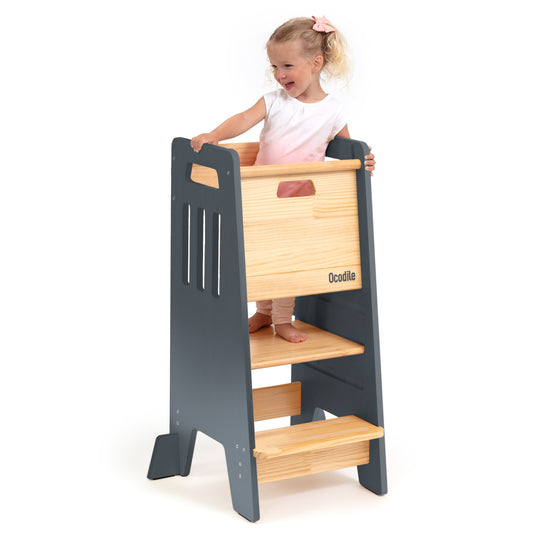
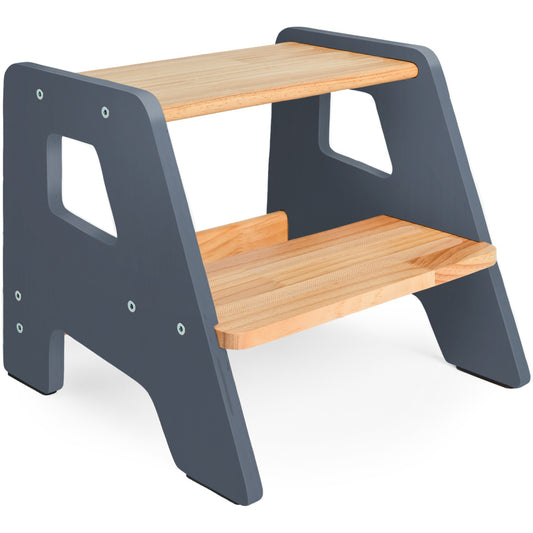
In a well-prepared home environment, each piece supports a different kind of independence. A low bed supports rest and self-direction. A step stool supports participation in daily routines. A balance beam supports movement, control, and physical confidence.
That’s why placement and intention matter so much. When the environment respects the child’s size and abilities, the child can act with less interruption. They don’t need constant lifting, repositioning, or correction.
What a calm movement space often includes
A harmonious setup usually feels simple, not crowded.
It may include:
- One clear movement piece such as a beam
- Open floor area instead of too many bulky toys
- Child-accessible storage so props can be put away easily
- Furniture that supports independence in daily life as well as play
Thoughtful design earns its place. Families often don’t need more things. They need fewer, better things that children can use with confidence.
A wooden balance beam fits that philosophy well. It’s modest, useful, and flexible. It supports child-led exploration because the child decides how to approach it, how long to use it, and when to return to it.
The result isn’t just active play. It’s a home that suggests, “You’re capable here.”
Frequently Asked Questions About Wooden Balance Beams
What age can a child start using a wooden balance beam
Some child-focused beam designs are recommended from 2.5 years in the verified background data, but readiness matters as much as age. If your child can step up and down with support, follow simple safety directions, and shows interest, a low beam may be appropriate.
How do I clean a wooden beam
Use a soft cloth and a mild child-safe cleaner appropriate for the finish. Dry it well after wiping. Check the surface regularly for rough spots, loose parts, or wear.
What should I do if the beam slides on hardwood or tile
Test it before each use area is finalized. Move it to a more stable surface, place it over a secure rug, or use a suitable non-slip base if the design supports one.
Should children use it with shoes or barefoot
Many families find barefoot or grippy socks easier indoors because children get better feedback from their feet. The safest option is the one that gives secure footing on your specific beam and floor.
A thoughtfully chosen beam can turn everyday movement into safe, confident practice. If you’re building a home that supports independence, exploration, and beautiful practical design, take a look at Ocodile for child-centered furniture made to help families create spaces where kids can participate, move, and grow.