



The Ultimate Guide to Finding the Best Gifts for 3 Year Olds
When you're looking for the best gifts for 3-year-olds, think beyond the flashy packaging. The most meaningful presents are often open-ended toys that ignite their imagination, support new developmental skills, and nurture their budding independence. Things like art supplies, active play equipment like a small climber, or pretend play sets are fantastic choices because they perfectly match a three-year-old's creative explosion and their deep desire to explore the world on their own terms.
Understanding What Makes a Great Gift for a 3 Year Old
Trying to pick a gift for a three-year-old can feel like you’re aiming at a moving target. One minute, they’re still your baby; the next, they're a tiny person with surprisingly strong opinions, a rapidly growing vocabulary, and an unstoppable urge to do everything "by myself!"
This isn't just a phase—it's a huge developmental leap. Understanding this massive shift is the secret to finding a gift that truly connects. The best gifts for a 3-year-old aren’t just fun distractions. They’re tools that meet your child exactly where they are on their journey of discovery, celebrating the incredible cognitive and physical growth happening right now.
The World of a Three-Year-Old
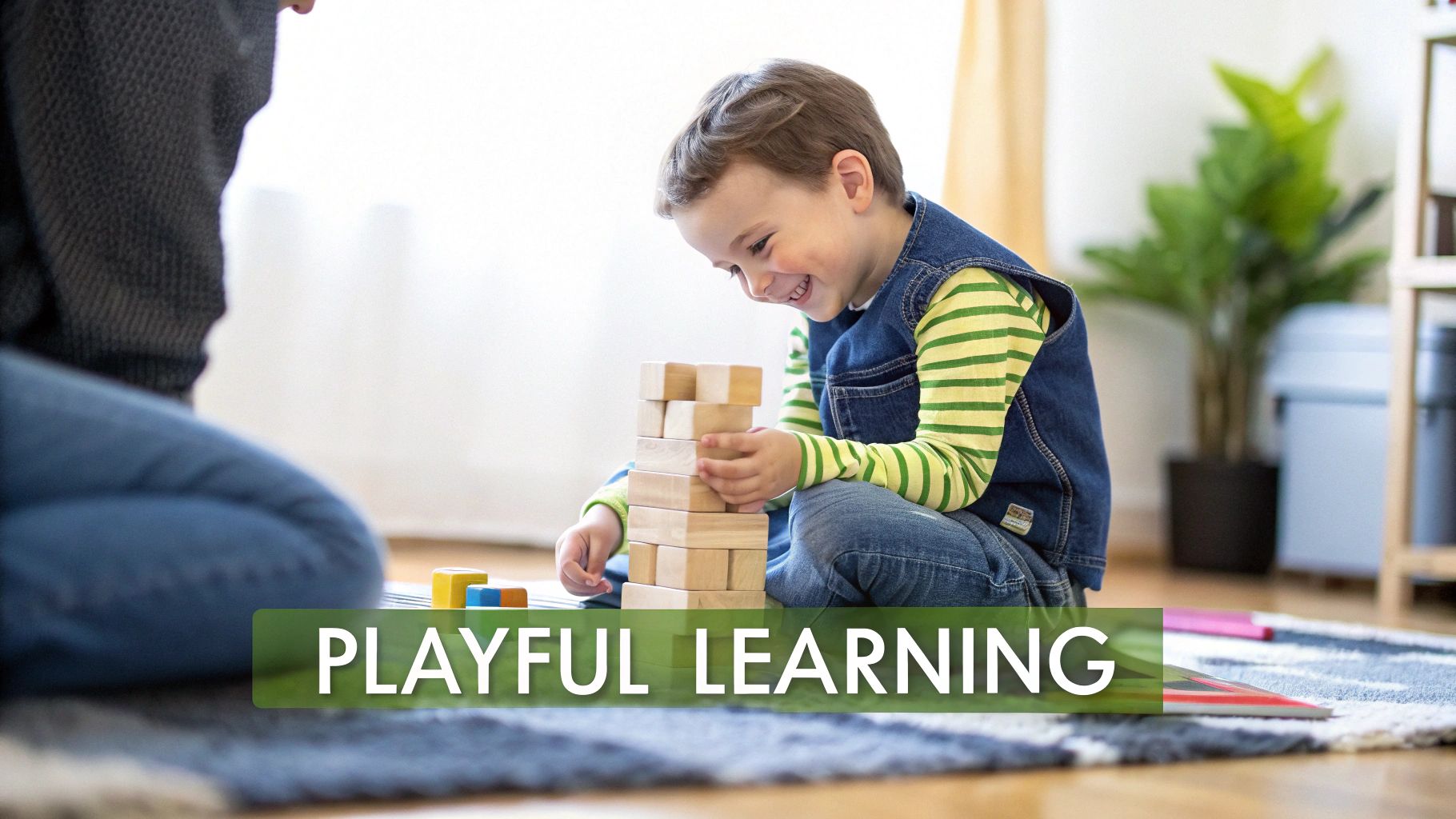
At age three, a child's world expands in the most amazing ways. Their play becomes so much more complex, shifting from simple, repetitive actions to rich, imaginative stories. A block is no longer just a block—it’s a car, a phone, or a piece of cake for a teddy bear’s birthday party. This is the golden age of imagination, where every single object holds the seed of a new adventure.
At the same time, their physical confidence is soaring. They can run faster, jump higher, and climb with a newfound sense of purpose. Their fine motor skills are also getting a major upgrade, which makes activities like drawing, stringing beads, or using kid-safe scissors suddenly fascinating. A great gift taps into these budding abilities, offering just enough of a challenge to build skills without tipping over into frustration.
The most meaningful gifts act as a bridge between what a three-year-old can do and what they are striving to do. They empower a child's natural curiosity and fierce desire for independence, turning everyday moments into opportunities for growth and connection.
More Than Just a Toy
While toys are fantastic, the idea of a "gift" can be so much broader. The real goal is to give something that enriches their life, builds their confidence, and simply brings them joy. This could be a physical item, a special experience, or something that helps you connect more deeply as a family.
Thinking about gifts that create memories for everyone? Exploring options for fun family days out can be just as impactful as any toy.
Ultimately, finding the perfect present is about seeing the world through their eyes. It’s about choosing something that honors their new skills and feeds their hungry imagination, turning gift-giving from a guessing game into a genuinely meaningful act of support.
A Smart Parent's Framework for Choosing Gifts
Walking into the toy aisle can be overwhelming. There's just an endless sea of options, and it's easy to get lost in a blur of bright colors and bold claims. Instead of trying to pick out a specific toy, I find it's much better to have a simple framework in mind.
Think of it as your own personal gift-selection filter. It helps you cut through the noise and zero in on what really matters for your three-year-old: safety, developmental value, and genuine, lasting fun. Once you have these principles down, you'll be able to confidently evaluate any potential gift, whether it's a shiny new toy or a practical tool for your home.
Start with the Non-Negotiables: Safety First
Before we even get to the fun stuff, let's talk about the absolute number one priority: safety. For a three-year-old, this goes way beyond just looking for obvious sharp edges. You have to get into the details of how something is made.
A three-year-old's world is still incredibly hands-on—and often, mouth-adjacent. That makes the actual materials a huge deal.
- Non-Toxic Materials: Always look for labels that say the paints and finishes are non-toxic. Certifications like ASTM F963 in the U.S. or CE in Europe are your friends here; they mean the product has been tested for nasty stuff like lead and phthalates.
- Durable Construction: A gift needs to hold up to the... let's call it enthusiastic play of a preschooler. Check for solid construction. Think sturdy wood over flimsy plastic when you can, and make sure all the parts are attached securely so they won't pop off and become a hazard.
- Choking Hazard Check: While three-year-olds are generally putting fewer things in their mouths than they did as babies, small parts are still a risk. The old "toilet paper roll test" is a great gut check: if a toy or any of its pieces can fit through a standard cardboard tube, it's a potential choking hazard.
Gauge the Developmental Sweet Spot
The perfect gift for a three-year-old meets them exactly where they are. It needs to be interesting enough to grab their attention but not so tricky that it just leads to frustration. A toy that's too simple gets tossed aside in five minutes, but one that's too advanced can make them feel like they've failed.
The goal is to find a gift that offers a "just-right" challenge. It should gently push them to practice emerging skills—like fine motor coordination, problem-solving, or imaginative thinking—without being overwhelming. This sweet spot is where true, joyful learning happens.
Think about it like this: a simple wooden puzzle helps a three-year-old build spatial reasoning and fine-tunes their little hand movements. A 100-piece jigsaw puzzle, on the other hand, would just be a box of frustration. The key is matching the gift's complexity to their current abilities and that booming curiosity.
Evaluate the Long-Term Play Value
One of the most important things I look for is a gift’s play value. Basically, can it be used in a bunch of different, creative ways over a long time? Does it spark their imagination, or does it do all the work for them?
Those single-purpose, battery-operated toys that just sing one song or do one trick have very low play value. Open-ended gifts are the complete opposite—their play value is through the roof.
- Building Blocks: They can be a castle, a car, a spaceship, or a telephone.
- Art Supplies: It's a blank canvas for whatever is brewing in their imagination.
- A Play Kitchen: This becomes the set for endless stories and scenarios.
Gifts like these grow with your child, adapting as their little worlds get bigger and more complex. They invite creativity instead of telling a child exactly how to play.
It's no surprise that interest in these kinds of skill-building toys is growing. In fact, educational toys for toddlers aged 1 to 3 made up about 51% of the global market in 2023. This push is coming from parents—58% of parents in the U.S. are actively looking for gifts that help their kids develop new skills and stay active. You can read more about these toy market trends and their drivers.
To make it even easier, I've put together a quick checklist you can mentally run through when you're considering a gift.
Gift Selection Checklist for 3 Year Olds
| Evaluation Criterion | What to Look For | Example |
|---|---|---|
| Safety | Non-toxic materials, sturdy build, no small parts that could be choking hazards. | A solid wood step stool with a child-safe finish. |
| Developmental Stage | Offers a "just-right" challenge for their current skills (motor, cognitive, social). | A set of large, easy-to-handle building blocks instead of a complex LEGO kit. |
| Long-Term Play Value | Is it open-ended? Can it be used in multiple ways and grow with the child? | A play kitchen or a standing tower that encourages imaginative role-play. |
| Child's Interests | Does it align with what they are currently fascinated by (dinosaurs, cars, art)? | A set of animal figures for a child who loves visiting the zoo. |
| Durability | Will it withstand vigorous play without breaking or becoming unsafe? | A well-made wooden floor bed frame versus a flimsy plastic alternative. |
This little guide isn't about finding the "perfect" toy, but about choosing gifts that are safe, engaging, and genuinely add value to your child's world of play.
The Best Gift Categories for Boosting Development
Okay, we’ve got a solid framework for how to spot a great gift. Now, let's put it into practice.
Instead of just scrolling through endless lists of toys, I find it’s way more helpful to think in play categories. This little shift in mindset ensures you’re picking gifts that actually target specific areas of their development. Suddenly, playtime becomes this incredible engine for growth.
When you organize gift ideas this way, you start to see the "why" behind every choice. You're not just buying another toy; you're investing in your child's creativity, their physical confidence, social skills, or practical independence. It’s about being intentional so the gifts you give are both fun and genuinely beneficial.
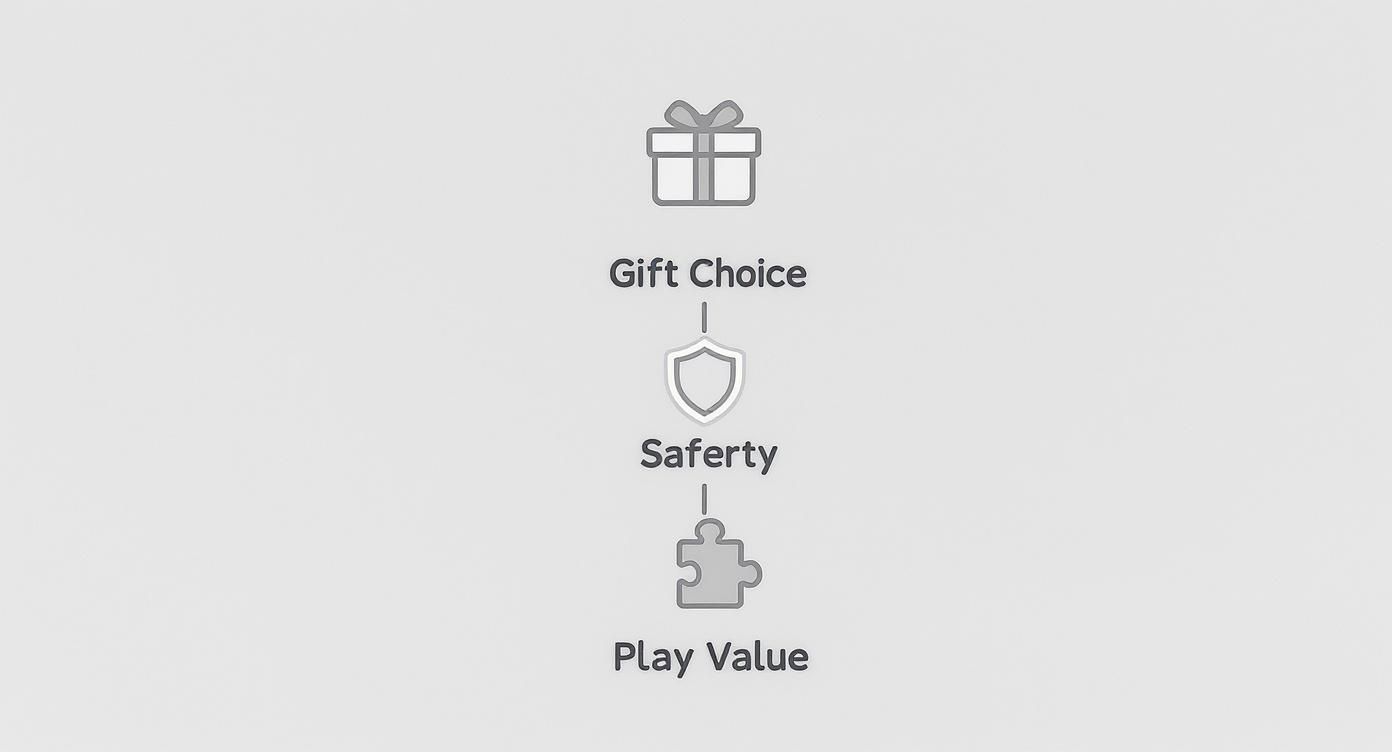
This just boils it all down: a thoughtful gift starts with safety and then zeroes in on its long-term play value. Simple as that.
Creative and Artistic Play Gifts
At three, a child’s imagination is a vibrant, limitless world. Gifts that tap into that creative energy give them the tools to bring their inner visions to life. This is about so much more than just making pretty pictures—it’s about self-expression, fine-tuning motor skills, and seeing cause and effect in action.
Every stroke of a crayon and every squish of clay strengthens the tiny muscles in their hands, getting them ready for big-kid skills like writing.
- Washable Paints and Easels: These give them a huge canvas for big, uninhibited creation. Messy but so worth it.
- Modeling Clay or Play-Doh: Fantastic for sensory exploration and building up hand strength.
- Jumbo Crayons and Construction Paper: The classics are classics for a reason. They offer endless possibilities.
- Sticker Books and Stamp Sets: Excellent for practicing that all-important pincer grasp and improving hand-eye coordination.
And for a different kind of creative spark, personalized storybooks that spark imagination can make them the hero of their own adventure, which is an amazing way to build a lifelong love for reading.
Active and Gross Motor Play Gifts
Three-year-olds are pure physical energy. They are constantly testing their bodies—running, jumping, climbing, and figuring out their balance. Gifts that support this are absolutely essential for developing gross motor skills, coordination, and a real sense of physical confidence.
These gifts give them a safe outlet for all that boundless energy while helping them learn what their bodies are capable of. This kind of play builds a strong foundation for a healthy, active life down the road.
Active play isn’t just about burning off energy. It’s how children develop body awareness, balance, and spatial understanding—critical skills for navigating their world safely and confidently.
- Balance Bikes or Scooters: A perfect way to teach balance and coordination, paving the way for a pedal bike.
- Small Climbing Structures or Slides: These build strength, courage, and even problem-solving skills.
- Balls of Various Sizes: Encourage kicking, throwing, and catching to improve hand-eye coordination.
- T-Ball Sets or Basketball Hoops: Introduce basic sports in a fun, no-pressure environment.
Pretend and Imaginative Play Gifts
This might just be the most important play category for a three-year-old. Pretend play is how they make sense of their world, practice social situations, and develop empathy. When they pretend to be a doctor, a parent, or a chef, they’re literally stepping into someone else's shoes and exploring complex emotions and ideas.
These gifts are simply the props for the incredible stories unfolding in their minds, helping them build vocabulary and narrative skills along the way.
- Play Kitchens and Food: A total classic because it lets them mimic the everyday routines they see adults doing.
- Dress-Up Clothes and Costumes: Allows them to explore different roles and identities.
- Dolls and Stuffed Animals: Great for encouraging nurturing behavior and emotional expression.
Practical Life and Montessori-Aligned Gifts
Finally, some of the absolute best gifts aren't really "toys" at all. They are beautifully designed, child-sized tools that empower a three-year-old to participate in real, everyday life. This is the heart of the Montessori philosophy—fostering independence and building self-esteem through meaningful contribution.
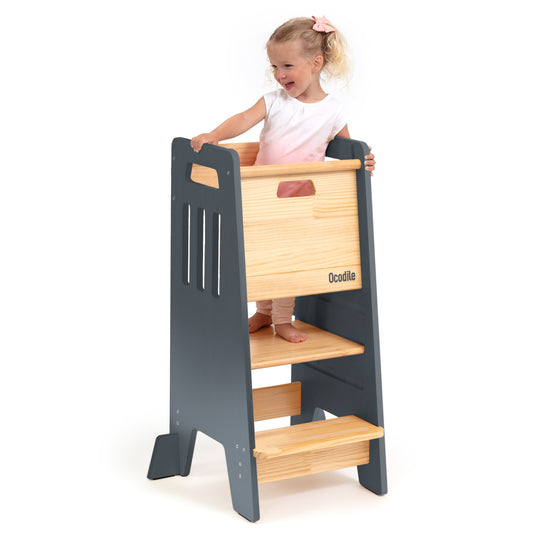
Gifts in this category turn daily routines into powerful learning opportunities. An Ocodile standing tower, for example, isn't just furniture; it's a ticket to being included. It allows a child to safely stand at counter height and "help" you cook, which builds real skills and a powerful sense of belonging. A simple step stool gives them the independence to wash their own hands or reach a book on the shelf.
These gifts send a powerful message: "You are capable. You are helpful. You are a valued member of our family." That confidence is one of the most lasting gifts you can ever give.
To dive deeper into toys that support this kind of skill-building, you might be interested in our guide on choosing the best STEM learning toys.
Gifts That Build Real-World Independence
While toys that spark imagination are fantastic, some of the most meaningful gifts for a three-year-old aren't toys at all. They’re beautifully designed, child-sized tools that invite them into our world.
That powerful urge your toddler has to do things "by myself!" isn't just a phase of defiance. It’s a deep, developmental drive to become competent and feel like they belong.
Gifts that support this drive are long-term investments in your child's confidence. These are items that blend right into your daily routines, turning ordinary tasks into amazing learning moments. By giving them the right tools, you’re sending a clear message: "You are capable, you are helpful, and you are an important part of our family." That feeling is one of the best gifts they'll ever receive.
From Observer to Participant
Try to see daily life from a three-year-old’s perspective for a moment. Most of the important family action happens way up high—on kitchen counters, at the bathroom sink, or on the "big bed." They often end up as spectators, watching the world unfold from a few feet below.
Practical gifts completely change this dynamic. They act as a bridge, elevating a child from a passive observer to an active participant in the life of the family. This shift is huge for building self-esteem and a genuine sense of responsibility.
The best practical gifts don't just teach a skill; they grant access. They give a child a ticket to join in on the activities that make a family feel like a team, fostering connection and a deep sense of security.
When a child can safely reach the counter to help stir pancake batter or wash their own hands at the sink, they're learning so much more than just the task. They are absorbing the rhythm of family life, building muscle memory, and hardwiring the belief that they can do things for themselves.
The Learning Tower: A Gift of Inclusion
One of the most impactful practical gifts you can give is a learning tower, sometimes called a kitchen helper. Trust me, it’s so much more than a stool. A well-designed tower, like the Ocodile Standing Tower, provides a secure, enclosed platform that lets a child stand safely at counter height.
This one piece of furniture is a total game-changer.
Suddenly, your three-year-old can be right there beside you, washing vegetables, stirring ingredients, or decorating cookies. These shared moments in the kitchen are packed with learning opportunities, from sensory exploration to early math concepts like measuring and counting.
- Builds Practical Skills: They learn real-life skills like mixing, pouring, and spreading.
- Fosters Connection: It turns meal prep from a chore you have to do around them into a joyful activity you do with them.
- Enhances Safety: It puts an end to that precarious balancing act of holding a squirming child while trying to cook.
A learning tower is truly a gift of inclusion. It gives your child a designated, safe space to contribute, making them feel like a real helper. To see how this one item can transform your daily routine, you can learn more about the Montessori principles behind the learning tower in our detailed guide.
The Floor Bed: A Gift of Autonomy
Moving from a crib to a "big kid" bed is a huge milestone. A Montessori floor bed reframes this transition as a gift of freedom and respect for a child's growing autonomy. Unlike a traditional bed frame that creates a barrier, a floor bed puts the mattress right at their level.
This simple design gives them complete control over their own sleep space. They can get in and out of bed all by themselves, which fosters a sense of ownership and self-regulation. It respects their ability to listen to their own body’s cues for rest and play.
The Step Stool: A Gift of Self-Sufficiency
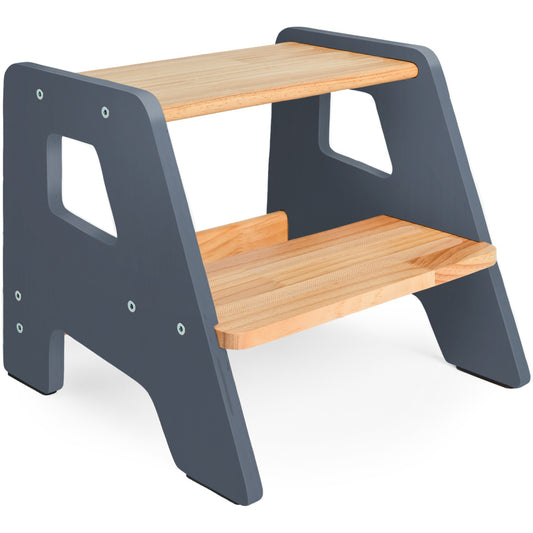
Finally, never underestimate the power of a simple, sturdy step stool. For a three-year-old, a step stool is like a key that unlocks new parts of their world. It’s the tool that allows them to reach the bathroom sink to brush their teeth, grab a book from a low shelf, or help put away their own toys.
Each time they use it successfully without asking for help, their self-sufficiency blossoms. This small boost in independence, repeated dozens of times a day, builds a solid foundation of confidence. It’s a simple gift, but its impact on their sense of capability is immense. These practical items are some of the best gifts for 3 year olds because they keep on giving, every single day.
Navigating Gift Overload and Modern Trends
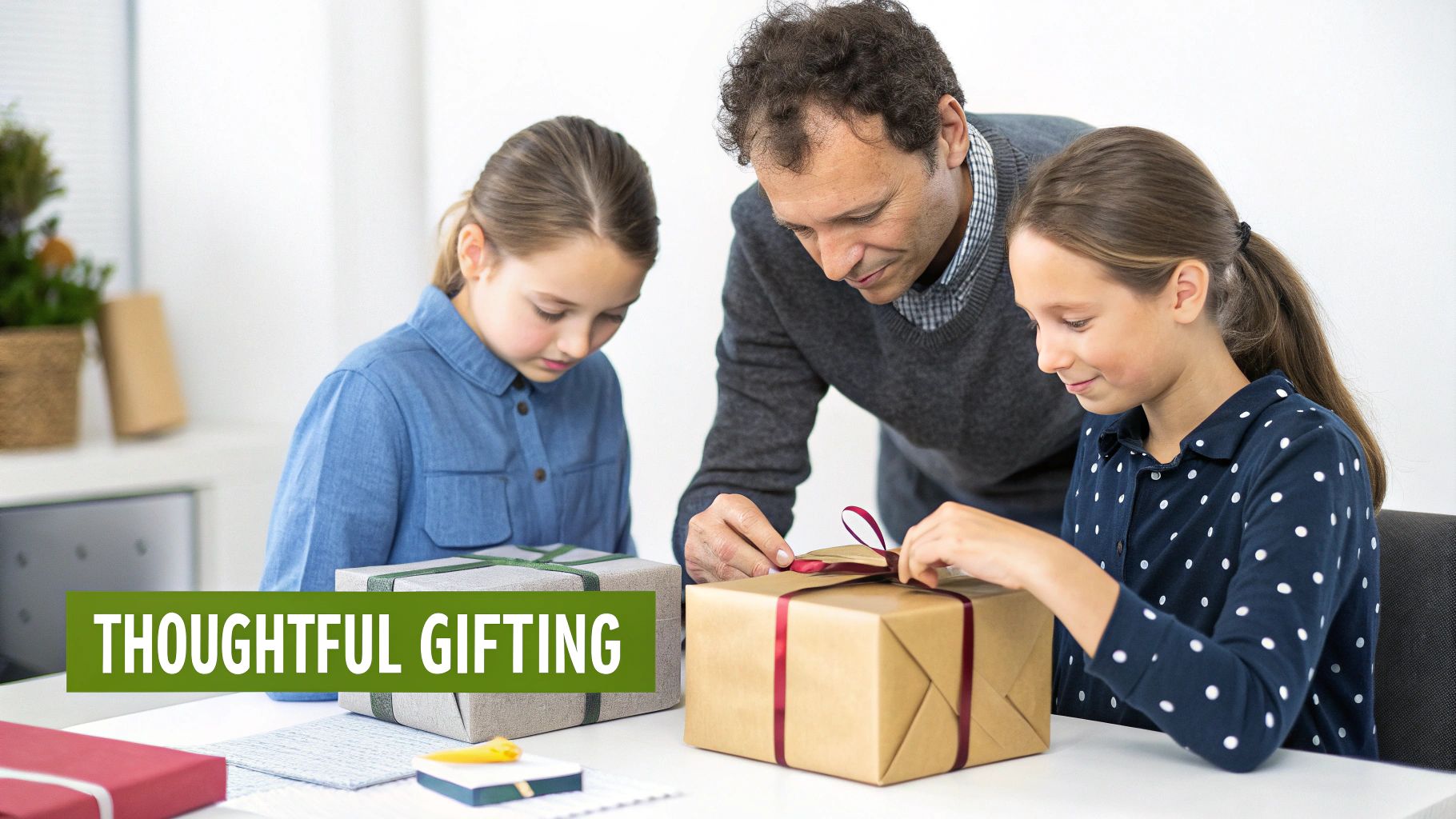
Choosing a thoughtful gift is one thing. Figuring out how to manage the sheer volume of stuff that comes with birthdays and holidays is a whole different ballgame. It's way too easy for a well-meaning gesture to contribute to a mountain of toys that feels overwhelming for both you and your child.
The trick is to shift your mindset from accumulation to intention. This isn't about being ungrateful; it's about being mindful. By having a plan for holidays and setting some gentle boundaries for birthday parties, you can make conscious choices about what you welcome into your home. The goal is to make sure every gift adds genuine value, not just clutter.
When you have a strategy in place, you can navigate these gift-giving seasons with confidence. You get to keep all the joy of the occasion without sacrificing your home’s tranquility.
The Power of Non-Toy Gifts
Let's be honest: some of the absolute best gifts for 3-year-olds aren't toys at all. They’re experiences. These are the things that create lasting memories and build real-world confidence, and they are naturally clutter-free.
Think about these powerful alternatives:
- Memberships: A pass to a local children’s museum, zoo, or aquarium is a gift that keeps on giving all year long with new adventures.
- Classes: Signing them up for swim lessons, a tumbling class, or a local music group is a wonderful way to support their physical and social development.
- Special Outings: Tickets to a children's theater performance or a special "date" with a grandparent can feel like the most magical treat in the world.
An experience-based gift says, "I want to spend time with you and create memories together." For a three-year-old who craves connection, this is one of the most powerful messages they can receive.
Managing the Inevitable Gift Overload
Even with the best intentions, holidays and birthdays can bring an avalanche of presents from well-meaning family and friends. Having a system in place is the secret to keeping your home organized and preventing your child from feeling totally overwhelmed.
One of the most effective strategies is the toy rotation system. Instead of having every single toy out at once, you keep a curated selection available and store the rest. Every few weeks, you swap them out. This simple trick keeps old toys feeling new again and dramatically reduces the daily clutter.
Of course, good toy storage is the backbone of this system. Investing in the right organizers makes the whole rotation process smooth and simple. If you need some ideas, check out our guide on the best toy storage organizers to maintain a peaceful play space.
Decoding Modern Toy Trends
The toy aisle is a wild place, constantly evolving with new trends popping up all the time. By 2025, the global toy market is projected to hit USD 132 billion. Knowing what's out there can help you make choices that feel right for your family.
Licensed character toys, for example, make up about 30% of all sales. But other categories are gaining ground fast. The market for STEM-focused toys has reached USD 15 billion, while eco-friendly toys are growing at 18% annually as more parents look for sustainable, high-quality options. You can find more insights on the forces shaping the modern toy industry here.
Here’s a quick look at what these trends mean for you:
- STEM Toys: These are all about introducing concepts from science, technology, engineering, and math through play. For a three-year-old, this looks like magnetic tiles, simple building sets, and colorful pattern blocks.
- Eco-Friendly Toys: Made from sustainable materials like wood, bamboo, or recycled plastics, these toys are durable, safe, and kinder to the planet. They just feel good to have in your home.
- Licensed Characters: Kids love them, but these toys can sometimes limit imaginative play since the character’s story is already written. It’s all about balance—mix them in with more open-ended options.
By thoughtfully considering non-toy gifts, managing the incoming flow, and understanding what's driving the market, you can make every gift a purposeful one.
Common Questions About Gifts for 3 Year Olds
Trying to find the perfect gift for a three-year-old can bring up a lot of questions. You want something that’s special, useful, and genuinely loved—without adding to the mountain of toys in the corner.
We get it. To help you feel confident in your choice, we’ve tackled some of the most common questions parents and gift-givers run into. These straightforward answers get back to the heart of what makes a great gift: supporting your child’s growth.
Here's a quick rundown of what parents often ask when picking out the perfect present.
| Question | Key Takeaway |
|---|---|
| How many gifts should a 3-year-old get? | Quality over quantity is key. A simple "four-gift rule" (want, need, wear, read) or just 2-3 well-chosen gifts prevents overwhelm and encourages deeper appreciation. |
| Are electronic toys a good choice? | It's best to be cautious. Passive, open-ended toys that require a child's imagination are far better for development than toys that do the work for them. |
| What are some great non-toy ideas? | Experiences (like zoo memberships), skill-building classes (like swimming), and practical life items (like a standing tower) create lasting memories and build real-world confidence. |
Let's dive a little deeper into each of these points to help you make the best choice for your little one.
How Many Gifts Should I Get for a Birthday?
There’s no magic number here, but when it comes to gifts for a three-year-old, less is almost always more. A huge pile of presents can be incredibly overwhelming for a little one, making it hard for them to focus on and appreciate any single gift.
A great way to approach this is with the "four-gift rule." It’s a simple, balanced framework that keeps things intentional:
- Something they want: This is usually a toy they’ve been talking about, tying into their latest obsession, whether that’s dinosaurs or painting.
- Something they need: Think about practical items that can still be fun, like new pajamas, a cool raincoat, or a sturdy step stool for reaching the sink.
- Something to wear: A special outfit, a pair of sparkly shoes, or a fun costume for their dress-up box.
- Something to read: A beautiful new picture book or a magazine subscription that keeps the excitement coming all year long.
This strategy helps manage expectations and keeps the focus on thoughtful items instead of just volume. Honestly, for a three-year-old, two or three well-chosen, open-ended gifts will make a much bigger impact than a dozen plastic toys that get forgotten by next week.
Are Electronic Toys Good for Three-Year-Olds?
You see them everywhere, marketed as "educational," but it’s smart to be skeptical about electronic toys. The American Academy of Pediatrics recommends limiting screen time for young kids for a good reason—their brains are growing at an incredible pace through real, hands-on play.
The best toys for this age are passive, which just means the child has to be the one doing all the work. Simple things like blocks, dolls, art supplies, and play food force a child to fire up their imagination, solve problems, and use their words to bring the play to life.
Electronic toys often just entertain, doing the "thinking" for the child with the push of a button. Passive toys, on the other hand, invite the child to become the creator, thinker, and storyteller. That's where the real learning happens.
If you do go for an electronic gift, look for something that encourages interaction, not just staring. A simple kid's digital camera or a screen-free audio player like a Toniebox can be fantastic choices. The goal is to find a tool that sparks their creativity, not just one that consumes their attention.
What Are Some Great Non-Toy Gift Ideas?
Sometimes, the best gifts aren't toys at all. Non-toy gifts often create the most powerful memories by focusing on experiences, skills, and connection—things that last a lifetime.
Here are a few ideas to get you thinking outside the toy box:
- Experience-Based Gifts: These are all about making memories together. Think of a family membership to a local children's museum, zoo, or botanical garden. Even something as simple as tickets to a kids' puppet show or a special "date" with a grandparent can feel like the biggest treat in the world.
- Skill-Building Classes: Lessons for swimming, gymnastics, music, or art are amazing for physical development and for nurturing a new passion. Plus, they offer great opportunities for making new friends.
- Practical Life Gifts: These are some of the best gifts for 3-year-olds because they are used every single day and build real independence. An Ocodile Standing Tower to help in the kitchen, a set of child-safe knives, or their own little gardening tools empower them to be capable members of the family.
- Subscriptions: A subscription box designed for preschoolers, like KiwiCo's Koala Crate, delivers a new, exciting project right to your door each month. A subscription to a great kids' magazine like Highlights High Five also provides fresh fun and learning all year.
By focusing on experiences and practical tools, you're giving a gift that truly enriches a child’s life without adding to the clutter.
At Ocodile, we believe the most profound gifts are those that empower children in their daily lives. Our Standing Towers, Floor Beds, and Step Stools are designed to foster independence, build confidence, and bring families closer together.
Explore our collection of child-focused furniture and give the lasting gift of capability.